
UNIT 3 FORENSIC ANTHROPOLOGY IMPRESSIONS Objective Identifying Male
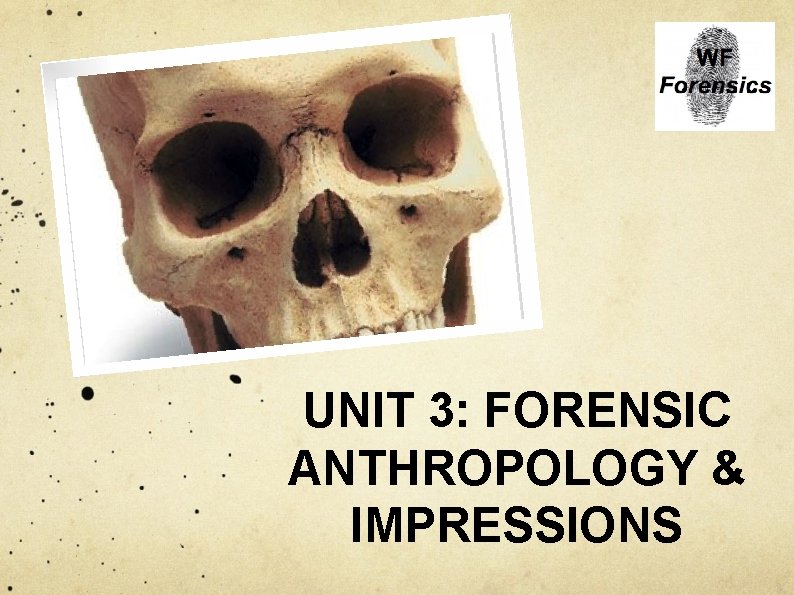
UNIT 3: FORENSIC ANTHROPOLOGY & IMPRESSIONS
Objective: Identifying Male vs Female DO NOW: What differences in bones do you think exist between males and females? If you missed the quiz on Friday see me now
What is Forensic Anthropology? The field of study that deals with the analysis of human skeletal remains resulting from unexplained deaths
Development of Bones begin as cartilage then harden to form bone (ossification)
206 Bones in Human Body Joint- location where bones meet Cartilage- found at ends of bones and protect bone Ligaments- connects bones to bones Tendons- connect muscle to
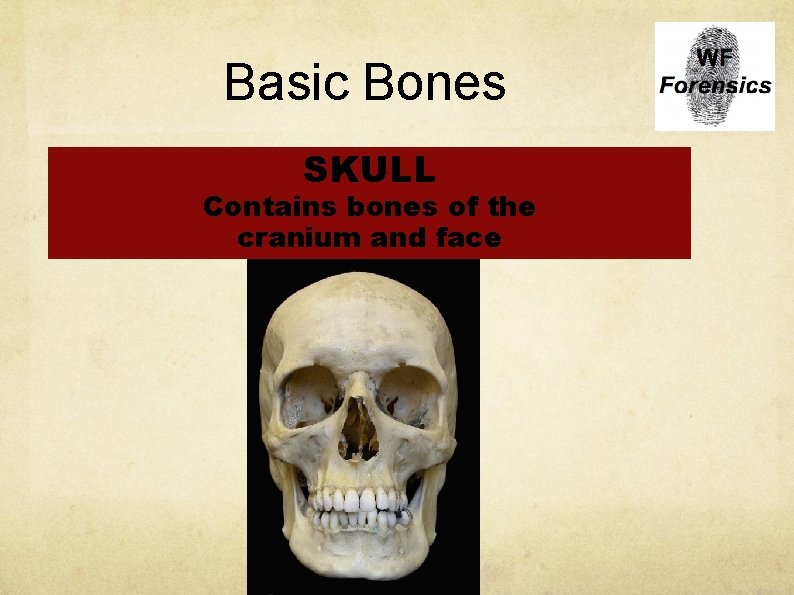
Basic Bones SKULL Contains bones of the cranium and face
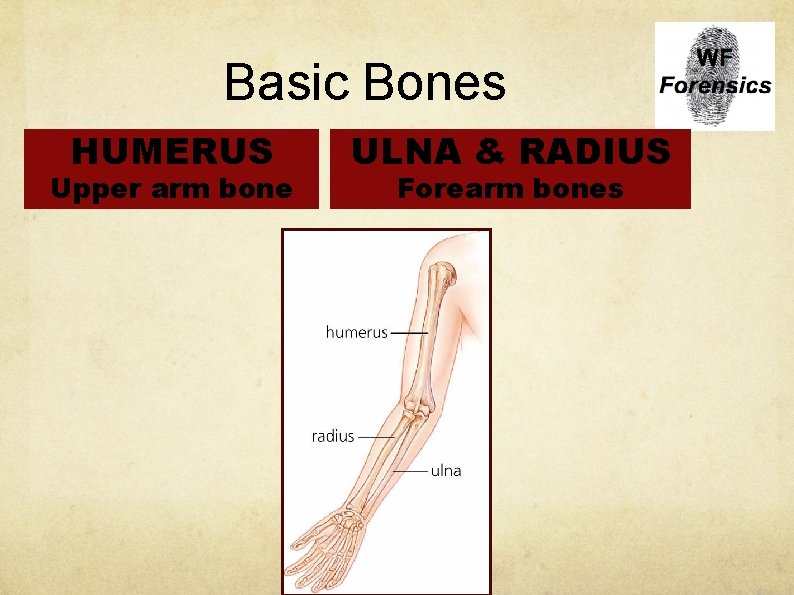
Basic Bones HUMERUS Upper arm bone ULNA & RADIUS Forearm bones
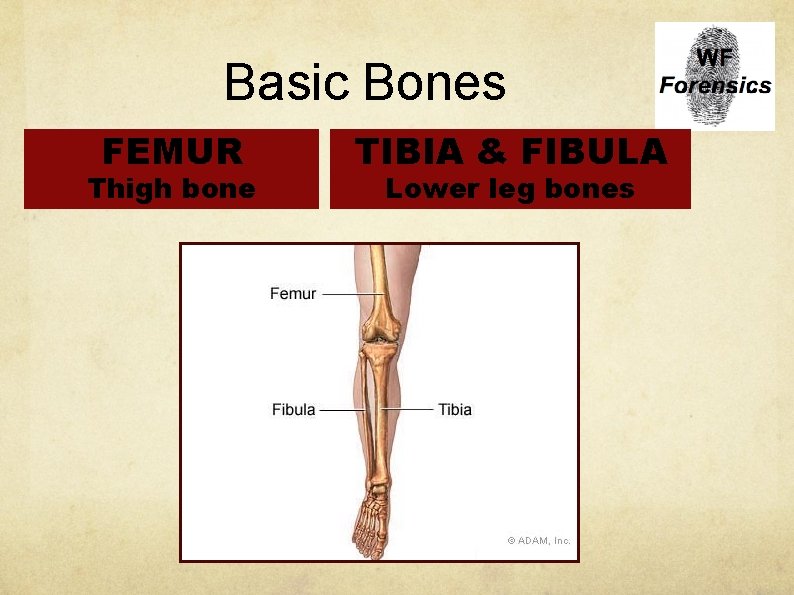
Basic Bones FEMUR Thigh bone TIBIA & FIBULA Lower leg bones
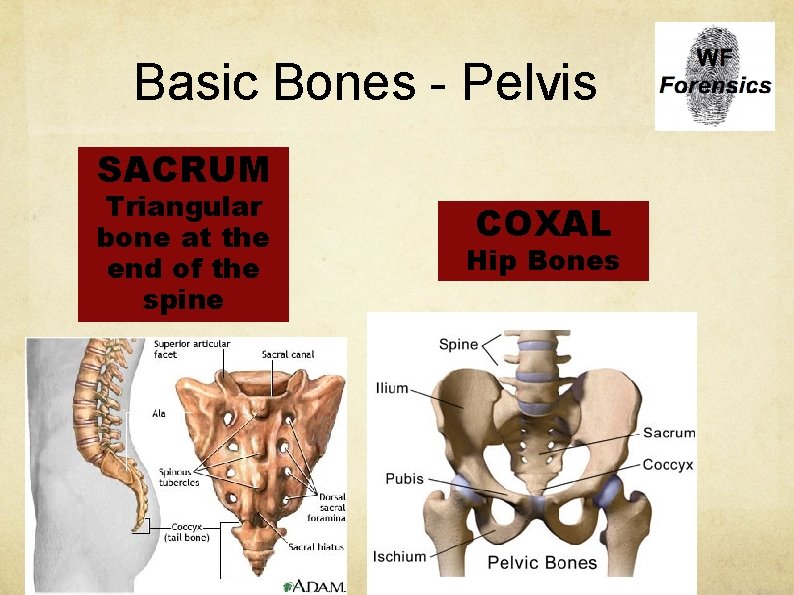
Basic Bones - Pelvis SACRUM Triangular bone at the end of the spine COXAL Hip Bones
Male or Female? Female- Skeleton is much smoother Maleü Skeleton is thicker, rougher, bumpier ü Muscles are more developed so where they attach need to be stronger ex. knee
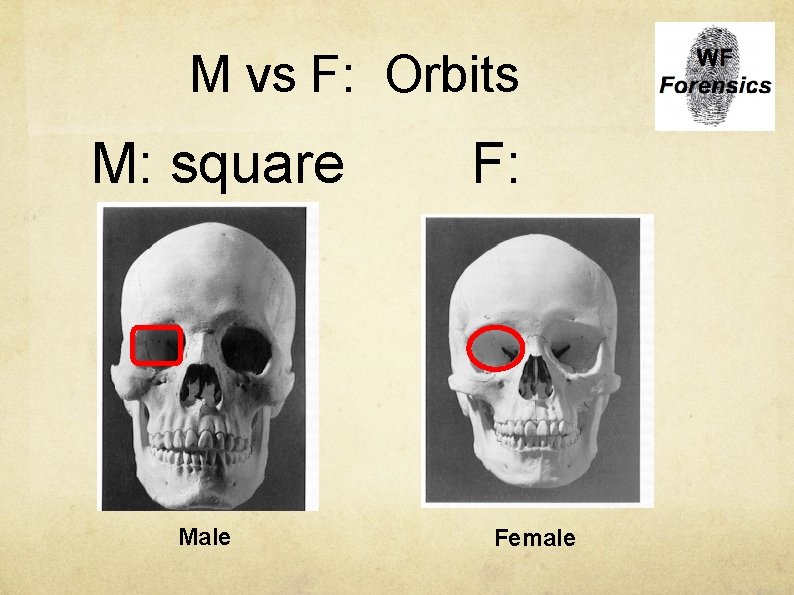
M vs F: Orbits M: square round Male F: Female
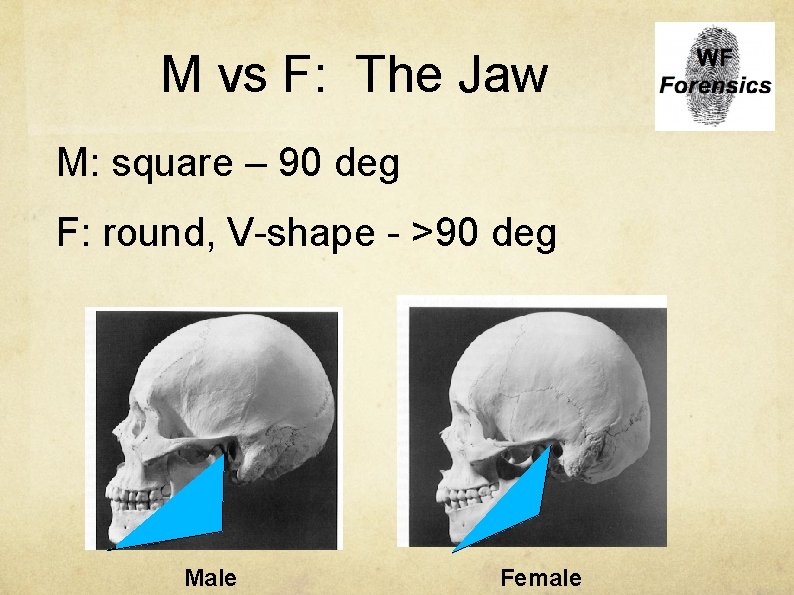
M vs F: The Jaw M: square – 90 deg F: round, V-shape - >90 deg Male Female
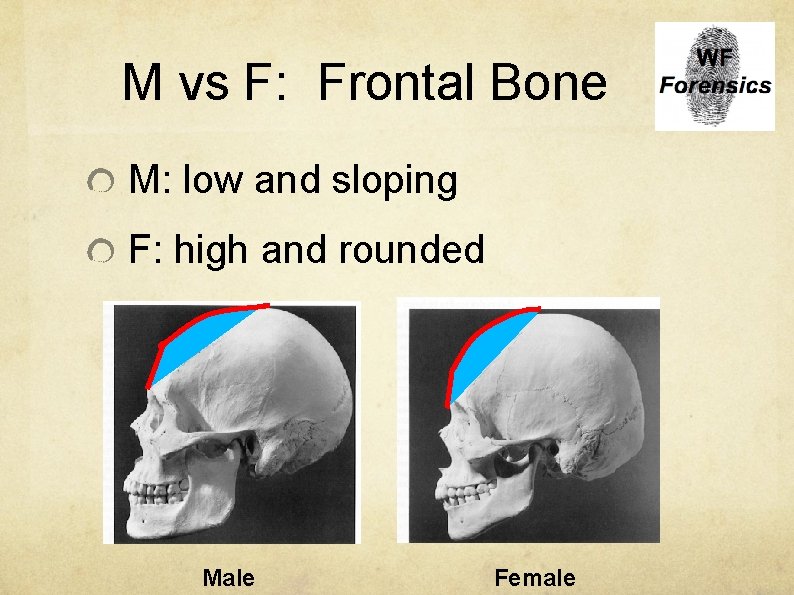
M vs F: Frontal Bone M: low and sloping F: high and rounded Male Female
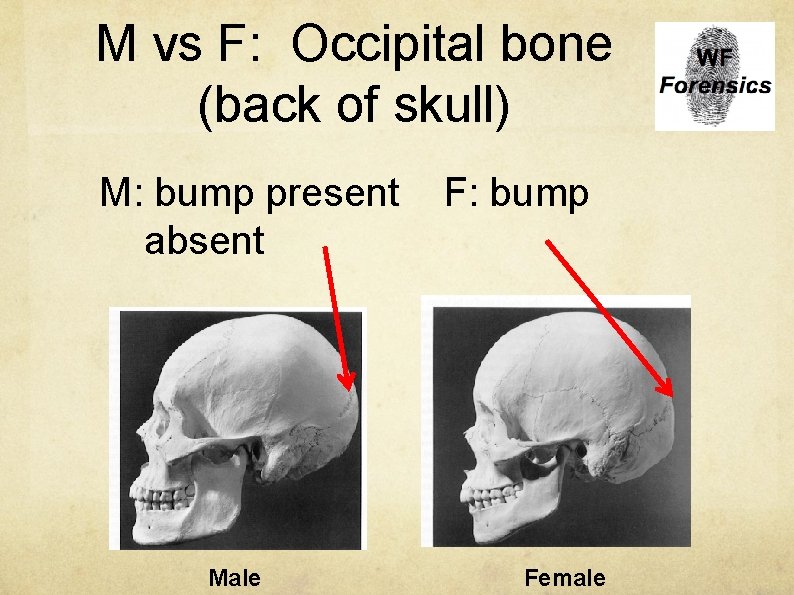
M vs F: Occipital bone (back of skull) M: bump present absent Male F: bump Female
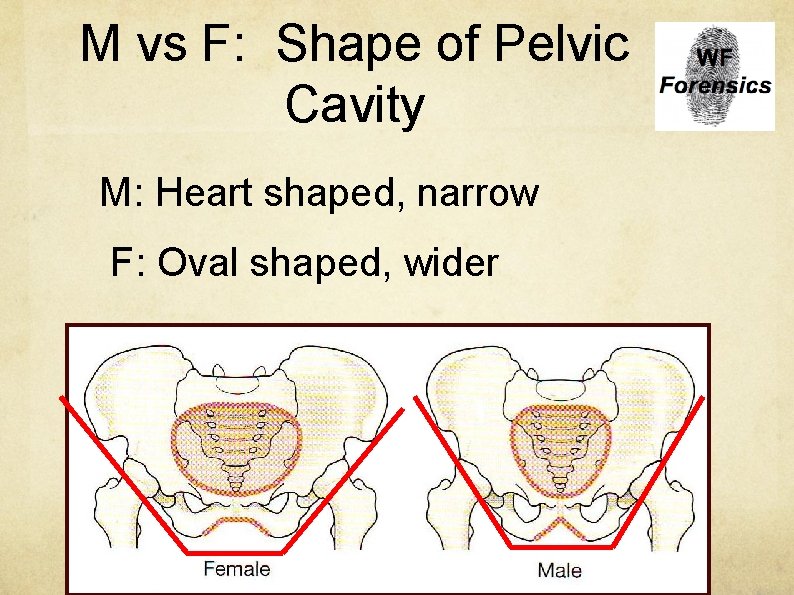
M vs F: Shape of Pelvic Cavity M: Heart shaped, narrow F: Oval shaped, wider
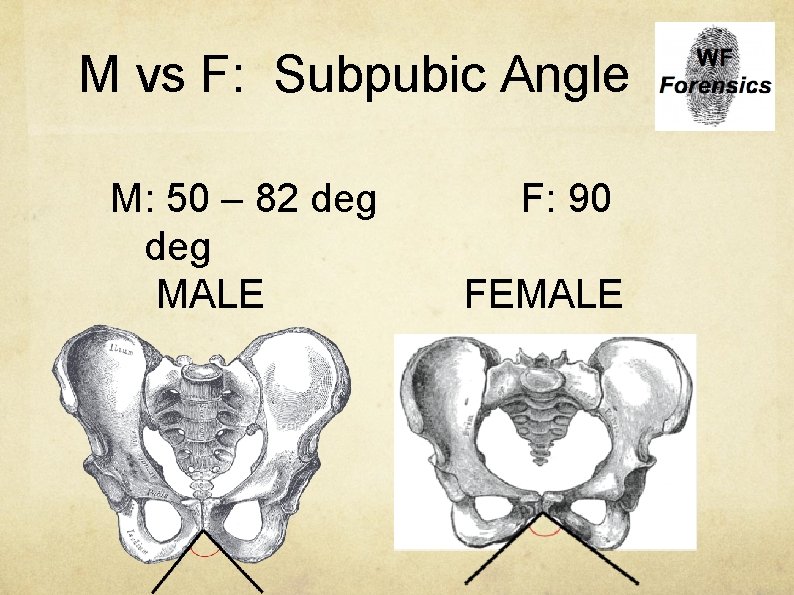
M vs F: Subpubic Angle M: 50 – 82 deg MALE F: 90 FEMALE
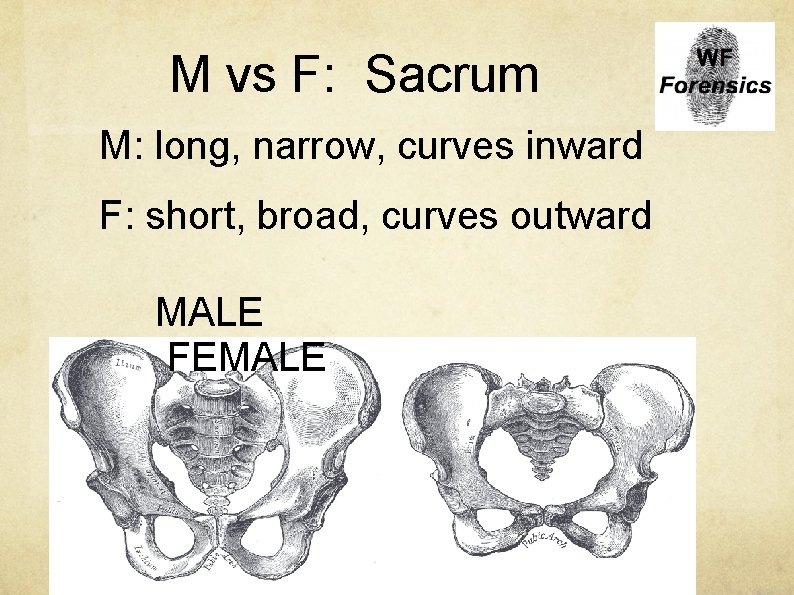
M vs F: Sacrum M: long, narrow, curves inward F: short, broad, curves outward MALE FEMALE
Activity Complete Identifying male or female activity
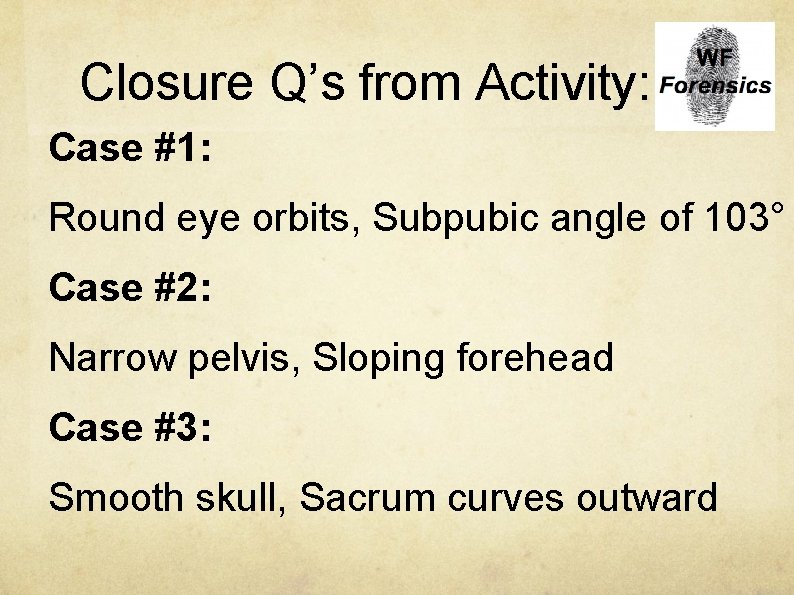
Closure Q’s from Activity: Case #1: Round eye orbits, Subpubic angle of 103° Case #2: Narrow pelvis, Sloping forehead Case #3: Smooth skull, Sacrum curves outward
Objective: Determine Gender of Bones DO NOW: What is the shape of the pelvic cavity in females and why?
Complete the lab male vs female skeleton
Objective: Determining Age DO NOW: Why are male bones rougher than females?
Determining Age Can determine age by looking at certain bones for cartilage still remaining
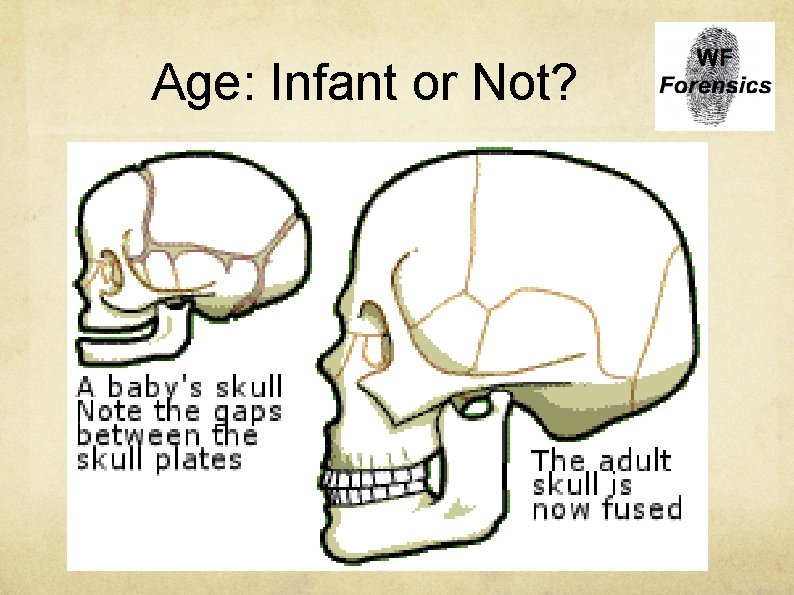
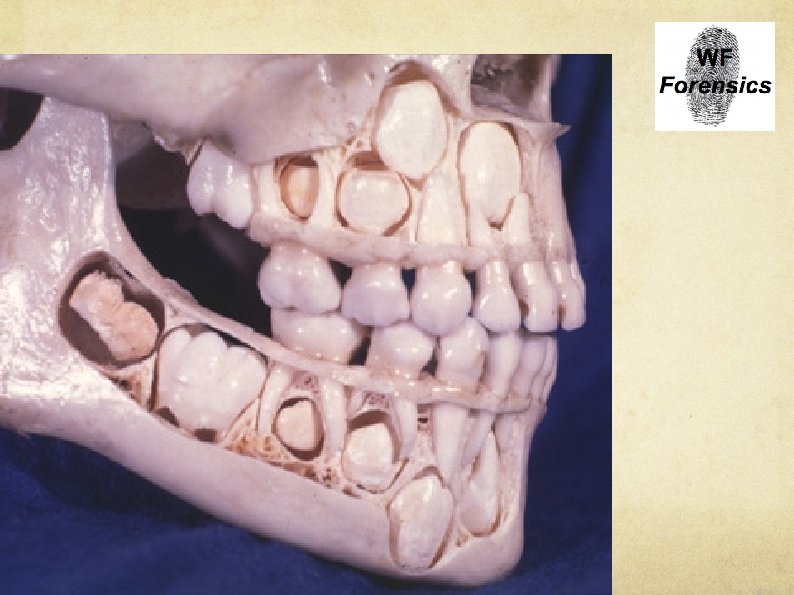
Age: Infant or Not?
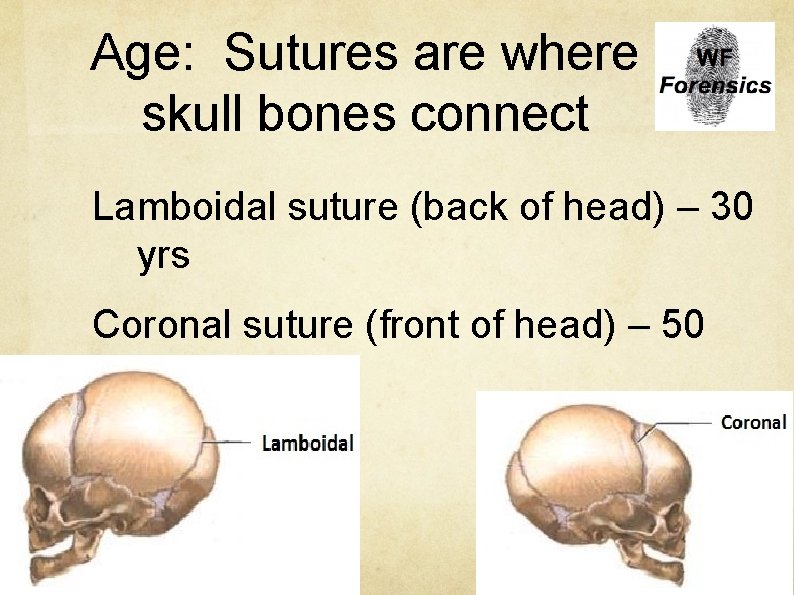
Age: Sutures are where skull bones connect Lamboidal suture (back of head) – 30 yrs Coronal suture (front of head) – 50 yrs
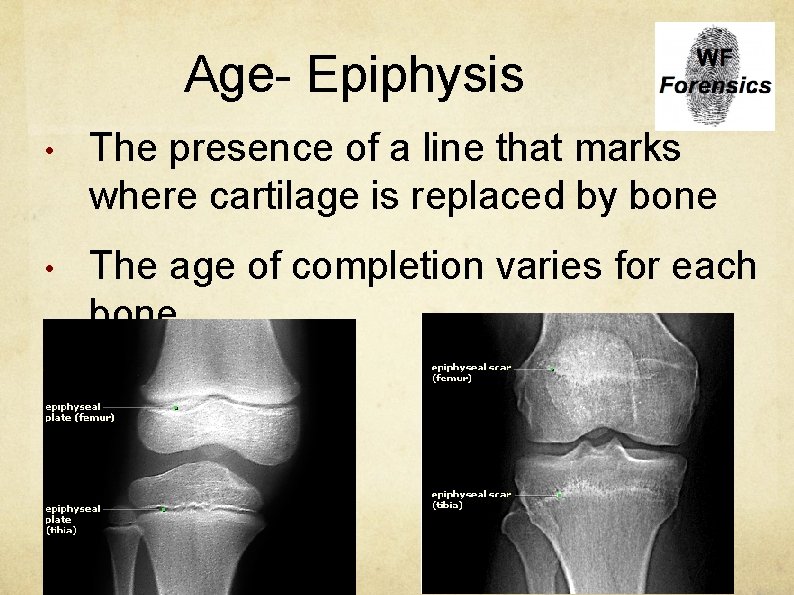
Age- Epiphysis • The presence of a line that marks where cartilage is replaced by bone • The age of completion varies for each bone
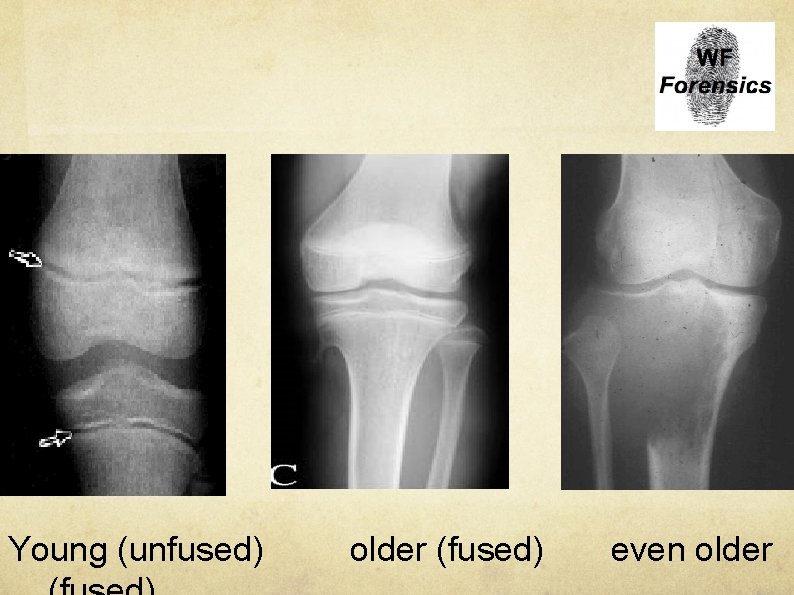
Young (unfused) older (fused) even older
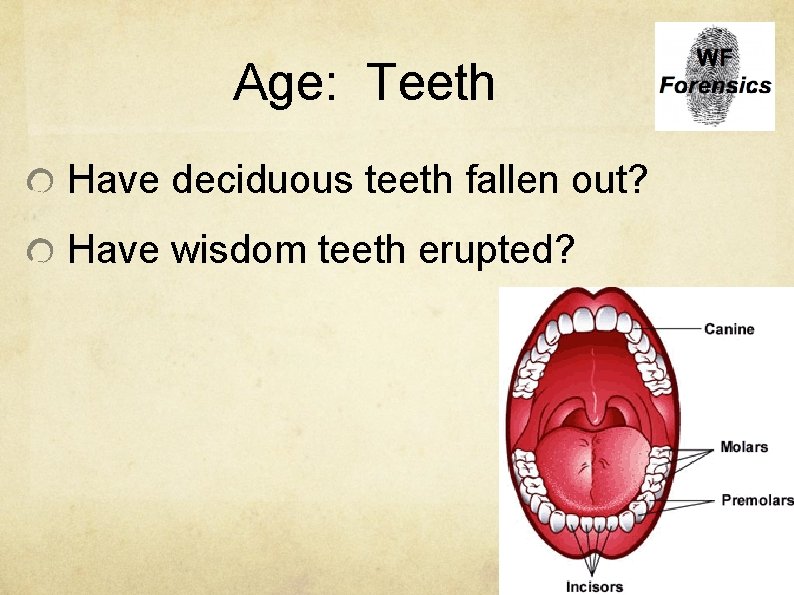
Age: Teeth Have deciduous teeth fallen out? Have wisdom teeth erupted?
Age When the head of a long bone has fused with the shaft it can help determine age
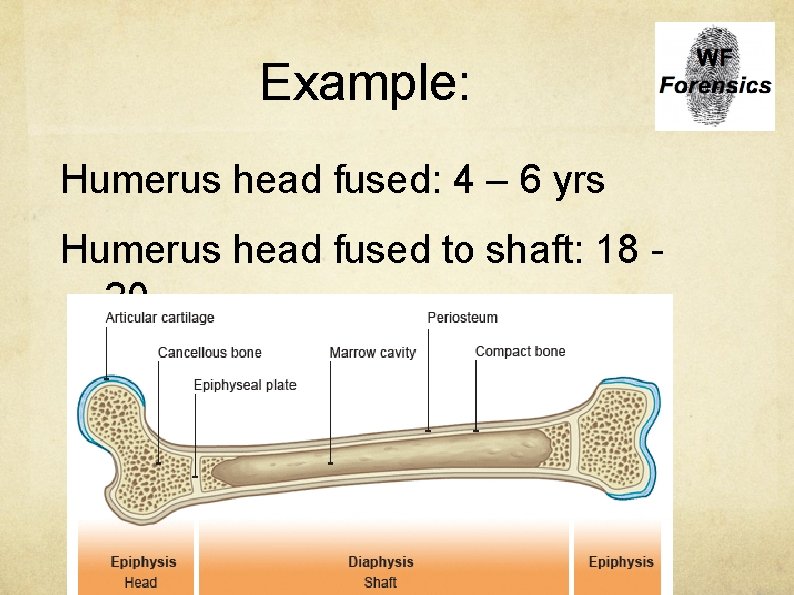
Example: Humerus head fused: 4 – 6 yrs Humerus head fused to shaft: 18 20
Case Study Complete the snaggletooth killer case study
Objective: Video case study DO NOW: If the skull is completely fused what does that indicate about the age of the individual?
Objective: video case study www. mrpalermo. com (first 48) Complete the case review sheet
Objective: Determine Height of Victim DO NOW: How can teeth be used to determine age? ****Hand in snaggletooth killer case study
Height Measuring bones can help to approximate height Gender and race should be considered if known
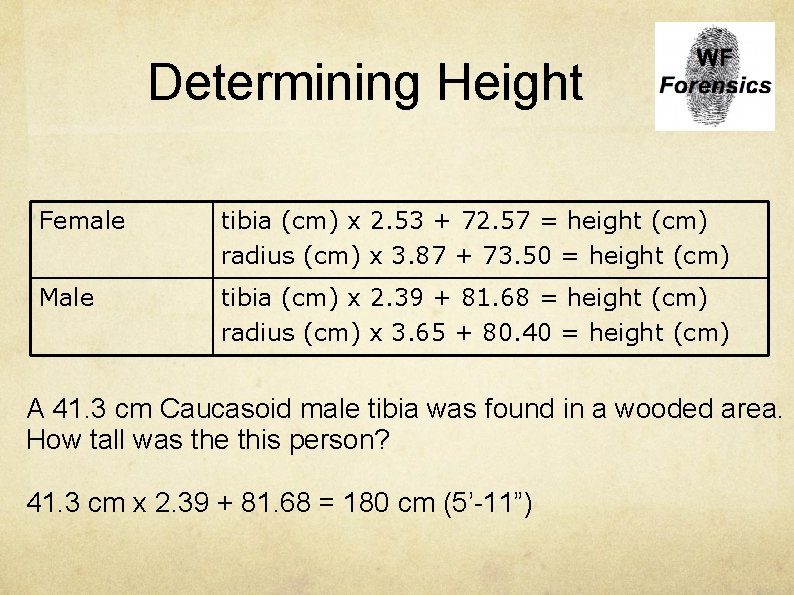
Determining Height Female tibia (cm) x 2. 53 + 72. 57 = height (cm) radius (cm) x 3. 87 + 73. 50 = height (cm) Male tibia (cm) x 2. 39 + 81. 68 = height (cm) radius (cm) x 3. 65 + 80. 40 = height (cm) A 41. 3 cm Caucasoid male tibia was found in a wooded area. How tall was the this person? 41. 3 cm x 2. 39 + 81. 68 = 180 cm (5’-11”)
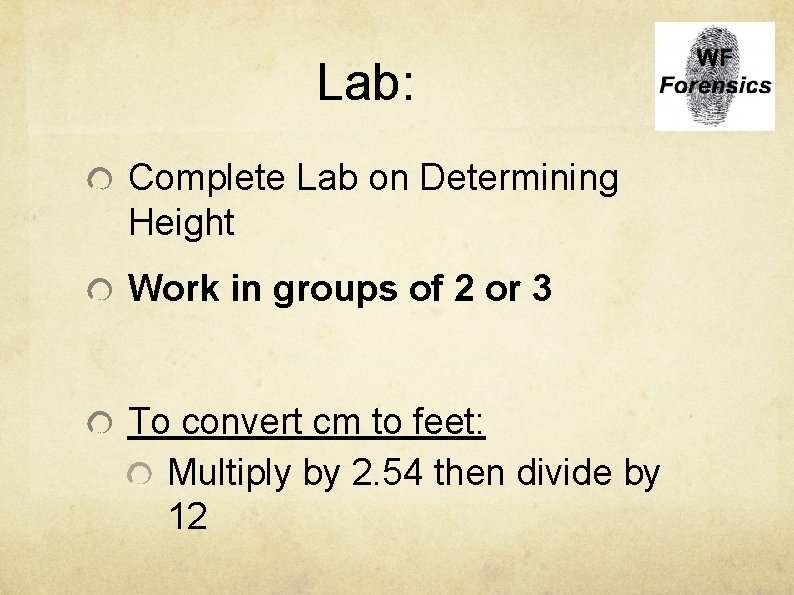
Lab: Complete Lab on Determining Height Work in groups of 2 or 3 To convert cm to feet: Multiply by 2. 54 then divide by 12
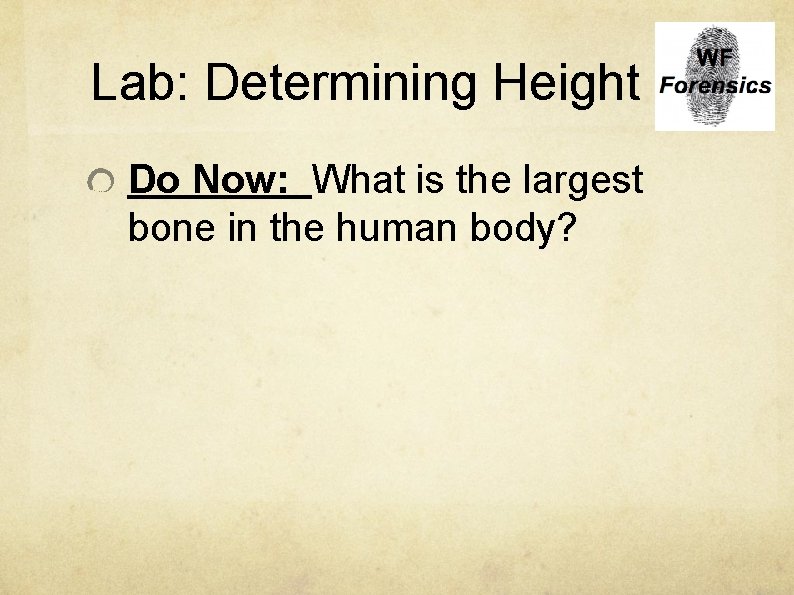
Lab: Determining Height Do Now: What is the largest bone in the human body?
http: //www. youtube. com/watch? v=c 8 IHPq 9 Vg. WI Finish Lab Today
Objective: Facial Reconstruction DO NOW: What other useful things can be determined by bones besides age, height and sex?
Race (ancestry) Can be difficult due to interracial people so not as significant as other factors Best determined with skull and femur Three categories are Caucasian, African, and Asian
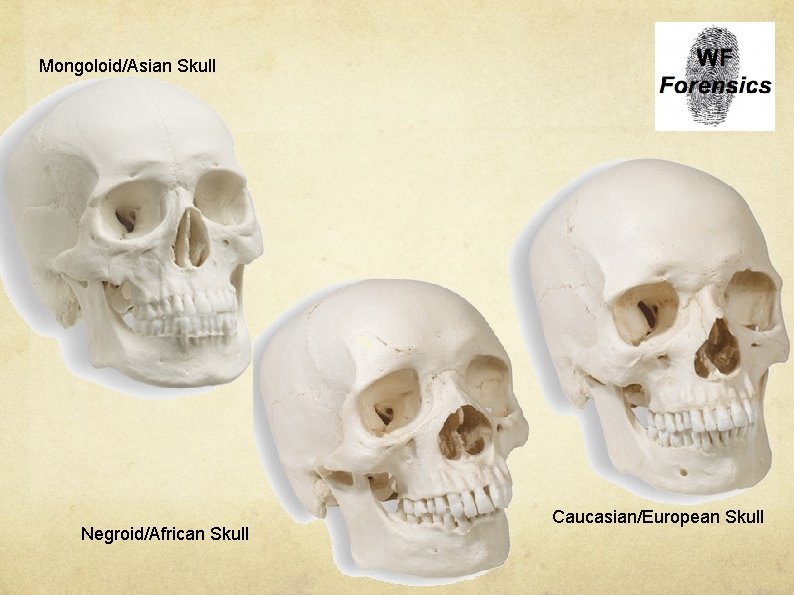
Mongoloid/Asian Skull Negroid/African Skull Caucasian/European Skull
Facial Reconstruction Size and shape of bones vary in people Facial markers are placed on the skull and clay is applied to follow the height of the markers Today computer programs can do this Programs can adjust features and age a person
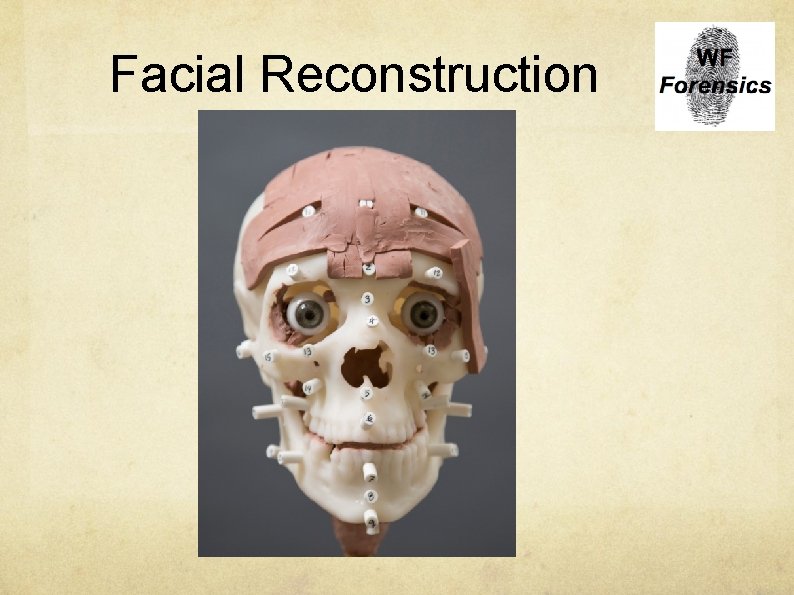
Facial Reconstruction
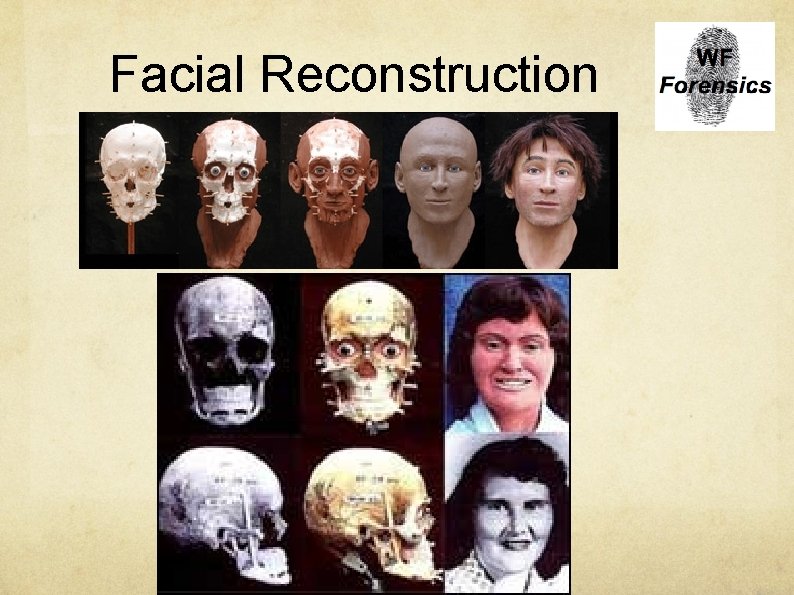
Facial Reconstruction
Facial Reconstruction http: //www. youtube. com/watch? v=VF 1 c. VAb 0 J 2 Q
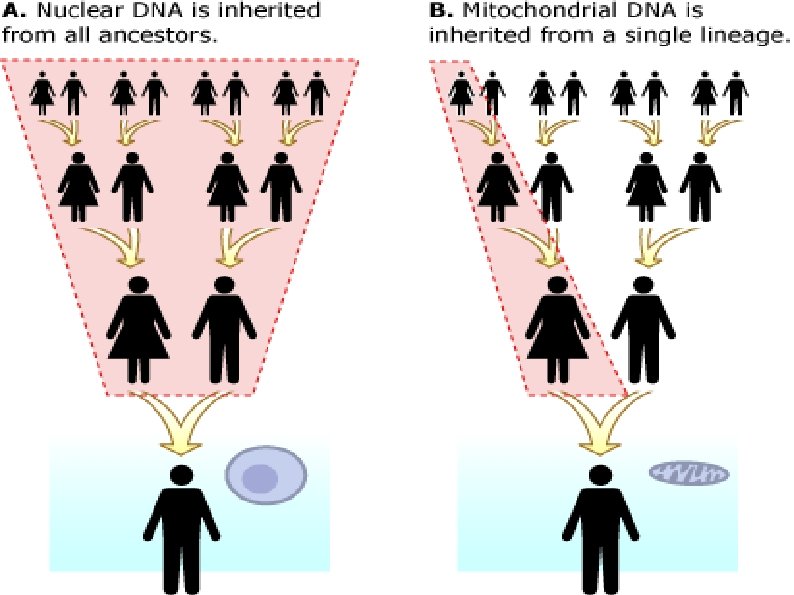
DNA Evidence Bones contain little nuclear DNA but do contain mitochondrial DNA Can compare mitochondrial DNA with living relatives on the mother's side to identify bones
Skeletal Trauma Analysis Forensic anthropologists determine if damage to bones occurred before or after death Antimortem- before death Perimortem- at or around time of death Postmortem- after death
There are distinctions between damage caused by weapons and those created by the environment after death

Antimortem damage
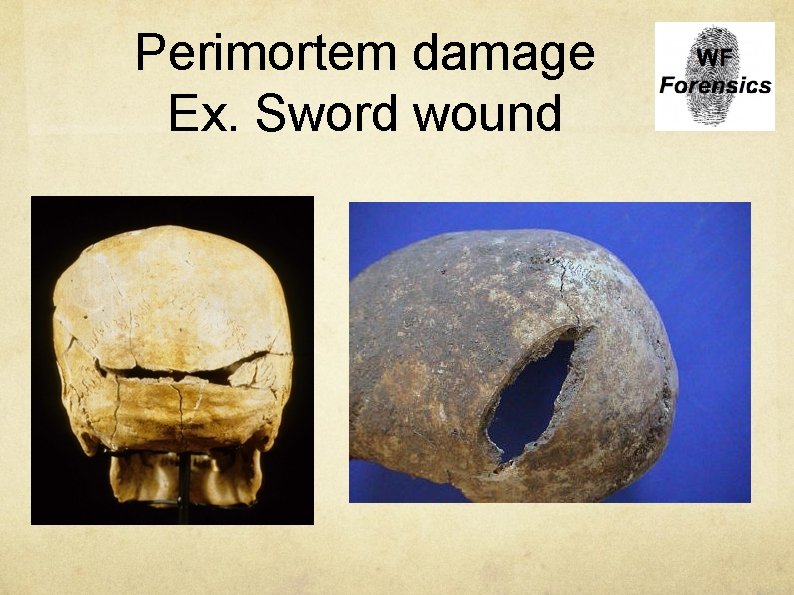
Perimortem damage Ex. Sword wound

Postmortem Damage
http: //www. youtube. com/watch? v=FGc. N 9_Gd 5 z. Q
Types of Trauma Sharp-force trauma, blunt force trauma, and gunshot wounds have distinct patterns
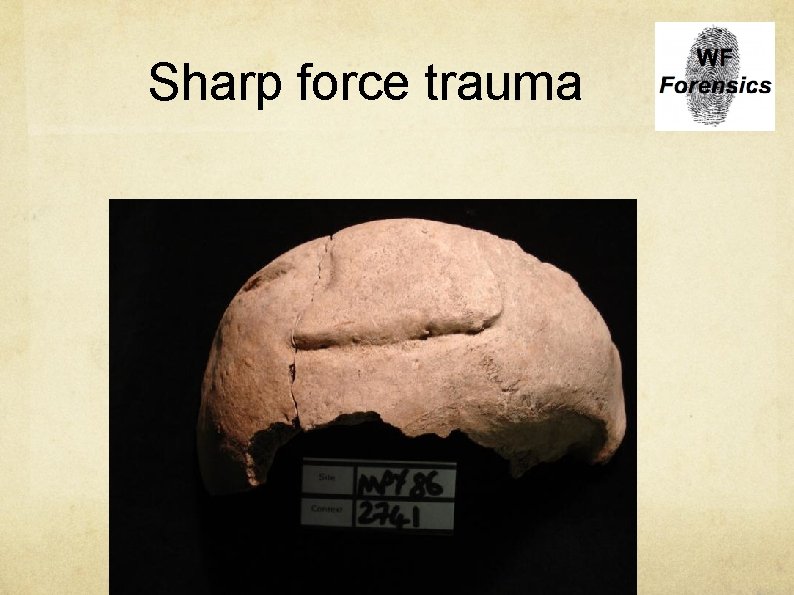
Sharp force trauma

Blunt force Trauma
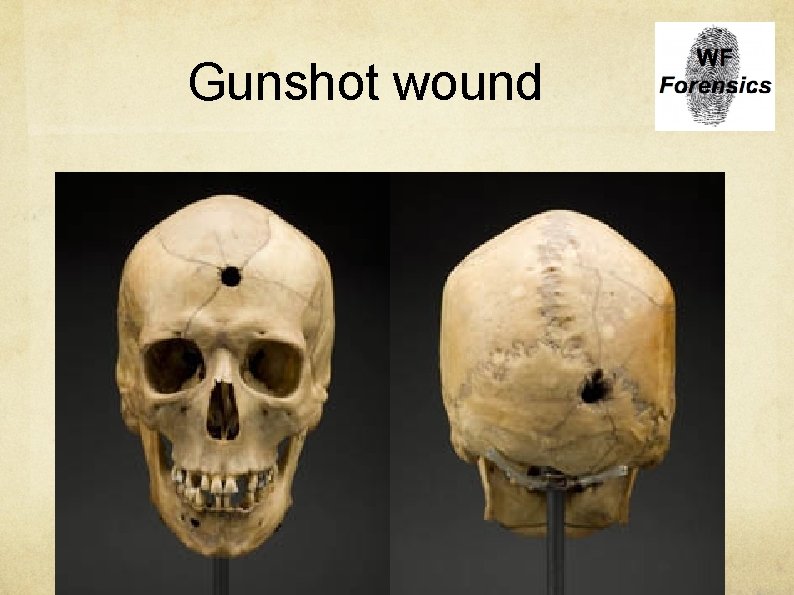
Gunshot wound
The Body Farm http: //www. youtube. com/watch? v=-q. Zm. Lo 8 q. Ix 4
Objective: case study John Wayne Gacy Do Now: Can DNA be found in bones?
Objective: case study John Wayne Gacy Complete case study on john wayne gacy
Objective: Video Case Study John Wayne Gacy http: //www. youtube. com/watch? v=FPMHsa. T 88 Sk
Closure Q’s How many people did he kill? Why was he called the killer clown? Did he target a particular type of victim? If so what type?
- Slides: 64