
Unit 3 Dynamics How Forces Affect Motion Unit
- Slides: 30
Unit 3 - Dynamics How Forces Affect Motion
Unit 3 Part 1 – Newton’s Laws of Motion Physics Book Chapter 4 Conceptual Physics Book Chapters 4 -6
Motion Theories The old way looked at the what The new way looked and looks at the why 4 th century BC - Aristotle Did not experiment Used Two only logic and observation states of motion natural and violent Earth at rest everything else moves in complete circles
Motion Theories 1600 Galileo Used experiments with ramps Discussed friction came up with the idea of inertia: property of all matter 1670 Newton Built off of Galileo’s idea
1 st Law of Motion: The Law of Inertia Newton said, “An object at rest wants to stay at rest unless acted on by a net (unbalanced) force, and an object in motion wants to stay in motion in a straight line at a constant speed unless acted on by an net (unbalanced) force. Forces do not cause motion they change motion Inertia is a property of all matter
1 st Law of Motion: The Law of Inertia is related to the mass of an object Mass is the measure of inertia or how easy or hard it is to change an objects position Mass can also be how much stuff makes up an object. Units 1 of mass kilograms or slugs slug = 14. 59 kg
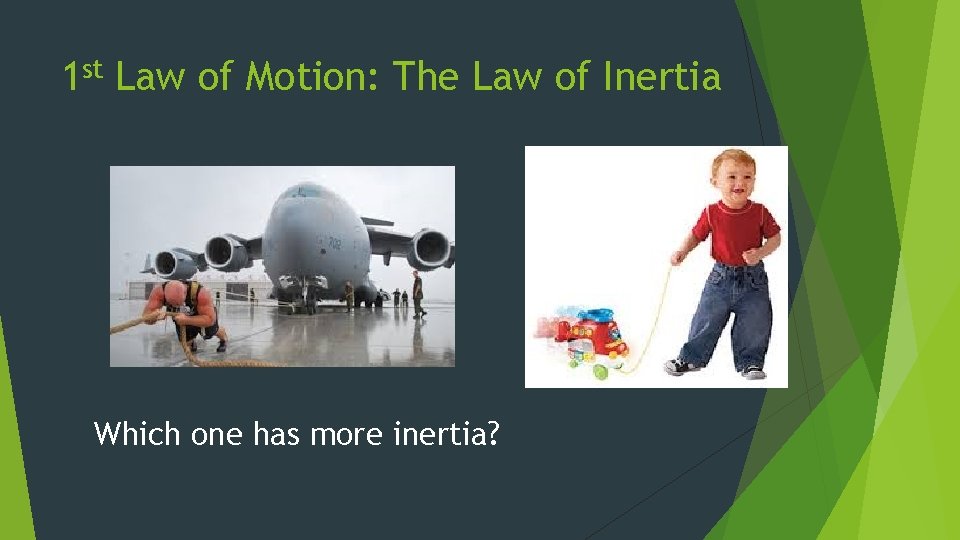
1 st Law of Motion: The Law of Inertia Which one has more inertia?
1 st Law of Motion: The Law of Inertia http: //science 360. gov/obj/video/70 fadaa 8 c 3 d 4 -4132 -ba 1 f-c 98 be 5 caeb 14/science-nflfootball-newtons-first-law-motion
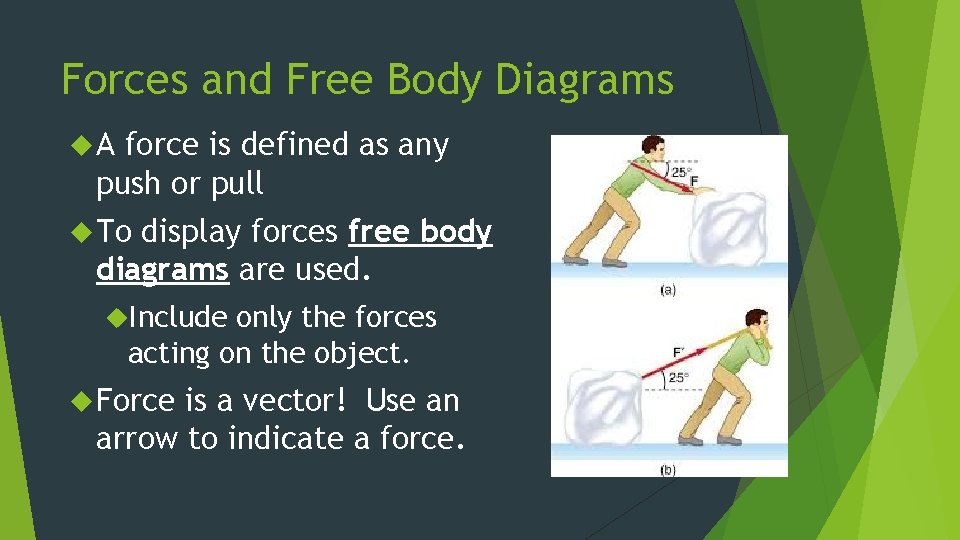
Forces and Free Body Diagrams A force is defined as any push or pull To display forces free body diagrams are used. Include only the forces acting on the object. Force is a vector! Use an arrow to indicate a force.
Forces and Free Body Diagrams Fit in two main categories Contact forces between 2 objects Shoot a basketball Push a shopping cart Friction Non-contact GRAVITY Electricity Magnetism or at a distance
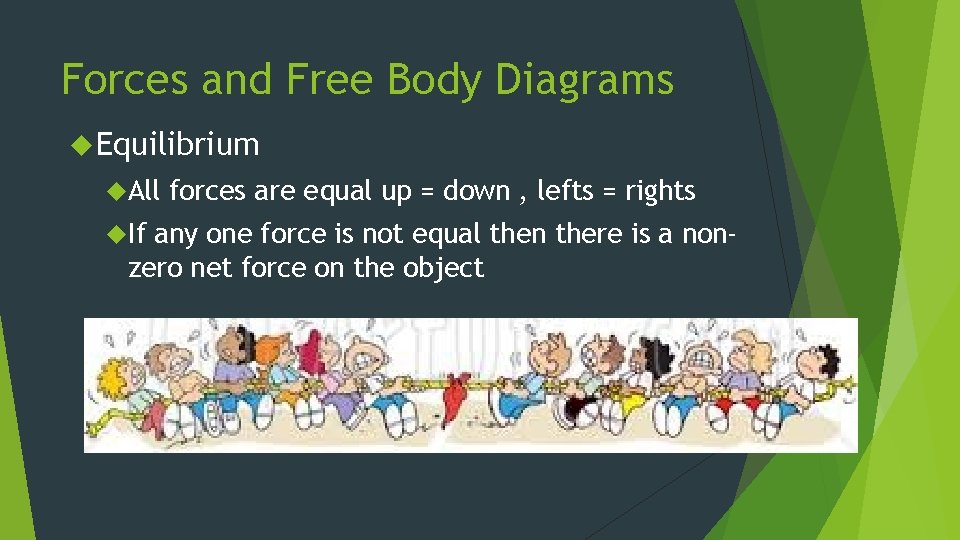
Forces and Free Body Diagrams Equilibrium All If forces are equal up = down , lefts = rights any one force is not equal then there is a nonzero net force on the object
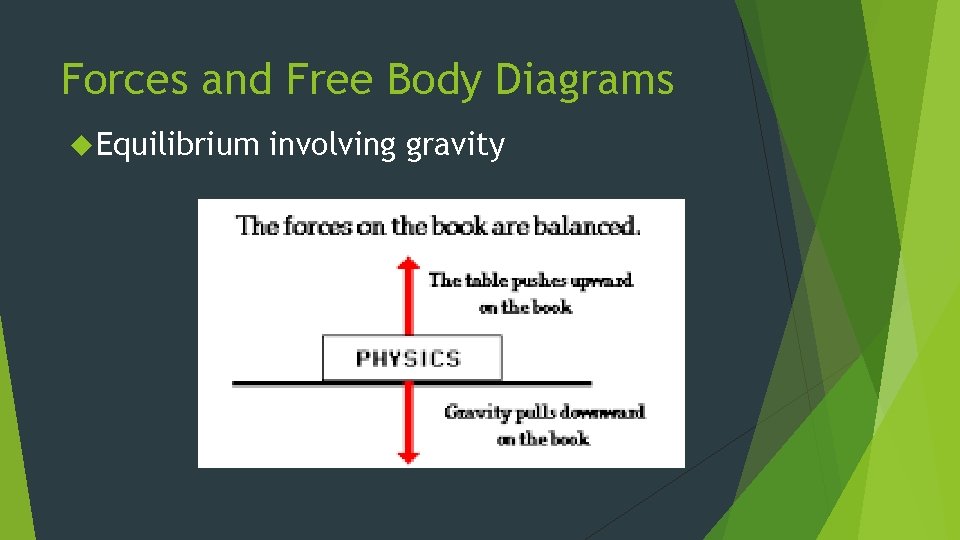
Forces and Free Body Diagrams Equilibrium involving gravity
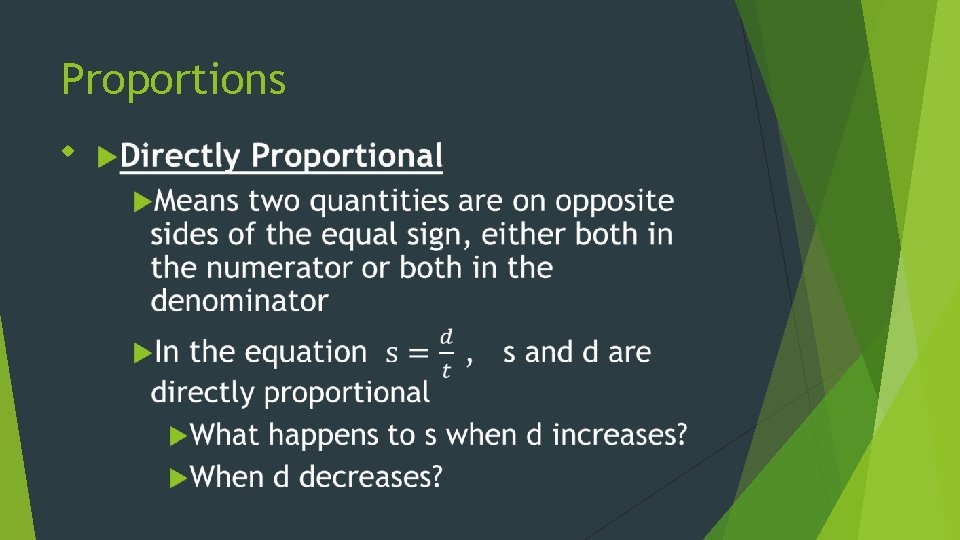
Proportions
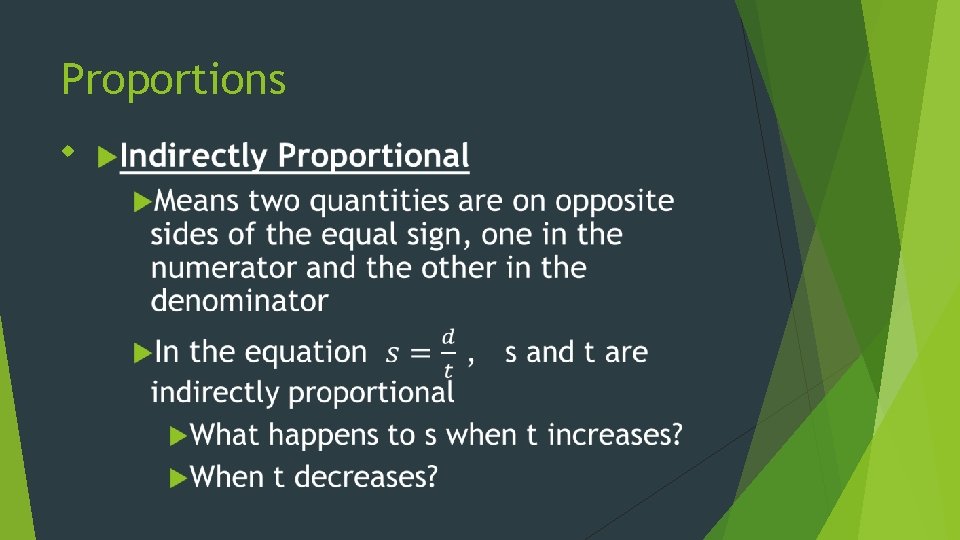
Proportions
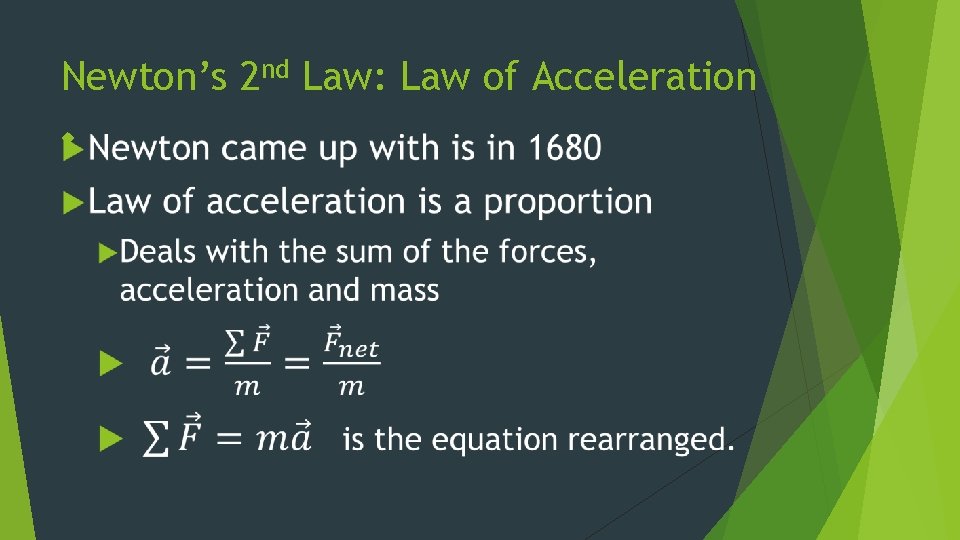
Newton’s 2 nd Law: Law of Acceleration
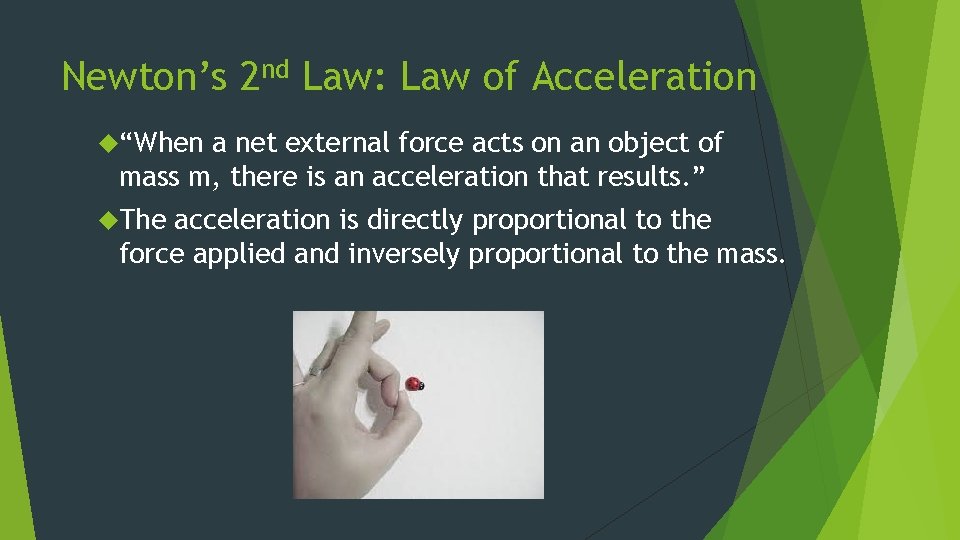
Newton’s 2 nd Law: Law of Acceleration “When a net external force acts on an object of mass m, there is an acceleration that results. ” The acceleration is directly proportional to the force applied and inversely proportional to the mass.
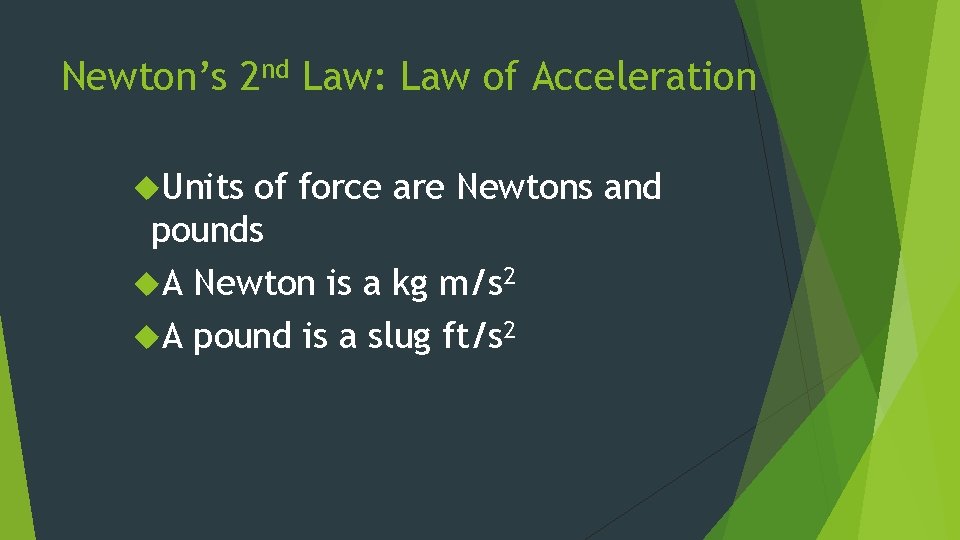
Newton’s 2 nd Law: Law of Acceleration Units of force are Newtons and pounds A Newton is a kg m/s 2 A pound is a slug ft/s 2
Newton’s 2 nd Law: Law of Acceleration https: //www. youtube. com/watch? v=iw. P 4 he WDhvw
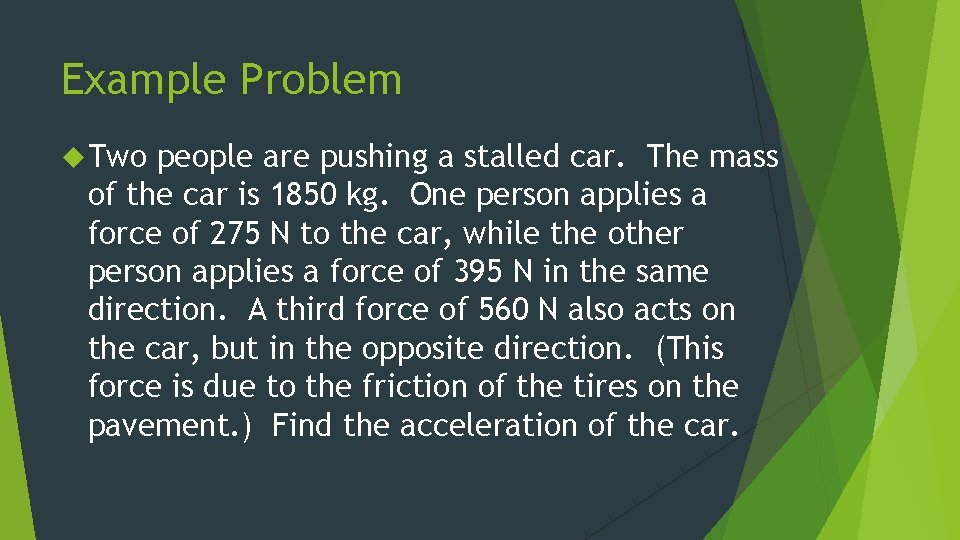
Example Problem Two people are pushing a stalled car. The mass of the car is 1850 kg. One person applies a force of 275 N to the car, while the other person applies a force of 395 N in the same direction. A third force of 560 N also acts on the car, but in the opposite direction. (This force is due to the friction of the tires on the pavement. ) Find the acceleration of the car.
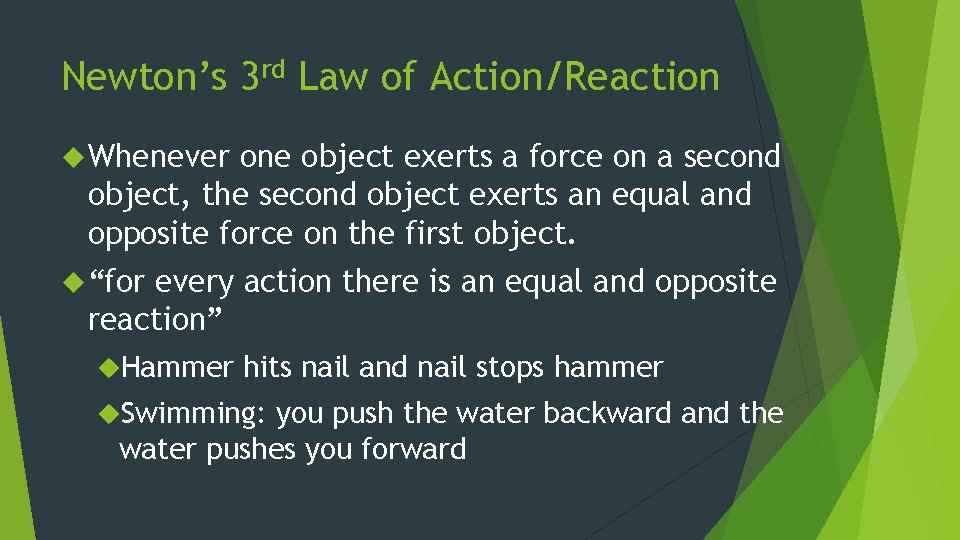
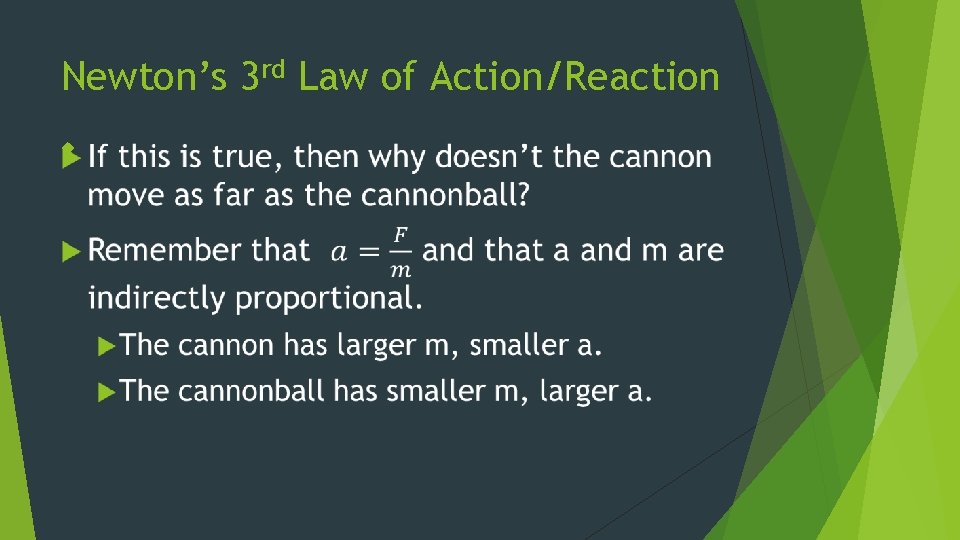
Newton’s 3 rd Law of Action/Reaction Whenever one object exerts a force on a second object, the second object exerts an equal and opposite force on the first object. “for every action there is an equal and opposite reaction” Hammer hits nail and nail stops hammer Swimming: you push the water backward and the water pushes you forward
Newton’s 3 rd Law of Action/Reaction
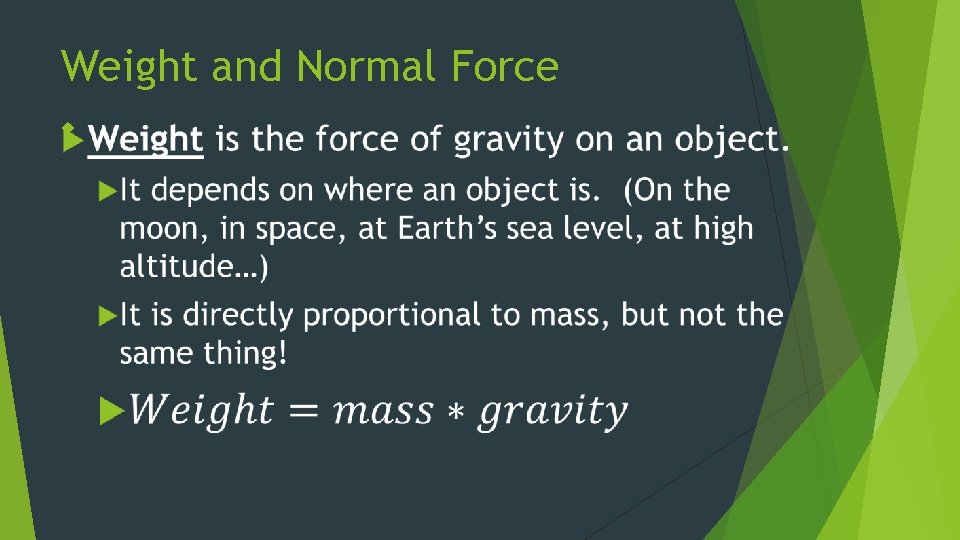
Weight and Normal Force
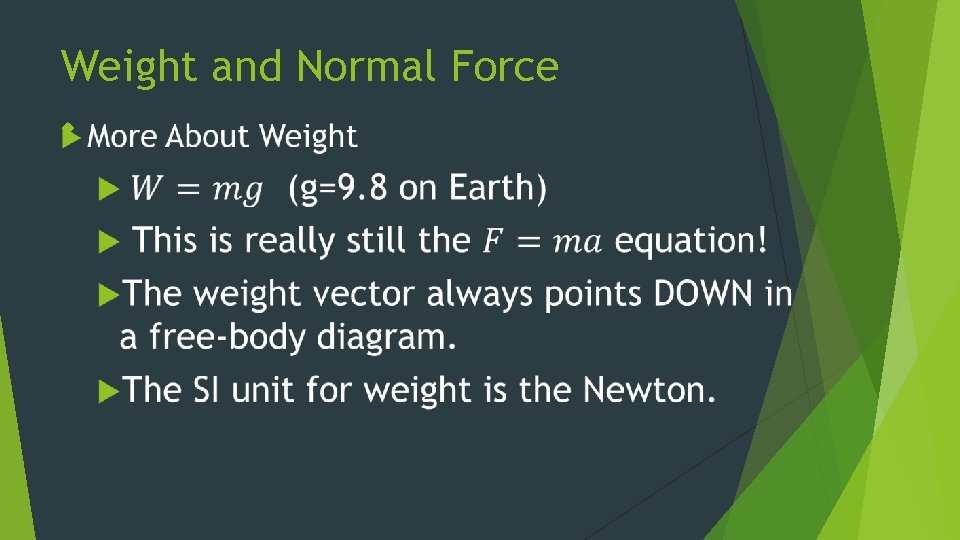
Weight and Normal Force
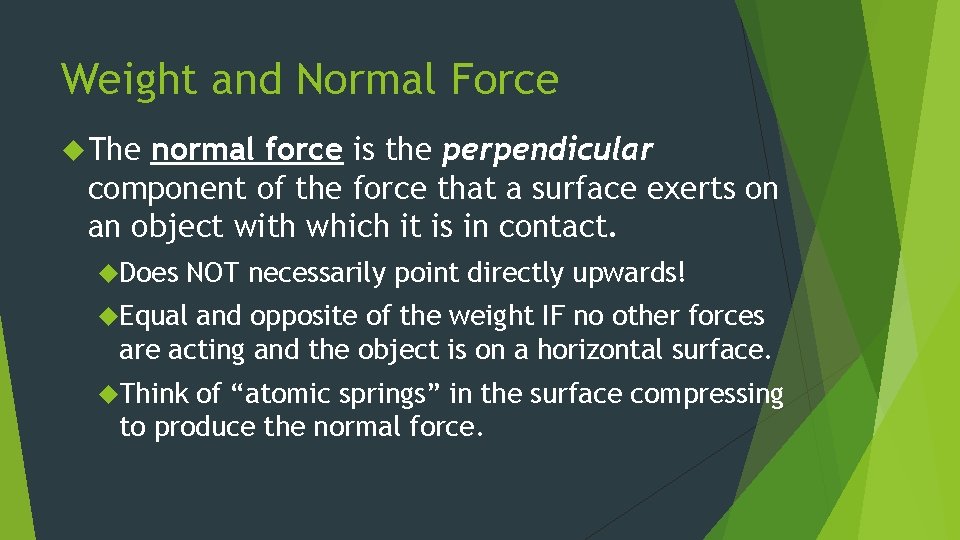
Weight and Normal Force The normal force is the perpendicular component of the force that a surface exerts on an object with which it is in contact. Does NOT necessarily point directly upwards! Equal and opposite of the weight IF no other forces are acting and the object is on a horizontal surface. Think of “atomic springs” in the surface compressing to produce the normal force.
Newton’s 3 rd Law of Action/Reaction https: //www. youtube. com/watch? v=91 QYouih 4 b. Q
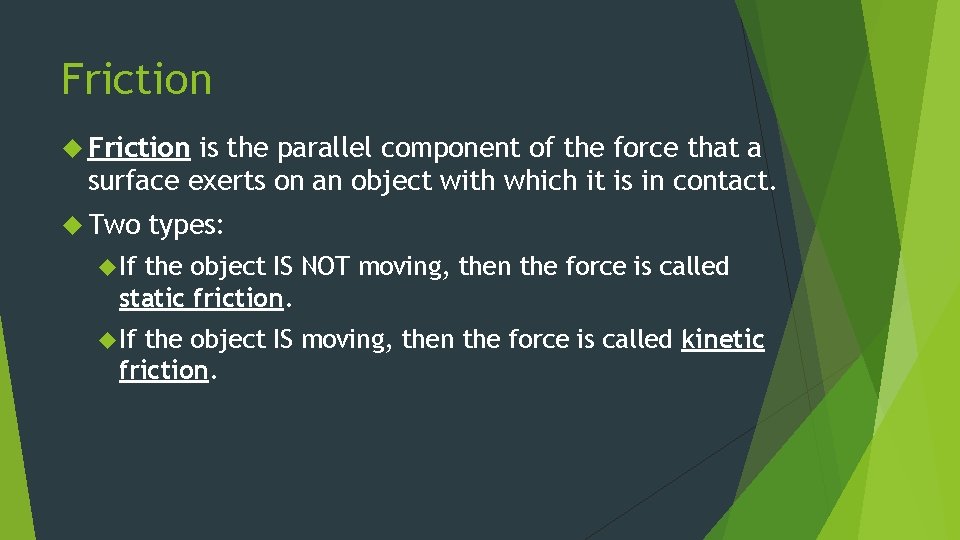
Friction is the parallel component of the force that a surface exerts on an object with which it is in contact. Two types: If the object IS NOT moving, then the force is called static friction. If the object IS moving, then the force is called kinetic friction.
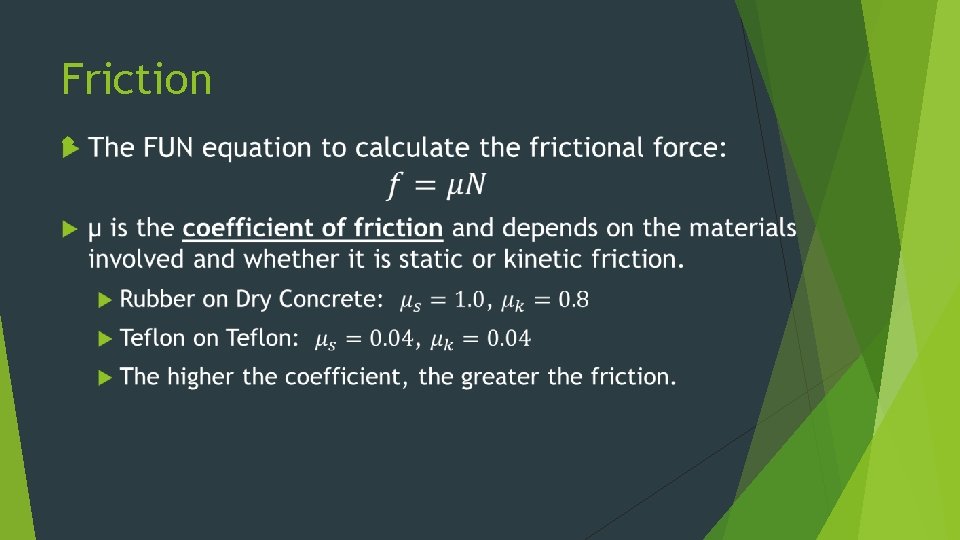
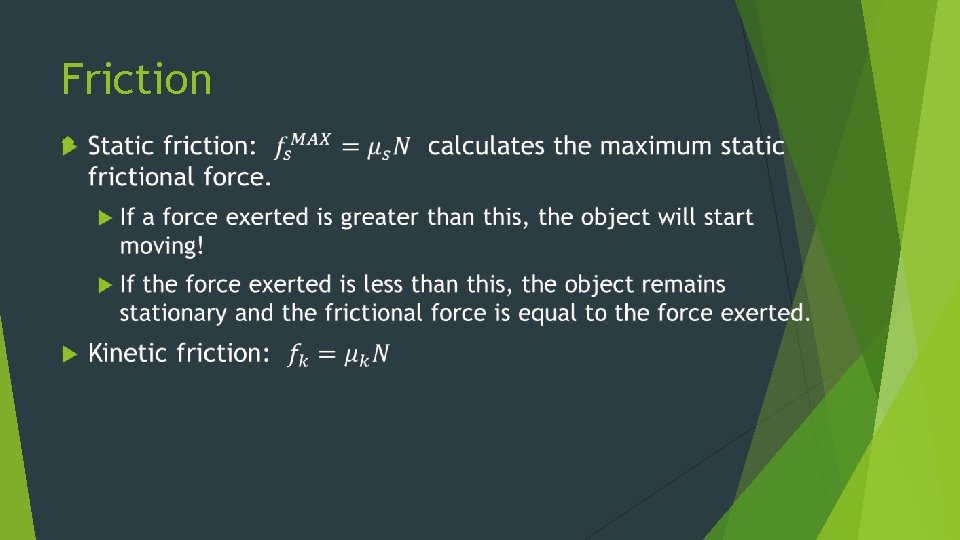
Friction
Friction
True Weight vs. Apparent Weight The apparent weight is the force that an object exerts on a scale. If the scale and the object are either at rest or moving at a constant speed (a=0), then True=Apparent. If the scale and object are accelerating, then apparent weight will be different!
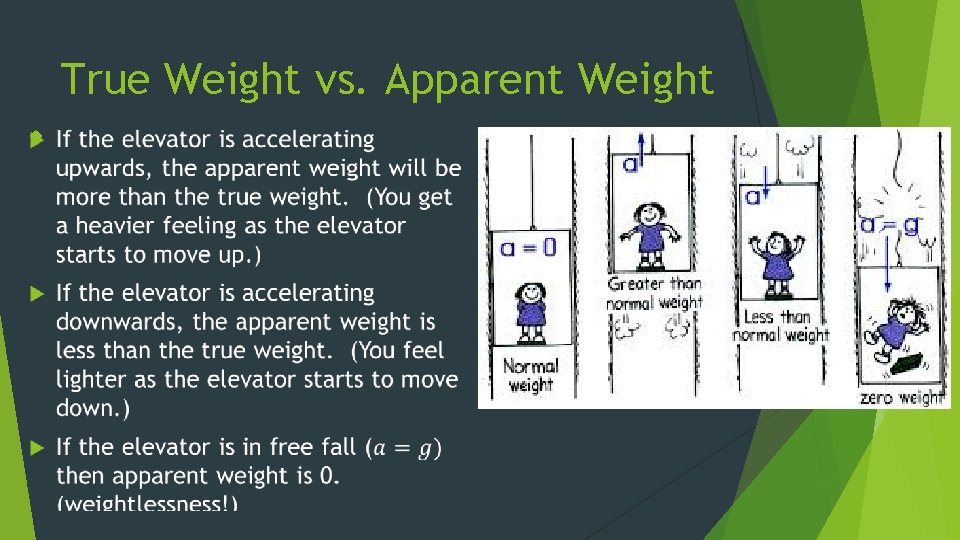
True Weight vs. Apparent Weight