
Unit 3 Criminal Law Criminology Historical Perspectives On
- Slides: 13
Unit 3: Criminal Law Criminology
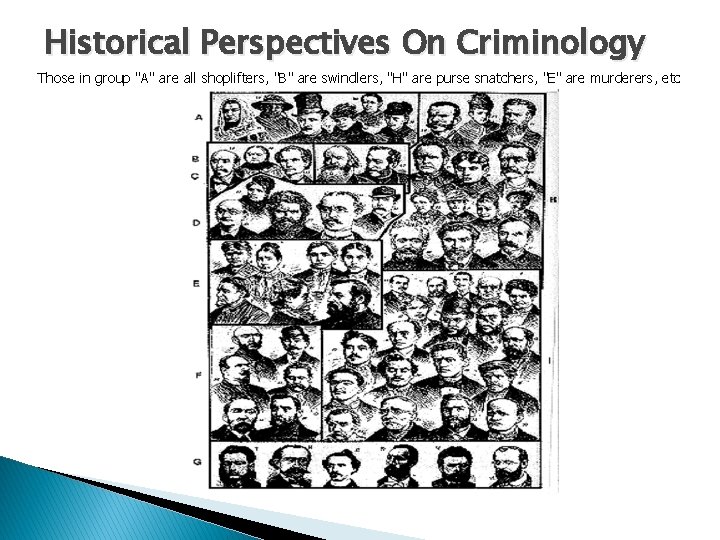
Historical Perspectives On Criminology Those in group "A" are all shoplifters, "B" are swindlers, "H" are purse snatchers, "E" are murderers, etc
Historical Perspectives: Classical Theory Definition � Human beings are rational, and make decisions freely and with understanding of consequences. � � Solutions � Punishment is because people choose to commit a crime. � Persons rationally choose actions that will bring them pleasure. Crime is an immoral form of behaviour. � The punishment should be severe enough to deter criminals from committing a crime. The punishment should fit the crime.
Positivist School � Focused on biological and psychological factors to explain criminal behaviour rather than legal system ◦ Lombroso “born criminal theory” ◦ XYY theory
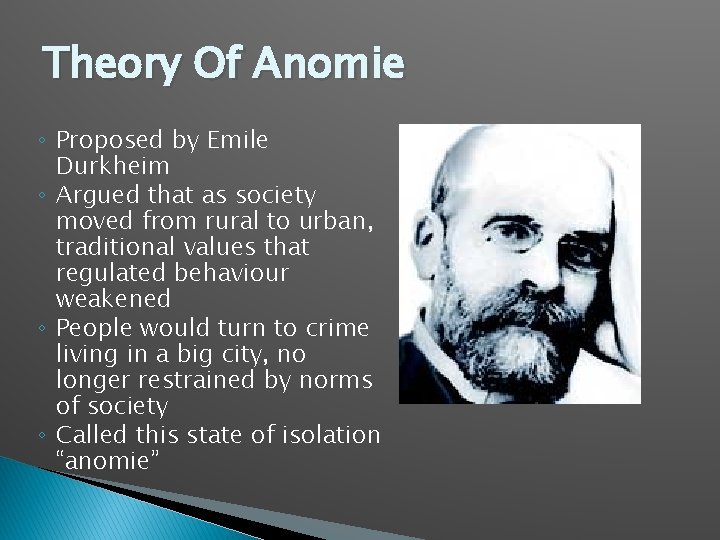
Theory Of Anomie ◦ Proposed by Emile Durkheim ◦ Argued that as society moved from rural to urban, traditional values that regulated behaviour weakened ◦ People would turn to crime living in a big city, no longer restrained by norms of society ◦ Called this state of isolation “anomie”
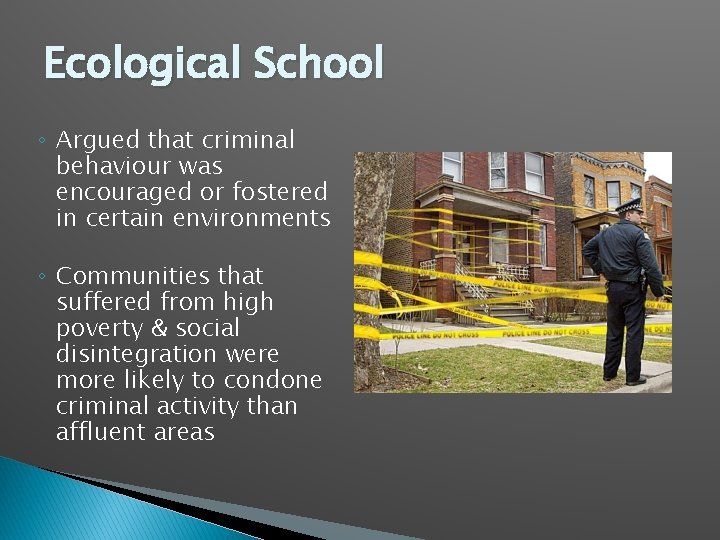
Ecological School ◦ Argued that criminal behaviour was encouraged or fostered in certain environments ◦ Communities that suffered from high poverty & social disintegration were more likely to condone criminal activity than affluent areas
Consensus Theory ◦ Consensus theorists assume there is a universal definition of right and wrong and that criminal law reflects this consensus ◦ Argue that criminal laws prohibit behaviours that society agrees are harmful
Contemporary Theories Of Crime
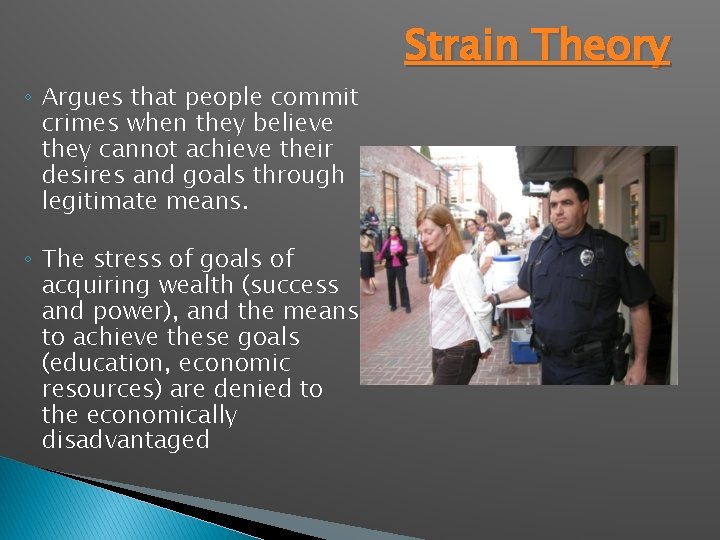
◦ Argues that people commit crimes when they believe they cannot achieve their desires and goals through legitimate means. ◦ The stress of goals of acquiring wealth (success and power), and the means to achieve these goals (education, economic resources) are denied to the economically disadvantaged Strain Theory
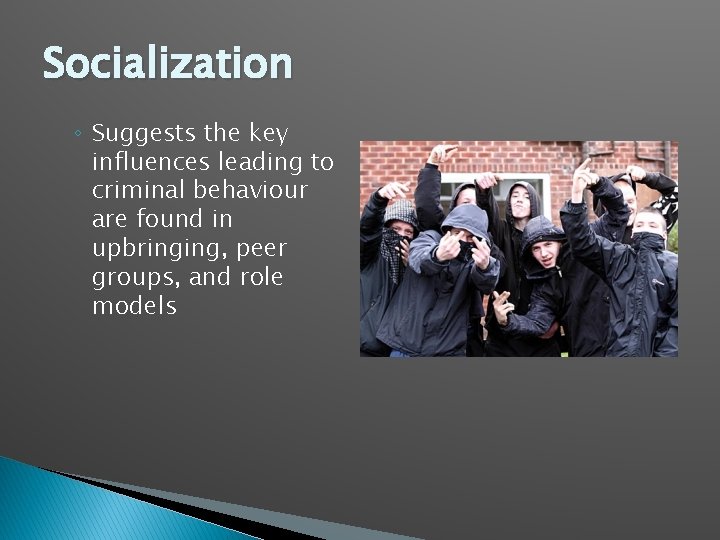
Socialization ◦ Suggests the key influences leading to criminal behaviour are found in upbringing, peer groups, and role models
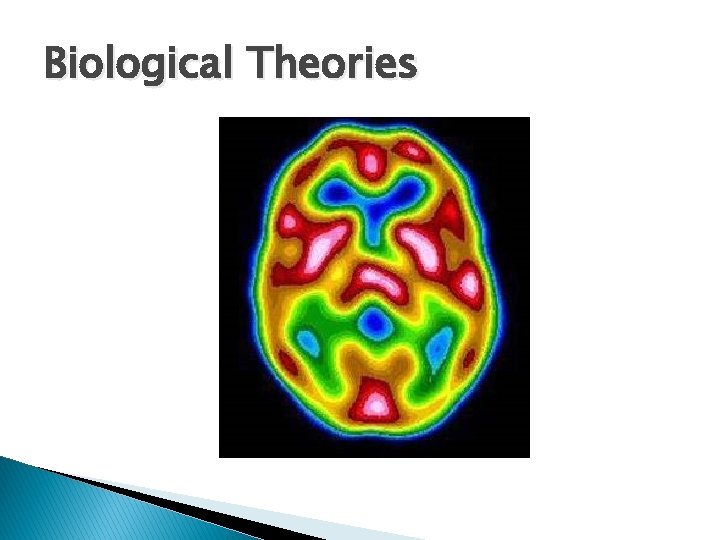
Biological Theories
Biological Trait Theory ◦ Argues that some human traits such as intelligence, personality, chemical and genetic makeup may predispose people to engage in criminal behaviour ◦ Research suggests that the following can cause a person to become a criminal �Poor diet (“Twinkie Defense”) �Influence of hormones (androgens) �Exposure to drugs/alcohol in the womb
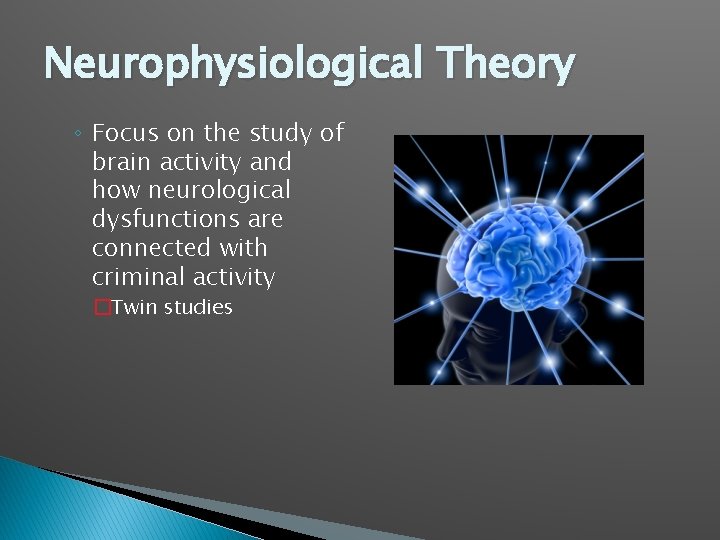
Neurophysiological Theory ◦ Focus on the study of brain activity and how neurological dysfunctions are connected with criminal activity �Twin studies