
Unit 3 Classical Civilizations 600 BCE to 600
Unit 3: Classical Civilizations 600 BCE to 600 CE
Changes From Ancient to Classical Civilizations § The classical civilizations, which began to emerge around 1000 B. C. E. , were much different than their river valley predecessors. § They grew noticeably larger through trade and conquest. § Classical civilizations developed in China, India, Greece, and Rome. China was the 1 st and the largest of the classical civs. § Classical Civilizations left last impacts on the future world § Great developments in philosophy, politics, and art in classical civilizations formed the foundation for subsequent civilizations. § Empires developed as rulers strengthened gov’t and military organizations § World religions emerged as potent forces in world history § More numerous and better written records § More complex long-distance trade
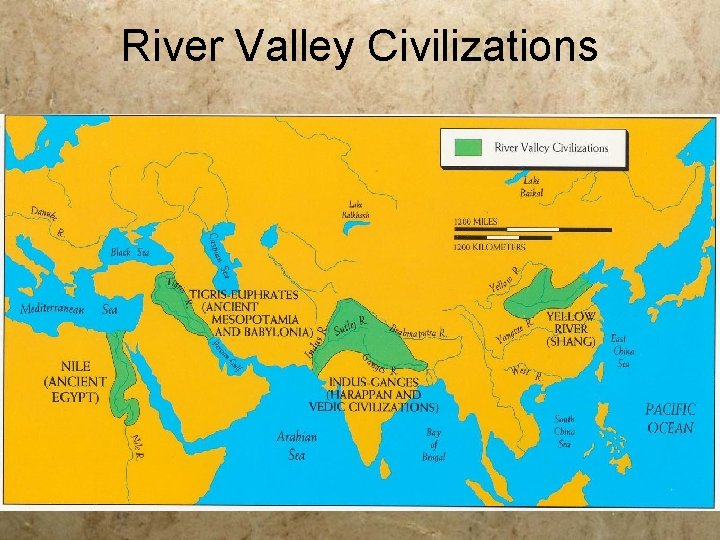
River Valley Civilizations
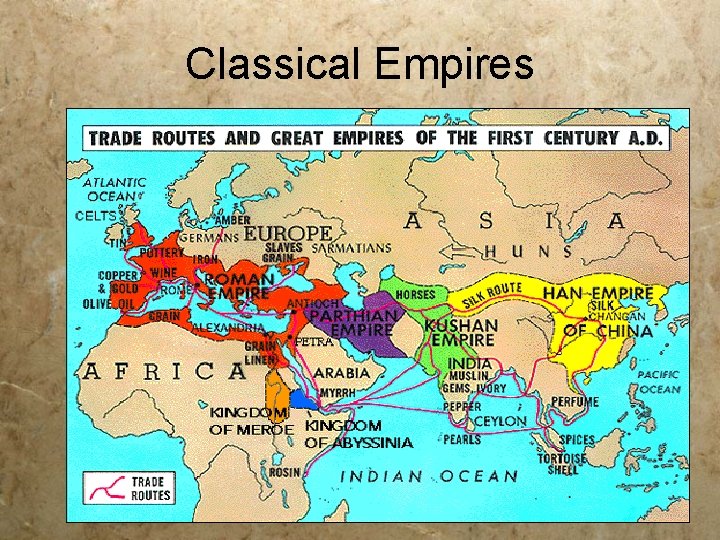
Classical Empires
Empire What makes up an empire? § § § Imposed political rule over people and their resources, usually by conquest Uniformity in language, currency, weights, measures, and legal systems to enable them to function as a single political structure Collection of taxes to provide means to administer the empire Often encourage great creativity in the arts and learning Establish vast marketplaces serviced by highways and roads, ports, and dockyards. Ex. All roads lead to Rome, and canals that linked Southern China with the North Earliest empires built with military force, superior technologies and vast armies or powerful navies.
Empire What causes the decline and fall of empires? A) Leadership Failure B) Overextension- Administrative responsibilities C) Economic Collapse- Financial problems outrun benefits as territories become more remote D) Military Defeat- From external enemies or revolt or both E) Doubts about Ideology- Justice of empire from ruling people leads to possible revolt of subjects
- Slides: 6