
Unit 3 Chemical Kinetics Definition Chapter 12 Section
- Slides: 13
Unit 3: Chemical Kinetics Definition: Chapter 12 Section 12. 1 Pages 540 -545
Chemical reactions can be described according to their spontaneity and their rate. Spontaneity - the tendency of the reaction to occur. Rate - How fast the reaction proceeds.
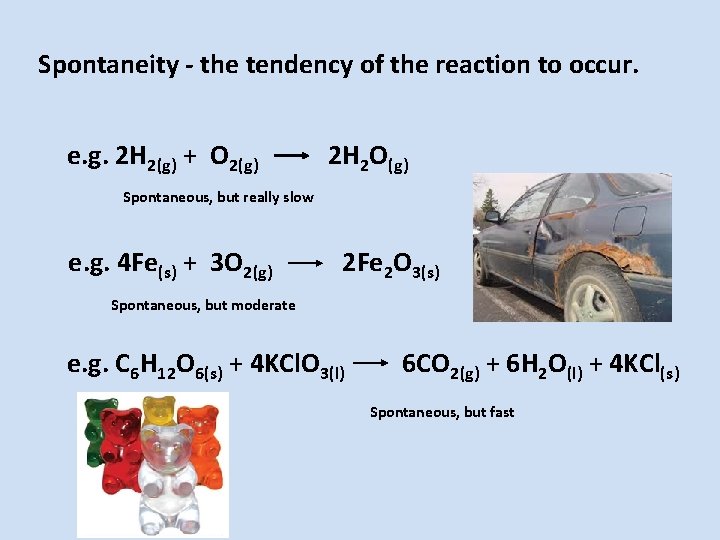
Spontaneity - the tendency of the reaction to occur. e. g. 2 H 2(g) + O 2(g) 2 H 2 O(g) Spontaneous, but really slow e. g. 4 Fe(s) + 3 O 2(g) 2 Fe 2 O 3(s) Spontaneous, but moderate e. g. C 6 H 12 O 6(s) + 4 KCl. O 3(l) 6 CO 2(g) + 6 H 2 O(l) + 4 KCl(s) Spontaneous, but fast
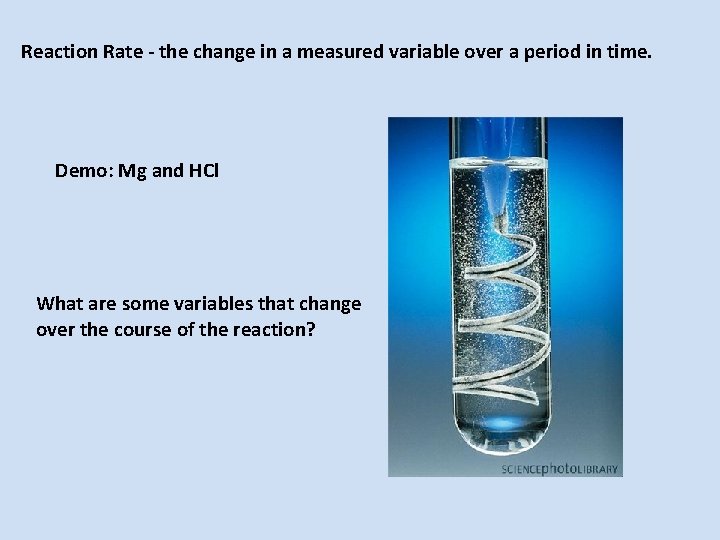
Reaction Rate - the change in a measured variable over a period in time. Demo: Mg and HCl What are some variables that change over the course of the reaction?
Variables we can measure to determine reaction rate include:
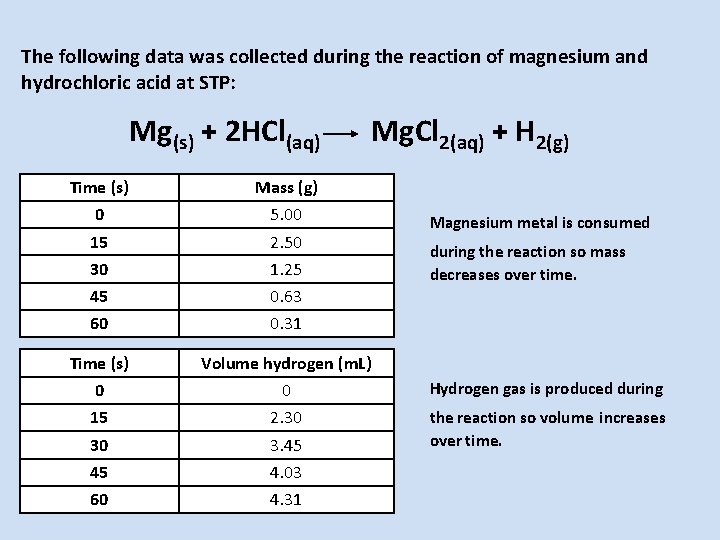
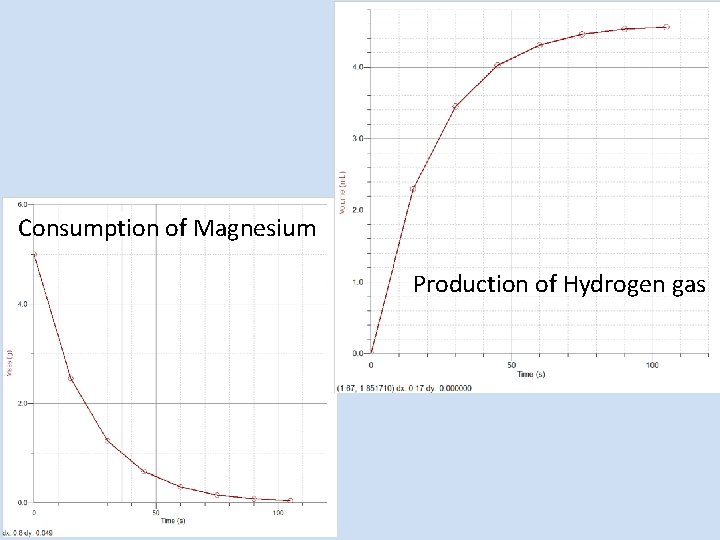
The following data was collected during the reaction of magnesium and hydrochloric acid at STP: Mg(s) + 2 HCl(aq) Mg. Cl 2(aq) + H 2(g) Time (s) Mass (g) 0 5. 00 15 2. 50 30 1. 25 45 0. 63 60 0. 31 Time (s) Volume hydrogen (m. L) 0 0 Hydrogen gas is produced during 15 2. 30 30 3. 45 the reaction so volume increases over time. 45 4. 03 60 4. 31 Magnesium metal is consumed during the reaction so mass decreases over time.
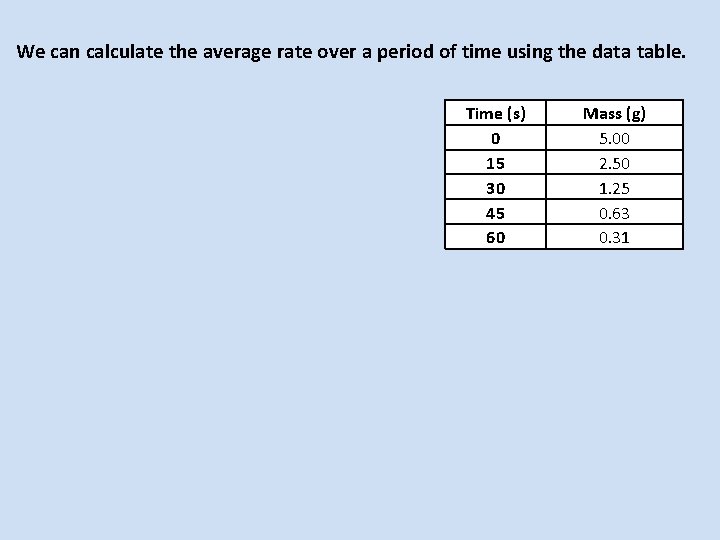
We can calculate the average rate over a period of time using the data table. Time (s) 0 15 30 45 60 Mass (g) 5. 00 2. 50 1. 25 0. 63 0. 31
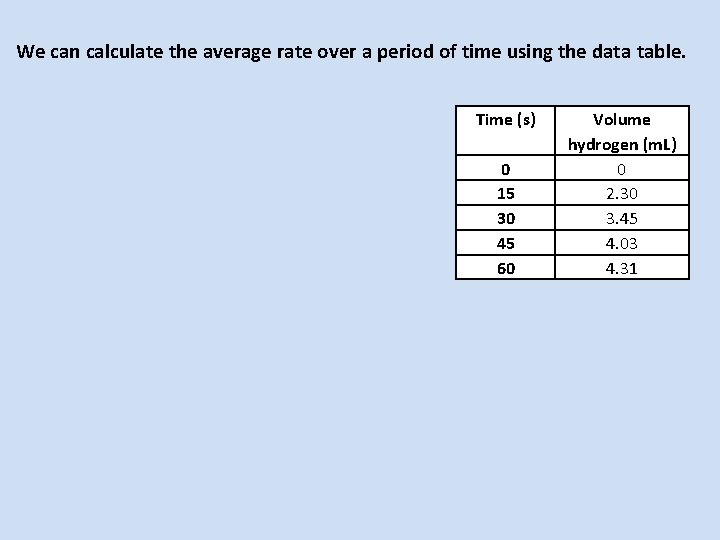
We can calculate the average rate over a period of time using the data table. Time (s) 0 15 30 45 60 Volume hydrogen (m. L) 0 2. 30 3. 45 4. 03 4. 31
Consumption of Magnesium Production of Hydrogen gas
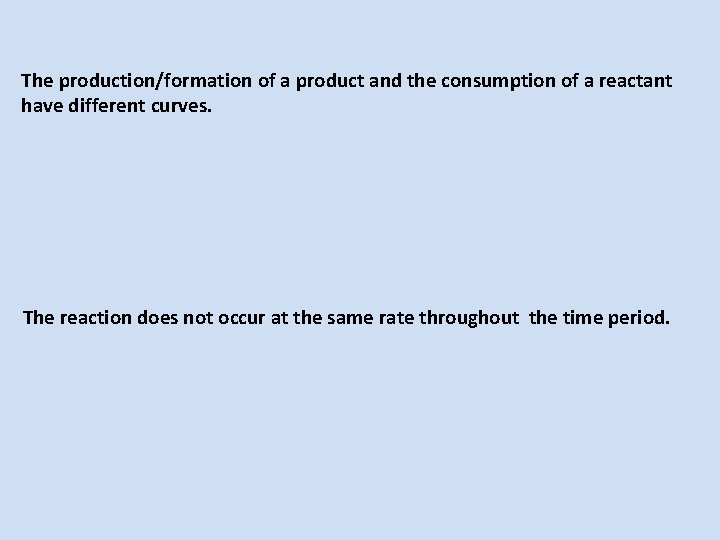
The production/formation of a product and the consumption of a reactant have different curves. The reaction does not occur at the same rate throughout the time period.
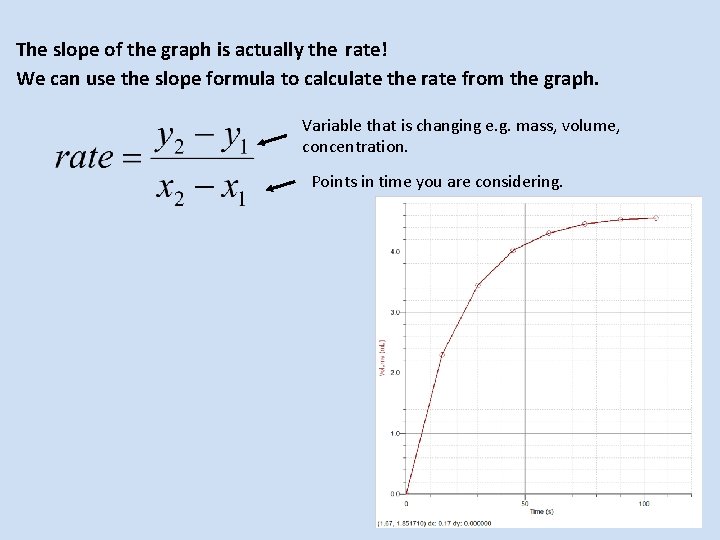
The slope of the graph is actually the rate! We can use the slope formula to calculate the rate from the graph. Variable that is changing e. g. mass, volume, concentration. Points in time you are considering.
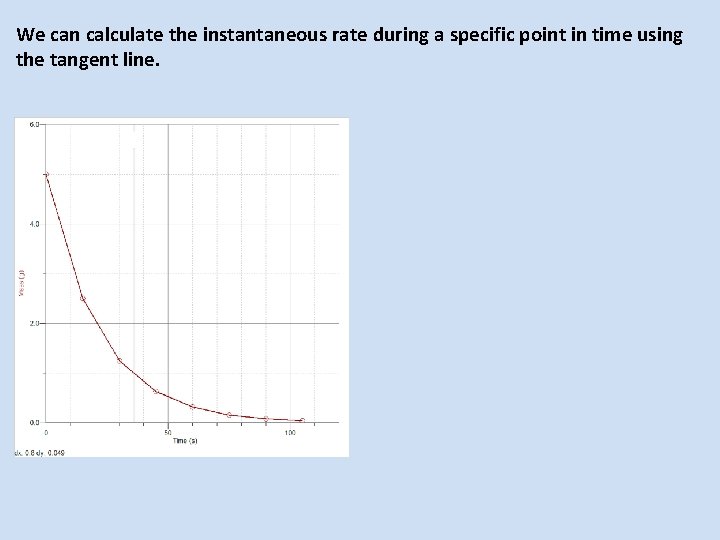
We can calculate the instantaneous rate during a specific point in time using the tangent line.
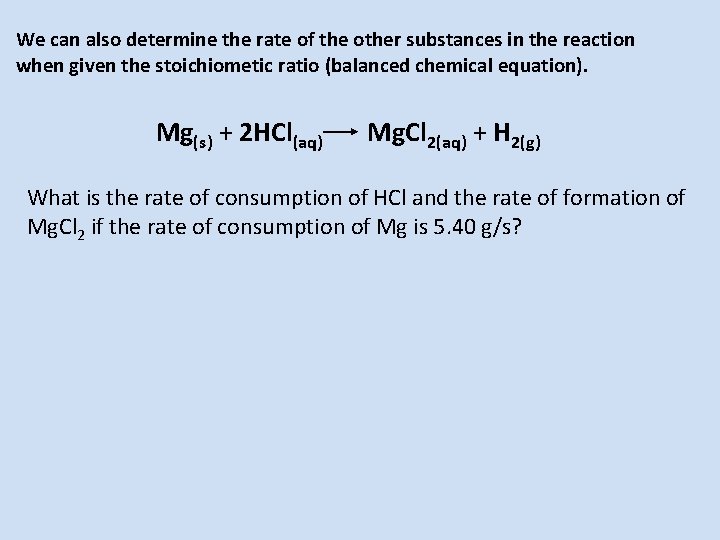
We can also determine the rate of the other substances in the reaction when given the stoichiometic ratio (balanced chemical equation). Mg(s) + 2 HCl(aq) Mg. Cl 2(aq) + H 2(g) What is the rate of consumption of HCl and the rate of formation of Mg. Cl 2 if the rate of consumption of Mg is 5. 40 g/s?