
Unit 3 Chapters 9 10 Bioenergetics How do
Unit 3 – Chapters 9 + 10 Bioenergetics How do living organisms (both animals and plants) generate and utilize energy?
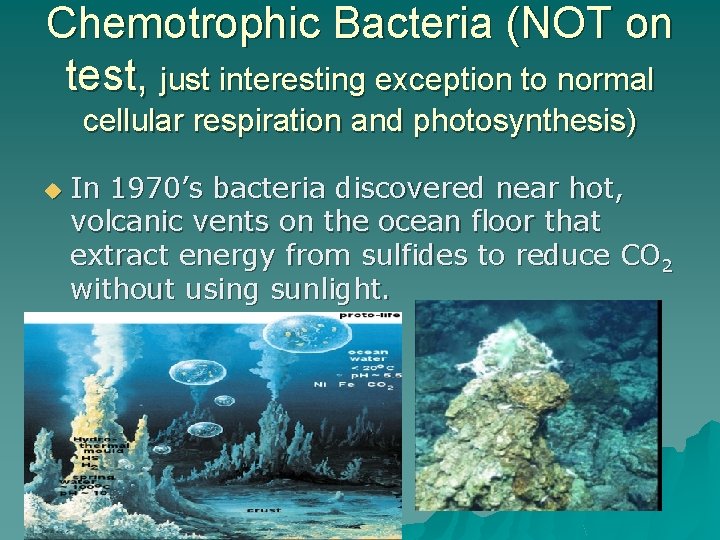
Chemotrophic Bacteria (NOT on test, just interesting exception to normal cellular respiration and photosynthesis) u In 1970’s bacteria discovered near hot, volcanic vents on the ocean floor that extract energy from sulfides to reduce CO 2 without using sunlight.
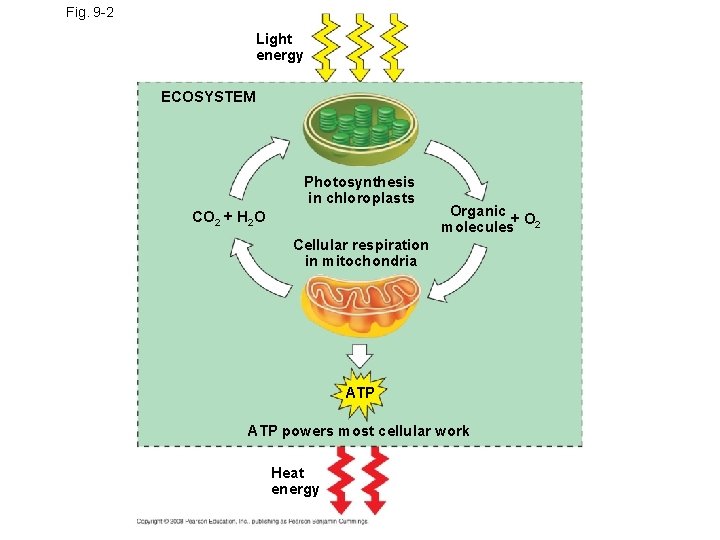
Fig. 9 -2 Light energy ECOSYSTEM Photosynthesis in chloroplasts CO 2 + H 2 O Organic +O molecules 2 Cellular respiration in mitochondria ATP powers most cellular work Heat energy
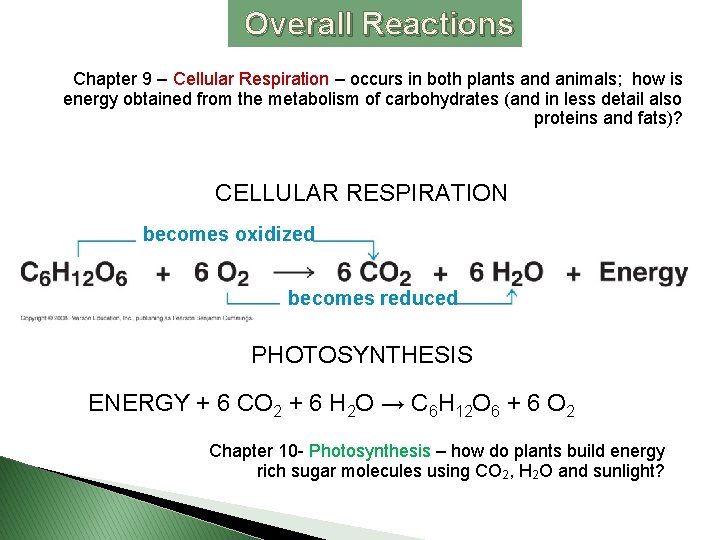
Overall Reactions Chapter 9 – Cellular Respiration – occurs in both plants and animals; how is energy obtained from the metabolism of carbohydrates (and in less detail also proteins and fats)? CELLULAR RESPIRATION becomes oxidized becomes reduced PHOTOSYNTHESIS ENERGY + 6 CO 2 + 6 H 2 O → C 6 H 12 O 6 + 6 O 2 Chapter 10 - Photosynthesis – how do plants build energy rich sugar molecules using CO 2, H 2 O and sunlight?
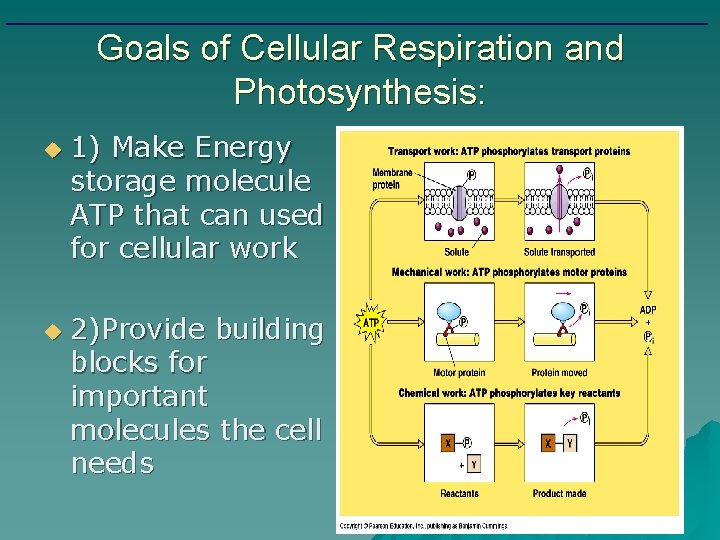
Goals of Cellular Respiration and Photosynthesis: u u 1) Make Energy storage molecule ATP that can used for cellular work 2)Provide building blocks for important molecules the cell needs
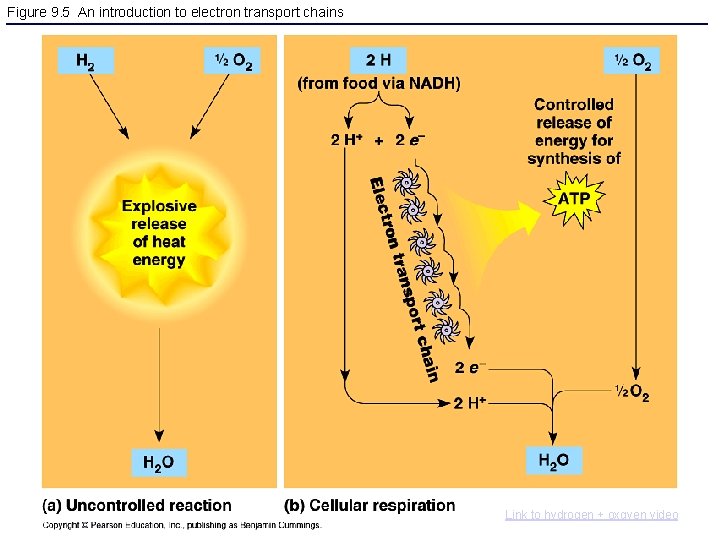
Figure 9. 5 An introduction to electron transport chains Link to hydrogen + oxgyen video
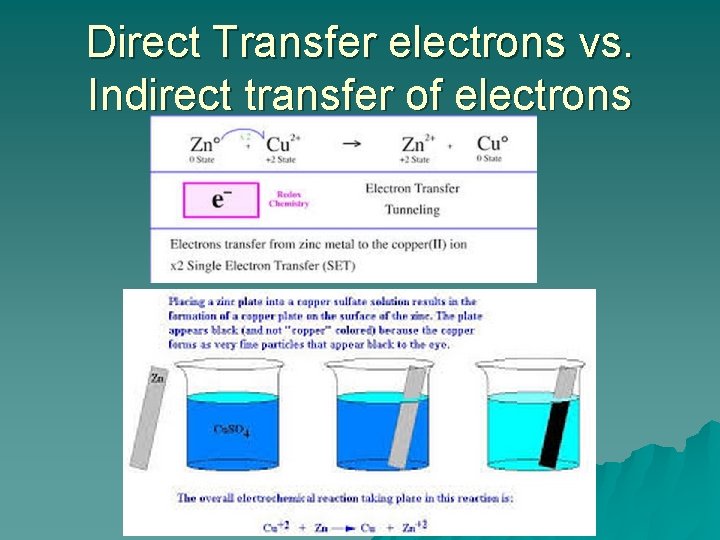
Direct Transfer electrons vs. Indirect transfer of electrons
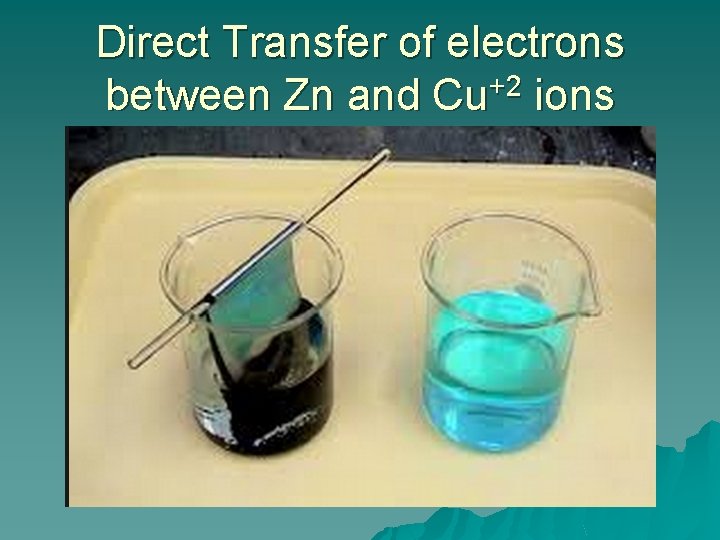
Direct Transfer of electrons between Zn and Cu+2 ions
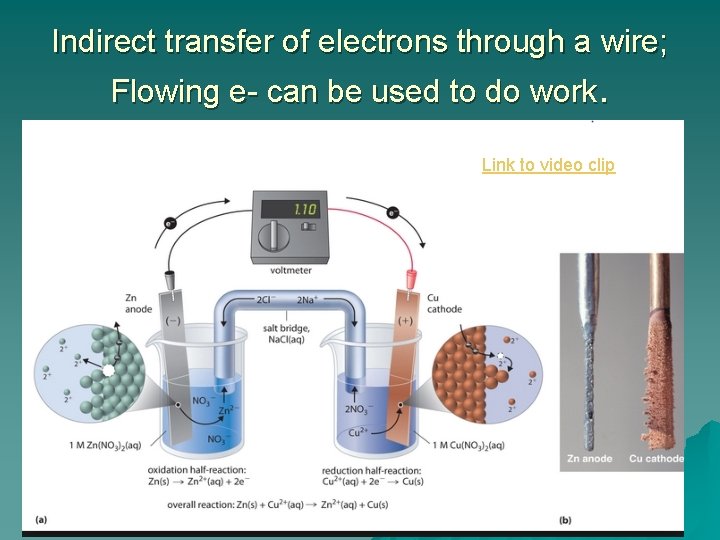
Indirect transfer of electrons through a wire; Flowing e- can be used to do work. Link to video clip
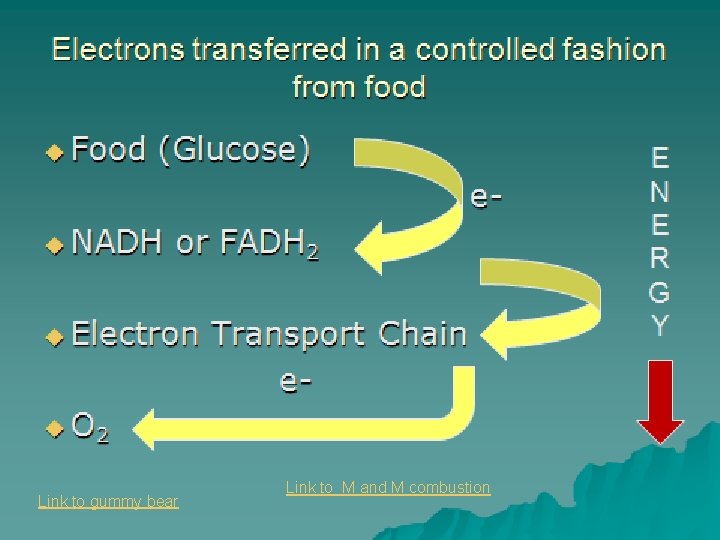
Link to gummy bear Link to M and M combustion
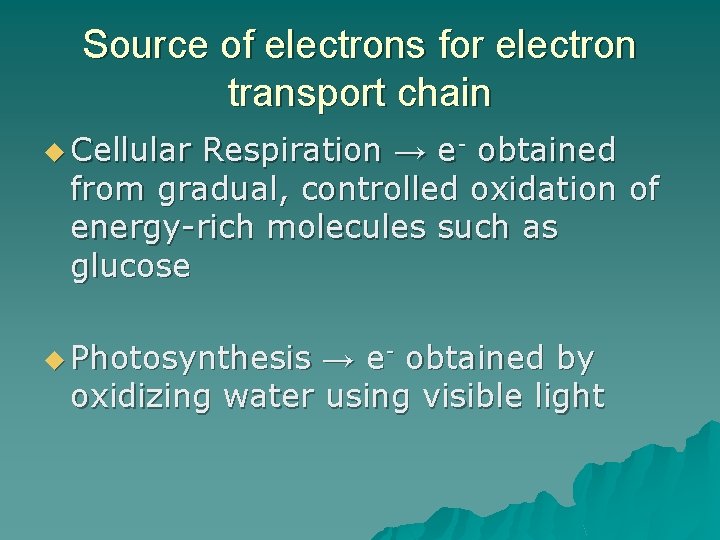
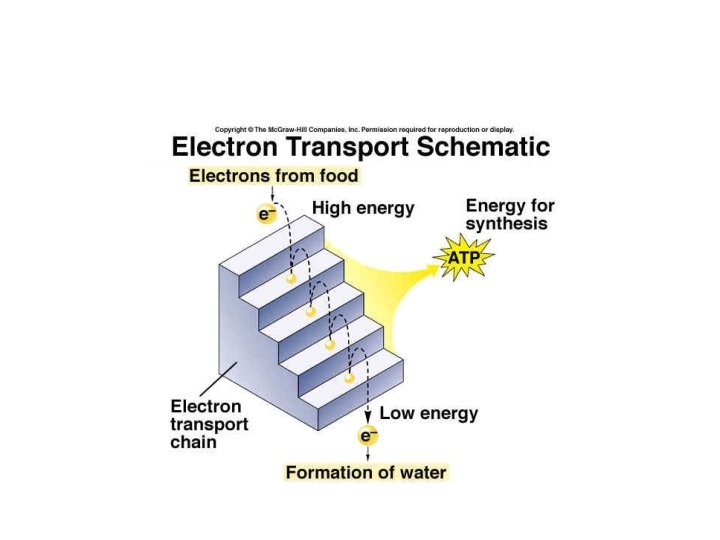
Source of electrons for electron transport chain u Cellular Respiration → e- obtained from gradual, controlled oxidation of energy-rich molecules such as glucose u Photosynthesis → e- obtained by oxidizing water using visible light
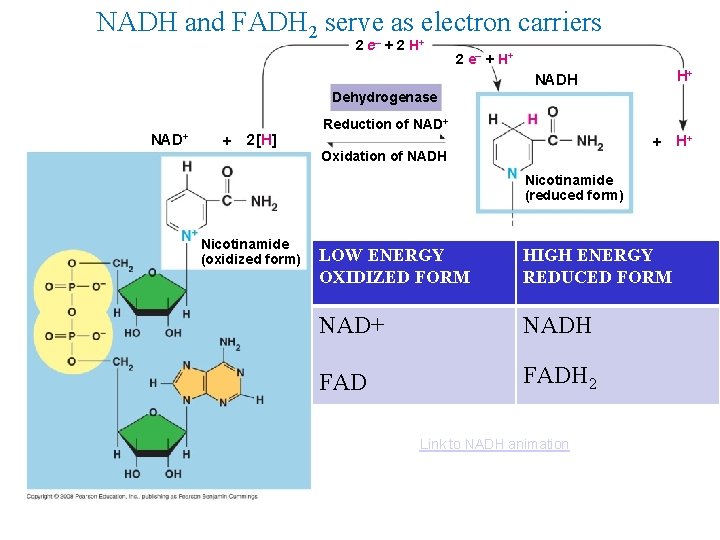
NADH and FADH 2 serve as electron carriers 2 e– + 2 H+ 2 e– + H+ H+ NADH Dehydrogenase NAD+ + 2[H] Reduction of NAD+ + H+ Oxidation of NADH Nicotinamide (reduced form) Nicotinamide (oxidized form) LOW ENERGY OXIDIZED FORM HIGH ENERGY REDUCED FORM NAD+ NADH FADH 2 Link to NADH animation
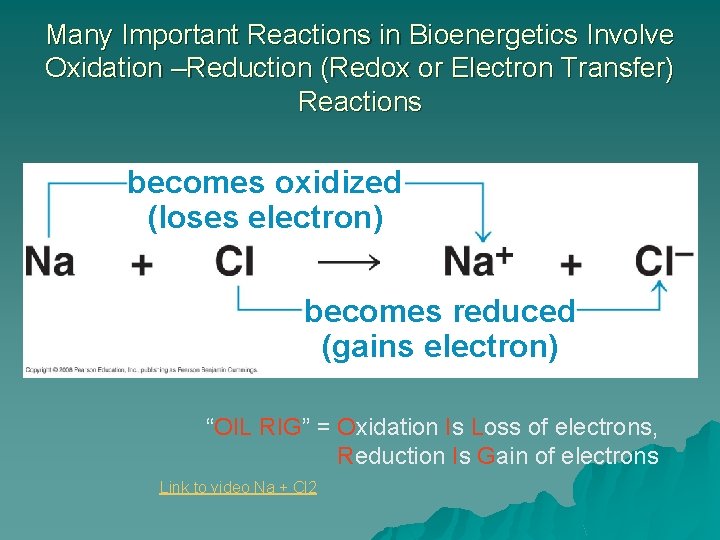
Many Important Reactions in Bioenergetics Involve Oxidation –Reduction (Redox or Electron Transfer) Reactions becomes oxidized (loses electron) becomes reduced (gains electron) “OIL RIG” = Oxidation Is Loss of electrons, Reduction Is Gain of electrons Link to video Na + Cl 2
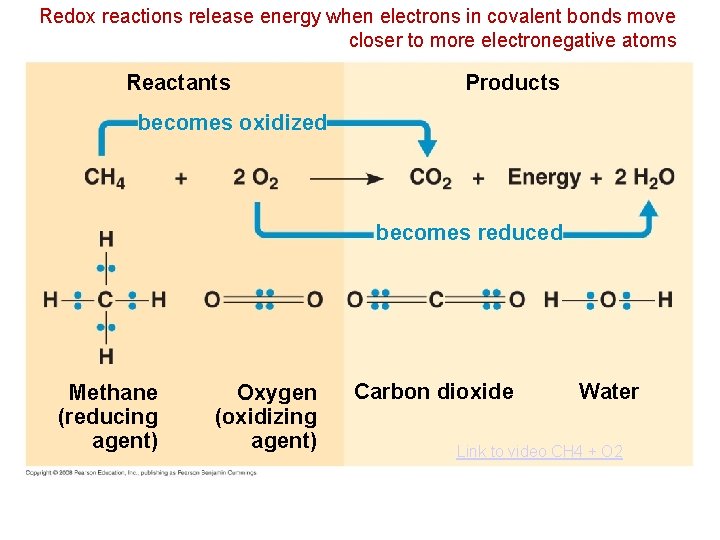
Redox reactions release energy when electrons in covalent bonds move closer to more electronegative atoms Reactants Products becomes oxidized becomes reduced Methane (reducing agent) Oxygen (oxidizing agent) Carbon dioxide Water Link to video CH 4 + O 2
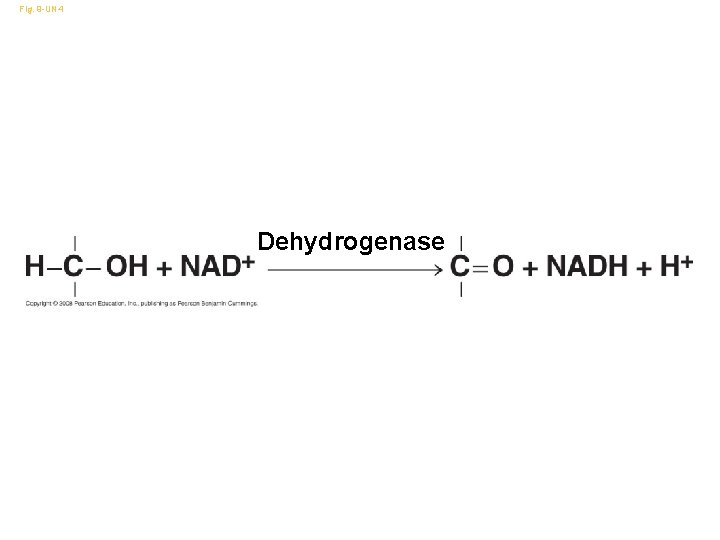
Fig. 9 -UN 4 Dehydrogenase
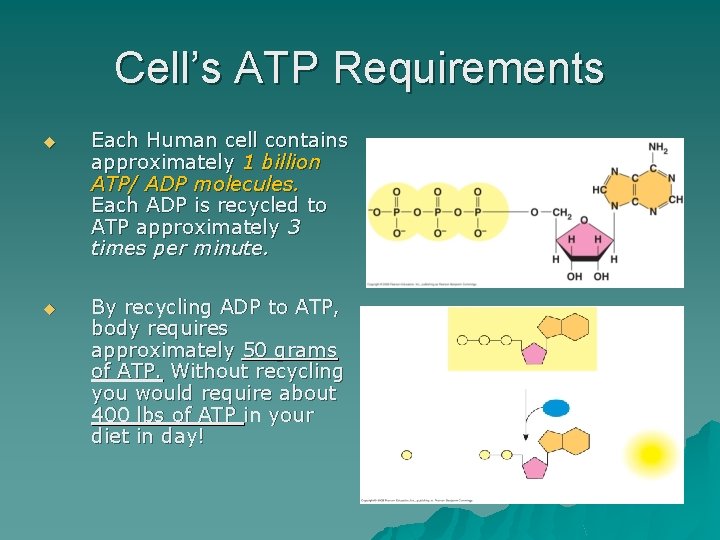
Cell’s ATP Requirements u Each Human cell contains approximately 1 billion ATP/ ADP molecules. Each ADP is recycled to ATP approximately 3 times per minute. u By recycling ADP to ATP, body requires approximately 50 grams of ATP. Without recycling you would require about 400 lbs of ATP in your diet in day!
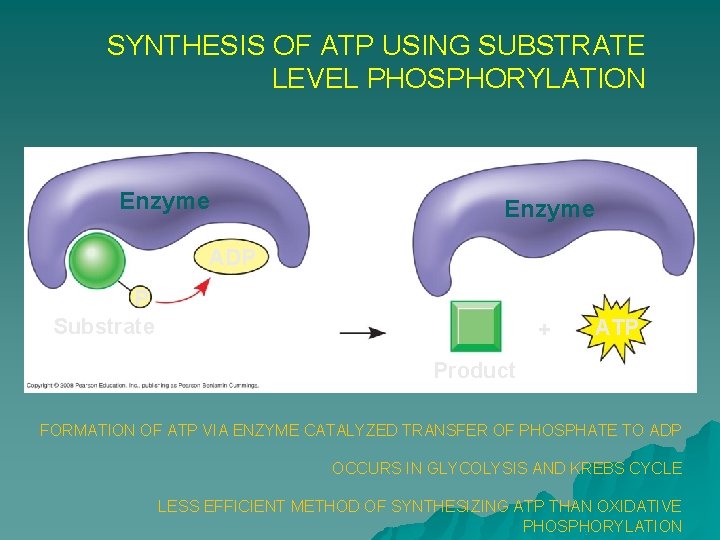
SYNTHESIS OF ATP USING SUBSTRATE LEVEL PHOSPHORYLATION Enzyme ADP P Substrate + ATP Product FORMATION OF ATP VIA ENZYME CATALYZED TRANSFER OF PHOSPHATE TO ADP OCCURS IN GLYCOLYSIS AND KREBS CYCLE LESS EFFICIENT METHOD OF SYNTHESIZING ATP THAN OXIDATIVE PHOSPHORYLATION
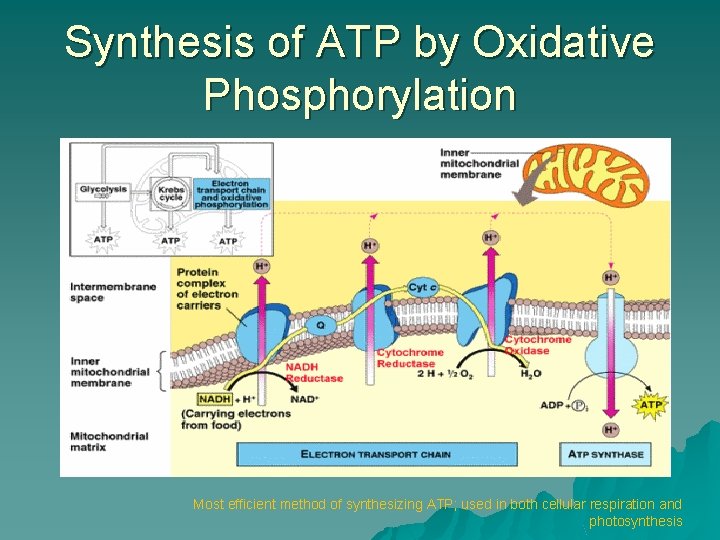
Synthesis of ATP by Oxidative Phosphorylation Most efficient method of synthesizing ATP; used in both cellular respiration and photosynthesis
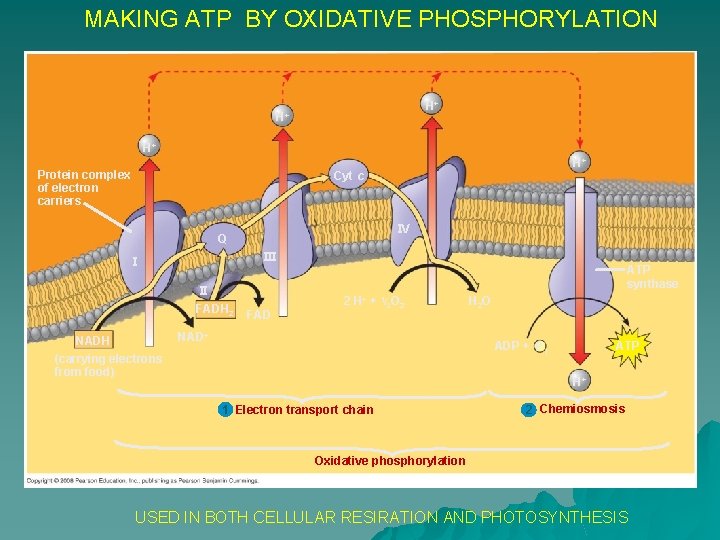
MAKING ATP BY OXIDATIVE PHOSPHORYLATION H+ H+ H+ Protein complex of electron carriers H+ Cyt c V Q FADH 2 ATP synthase FAD 2 H+ + 1/2 O 2 NAD+ NADH H 2 O ADP + P i (carrying electrons from food) ATP H+ 1 Electron transport chain 2 Chemiosmosis Oxidative phosphorylation USED IN BOTH CELLULAR RESIRATION AND PHOTOSYNTHESIS
- Slides: 20