
Unit 3 Chapter 7 A View of the

- Slides: 46
Unit 3 Chapter 7 A View of the Cell
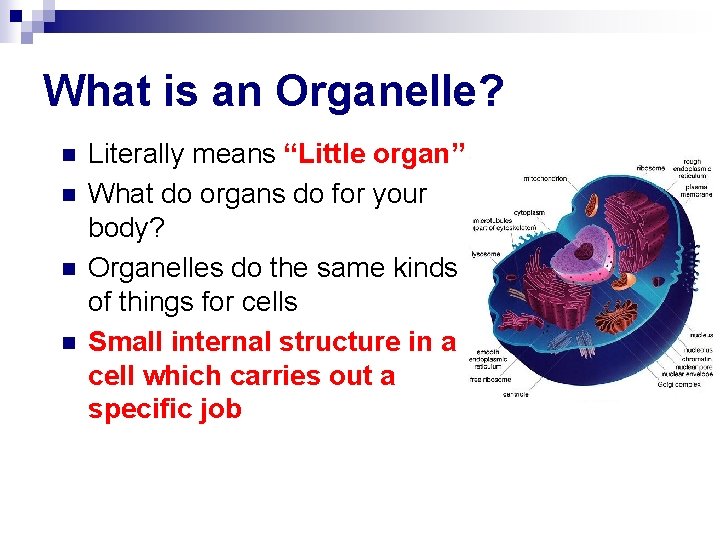
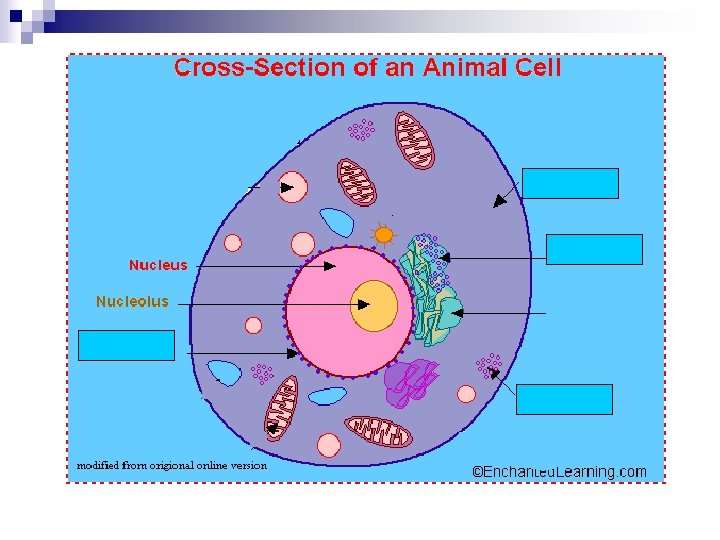
What is an Organelle? n n Literally means “Little organ” What do organs do for your body? Organelles do the same kinds of things for cells Small internal structure in a cell which carries out a specific job
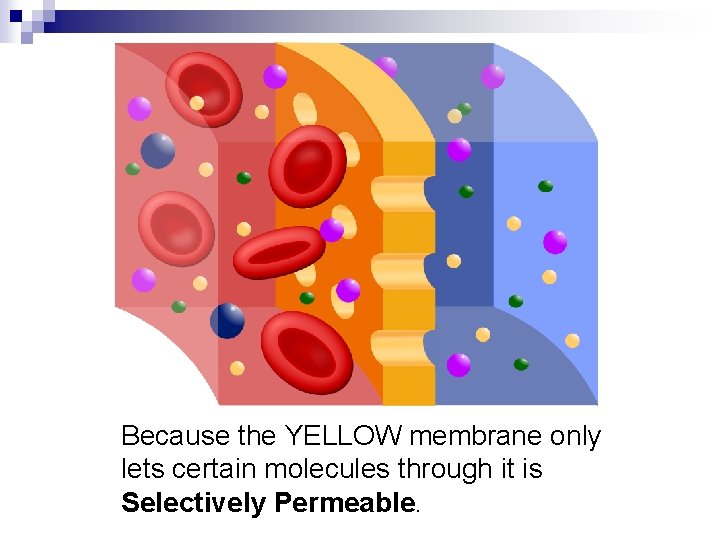
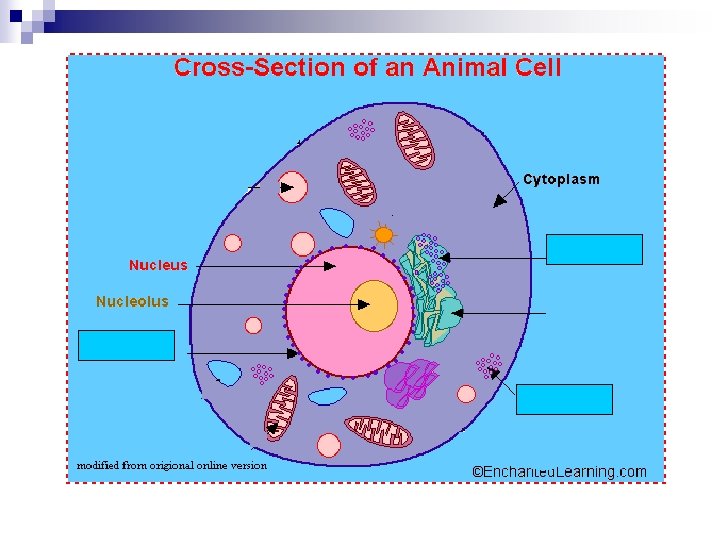
Plasma Membrane n A flexible boundary between the cell and its environment maintains a balance of nutrients, etc. n Selective permeability ¨A process in which a membrane allows some molecules to pass through while keeping others out
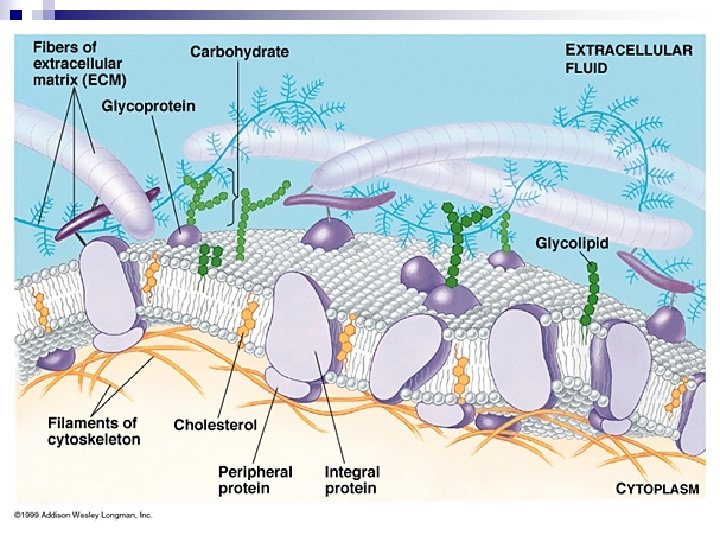
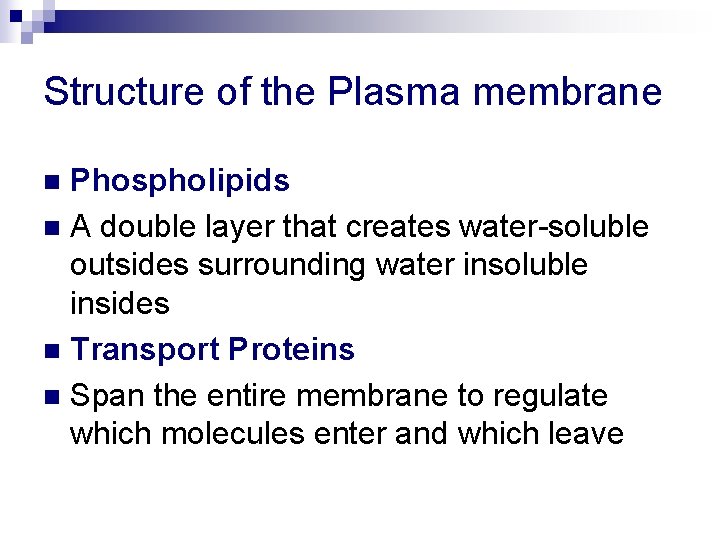
Structure of the Plasma membrane Phospholipids n A double layer that creates water-soluble outsides surrounding water insoluble insides n Transport Proteins n Span the entire membrane to regulate which molecules enter and which leave n
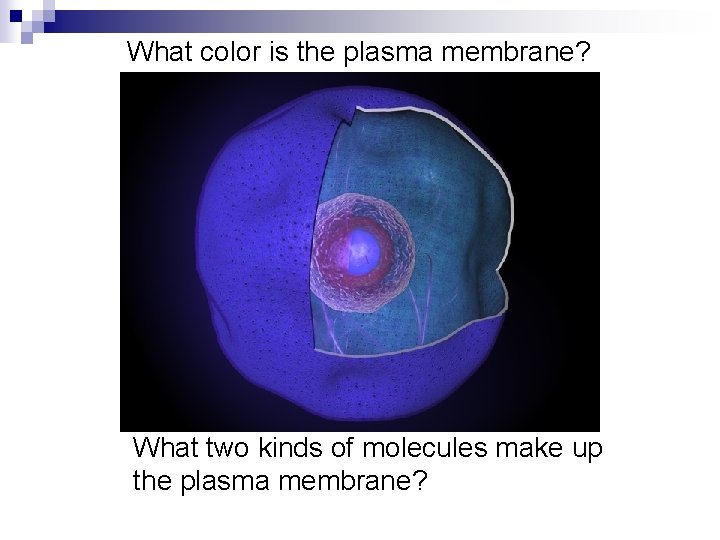
What color is the plasma membrane? What two kinds of molecules make up the plasma membrane?
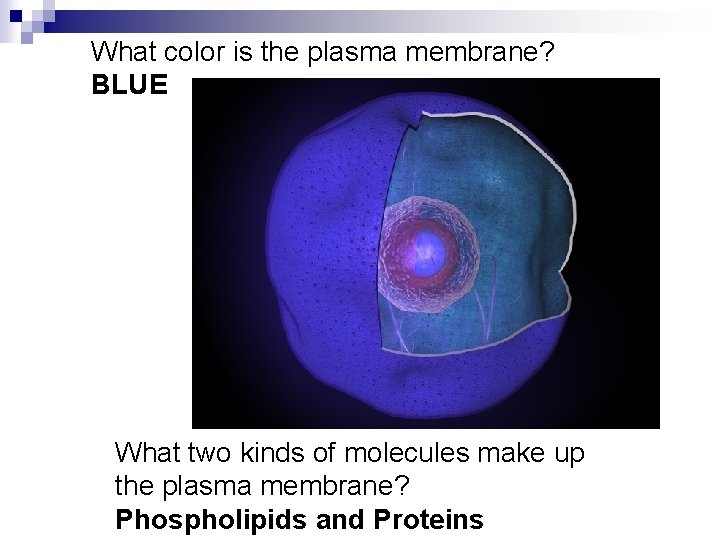
What color is the plasma membrane? BLUE What two kinds of molecules make up the plasma membrane? Phospholipids and Proteins
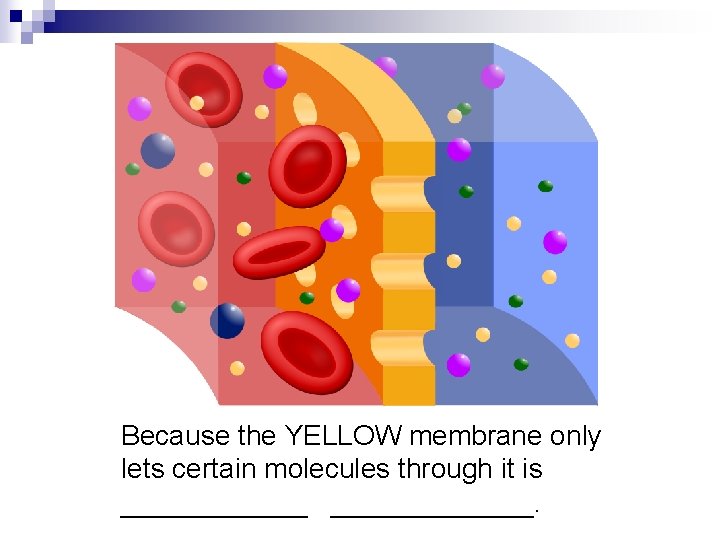
Because the YELLOW membrane only lets certain molecules through it is _____________.
Because the YELLOW membrane only lets certain molecules through it is Selectively Permeable.
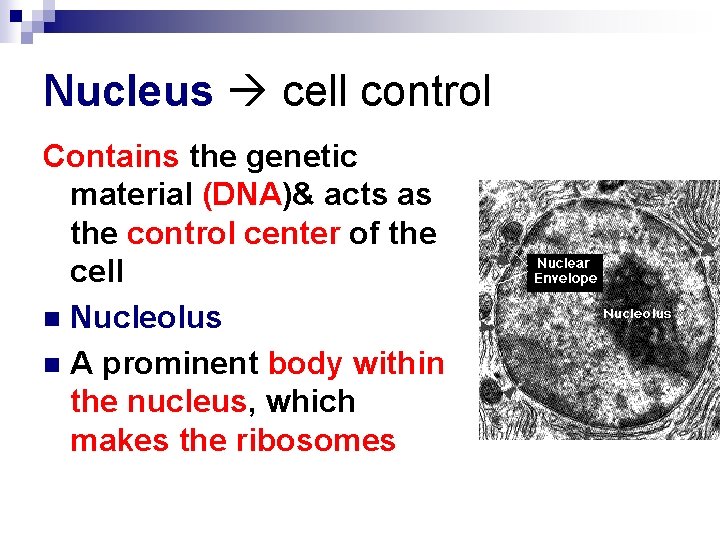
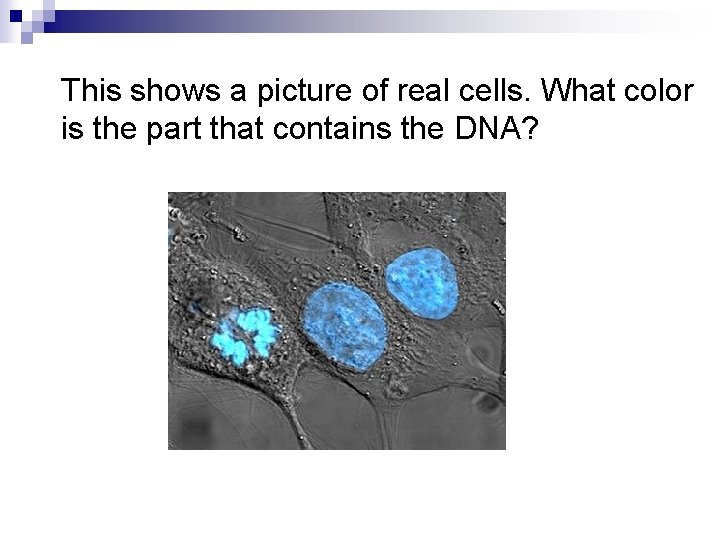
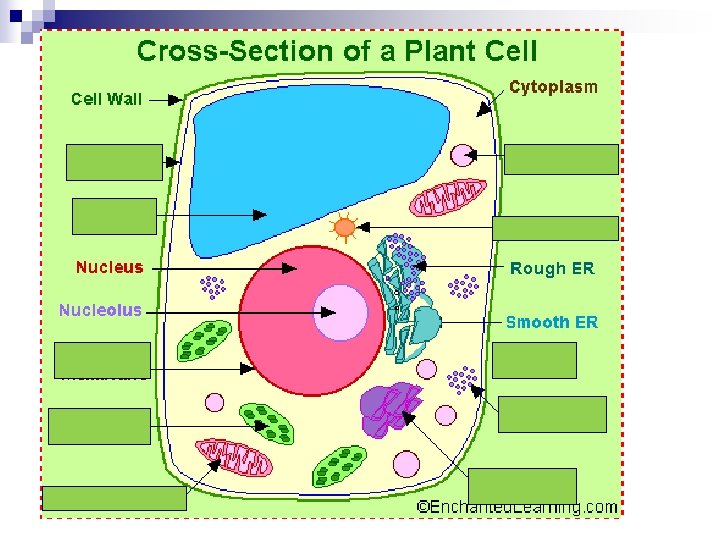
Nucleus cell control Contains the genetic material (DNA)& acts as the control center of the cell n Nucleolus n A prominent body within the nucleus, which makes the ribosomes
This shows a picture of real cells. What color is the part that contains the DNA?
Cytoplasm Gel-like material containing organelles found between the nucleus and cell membrane n It’s the “jelly stuff” that everything floats in n
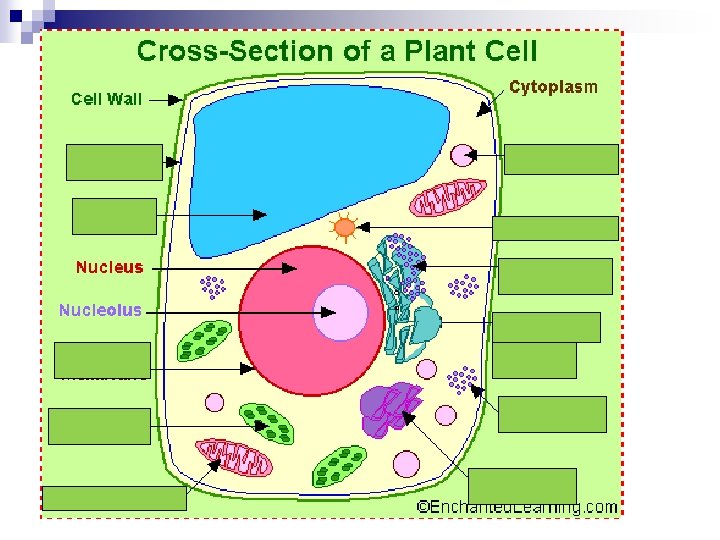
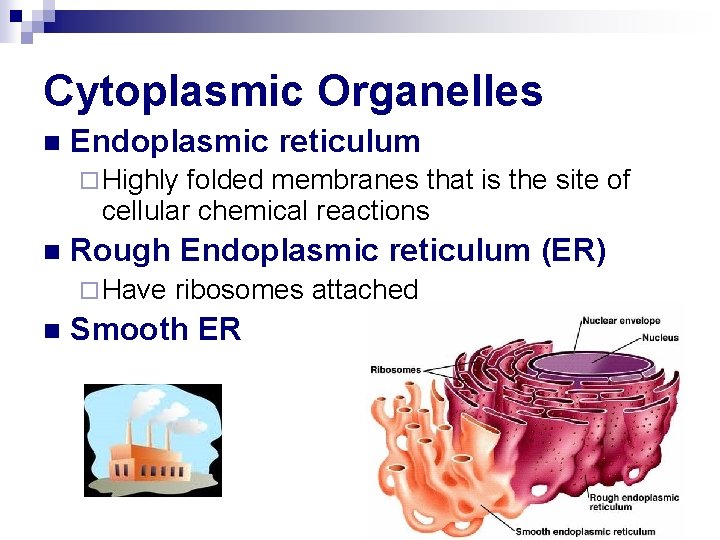
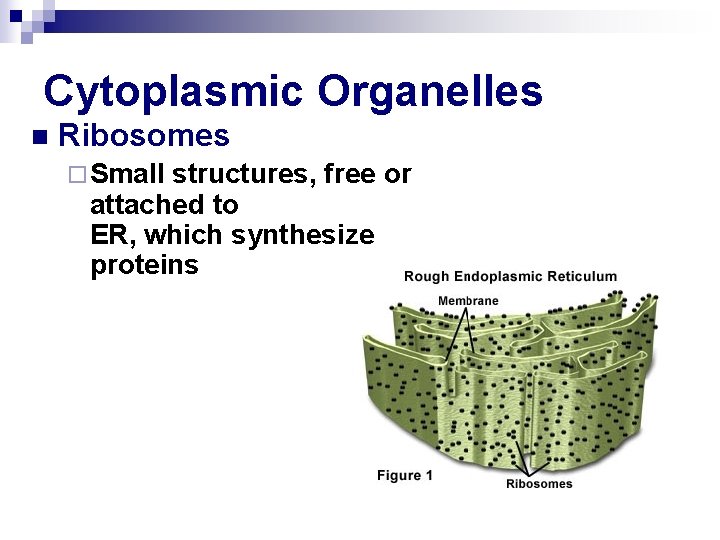
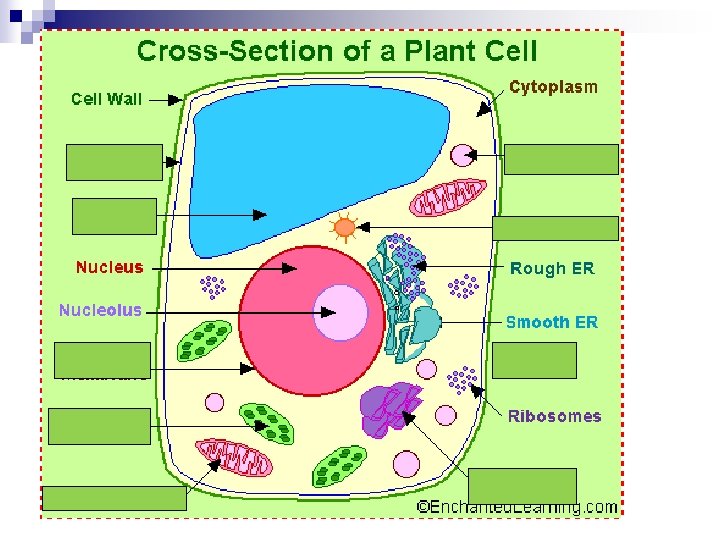
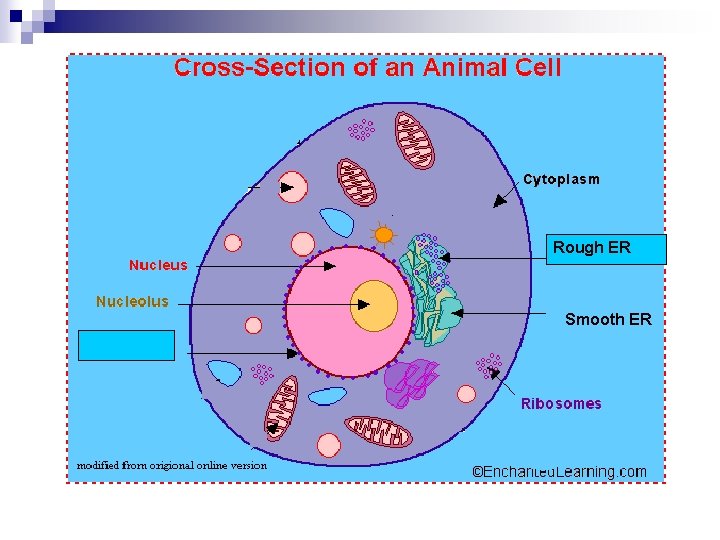
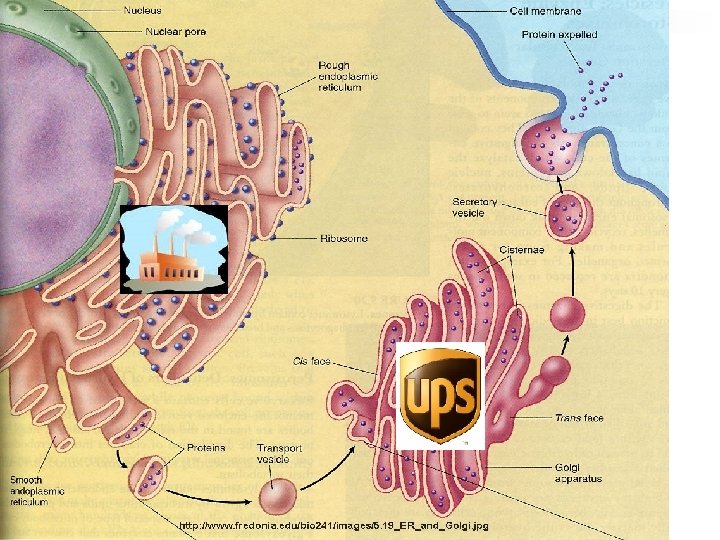
Cytoplasmic Organelles n Endoplasmic reticulum ¨ Highly folded membranes that is the site of cellular chemical reactions n Rough Endoplasmic reticulum (ER) ¨ Have n ribosomes attached Smooth ER
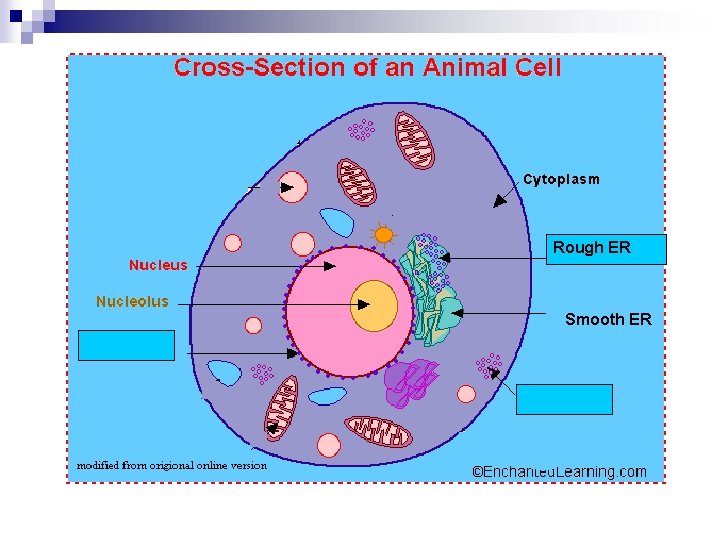
Rough ER Smooth ER
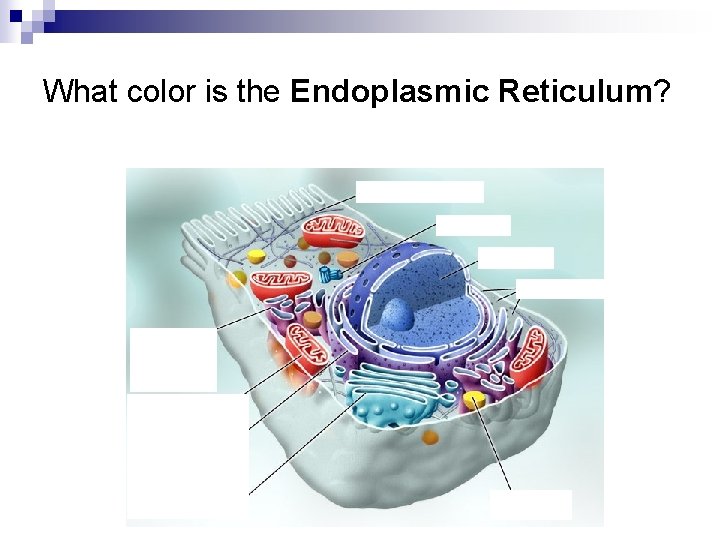
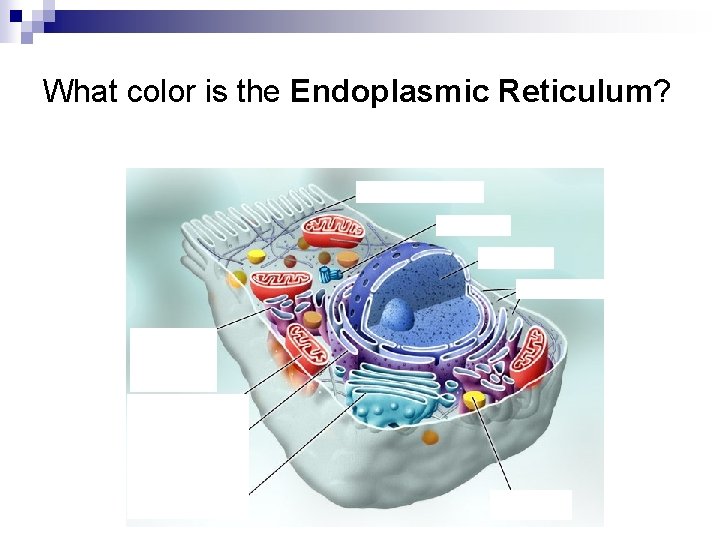
What color is the Endoplasmic Reticulum?
What color is the Endoplasmic Reticulum?
Cytoplasmic Organelles n Ribosomes ¨ Small structures, free or attached to ER, which synthesize proteins
Rough ER Smooth ER
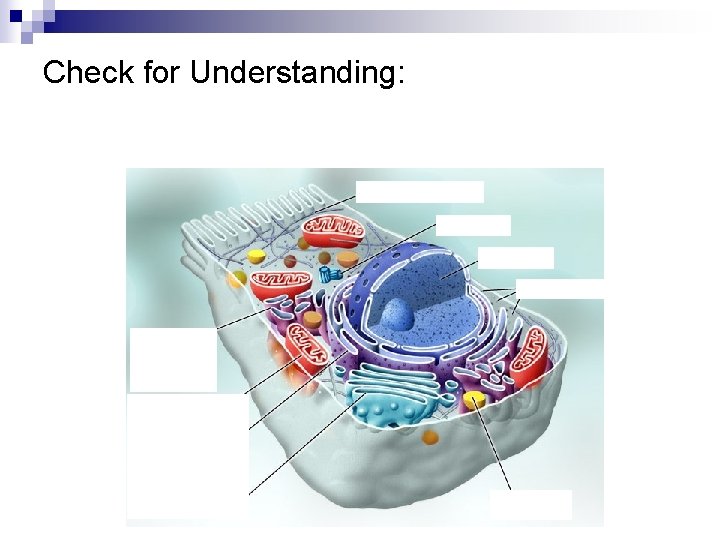
Check for Understanding:
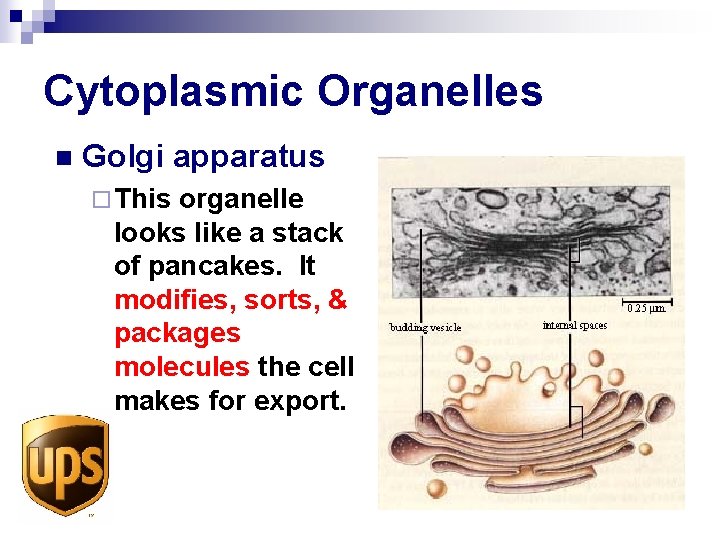
Cytoplasmic Organelles n Golgi apparatus ¨ This organelle looks like a stack of pancakes. It modifies, sorts, & packages molecules the cell makes for export. ¨
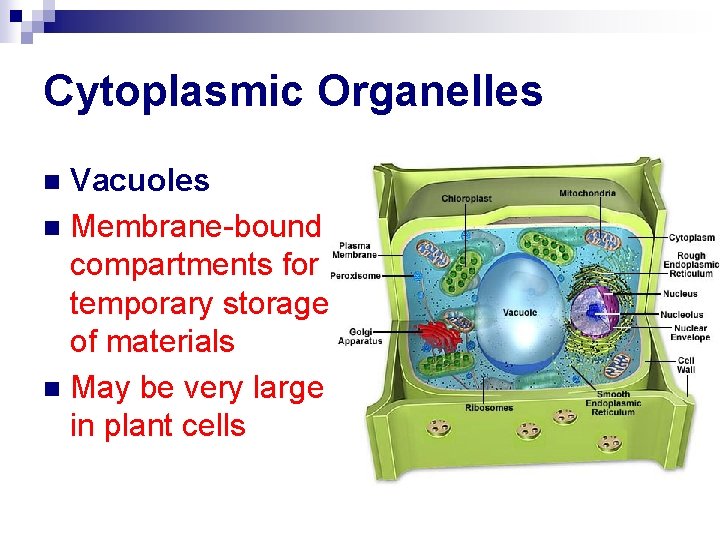
Cytoplasmic Organelles Vacuoles n Membrane-bound compartments for temporary storage of materials n May be very large in plant cells n
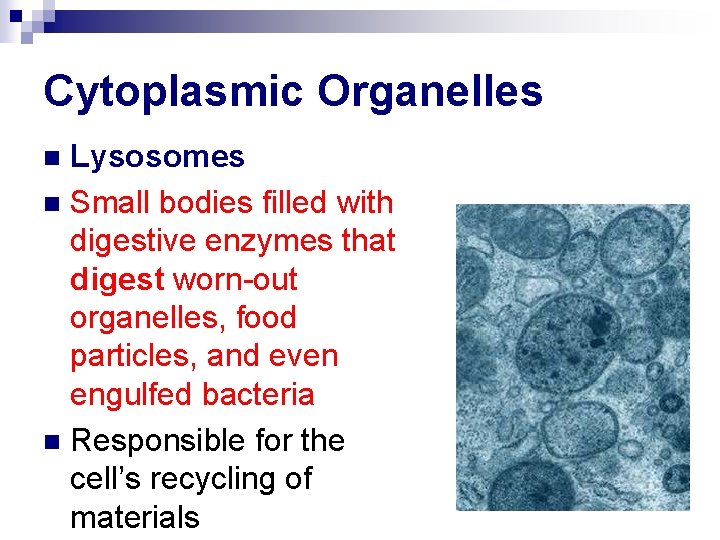
Cytoplasmic Organelles Lysosomes n Small bodies filled with digestive enzymes that digest worn-out organelles, food particles, and even engulfed bacteria n Responsible for the cell’s recycling of materials n
What organ system would you compare a lysosome to?
What organ system would you compare a lysosome to? The Digestive system!!!!!
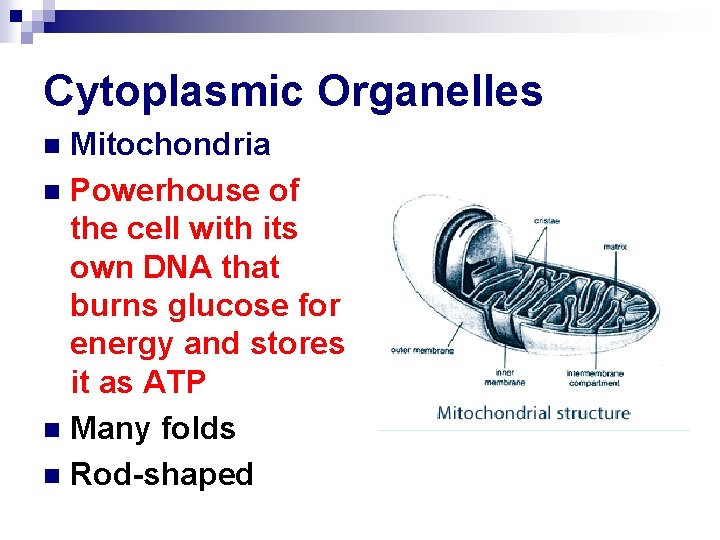
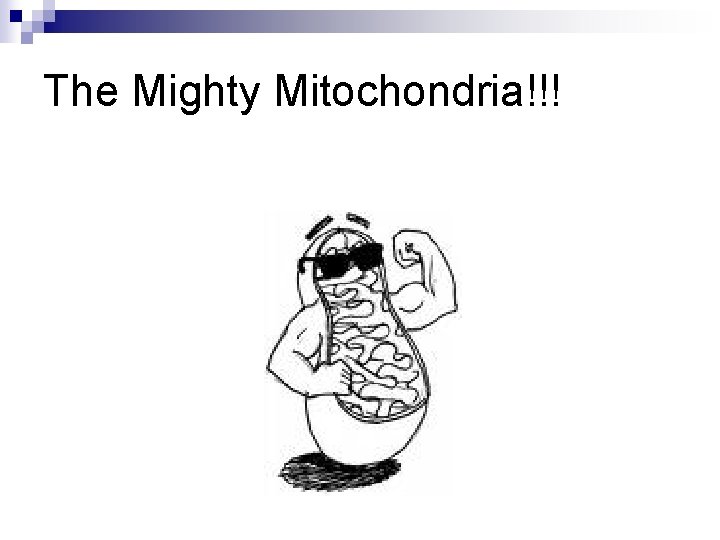
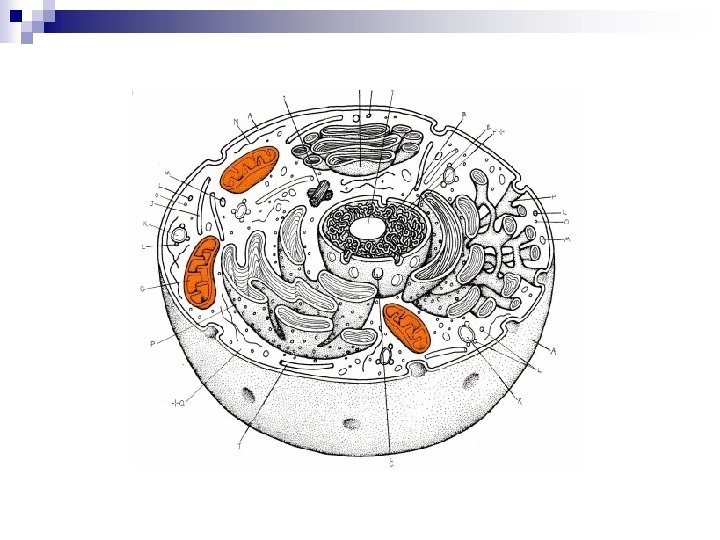
Cytoplasmic Organelles Mitochondria n Powerhouse of the cell with its own DNA that burns glucose for energy and stores it as ATP n Many folds n Rod-shaped n
The Mighty Mitochondria!!!
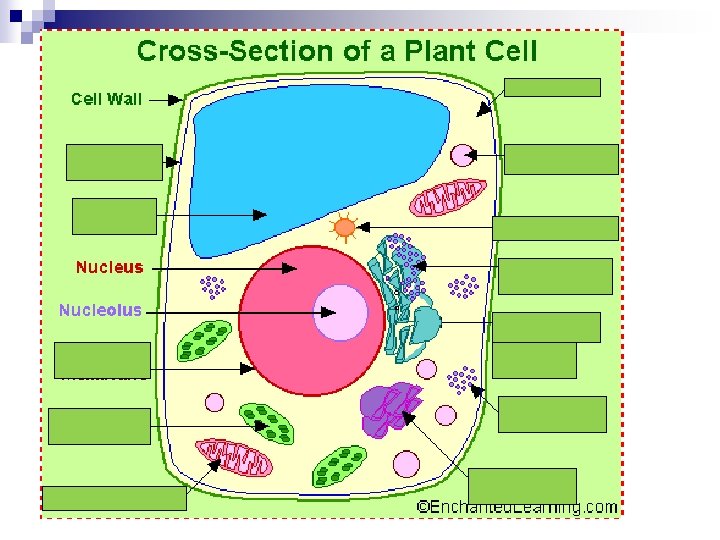
There are certain organelles only found in Plant cells n Cell walls n Chloroplasts
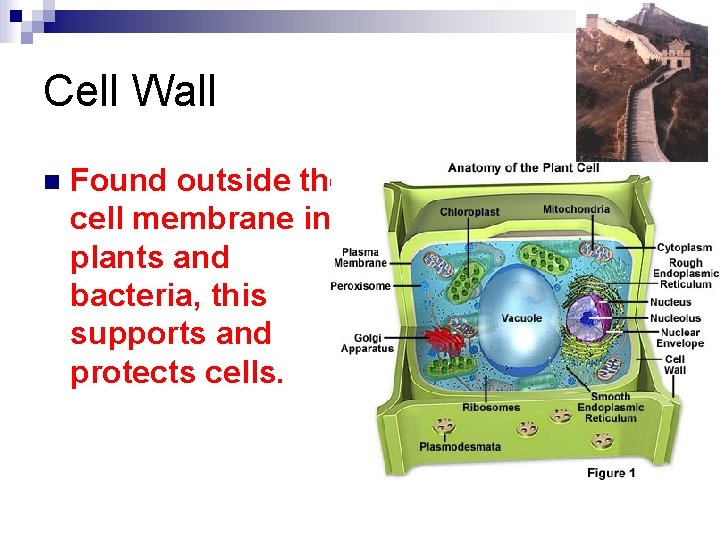
Cell Wall n Found outside the cell membrane in plants and bacteria, this supports and protects cells.
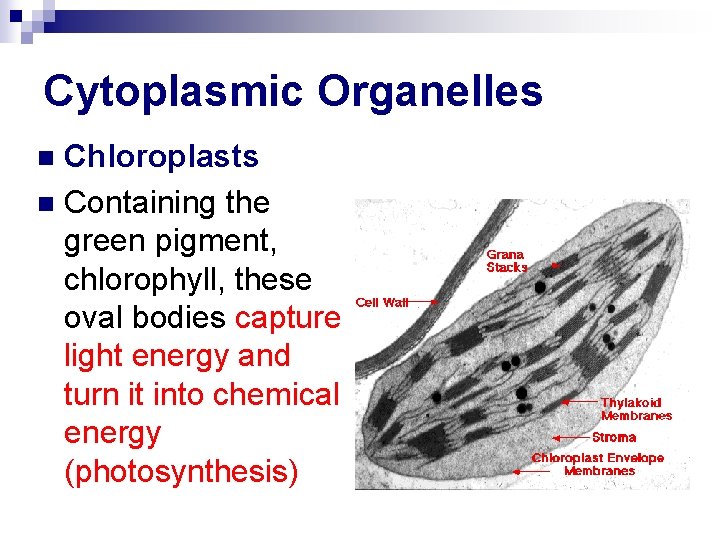
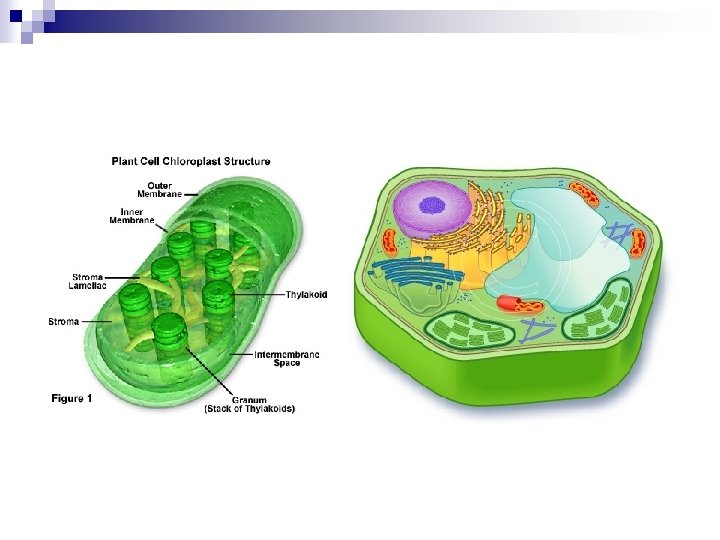
Cytoplasmic Organelles Chloroplasts n Containing the green pigment, chlorophyll, these oval bodies capture light energy and turn it into chemical energy (photosynthesis) n
Cilia and Flagella are only found in animal cells
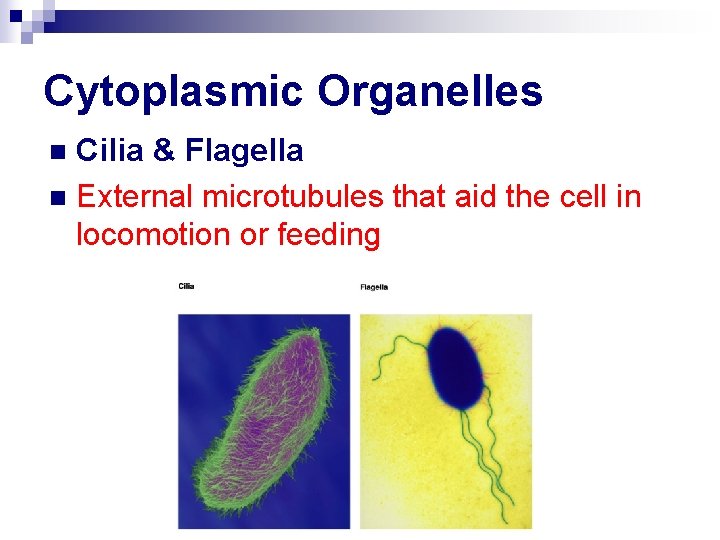
Cytoplasmic Organelles Cilia & Flagella n External microtubules that aid the cell in locomotion or feeding n
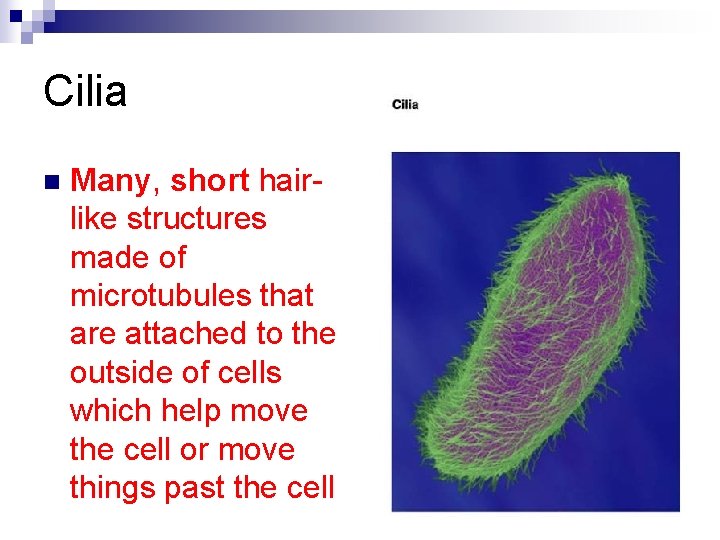
Cilia n Many, short hairlike structures made of microtubules that are attached to the outside of cells which help move the cell or move things past the cell
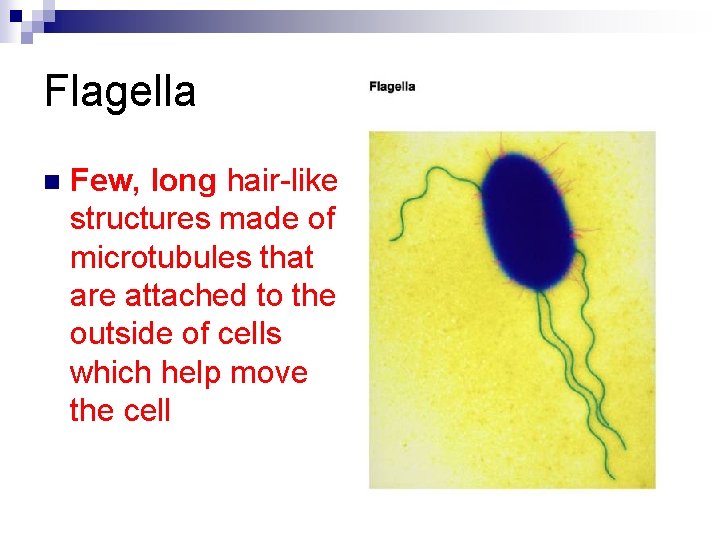
Flagella n Few, long hair-like structures made of microtubules that are attached to the outside of cells which help move the cell
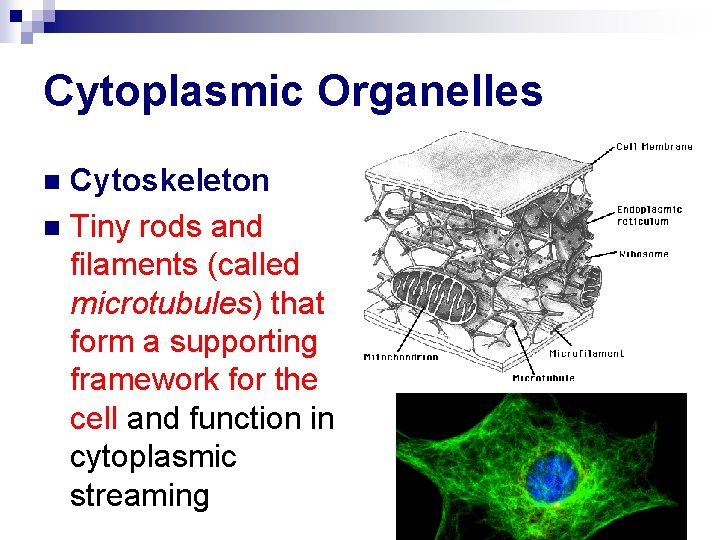
Cytoplasmic Organelles Cytoskeleton n Tiny rods and filaments (called microtubules) that form a supporting framework for the cell and function in cytoplasmic streaming n