
UNIT 3 Chapter 4 Evolution and Biodiversity The
UNIT 3 Chapter 4 Evolution and Biodiversity The Earth is 6 billion years old. Life is 3. 7 billion years old.
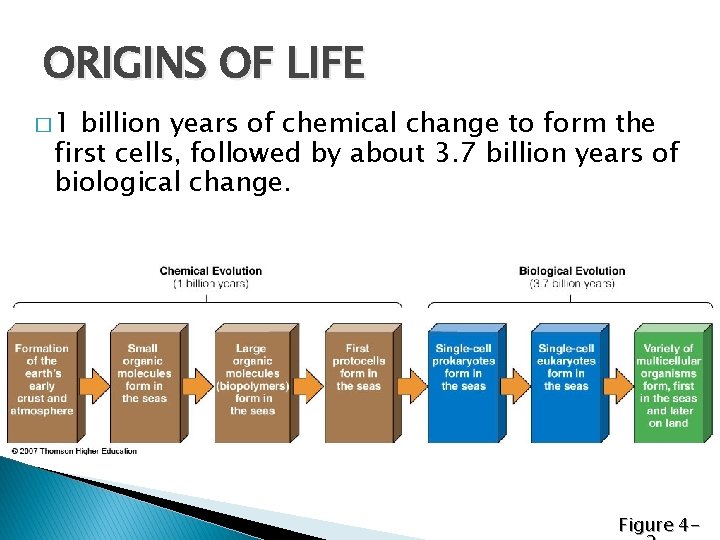
ORIGINS OF LIFE � 1 billion years of chemical change to form the first cells, followed by about 3. 7 billion years of biological change. Figure 4 -
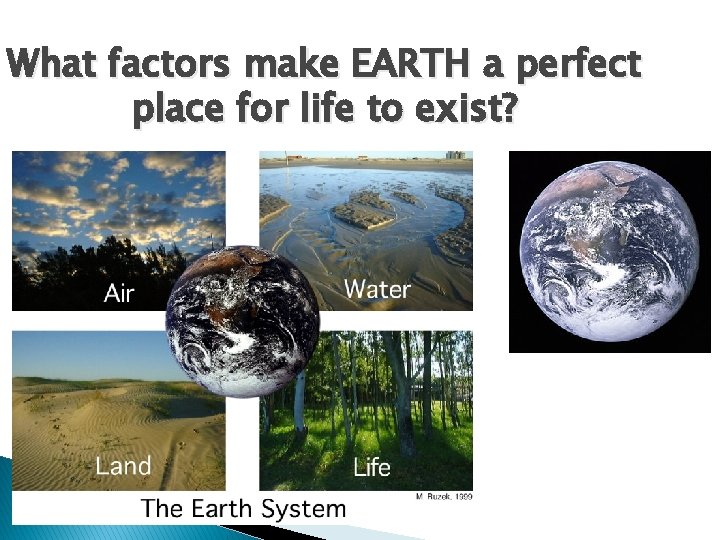
What factors make EARTH a perfect place for life to exist?
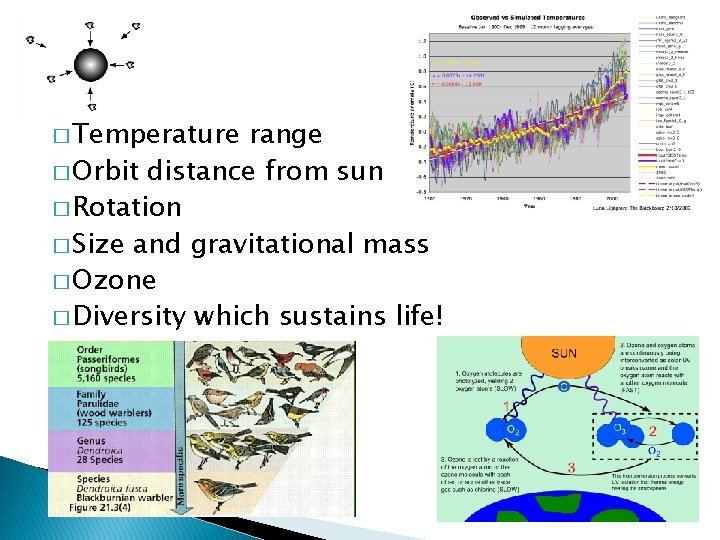
� Temperature range � Orbit distance from sun � Rotation � Size and gravitational mass � Ozone � Diversity which sustains life!
Background for Evolution from Biology � Evolution is the change in a population’s genetic makeup over time. � All species descend from earlier, ancestral species- theory of evolution � Can species evolve in one generation? � Darwin video

Evolution cont. � Microevolution describes the small genetic changes that occur in a population over time. ◦ Over time, a population’s gene pool changes when mutations in DNA molecules are passed on to offspring. There may be several different forms (alleles) of a single gene. �Example: Alleles for eye color might be B (brown) and b (blue) �Homozygous vs. heterozygous �Genotype vs. phenotype �Dominant vs. recessive
Genetic Diversity leads to Evolution ◦ Sexual reproduction leads to random recombination of alleles from individual to individual. �Crossing over �Recombination ◦ Mutations causes genetic variability in populations due to random changes in structure/number of DNA molecules in a cell. �Errors in transcription, translation, or replication ◦ Exposure to radiation (x-rays, UV light, radioactivity, mutagens (specific chemicals) can cause genetic variations ◦ Are all mutations harmful?
In order for evolution to occur by natural selection there must be… � Genetic variability ◦ Different traits to exist in the population ◦ Ex. Fur color � Traits must be heritable ◦ Fur color depends on parents fur color � Trait must lead to Differential reproduction ◦ Trait allows those individuals to have more reproductive success ◦ Video
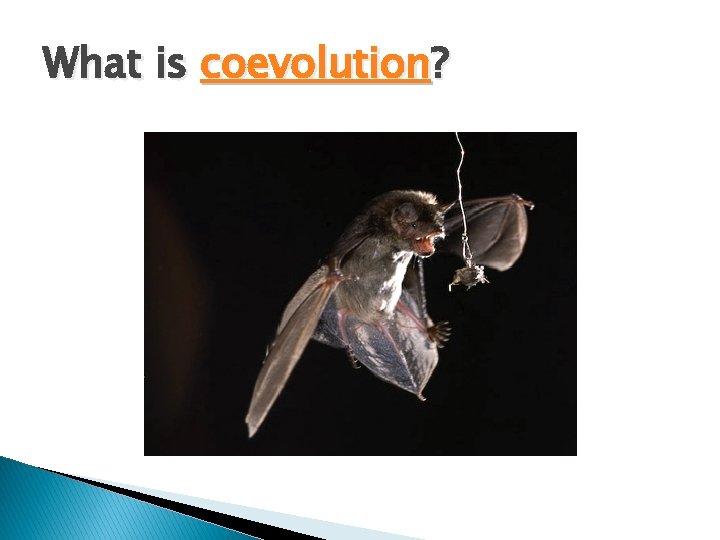
What is coevolution?
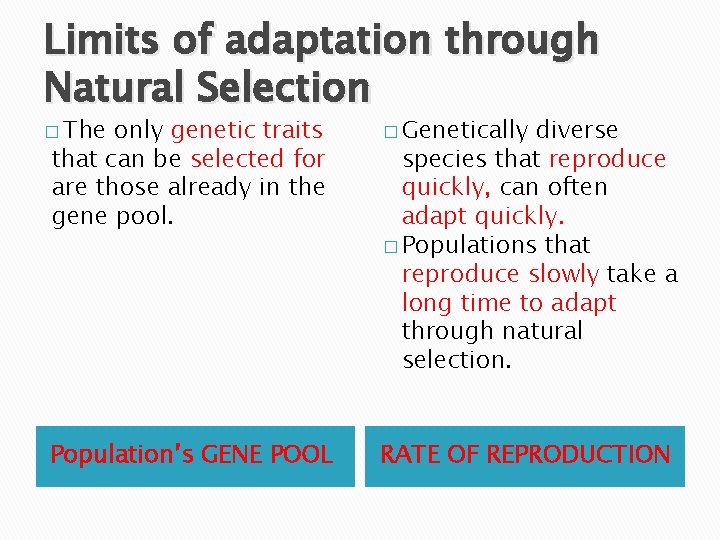
Limits of adaptation through Natural Selection � The only genetic traits that can be selected for are those already in the gene pool. � Genetically diverse species that reproduce quickly, can often adapt quickly. � Populations that reproduce slowly take a long time to adapt through natural selection. Population’s GENE POOL RATE OF REPRODUCTION
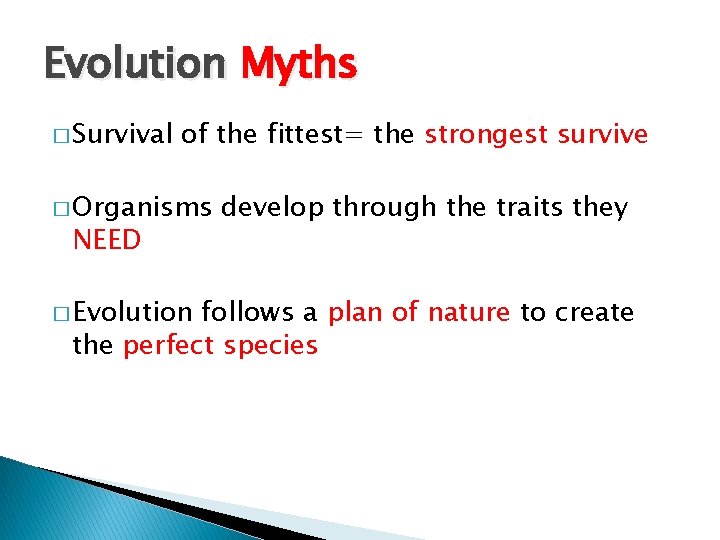
Evolution Myths � Survival of the fittest= the strongest survive � Organisms NEED � Evolution develop through the traits they follows a plan of nature to create the perfect species
How did each event affect Evolution? � Tectonic plates � Volcanoes � Earthquakes � Climate change � Asteroids
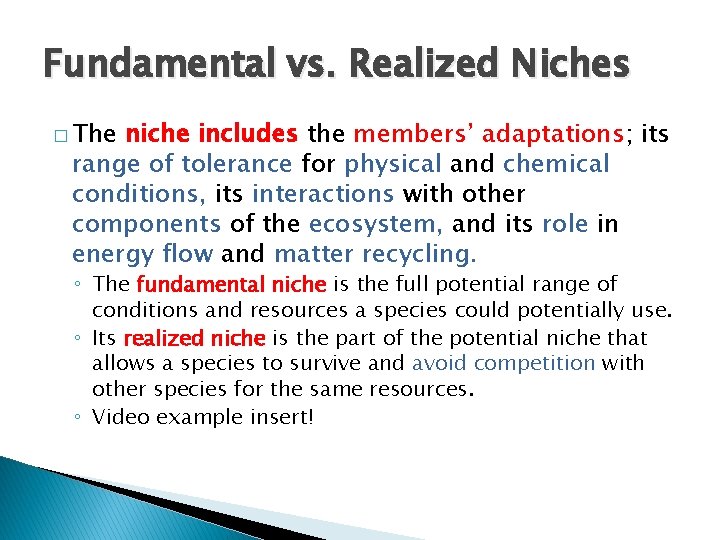
Fundamental vs. Realized Niches � The niche includes the members’ adaptations; its range of tolerance for physical and chemical conditions, its interactions with other components of the ecosystem, and its role in energy flow and matter recycling. ◦ The fundamental niche is the full potential range of conditions and resources a species could potentially use. ◦ Its realized niche is the part of the potential niche that allows a species to survive and avoid competition with other species for the same resources. ◦ Video example insert!
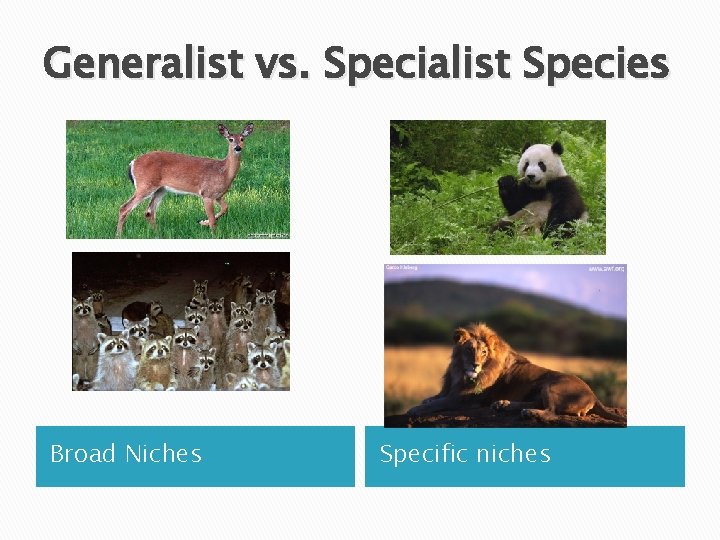
Generalist vs. Specialist Species Broad Niches Specific niches
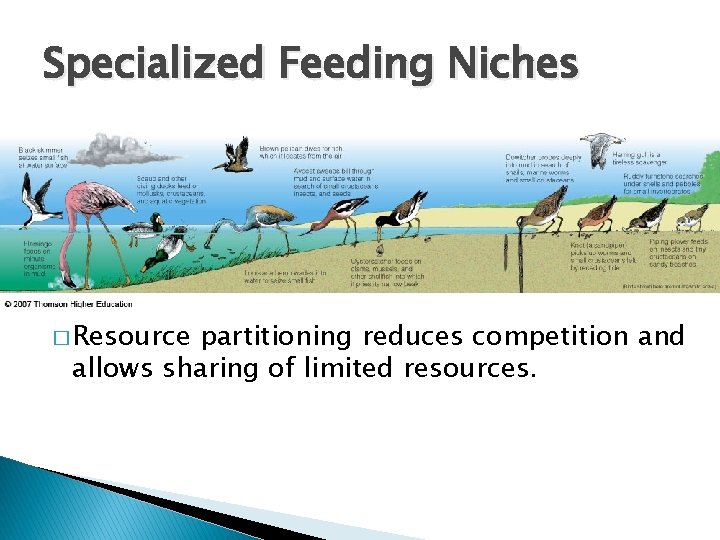
Specialized Feeding Niches � Resource partitioning reduces competition and allows sharing of limited resources.
Rainforest and specialist species
Speciation- creation of a new species � Most species take thousands-millions of years to evolve and create new species. � What about fleas, ticks, roaches?
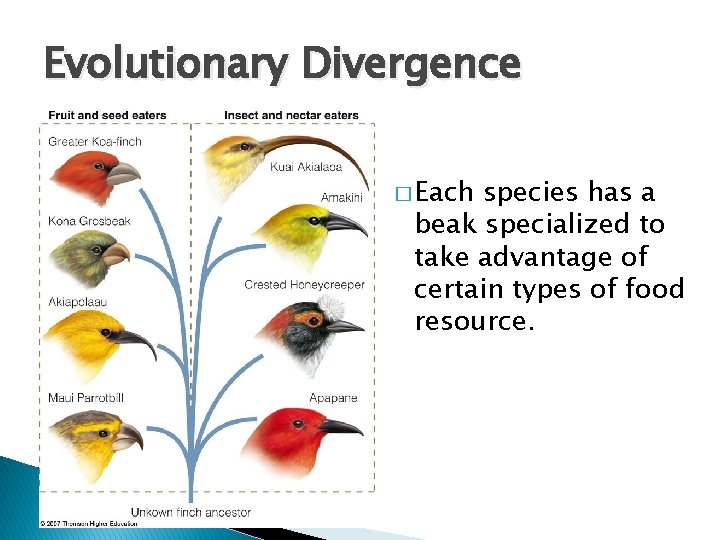
Evolutionary Divergence � Each species has a beak specialized to take advantage of certain types of food resource.
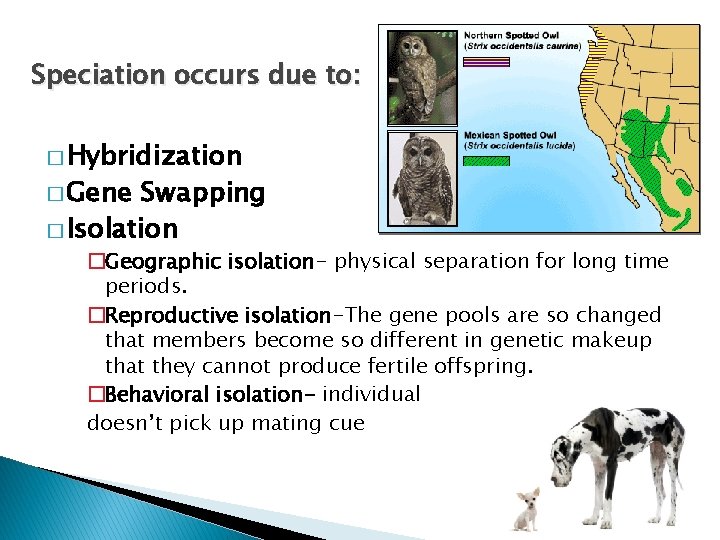
Speciation occurs due to: � Hybridization � Gene Swapping � Isolation �Geographic isolation- physical separation for long time periods. �Reproductive isolation-The gene pools are so changed that members become so different in genetic makeup that they cannot produce fertile offspring. �Behavioral isolation- individual doesn’t pick up mating cue
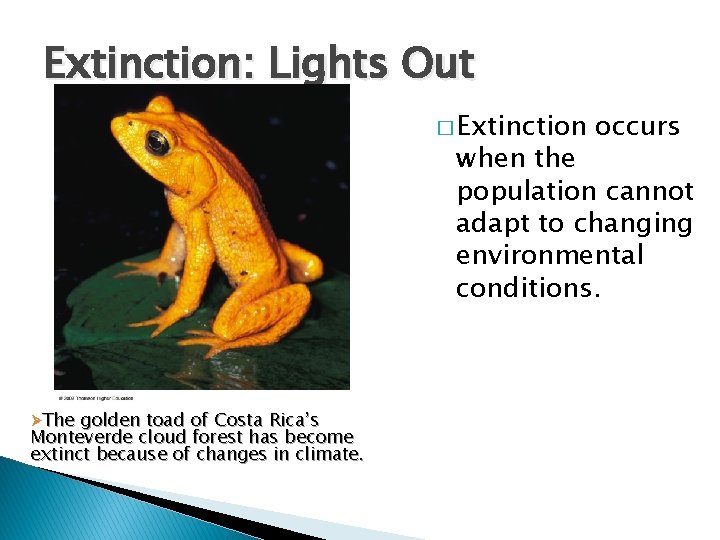
Extinction: Lights Out � Extinction occurs when the population cannot adapt to changing environmental conditions. ØThe golden toad of Costa Rica’s Monteverde cloud forest has become extinct because of changes in climate.
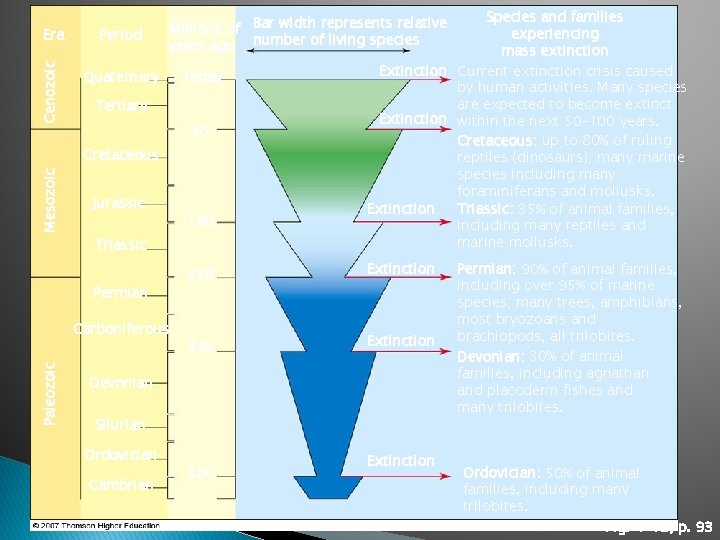
Era Period Cenozoic Quaternary Today Tertiary 65 Mesozoic Cretaceous Jurassic 180 Triassic Permian Carboniferous Paleozoic Species and families experiencing mass extinction Extinction Current extinction crisis caused by human activities. Many species are expected to become extinct Extinction within the next 50– 100 years. Cretaceous: up to 80% of ruling reptiles (dinosaurs); many marine species including many foraminiferans and mollusks. Extinction Triassic: 35% of animal families, including many reptiles and marine mollusks. Millions of Bar width represents relative years ago number of living species 250 Extinction 345 Extinction Devonian Silurian Ordovician Cambrian 500 Extinction Permian: 90% of animal families, including over 95% of marine species; many trees, amphibians, most bryozoans and brachiopods, all trilobites. Devonian: 30% of animal families, including agnathan and placoderm fishes and many trilobites. Ordovician: 50% of animal families, including many trilobites. Fig. 4 -12, p. 93
Natural Selection takes a LONG time… � Man has used artificial selection to change the genetic characteristics of populations for years. ◦ We use selective breeding to obtain specific desired traits. (plants, domestic animals) but this takes many generations also. � Humans have turned to the GENE REVOLUTION
Genetic Engineering ◦ Genetic engineering/gene splicing are techniques that isolate, modify, multiply and recombine genes from different organisms. � Genes from different species that would never interbreed in nature are being transferred to each other.
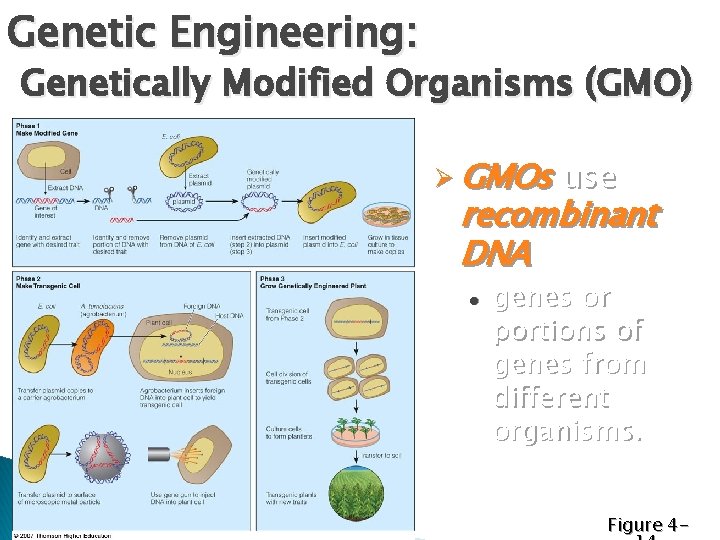
Genetic Engineering: Genetically Modified Organisms (GMO) Ø GMOs use recombinant DNA l genes or portions of genes from different organisms. Figure 4 -
Genetic Engineering ◦ Genetically modified organisms (GMOs)/transgenic organisms are the results of this gene splicing. �Glowing tobacco http: //upload. wikimedia. org/wikipedia/en/8/80/Glowi ng_tobacco_plant. jpg
Do you agree with cloning? � Cloning � Video plants, animals, humans, pets? of golden retriever cloned insert!!!
- Slides: 26