
Unit 3 Biopsychology Part 1 The Brain The
Unit 3: Biopsychology (Part 1)
The Brain: The most important part of the body. § The Brain is the central processing unit for the whole body § It sends impulses throughout the entire body and regulates our normal functions. § The brain, however is a vastly complex organ with many parts that must work together
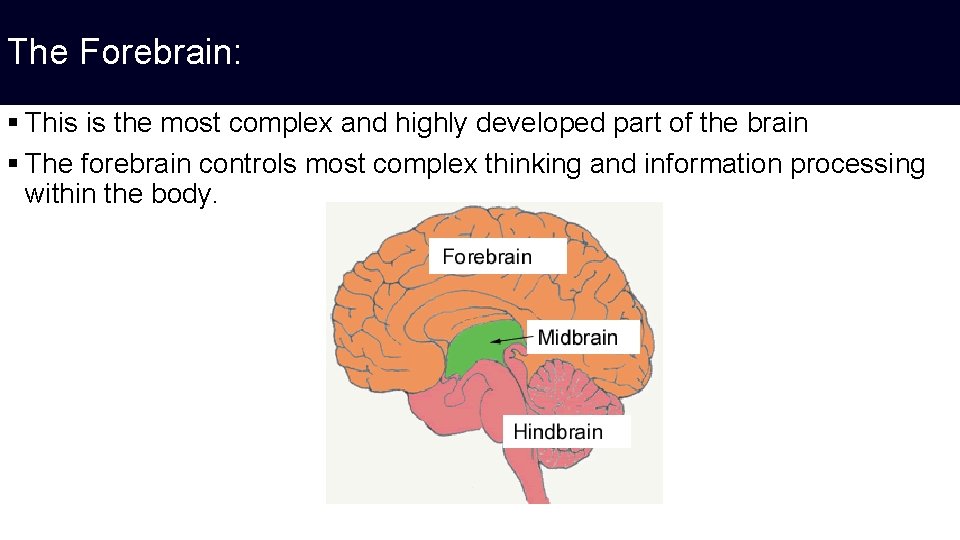
The Forebrain: § This is the most complex and highly developed part of the brain § The forebrain controls most complex thinking and information processing within the body.
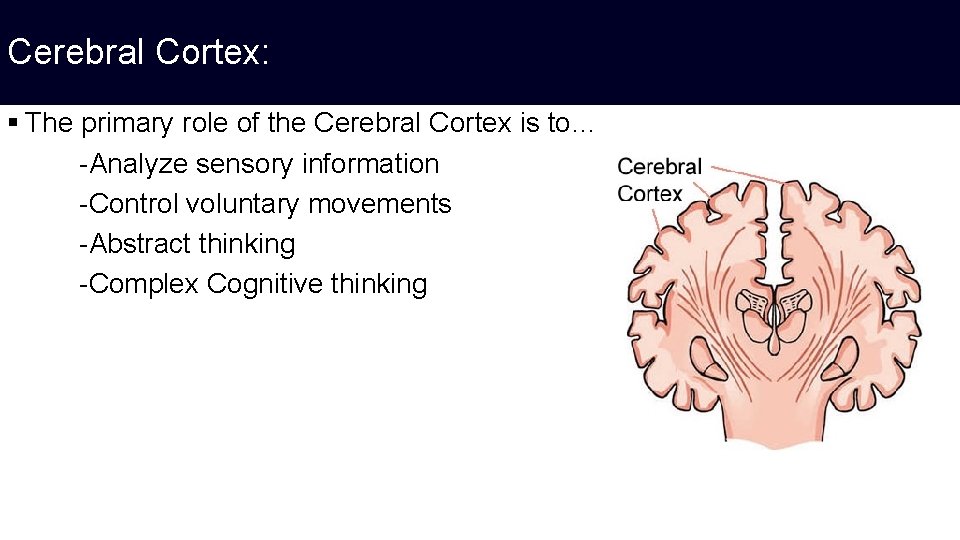
Cerebral Cortex: § The primary role of the Cerebral Cortex is to… -Analyze sensory information -Control voluntary movements -Abstract thinking -Complex Cognitive thinking
The Lobes: § Frontal Lobe: Located at the front of the brain and is associated with reasoning, motor skills, higher level cognition, and expressive language. § Parietal Lobe: Located in the middle section of the brain and is associated with processing tactile sensory information such as pressure, touch, and pain. § Temporal Lobe: Located on the bottom section of the brain. This lobe is also the location of the primary auditory cortex, which is important for interpreting sounds and the language we hear. § Occipital Lobe: Located at the back portion of the brain and is associated with interpreting visual stimuli and information. The primary visual cortex, which receives and interprets information from the retinas of the eyes, is located in the occipital lobe.
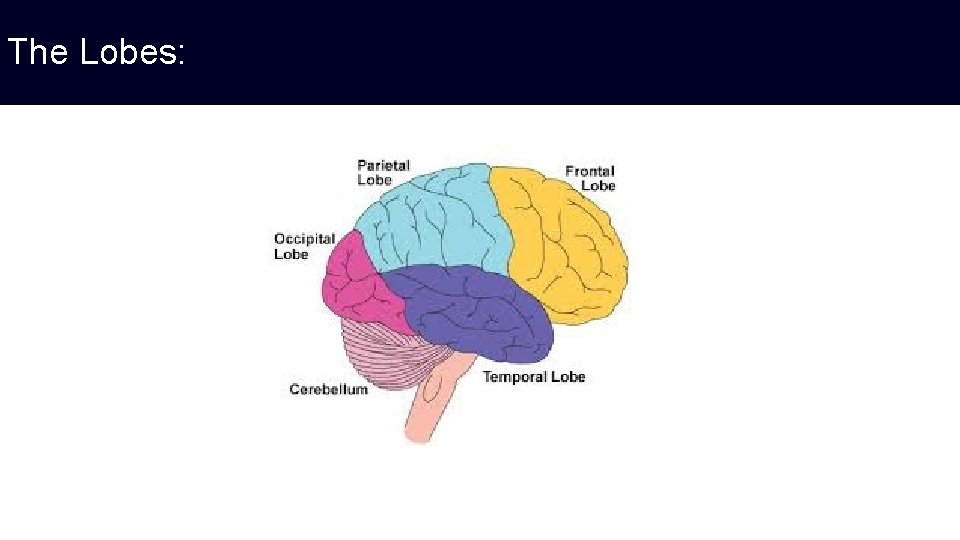
The Lobes:
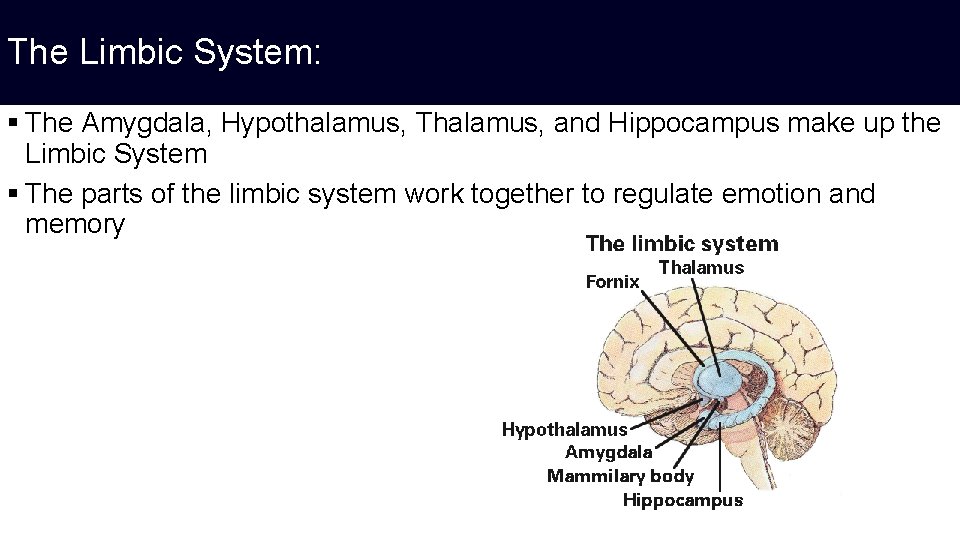
The Limbic System: § The Amygdala, Hypothalamus, Thalamus, and Hippocampus make up the Limbic System § The parts of the limbic system work together to regulate emotion and memory
The Limbic System: § The Amygdala, Hypothalamus, Thalamus, and Hippocampus make up the Limbic System § The parts of the limbic system work together to regulate emotion and memory
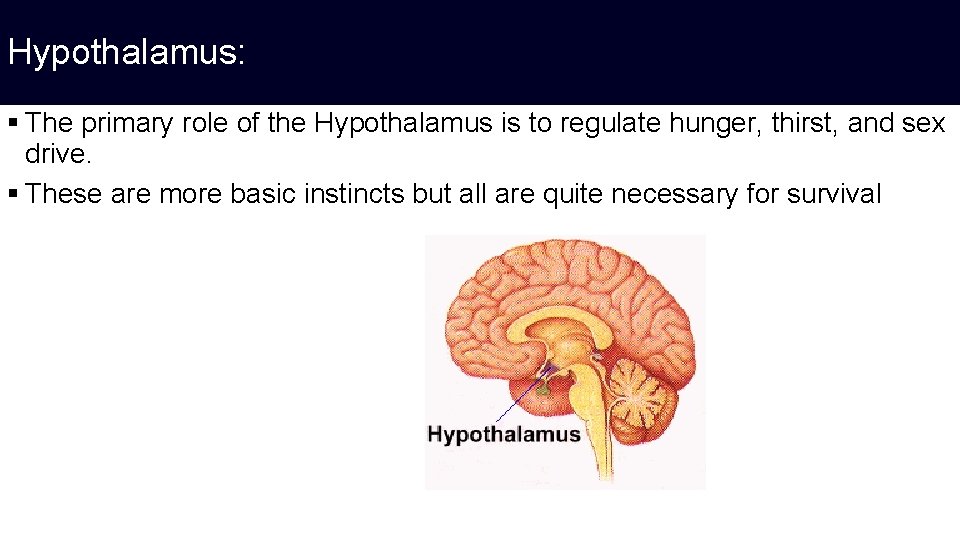
Hypothalamus: § The primary role of the Hypothalamus is to regulate hunger, thirst, and sex drive. § These are more basic instincts but all are quite necessary for survival
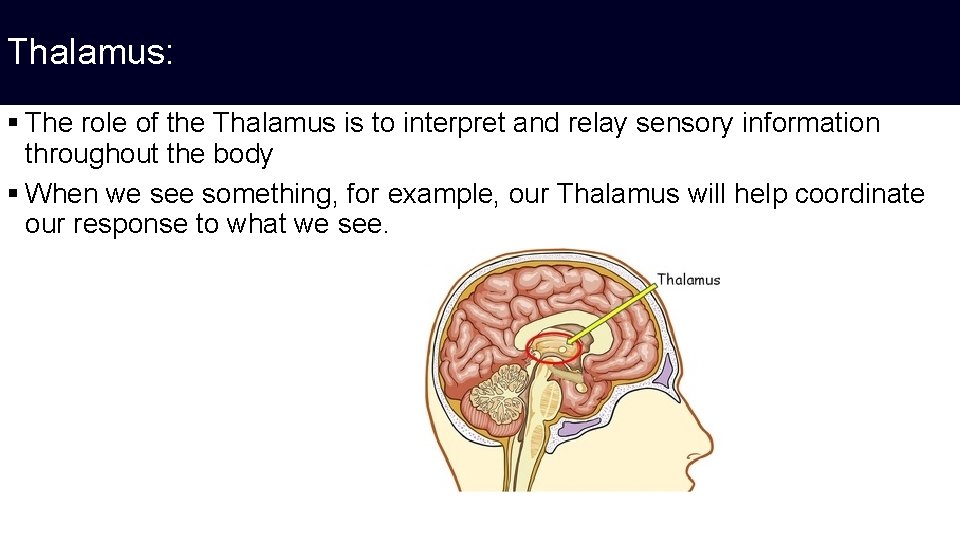
Thalamus: § The role of the Thalamus is to interpret and relay sensory information throughout the body § When we see something, for example, our Thalamus will help coordinate our response to what we see.
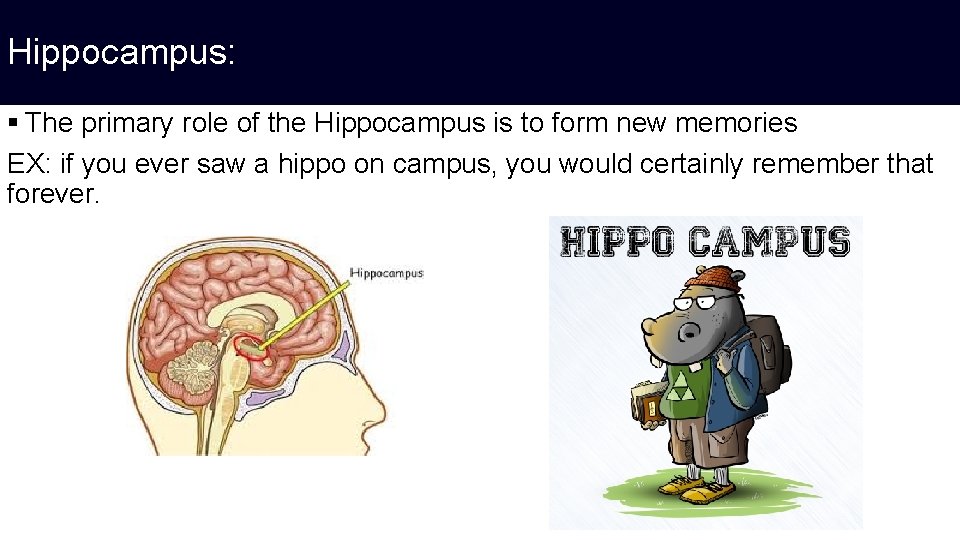
Hippocampus: § The primary role of the Hippocampus is to form new memories EX: if you ever saw a hippo on campus, you would certainly remember that forever.
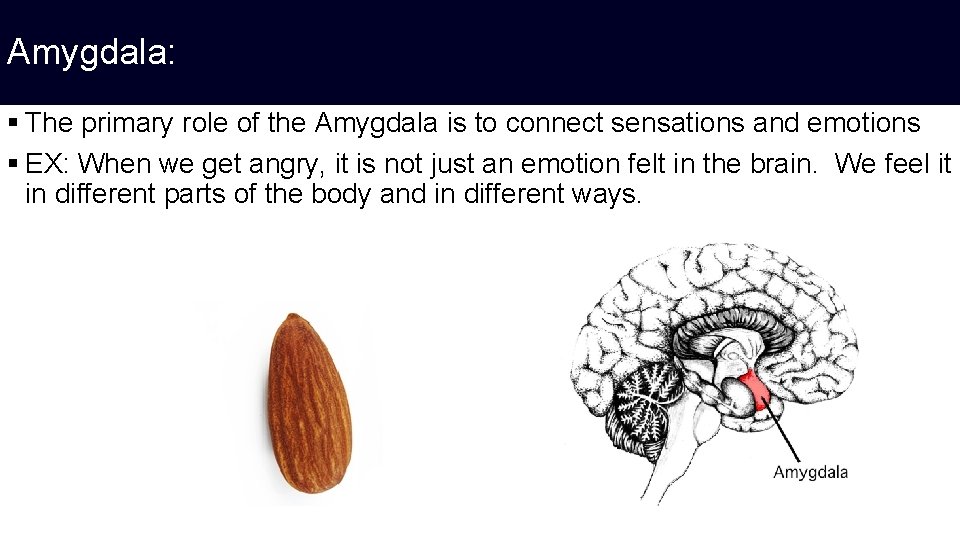
Amygdala: § The primary role of the Amygdala is to connect sensations and emotions § EX: When we get angry, it is not just an emotion felt in the brain. We feel it in different parts of the body and in different ways.
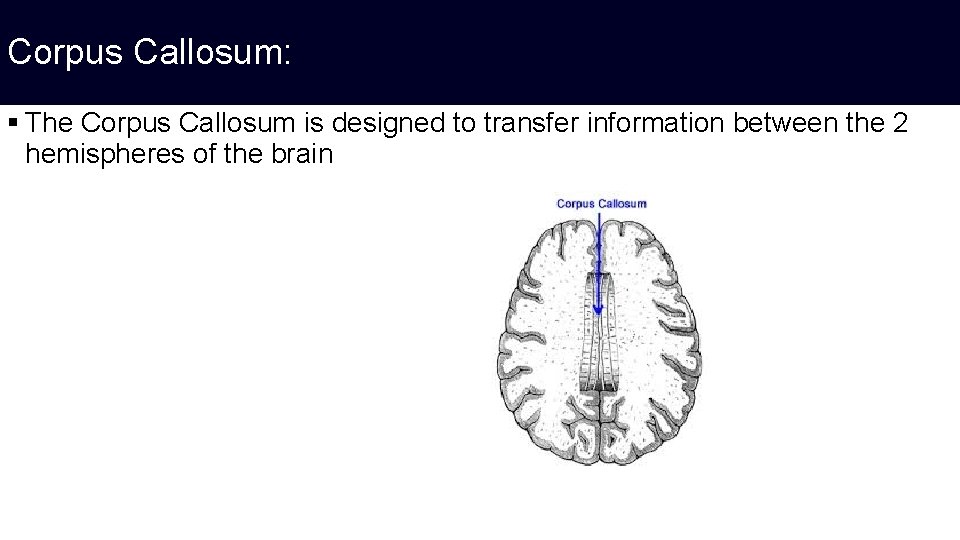
Corpus Callosum: § The Corpus Callosum is designed to transfer information between the 2 hemispheres of the brain
Some Other Important Parts of the Forebrain: § Cerebral Cortex: The outermost folded part of the brain where the lobes are located § Sensory Cortex: Parts of the Cerebral Cortex that take in information from the senses § Prefrontal Cortex: This part of the Cerebral Cortex regulates our personality and is largely responsible for our decision making § Motor Cortex: Part of the Cerebral Cortex that is responsible for movement and balance

The Midbrain: § The midbrain is located in between the forebrain and the hindbrain § The midbrain’s primary job is to relay information from the eyes, ears, and skin § It also controls certain types of automatic behaviors
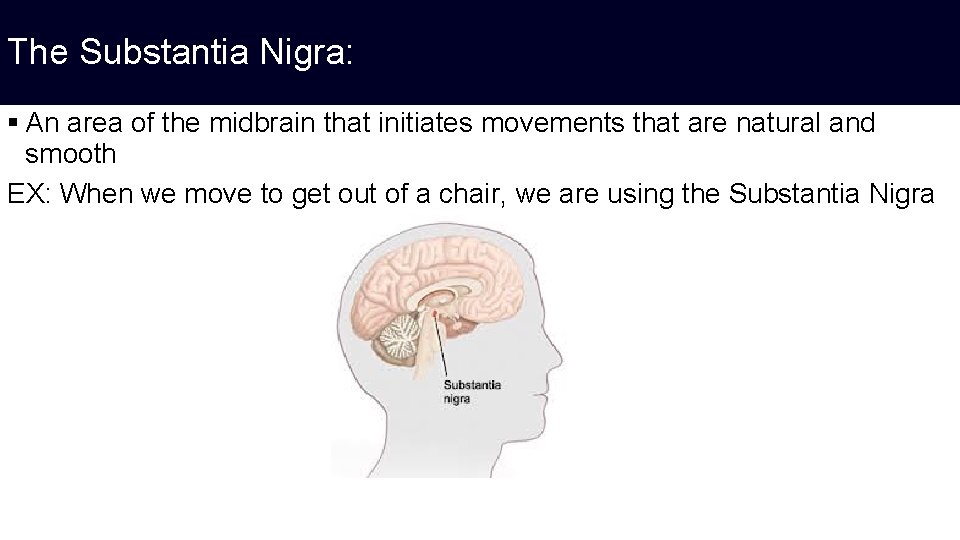
The Substantia Nigra: § An area of the midbrain that initiates movements that are natural and smooth EX: When we move to get out of a chair, we are using the Substantia Nigra
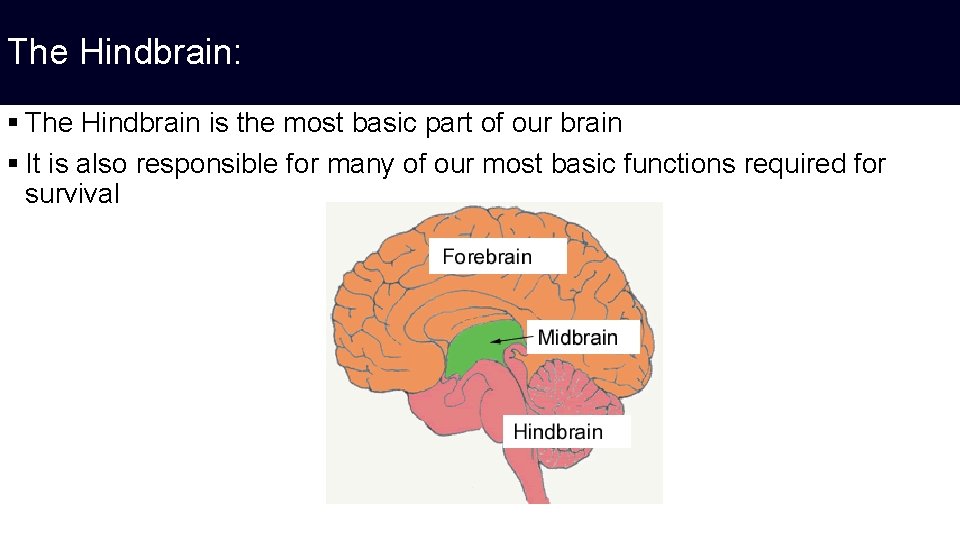
The Hindbrain: § The Hindbrain is the most basic part of our brain § It is also responsible for many of our most basic functions required for survival
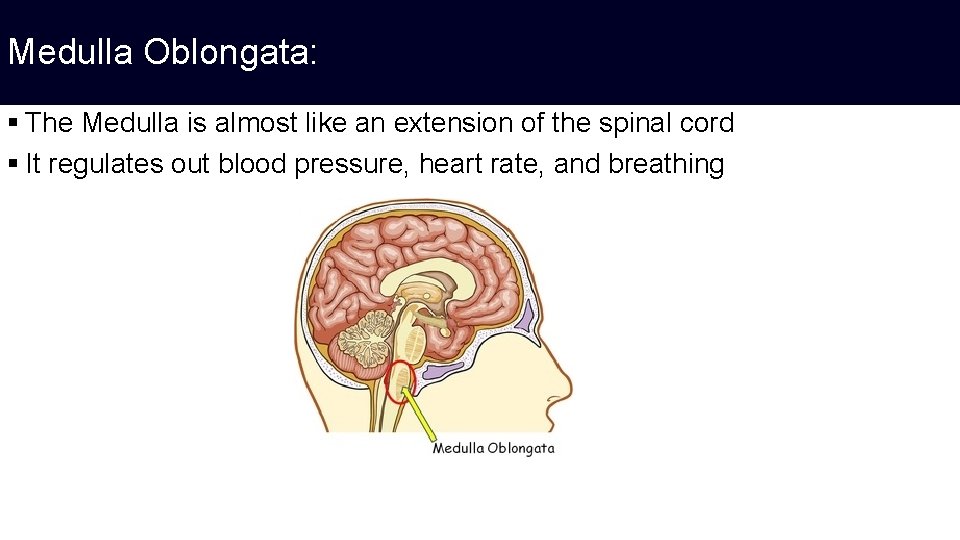
Medulla Oblongata: § The Medulla is almost like an extension of the spinal cord § It regulates out blood pressure, heart rate, and breathing
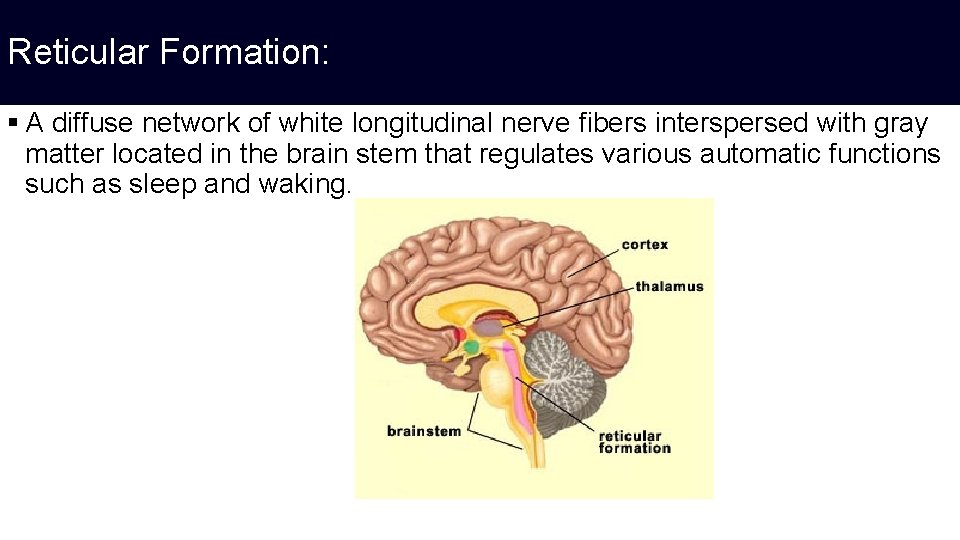
Reticular Formation: § A diffuse network of white longitudinal nerve fibers interspersed with gray matter located in the brain stem that regulates various automatic functions such as sleep and waking.
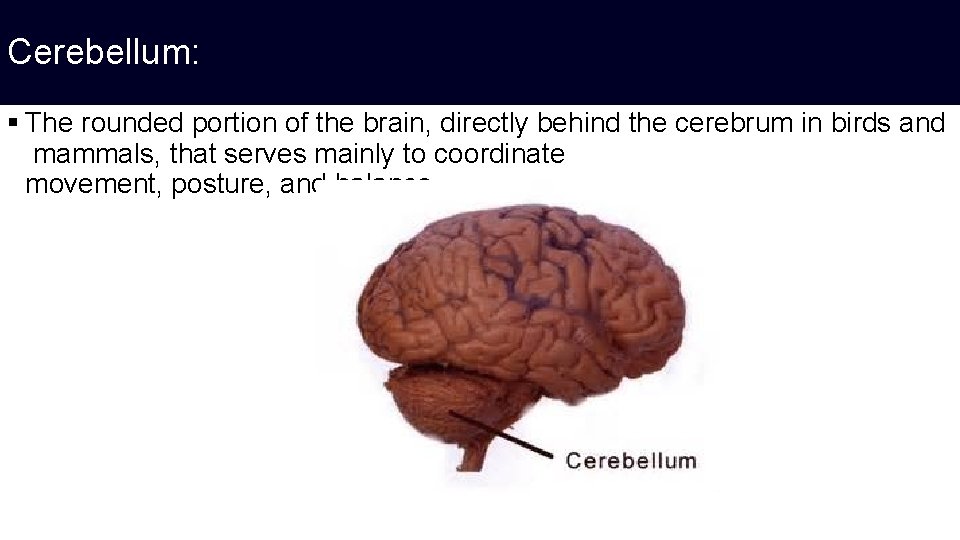
Cerebellum: § The rounded portion of the brain, directly behind the cerebrum in birds and mammals, that serves mainly to coordinate movement, posture, and balance.
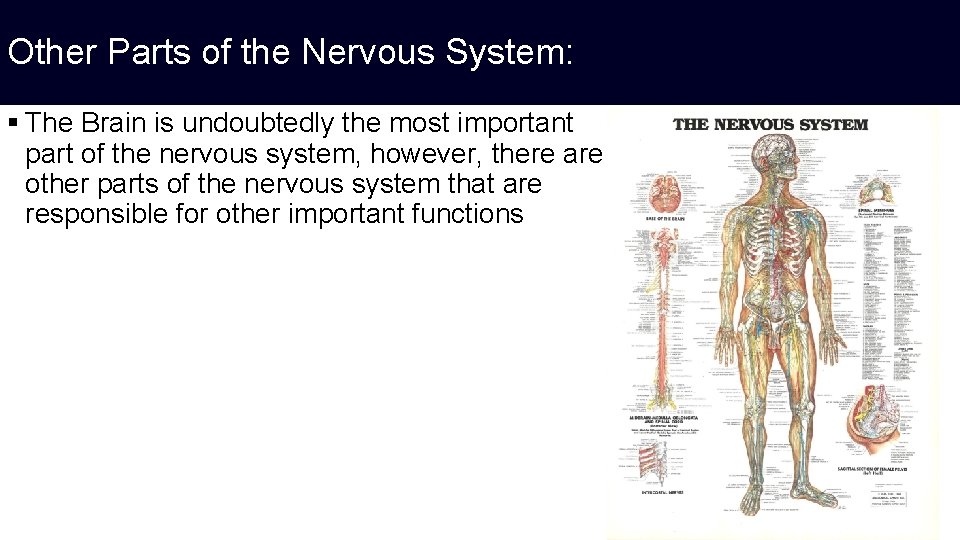
Other Parts of the Nervous System: § The Brain is undoubtedly the most important part of the nervous system, however, there are other parts of the nervous system that are responsible for other important functions
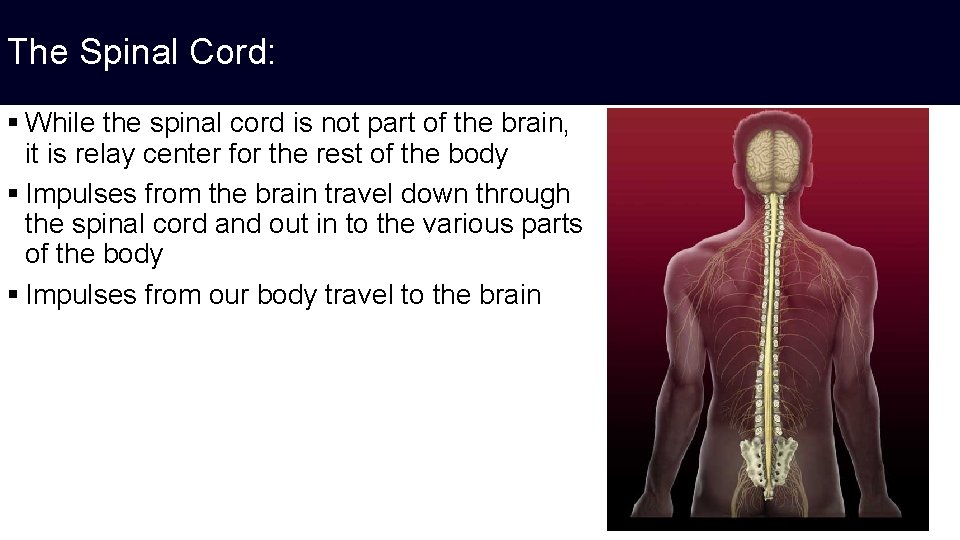
The Spinal Cord: § While the spinal cord is not part of the brain, it is relay center for the rest of the body § Impulses from the brain travel down through the spinal cord and out in to the various parts of the body § Impulses from our body travel to the brain
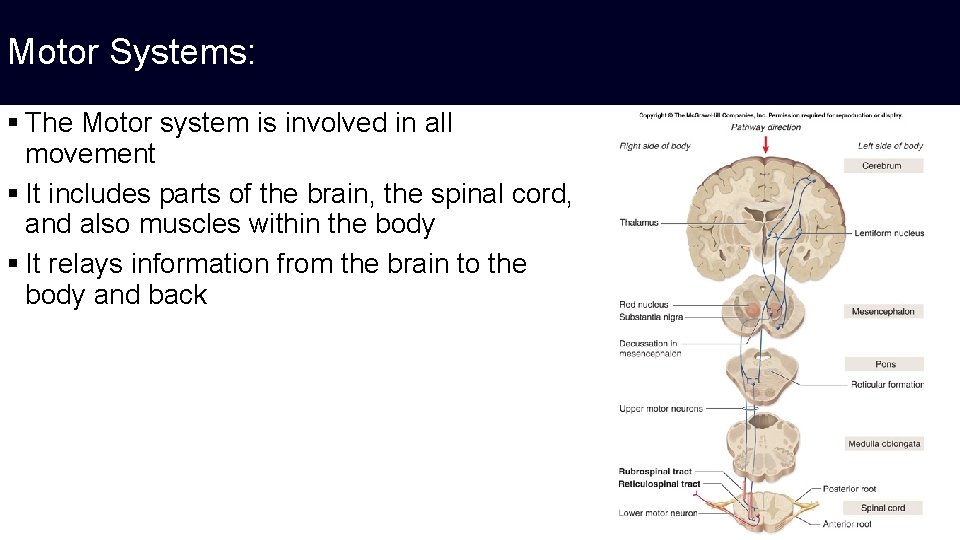
Motor Systems: § The Motor system is involved in all movement § It includes parts of the brain, the spinal cord, and also muscles within the body § It relays information from the brain to the body and back
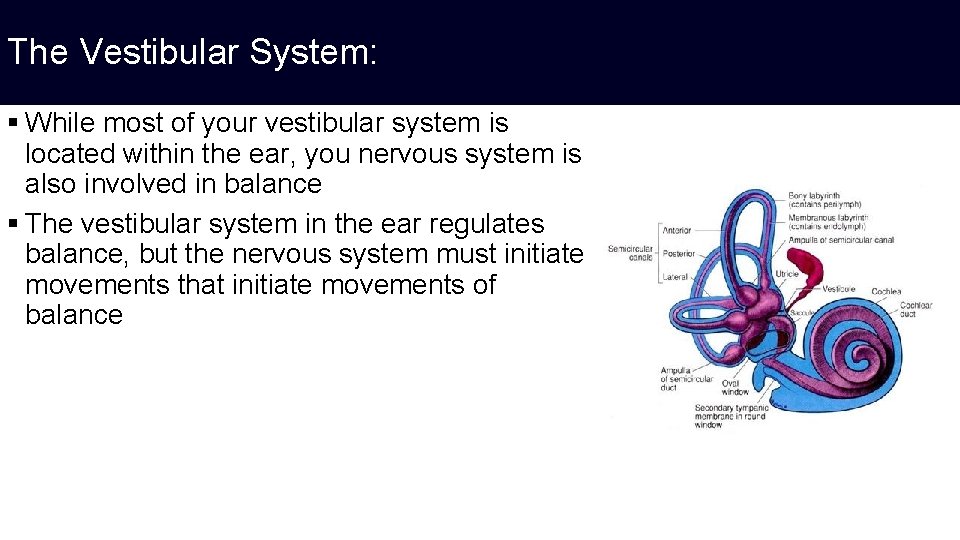
The Vestibular System: § While most of your vestibular system is located within the ear, you nervous system is also involved in balance § The vestibular system in the ear regulates balance, but the nervous system must initiate movements that initiate movements of balance
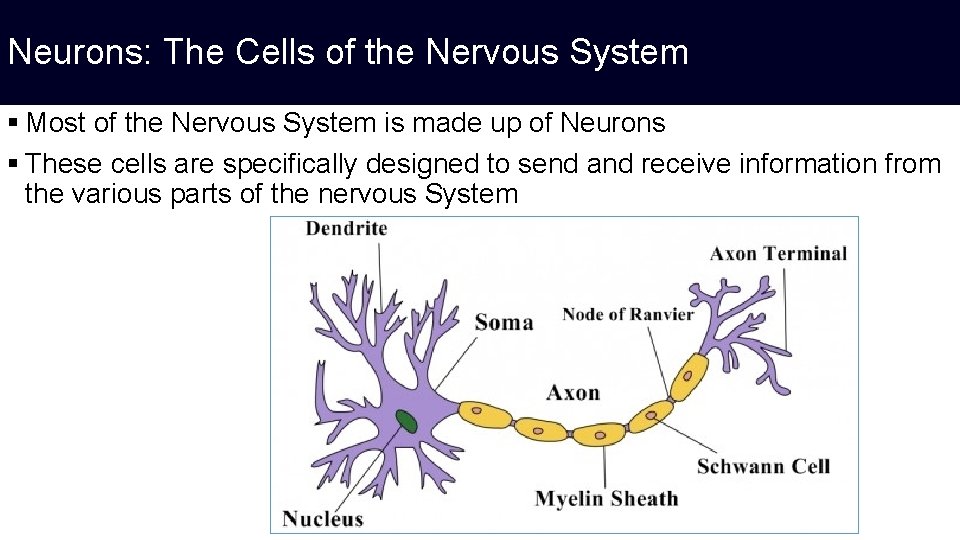
Neurons: The Cells of the Nervous System § Most of the Nervous System is made up of Neurons § These cells are specifically designed to send and receive information from the various parts of the nervous System

Dendrites: § The purpose of the dendrites is to receive information from the neighboring neuron § This information is carried by specific cells called “neurotransmitters”
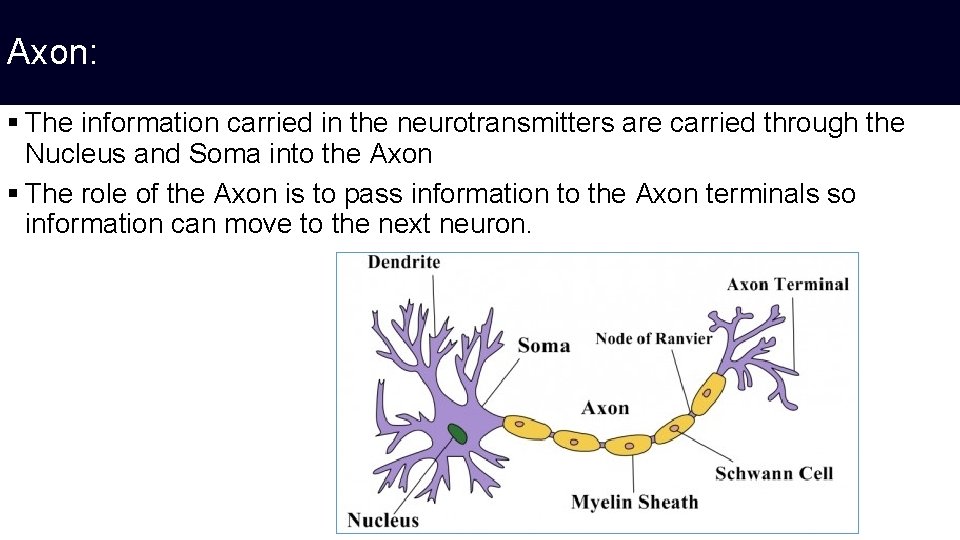
Axon: § The information carried in the neurotransmitters are carried through the Nucleus and Soma into the Axon § The role of the Axon is to pass information to the Axon terminals so information can move to the next neuron.
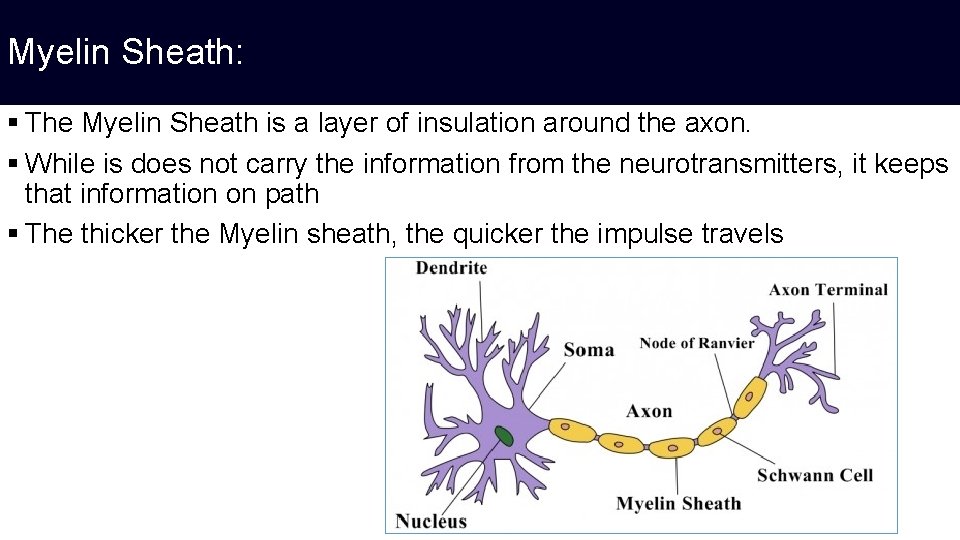
Myelin Sheath: § The Myelin Sheath is a layer of insulation around the axon. § While is does not carry the information from the neurotransmitters, it keeps that information on path § The thicker the Myelin sheath, the quicker the impulse travels
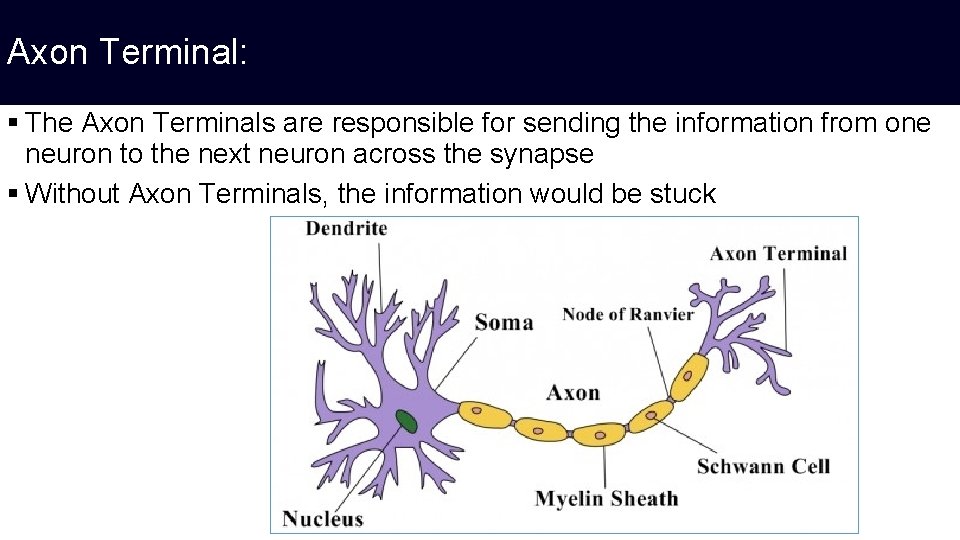
Axon Terminal: § The Axon Terminals are responsible for sending the information from one neuron to the next neuron across the synapse § Without Axon Terminals, the information would be stuck
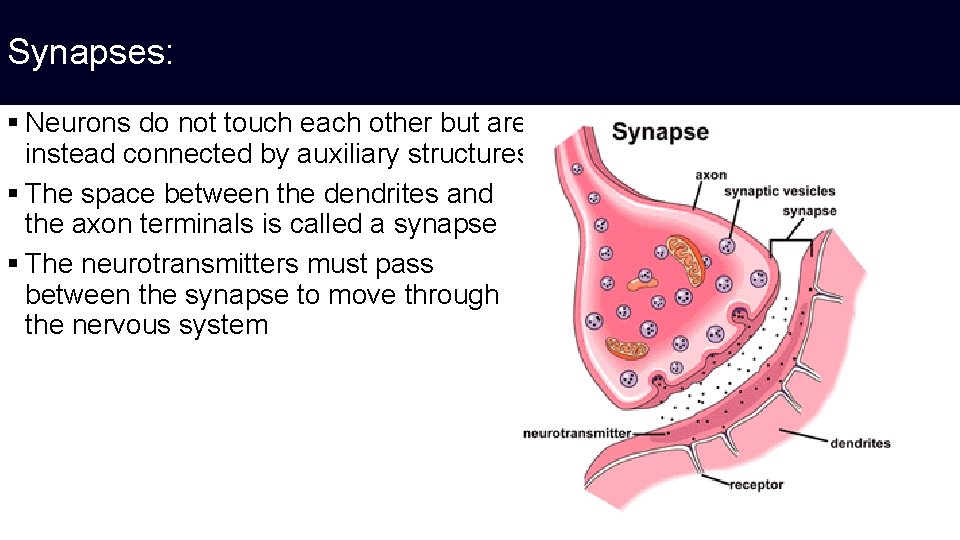
Synapses: § Neurons do not touch each other but are instead connected by auxiliary structures § The space between the dendrites and the axon terminals is called a synapse § The neurotransmitters must pass between the synapse to move through the nervous system
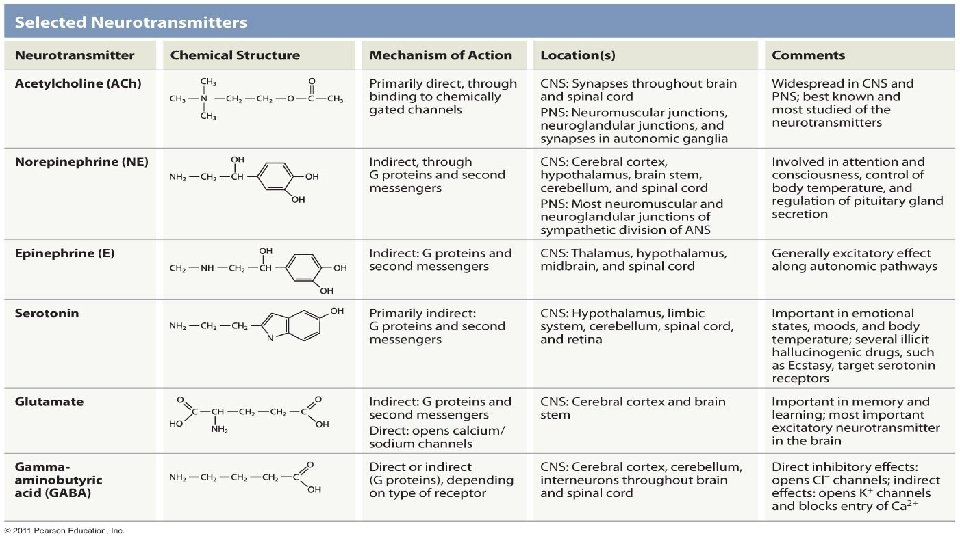
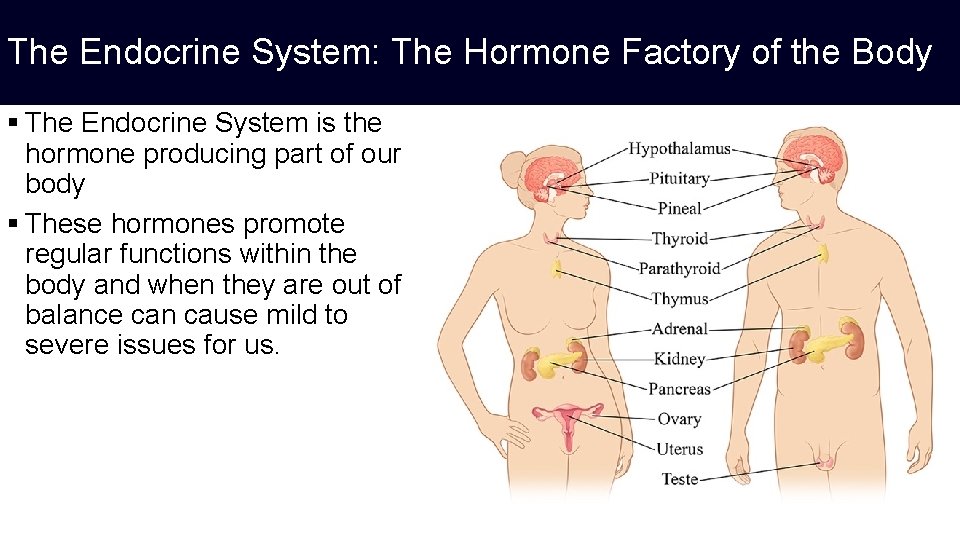
The Endocrine System: The Hormone Factory of the Body § The Endocrine System is the hormone producing part of our body § These hormones promote regular functions within the body and when they are out of balance can cause mild to severe issues for us.
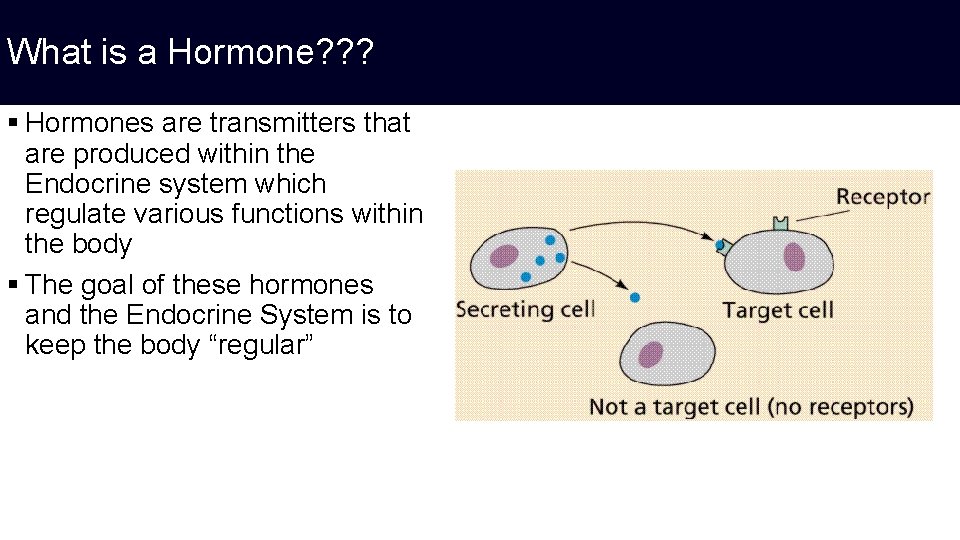
What is a Hormone? ? ? § Hormones are transmitters that are produced within the Endocrine system which regulate various functions within the body § The goal of these hormones and the Endocrine System is to keep the body “regular”
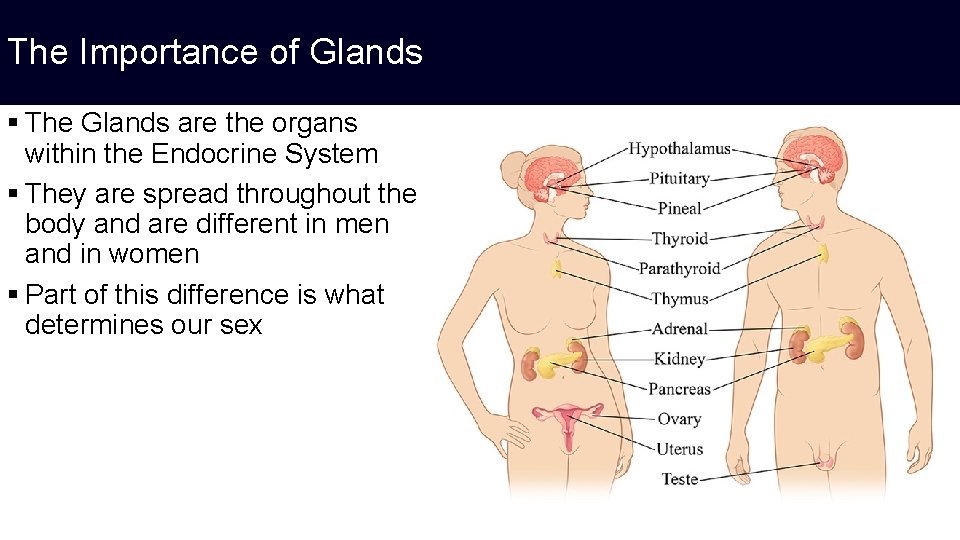
The Importance of Glands § The Glands are the organs within the Endocrine System § They are spread throughout the body and are different in men and in women § Part of this difference is what determines our sex
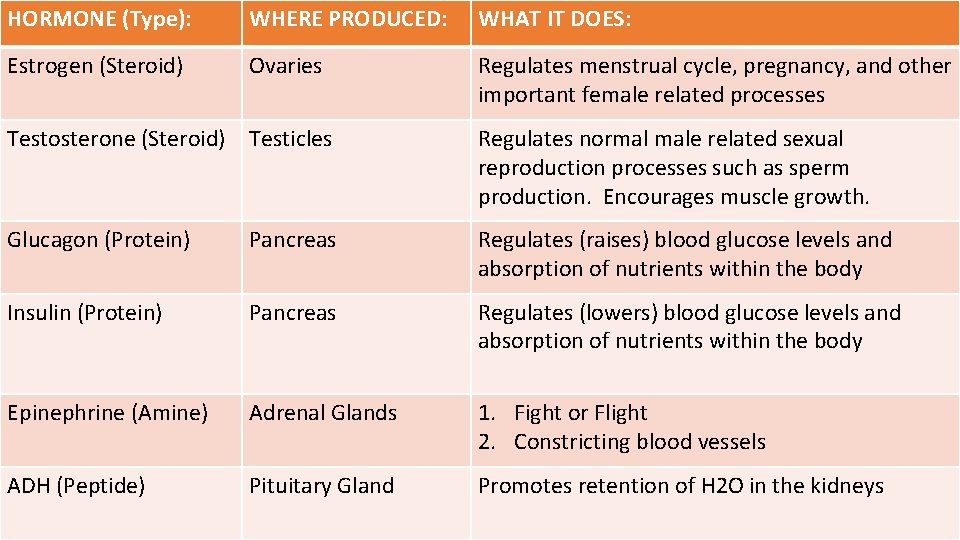
HORMONE (Type): WHERE PRODUCED: WHAT IT DOES: Estrogen (Steroid) Ovaries Regulates menstrual cycle, pregnancy, and other important female related processes Testosterone (Steroid) Testicles Regulates normal male related sexual reproduction processes such as sperm production. Encourages muscle growth. Glucagon (Protein) Pancreas Regulates (raises) blood glucose levels and absorption of nutrients within the body Insulin (Protein) Pancreas Regulates (lowers) blood glucose levels and absorption of nutrients within the body Epinephrine (Amine) Adrenal Glands 1. Fight or Flight 2. Constricting blood vessels ADH (Peptide) Pituitary Gland Promotes retention of H 2 O in the kidneys
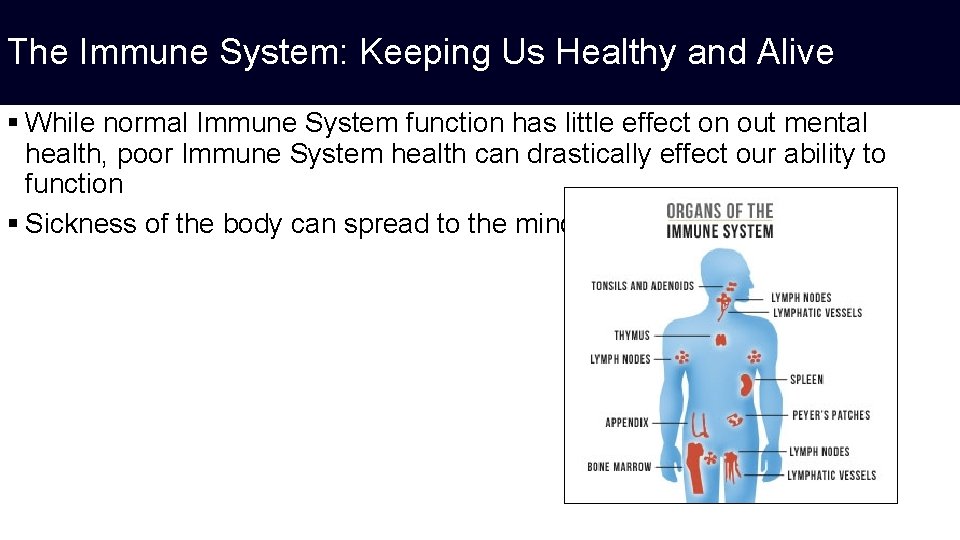
The Immune System: Keeping Us Healthy and Alive § While normal Immune System function has little effect on out mental health, poor Immune System health can drastically effect our ability to function § Sickness of the body can spread to the mind
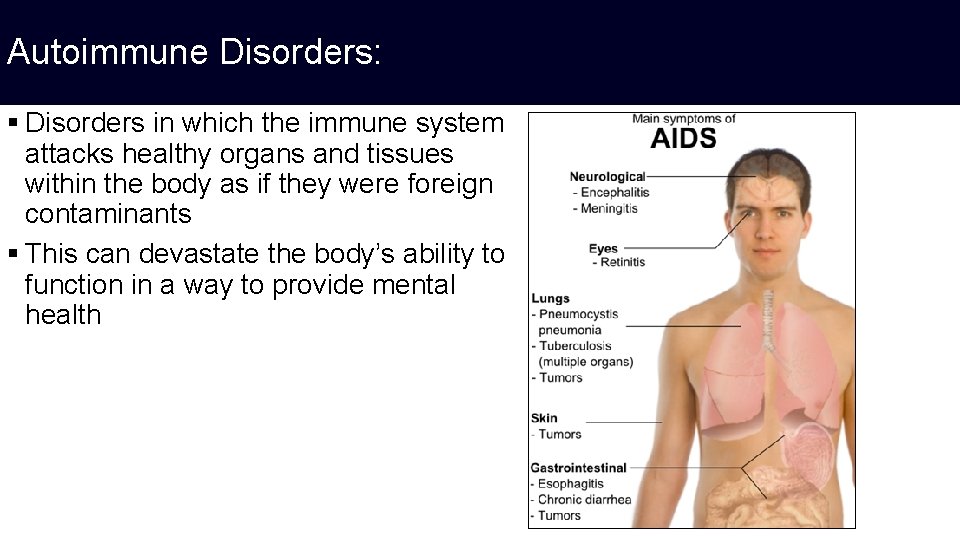
Autoimmune Disorders: § Disorders in which the immune system attacks healthy organs and tissues within the body as if they were foreign contaminants § This can devastate the body’s ability to function in a way to provide mental health
Methods for Examining the Brain § With the advent of modern technology, our ability to study the brain has increased tremendously § We can do things now that were impossible just 20 years ago
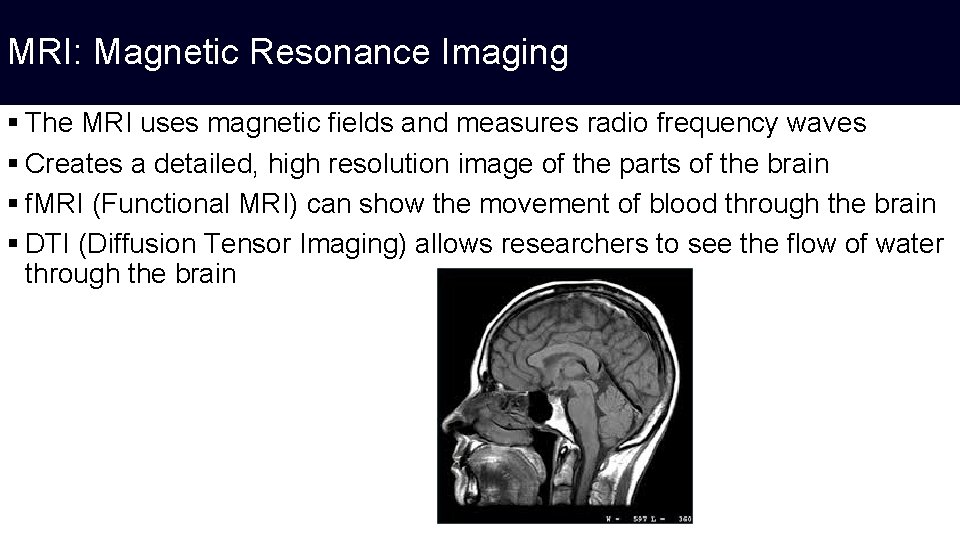
MRI: Magnetic Resonance Imaging § The MRI uses magnetic fields and measures radio frequency waves § Creates a detailed, high resolution image of the parts of the brain § f. MRI (Functional MRI) can show the movement of blood through the brain § DTI (Diffusion Tensor Imaging) allows researchers to see the flow of water through the brain

EEG: Electroencephalograph § The EEG uses pasted electrodes around the skull to gain a detailed image of the brain structure § This creates a chart that shows brain activity which can be compared to normal brain activity
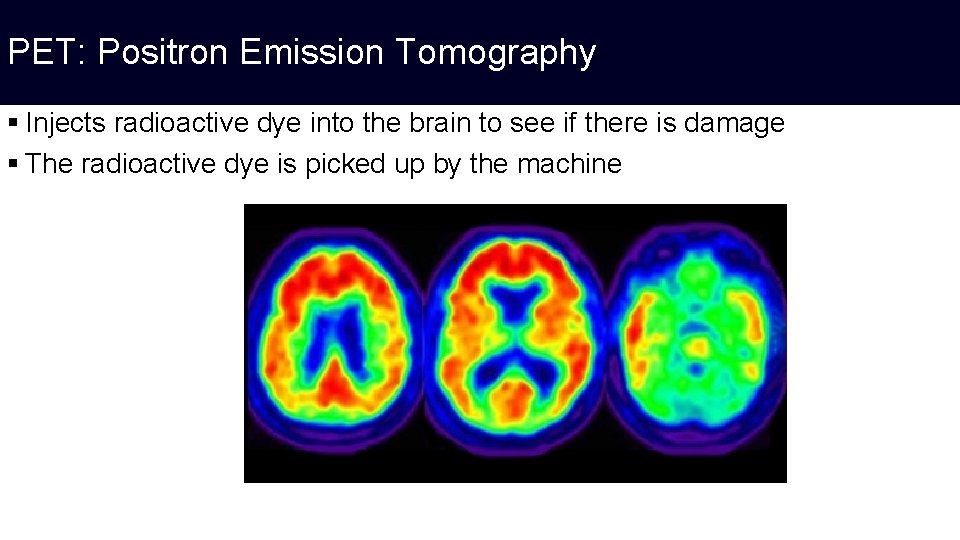
PET: Positron Emission Tomography § Injects radioactive dye into the brain to see if there is damage § The radioactive dye is picked up by the machine
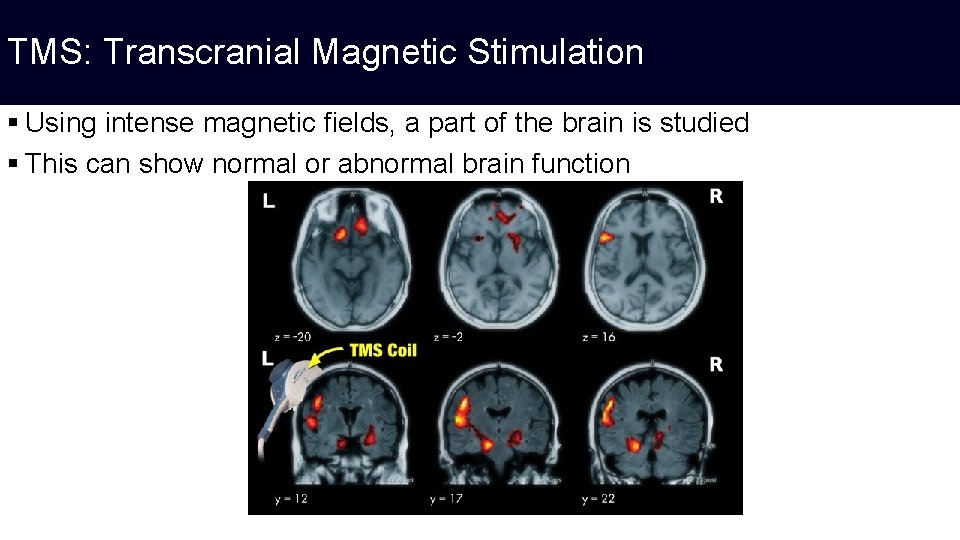
TMS: Transcranial Magnetic Stimulation § Using intense magnetic fields, a part of the brain is studied § This can show normal or abnormal brain function

FRQ: PRACTICE 2
- Slides: 43