
Unit 3 B The Brain The Cerebral Cortex
Unit 3 B : The Brain The Cerebral Cortex
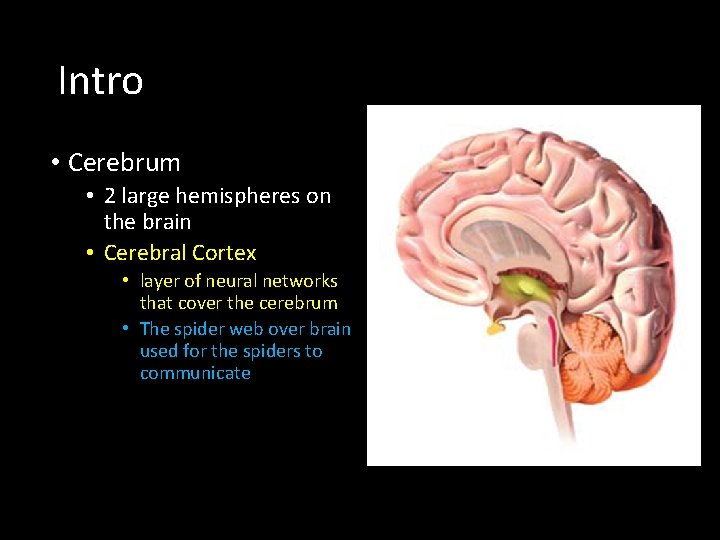
Intro • Cerebrum • 2 large hemispheres on the brain • Cerebral Cortex • layer of neural networks that cover the cerebrum • The spider web over brain used for the spiders to communicate
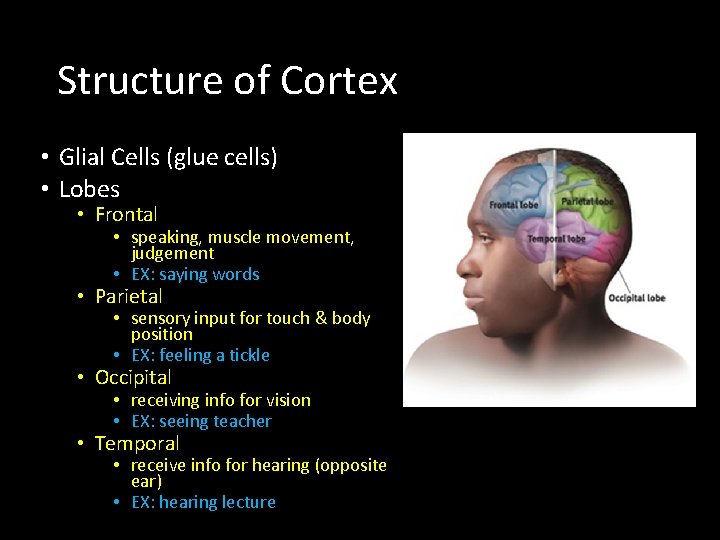
Structure of Cortex • Glial Cells (glue cells) • Lobes • Frontal • speaking, muscle movement, judgement • EX: saying words • Parietal • sensory input for touch & body position • EX: feeling a tickle • Occipital • receiving info for vision • EX: seeing teacher • Temporal • receive info for hearing (opposite ear) • EX: hearing lecture
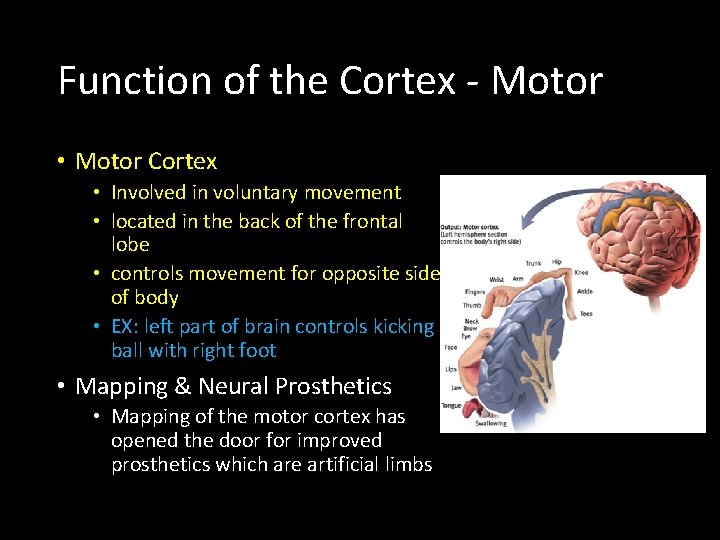
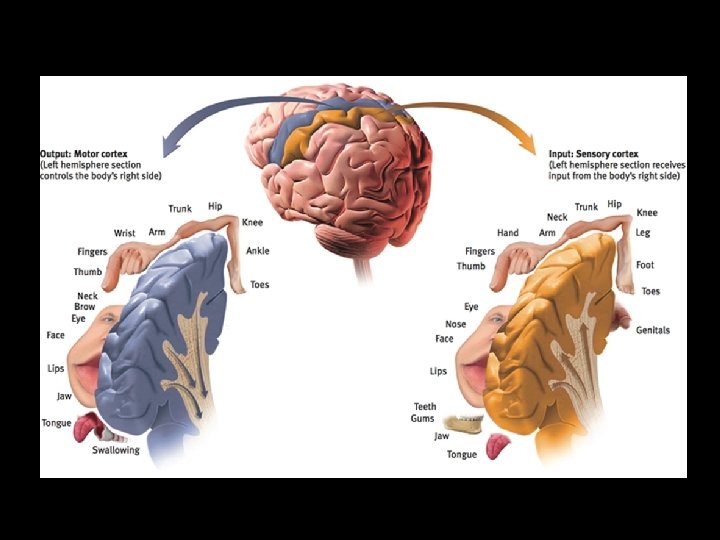
Function of the Cortex - Motor • Motor Cortex • Involved in voluntary movement • located in the back of the frontal lobe • controls movement for opposite side of body • EX: left part of brain controls kicking ball with right foot • Mapping & Neural Prosthetics • Mapping of the motor cortex has opened the door for improved prosthetics which are artificial limbs
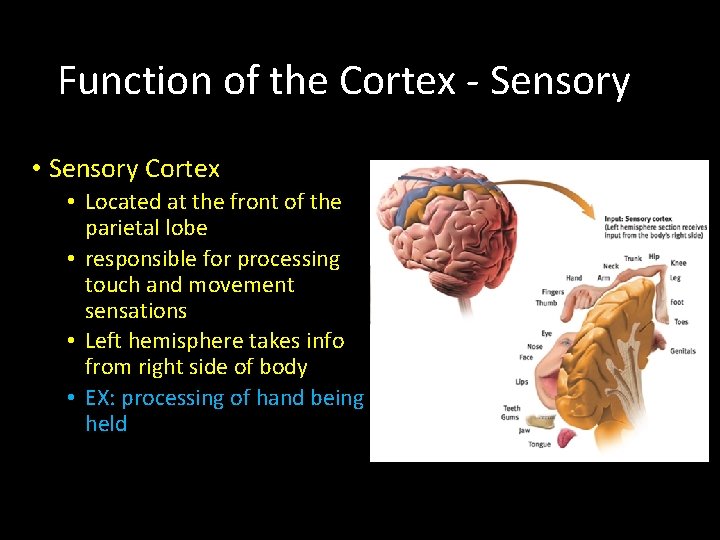
Function of the Cortex - Sensory • Sensory Cortex • Located at the front of the parietal lobe • responsible for processing touch and movement sensations • Left hemisphere takes info from right side of body • EX: processing of hand being held
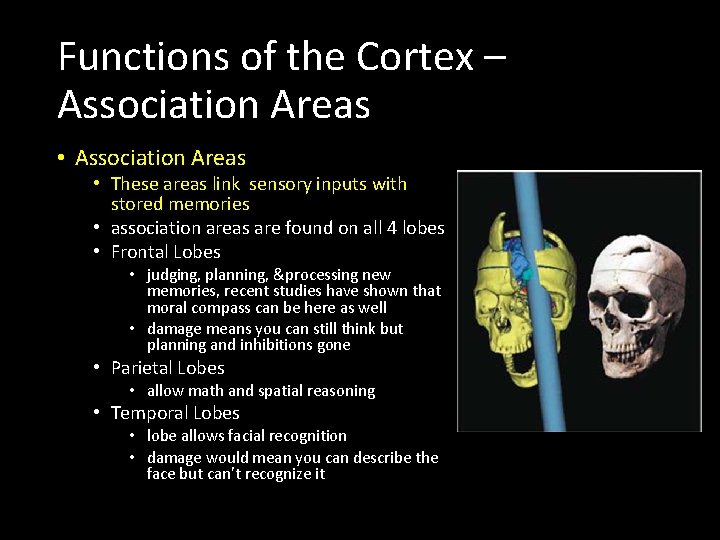
Functions of the Cortex – Association Areas • Association Areas • These areas link sensory inputs with stored memories • association areas are found on all 4 lobes • Frontal Lobes • judging, planning, &processing new memories, recent studies have shown that moral compass can be here as well • damage means you can still think but planning and inhibitions gone • Parietal Lobes • allow math and spatial reasoning • Temporal Lobes • lobe allows facial recognition • damage would mean you can describe the face but can’t recognize it
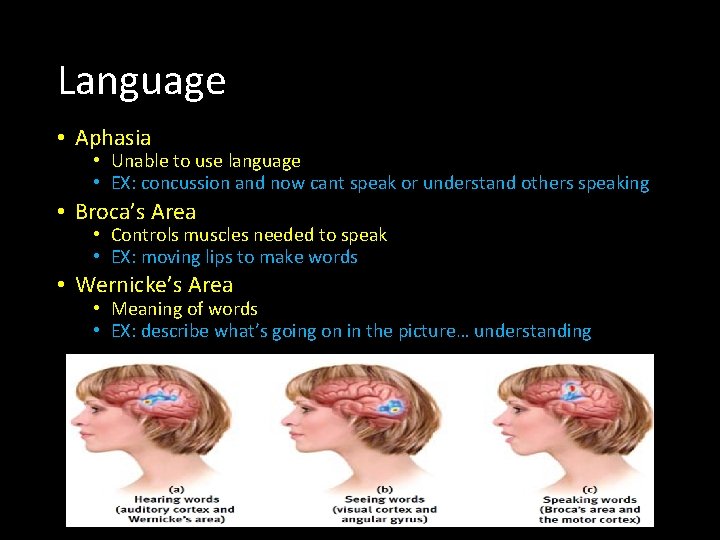
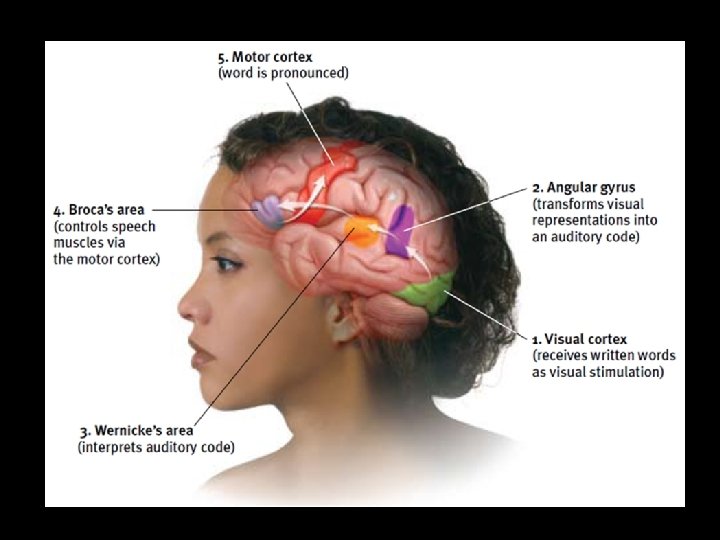
Language • Aphasia • Unable to use language • EX: concussion and now cant speak or understand others speaking • Broca’s Area • Controls muscles needed to speak • EX: moving lips to make words • Wernicke’s Area • Meaning of words • EX: describe what’s going on in the picture… understanding
The Brain’s Plasticity • Brain Damage • Plasticity • Being able to modify itself after damage • EX: constraint-induced therapy • Constraint- induced therapy • Reprogram brain to use damaged areas • Neurogenesis • Formation of new neurons • Think stem cells
- Slides: 10