
Unit 3 B Human Diversity Change Variation evolution
Unit 3 B Human Diversity & Change Variation & evolution Primate evolutionary trends

Evolution review http: //www. bozemanscience. com/evidence-for-evolution-ii Evidence for evolution II (10 mins) https: //www. youtube. com/watch? v=f. Cu 1 RVq 40 QI Evolution Continues (10 mins)
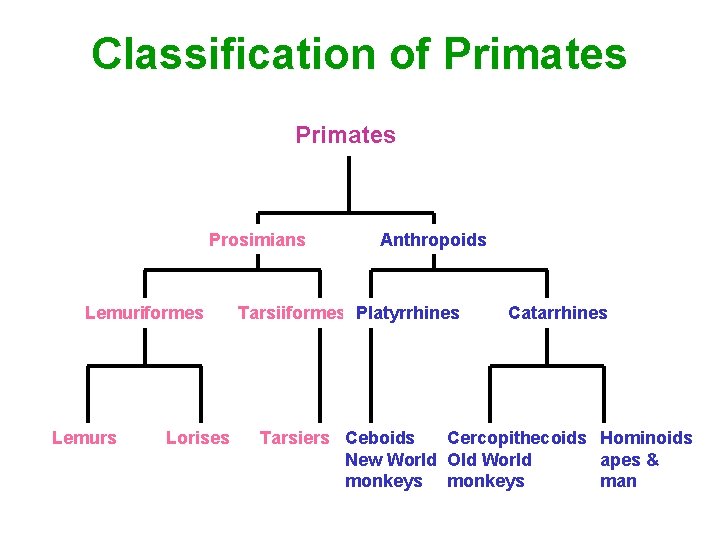
Classification of Primates Prosimians Lemuriformes Lemurs Lorises Anthropoids Tarsiiformes Platyrrhines Catarrhines Tarsiers Ceboids Cercopithecoids Hominoids New World Old World apes & monkeys man
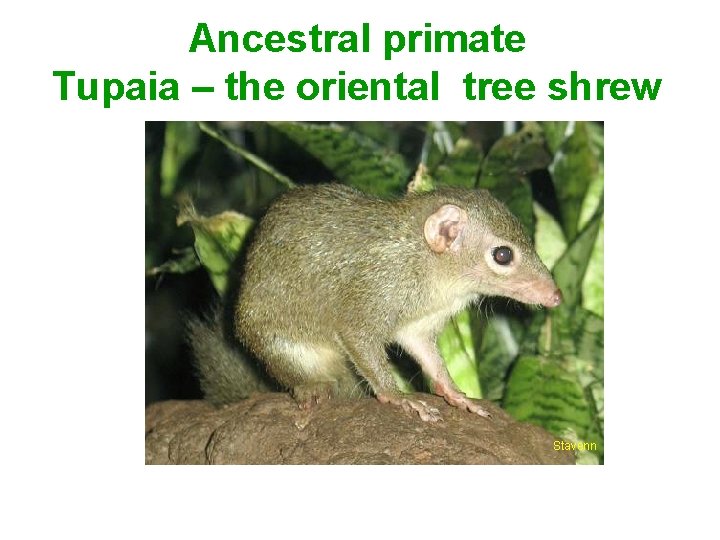
Ancestral primate Tupaia – the oriental tree shrew Stavenn
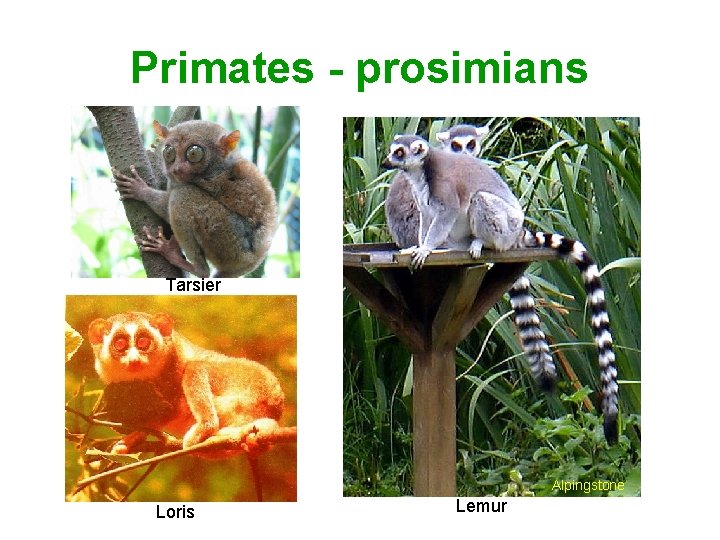
Primates - prosimians Tarsier Alpingstone Loris Lemur
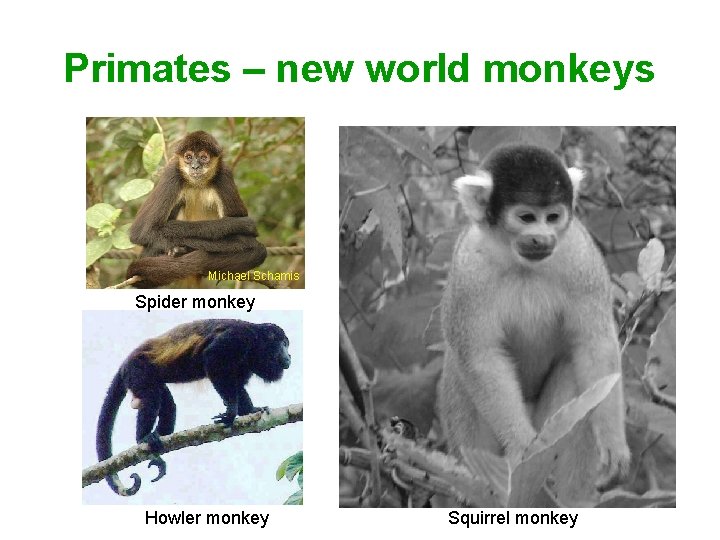
Primates – new world monkeys Michael Schamis Spider monkey Howler monkey Squirrel monkey
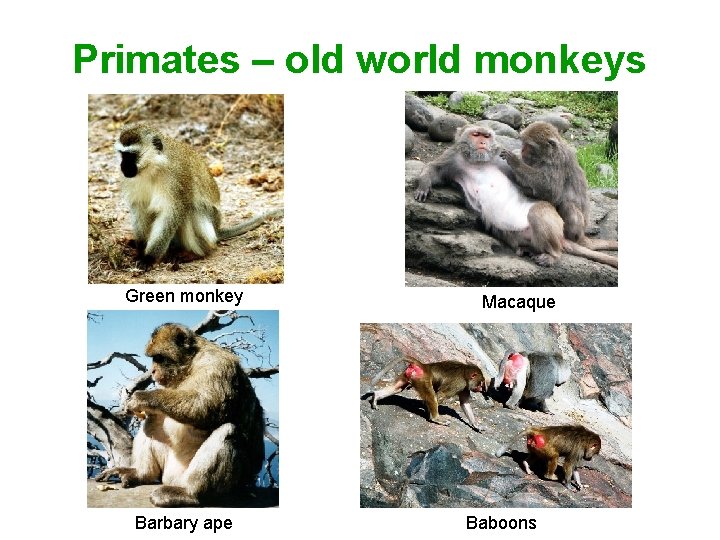
Primates – old world monkeys Green monkey Barbary ape Macaque Baboons
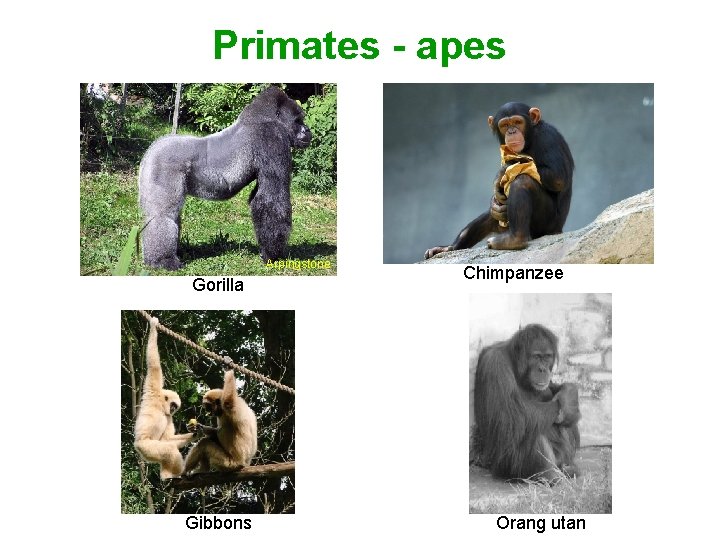
Primates - apes Arpingstone Gorilla Gibbons Chimpanzee Orang utan
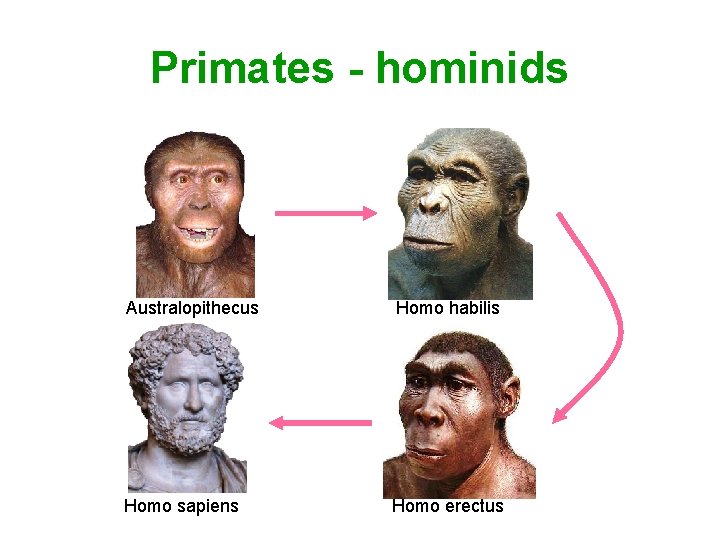
Primates - hominids Australopithecus Homo habilis Homo sapiens Homo erectus
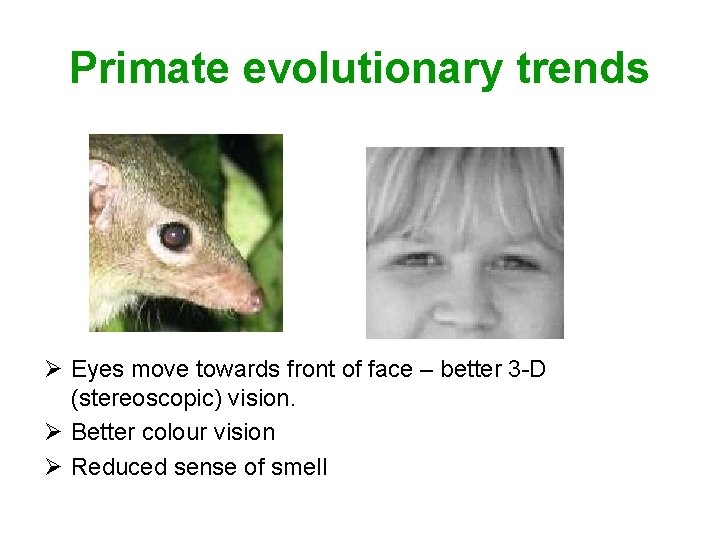
Primate evolutionary trends Ø Eyes move towards front of face – better 3 -D (stereoscopic) vision. Ø Better colour vision Ø Reduced sense of smell
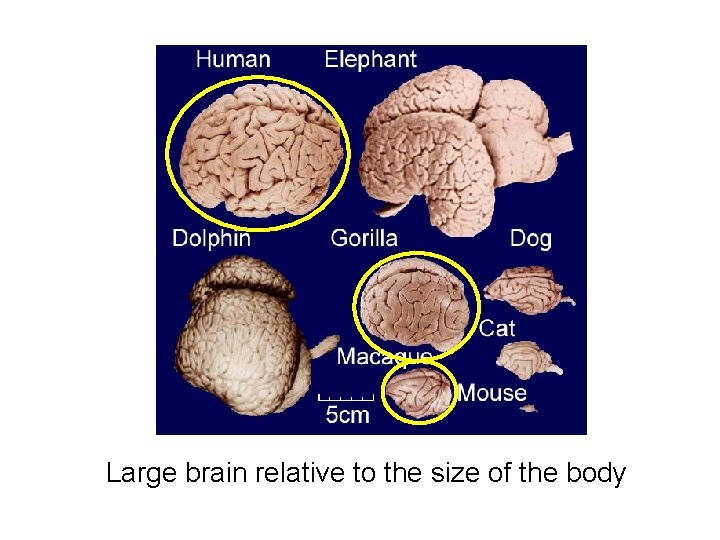
Large brain relative to the size of the body
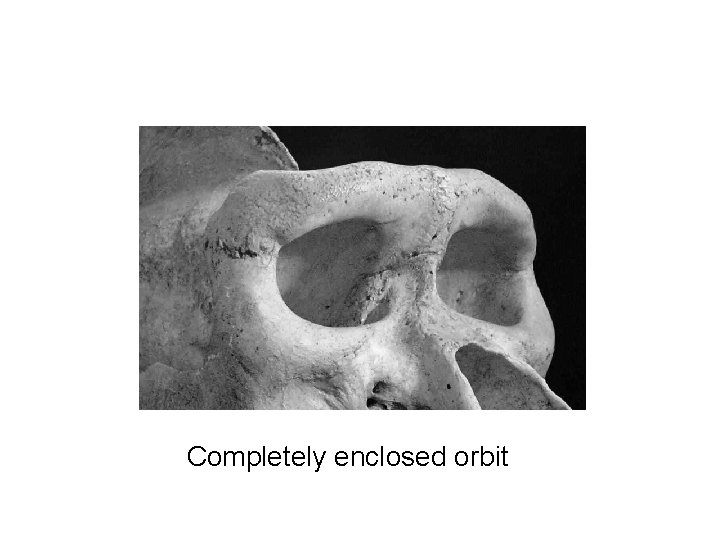
Completely enclosed orbit
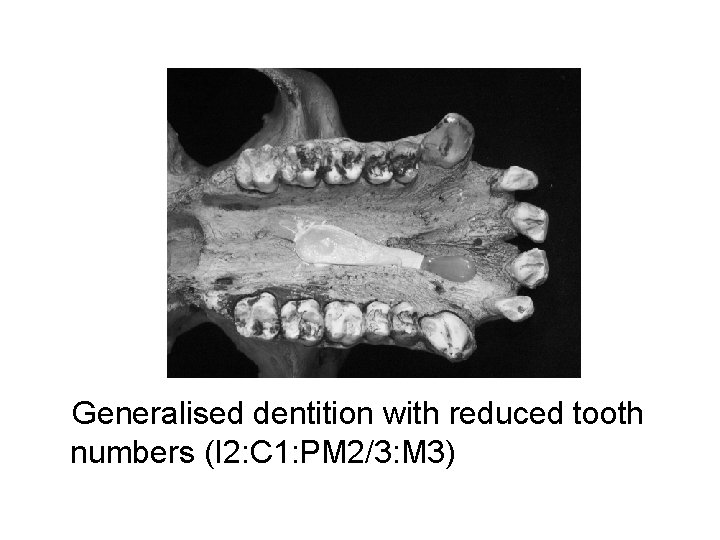
Generalised dentition with reduced tooth numbers (I 2: C 1: PM 2/3: M 3)
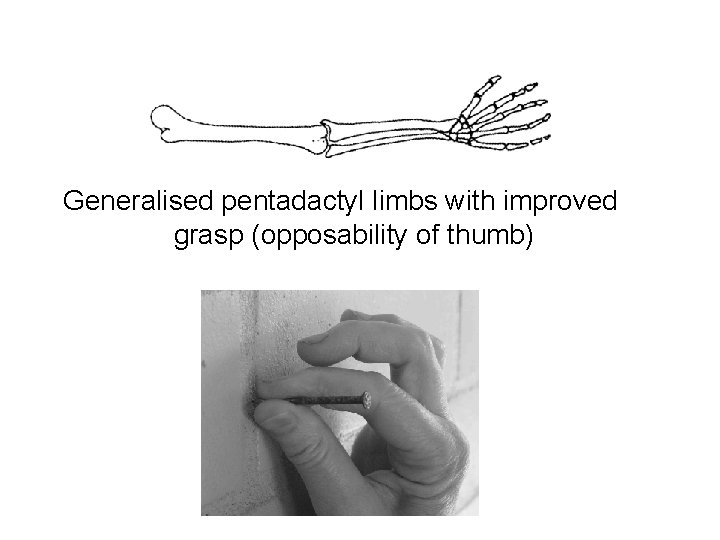
Generalised pentadactyl limbs with improved grasp (opposability of thumb)
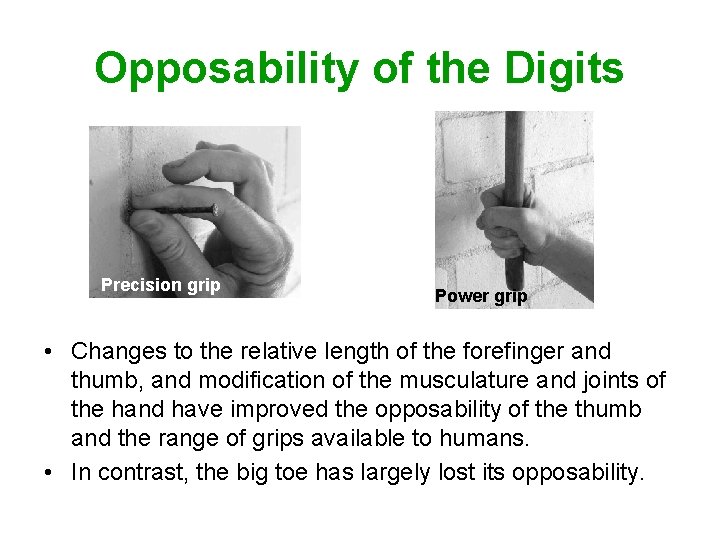
Opposability of the Digits Precision grip Power grip • Changes to the relative length of the forefinger and thumb, and modification of the musculature and joints of the hand have improved the opposability of the thumb and the range of grips available to humans. • In contrast, the big toe has largely lost its opposability.
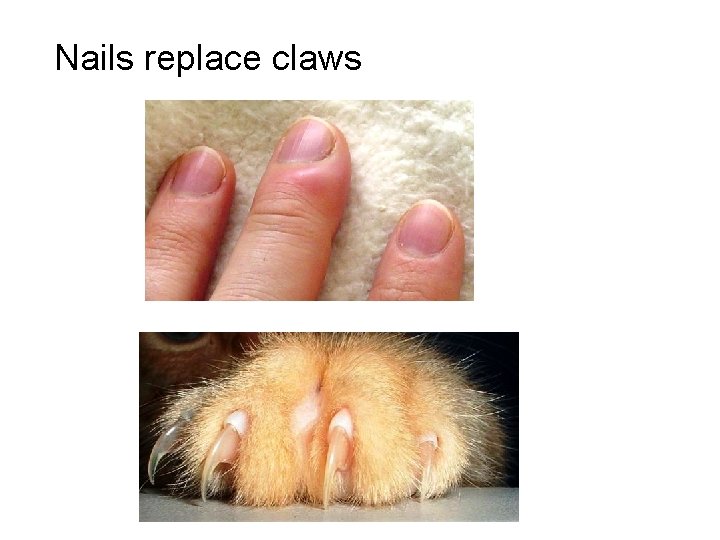
Nails replace claws
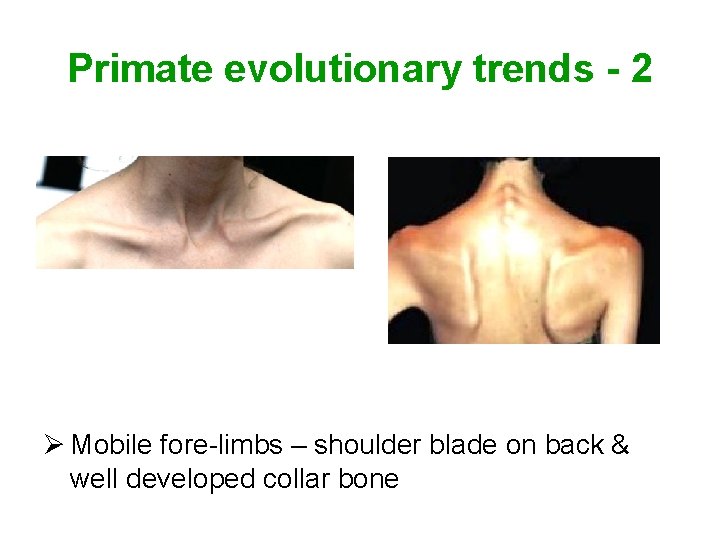
Primate evolutionary trends - 2 Ø Mobile fore-limbs – shoulder blade on back & well developed collar bone

• Single pregnancies • Extended period of dependency on parents • Body tends to get larger
- Slides: 18