
Unit 3 1 Gender analysis for adaptation Gender
- Slides: 10
Unit 3. 1: Gender analysis for adaptation Gender in Adaptation Planning for the Agriculture Sectors Training Workshop [Name of presenter] [Date]
Learning outcomes Discuss Describe Contribute Discuss what gender analysis is and what questions it helps answer. Describe ways that a gender analysis could be carried out to support adaptation planning for the agriculture sectors. Contribute to a basic gender analysis or perhaps undertake one.
What is gender analysis? Gender analysis is a systematic attempt to identify gender inequalities, their causes and how they are linked to the goals of a policy or plan. • Sheds light on how inequitable social, economic and political structures and unequal power relations rise to discrimination, subordination and exclusion. • Clarifies how women and men’s gender, age, ethnicity, culture, etc. contribute to who they are and how they operate in the world. • Identifies men’s and women’s different knowledge, experience, needs, challenges, roles, responsibilities in relation to adaptation options.
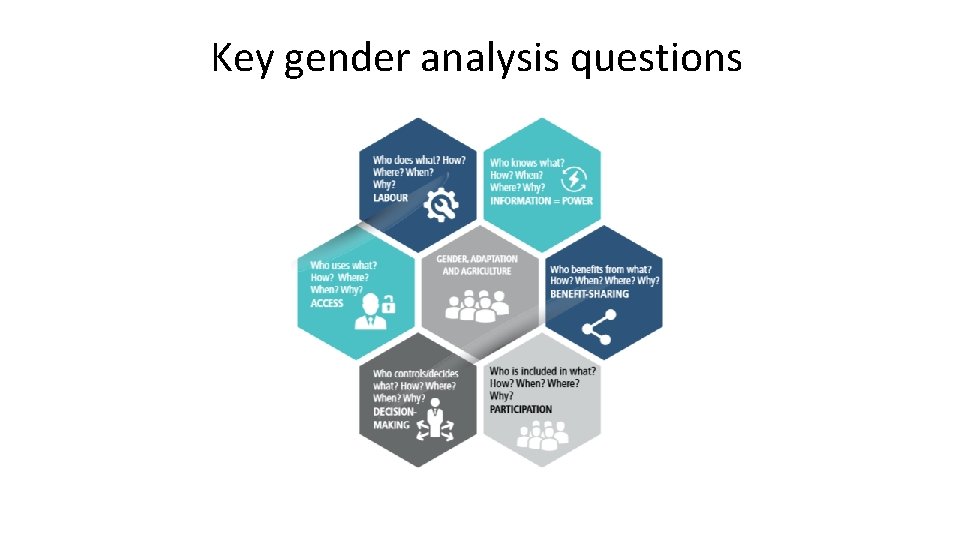
Gender issues to consider in gender analysis for adaptation in agriculture • Gender roles define how women and men “should” act and are linked to the gender division of labour, as well as differences in needs, knowledge and priorities • Discrimination of women leads to devaluing of “women’s work” • Gender roles and gender-based discrimination give rise to gender gaps in • • • Labour (including time use) Access to and control over productive resources Information (including access to services) Decision-making (household and public sphere) Participation Benefit sharing
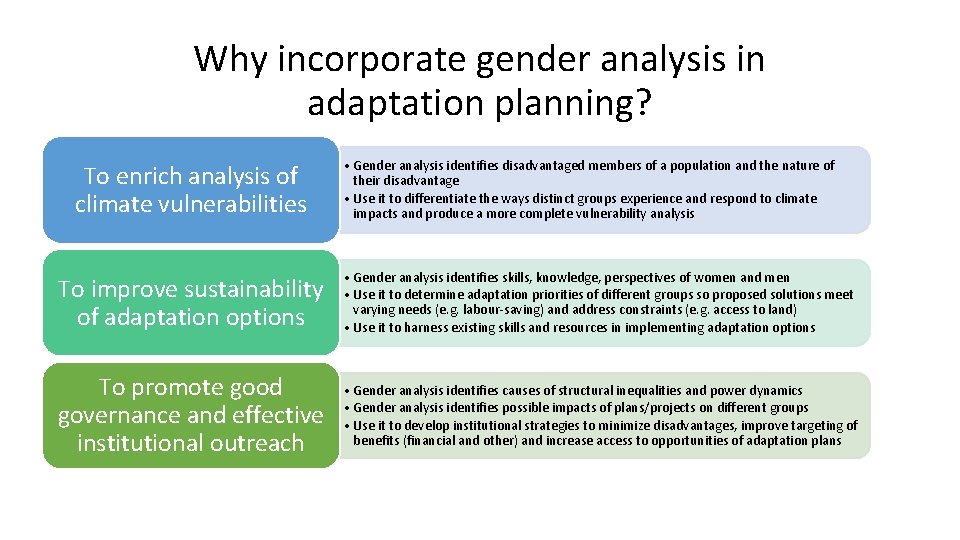
Why incorporate gender analysis in adaptation planning? To enrich analysis of climate vulnerabilities • Gender analysis identifies disadvantaged members of a population and the nature of their disadvantage • Use it to differentiate the ways distinct groups experience and respond to climate impacts and produce a more complete vulnerability analysis To improve sustainability of adaptation options • Gender analysis identifies skills, knowledge, perspectives of women and men • Use it to determine adaptation priorities of different groups so proposed solutions meet varying needs (e. g. labour-saving) and address constraints (e. g. access to land) • Use it to harness existing skills and resources in implementing adaptation options To promote good governance and effective institutional outreach • Gender analysis identifies causes of structural inequalities and power dynamics • Gender analysis identifies possible impacts of plans/projects on different groups • Use it to develop institutional strategies to minimize disadvantages, improve targeting of benefits (financial and other) and increase access to opportunities of adaptation plans
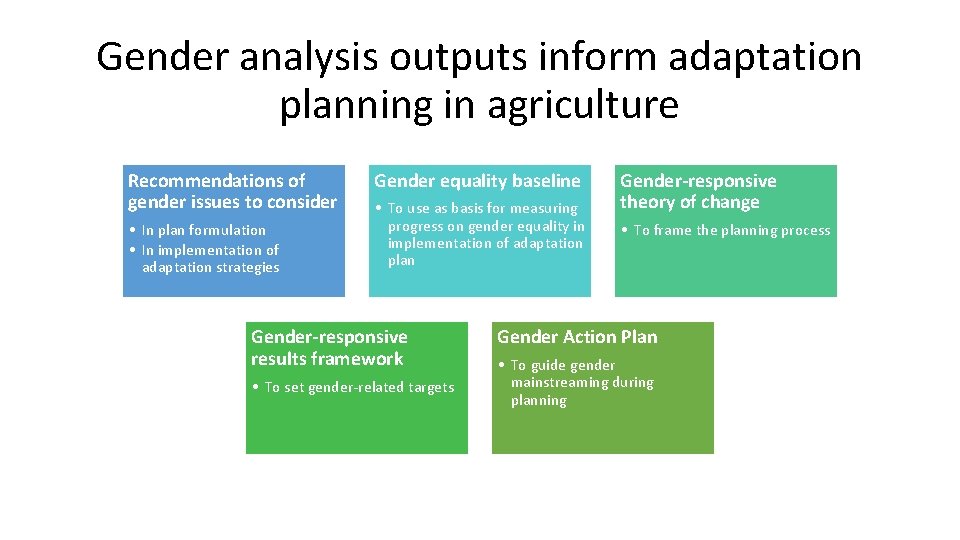
Gender analysis outputs inform adaptation planning in agriculture Recommendations of gender issues to consider • In plan formulation • In implementation of adaptation strategies Gender equality baseline • To use as basis for measuring progress on gender equality in implementation of adaptation plan Gender-responsive results framework • To set gender-related targets Gender-responsive theory of change • To frame the planning process Gender Action Plan • To guide gender mainstreaming during planning
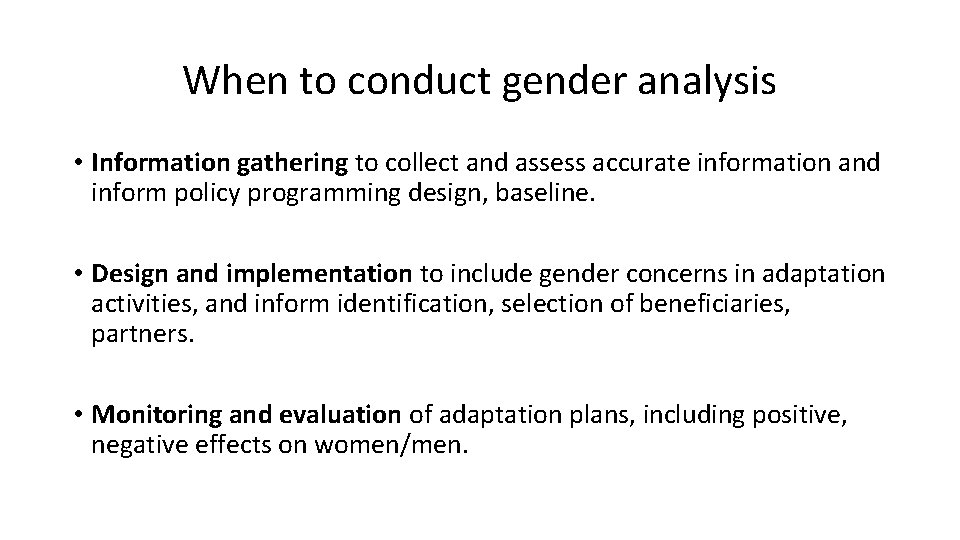
When to conduct gender analysis • Information gathering to collect and assess accurate information and inform policy programming design, baseline. • Design and implementation to include gender concerns in adaptation activities, and inform identification, selection of beneficiaries, partners. • Monitoring and evaluation of adaptation plans, including positive, negative effects on women/men.
What resources needed? • Gender analysis framework • Resource person(s) • Financial, other resources • Access to secondary data • Access to qualitative data as well as quantitative • Expertise to collect primary data if needed
Sources of information for a national-level gender analysis • National policies • National gender strategies • Legislation • Government studies/data • Research institutes • INGOs/NGOs Other • World Bank Database • OECD Social Institutions and Gender Index (SIGI) • UNDP’s Human Development Index (HDI) • UNDP‘s Gender Inequality Index (GDI) • FAO Gender and Land Rights Database.
Key gender analysis questions