
Unit 202 Principles of electrical science Mathematical principles
- Slides: 29
Unit 202: Principles of electrical science Mathematical principles
Fractions can be classified in two ways: • vulgar fractions • decimal fractions.
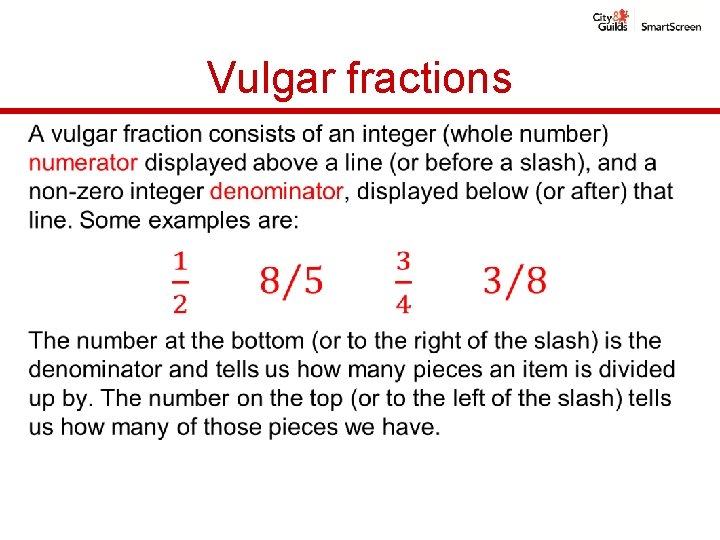
Vulgar fractions •
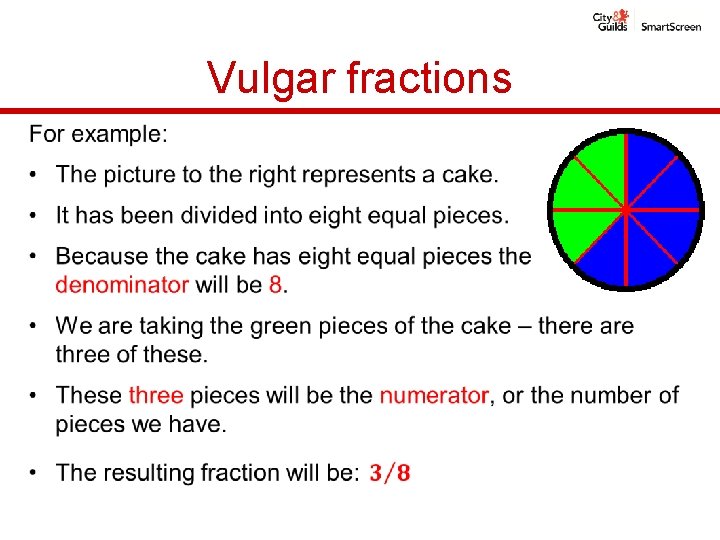
Vulgar fractions •
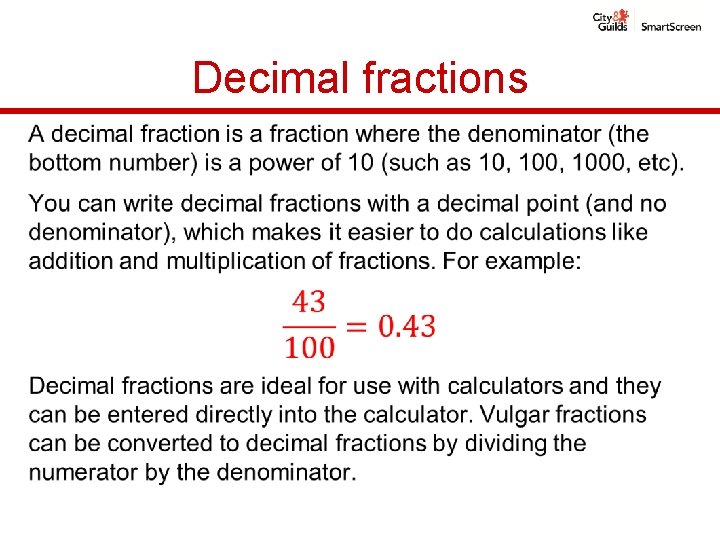
Decimal fractions •
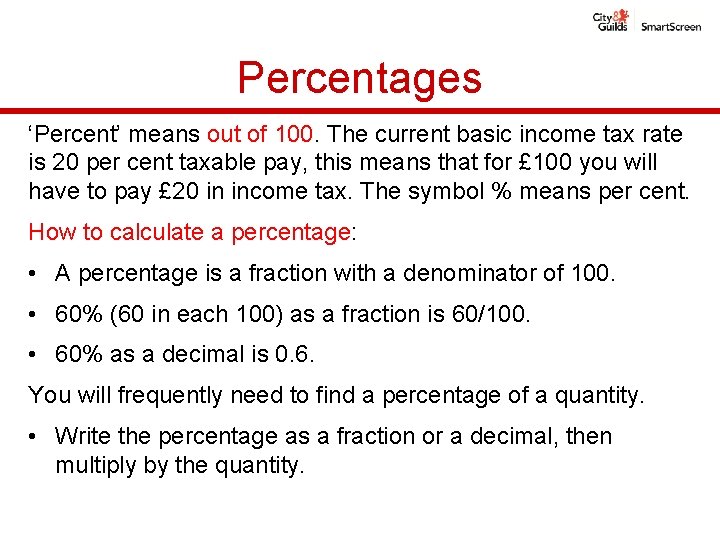
Percentages ‘Percent’ means out of 100. The current basic income tax rate is 20 per cent taxable pay, this means that for £ 100 you will have to pay £ 20 in income tax. The symbol % means per cent. How to calculate a percentage: • A percentage is a fraction with a denominator of 100. • 60% (60 in each 100) as a fraction is 60/100. • 60% as a decimal is 0. 6. You will frequently need to find a percentage of a quantity. • Write the percentage as a fraction or a decimal, then multiply by the quantity.
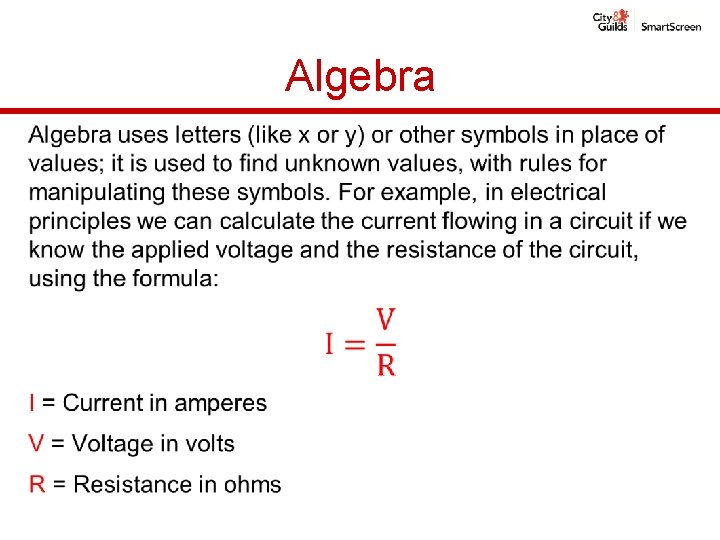
Algebra •
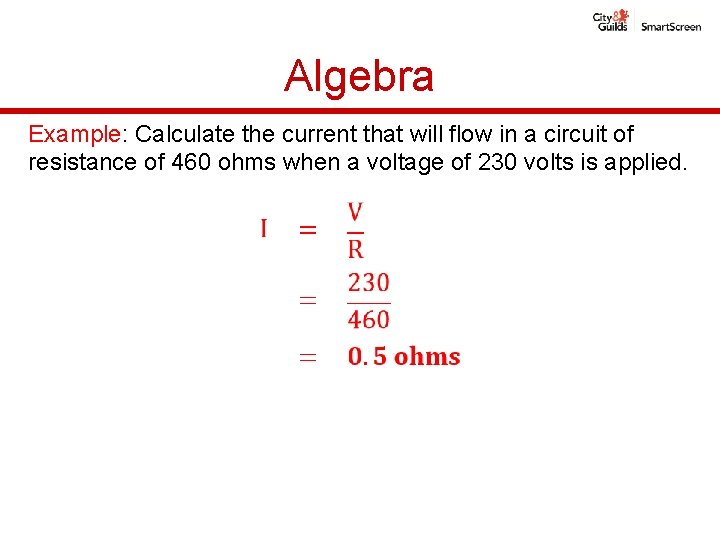
Algebra Example: Calculate the current that will flow in a circuit of resistance of 460 ohms when a voltage of 230 volts is applied.
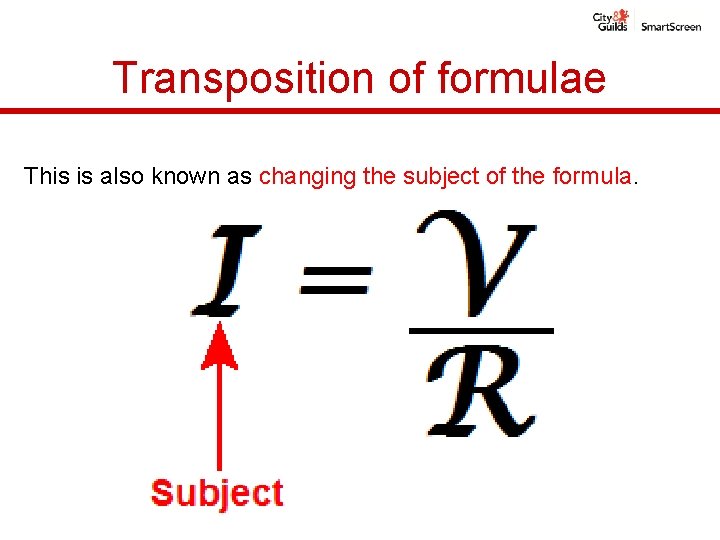
Transposition of formulae This is also known as changing the subject of the formula.
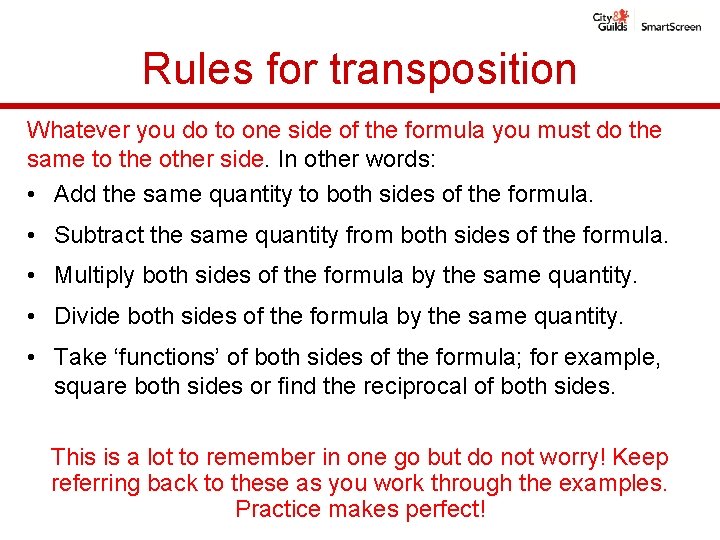
Rules for transposition Whatever you do to one side of the formula you must do the same to the other side. In other words: • Add the same quantity to both sides of the formula. • Subtract the same quantity from both sides of the formula. • Multiply both sides of the formula by the same quantity. • Divide both sides of the formula by the same quantity. • Take ‘functions’ of both sides of the formula; for example, square both sides or find the reciprocal of both sides. This is a lot to remember in one go but do not worry! Keep referring back to these as you work through the examples. Practice makes perfect!
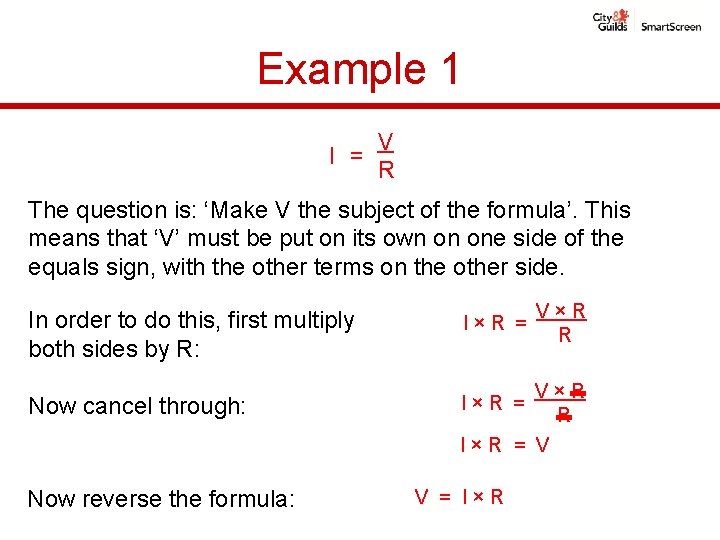
Example 1 I = V R The question is: ‘Make V the subject of the formula’. This means that ‘V’ must be put on its own on one side of the equals sign, with the other terms on the other side. In order to do this, first multiply both sides by R: Now cancel through: Now reverse the formula: I×R = V×R R I×R = V = I×R
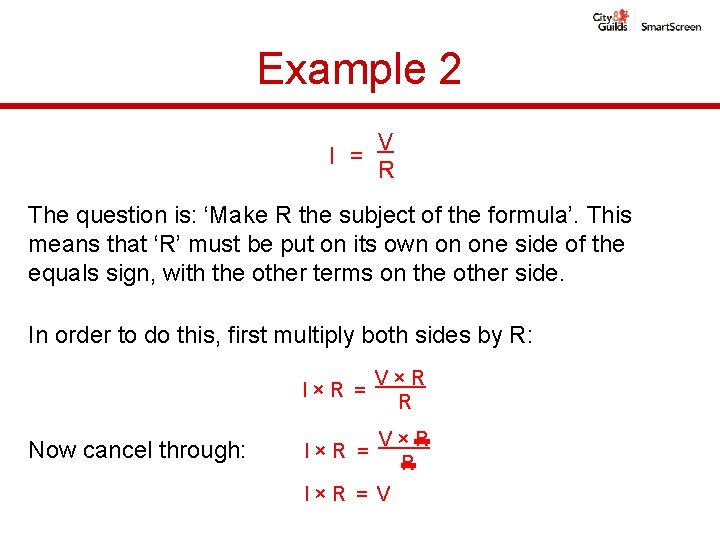
Example 2 I = V R The question is: ‘Make R the subject of the formula’. This means that ‘R’ must be put on its own on one side of the equals sign, with the other terms on the other side. In order to do this, first multiply both sides by R: Now cancel through: I×R = V×R R I×R = V
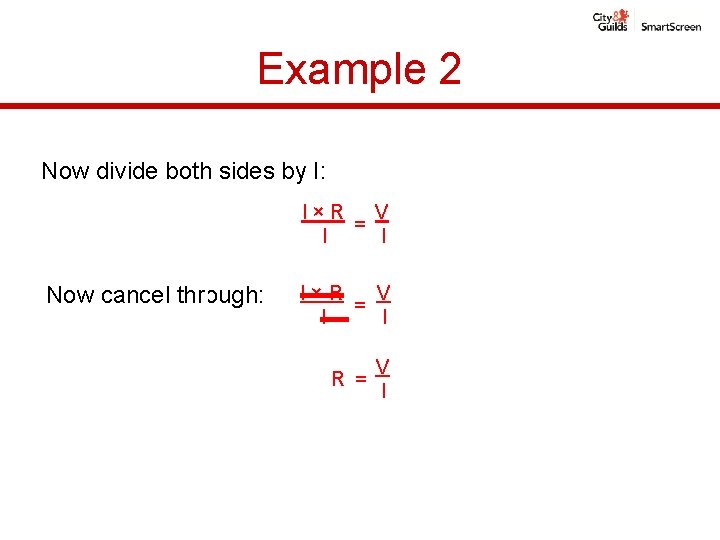
Example 2 Now divide both sides by I: I×R V = I. I Now cancel through: I×R V = I. I R = V I
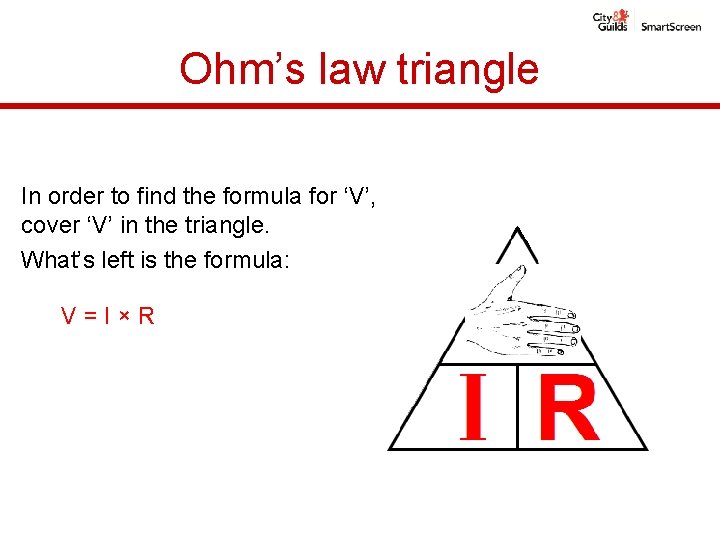
Ohm’s law triangle In order to find the formula for ‘V’, cover ‘V’ in the triangle. What’s left is the formula: V=I×R
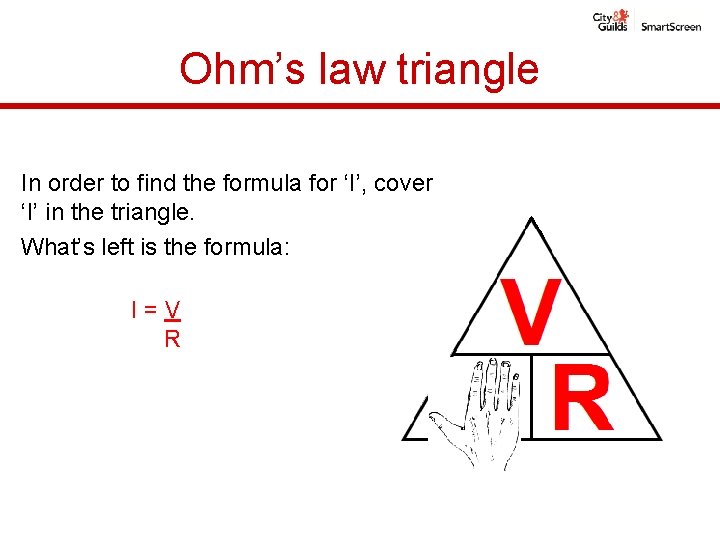
Ohm’s law triangle In order to find the formula for ‘I’, cover ‘I’ in the triangle. What’s left is the formula: I=V R
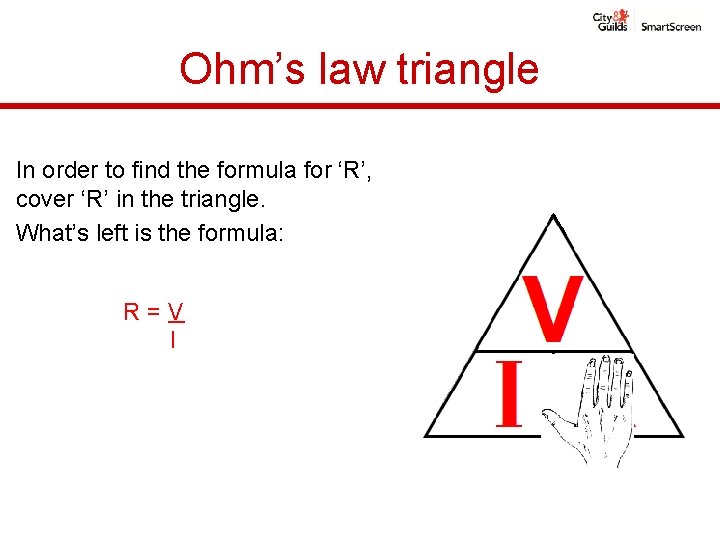
Ohm’s law triangle In order to find the formula for ‘R’, cover ‘R’ in the triangle. What’s left is the formula: R=V I
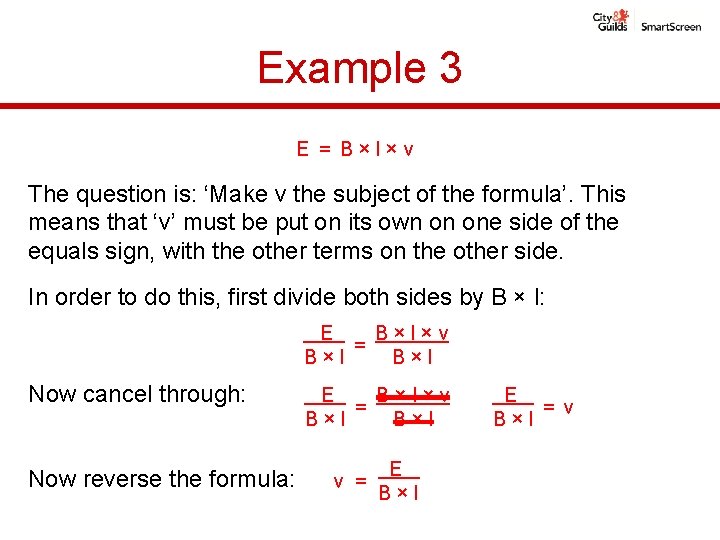
Example 3 E = B×l×v The question is: ‘Make v the subject of the formula’. This means that ‘v’ must be put on its own on one side of the equals sign, with the other terms on the other side. In order to do this, first divide both sides by B × l: E. B×l×v = B × l. B×l Now cancel through: Now reverse the formula: E. B×l×v = B × l. B×l v = E. B×l E. = v B × l.
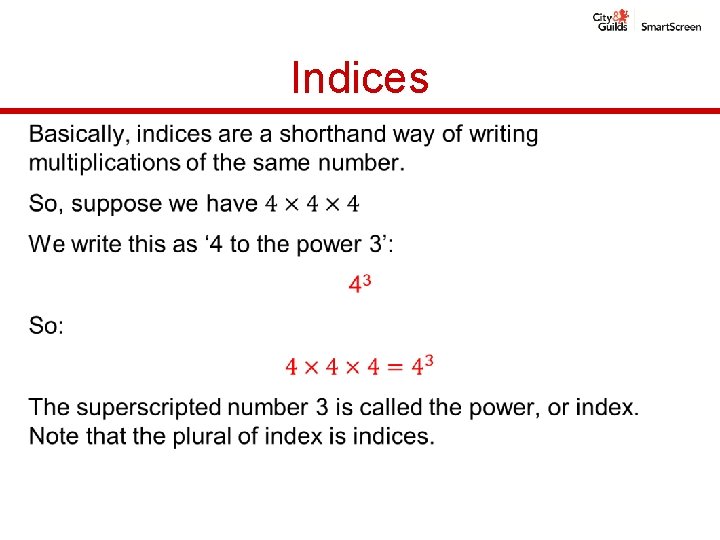
Indices •
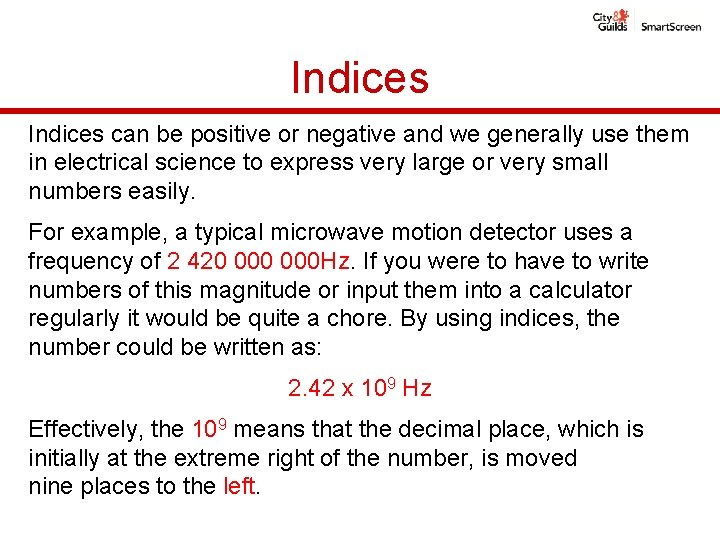
Indices can be positive or negative and we generally use them in electrical science to express very large or very small numbers easily. For example, a typical microwave motion detector uses a frequency of 2 420 000 Hz. If you were to have to write numbers of this magnitude or input them into a calculator regularly it would be quite a chore. By using indices, the number could be written as: 2. 42 x 109 Hz Effectively, the 109 means that the decimal place, which is initially at the extreme right of the number, is moved nine places to the left.
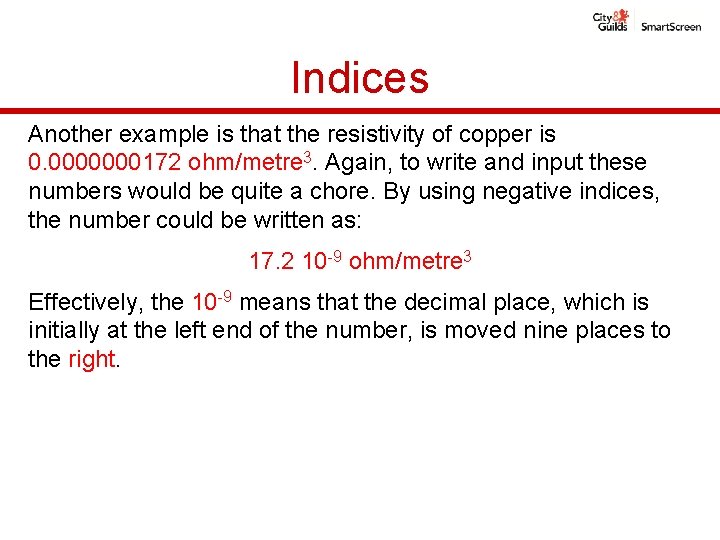
Indices Another example is that the resistivity of copper is 0. 0000000172 ohm/metre 3. Again, to write and input these numbers would be quite a chore. By using negative indices, the number could be written as: 17. 2 10 -9 ohm/metre 3 Effectively, the 10 -9 means that the decimal place, which is initially at the left end of the number, is moved nine places to the right.
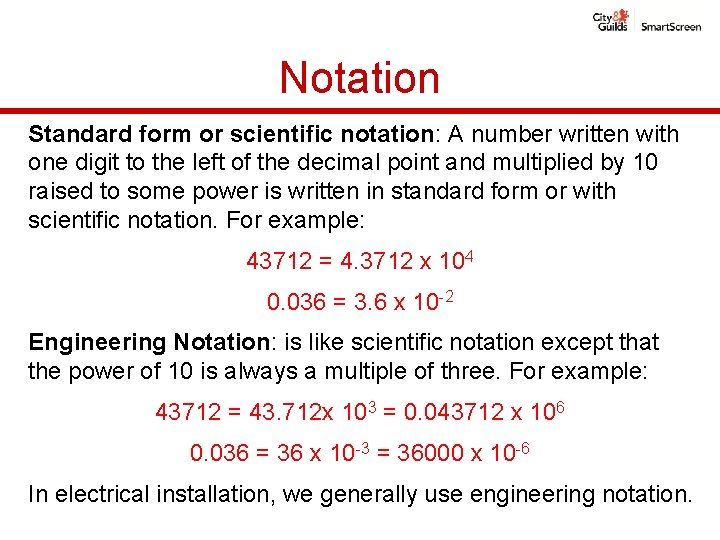
Notation Standard form or scientific notation: A number written with one digit to the left of the decimal point and multiplied by 10 raised to some power is written in standard form or with scientific notation. For example: 43712 = 4. 3712 x 104 0. 036 = 3. 6 x 10 -2 Engineering Notation: is like scientific notation except that the power of 10 is always a multiple of three. For example: 43712 = 43. 712 x 103 = 0. 043712 x 106 0. 036 = 36 x 10 -3 = 36000 x 10 -6 In electrical installation, we generally use engineering notation.
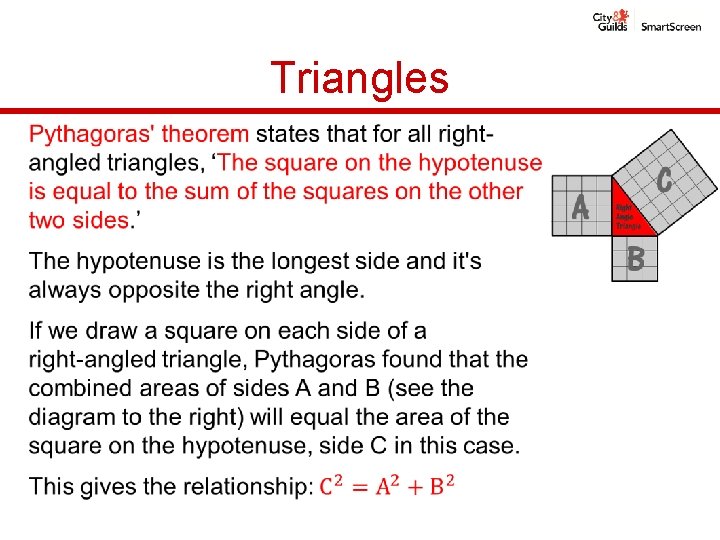
Triangles •
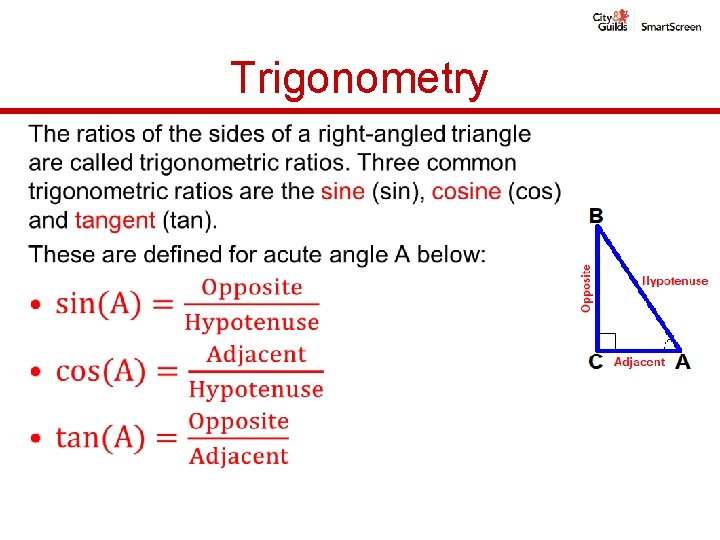
Trigonometry •
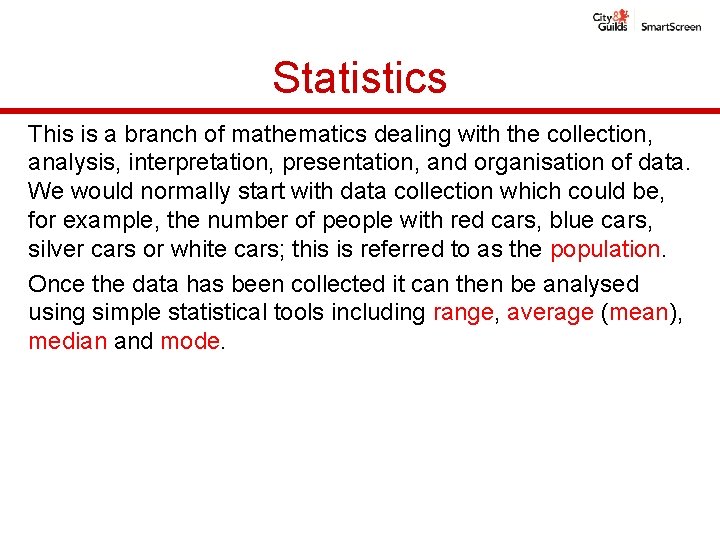
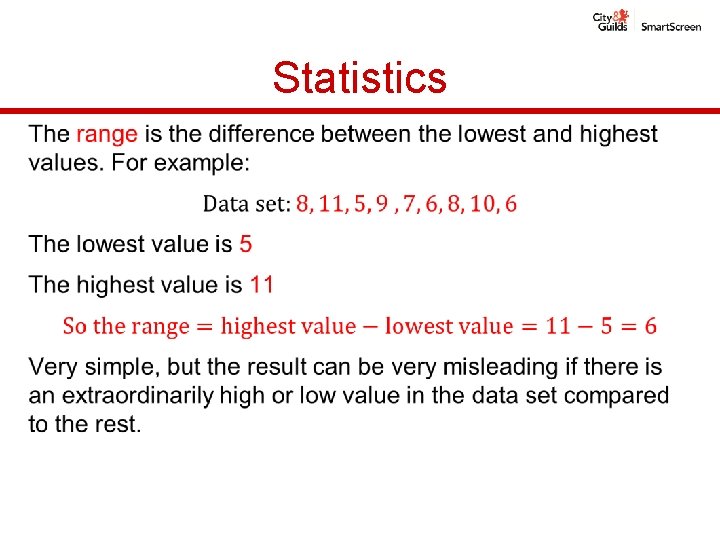
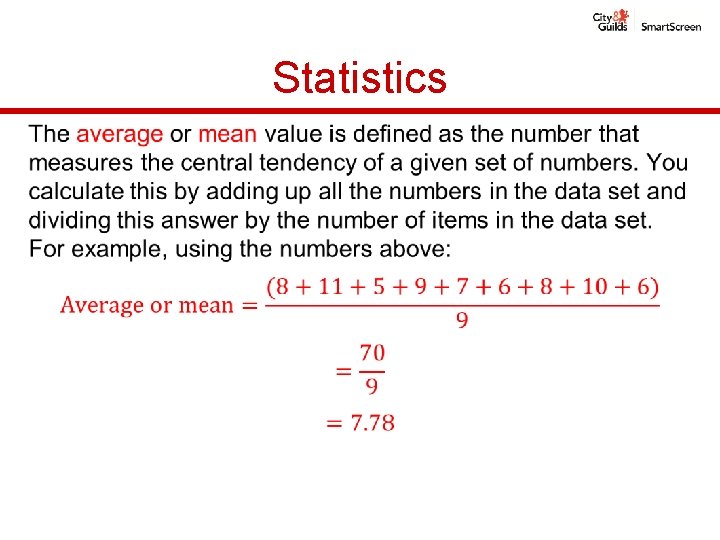
Statistics This is a branch of mathematics dealing with the collection, analysis, interpretation, presentation, and organisation of data. We would normally start with data collection which could be, for example, the number of people with red cars, blue cars, silver cars or white cars; this is referred to as the population. Once the data has been collected it can then be analysed using simple statistical tools including range, average (mean), median and mode.
Statistics •
Statistics •
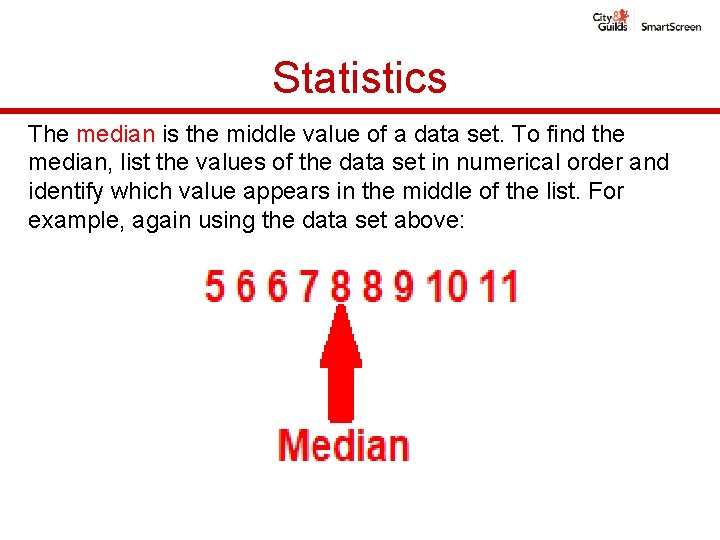
Statistics The median is the middle value of a data set. To find the median, list the values of the data set in numerical order and identify which value appears in the middle of the list. For example, again using the data set above:
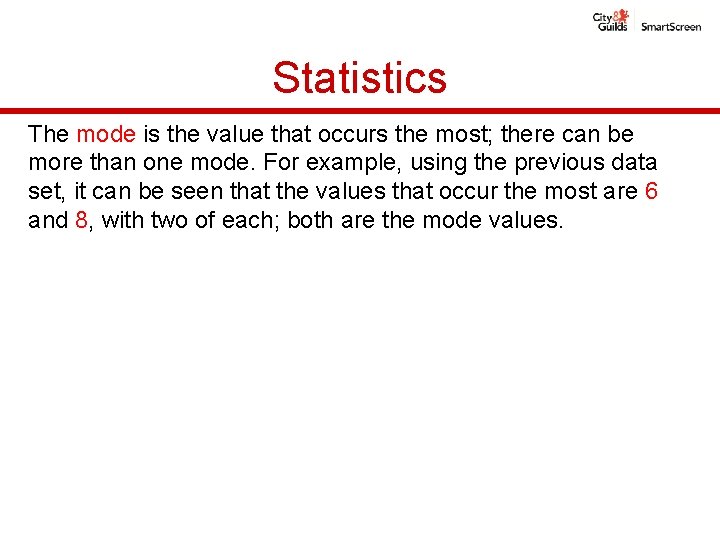
Statistics The mode is the value that occurs the most; there can be more than one mode. For example, using the previous data set, it can be seen that the values that occur the most are 6 and 8, with two of each; both are the mode values.
Unit 202: Principles of electrical science The end