
Unit 20 Vibrationdata Digital Filtering Part 2 1
Unit 20 Vibrationdata Digital Filtering, Part 2 1
Introduction n Vibrationdata Successive bandpass filtering can be used to calculate a power spectral density (PSD) from a time history This method is very educational but inefficient for general use Begin with a review exercise by synthesizing a time history to satisfy a PSD 2
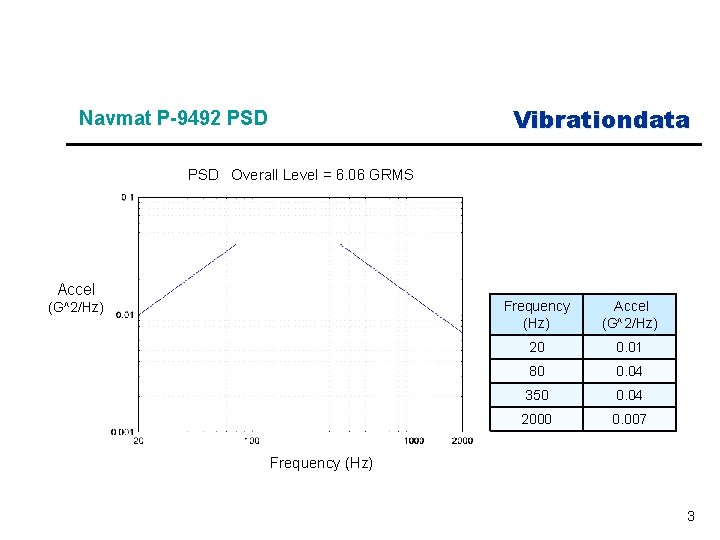
Vibrationdata Navmat P-9492 PSD Overall Level = 6. 06 GRMS Accel (G^2/Hz) Frequency (Hz) Accel (G^2/Hz) 20 0. 01 80 0. 04 350 0. 04 2000 0. 007 Frequency (Hz) 3
Synthesis Steps Vibrationdata ♦ vibrationdata > Power Spectral Density > Time History Synthesis from White Noise ♦ Input file: navmat_spec. psd ♦ Duration = 60 sec ♦ Row 8, df = 2. 13 Hz, dof = 256 ♦ Save Acceleration time history as: input_th ♦ Save Acceleration PSD as: input_psd 4
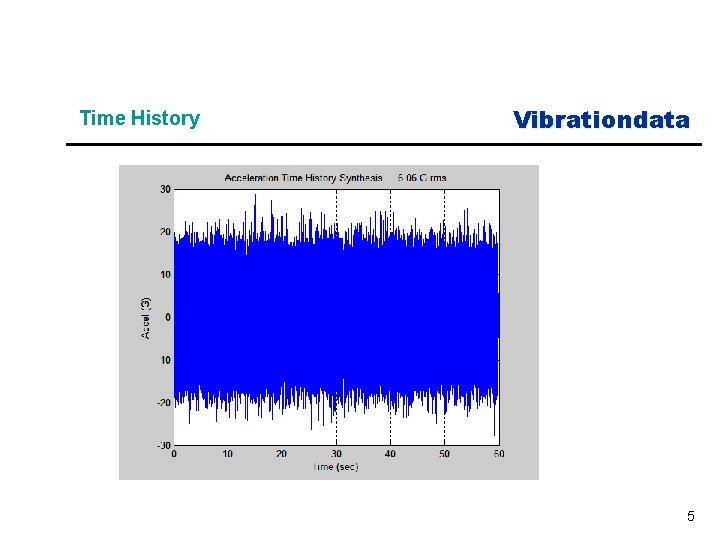
Time History Vibrationdata 5
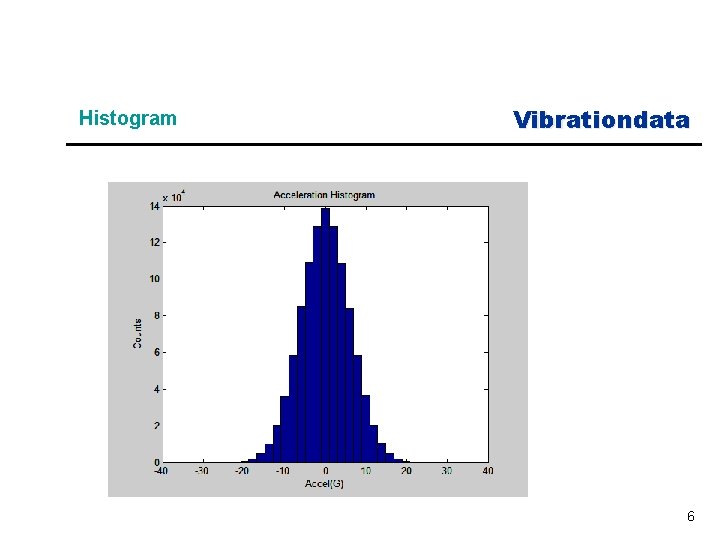
Histogram Vibrationdata 6
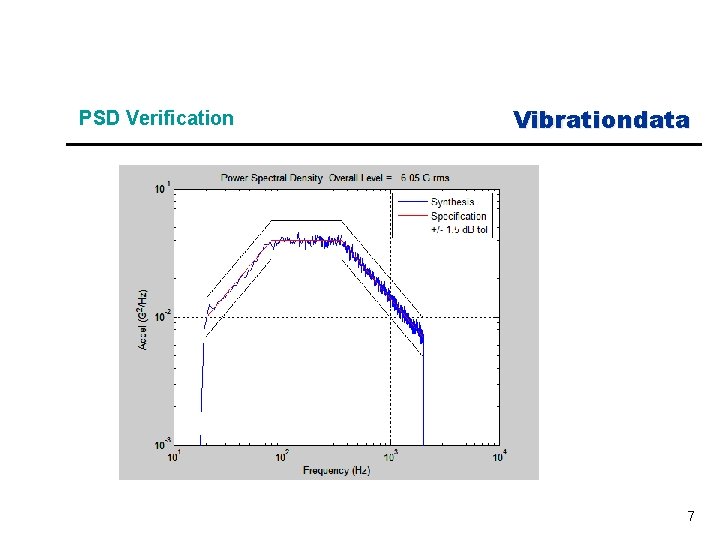
PSD Verification Vibrationdata 7
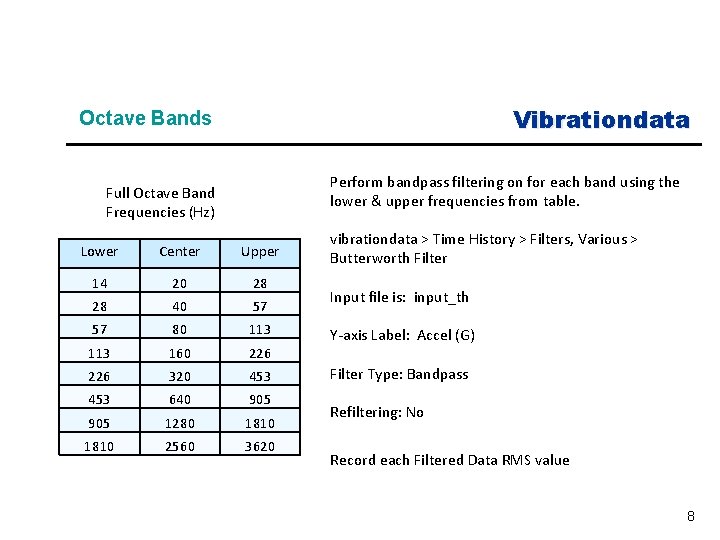
Vibrationdata Octave Bands Perform bandpass filtering on for each band using the lower & upper frequencies from table. Full Octave Band Frequencies (Hz) Lower Center Upper 14 20 28 28 40 57 57 80 113 160 226 320 453 640 905 1280 1810 2560 3620 vibrationdata > Time History > Filters, Various > Butterworth Filter Input file is: input_th Y-axis Label: Accel (G) Filter Type: Bandpass Refiltering: No Record each Filtered Data RMS value 8
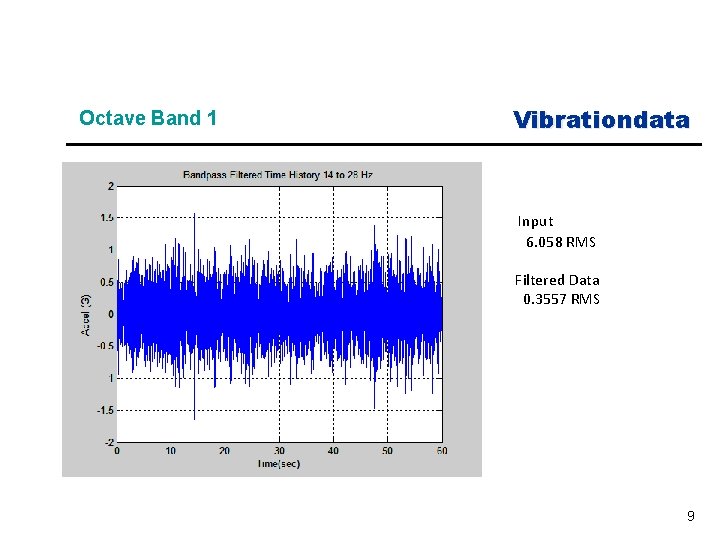
Octave Band 1 Vibrationdata Input 6. 058 RMS Filtered Data 0. 3557 RMS 9
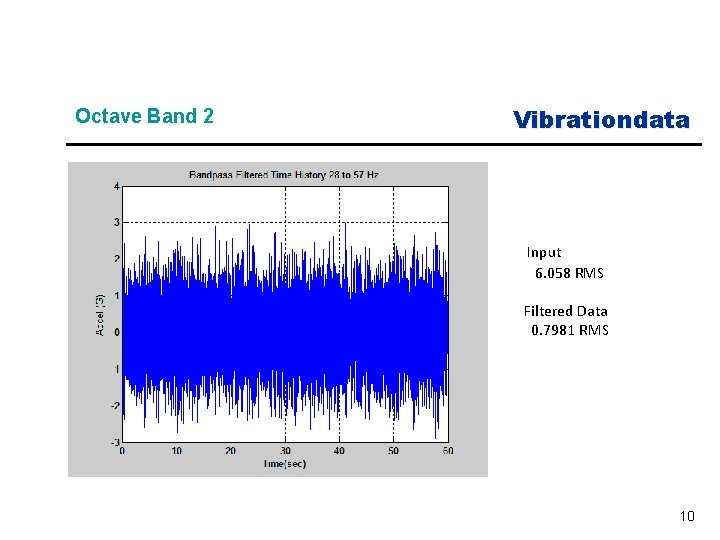
Octave Band 2 Vibrationdata Input 6. 058 RMS Filtered Data 0. 7981 RMS 10
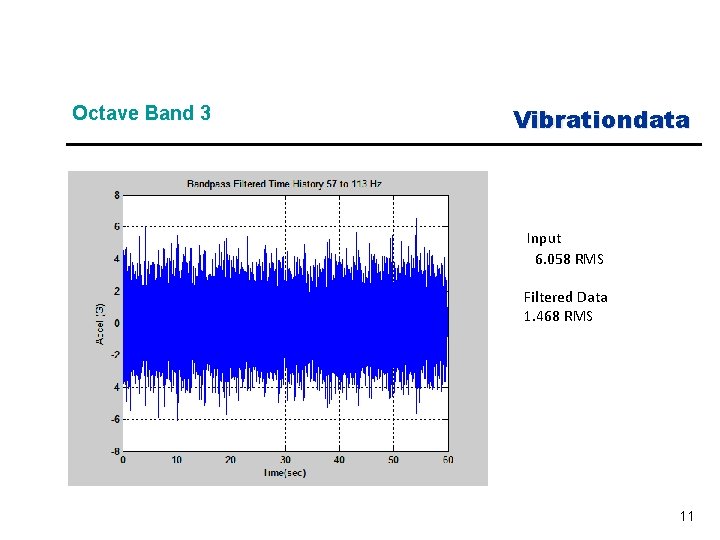
Octave Band 3 Vibrationdata Input 6. 058 RMS Filtered Data 1. 468 RMS 11
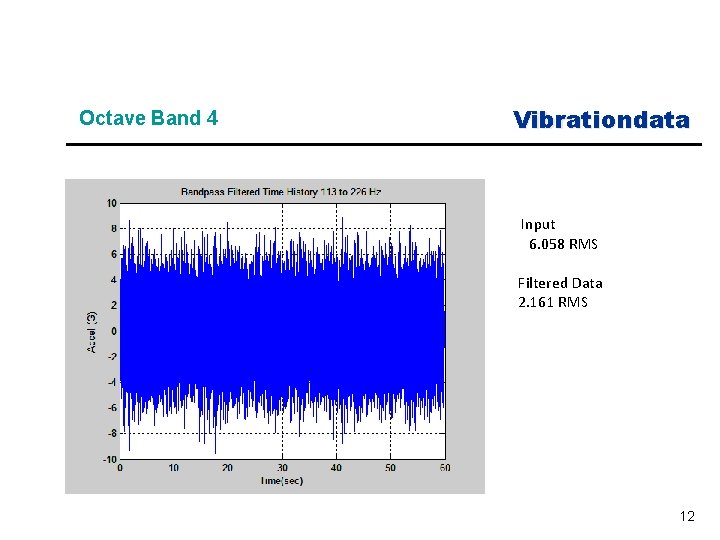
Octave Band 4 Vibrationdata Input 6. 058 RMS Filtered Data 2. 161 RMS 12
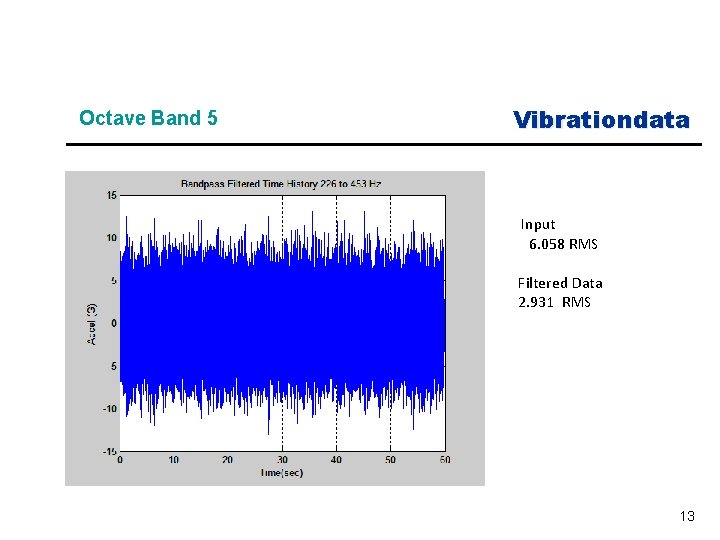
Octave Band 5 Vibrationdata Input 6. 058 RMS Filtered Data 2. 931 RMS 13
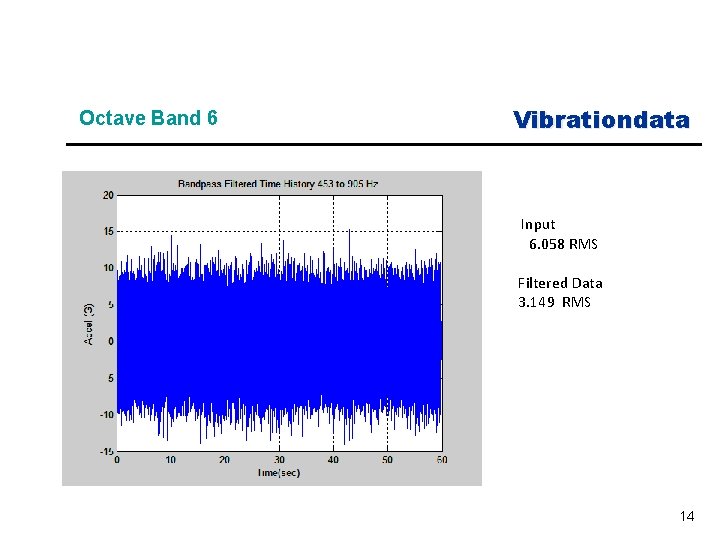
Octave Band 6 Vibrationdata Input 6. 058 RMS Filtered Data 3. 149 RMS 14
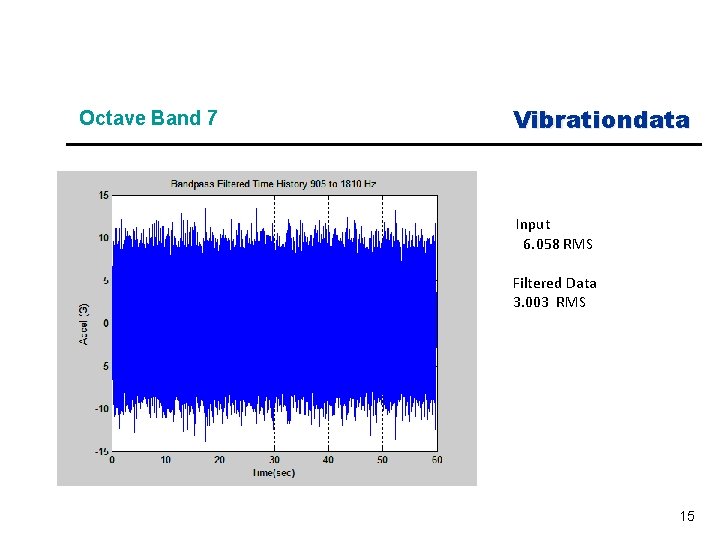
Octave Band 7 Vibrationdata Input 6. 058 RMS Filtered Data 3. 003 RMS 15
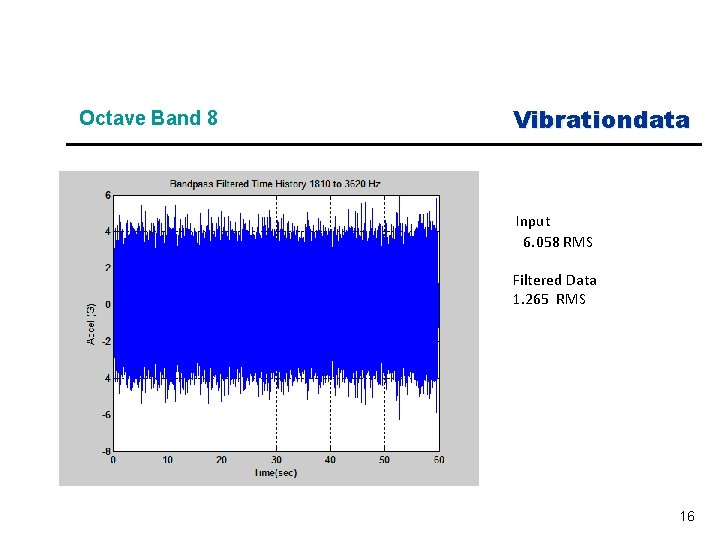
Octave Band 8 Vibrationdata Input 6. 058 RMS Filtered Data 1. 265 RMS 16
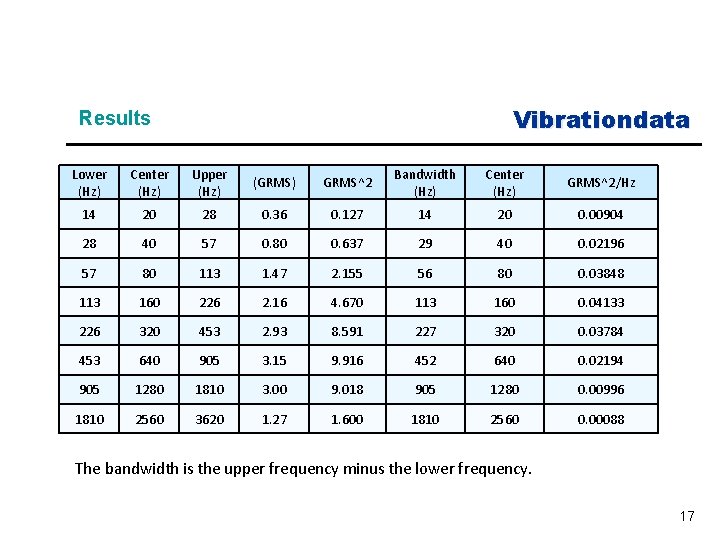
Vibrationdata Results Lower (Hz) Center (Hz) Upper (Hz) (GRMS) GRMS^2 Bandwidth (Hz) Center (Hz) GRMS^2/Hz 14 20 28 0. 36 0. 127 14 20 0. 00904 28 40 57 0. 80 0. 637 29 40 0. 02196 57 80 113 1. 47 2. 155 56 80 0. 03848 113 160 226 2. 16 4. 670 113 160 0. 04133 226 320 453 2. 93 8. 591 227 320 0. 03784 453 640 905 3. 15 9. 916 452 640 0. 02194 905 1280 1810 3. 00 9. 018 905 1280 0. 00996 1810 2560 3620 1. 27 1. 600 1810 2560 0. 00088 The bandwidth is the upper frequency minus the lower frequency. 17
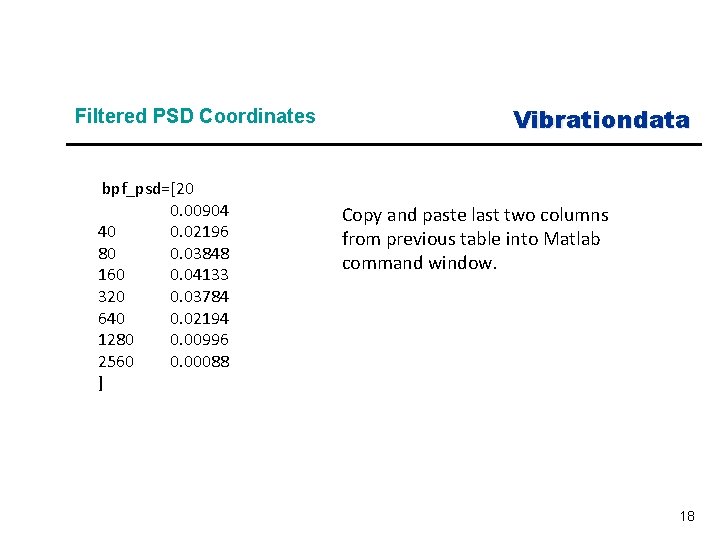
Filtered PSD Coordinates bpf_psd=[20 0. 00904 40 0. 02196 80 0. 03848 160 0. 04133 320 0. 03784 640 0. 02194 1280 0. 00996 2560 0. 00088 ] Vibrationdata Copy and paste last two columns from previous table into Matlab command window. 18
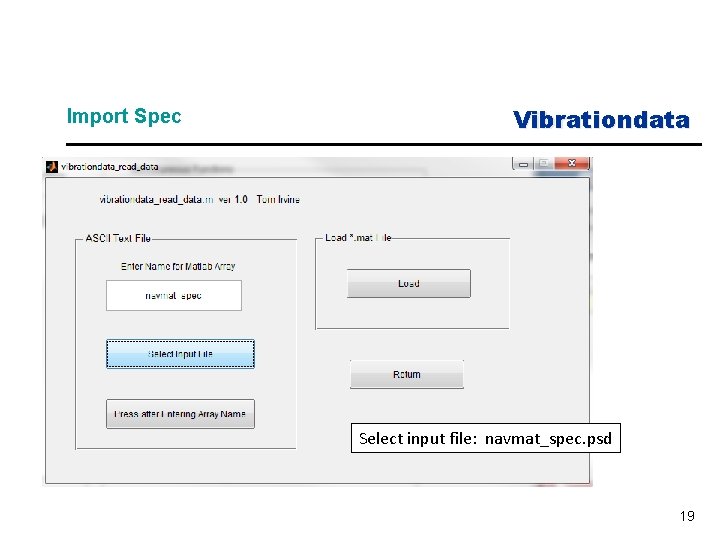
Import Spec Vibrationdata Select input file: navmat_spec. psd 19
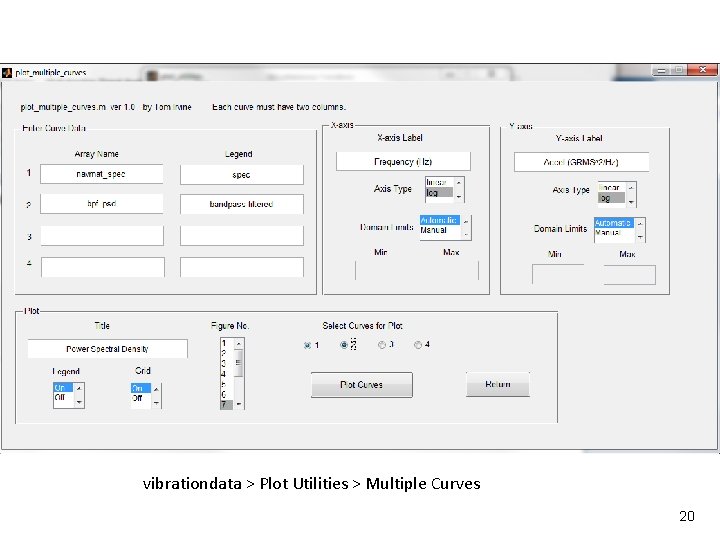
Introduction Vibrationdata vibrationdata > Plot Utilities > Multiple Curves 20
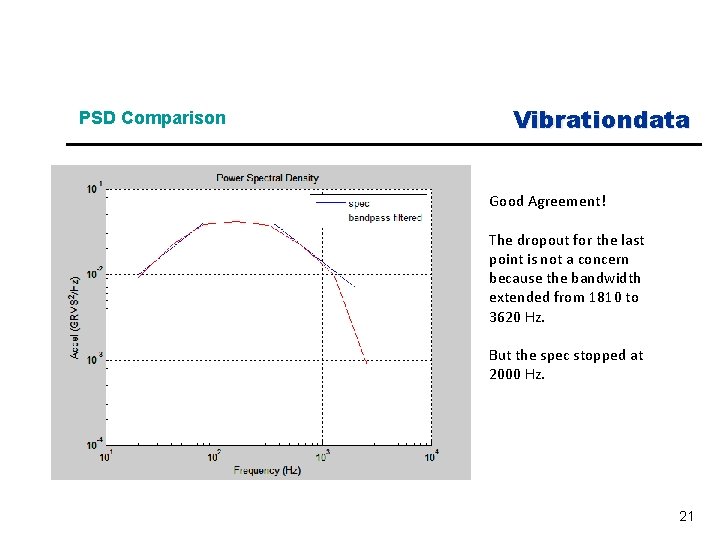
PSD Comparison Vibrationdata Good Agreement! The dropout for the last point is not a concern because the bandwidth extended from 1810 to 3620 Hz. But the spec stopped at 2000 Hz. 21
Vibrationdata Decimation • Data needs to be downsampled in some cases • Example: retain every other point • Possible reasons: Original sample rate was too high Only low frequency energy is of interest • Lowpass filtering should be performed prior to downsamping to prevent aliasing • Filter frequency should be < 0. 8 * Nyquist frequency • Practice exercise: Time History > Signal Editing > Decimate, Downsample input file: input_th downsample factor = 10 lowpass filter = 100 Hz 22
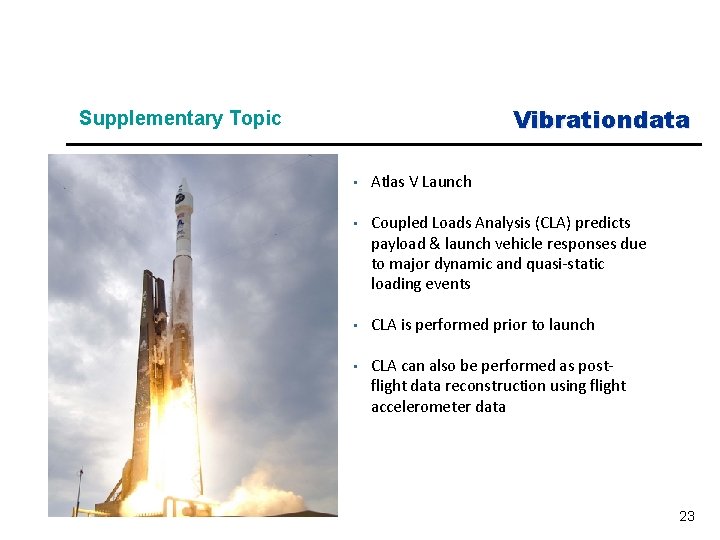
Vibrationdata Supplementary Topic • Atlas V Launch • Coupled Loads Analysis (CLA) predicts payload & launch vehicle responses due to major dynamic and quasi-static loading events • CLA is performed prior to launch • CLA can also be performed as postflight data reconstruction using flight accelerometer data 23
Launch Vehicle Filtering Applications Vibrationdata § Flight accelerometer data is lowpass filtered for coupled-loads analyses § The cut-off frequency varies by launch vehicle, payload, key events, etc. § The primary sources of these low frequency loads are • • Pre-launch events: ground winds, seismic loads Liftoff: engine/motor thrust build-up, ignition overpressure, pad release • Airloads: buffet, gust, static-elastic • Liquid engine ignitions and shutdowns 24
Typical Guideline n Vibrationdata European Cooperation for Spacecraft Standardization (ECSS), Spacecraft Mechanical Loads Analysis Handbook: • • The low-frequency dynamic response, typically from 0 Hz to 100 Hz, of the launch vehicle/payload system to transient flight events For some small launch vehicles the range of lowfrequency dynamic response can be up to 150 Hz 25
- Slides: 25