
Unit 2 Unit 2 Learning Targets Standard Checklist
- Slides: 18
Unit 2
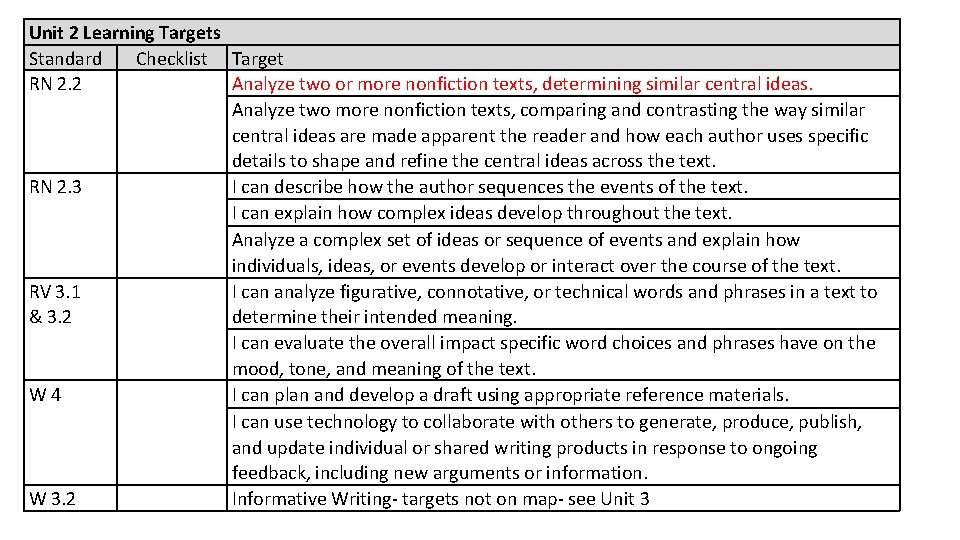
Unit 2 Learning Targets Standard Checklist Target RN 2. 2 Analyze two or more nonfiction texts, determining similar central ideas. Analyze two more nonfiction texts, comparing and contrasting the way similar central ideas are made apparent the reader and how each author uses specific details to shape and refine the central ideas across the text. RN 2. 3 I can describe how the author sequences the events of the text. I can explain how complex ideas develop throughout the text. Analyze a complex set of ideas or sequence of events and explain how individuals, ideas, or events develop or interact over the course of the text. RV 3. 1 I can analyze figurative, connotative, or technical words and phrases in a text to & 3. 2 determine their intended meaning. I can evaluate the overall impact specific word choices and phrases have on the mood, tone, and meaning of the text. W 4 I can plan and develop a draft using appropriate reference materials. I can use technology to collaborate with others to generate, produce, publish, and update individual or shared writing products in response to ongoing feedback, including new arguments or information. W 3. 2 Informative Writing- targets not on map- see Unit 3
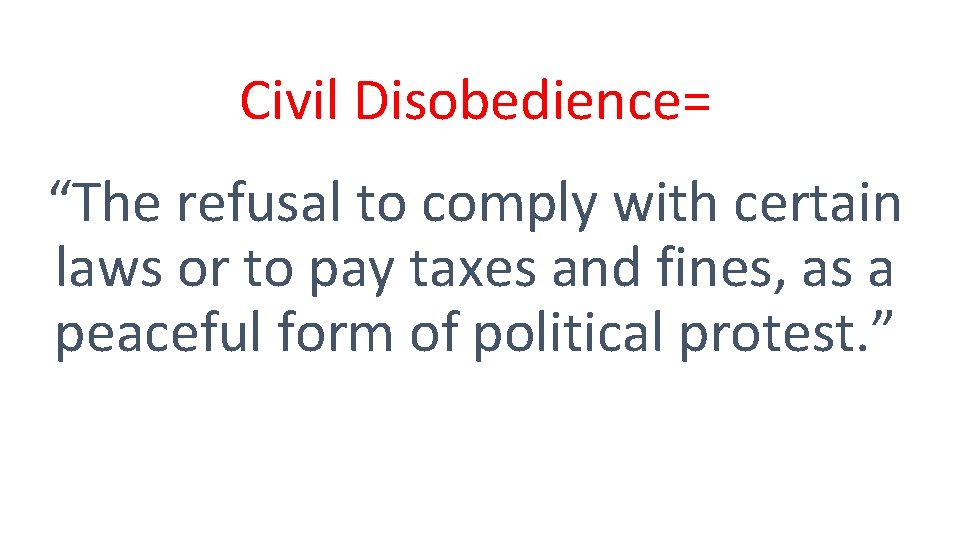
Civil Disobedience= “The refusal to comply with certain laws or to pay taxes and fines, as a peaceful form of political protest. ”
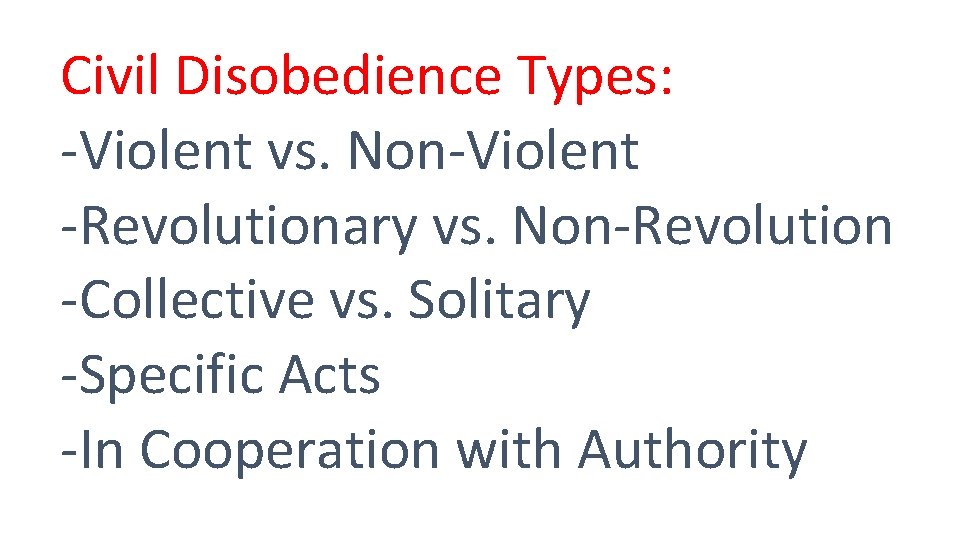
Civil Disobedience Types: -Violent vs. Non-Violent -Revolutionary vs. Non-Revolution -Collective vs. Solitary -Specific Acts -In Cooperation with Authority
Determine examples that you already know about. Each person brainstorms for 1 minute each. Past Present Possible Future
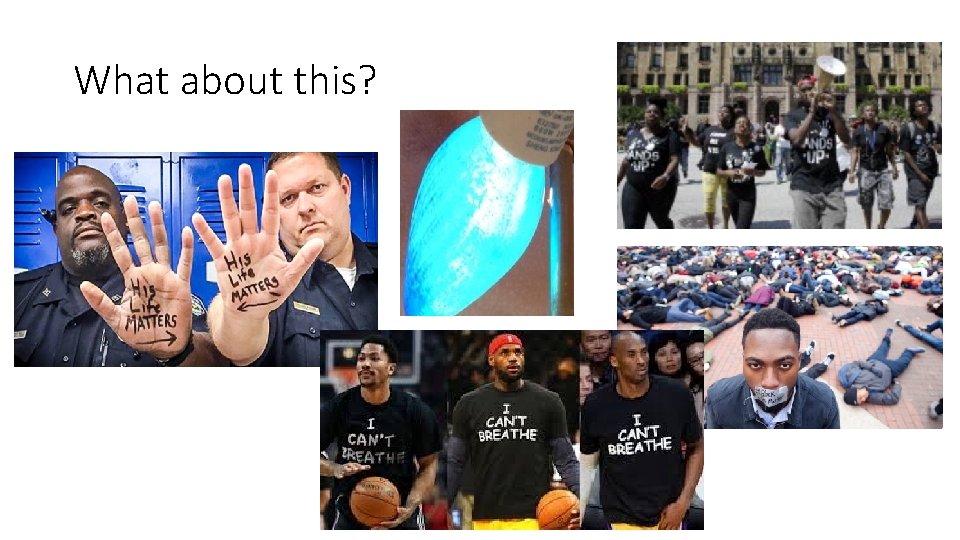
What about this?
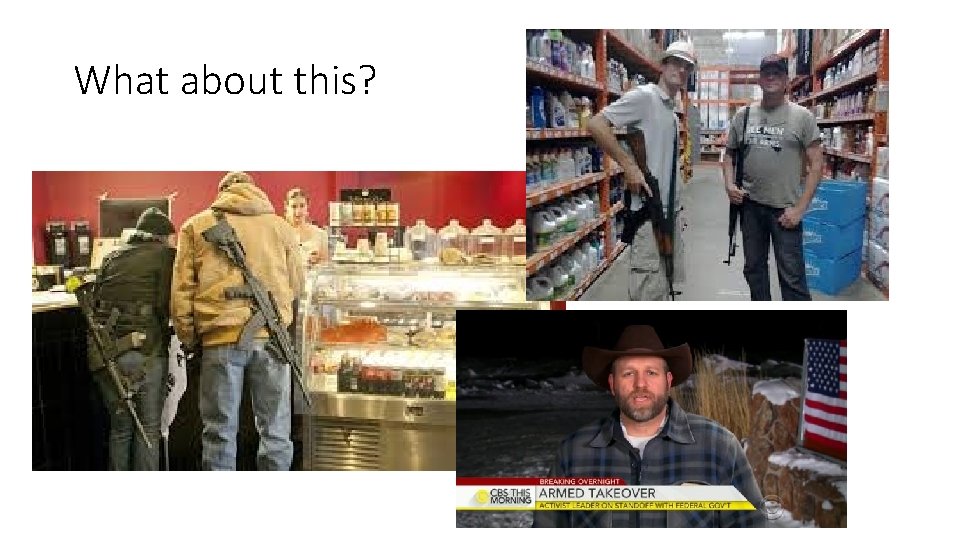
What about this?
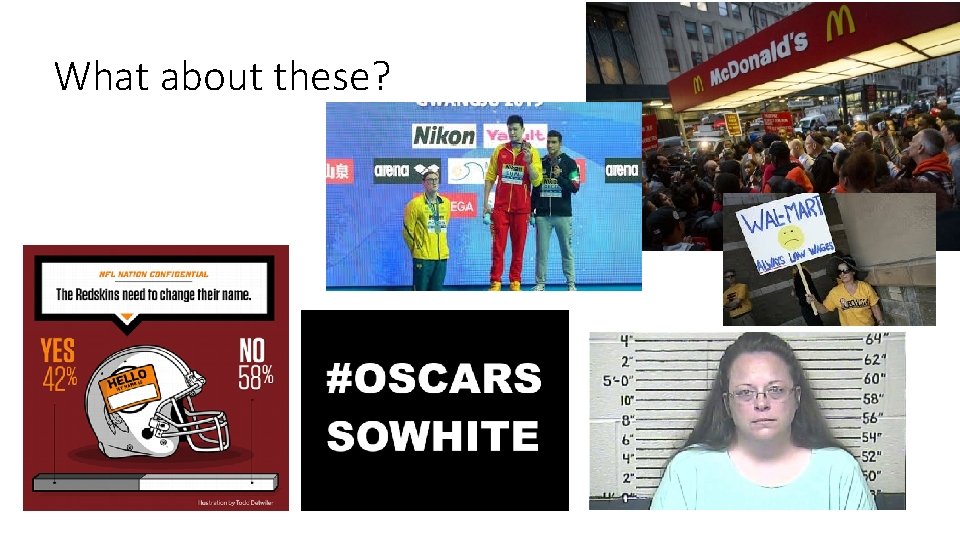
What about these?
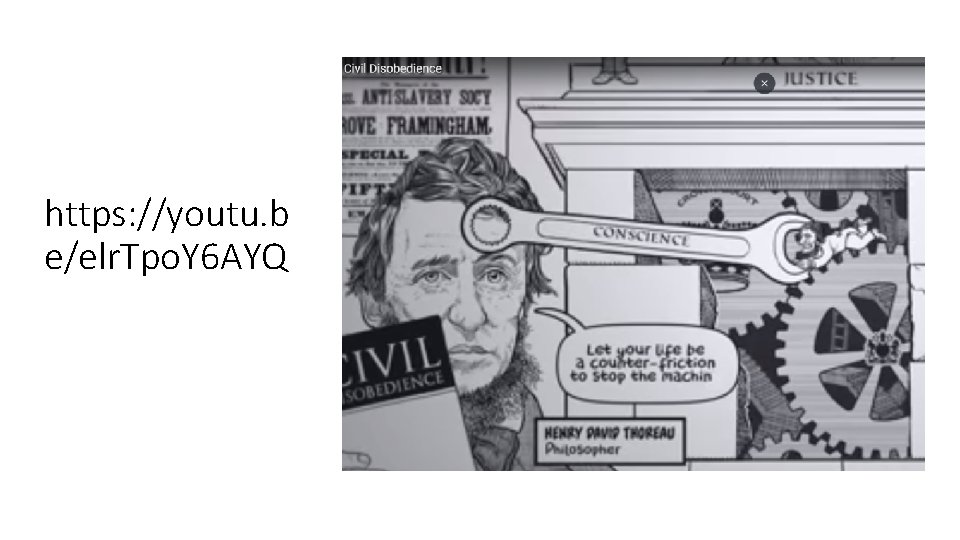
https: //youtu. b e/elr. Tpo. Y 6 AYQ
Target Check Names: __________________ • Example # 1 • Example #2 • Example #3 • Example #4 • Example #5 What’s being fought for? ______________________ ___________ What is the act? _______________ ________
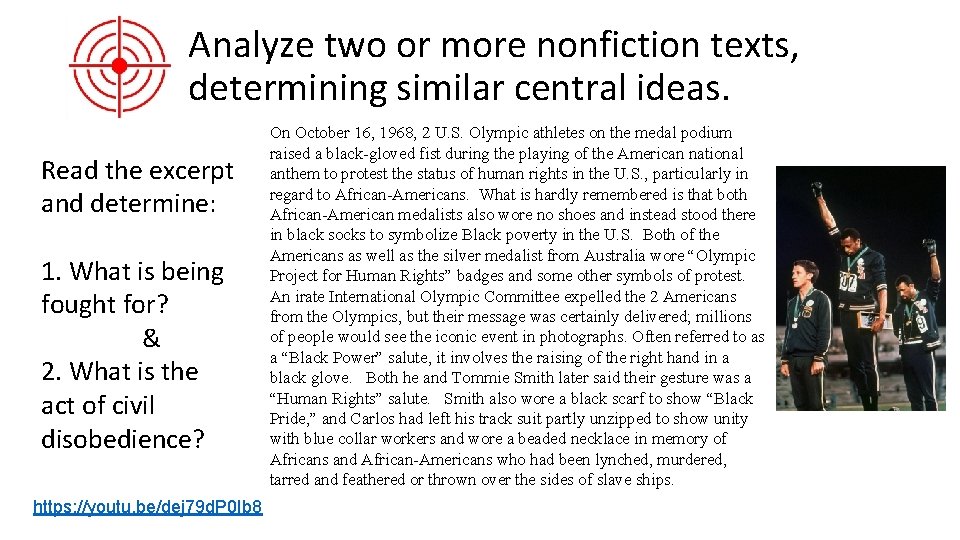
Analyze two or more nonfiction texts, determining similar central ideas. Read the excerpt and determine: 1. What is being fought for? & 2. What is the act of civil disobedience? https: //youtu. be/dej 79 d. P 0 Ib 8 On October 16, 1968, 2 U. S. Olympic athletes on the medal podium raised a black-gloved fist during the playing of the American national anthem to protest the status of human rights in the U. S. , particularly in regard to African-Americans. What is hardly remembered is that both African-American medalists also wore no shoes and instead stood there in black socks to symbolize Black poverty in the U. S. Both of the Americans as well as the silver medalist from Australia wore “Olympic Project for Human Rights” badges and some other symbols of protest. An irate International Olympic Committee expelled the 2 Americans from the Olympics, but their message was certainly delivered; millions of people would see the iconic event in photographs. Often referred to as a “Black Power” salute, it involves the raising of the right hand in a black glove. Both he and Tommie Smith later said their gesture was a “Human Rights” salute. Smith also wore a black scarf to show “Black Pride, ” and Carlos had left his track suit partly unzipped to show unity with blue collar workers and wore a beaded necklace in memory of Africans and African-Americans who had been lynched, murdered, tarred and feathered or thrown over the sides of slave ships.
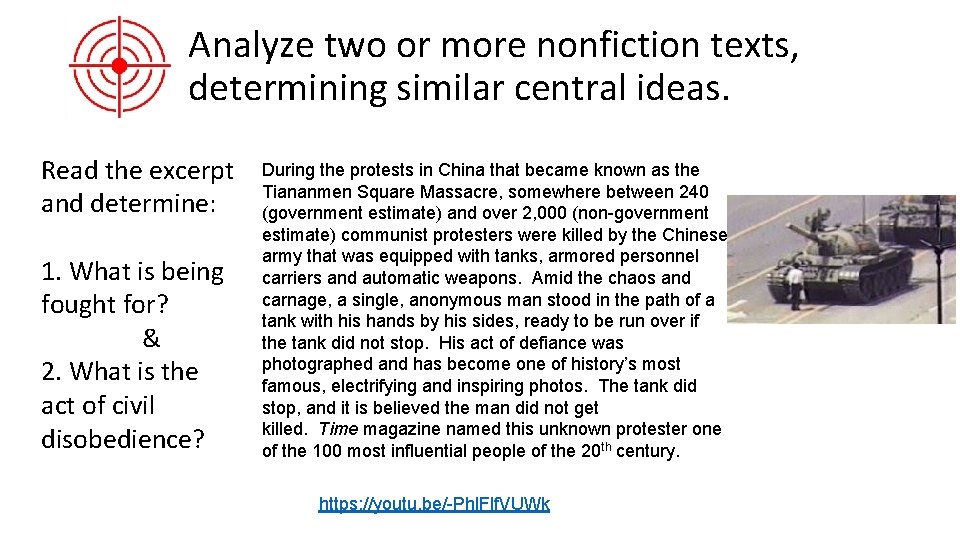
Analyze two or more nonfiction texts, determining similar central ideas. Read the excerpt and determine: 1. What is being fought for? & 2. What is the act of civil disobedience? During the protests in China that became known as the Tiananmen Square Massacre, somewhere between 240 (government estimate) and over 2, 000 (non-government estimate) communist protesters were killed by the Chinese army that was equipped with tanks, armored personnel carriers and automatic weapons. Amid the chaos and carnage, a single, anonymous man stood in the path of a tank with his hands by his sides, ready to be run over if the tank did not stop. His act of defiance was photographed and has become one of history’s most famous, electrifying and inspiring photos. The tank did stop, and it is believed the man did not get killed. Time magazine named this unknown protester one of the 100 most influential people of the 20 th century. https: //youtu. be/-Phl. Flf. VUWk
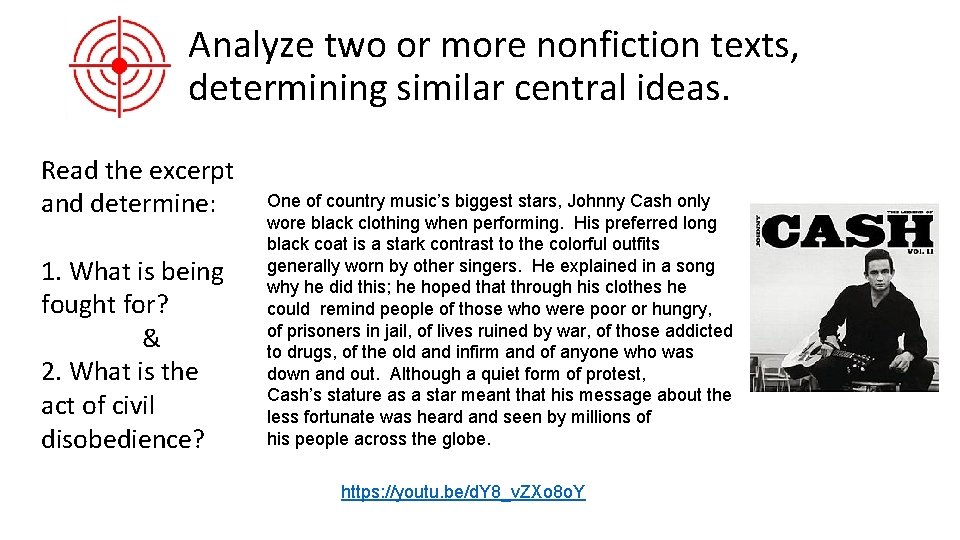
Analyze two or more nonfiction texts, determining similar central ideas. Read the excerpt and determine: 1. What is being fought for? & 2. What is the act of civil disobedience? One of country music’s biggest stars, Johnny Cash only wore black clothing when performing. His preferred long black coat is a stark contrast to the colorful outfits generally worn by other singers. He explained in a song why he did this; he hoped that through his clothes he could remind people of those who were poor or hungry, of prisoners in jail, of lives ruined by war, of those addicted to drugs, of the old and infirm and of anyone who was down and out. Although a quiet form of protest, Cash’s stature as a star meant that his message about the less fortunate was heard and seen by millions of his people across the globe. https: //youtu. be/d. Y 8_v. ZXo 8 o. Y
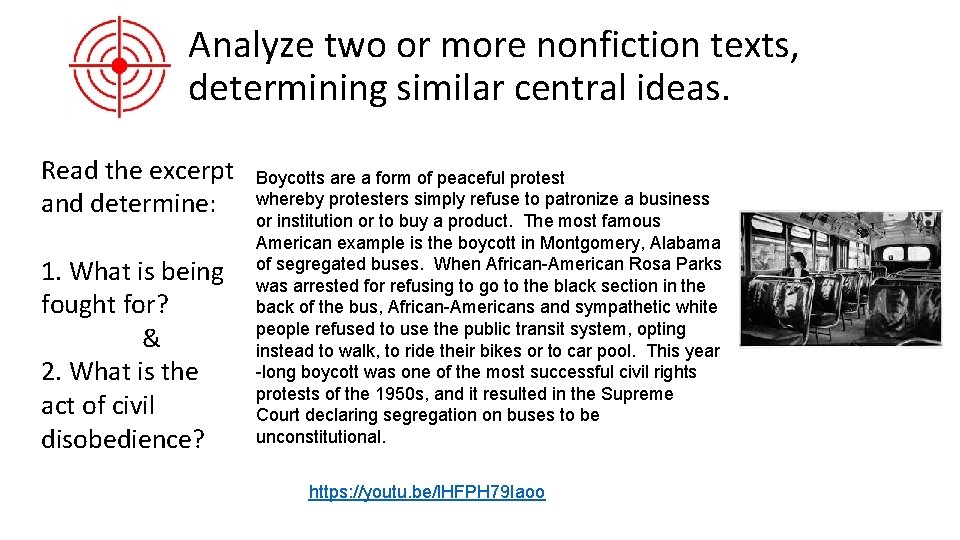
Analyze two or more nonfiction texts, determining similar central ideas. Read the excerpt and determine: 1. What is being fought for? & 2. What is the act of civil disobedience? Boycotts are a form of peaceful protest whereby protesters simply refuse to patronize a business or institution or to buy a product. The most famous American example is the boycott in Montgomery, Alabama of segregated buses. When African-American Rosa Parks was arrested for refusing to go to the black section in the back of the bus, African-Americans and sympathetic white people refused to use the public transit system, opting instead to walk, to ride their bikes or to car pool. This year -long boycott was one of the most successful civil rights protests of the 1950 s, and it resulted in the Supreme Court declaring segregation on buses to be unconstitutional. https: //youtu. be/l. HFPH 79 Iaoo
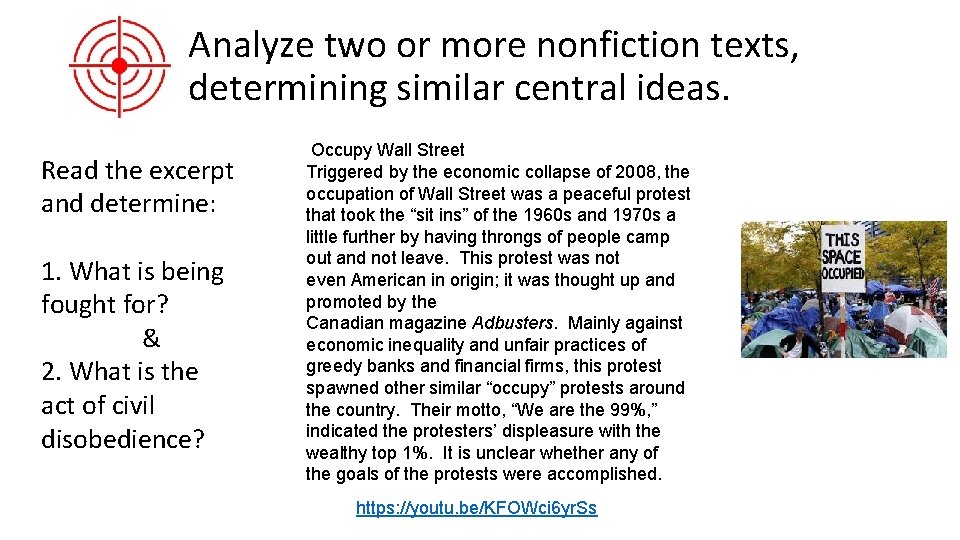
Analyze two or more nonfiction texts, determining similar central ideas. Read the excerpt and determine: 1. What is being fought for? & 2. What is the act of civil disobedience? Occupy Wall Street Triggered by the economic collapse of 2008, the occupation of Wall Street was a peaceful protest that took the “sit ins” of the 1960 s and 1970 s a little further by having throngs of people camp out and not leave. This protest was not even American in origin; it was thought up and promoted by the Canadian magazine Adbusters. Mainly against economic inequality and unfair practices of greedy banks and financial firms, this protest spawned other similar “occupy” protests around the country. Their motto, “We are the 99%, ” indicated the protesters’ displeasure with the wealthy top 1%. It is unclear whether any of the goals of the protests were accomplished. https: //youtu. be/KFOWci 6 yr. Ss
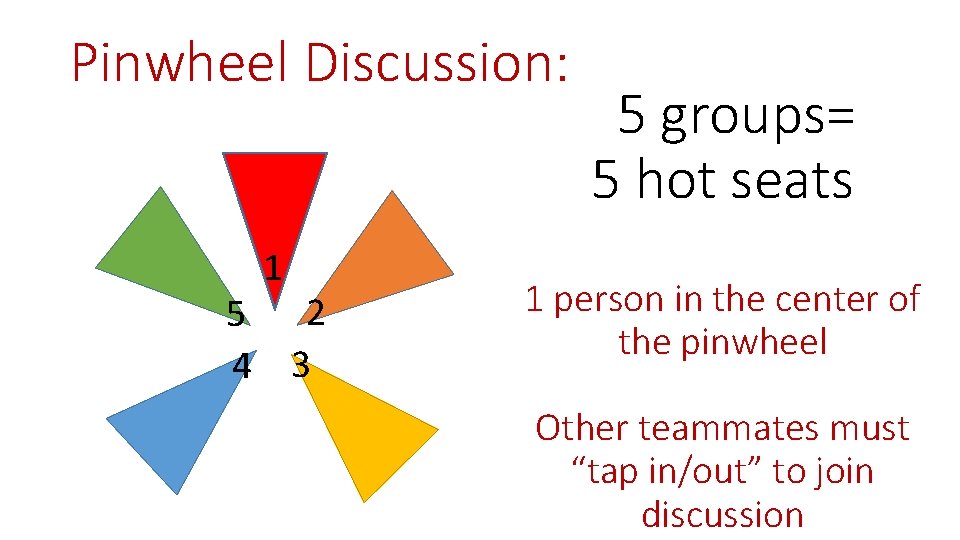
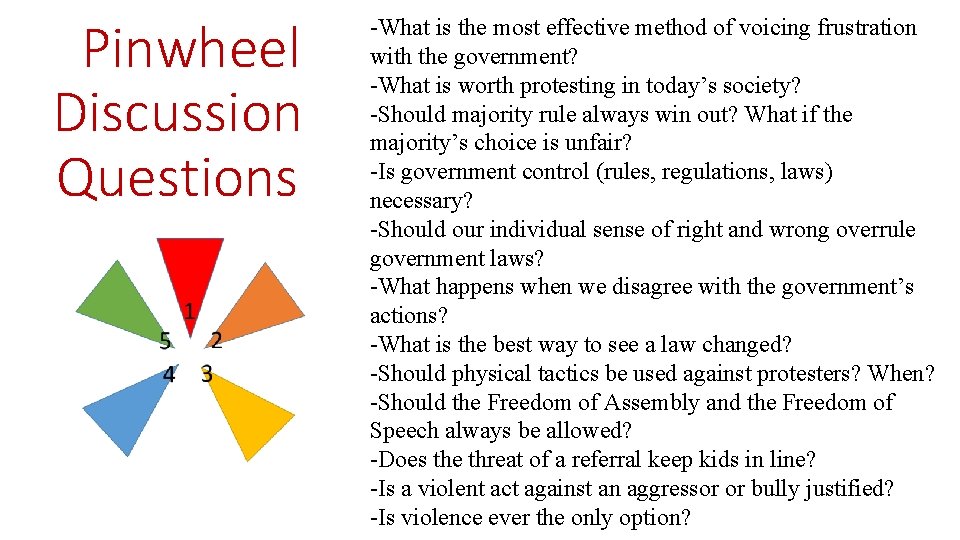
Pinwheel Discussion: 1 2 5 4 3 5 groups= 5 hot seats 1 person in the center of the pinwheel Other teammates must “tap in/out” to join discussion
Pinwheel Discussion Questions -What is the most effective method of voicing frustration with the government? -What is worth protesting in today’s society? -Should majority rule always win out? What if the majority’s choice is unfair? -Is government control (rules, regulations, laws) necessary? -Should our individual sense of right and wrong overrule government laws? -What happens when we disagree with the government’s actions? -What is the best way to see a law changed? -Should physical tactics be used against protesters? When? -Should the Freedom of Assembly and the Freedom of Speech always be allowed? -Does the threat of a referral keep kids in line? -Is a violent act against an aggressor or bully justified? -Is violence ever the only option?
► SL 2. 2 Examine, analyze, and reflect on ideas and support or refute points under discussion, cite evidence Success Looks Like: -I support with evidence from the text -I build off my peers’ comments -My comments drive the discussion forward -Quality over quantity -I promote a respectful class culture