
Unit 2 Tourism and the Environment Connecting the
- Slides: 14
Unit 2: Tourism and the Environment Connecting the Tourism Industry to Natural Spaces Mr. Barter | www. mrbarter. wordpress. com CGG 3 O
Unit 2 Learning Goals: Define and identify examples of adventure tourism Define and describe ecotourism or tourism in the natural environment Explain how tourism can protect or damage the natural environment Define key terms such as; biodiversity, direct tourist spending, intrinsic value and poaching, and use them in a proper context Explain what UNESCO is and what their role is with respect to the tourism industry and protecting the natural environment Identify examples of adventure tourism and ecotourism from realworld scenarios and use critical thinking to explain how they are either protecting or damaging the natural environment Mr. Barter | www. mrbarter. wordpress. com CGG 3 O
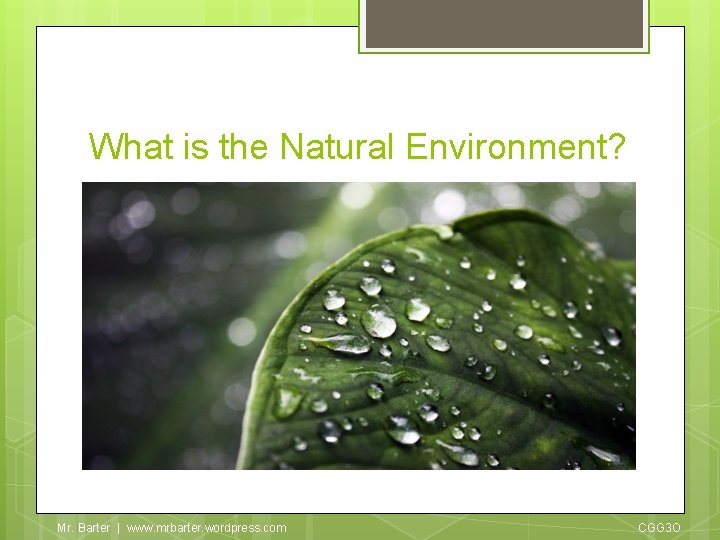
What is the Natural Environment? Mr. Barter | www. mrbarter. wordpress. com CGG 3 O
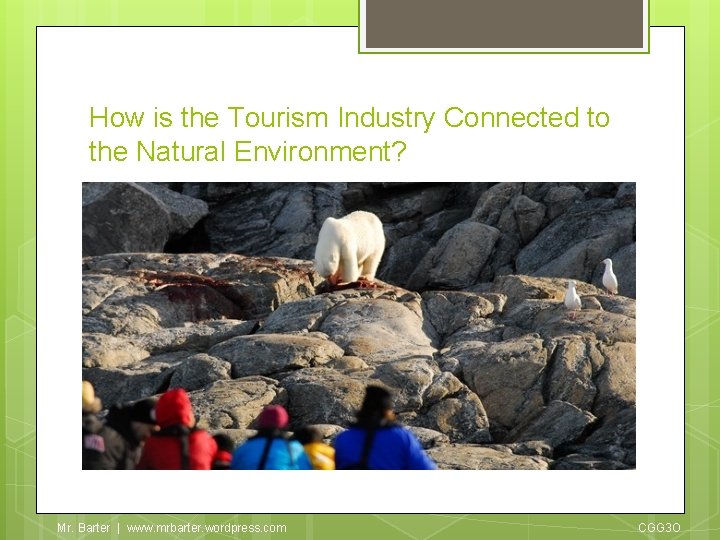
How is the Tourism Industry Connected to the Natural Environment? Mr. Barter | www. mrbarter. wordpress. com CGG 3 O
Learning Goals for Today: Describe how the tourism industry is connected to the natural environment List the three types of adventure tourism, giving examples of each Describe how people in different age groups seek different kinds of adventure Describe how people in different age groups use the land in different ways Identify and define key words/concepts from this unit and be able to use them in a sentence (that makes sense) Mr. Barter | www. mrbarter. wordpress. com CGG 3 O
Create a Web Diagram… Choose one location from your bucket list and create a web diagram which shows in detail, all the ways this location is connected to the natural environment. Include: physical landscape, climate, landforms, wild life, water systems, plants and of course tourism’s connections to these things. Mr. Barter | www. mrbarter. wordpress. com CGG 3 O
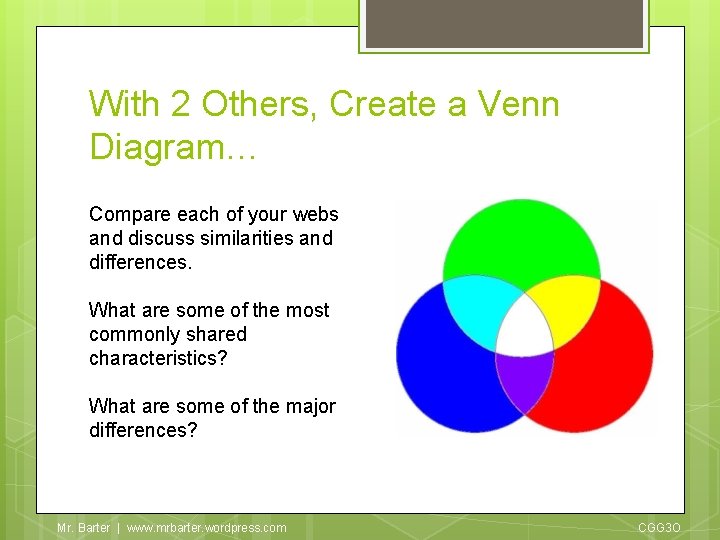
With 2 Others, Create a Venn Diagram… Compare each of your webs and discuss similarities and differences. What are some of the most commonly shared characteristics? What are some of the major differences? Mr. Barter | www. mrbarter. wordpress. com CGG 3 O
Textbook Preview: With the same group of three, each take one chapter and skim through the textbook. Look at the content and concepts of chapters 3, 4 and 5 What will we be discussing in this unit? Mr. Barter | www. mrbarter. wordpress. com CGG 3 O
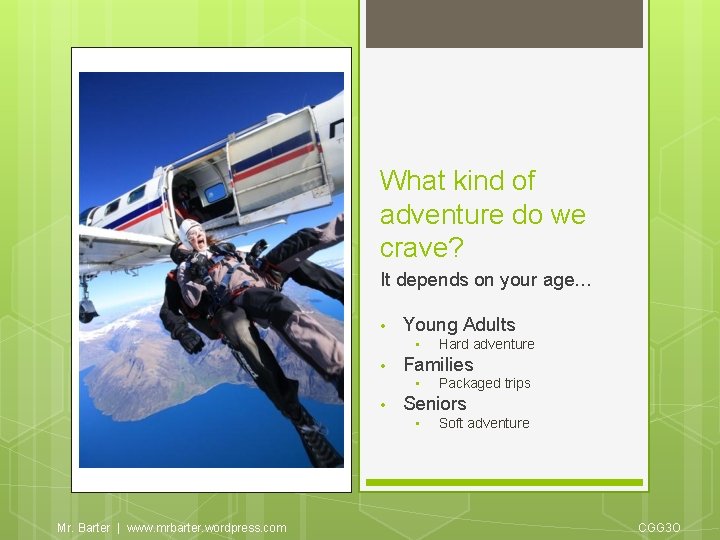
What kind of adventure do we crave? It depends on your age… • Young Adults • • Families • • Packaged trips Seniors • Mr. Barter | www. mrbarter. wordpress. com Hard adventure Soft adventure CGG 3 O
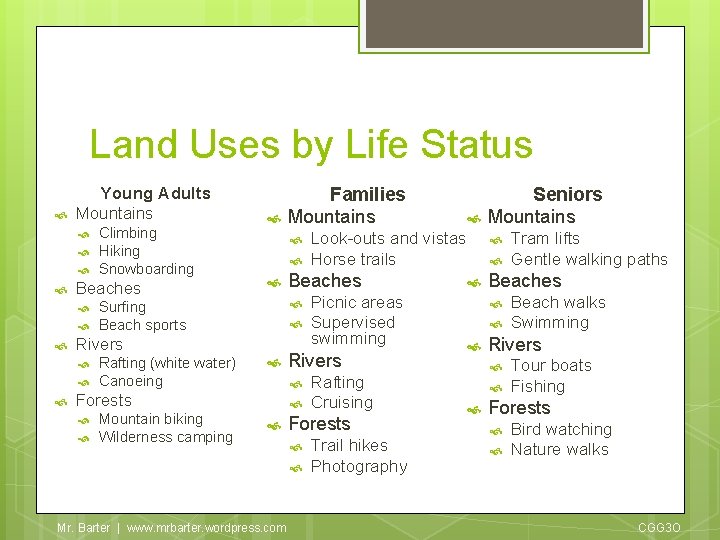
Land Uses by Life Status Young Adults Mountains Beaches Rafting (white water) Canoeing Forests Mountain biking Wilderness camping Rafting Cruising Forests Mr. Barter | www. mrbarter. wordpress. com Picnic areas Supervised swimming Rivers Look-outs and vistas Horse trails Beaches Surfing Beach sports Rivers Climbing Hiking Snowboarding Families Mountains Trail hikes Photography Seniors Mountains Beaches Beach walks Swimming Rivers Tram lifts Gentle walking paths Tour boats Fishing Forests Bird watching Nature walks CGG 3 O
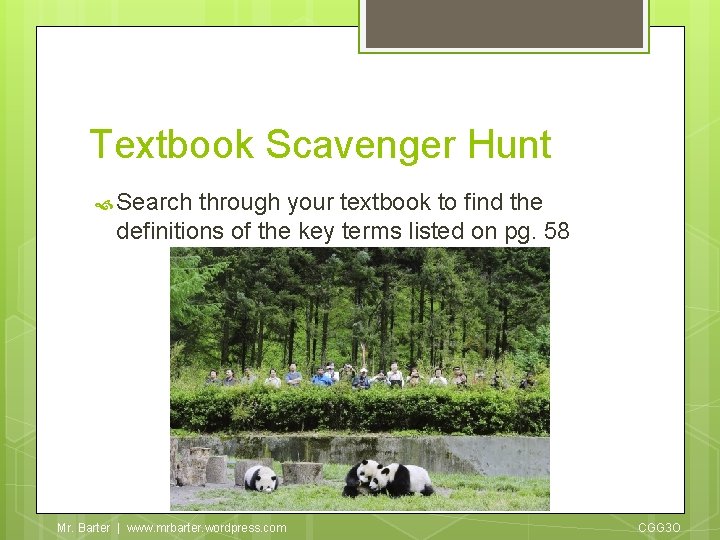
Textbook Scavenger Hunt Search through your textbook to find the definitions of the key terms listed on pg. 58 Mr. Barter | www. mrbarter. wordpress. com CGG 3 O
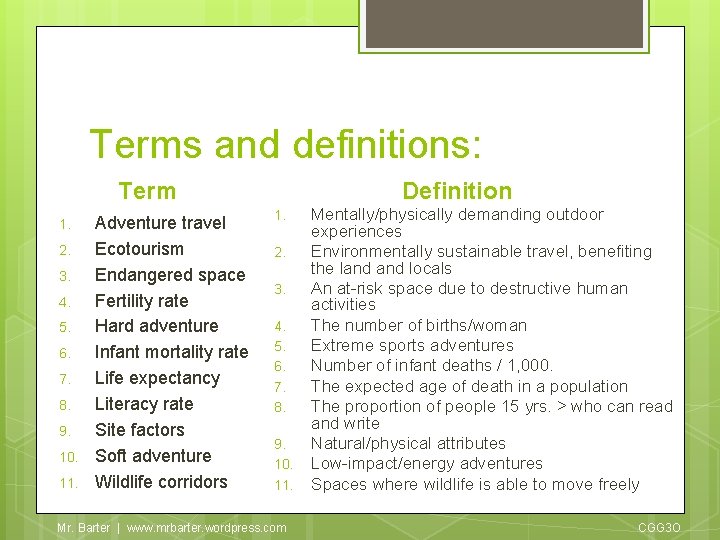
Terms and definitions: Term 1. 2. 3. 4. 5. 6. 7. 8. 9. 10. 11. Adventure travel Ecotourism Endangered space Fertility rate Hard adventure Infant mortality rate Life expectancy Literacy rate Site factors Soft adventure Wildlife corridors Definition 1. 2. 3. 4. 5. 6. 7. 8. 9. 10. 11. Mr. Barter | www. mrbarter. wordpress. com Mentally/physically demanding outdoor experiences Environmentally sustainable travel, benefiting the land locals An at-risk space due to destructive human activities The number of births/woman Extreme sports adventures Number of infant deaths / 1, 000. The expected age of death in a population The proportion of people 15 yrs. > who can read and write Natural/physical attributes Low-impact/energy adventures Spaces where wildlife is able to move freely CGG 3 O
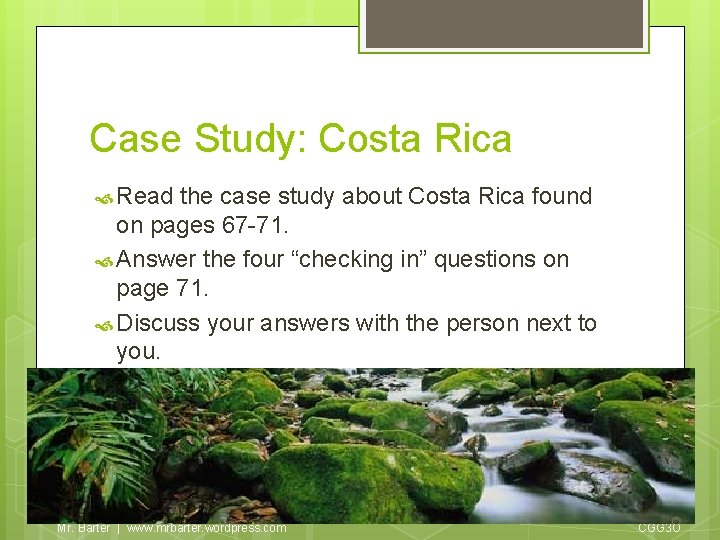
Case Study: Costa Rica Read the case study about Costa Rica found on pages 67 -71. Answer the four “checking in” questions on page 71. Discuss your answers with the person next to you. Mr. Barter | www. mrbarter. wordpress. com CGG 3 O
Learning Goals for Today: Describe how the tourism industry is connected to the natural environment List the three types of adventure tourism, giving examples of each Describe how people in different age groups seek different kinds of adventure Describe how people in different age groups use the land in different ways Identify and define key words/concepts from this unit and be able to use them in a sentence (that makes sense) Mr. Barter | www. mrbarter. wordpress. com CGG 3 O