
Unit 2 The Reformation The Northern Renaissance Until

- Slides: 47
Unit 2 The Reformation
The Northern Renaissance • Until the 15 th Century the Renaissance was confined to Italy. • The spread of Humanism to Northern Europe was gradual and reflected Italian influence. • Literary societies, academics, and universities will help spread the Renaissance to Northern Europe, this will lead to kings and princes hiring humanists as secretaries and diplomats. • The Dutch Renaissance favored realism over Italian idealism and was more religious.
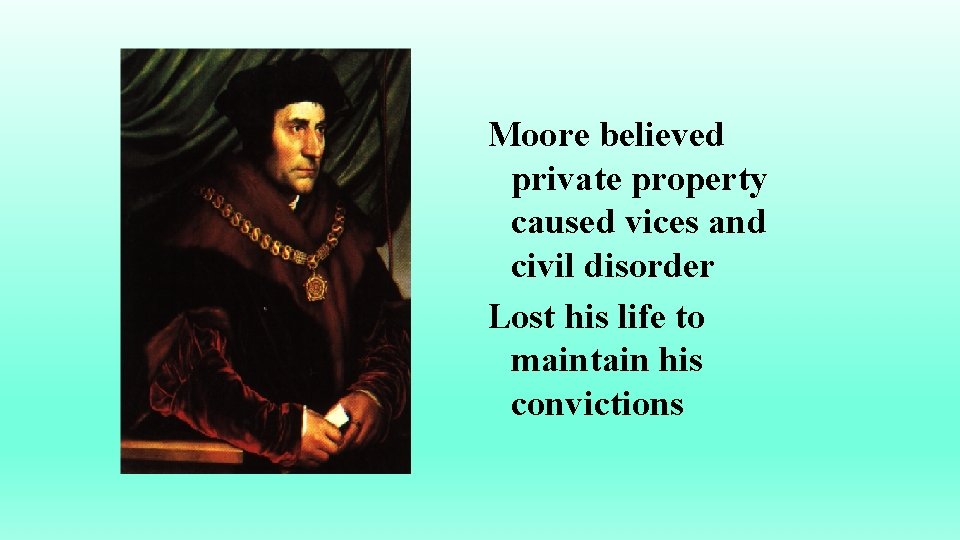
Northern Renaissance Humanists • Sir Thomas More of England will write Utopia as a satire that will ask readers to consider their own values and reflect. • Desiderius Erasmus will criticize the Church about its use of relics and the Church’s emphasis on the sacraments. • By suggesting the individuals who were not priests could interpret the Bible the Church felt threatened that they would lose their monopoly on interpretation and therefore worship.
Moore believed private property caused vices and civil disorder Lost his life to maintain his convictions
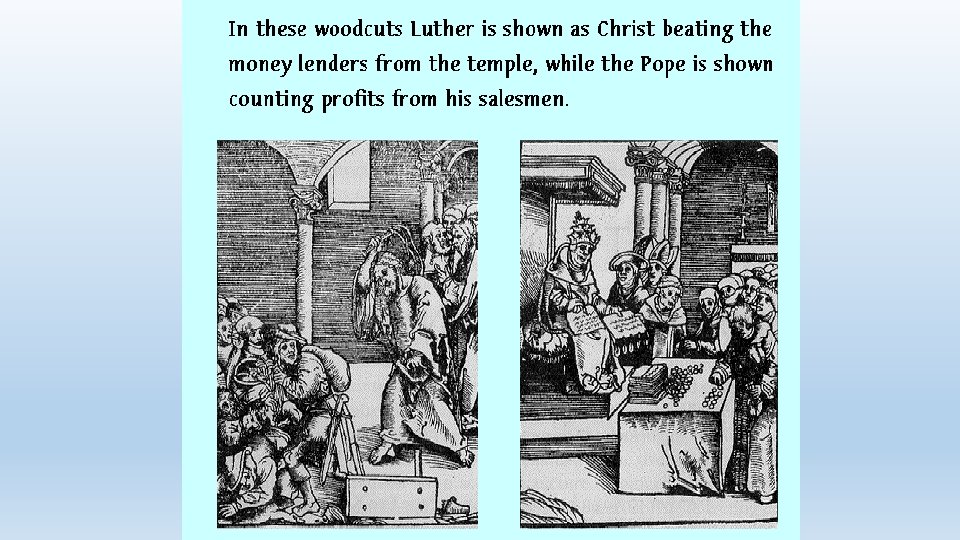
Origins of the Reformation • Expansion of kings in the Middle Ages took power away from the Pope. • The Church was very corrupt. • National churches were created in England, France, and Spain so that the kings could control Church appointments. • The Great Schism and the Avignon Papacy. • Heretics like Jan Hus and his Hussites who defeated Papal armies, and John Wycliffe. • Clerical abuses (like exorbitant fees) and the selling of indulgences. • Poorly educated clergy. • The Fifth Lateran Council offered changes but the Pope refused to institute them.
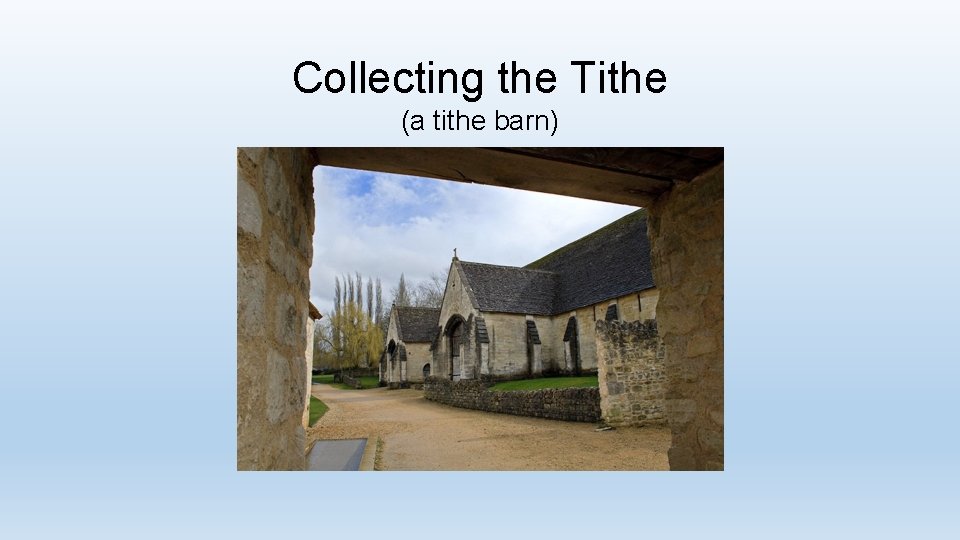
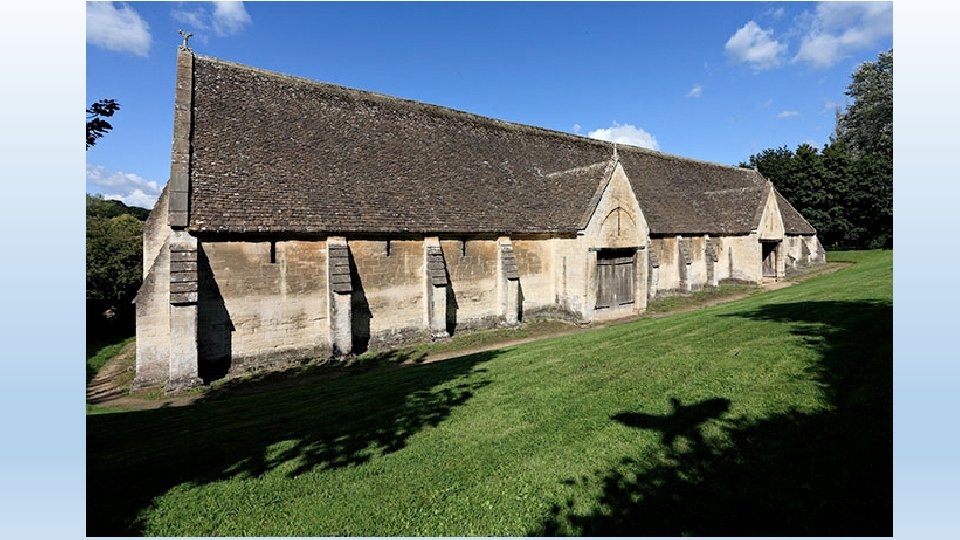
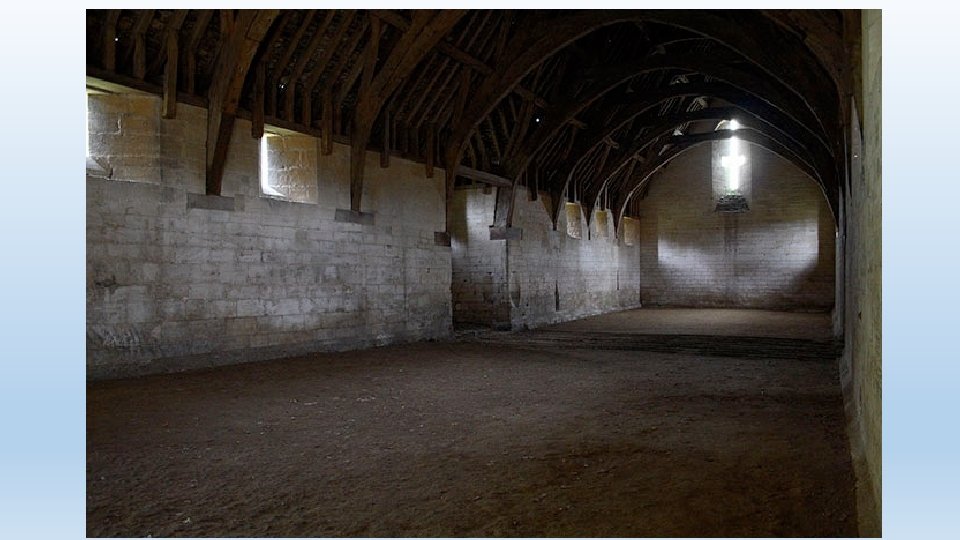
Collecting the Tithe (a tithe barn)
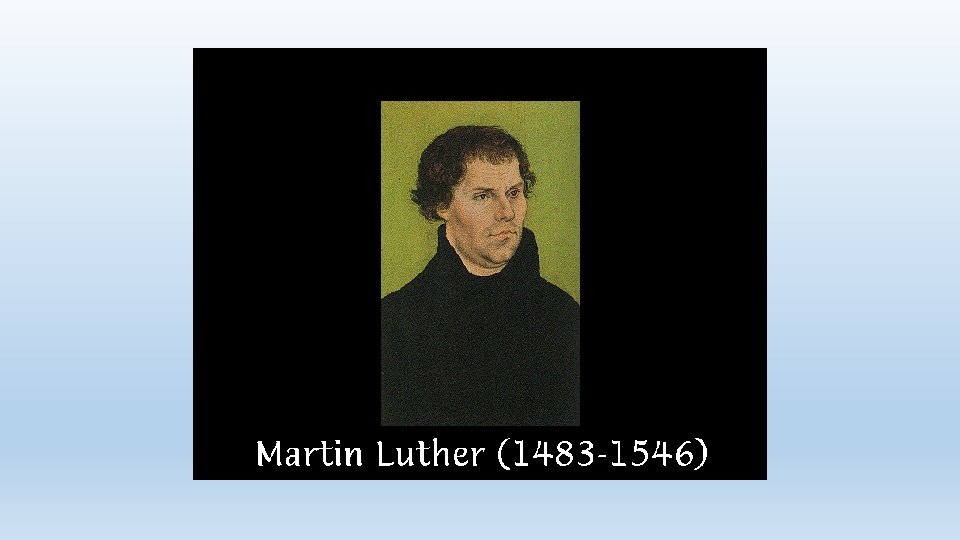
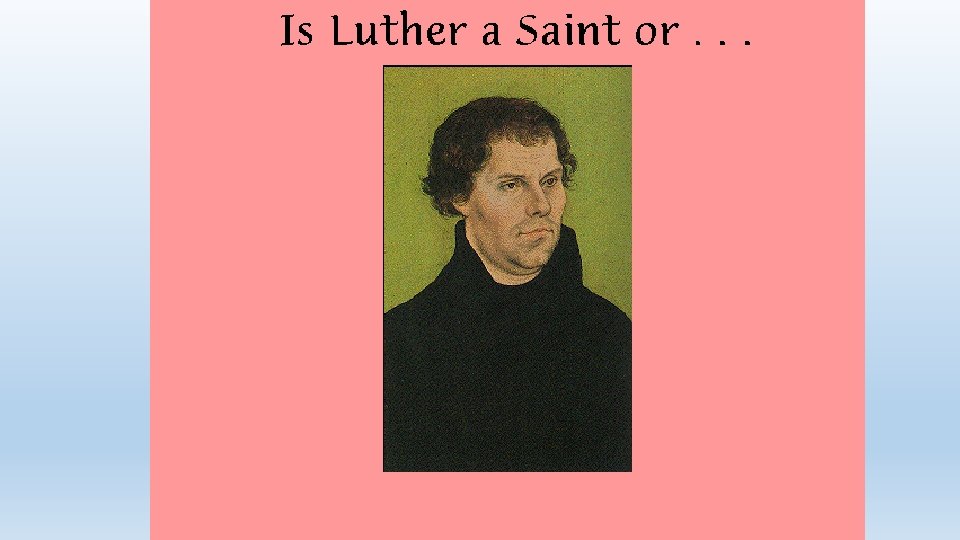
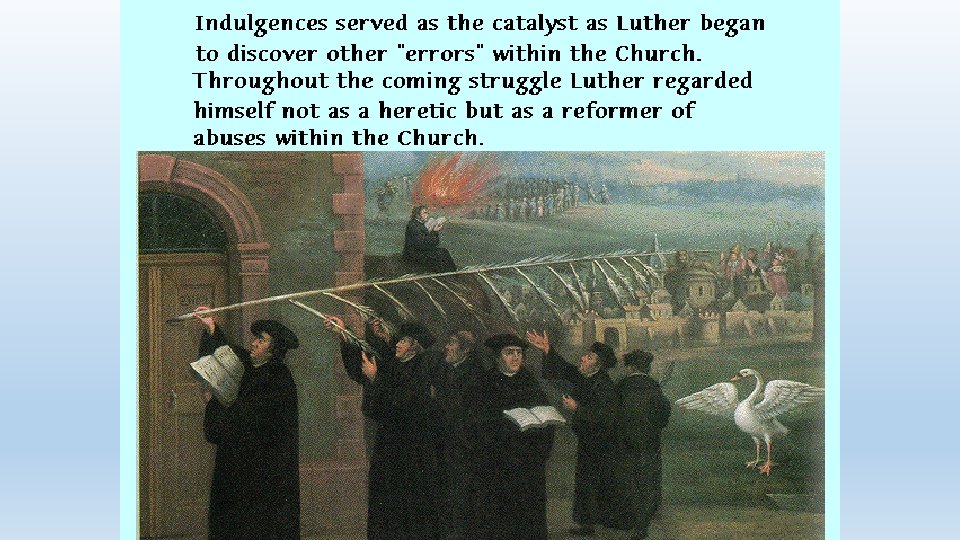
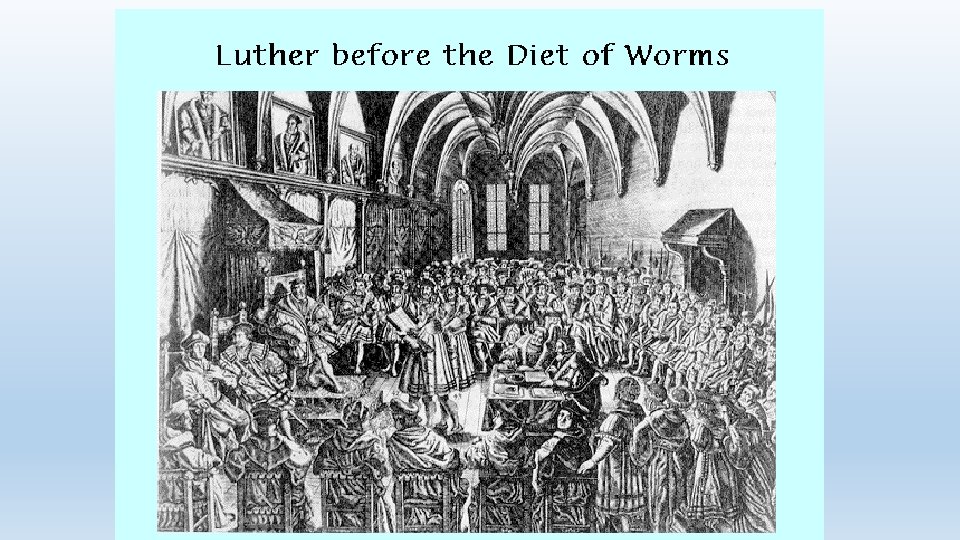
Luther’s Arguments • Did not believe the Pope was infallible. • Indulgences should not be sold. • Good works are not necessary for heaven. • Only two sacraments. • Priests should not have to swear poverty, chastity, and obedience. • Luther is excommunicated and summoned to the Diet of Worms. • Luther is declared an outlaw by the Edict of Worms. • The Bible and mass should be translated to the vernacular.
Why Germany? October 31, 1517, he posted his 95 theses on the Castle Church in Wittenberg Spread without Luther’s knowledge. Reasons for success Germany resented papal power Distance from Rome Lack of central authority to mediate the dispute German towns had a sense of civic solidarity
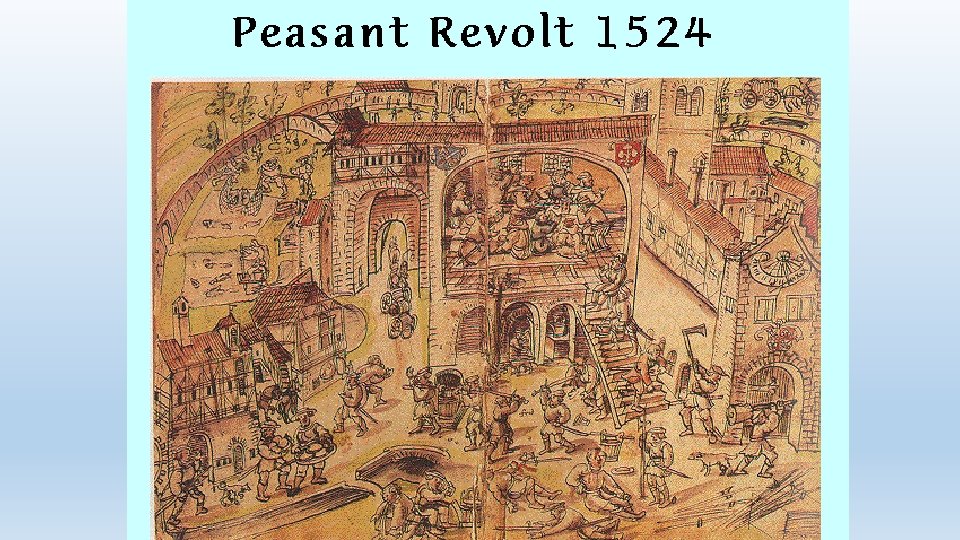
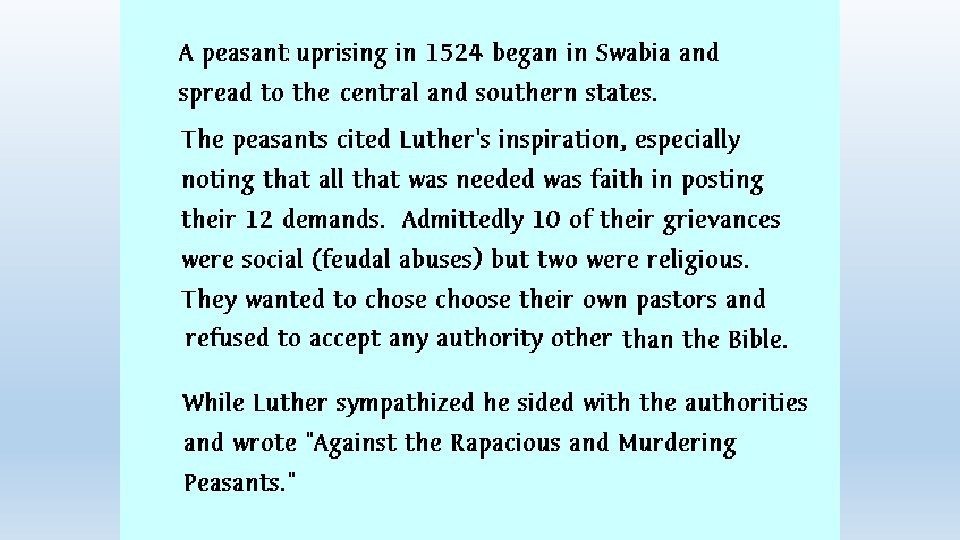
Luther gained wide support among the peasants but they misunderstood him. But Luther meant independence from the Roman Catholic Church not simply freedom for all from their secular Lords. Luther’s translation of the Bible into German made it an issue of nationalism
German Protestantism
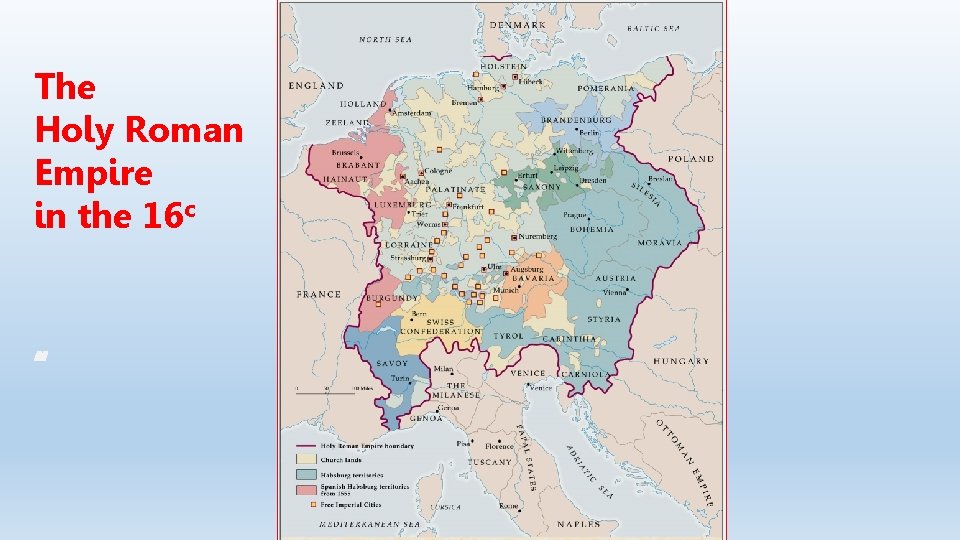
The Holy Roman Empire in the 16 c “
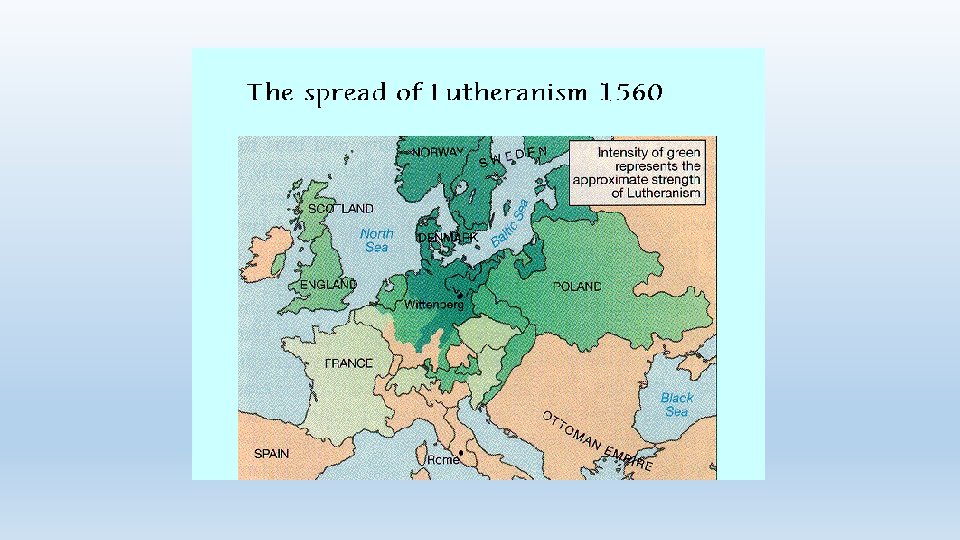
Lutheranism • Because of the intertwining of religion and politics, what began as a movement for Church reform became entangled in the rivalry of the German states. • Eventually at the Augsburg Confession the Lutheran Church is crated and the first division is made. • Many reformers did not agree with the Humanists who wanted to celebrate man. • The Diet of Speyer stated that each German prince was “to live, govern, and bear himself as he hopes and trusts to answer to God. ” • Sweden, Denmark, Bohemia, Moravia, and many small states quickly converted to Lutheranism.
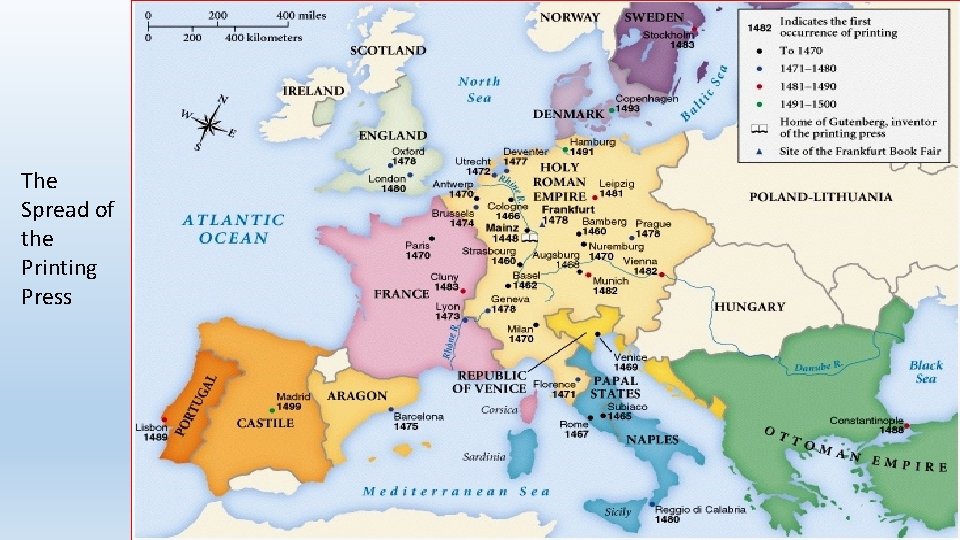
The Spread of the Printing Press
Charles V and the Peace of Augsburg • Charles V Holy Roman Emperor and King of Spain and the Netherlands was preoccupied fighting France and the Turks and did not respond to the Reformation quickly • By the mid 1500’s it was clear that Protestantism was entrenched in Central Europe so Charles V agreed to a compromise. • The Peace of Augsburg said that the religion of the ruler would be the religion of the state (cuius regio, eius religio) • Catholics and Protestants were free to emigrate to states that match their beliefs.
Reformation in Switzerland France
Zwingli and Switzerland • Switzerland was a series of city states similar to Italy in the 16 th century. • Zwingli was a reformer in Zurich who preached salvation through faith alone. • He insisted that the scriptures should be the basis of all faith alone. • His followers believed there should not be images and alter decorations in churches and tithes should be used to aid the poor. • Zwingli also believed that the Eucharist was only a symbol unlike Luther or Catholicism. • Zwingli will be killed in battle and never forms a church of his own, but his ideas will continue to spread.
Anabaptists • Many other radical ideas spread at this time such as the anti. Trinitarians which rejected the trinity (these would later found the Unitarian church) and many apocalyptic groups that believed the end of the world was at hand. • Anabaptists will come from this who took on the belief that only adults could manifest true faith and therefore began baptizing adults in 1525. • These reformers advocated congregationalism and membership through free will and self selection. • Mennonites will directly come from the Anabaptist movement.
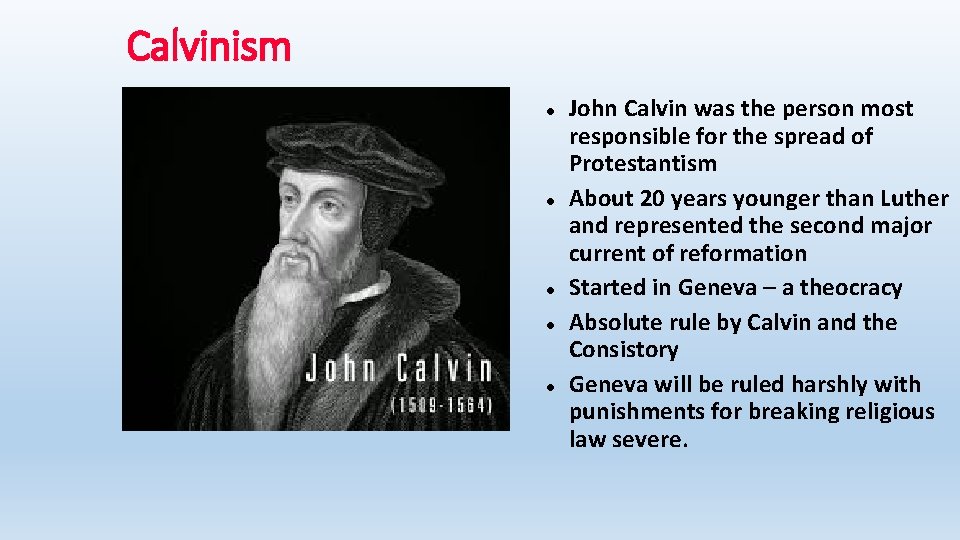
Calvinism John Calvin was the person most responsible for the spread of Protestantism About 20 years younger than Luther and represented the second major current of reformation Started in Geneva – a theocracy Absolute rule by Calvin and the Consistory Geneva will be ruled harshly with punishments for breaking religious law severe.
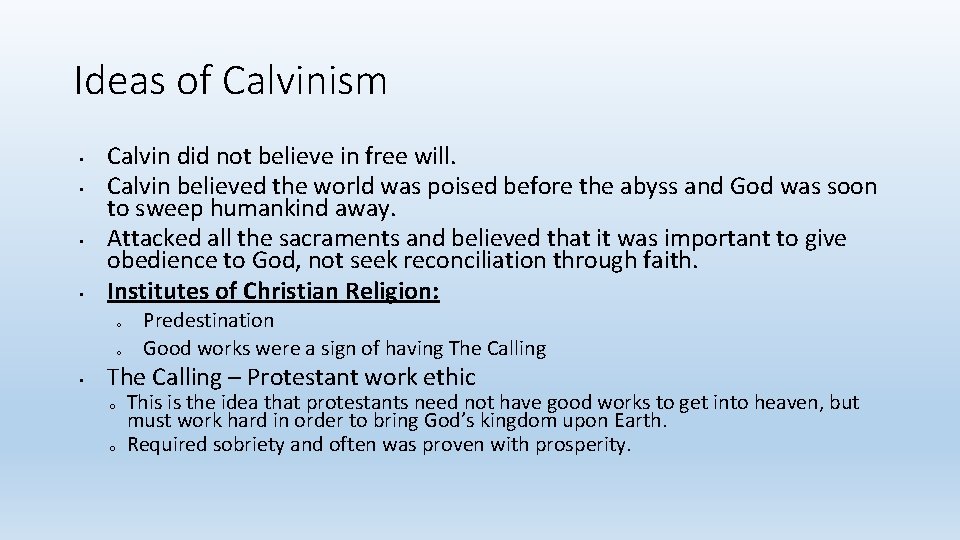
Ideas of Calvinism • • Calvin did not believe in free will. Calvin believed the world was poised before the abyss and God was soon to sweep humankind away. Attacked all the sacraments and believed that it was important to give obedience to God, not seek reconciliation through faith. Institutes of Christian Religion: o o • Predestination Good works were a sign of having The Calling – Protestant work ethic o o This is the idea that protestants need not have good works to get into heaven, but must work hard in order to bring God’s kingdom upon Earth. Required sobriety and often was proven with prosperity.
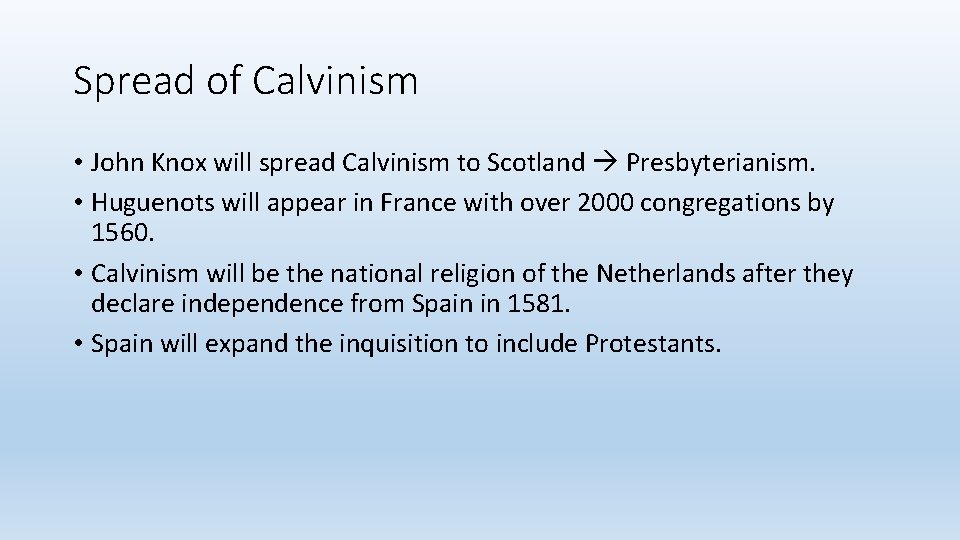
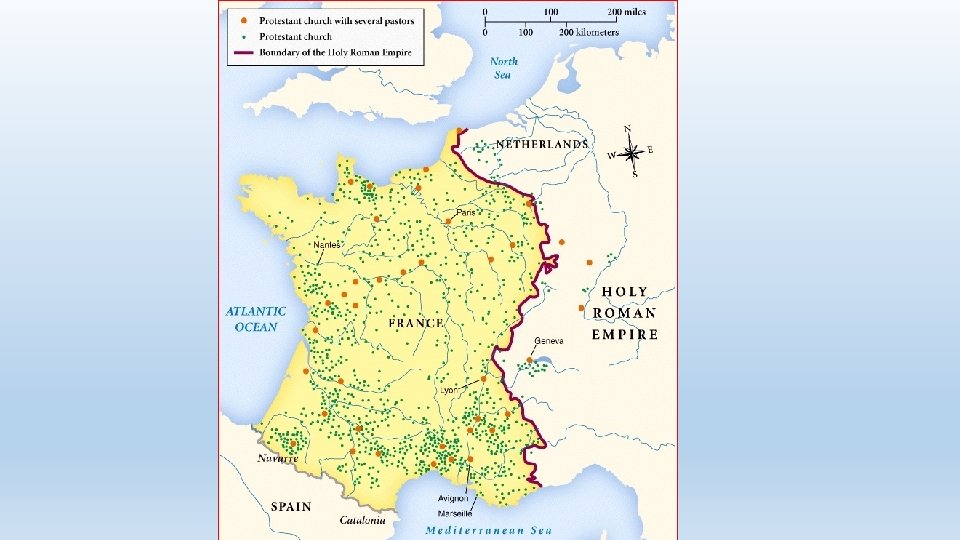
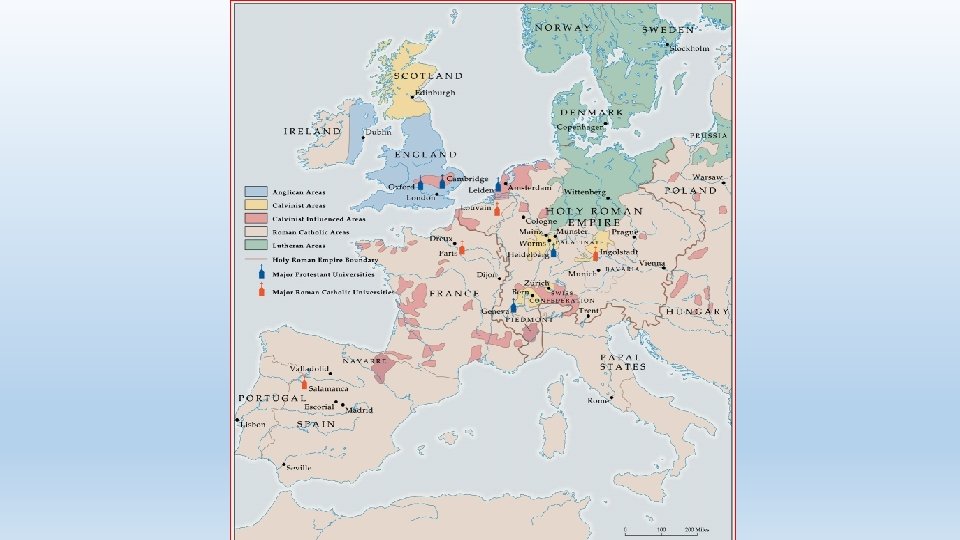
Spread of Calvinism • John Knox will spread Calvinism to Scotland Presbyterianism. • Huguenots will appear in France with over 2000 congregations by 1560. • Calvinism will be the national religion of the Netherlands after they declare independence from Spain in 1581. • Spain will expand the inquisition to include Protestants.
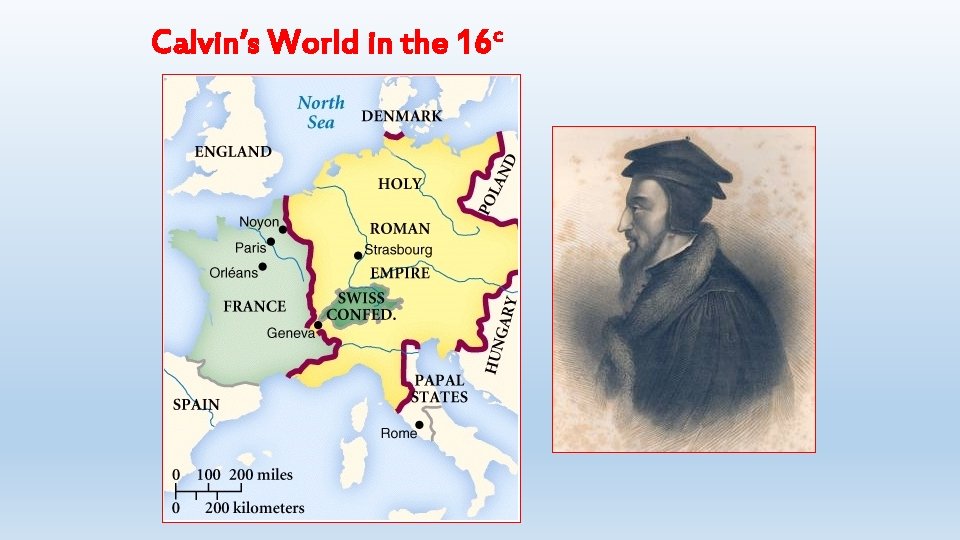
Calvin’s World in the 16 c
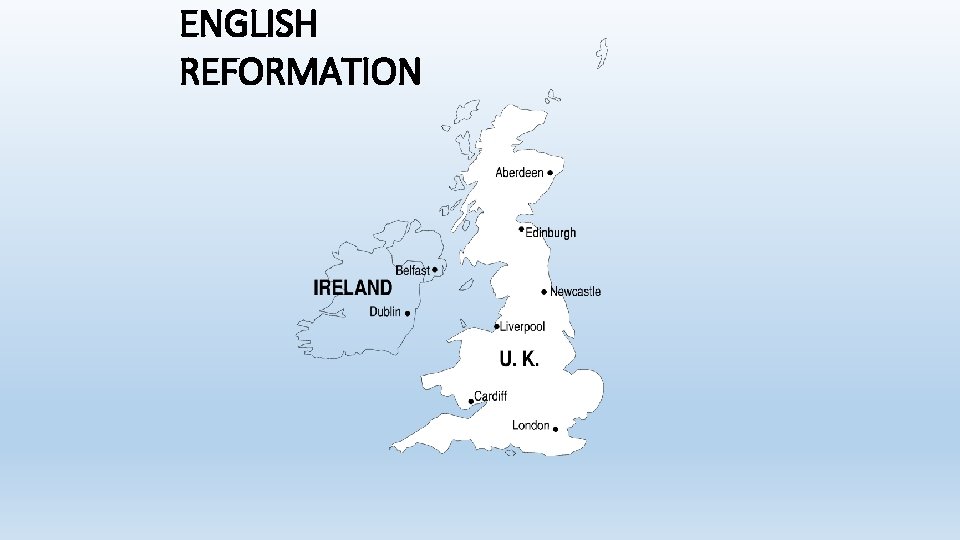
ENGLISH REFORMATION
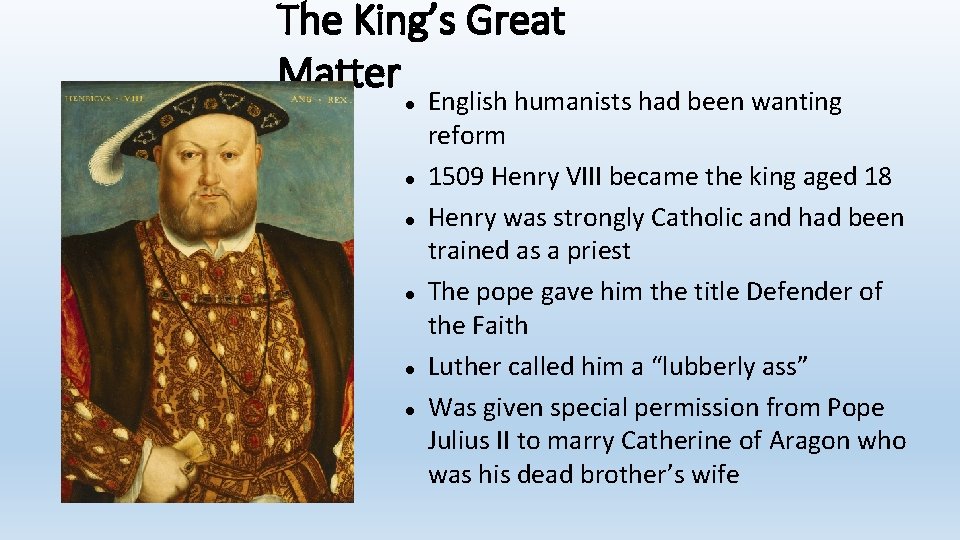
The King’s Great Matter English humanists had been wanting reform 1509 Henry VIII became the king aged 18 Henry was strongly Catholic and had been trained as a priest The pope gave him the title Defender of the Faith Luther called him a “lubberly ass” Was given special permission from Pope Julius II to marry Catherine of Aragon who was his dead brother’s wife
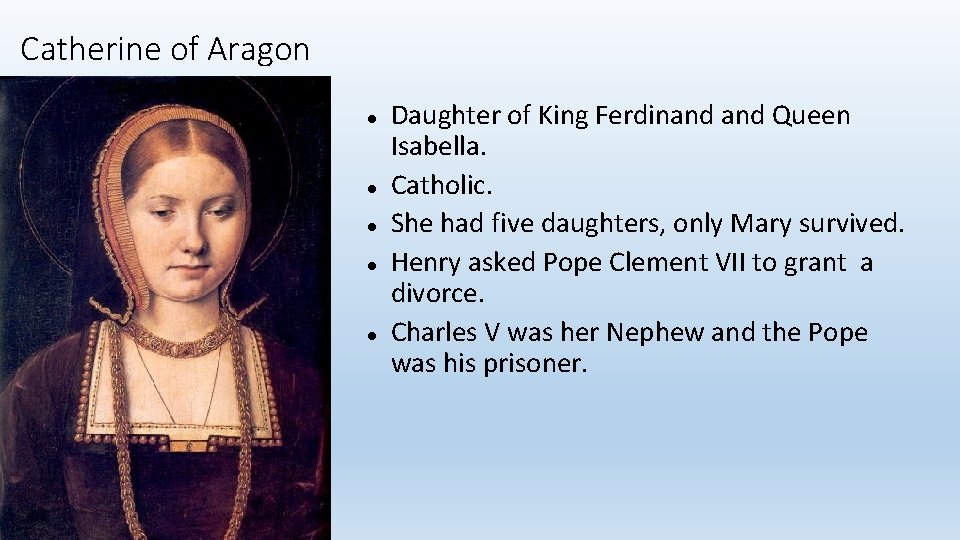
Catherine of Aragon Daughter of King Ferdinand Queen Isabella. Catholic. She had five daughters, only Mary survived. Henry asked Pope Clement VII to grant a divorce. Charles V was her Nephew and the Pope was his prisoner.
The Church of England Denied an annulment of marriage. Secretly married Anne Boleyn anyway. Henry issued The Act in Restraint of Appeals (1533), which made the king supreme head of England. The Act of Submission of the Clergy (1534), clergy must submit to the monarch. The Supremacy Act, (1534) made the king head of the Church of England. Separated Church of England from the Roman Catholic Church. The Church of England will be the first national church and was essentially Lutheran. Henry dissolved the monasteries and kept the wealth Sold the land to his friends The whole country was not willing to change
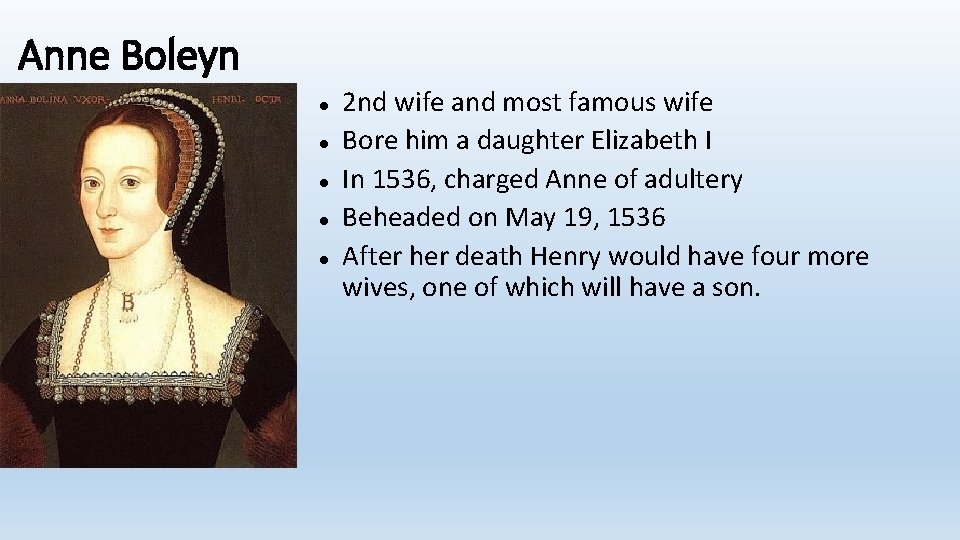
Anne Boleyn 2 nd wife and most famous wife Bore him a daughter Elizabeth I In 1536, charged Anne of adultery Beheaded on May 19, 1536 After her death Henry would have four more wives, one of which will have a son.
The Catholic Reformation Or Counter-Reformation depending on who you ask
Catholicism Strikes Back • At first the Pope tried to reconcile the two sides, when it failed and Inquisition in Rome was established. • This led to aggressive repression, censorship, and the Index of Forbidden Books in 1559. • Pope Paul IV will invent the ghetto ordering Jews living in the Papal States to reside in certain neighborhoods, stated that Jews were guilty of killing Christ and should be slaves. • Catholic Europe responded by banning Jews from owning land working in most professions. They were also forced to wear a yellow cap so they could be identified.
Jesuits (The Society of Jesus) The Jesuits will be founded by Ignatius of Loyola to be aggressive crusaders of the Catholic Reformation. The order emphasized strict Catholic dogma to lift up the spiritual condition of the clergy and laity. Emphasized education
Council of Trent The council met sporadically until 1563 Decided: a) 7 sacraments b) Bishops had to reside in their dioceses c) Suppressed pluralism and simony d) Churches had to establish seminaries e) The Index of Prohibited Books Great emphasis was placed on discipline.