
Unit 2 The Reformation I can explain how

- Slides: 38
Unit 2: The Reformation I can explain how ideas of (humanism) affected people’s perspectives during the Reformation. I can evaluate the causes and effects of the Protestant Reformation. I can explain how the development of the printing press influenced the spread of religious ideas and the Reformation. I can describe the reforms made by the Catholic Church in response to the Protestant Reformation. I can describe the impact the Inquisition had on the Reformation and Counter-Reformation.
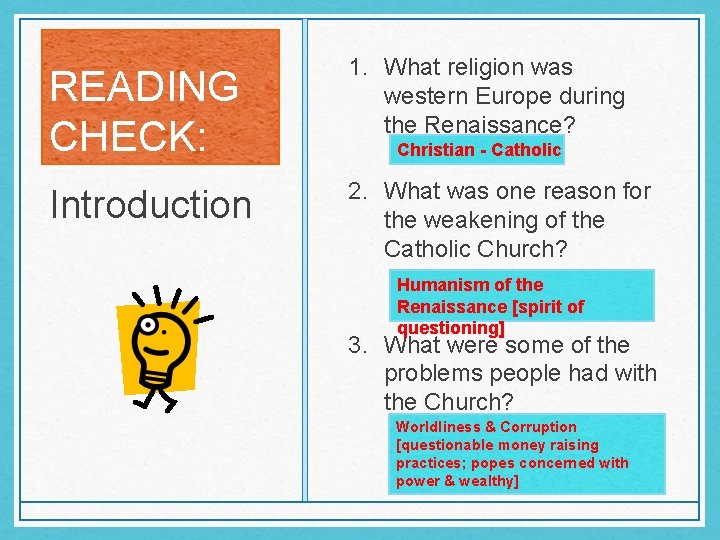
READING CHECK: 1. What religion was western Europe during the Renaissance? Introduction 2. What was one reason for the weakening of the Catholic Church? Christian - Catholic Humanism of the Renaissance [spirit of questioning] 3. What were some of the problems people had with the Church? Worldliness & Corruption [questionable money raising practices; popes concerned with power & wealthy]
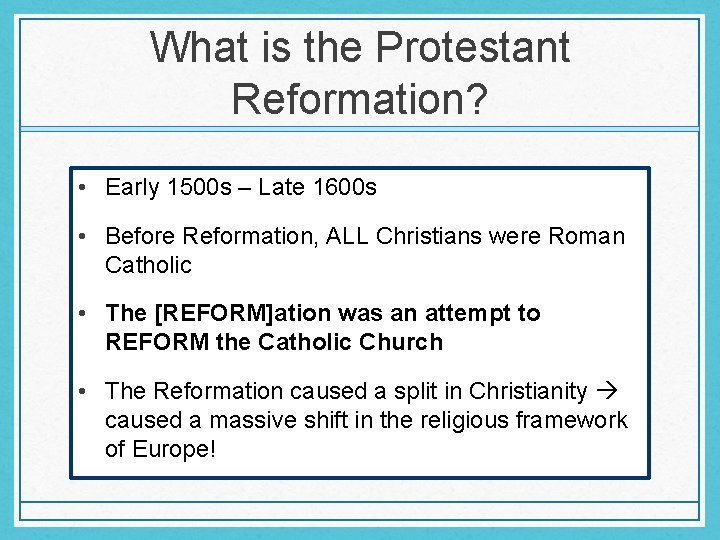
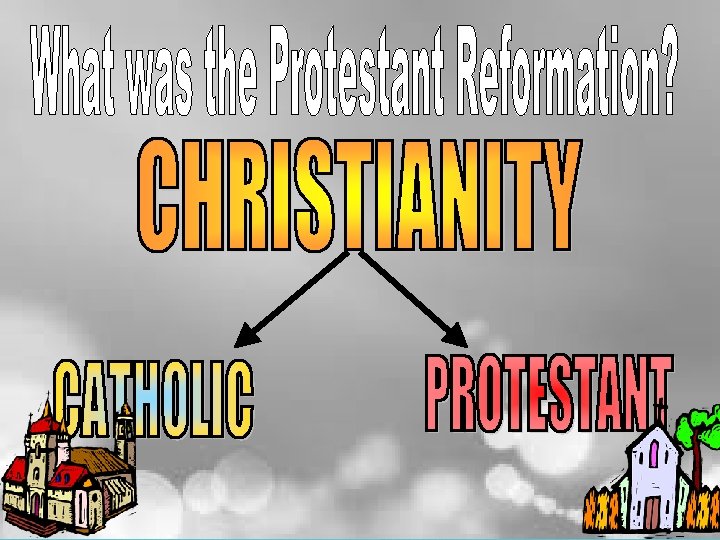
What is the Protestant Reformation? • Early 1500 s – Late 1600 s • Before Reformation, ALL Christians were Roman Catholic • The [REFORM]ation was an attempt to REFORM the Catholic Church • The Reformation caused a split in Christianity caused a massive shift in the religious framework of Europe!
KEY IDEAS of the Reformation: • A call to purify the church & • Belief that the Bible, not tradition, should be the only source of spiritual authority
How did the Roman Catholic Church control daily life in medieval Europe? How did this control effect the population? http: //video. pbs. org/video/1379546586/
Causes of the Reformation I can evaluate the causes and effects of the Protestant Reformation. • The Black Death. • Scientific Advances, which contradicted the Church I can • explain Thehow Corruption ideas of (humanism) affected people’s perspectives during the Reformation within the Catholic Church • Humanism – focus on human potential and achievements. • Often SECULAR (nonreligious) • Spirit of questioning
READING CHECK: Section 2: The Weakening of the Catholic Church 1. Name three factors, besides selling indulgences, that contributed to the weakening of the Catholic Church. 1. 2. 3. Popes became entangled in political disputes that prompted many to question the popes’ authority. The Great Schism lessened people’s respect for the papacy. The Catholic Church sold offices in a practice called simony.
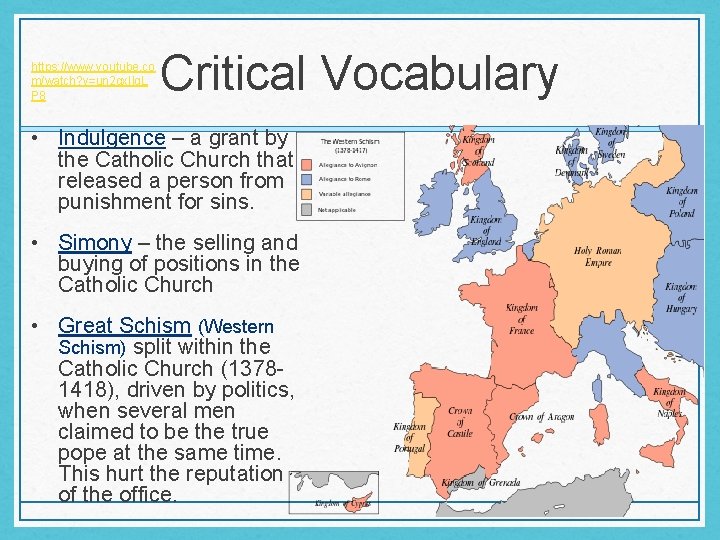
https: //www. youtube. co m/watch? v=un 2 qx. Ilq. L P 8 Critical Vocabulary • Indulgence – a grant by the Catholic Church that released a person from punishment for sins. • Simony – the selling and buying of positions in the Catholic Church • Great Schism (Western Schism) split within the Catholic Church (13781418), driven by politics, when several men claimed to be the true pope at the same time. This hurt the reputation of the office.
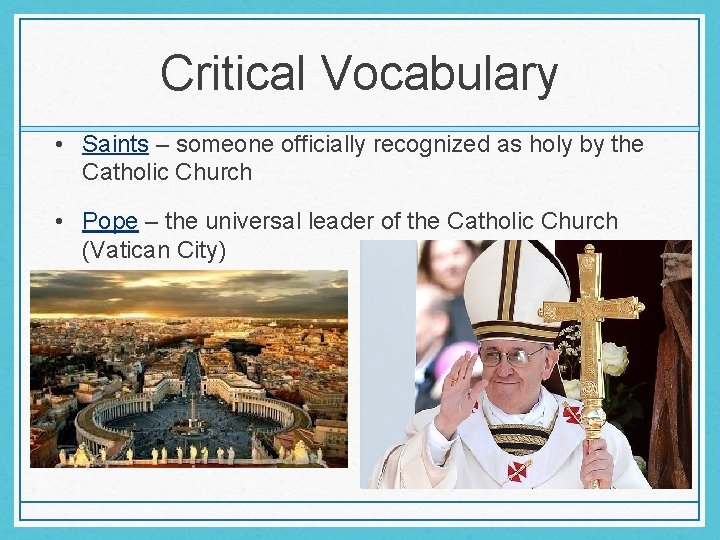
Critical Vocabulary • Saints – someone officially recognized as holy by the Catholic Church • Pope – the universal leader of the Catholic Church (Vatican City)
1. READING CHECK: Section 3: Early Calls For Reform What teachings and actions of John Wycliffe led the pope to accuse him of heresy? Wycliffe questioned the pope’s authority and attacked indulgences and immoral behavior by clergy. He said the Bible, not the Church, was the ultimate religious authority. Against Church tradition, he had the Bible translated into English. 2. What toreforms did Jan Hus the callclergy. for? He also Hus wanted end corruption among wanted the Bible and the mass to be available in the people’s everyday language, rather than in Latin. 3. In what way did Catherine of Siena’s approach to faith help prepare people for the Reformation? Catherine showed that people could lead spiritual lives that went beyond the usual norms of the Church. She emphasized personal experience of God over Church doctrine. 4. Who was Desiderius Erasmus? How did he help to prepare Europe for the Erasmus was a humanist priest who wanted to reform Reformation? the Church. He wrote The Praise of Folly, a satire of society, including abuses within the Church. His criticism of the Church added to people’s desire to question its teachings.
Critical Vocabulary • Reformation – a religious reform movement from the early 1500 s to the 1600 s that led to the formation of new Christian groups • Doctrine – a belief or set of beliefs, especially relating to religion • Protestant - a Christian who separated from the Roman Catholic Church during the Reformation; today, any member of a Christian church founded on the principles of the Reformation. • Denomination - a particular religious group within a larger faith; for example, Lutheranism is one denomination within Christianity.
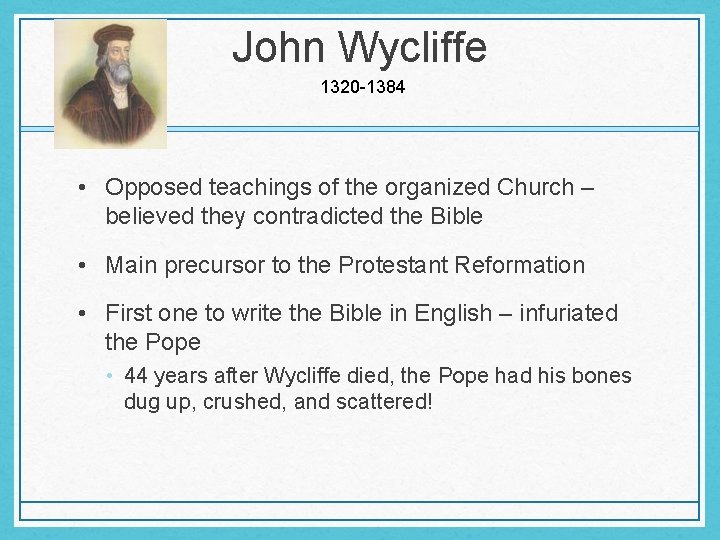
John Wycliffe 1320 -1384 • Opposed teachings of the organized Church – believed they contradicted the Bible • Main precursor to the Protestant Reformation • First one to write the Bible in English – infuriated the Pope • 44 years after Wycliffe died, the Pope had his bones dug up, crushed, and scattered!
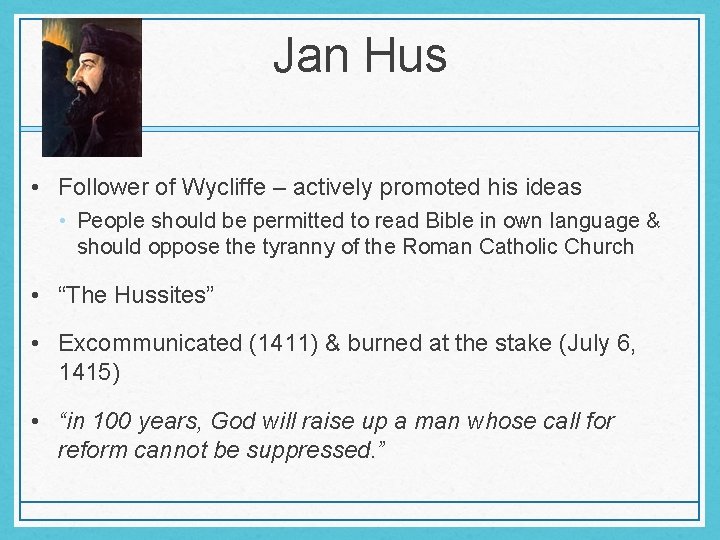
Jan Hus • Follower of Wycliffe – actively promoted his ideas • People should be permitted to read Bible in own language & should oppose the tyranny of the Roman Catholic Church • “The Hussites” • Excommunicated (1411) & burned at the stake (July 6, 1415) • “in 100 years, God will raise up a man whose call for reform cannot be suppressed. ”
1. READING CHECK: Section 4: Martin Luther Breaks Away From The Church Why did Martin Luther write the Ninety. Five Theses and post them on the door of a church in Wittenberg? Luther was outraged by the sale of indulgences. He posted the Ninety-Five Theses to express his ideas about this practice and other issues. 2. Compare and contrast Martin Luther’s beliefs with those of the Catholic Church. NEXT SLIDE 3. What happened when Luther was brought before the Diet of Worms? He refused to take back his teachings and was declared a heretic by the Holy Roman emperor. The emperor forbade the printing of his writings.
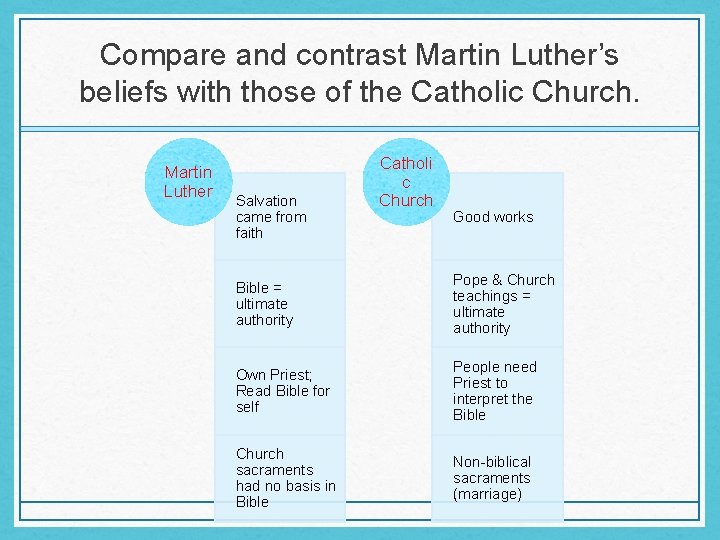
Compare and contrast Martin Luther’s beliefs with those of the Catholic Church. Martin Luther Salvation came from faith Catholi c Church Good works Bible = ultimate authority Pope & Church teachings = ultimate authority Own Priest; Read Bible for self People need Priest to interpret the Bible Church sacraments had no basis in Bible Non-biblical sacraments (marriage)
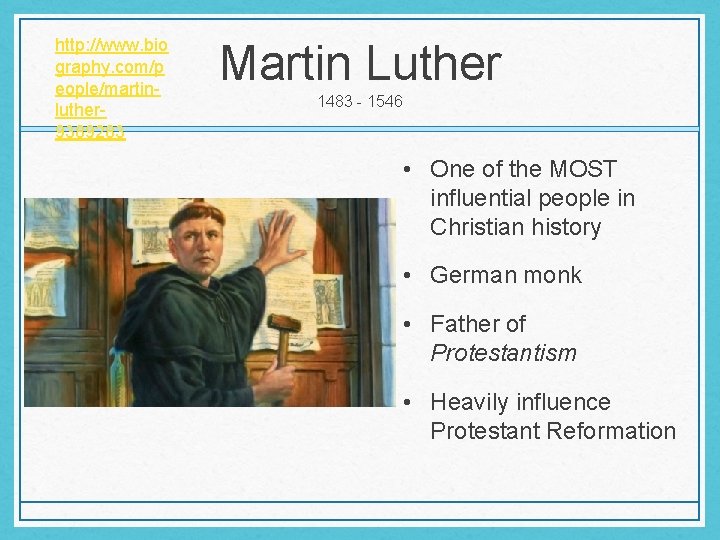
http: //www. bio graphy. com/p eople/martinluther 9389283 Martin Luther 1483 - 1546 • One of the MOST influential people in Christian history • German monk • Father of Protestantism • Heavily influence Protestant Reformation
What is Protestantism? • A major body of Christianity that denies the universal authority of the Pope
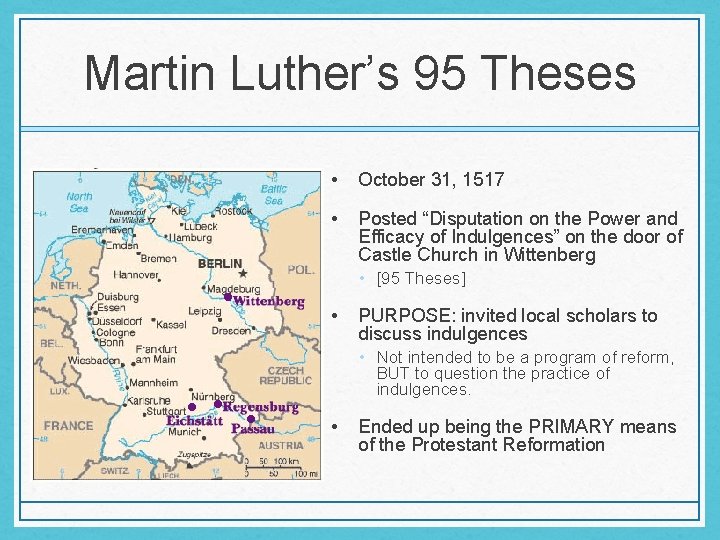
Martin Luther’s 95 Theses • October 31, 1517 • Posted “Disputation on the Power and Efficacy of Indulgences” on the door of Castle Church in Wittenberg • [95 Theses] • PURPOSE: invited local scholars to discuss indulgences • Not intended to be a program of reform, BUT to question the practice of indulgences. • Ended up being the PRIMARY means of the Protestant Reformation
Read and Annotate: Martin Luther’s 95 Theses
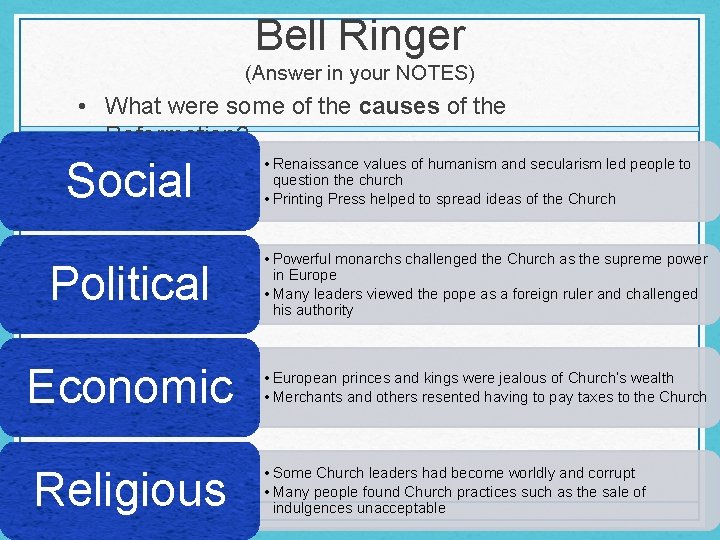
Bell Ringer (Answer in your NOTES) • What were some of the causes of the Reformation? Social • Renaissance values of humanism and secularism led people to question the church • Printing Press helped to spread ideas of the Church Political • Powerful monarchs challenged the Church as the supreme power in Europe • Many leaders viewed the pope as a foreign ruler and challenged his authority Economic • European princes and kings were jealous of Church’s wealth • Merchants and others resented having to pay taxes to the Church Religious • Some Church leaders had become worldly and corrupt • Many people found Church practices such as the sale of indulgences unacceptable
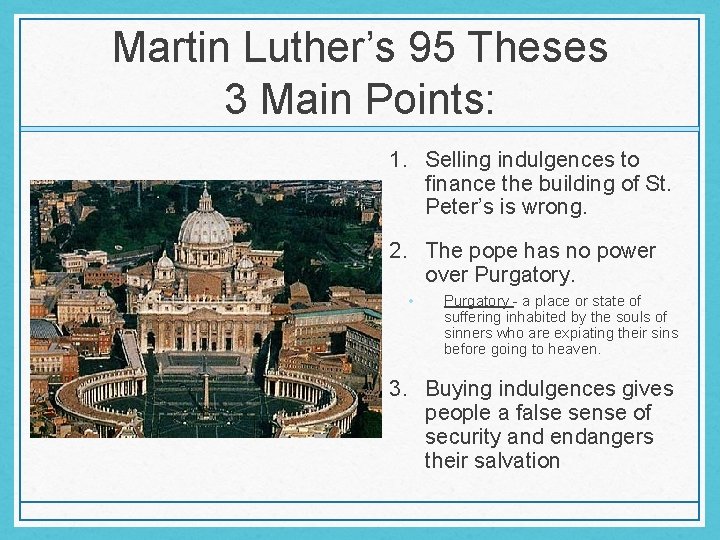
Martin Luther’s 95 Theses 3 Main Points: 1. Selling indulgences to finance the building of St. Peter’s is wrong. 2. The pope has no power over Purgatory. • Purgatory - a place or state of suffering inhabited by the souls of sinners who are expiating their sins before going to heaven. 3. Buying indulgences gives people a false sense of security and endangers their salvation
Response to Luther Explaining the positions of historical figures • In your group. . . read and summarize the reaction of the historical figure assigned to you. (Page 56 – “The Pope’s Threat” and “The Emperor’s Opposition”)
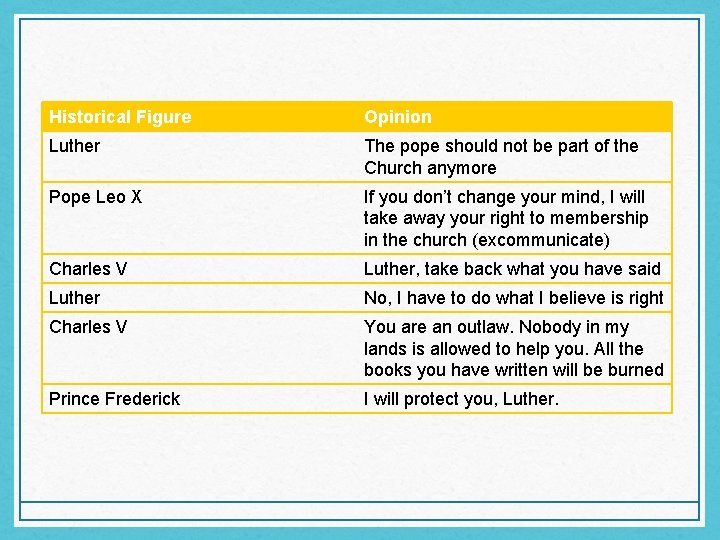
Historical Figure Opinion Luther The pope should not be part of the Church anymore Pope Leo X If you don’t change your mind, I will take away your right to membership in the church (excommunicate) Charles V Luther, take back what you have said Luther No, I have to do what I believe is right Charles V You are an outlaw. Nobody in my lands is allowed to help you. All the books you have written will be burned Prince Frederick I will protect you, Luther.
What is Protestantism? • A major body of Christianity that denies the universal authority of the Pope
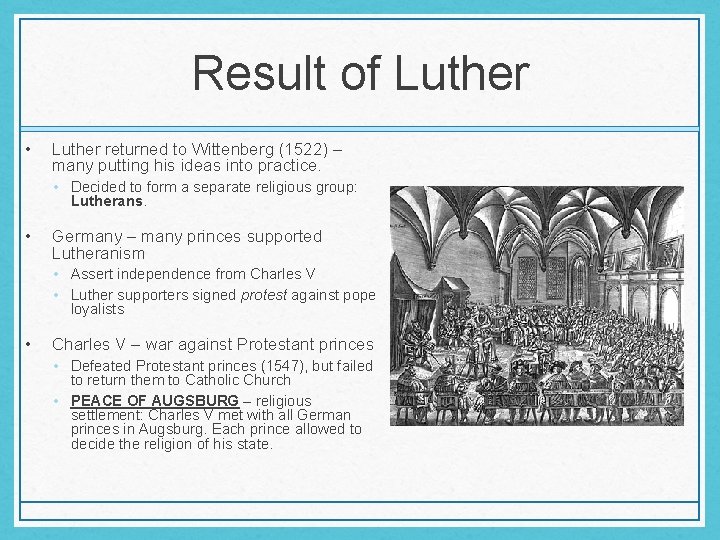
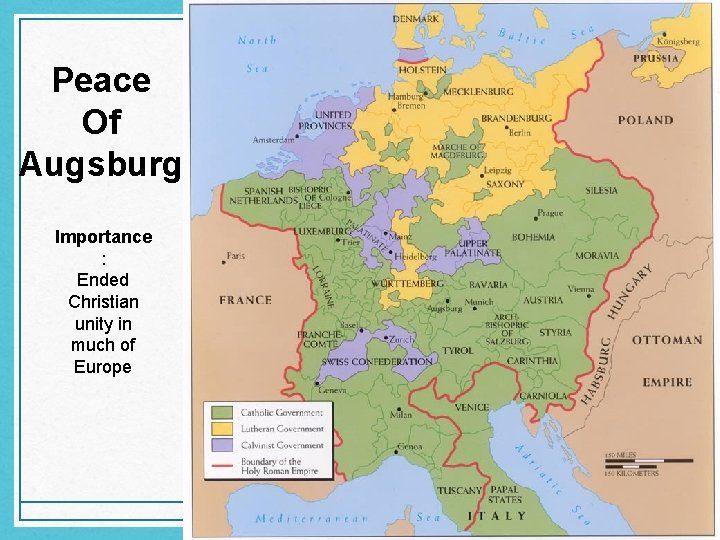
Result of Luther • Luther returned to Wittenberg (1522) – many putting his ideas into practice. • Decided to form a separate religious group: Lutherans. • Germany – many princes supported Lutheranism • Assert independence from Charles V • Luther supporters signed protest against pope loyalists • Charles V – war against Protestant princes • Defeated Protestant princes (1547), but failed to return them to Catholic Church • PEACE OF AUGSBURG – religious settlement: Charles V met with all German princes in Augsburg. Each prince allowed to decide the religion of his state.
Peace Of Augsburg Importance : Ended Christian unity in much of Europe
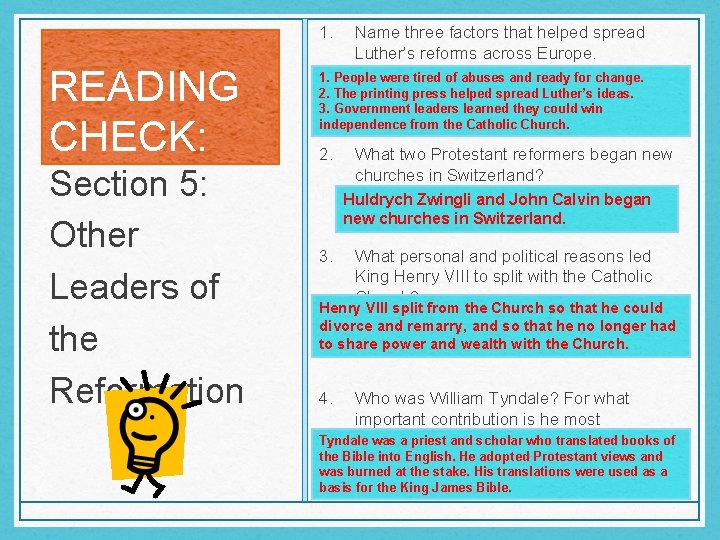
1. READING CHECK: Section 5: Other Leaders of the Reformation Name three factors that helped spread Luther’s reforms across Europe. 1. People were tired of abuses and ready for change. 2. The printing press helped spread Luther’s ideas. 3. Government leaders learned they could win independence from the Catholic Church. 2. What two Protestant reformers began new churches in Switzerland? Huldrych Zwingli and John Calvin began new churches in Switzerland. 3. What personal and political reasons led King Henry VIII to split with the Catholic Church? Henry VIII split from the Church so that he could divorce and remarry, and so that he no longer had to share power and wealth with the Church. 4. Who was William Tyndale? For what important contribution is he most remembered? Tyndale was a priest and scholar who translated books of the Bible into English. He adopted Protestant views and was burned at the stake. His translations were used as a basis for the King James Bible.
Critical Vocabulary • Predestination –belief that God has known since the beginning of time who will be saved • Theocracy – a government controlled by religious leaders
England Becomes Protestant • http: //prezi. com/hftgraefrhim/chapter-1 -section-34/
England Becomes Protestant • King Henry VIII (Tudor) of England – was devout Catholic in 1509 when he became king • Wrote attack on Luther’s ideas (1521) • Pope gave him title of “Defender of the Faith” • Due to political needs, Henry VIII’s faith was tested. • Needed male heir (someone who will be the next king), worried of another civil war if he died • Wife, Catherine of Aragon, had only given him a girl, Mary • Henry VIII wanted to divorce Catherine of Aragon for a younger wife
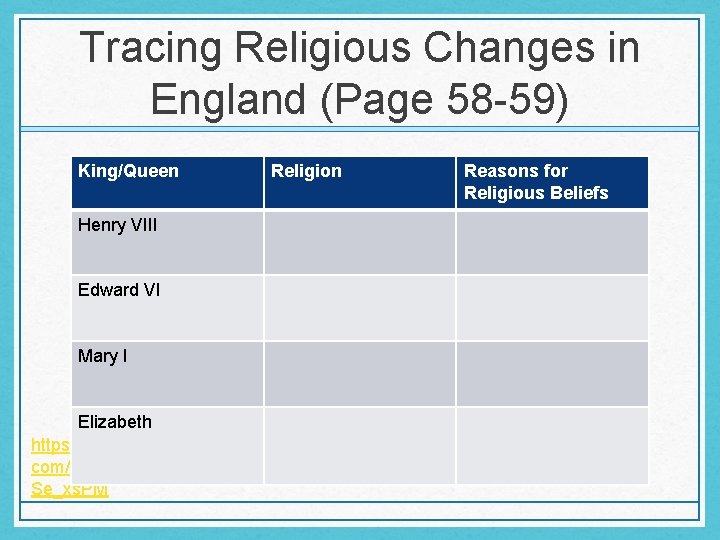
Tracing Religious Changes in England (Page 58 -59) King/Queen Henry VIII Edward VI Mary I Elizabeth https: //www. youtube. com/watch? v=3 m 6 i Se_xs. PM Religion Reasons for Religious Beliefs
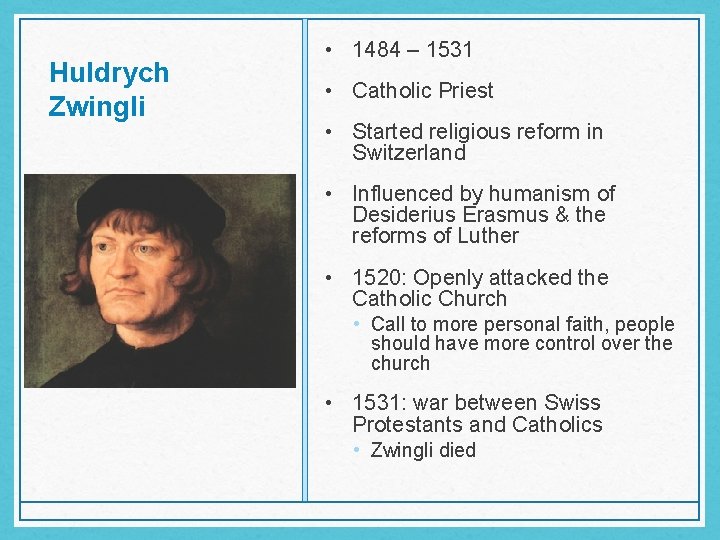
Huldrych Zwingli • 1484 – 1531 • Catholic Priest • Started religious reform in Switzerland • Influenced by humanism of Desiderius Erasmus & the reforms of Luther • 1520: Openly attacked the Catholic Church • Call to more personal faith, people should have more control over the church • 1531: war between Swiss Protestants and Catholics • Zwingli died
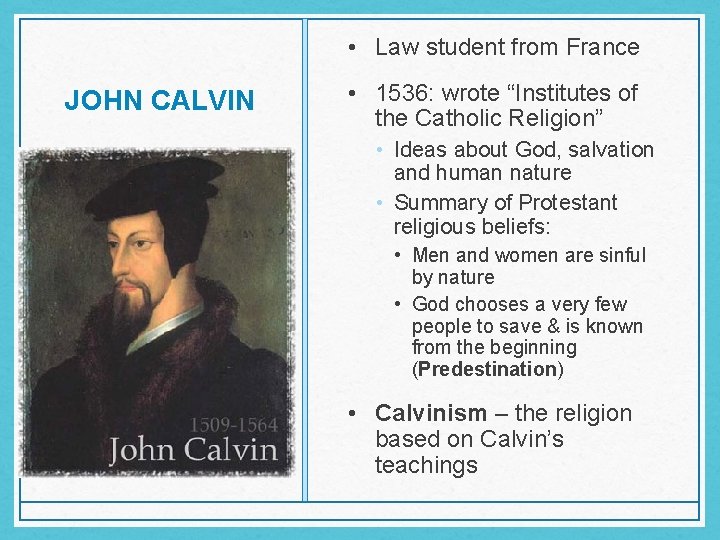
• Law student from France JOHN CALVIN • 1536: wrote “Institutes of the Catholic Religion” • Ideas about God, salvation and human nature • Summary of Protestant religious beliefs: • Men and women are sinful by nature • God chooses a very few people to save & is known from the beginning (Predestination) • Calvinism – the religion based on Calvin’s teachings
Calvin Leads the Reformation in Switzerland • Believed that the ideal government was a theocracy • 1541: Protestants in Geneva, Switzerland asked Calvin to lead their city. Very strict. • Religion classes • No bright clothing or playing cards • Preaching different doctrines = burned at the stake • “Model city” of highly moral citizens
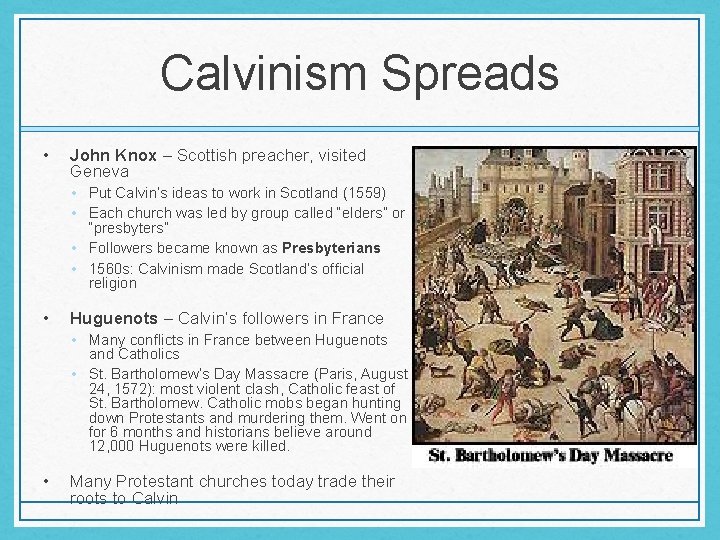
Calvinism Spreads • John Knox – Scottish preacher, visited Geneva • Put Calvin’s ideas to work in Scotland (1559) • Each church was led by group called “elders” or “presbyters” • Followers became known as Presbyterians • 1560 s: Calvinism made Scotland’s official religion • Huguenots – Calvin’s followers in France • Many conflicts in France between Huguenots and Catholics • St. Bartholomew’s Day Massacre (Paris, August 24, 1572): most violent clash, Catholic feast of St. Bartholomew. Catholic mobs began hunting down Protestants and murdering them. Went on for 6 months and historians believe around 12, 000 Huguenots were killed. • Many Protestant churches today trade their roots to Calvin
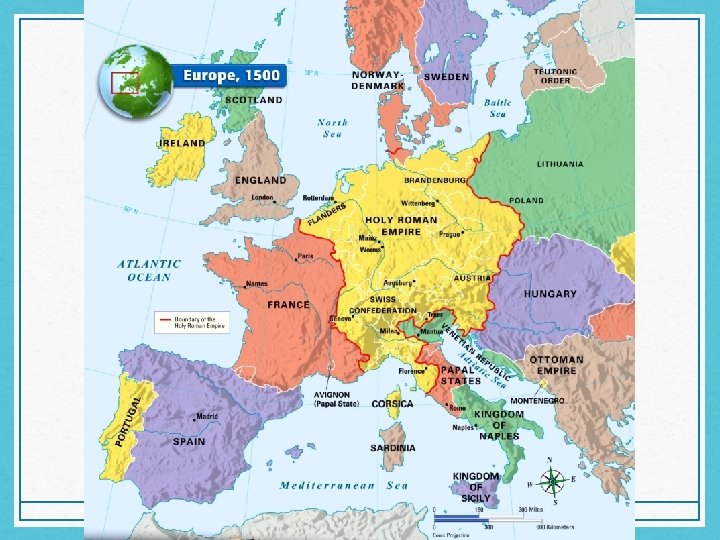
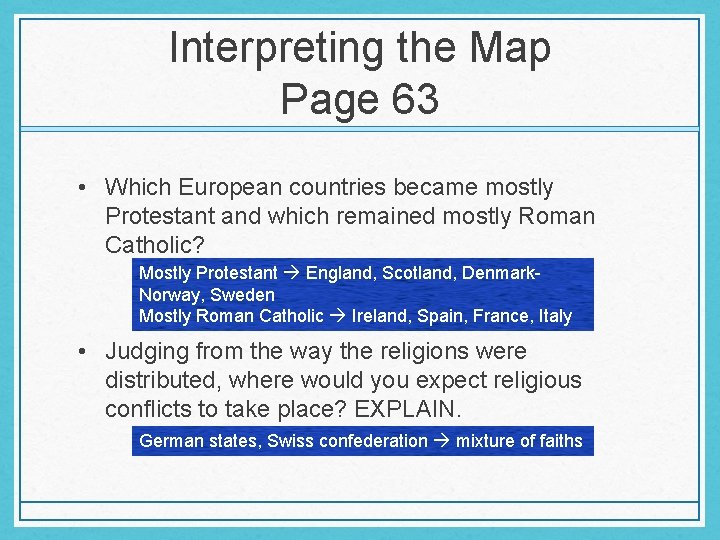
Interpreting the Map Page 63 • Which European countries became mostly Protestant and which remained mostly Roman Catholic? Mostly Protestant England, Scotland, Denmark. Norway, Sweden Mostly Roman Catholic Ireland, Spain, France, Italy • Judging from the way the religions were distributed, where would you expect religious conflicts to take place? EXPLAIN. German states, Swiss confederation mixture of faiths