
UNIT 2 THE ORGANISATION OF THE HUMAN BODY
UNIT 2 THE ORGANISATION OF THE HUMAN BODY
UNIT 2 THE ORGANISATION OF THE HUMAN BODY CONTENTS 1. LEVELS OF ORGANISATION OF LIVING MATTER 2. THE CELL a) Cell Theory b) Cell structure 3. TISSUES a) Cell differentation b) Epithelial tissues c) Concective tissues d) Muscle tissues e) Nervous tissues 4. SYSTEMS a) Nutrition b) Reproduction c) Interaction
Unit 2: The organisation of the human body Levels of organisation 1 st Session
Unit 2: The organisation of the human body Levels of organisation 1 st Session
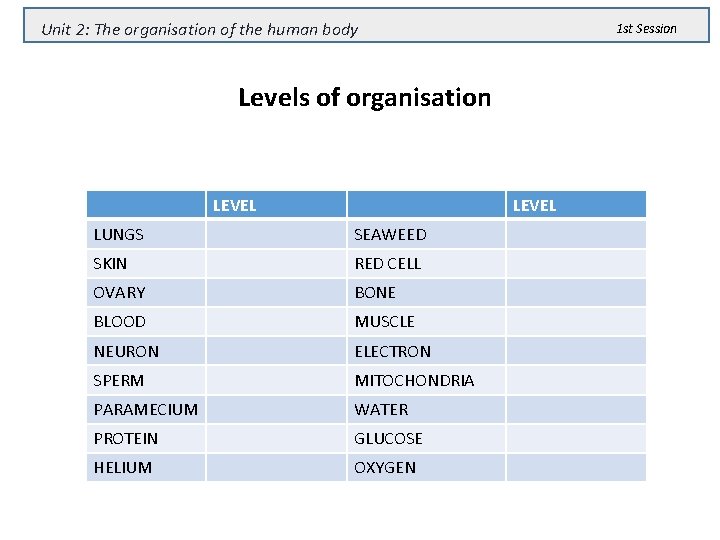
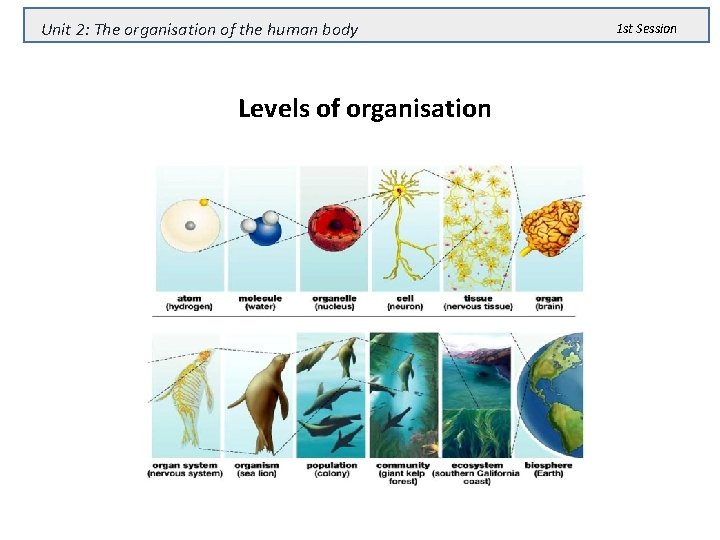
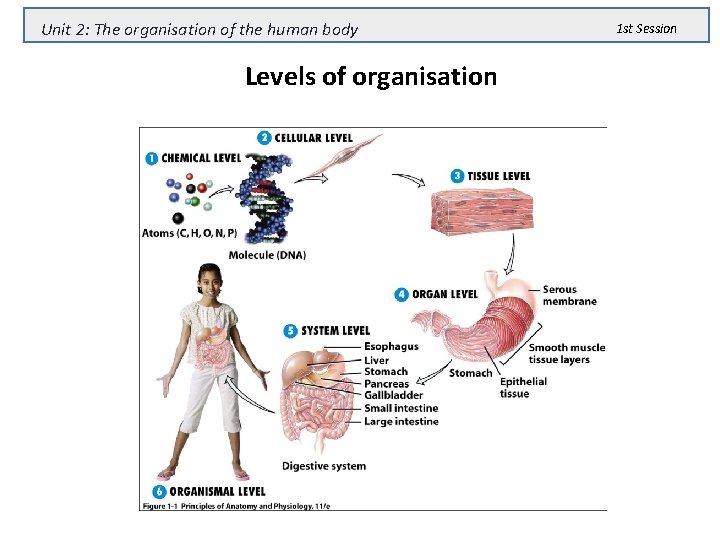
Unit 2: The organisation of the human body 1 st Session Levels of organisation LEVEL LUNGS SEAWEED SKIN RED CELL OVARY BONE BLOOD MUSCLE NEURON ELECTRON SPERM MITOCHONDRIA PARAMECIUM WATER PROTEIN GLUCOSE HELIUM OXYGEN
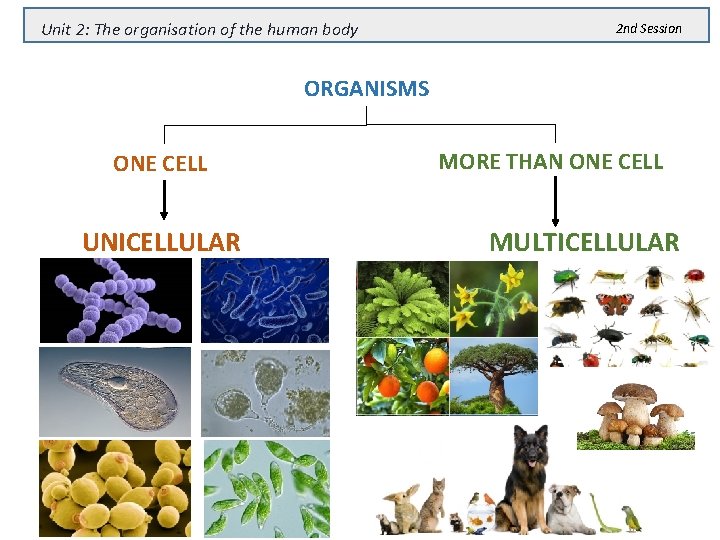
Unit 2: The organisation of the human body 2 nd Session ORGANISMS ONE CELL UNICELLULAR MORE THAN ONE CELL MULTICELLULAR
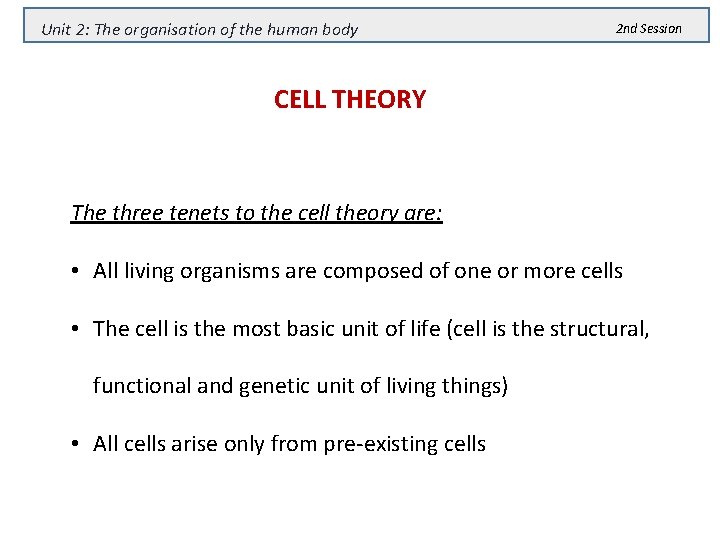
Unit 2: The organisation of the human body 2 nd Session CELL THEORY The three tenets to the cell theory are: • All living organisms are composed of one or more cells • The cell is the most basic unit of life (cell is the structural, functional and genetic unit of living things) • All cells arise only from pre-existing cells
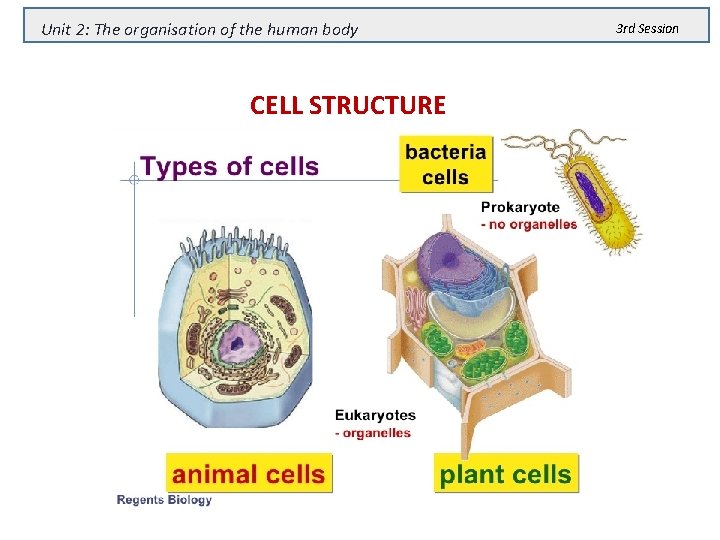
Unit 2: The organisation of the human body CELL STRUCTURE 3 rd Session
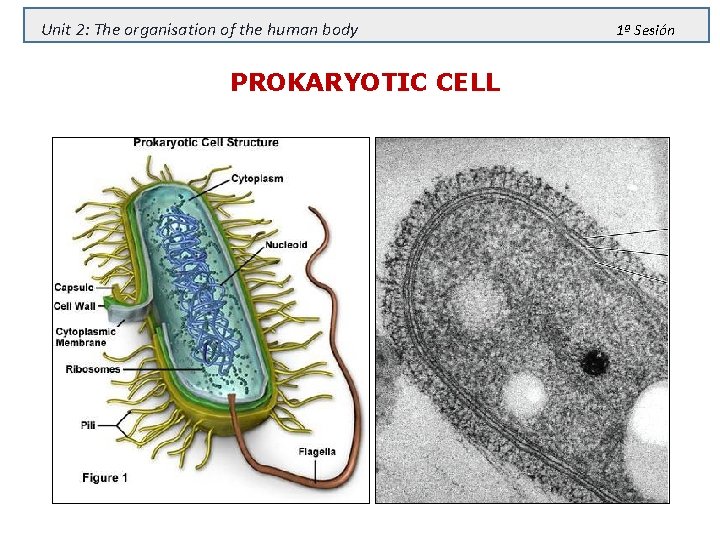
Unit 2: The organisation of the human body PROKARYOTIC CELL 1ª Sesión

3. LA CÉLULA PROCARIOTA • PLASMA MEMBRANE: membrane that limits the cell regulates the exchange of substances and the interactions with the environment. • BACTERIAL CELL: Wall gives the cell its shape and surrounds the plasma membrane, protecting it form the environment. • CAPSULE: external layer that protects bacteria from harsh environmental conditions. • CYTOPLASM: liquid solution mainly composed of water, salts, and proteins. It contains the cellular organelles. • RIBOSOMES: Organelles responsible for the synthesis of proteins • INCLUSIONS: intracellular substances that are stored nutrients and other substances. • DNA-CHROMOSOME-NUCLEOID: circular double strand of DNA. • PLASMID: extra chromosome made of a circular double strand of DNA. It is present in some bacteria • FIMBRIA: short and numerous protein structures that allow cells to attach to the substrate • FLAGELLA: is a lash-like protein appendage that protrudes from the cell body of certain bacterial. The primary role of the flagellum is locomotion, but it also often has function as a sensory organelle, being sensitive to chemicals and temperatures outside the cell.
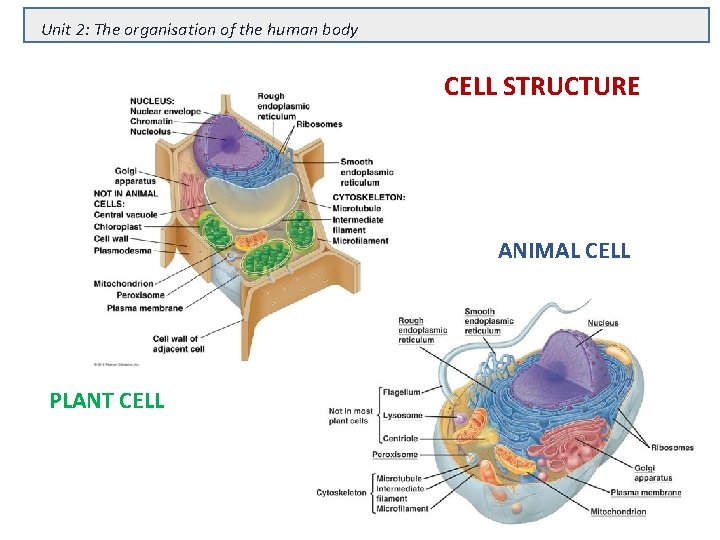
Unit 2: The organisation of the human body CELL STRUCTURE ANIMAL CELL PLANT CELL
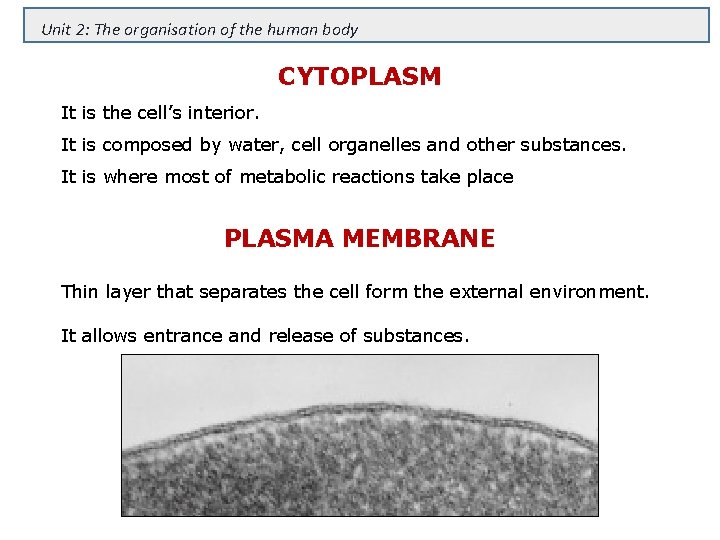
Unit 2: The organisation of the human body CYTOPLASM It is the cell’s interior. It is composed by water, cell organelles and other substances. It is where most of metabolic reactions take place PLASMA MEMBRANE Thin layer that separates the cell form the external environment. It allows entrance and release of substances.
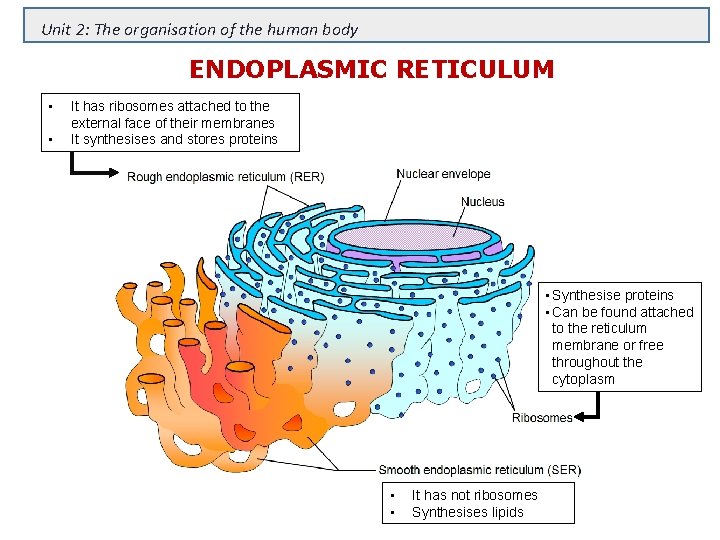
Unit 2: The organisation of the human body ENDOPLASMIC RETICULUM • • It has ribosomes attached to the external face of their membranes It synthesises and stores proteins • Synthesise proteins • Can be found attached to the reticulum membrane or free throughout the cytoplasm • • It has not ribosomes Synthesises lipids
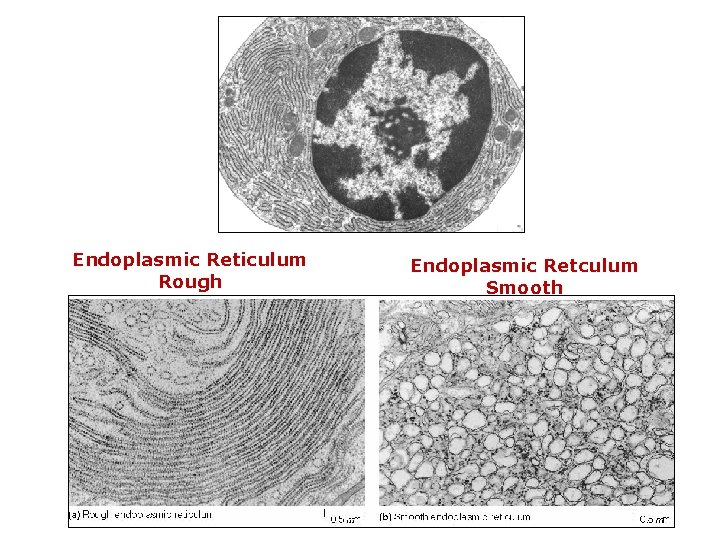
Endoplasmic Reticulum Rough Endoplasmic Retculum Smooth
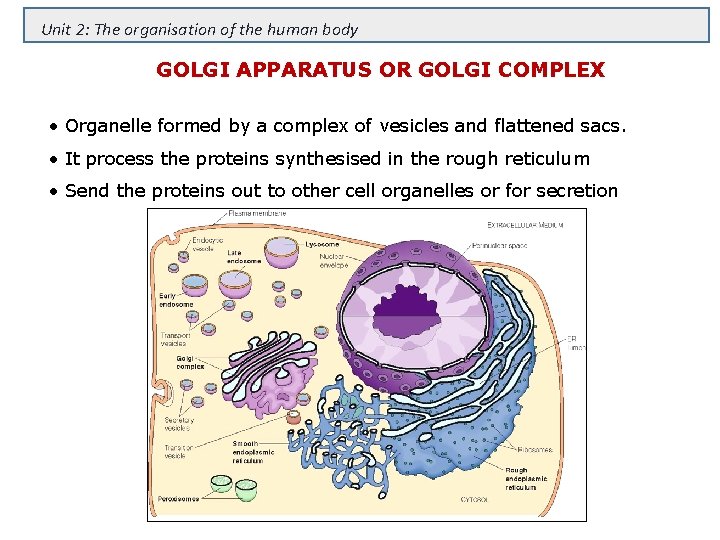
Unit 2: The organisation of the human body GOLGI APPARATUS OR GOLGI COMPLEX • Organelle formed by a complex of vesicles and flattened sacs. • It process the proteins synthesised in the rough reticulum • Send the proteins out to other cell organelles or for secretion

Unit 2: The organisation of the human body VACUOLES • Membranous vesicles that contains water and other substances • In plant cell are specially relevant in regulating the cellular volume and turgor (turgencia celular)
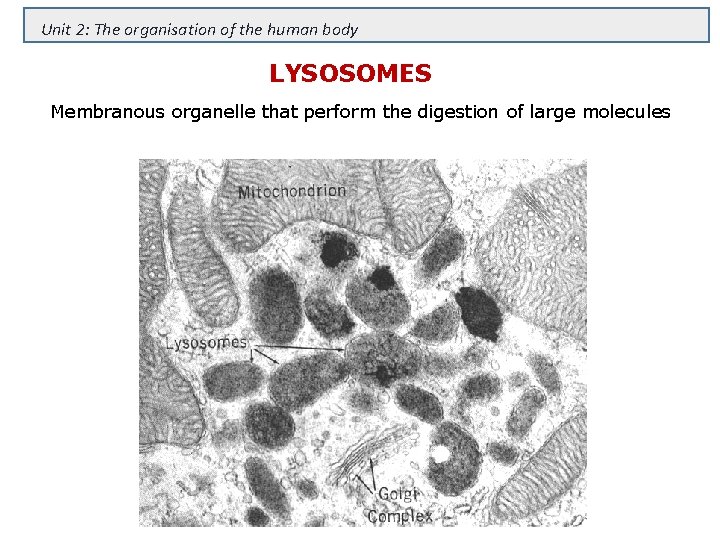
Unit 2: The organisation of the human body LYSOSOMES Membranous organelle that perform the digestion of large molecules
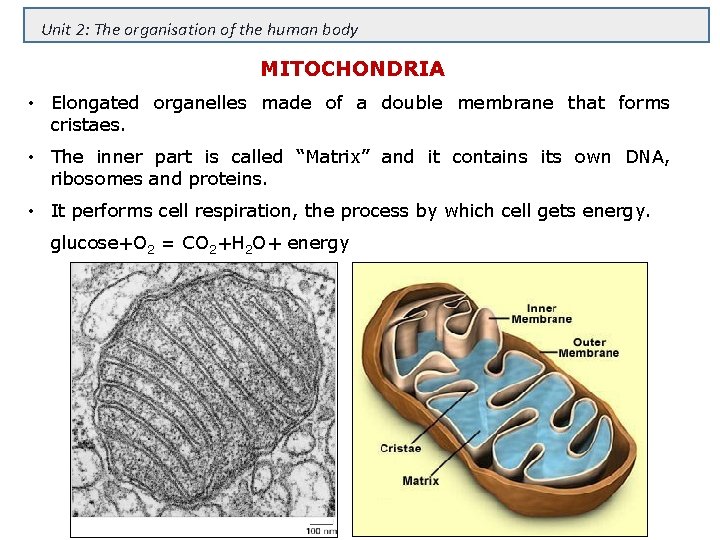
Unit 2: The organisation of the human body MITOCHONDRIA • Elongated organelles made of a double membrane that forms cristaes. • The inner part is called “Matrix” and it contains its own DNA, ribosomes and proteins. • It performs cell respiration, the process by which cell gets energy. glucose+O 2 = CO 2+H 2 O+ energy
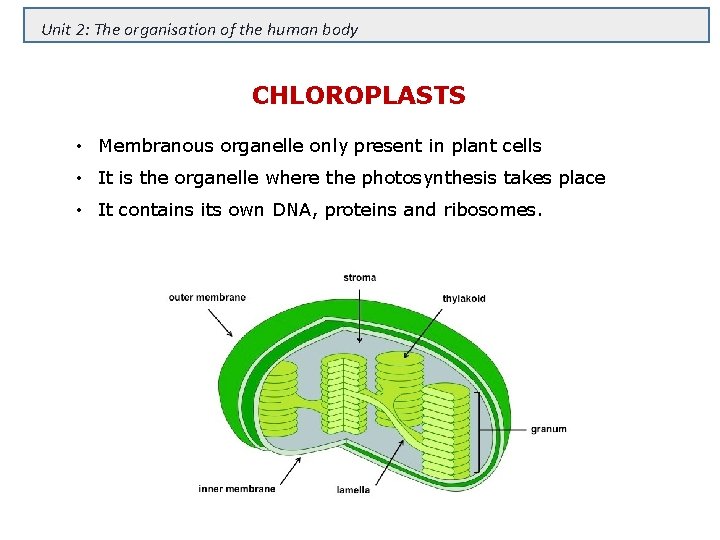
Unit 2: The organisation of the human body CHLOROPLASTS • Membranous organelle only present in plant cells • It is the organelle where the photosynthesis takes place • It contains its own DNA, proteins and ribosomes.

Unit 2: The organisation of the human body CHLOROPLASTS
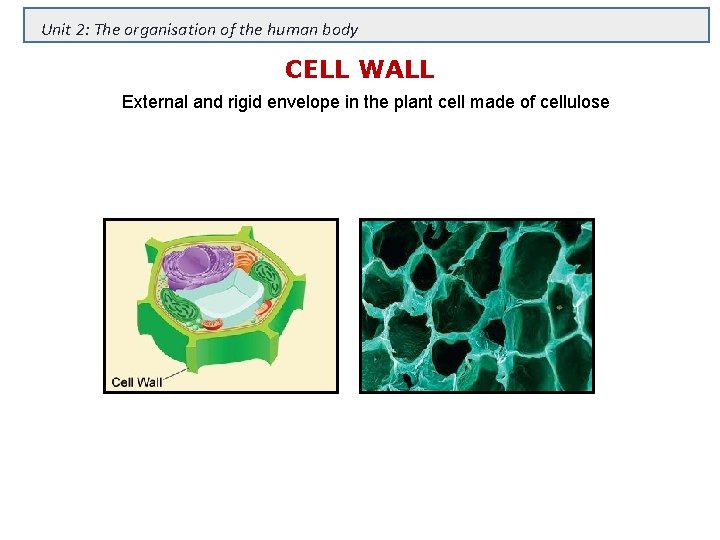
Unit 2: The organisation of the human body CELL WALL External and rigid envelope in the plant cell made of cellulose

Unit 2: The organisation of the human body RIBOSOMES • Small organelles without membrane, made up of RNA and proteins. • They synthesise proteins
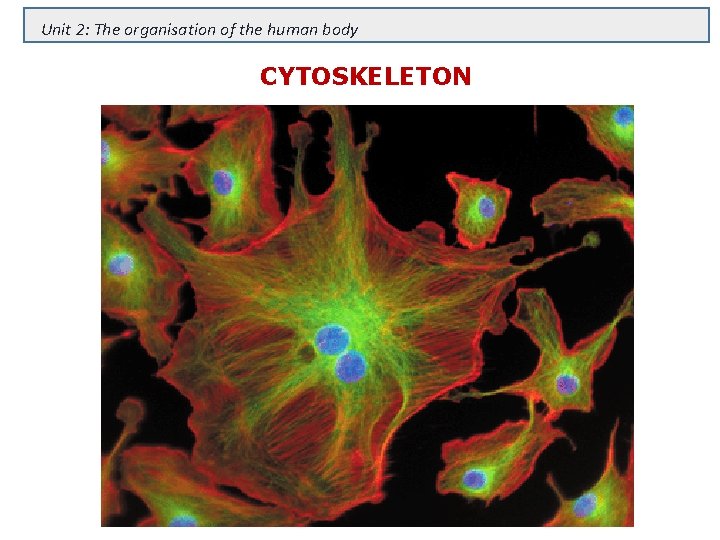
Unit 2: The organisation of the human body CYTOSKELETON
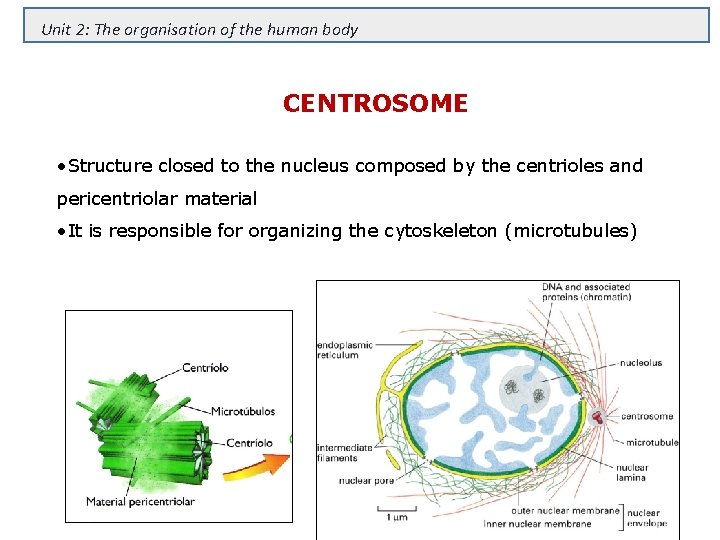
Unit 2: The organisation of the human body CENTROSOME • Structure closed to the nucleus composed by the centrioles and pericentriolar material • It is responsible for organizing the cytoskeleton (microtubules)
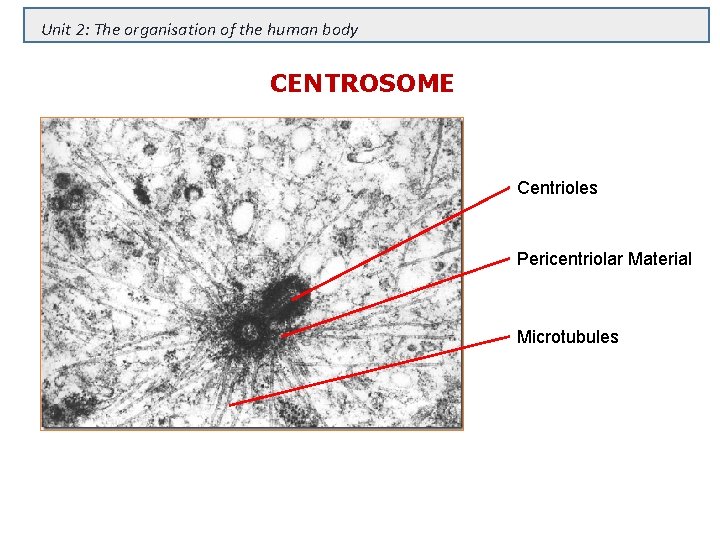
Unit 2: The organisation of the human body CENTROSOME Centrioles Pericentriolar Material Microtubules
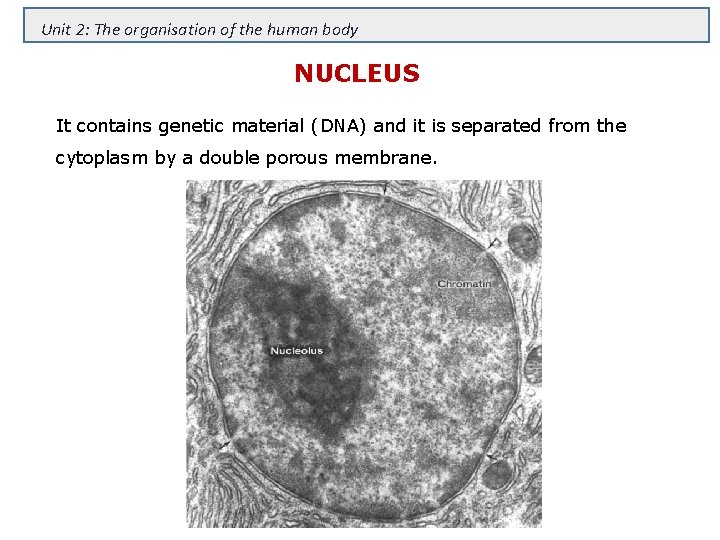
Unit 2: The organisation of the human body NUCLEUS It contains genetic material (DNA) and it is separated from the cytoplasm by a double porous membrane.
Lesson 1: The organisation of the human body CELL STRUCTURE 3 rd Session

Unit 2: The organisation of the human body HOW WOULD YOU DEFINE A HUMAN BEING? Composition Cellular level Kind of cells Nutrition Reproduction Interaction
Unit 2: The organisation of the human body CELL SPECIALISATION • Multicellular organisms are made up of many cells. • All cells have the same genetic material (DNA) Why are there different types of cell in the same organism? Every cell uses one part of the information found in the DNA = CELL SPECIALISATION
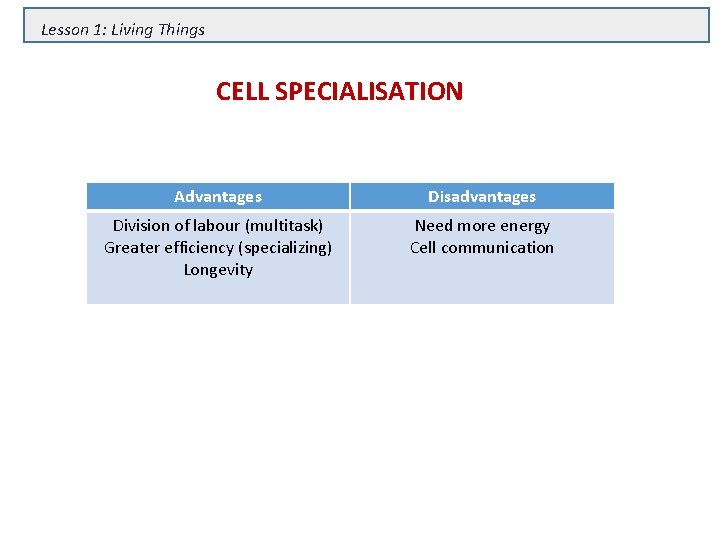
Lesson 1: Living Things CELL SPECIALISATION Advantages Disadvantages Division of labour (multitask) Greater efficiency (specializing) Longevity Need more energy Cell communication
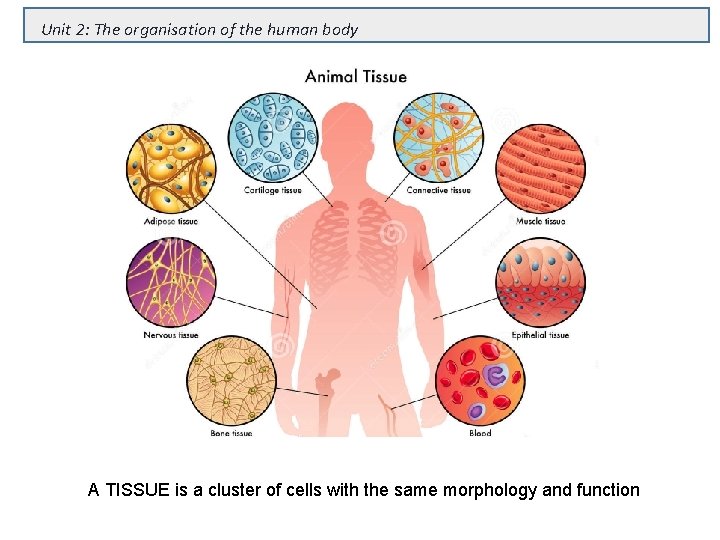
Unit 2: The organisation of the human body A TISSUE is a cluster of cells with the same morphology and function
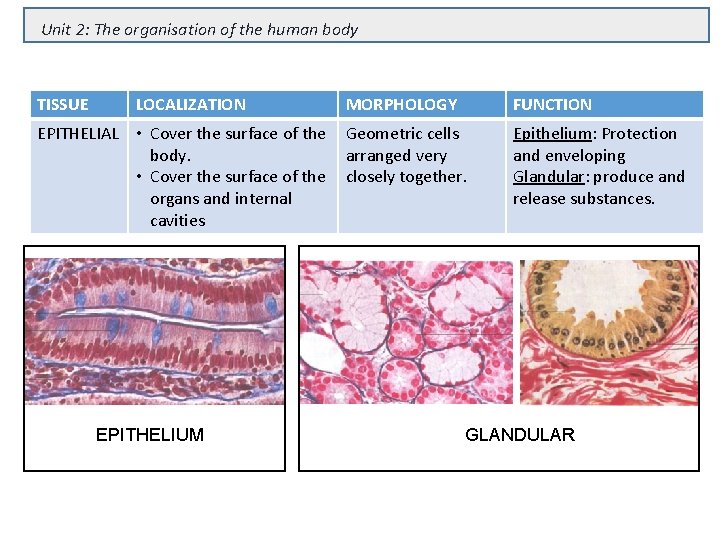
Unit 2: The organisation of the human body TISSUE LOCALIZATION EPITHELIAL • Cover the surface of the body. • Cover the surface of the organs and internal cavities EPITHELIUM MORPHOLOGY FUNCTION Geometric cells arranged very closely together. Epithelium: Protection and enveloping Glandular: produce and release substances. GLANDULAR
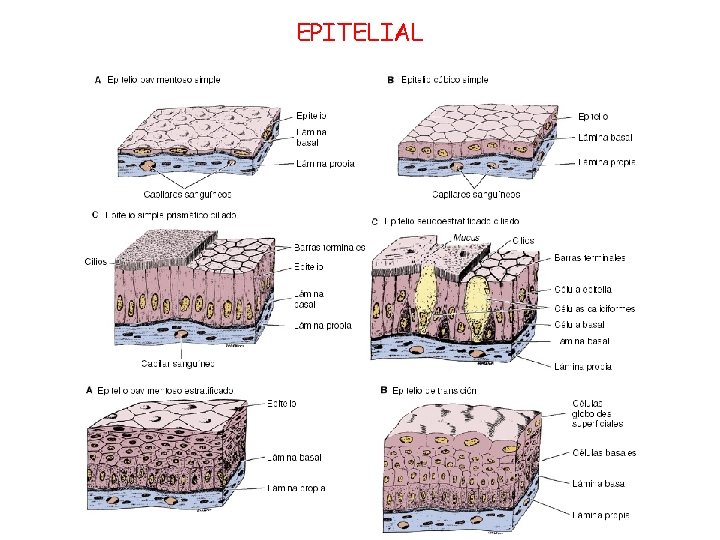
EPITELIAL

Lesson 1: The organisation of the human body TISSUE FUNCTION COMPOSITION TYPES CONNECTIVE It has a wide variety of functions that depend on the types of cells and the different classes of fibers involved. • Extracellular matrix (fibres and ground substance) • Cells • • Connective Adipose Cartilaginous Bone
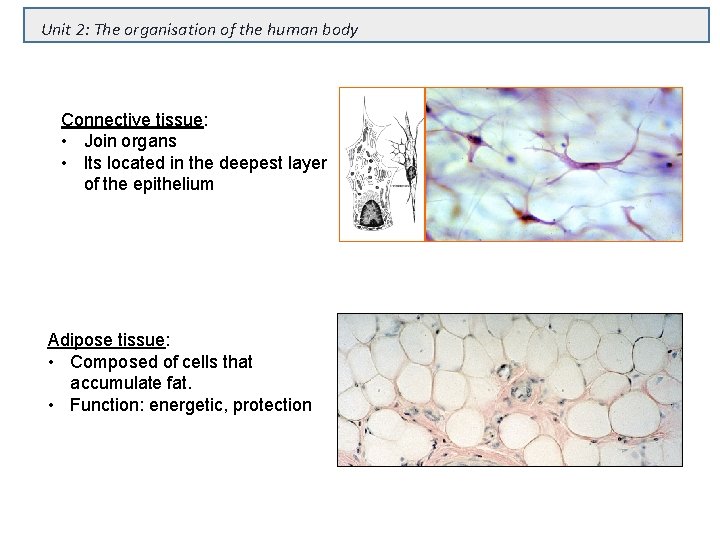
Unit 2: The organisation of the human body Connective tissue: • Join organs • Its located in the deepest layer of the epithelium Adipose tissue: • Composed of cells that accumulate fat. • Function: energetic, protection
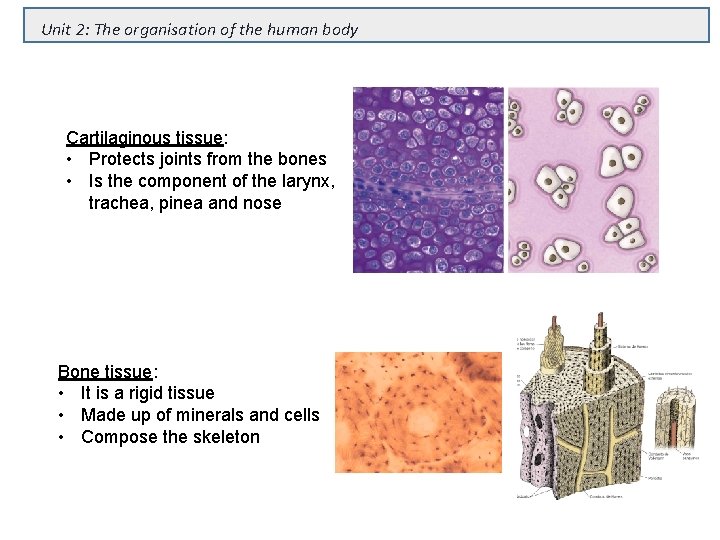
Unit 2: The organisation of the human body Cartilaginous tissue: • Protects joints from the bones • Is the component of the larynx, trachea, pinea and nose Bone tissue: • It is a rigid tissue • Made up of minerals and cells • Compose the skeleton
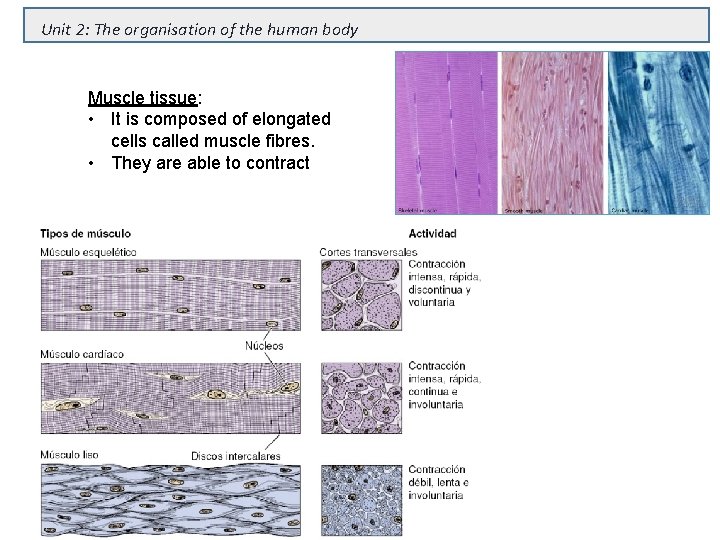
Unit 2: The organisation of the human body Muscle tissue: • It is composed of elongated cells called muscle fibres. • They are able to contract
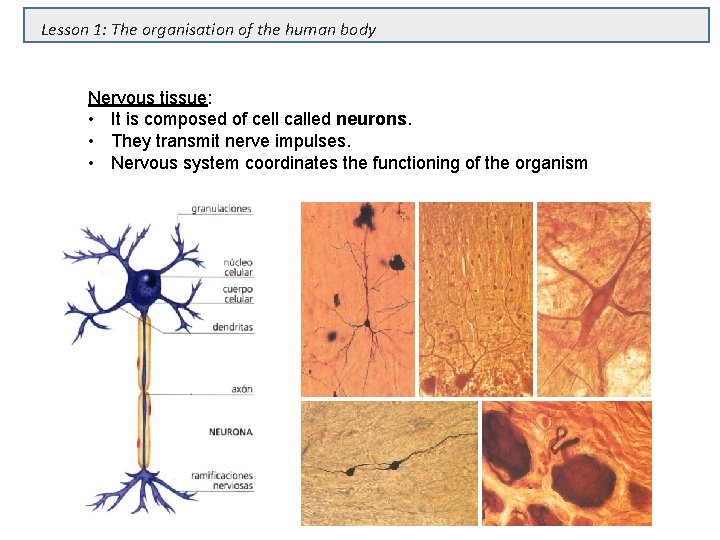
Lesson 1: The organisation of the human body Nervous tissue: • It is composed of cell called neurons. • They transmit nerve impulses. • Nervous system coordinates the functioning of the organism
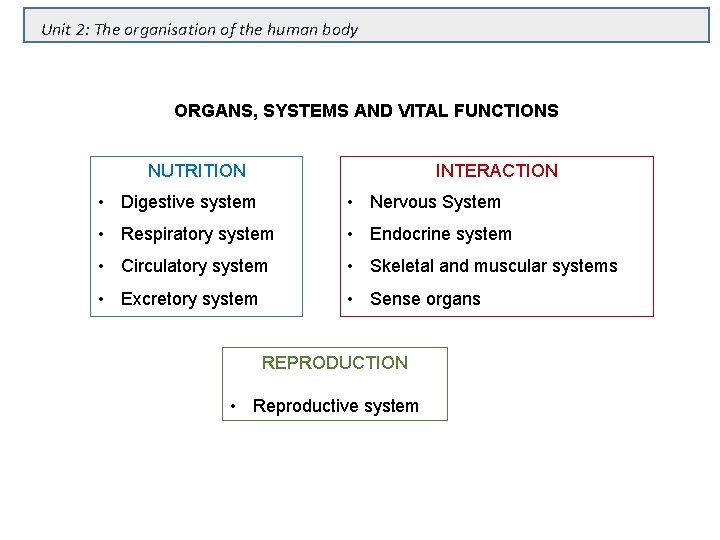
Unit 2: The organisation of the human body ORGANS, SYSTEMS AND VITAL FUNCTIONS NUTRITION INTERACTION • Digestive system • Nervous System • Respiratory system • Endocrine system • Circulatory system • Skeletal and muscular systems • Excretory system • Sense organs REPRODUCTION • Reproductive system
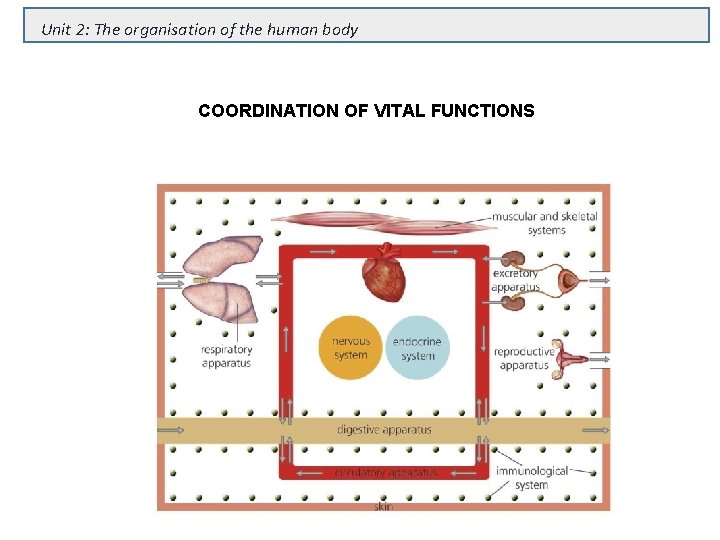
Unit 2: The organisation of the human body COORDINATION OF VITAL FUNCTIONS
- Slides: 40