
Unit 2 The Crime Scene Mr Ross Brown
Unit 2: The Crime Scene Mr. Ross Brown Brooklyn School for Law and Technology
How can we best process a crime scene? • 11 March 2016 • Do now: What pieces of information do we need to capture at the crime scene?

How can we best process a crime scene? • Secure all physical evidence – Isolate the crime scene – Record the Scene • Photography • Sketches • Notes
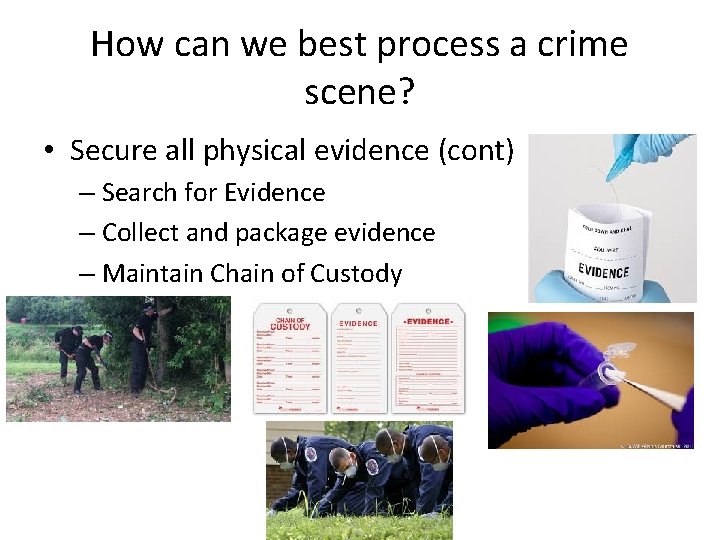
How can we best process a crime scene? • Secure all physical evidence (cont) – Search for Evidence – Collect and package evidence – Maintain Chain of Custody
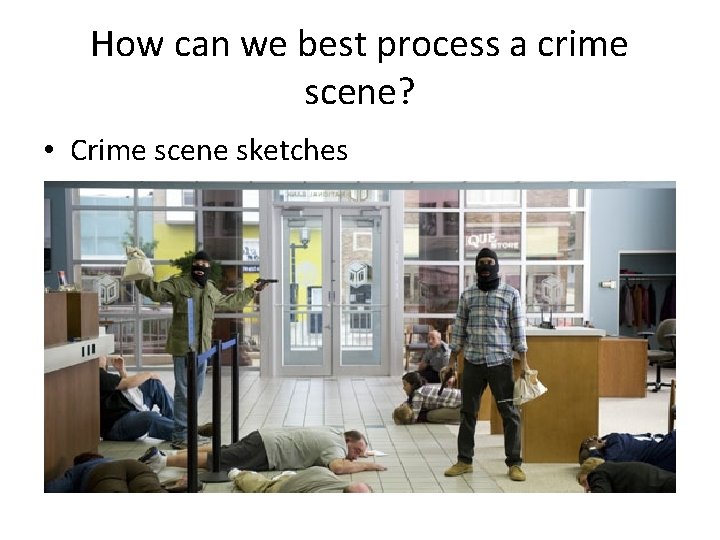
How can we best process a crime scene? • Crime scene sketches
What are the different types of physical evidence? • 14 March 2016 (Happy Pi Day!) • Do now: What are some types of physical evidence? Think of some less common types for more credit.
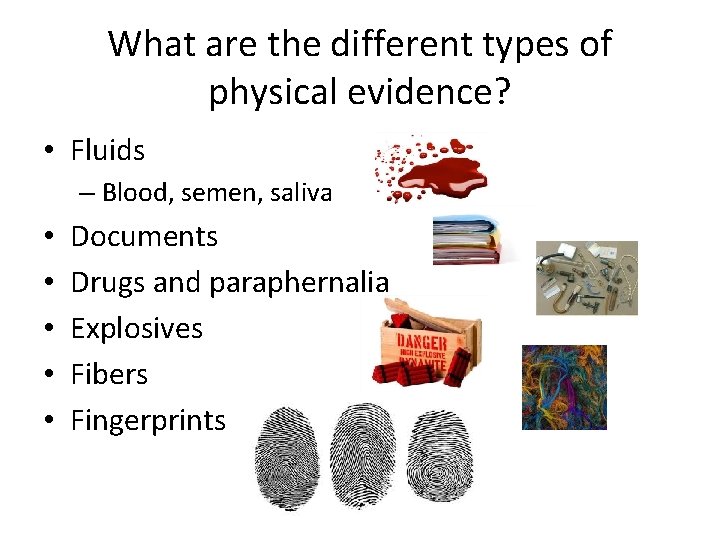
What are the different types of physical evidence? • Fluids – Blood, semen, saliva • • • Documents Drugs and paraphernalia Explosives Fibers Fingerprints
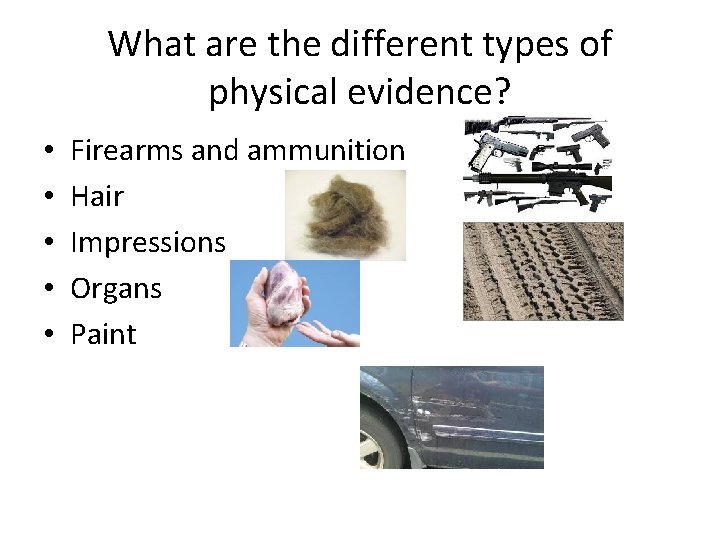
What are the different types of physical evidence? • • • Firearms and ammunition Hair Impressions Organs Paint
What are the different types of physical evidence? • Also… – Plastic bags – Powder residues – Serial numbers – Soil and minerals – Tool marks – Vehicle lights and parts
How can we evaluate hair, fibers, and paint as physical evidence? • 15 March 2016 (Beware the Ides of March!) • Do now: What are different sources of fibers that we can analyze as physical evidence?

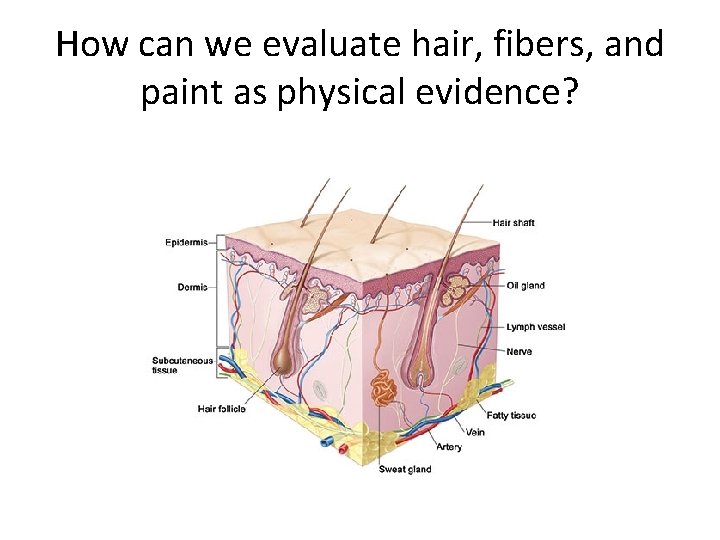
How can we evaluate hair, fibers, and paint as physical evidence? • Morphology (form of living things) of hair • Parts of hair: – Cuticle: covers the exterior of the hair – Cortex: main body of a hair shaft – Medulla: cells running through the hair
How can we evaluate hair, fibers, and paint as physical evidence?
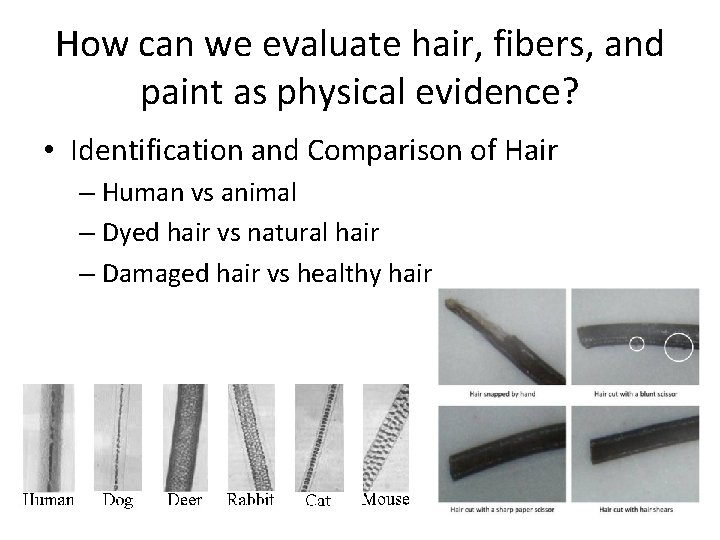
How can we evaluate hair, fibers, and paint as physical evidence? • Identification and Comparison of Hair – Human vs animal – Dyed hair vs natural hair – Damaged hair vs healthy hair
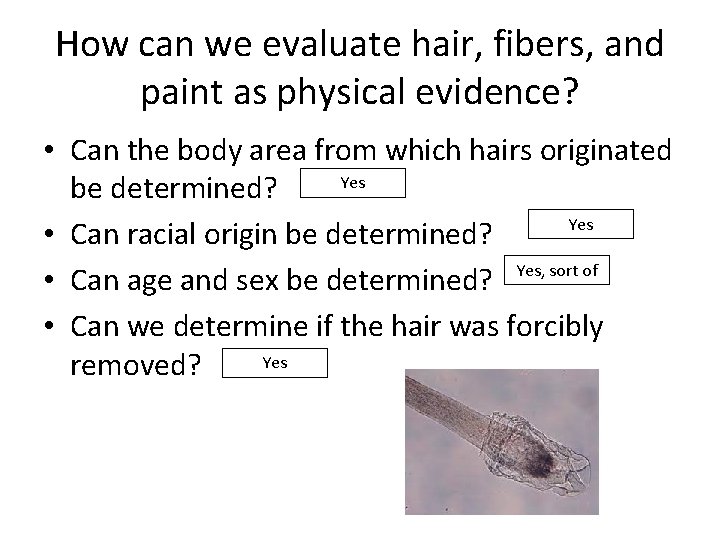
How can we evaluate hair, fibers, and paint as physical evidence? • Can the body area from which hairs originated Yes be determined? Yes • Can racial origin be determined? Yes, sort of • Can age and sex be determined? • Can we determine if the hair was forcibly Yes removed?

Homework #1 • 15 March 2016 • The two most important components of dried paint from a criminologist’s point of view are the ________ and the ______. Explain your answer in complete sentences.
How can we evaluate hair, fibers, and paint as physical evidence? • 16 March 2016 • Do now: List all the different natural sources of fibers that you know
How can we evaluate hair, fibers, and paint as physical evidence? • Where might we find fibers? – Crime scene cross-transfer – On a car after a hit-and-run accident – Broken windows or screens
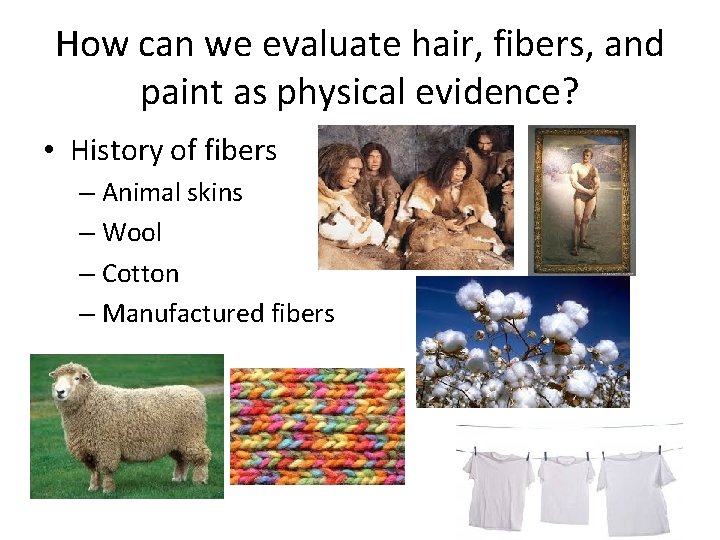
How can we evaluate hair, fibers, and paint as physical evidence? • History of fibers – Animal skins – Wool – Cotton – Manufactured fibers
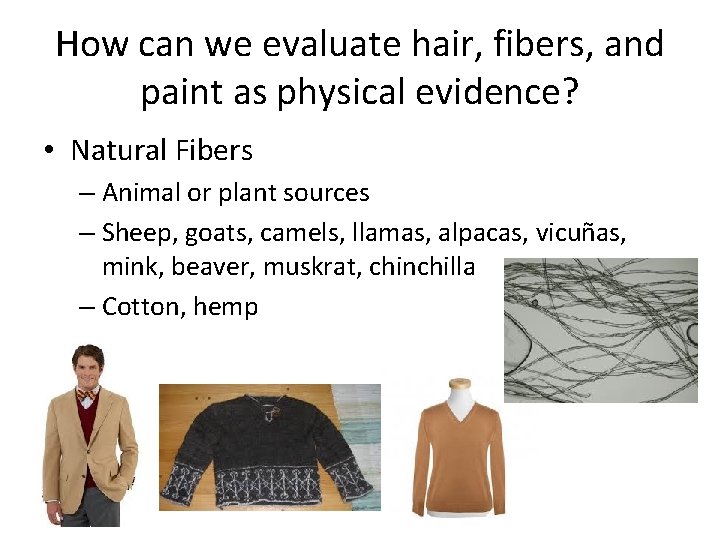
How can we evaluate hair, fibers, and paint as physical evidence? • Natural Fibers – Animal or plant sources – Sheep, goats, camels, llamas, alpacas, vicuñas, mink, beaver, muskrat, chinchilla – Cotton, hemp
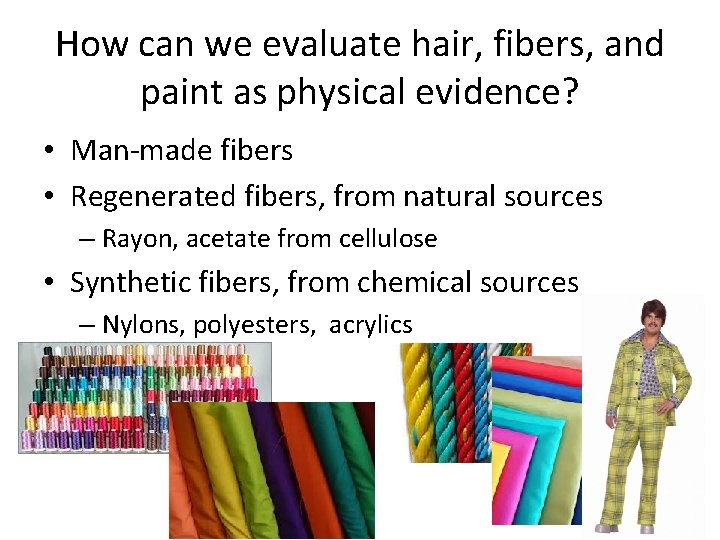
How can we evaluate hair, fibers, and paint as physical evidence? • Man-made fibers • Regenerated fibers, from natural sources – Rayon, acetate from cellulose • Synthetic fibers, from chemical sources – Nylons, polyesters, acrylics
How can we evaluate hair, fibers, and paint as physical evidence? • 17 March 2016 • Do now: What information can paint samples provide?
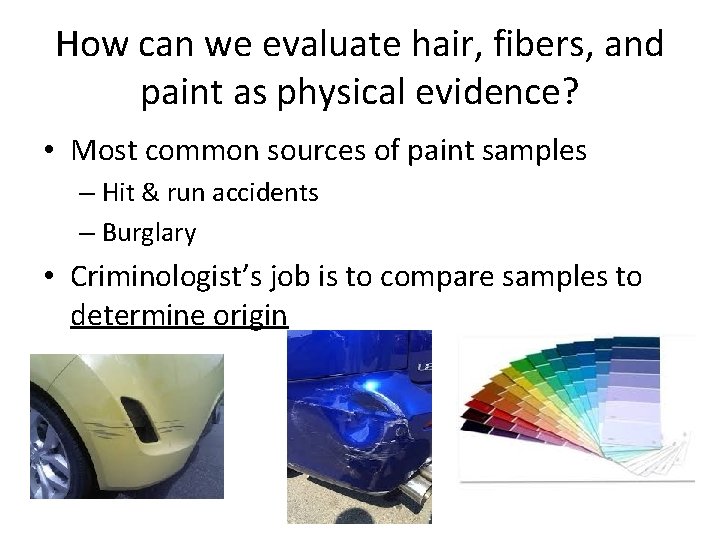
How can we evaluate hair, fibers, and paint as physical evidence? • Most common sources of paint samples – Hit & run accidents – Burglary • Criminologist’s job is to compare samples to determine origin
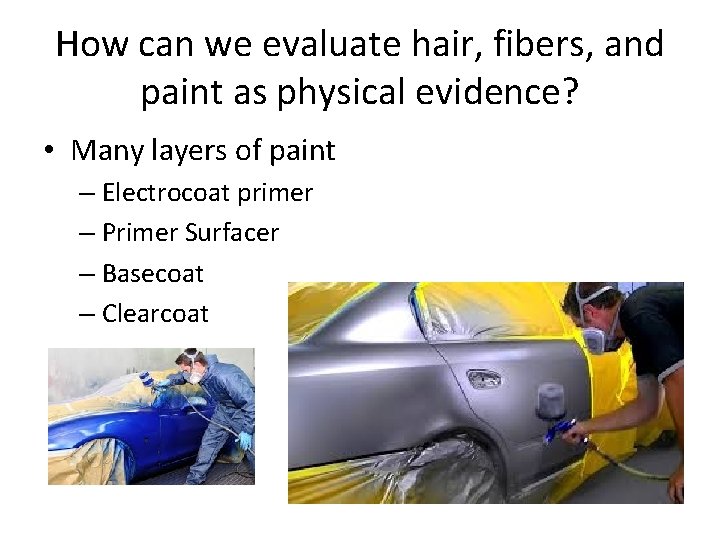
How can we evaluate hair, fibers, and paint as physical evidence? • Many layers of paint – Electrocoat primer – Primer Surfacer – Basecoat – Clearcoat
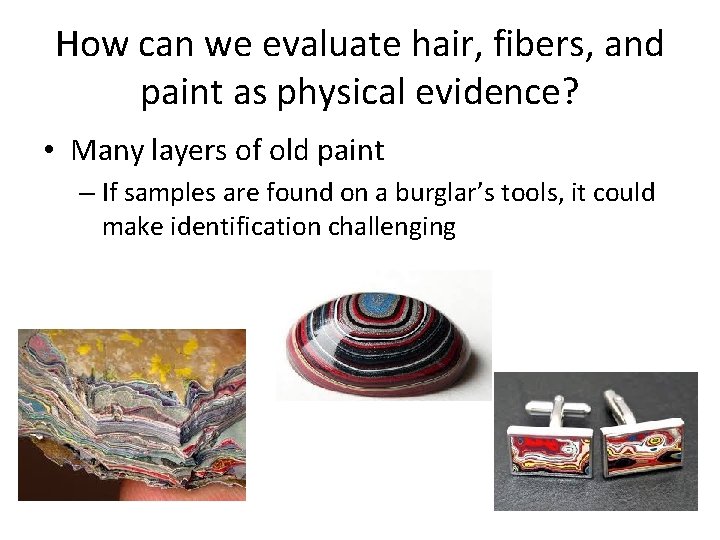
How can we evaluate hair, fibers, and paint as physical evidence? • Many layers of old paint – If samples are found on a burglar’s tools, it could make identification challenging
How can we evaluate hair, fibers, and paint as physical evidence?
- Slides: 25