
Unit 2 Social Development involves Using communication skills
- Slides: 25
Unit 2
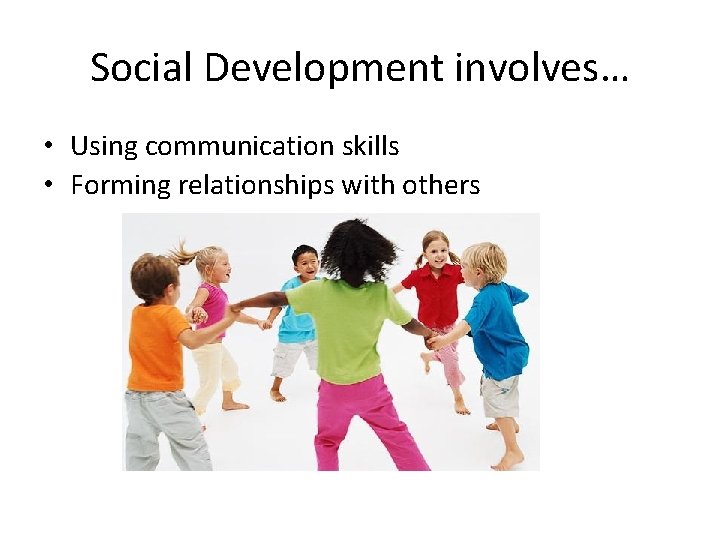
Social Development involves… • Using communication skills • Forming relationships with others
Expected Stage of Social Development of children aged 4: Can take turns and share Displays anger verbally Ability to feel jealous of others Understand what a lie is and may lie to get out of trouble – Enjoys pretending – Able to communicate wishes – Enjoys being with other children – –
Expected Stage of Social Development for Children aged 5: • • Knows right from wrong and the need for rules Enjoys pretend play Copies adults Likes praise Sees the importance of friends and playing with others Plays with boys and girls Wants to conform – do the same as everyone else
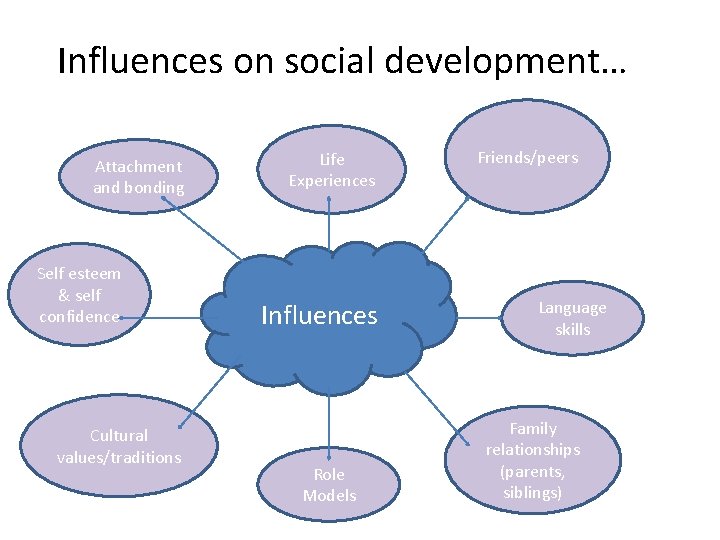
Influences on social development… Attachment and bonding Self esteem & self confidence Cultural values/traditions Life Experiences Influences Role Models Friends/peers Language skills Family relationships (parents, siblings)
Why do practitioners observe children? • Milestones – are children at the expected level for their age? • Track progress • Identify those who are struggling and put support in place • To outline any children who may be being mistreated – keep a log of it for future evidence • Log behaviour issues • Identify social needs – e. g bullying • To identify children’s needs/interests which would allow for a children-centred approach as child’s interests could be used to inform further activities
Observation methods – Structured recording • Structured recording involves looking out for behaviour and skills displayed by children and recording these • Tick charts/ checklists • v v v • v v Advantages: Quick Easy to use Can continually updated to track progress Disadvantages: Only looks for behaviour/skills which are on the checklist May miss certain behaviours and they will not be ticked off
Observation methods – Narrative/ Unstructured recording • Unstructured recording – No checklists, can record what you feel is appropriate to record • E. g time sampling – collecting information at regular intervals for example every 15 minutes recording behaviour • Advantages: v Can see behaviour over a long period of time rather than doing one small observation v Can identify all areas of development and not just what is on a checklist • Disadvantages: v Only records behaviour which happens within the time frame of the observations
Everyday care routines… • Brushing teeth, Brushing hair, Washing hands, Using the toilet, Having a bath, Having a set bed time…. • Consider how 2 of these affect PIES… • How can they be used to promote holistic development? • E. g prevent illness, promote hygiene, provide routine, promote independence, promote time management etc…
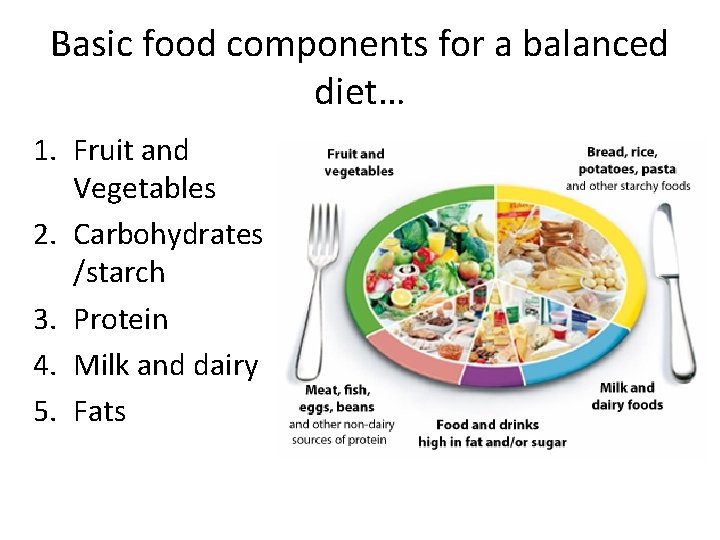
Basic food components for a balanced diet… 1. Fruit and Vegetables 2. Carbohydrates /starch 3. Protein 4. Milk and dairy 5. Fats
Transitions: Involve a BIG change… e. g Moving house, the birth of a sibling, parents returning to work, starting nursery or school, death of a parent, being adopted, being fostered, moving school • Transitions affect all areas of development but have the biggest impact on Emotional Development. (Give examples of how transitions affect PIES) • It is important to reassure children to help them through transitions.
How can the Early Years Worker help children through transitions… • Read books on the subject • Provide a routine to give consistency • Go on home visits to get to know children in an familiar environment • Keep the children busy to keep their mind off things • Reassure children • Visual timetable – so they know what to expect • Allow parents to go to nursery the first few times to allow children to get used to the environment
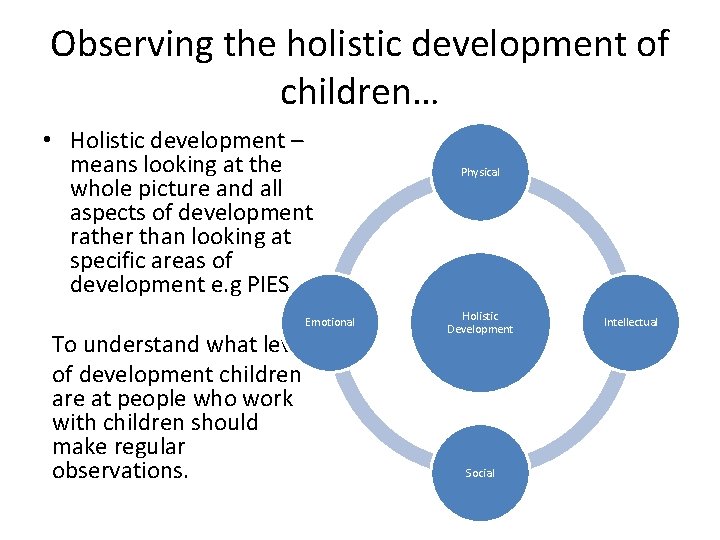
Observing the holistic development of children… • Holistic development – means looking at the whole picture and all aspects of development rather than looking at specific areas of development e. g PIES Emotional To understand what level of development children are at people who work with children should make regular observations. Physical Holistic Development Social Intellectual
Partnership working • Practitioners in a setting should work in partnership with one another and with parents to ensure all areas of development can be identified. • E. g a school nurse may share information with a nursery teacher to ensure that they are aware of a child’s medical needs • Or a parent may talk to staff about something that has upset the child at home
Partnership working • Practitioners in a setting should work in partnership with one another and with parents to ensure all areas of development can be identified. • E. g a school nurse may share information with a nursery teacher to ensure that they are aware of a child's medical needs • Or a parent may talk to staff about something that has upset the child at home
Confidentiality… • is keeping information private and away from people who shouldn’t see it. • Information such as patient details, student records, medical records, counsellors notes, legal information and child protection information should be kept confidential by professionals. • Professionals who should keep information confidential include counsellors, teachers, receptionists, medical professionals, social workers, lawyers and police officers.
How should confidential information be recorded? • It should be recorded both in written format and electronically and should be kept in locked filing cabinets or on computers with password protection. • Only those who are allowed to see it should have access to it.
Why should we keep information about children and families confidential… • To keep people safe from harm and to stop information getting into the hands of the wrong people for example from sex offenders or people who may take advantage of vulnerable people • So that a trusting relationship can be formed between children and families and professionals such as doctors. Families know that if they tell their doctor something they have to keep it confidential and therefore are more likely to trust their doctor. • This applies to other people such as teachers and students…
When should you refer confidential information to professionals… • To protect someone who is in danger for example a teacher passing on child protection information to a social worker or the police • To improve the service offered to the child or parent for example a nurse or doctor may pass on medical information to a teacher to help them meet the needs of the child. • Nurseries may pass on confidential information to primary schools to help children with their transition into school. • Primary schools may pass on confidential information to secondary schools to help with the transition.
Valuing each child as an individual • Refers to making children feel special and cared about. • It is important because it helps children to feel safe, welcome and part of the group. • People who work with children should value each child as an individual. • Ways to achieve this: q Teaching Style q Time q Greeting q Planning Activities q Work with parents q Sense of Belonging
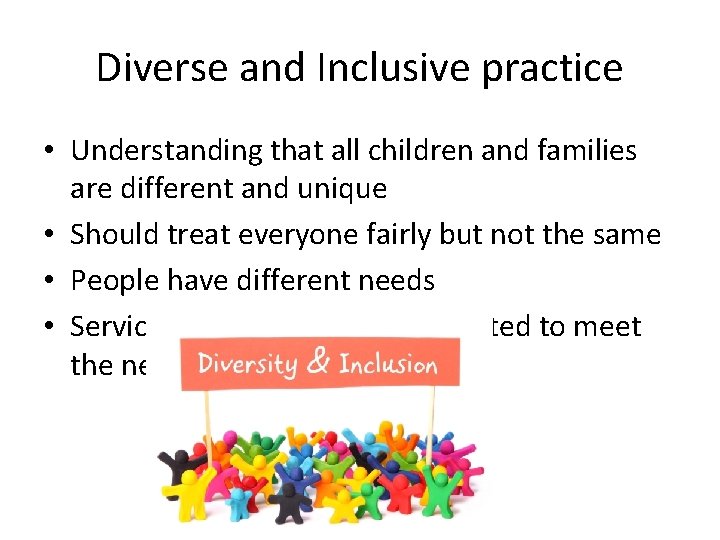
Diverse and Inclusive practice • Understanding that all children and families are different and unique • Should treat everyone fairly but not the same • People have different needs • Services/lessons should be adapted to meet the needs of all
Preparing for work placement with children • How can you give a good first impression? 1. 2. 3. 4. 5. Smartly dressed/presentable appearance Polite/manners Arrive on time Show enthusiasm Good role model • Why is it important to give a good first impression? 1. People form their first opinions of you 2. It is hard to change someone’s opinion of you once it has been formed 3. May miss out on employment or an opportunity to gain work experience
Preparing for work placement with children • What is a positive attitude and why is it important to have a positive attitude towards working with children? • Showing enthusiasm • Willingness to stay longer • Volunteers themselves for jobs • Makes you more approachable to children/parents • Good role model – encourages children to have a positive attitude
Transitions: • Involve a BIG change… e. g Moving house, the birth of a sibling, parents returning to work, starting nursery or school etc. • Transitions affect all areas of development but have the biggest impact on Emotional Development. • It is important to reassure children to help them through transitions.
• Penny Tassoni, Child Care and Education 4 th Edition. • http: //www. youngminds. org. uk/training_services /training_and_consultancy/for_schools/wellbein g/transitions • http: //www. beststart. org/On. Track_English/2 factors. html • http: //www. greatschools. org/gk/articles/develop mental-milestones-age-5/ • http: //www. greatschools. org/gk/articles/develop mental-milestones-age-4/