
Unit 2 Sec 7 3 Homeostasis and Transport
- Slides: 27
Unit 2 Sec 7. 3 Homeostasis and Transport
I. Cell Wall A. Structure Composed of cellulose (_____) Cellulose is a: Glucose protects and supports cell
II. Cell Membrane: Boundary of every cell
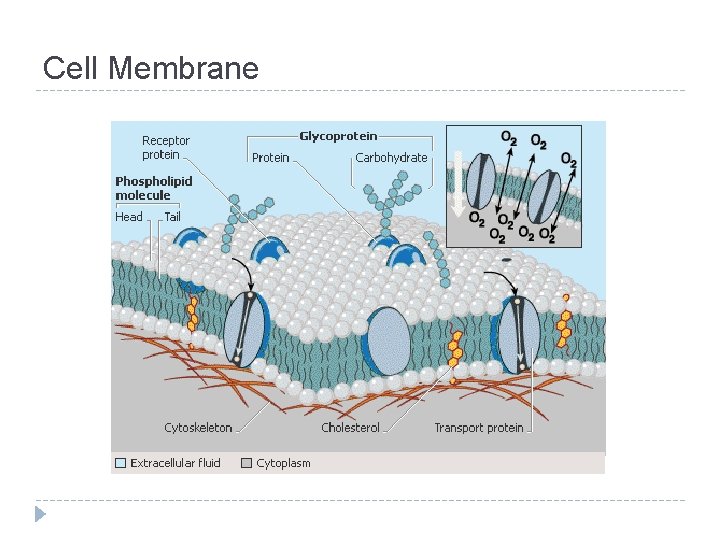
II. Cell Membrane A. Membrane Lipids Phospholipid bilayer: Steriods: Cholesterol provides strength and stability in movement
Cell Membrane
II. Cell Membrane B. Membrane Proteins Integral proteins: embedded in lipid bilayer & extend from:
C. Fluid Mosaic Model Phospholipid bilayer acts more like a fluid than a solid
III. Passive Transport: the movement of substances across the CM:
III. Passive Transport How molecules move:
III. Passive Transport Factors Affecting the Movement Temperature: hot= cold= Size of pores and particle size Mass
Types of Passive Transport Diffusion Osmosis Facilitated Diffusion
A. Diffusion: movement of molecules from an area of _______ concentration to an area of ________ _____________ Cool Science Trick Concentration Gradient:
A. Diffusion Equilibrium: concentration of substances in an area is _______ Results with: Diffusion Across Membranes:
B. Osmosis: diffusion of ____ molecules across cell memb. from area of _______ con. to an area of ____ con. Moves:
Who gets it? 1) 2) 3) What is diffusion? What is equilibrium? What is osmosis?
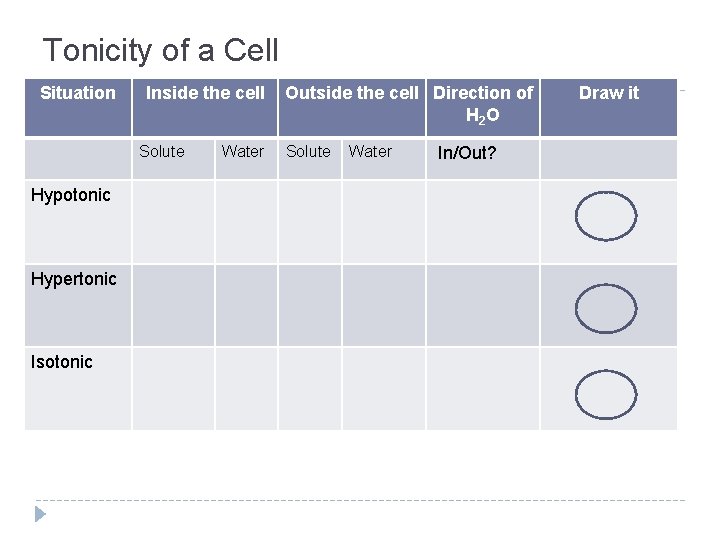
B. Osmosis Direction of Osmosis: Hypotonic: Concentration of solute is lower outside the cell Hypertonic: Concentration of solute is higher outside the cell Isotonic: solutes in and outside the cell are equal
Tonicity of a Cell Situation Inside the cell Solute Hypotonic Hypertonic Isotonic Water Outside the cell Direction of H 2 O Solute Water In/Out? Draw it
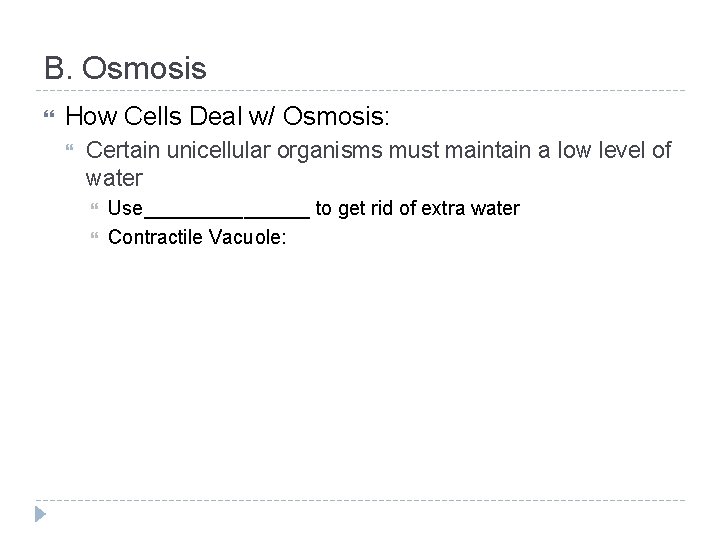
B. Osmosis How Cells Deal w/ Osmosis: Certain unicellular organisms must maintain a low level of water Use________ to get rid of extra water Contractile Vacuole:
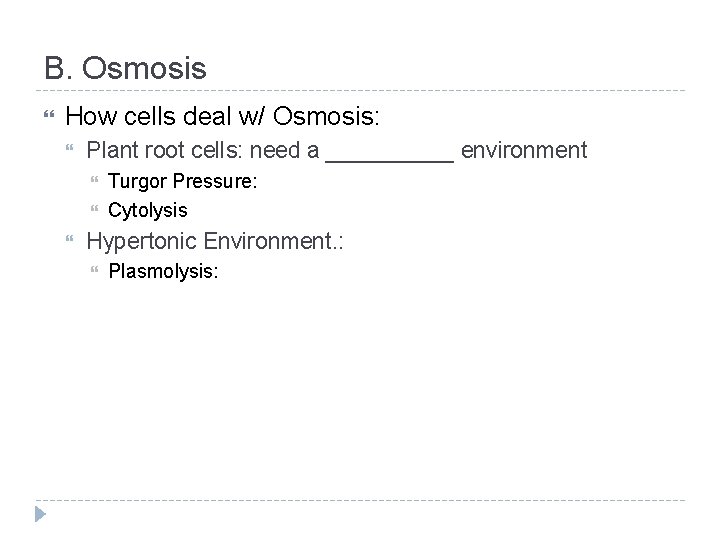
B. Osmosis How cells deal w/ Osmosis: Plant root cells: need a _____ environment Turgor Pressure: Cytolysis Hypertonic Environment. : Plasmolysis:
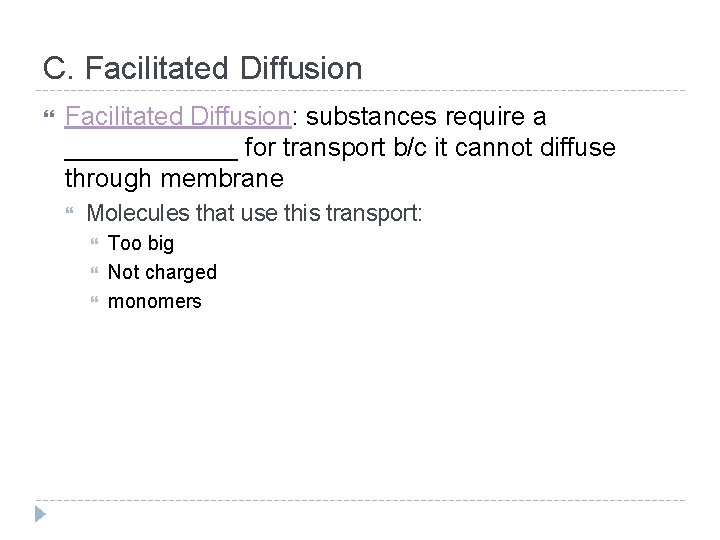
C. Facilitated Diffusion: substances require a ______ for transport b/c it cannot diffuse through membrane Molecules that use this transport: Too big Not charged monomers
D. Diffusion through ion channels Ion Channel: pathway for specific ion to pass through cell membrane Stimuli will control gates to channels: __________________
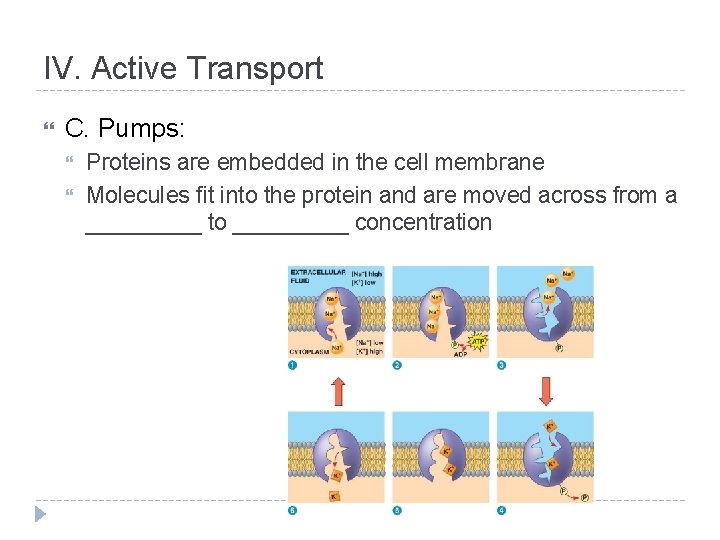
IV. Active Transport (AT) 1) AT: movement of materials from a area of ______ concentration to a _______ concentration using energy 2) Molecule is ______ or not compatible with cell
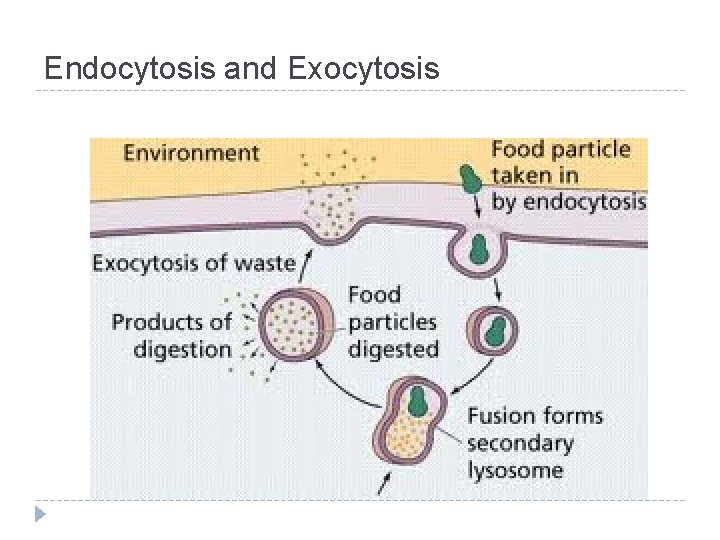
IV. Active Transport 3) Bulk Transport: Used to transport macromolecules or a large quantity of substance A) Endocytosis: a cell will engulf external substances into cell
IV. Active Transport A. Endocytosis (continued) -2 Types 1) Pinocytosis: cell ______ 2) Phagocytosis: cell _____
Endocytosis and Exocytosis
IV. Active Transport B) Exocytosis: process to remove materials from cell a) vesicle w/in the cell is sent to CM b) vesicle fuses w/ the CM & releases substance
IV. Active Transport C. Pumps: Proteins are embedded in the cell membrane Molecules fit into the protein and are moved across from a _____ to _____ concentration