
Unit 2 Rocks Types and Their Formation Class
- Slides: 28
Unit 2: Rocks Types and Their Formation Class Notes: Mrs. Cirillo
Rocks: General n. All rocks are classified on the basis of formation There are three categories: Igneous, Sedimentary, and Metamorphic Minerals make up rocks All rock info can be found in the ESRT p 6, 7 n n n
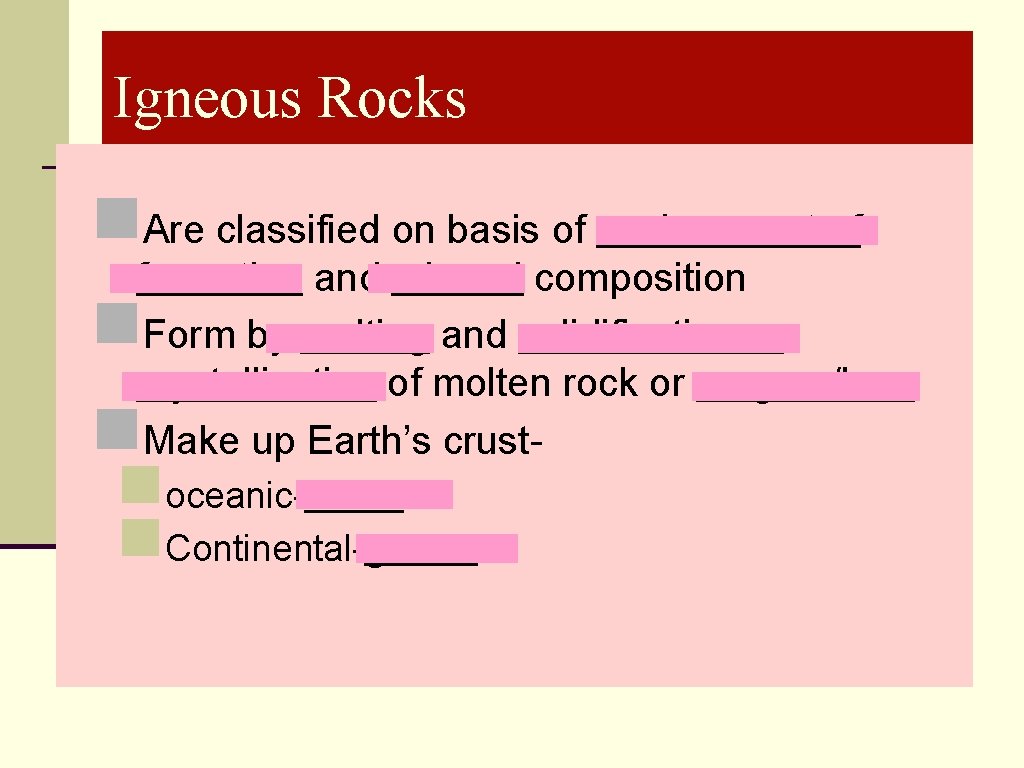
Igneous Rocks n. Are classified on basis of environment of formation and mineral composition Form by melting and solidification or crystallization of molten rock or magma/lava Make up Earth’s crust- n n noceanic-basalt n. Continental-granite
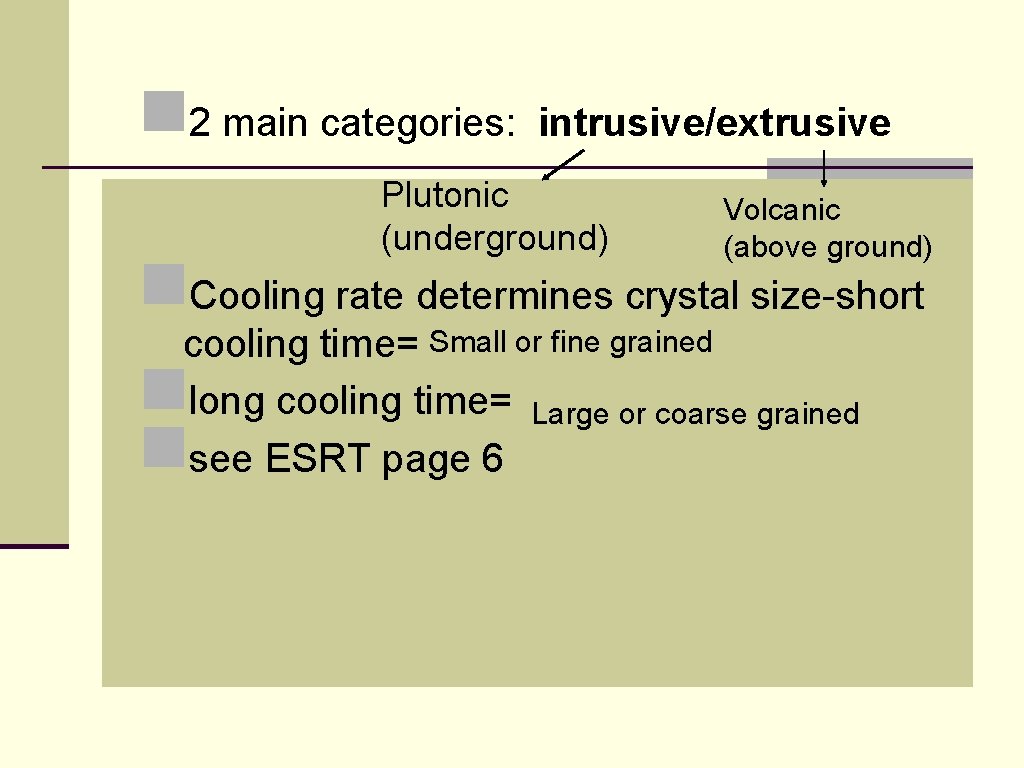
n 2 main categories: intrusive/extrusive Plutonic (underground) Volcanic (above ground) n. Cooling rate determines crystal size-short cooling time= Small or fine grained long cooling time= Large or coarse grained see ESRT page 6 n n
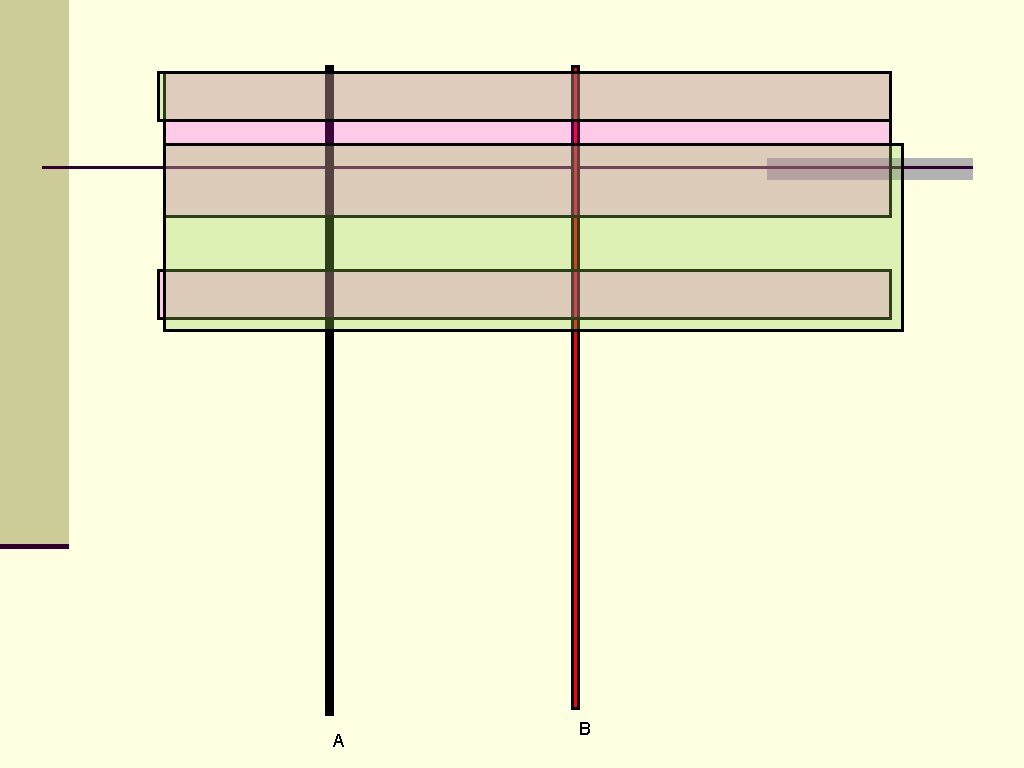
A B
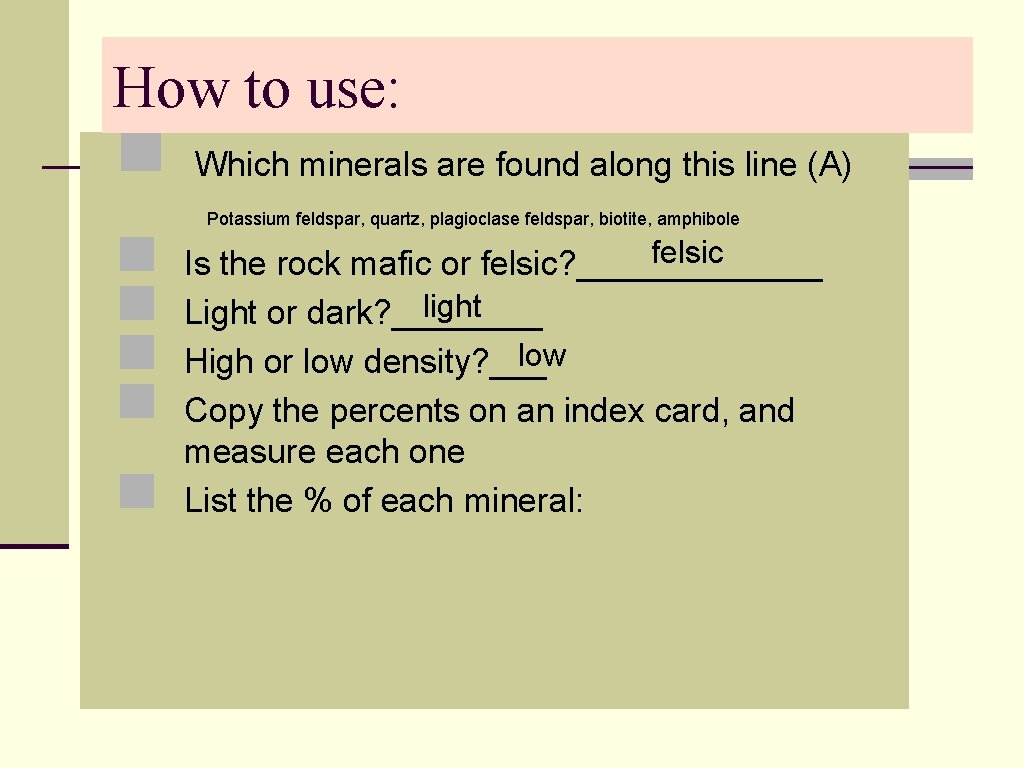
How to use: n n n Which minerals are found along this line (A) Potassium feldspar, quartz, plagioclase feldspar, biotite, amphibole felsic Is the rock mafic or felsic? _______ light Light or dark? ____ low High or low density? ___ Copy the percents on an index card, and measure each one List the % of each mineral:
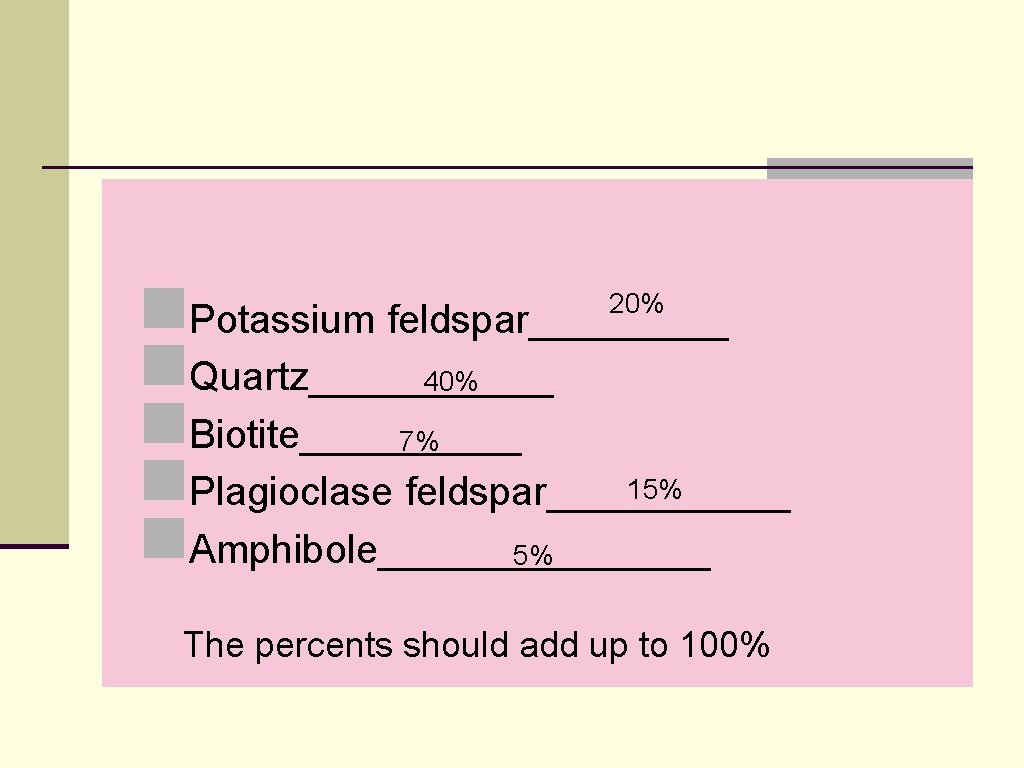
n. Potassium feldspar_____ n. Quartz______ 40% n. Biotite_____ 7% 15% n. Plagioclase feldspar______ n. Amphibole________ 5% 20% The percents should add up to 100%
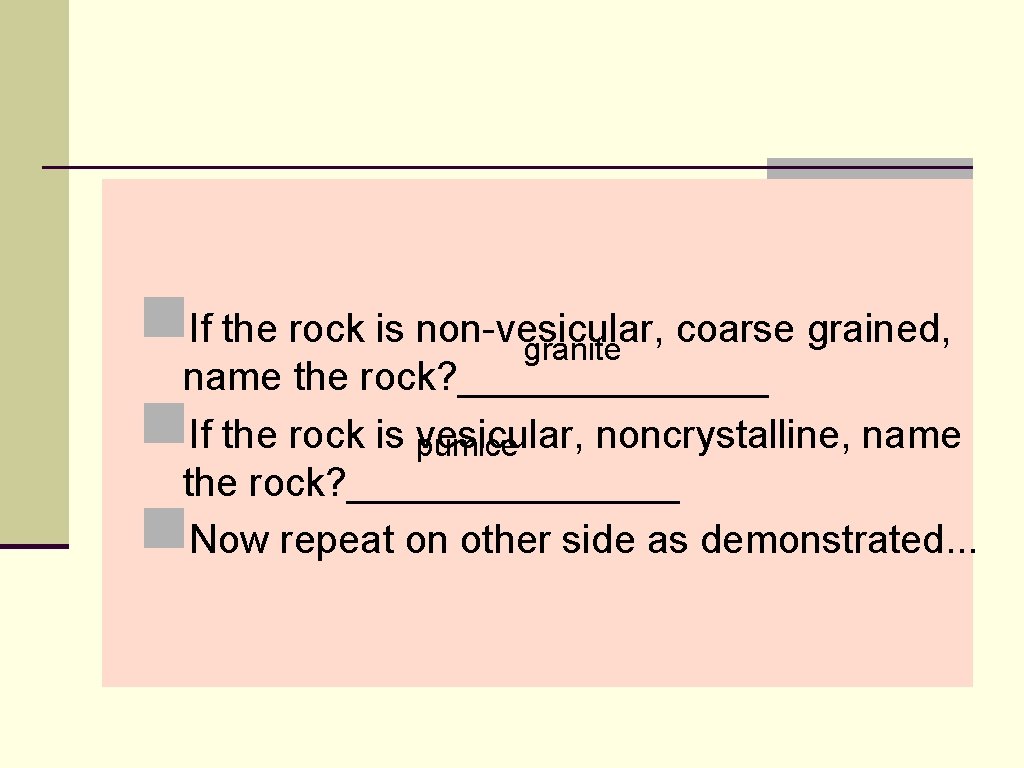
n. If the rock is non-vesicular, coarse grained, granite name the rock? _______ If the rock is vesicular, noncrystalline, name pumice the rock? ________ Now repeat on other side as demonstrated. . . n n
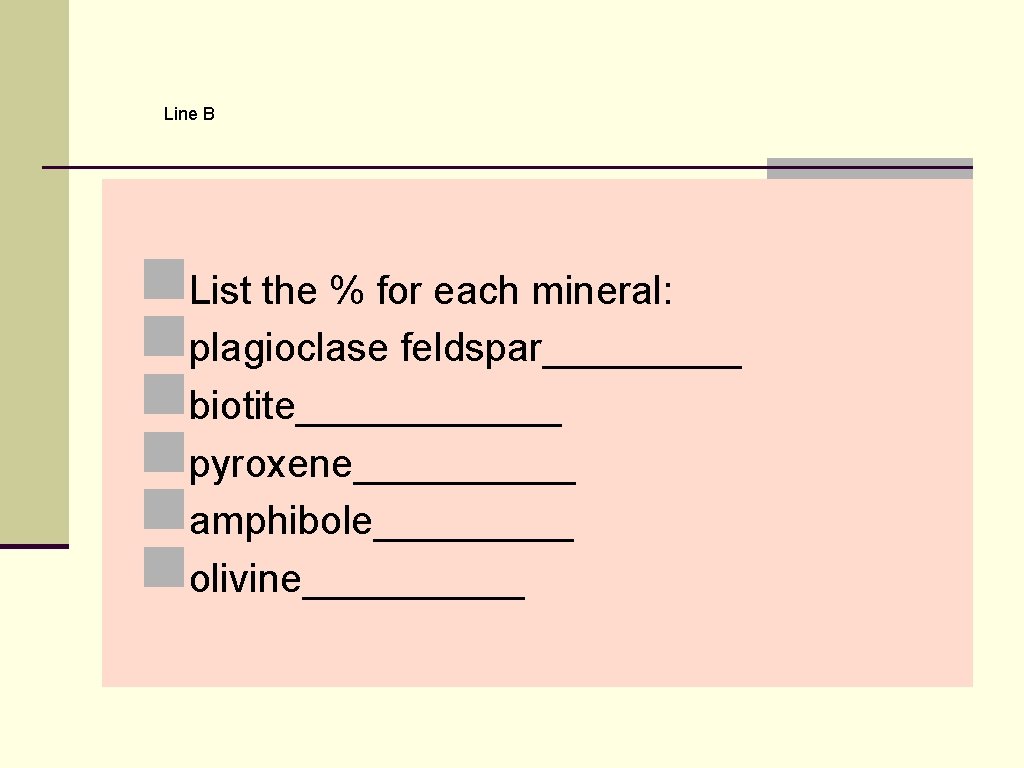
Line B n. List the % for each mineral: nplagioclase feldspar_____ nbiotite______ npyroxene_____ namphibole_____ nolivine_____
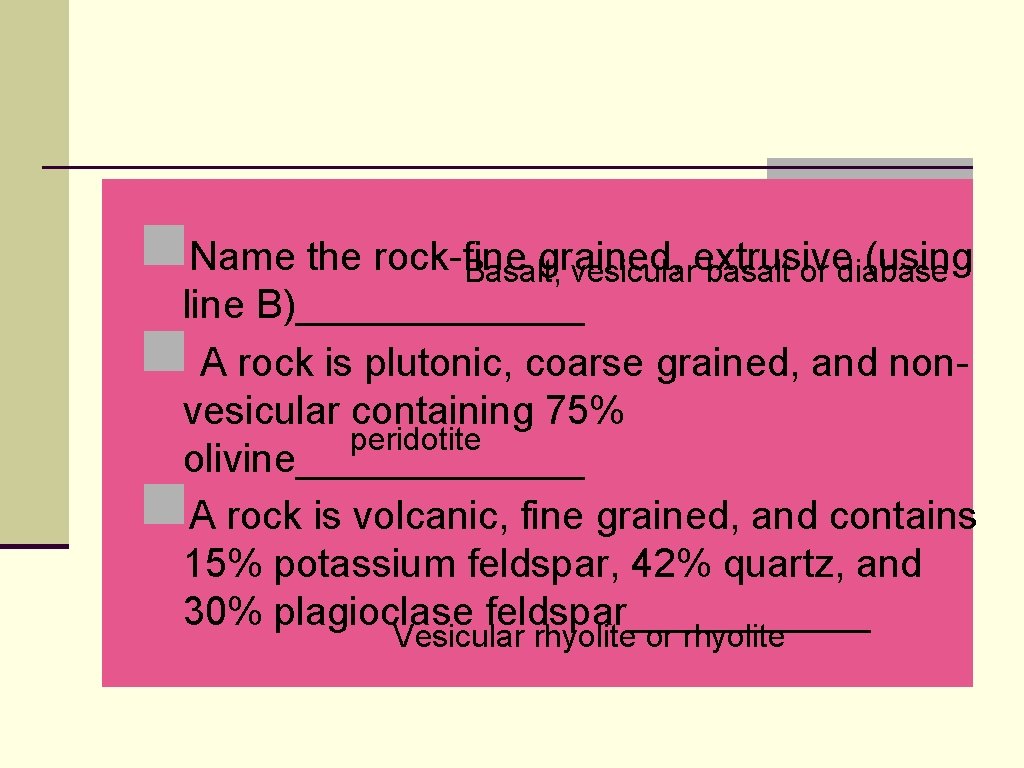
n. Name the rock-fine grained, (using Basalt, vesicularextrusive basalt or diabase line B)_______ A rock is plutonic, coarse grained, and nonvesicular containing 75% peridotite olivine_______ A rock is volcanic, fine grained, and contains 15% potassium feldspar, 42% quartz, and 30% plagioclase feldspar______ n n Vesicular rhyolite or rhyolite
n http: //www. classzone. com/books/earth_scien ce/terc/content/investigations/es 0603 page 01. cfm
Sedimentary Rocks n Classified upon basis of formation n Composed of WEATHERED remains of other rocks n Form by compression and compaction of sediments (lithification) http: //www. classzone. com/books/earth_science/terc/content/visualizations/e s 0604/es 0604 page 01. cfm? chapter_no=06
Groupsn Fragmental or clastic: Made from pieces of broken or weathered rock n Organic: Made from the remains of plants Or animals n Chemically(evaporites): Made from the Evaporation of sea Water, or as chemical http: //www. classzone. com/books/earth_s Precipitates in cience/terc/content/visualizations/es 0605 page 01. cfm? chapter_no=06 Sea water
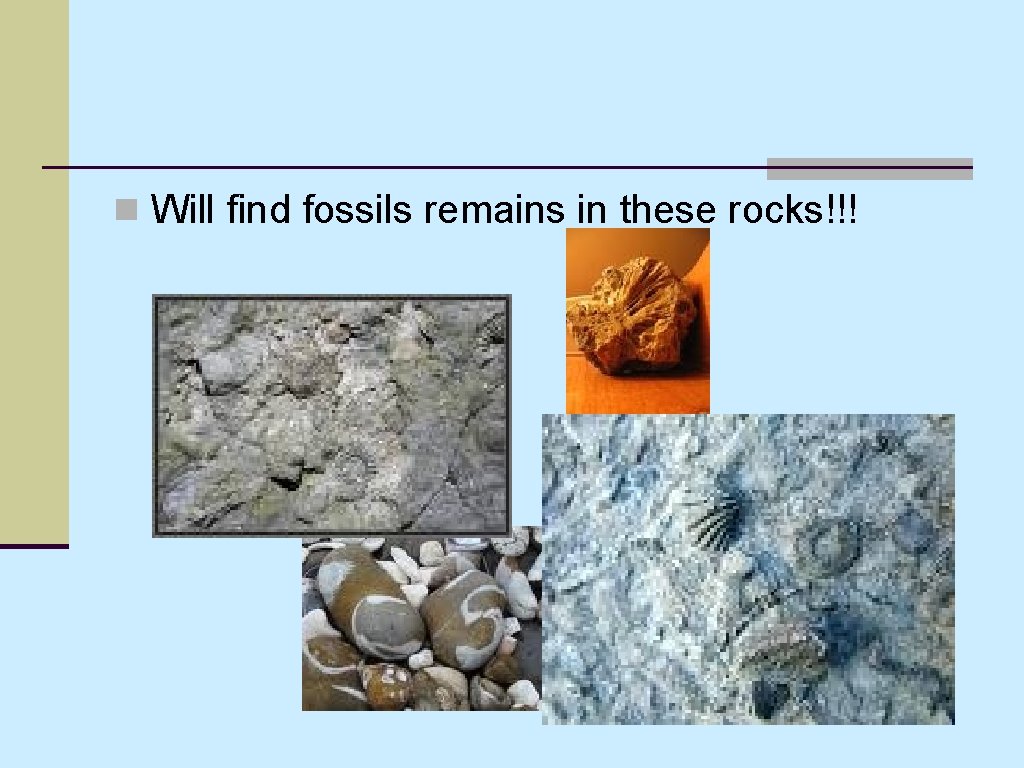
n Will find fossils remains in these rocks!!!
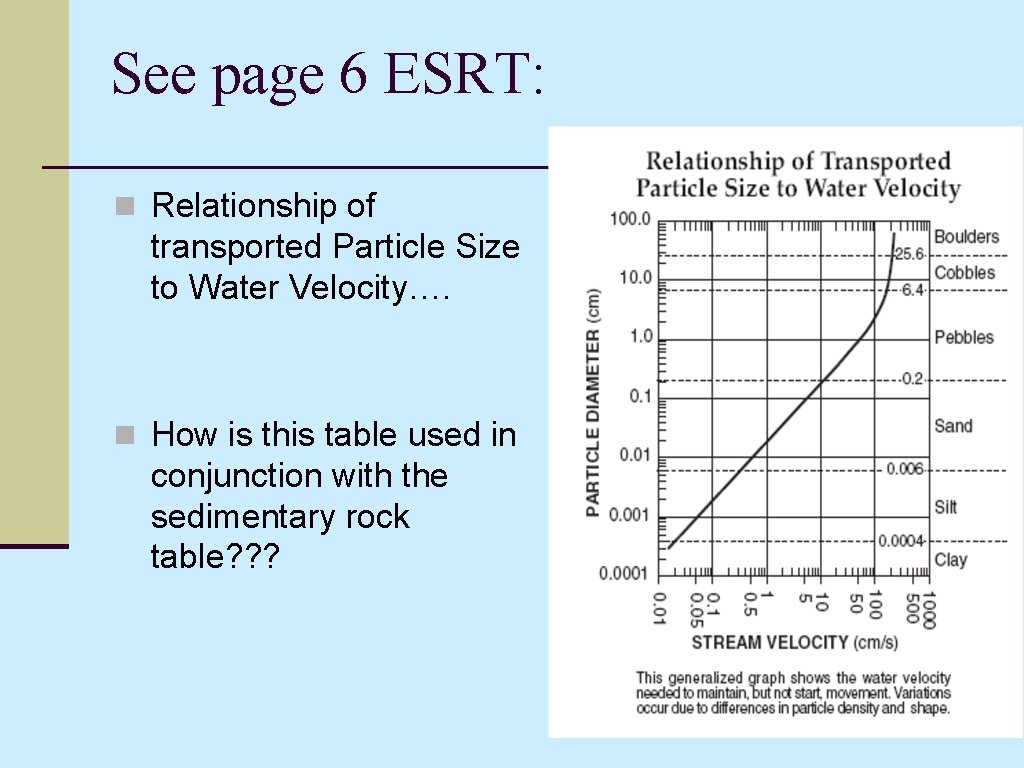
See page 6 ESRT: n Relationship of transported Particle Size to Water Velocity…. n How is this table used in conjunction with the sedimentary rock table? ? ?
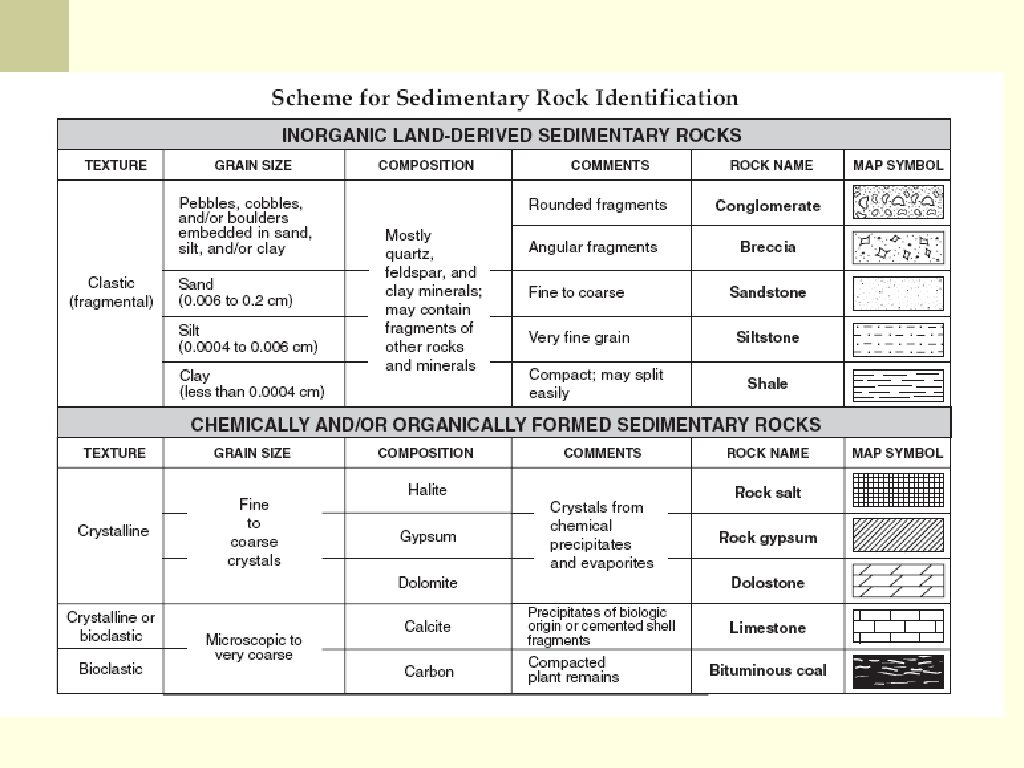
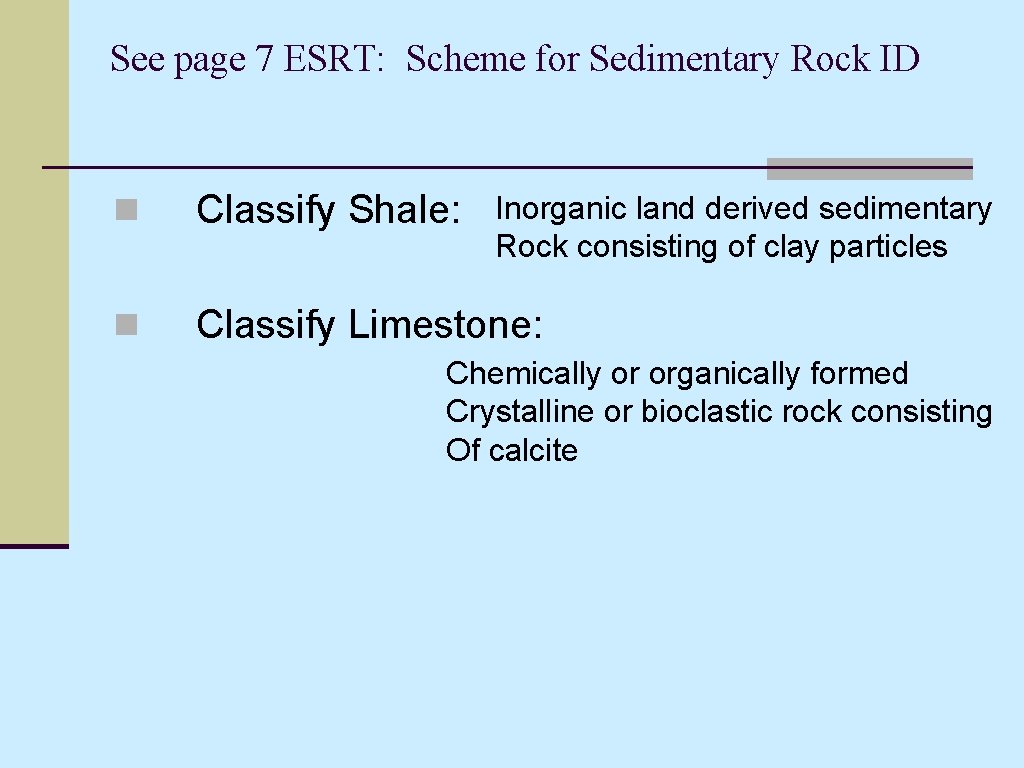
See page 7 ESRT: Scheme for Sedimentary Rock ID n Classify Shale: n Classify Limestone: Inorganic land derived sedimentary Rock consisting of clay particles Chemically or organically formed Crystalline or bioclastic rock consisting Of calcite
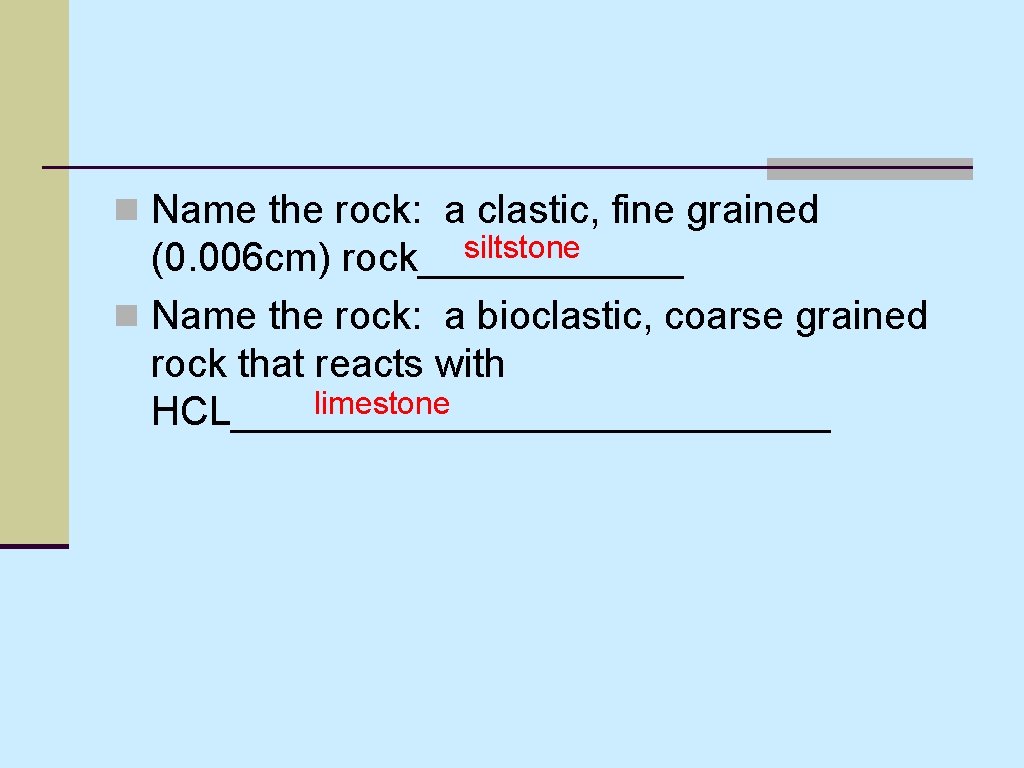
n Name the rock: a clastic, fine grained siltstone (0. 006 cm) rock______ n Name the rock: a bioclastic, coarse grained rock that reacts with limestone HCL______________
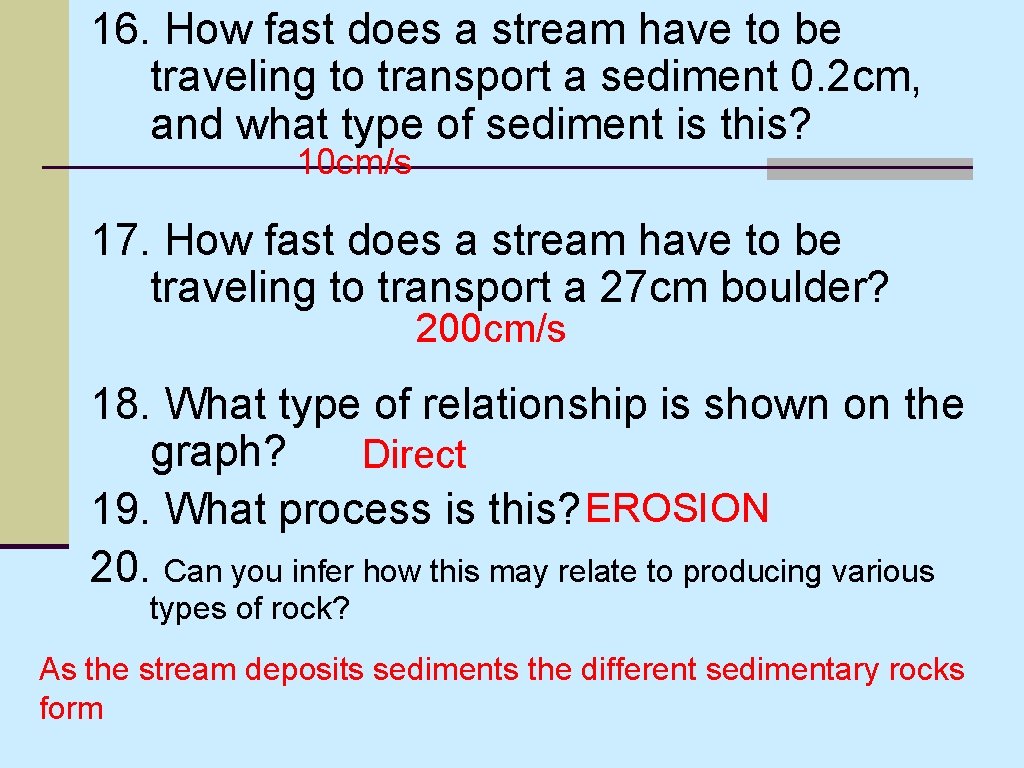
16. How fast does a stream have to be traveling to transport a sediment 0. 2 cm, and what type of sediment is this? 10 cm/s 17. How fast does a stream have to be traveling to transport a 27 cm boulder? 200 cm/s 18. What type of relationship is shown on the graph? Direct 19. What process is this? EROSION 20. Can you infer how this may relate to producing various types of rock? As the stream deposits sediments the different sedimentary rocks form
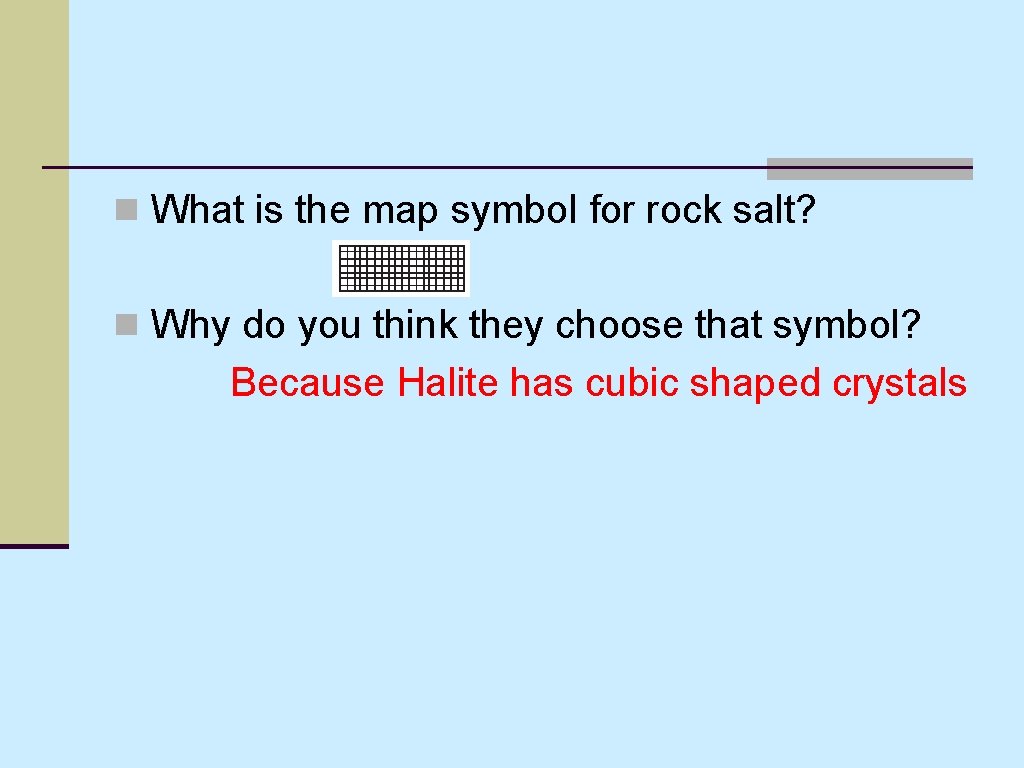
n What is the map symbol for rock salt? n Why do you think they choose that symbol? Because Halite has cubic shaped crystals
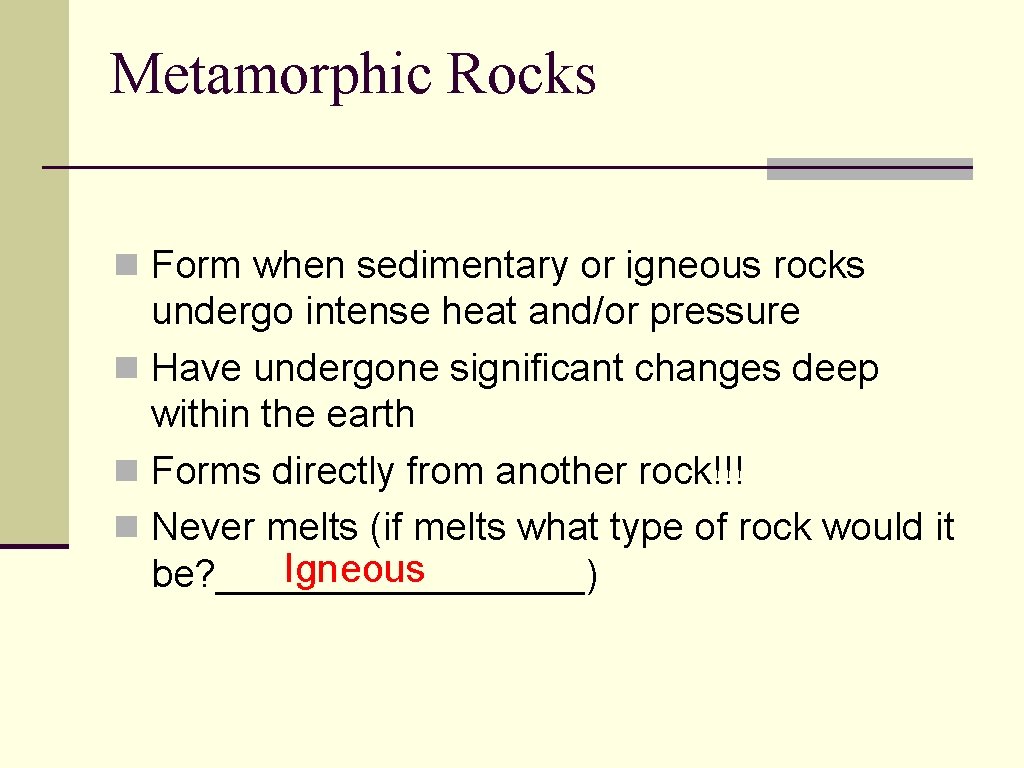
Metamorphic Rocks n Form when sedimentary or igneous rocks undergo intense heat and/or pressure n Have undergone significant changes deep within the earth n Forms directly from another rock!!! n Never melts (if melts what type of rock would it Igneous be? _________)
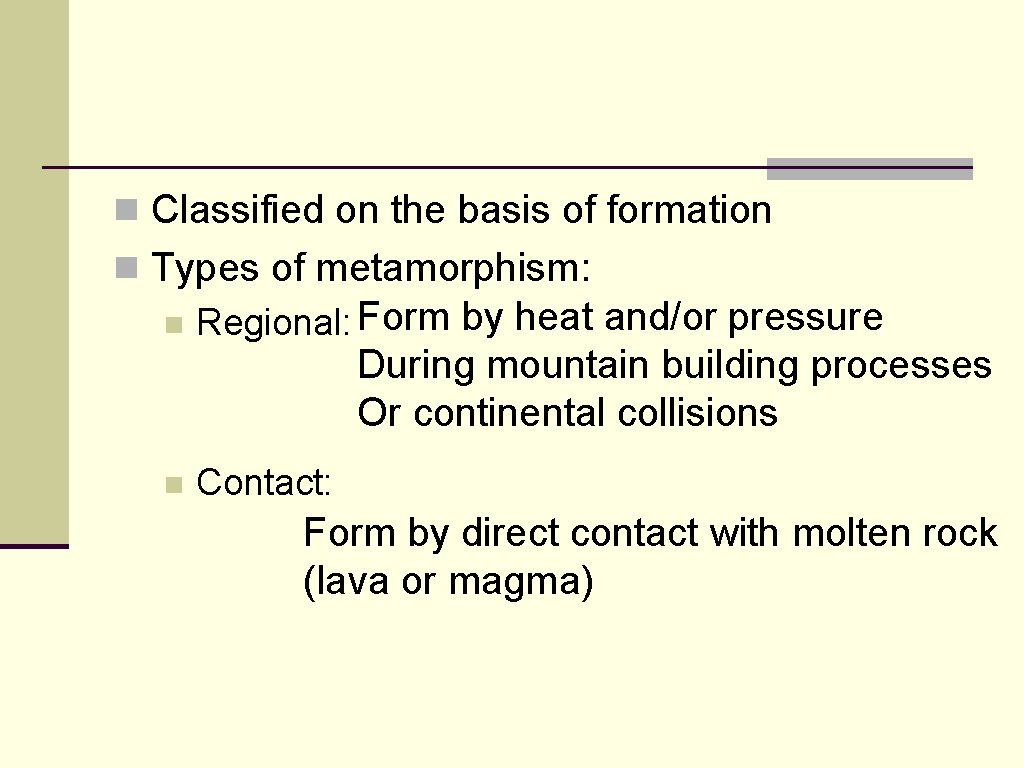
n Classified on the basis of formation n Types of metamorphism: n Regional: Form by heat and/or pressure During mountain building processes Or continental collisions n Contact: Form by direct contact with molten rock (lava or magma)
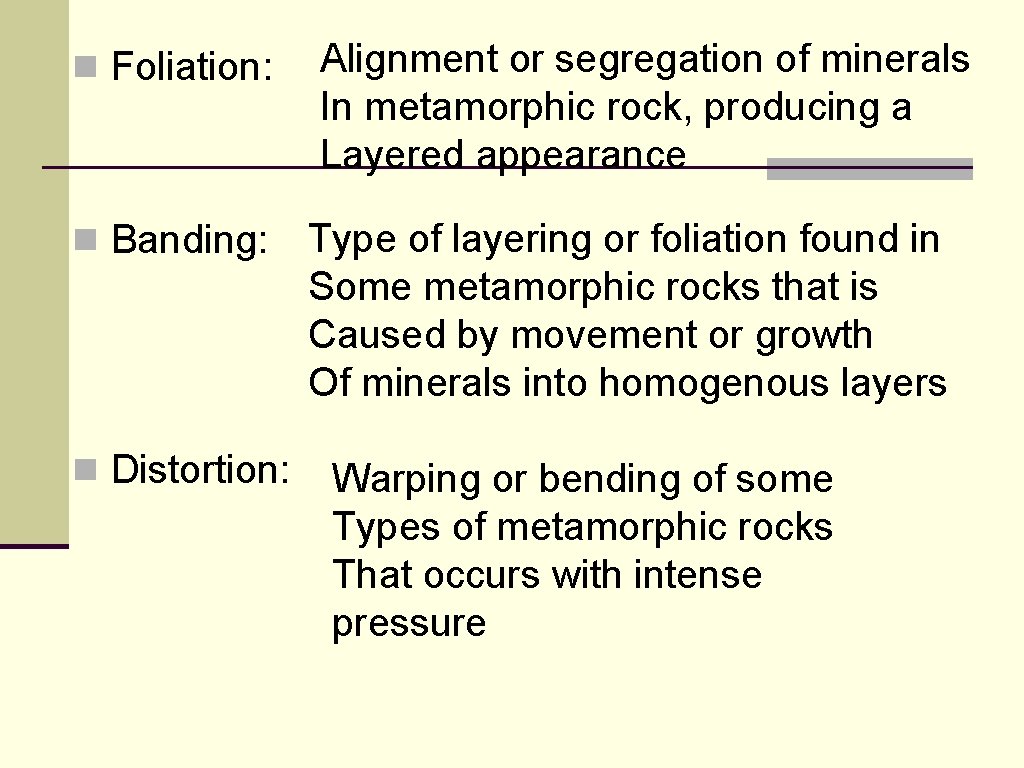
n Foliation: n Banding: n Distortion: Alignment or segregation of minerals In metamorphic rock, producing a Layered appearance Type of layering or foliation found in Some metamorphic rocks that is Caused by movement or growth Of minerals into homogenous layers Warping or bending of some Types of metamorphic rocks That occurs with intense pressure
n Would you find fossils in this rock type? NO
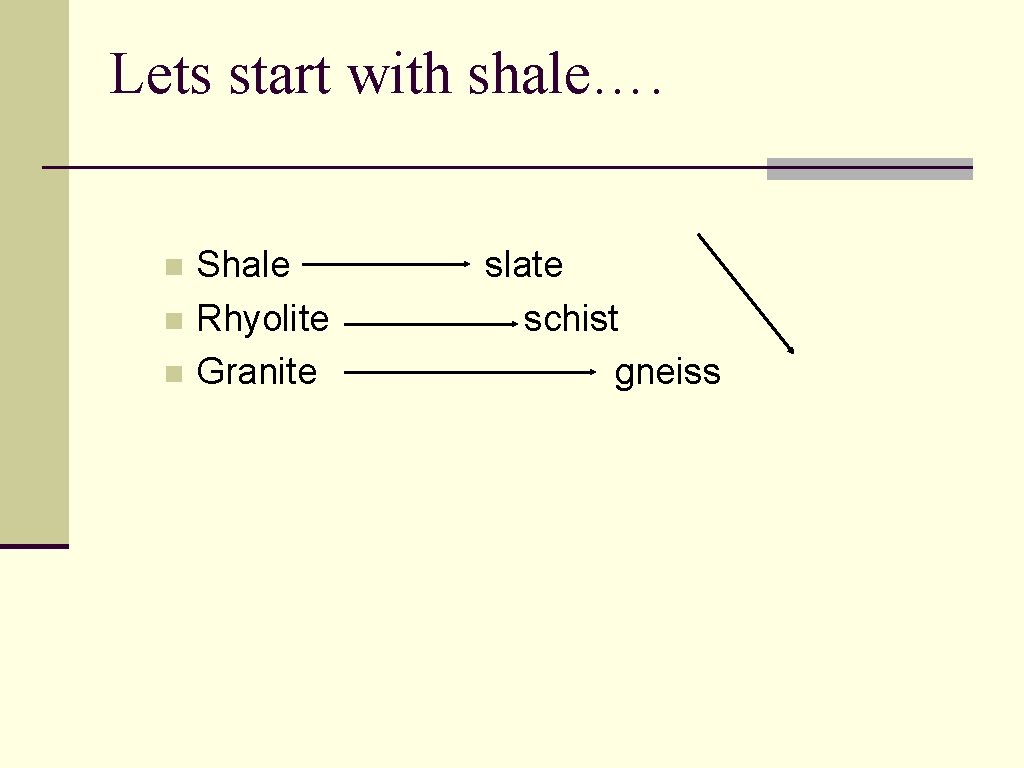
Lets start with shale…. Shale n Rhyolite n Granite n slate schist gneiss
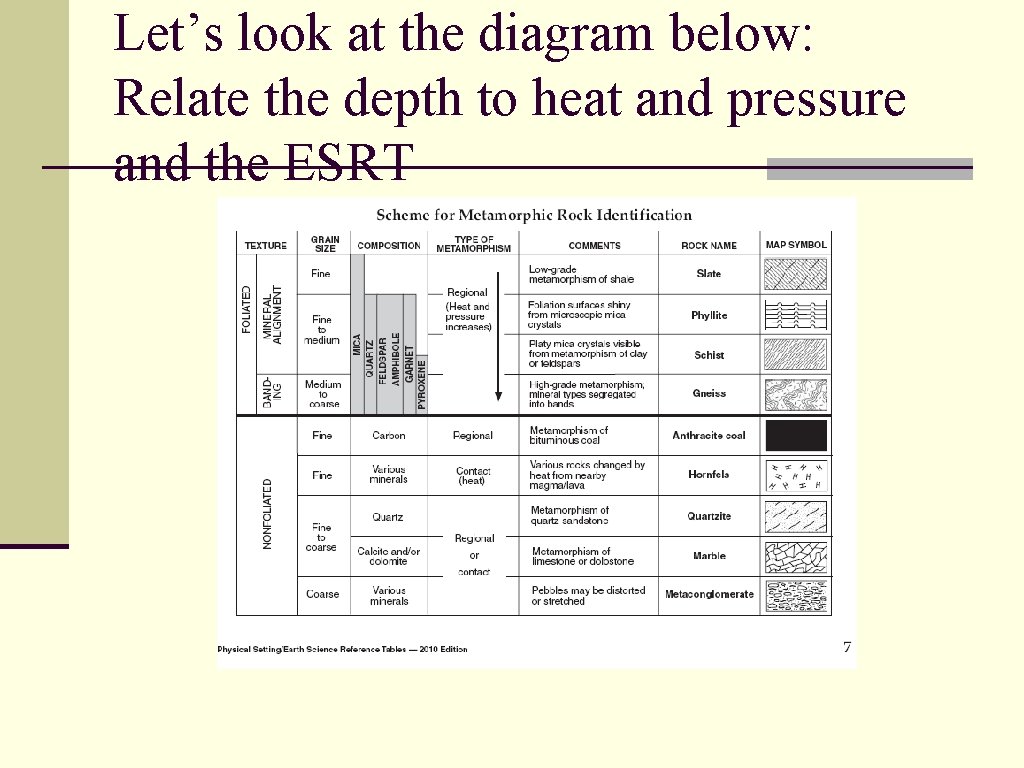
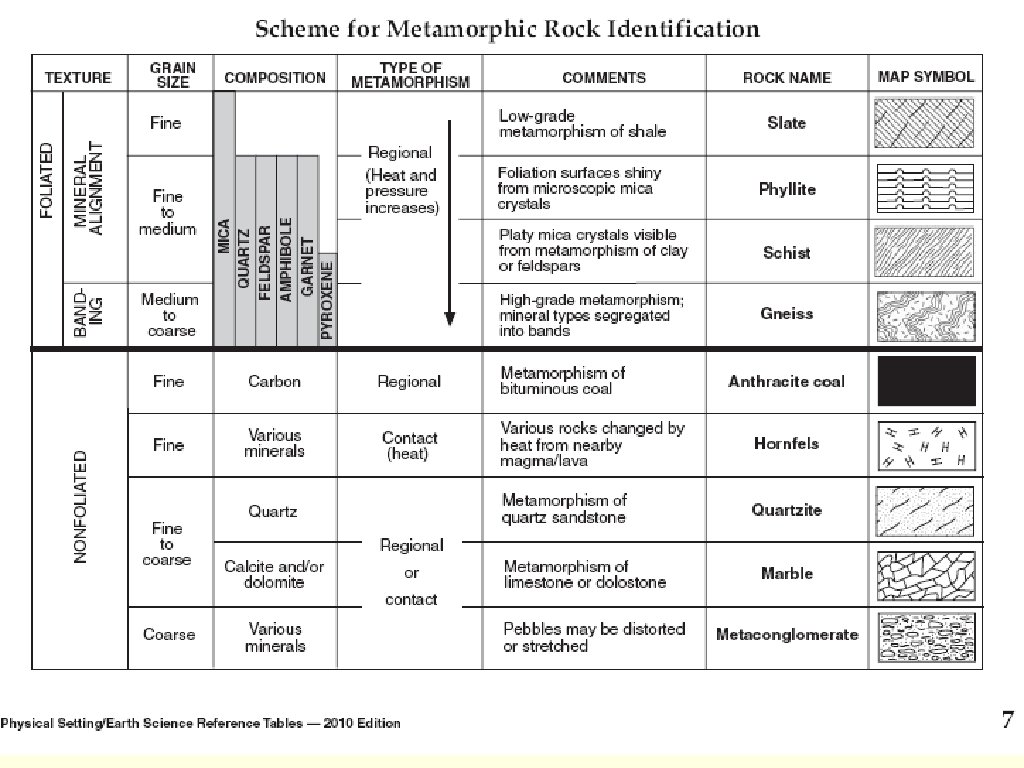
Let’s look at the diagram below: Relate the depth to heat and pressure and the ESRT
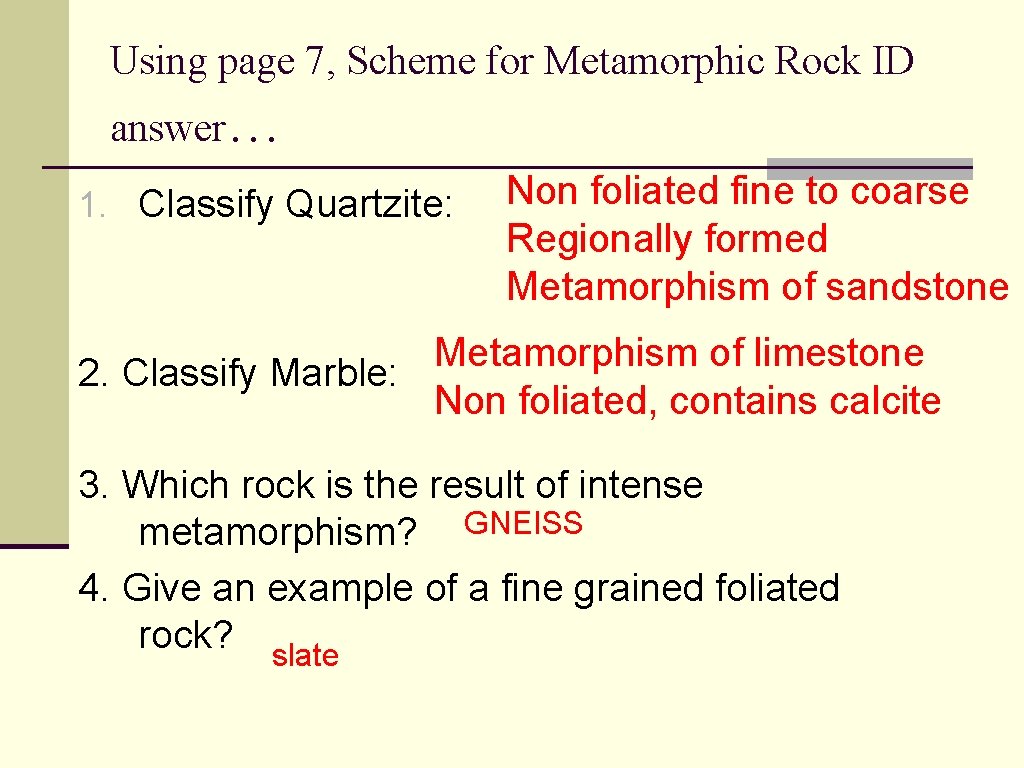
Using page 7, Scheme for Metamorphic Rock ID answer… 1. Classify Quartzite: Non foliated fine to coarse Regionally formed Metamorphism of sandstone Metamorphism of limestone 2. Classify Marble: Non foliated, contains calcite 3. Which rock is the result of intense metamorphism? GNEISS 4. Give an example of a fine grained foliated rock? slate