
Unit 2 Revolution Standards 3 and 4 Anglo


- Slides: 60
Unit 2 Revolution Standards 3 and 4
Anglo French Relationships 1754 -1763 • By 1750, Britain & France had become serious rivals because: – Both nations used mercantilism to expand their colonial claims in order to increase their wealth – Britain & France went to war 3 times in Europe from 1690 -1750 • These wars in Europe meant that their colonists would fight too
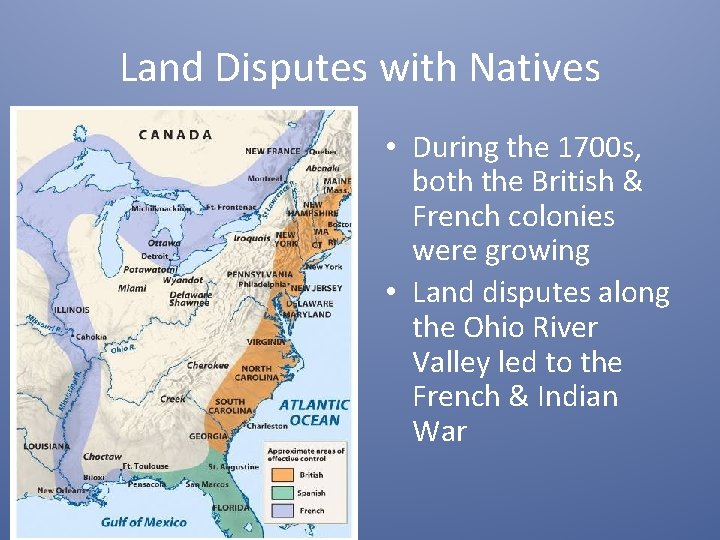
Land Disputes with Natives • During the 1700 s, both the British & French colonies were growing • Land disputes along the Ohio River Valley led to the French & Indian War
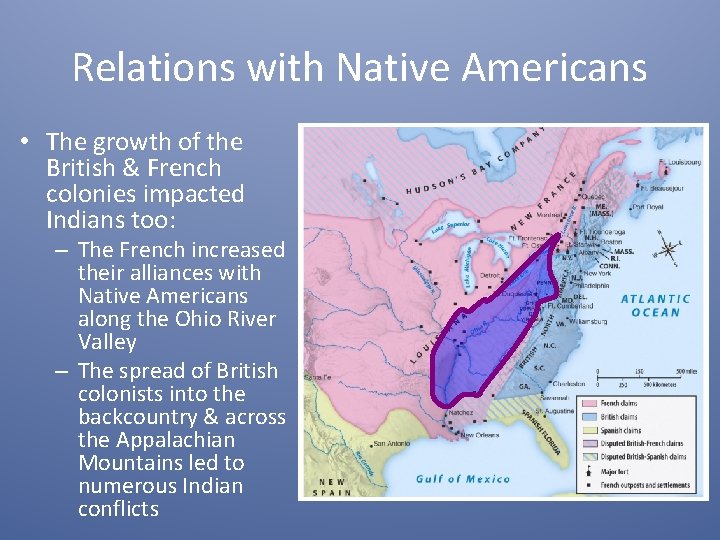
Relations with Native Americans • The growth of the British & French colonies impacted Indians too: – The French increased their alliances with Native Americans along the Ohio River Valley – The spread of British colonists into the backcountry & across the Appalachian Mountains led to numerous Indian conflicts
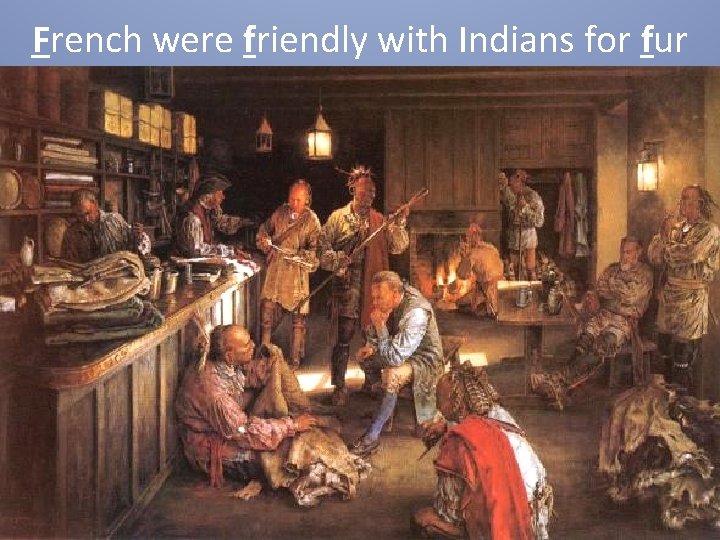
French were friendly with Indians for fur
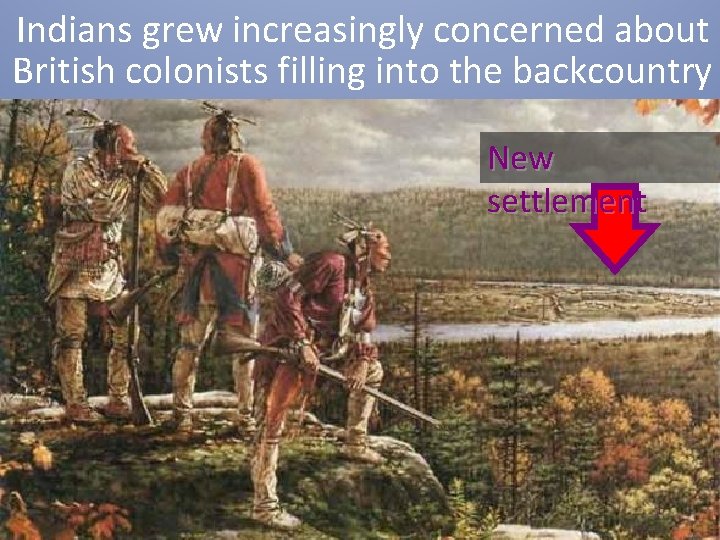
Indians grew increasingly concerned about British colonists filling into the backcountry New settlement
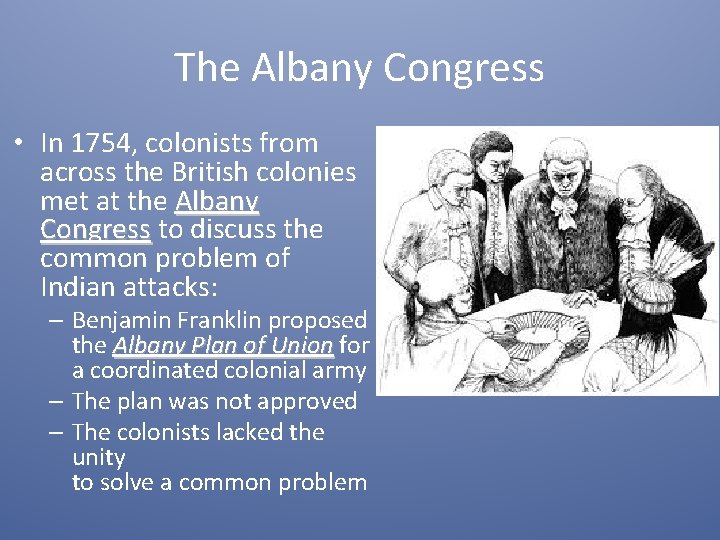
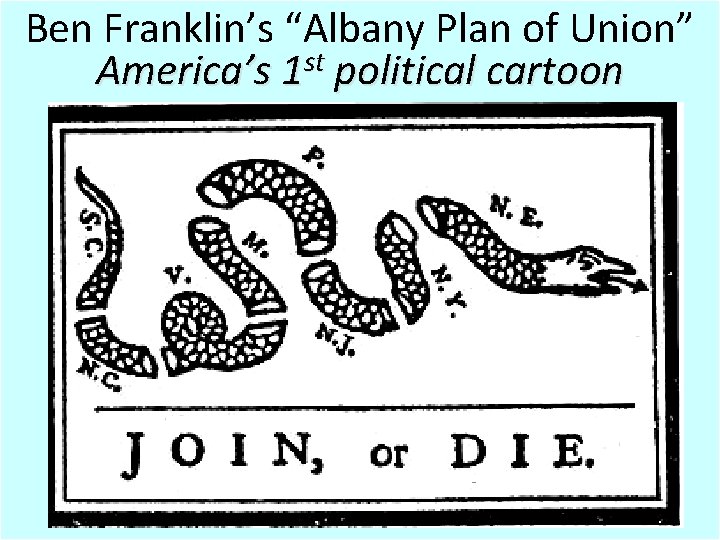
The Albany Congress • In 1754, colonists from across the British colonies met at the Albany Congress to discuss the common problem of Indian attacks: – Benjamin Franklin proposed the Albany Plan of Union for a coordinated colonial army – The plan was not approved – The colonists lacked the unity to solve a common problem
Ben Franklin’s “Albany Plan of Union” America’s 1 st political cartoon
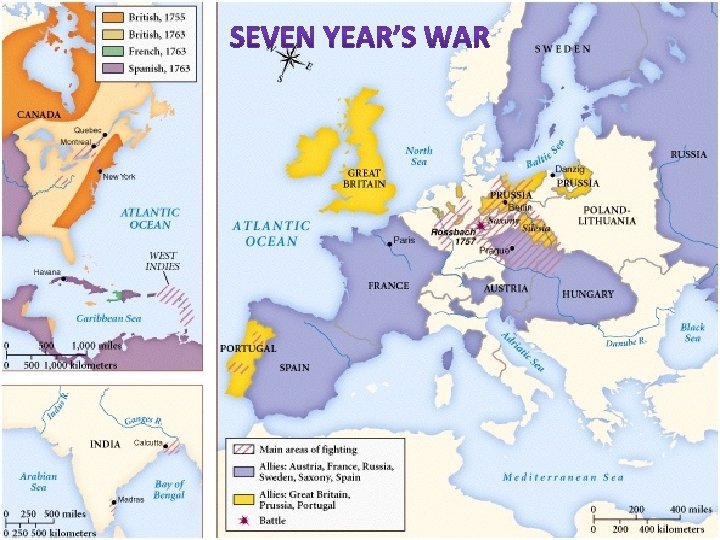
The French & Indian War • Britain & their North American colonists • France, vs. their colonists, & Indian allies ■ The war started in North America (1754 -1763), but became part of a larger, “world” war called the Seven Years War (1756 -1763) due to competition among empires
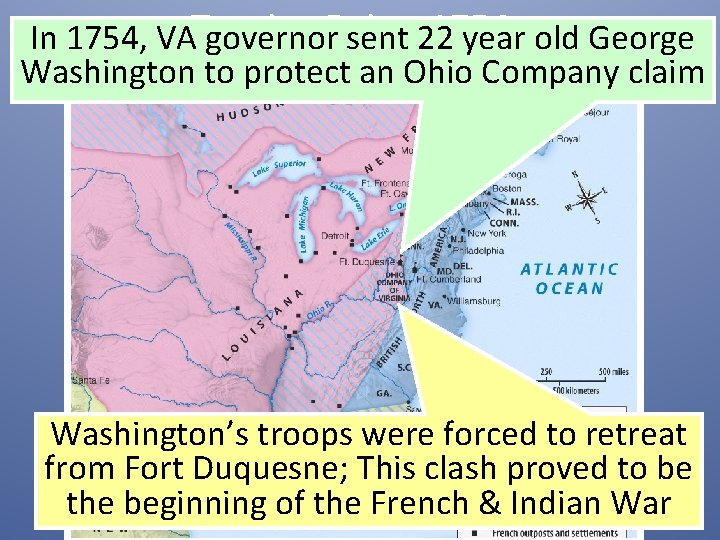
1754 In 1754, VATurning governor. Point: sent 22 year old George Washington to protect an Ohio Company claim Washington’s troops were forced to retreat from Fort Duquesne; This clash proved to be the beginning of the French & Indian War
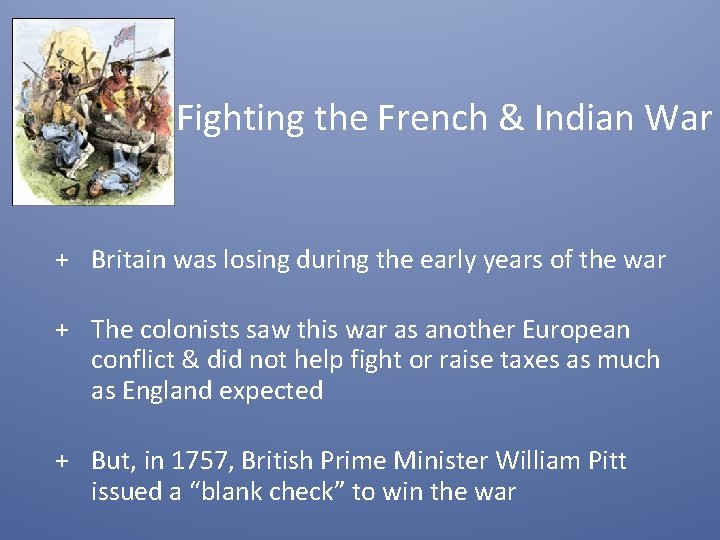
Fighting the French & Indian War + Britain was losing during the early years of the war + The colonists saw this war as another European conflict & did not help fight or raise taxes as much as England expected + But, in 1757, British Prime Minister William Pitt issued a “blank check” to win the war
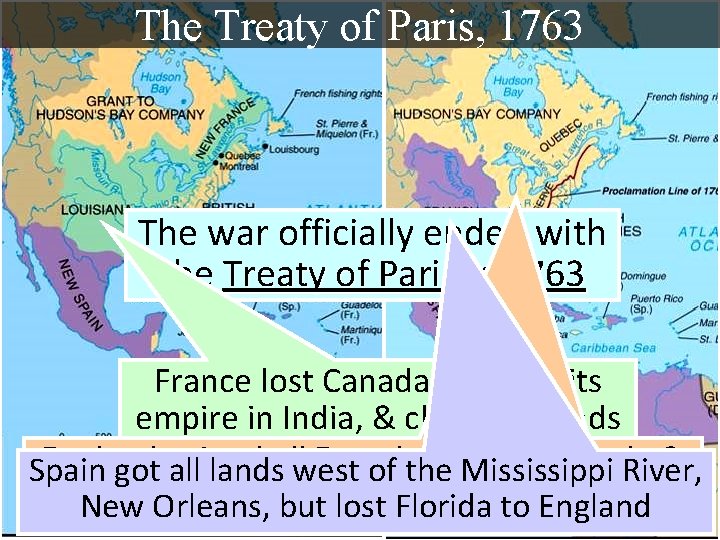
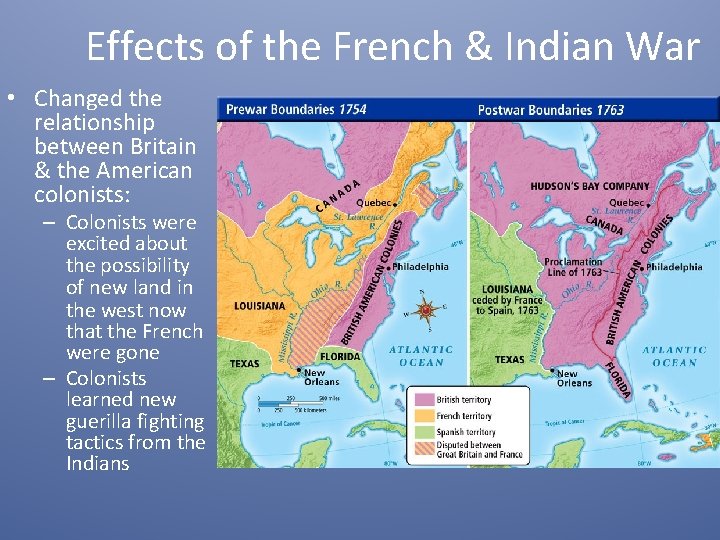
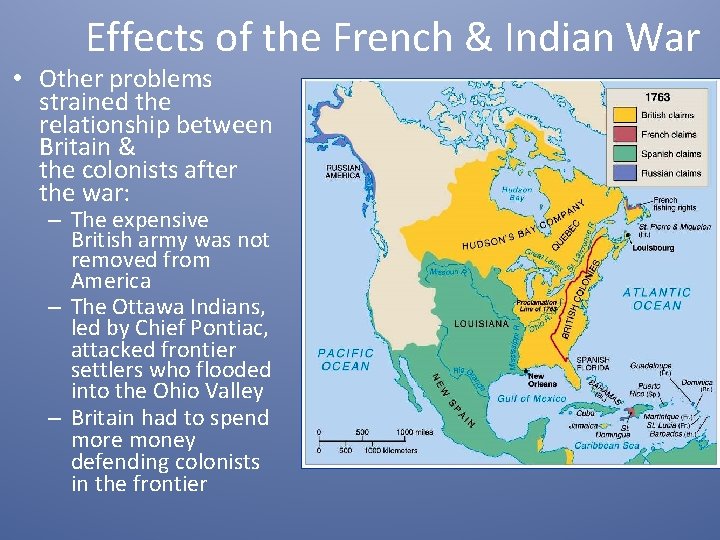
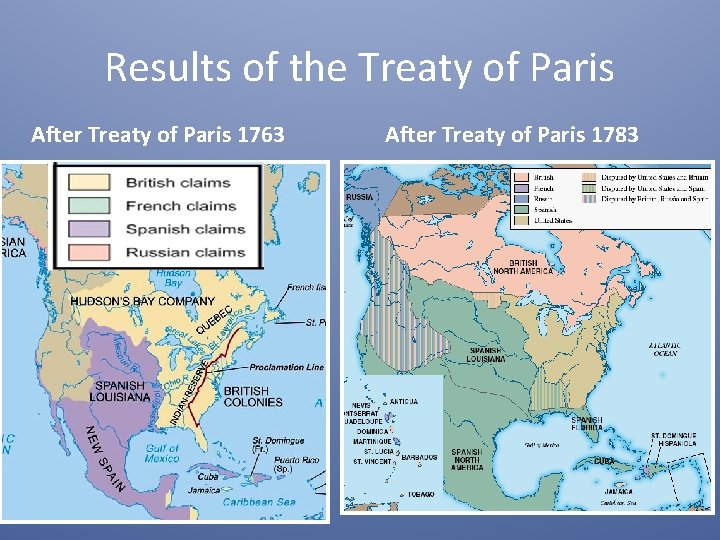
The Treaty of Paris, 1763 The war officially ended with the Treaty of Paris in 1763 France lost Canada, most of its empire in India, & claims to lands east of the Mississippi River England gained all French lands in Canada & Spain got all lands west of the Mississippi River, exclusive rights to Caribbean trade America in 1754 America in 1763 New Orleans, butthe lost Florida toslave England
Effects of the French & Indian War • Changed the relationship between Britain & the American colonists: – Colonists were excited about the possibility of new land in the west now that the French were gone – Colonists learned new guerilla fighting tactics from the Indians
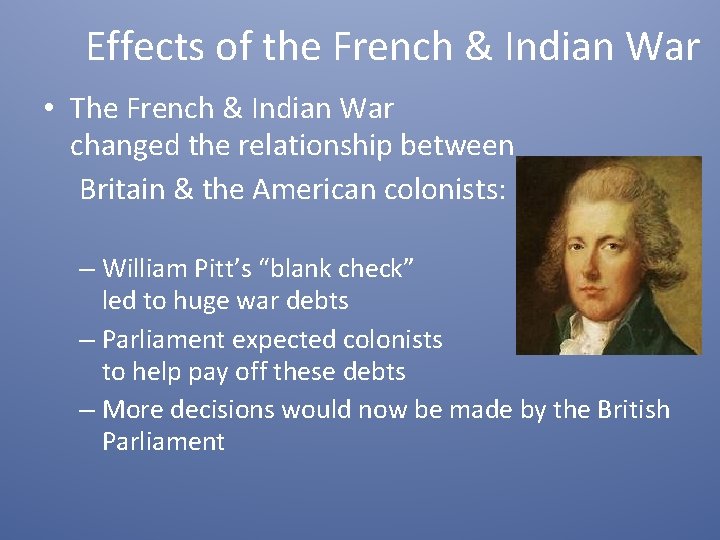
Effects of the French & Indian War • The French & Indian War changed the relationship between Britain & the American colonists: – William Pitt’s “blank check” led to huge war debts – Parliament expected colonists to help pay off these debts – More decisions would now be made by the British Parliament
Effects of the French & Indian War • Other problems strained the relationship between Britain & the colonists after the war: – The expensive British army was not removed from America – The Ottawa Indians, led by Chief Pontiac, attacked frontier settlers who flooded into the Ohio Valley – Britain had to spend more money defending colonists in the frontier
The end to salutary neglect –New taxes & laws were passed without asking colonial assemblies –As Britain assumed more control, the colonists tried to hang onto the power of their colonial assemblies –This shift would prove to be the beginning of the long road towards colonial independence
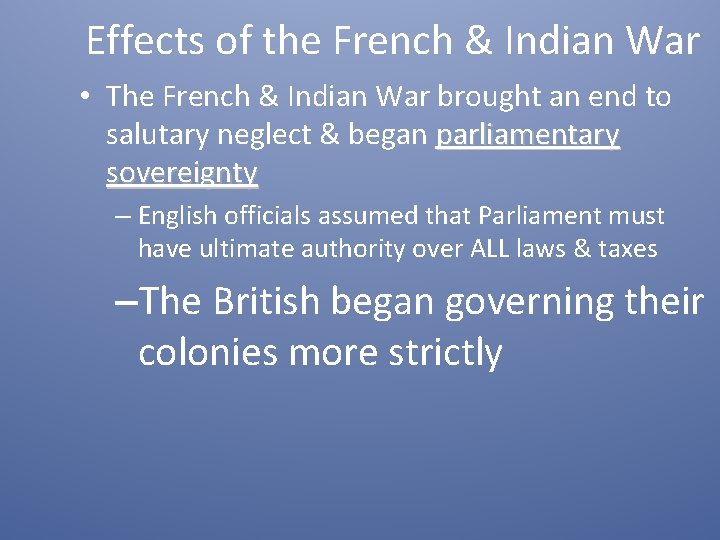
Effects of the French & Indian War • The French & Indian War brought an end to salutary neglect & began parliamentary sovereignty – English officials assumed that Parliament must have ultimate authority over ALL laws & taxes –The British began governing their colonies more strictly
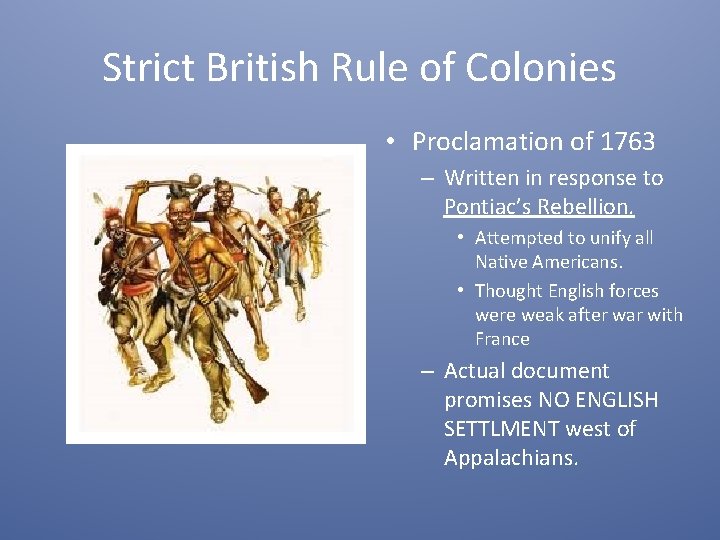
Strict British Rule of Colonies • Proclamation of 1763 – Written in response to Pontiac’s Rebellion. • Attempted to unify all Native Americans. • Thought English forces were weak after war with France – Actual document promises NO ENGLISH SETTLMENT west of Appalachians.
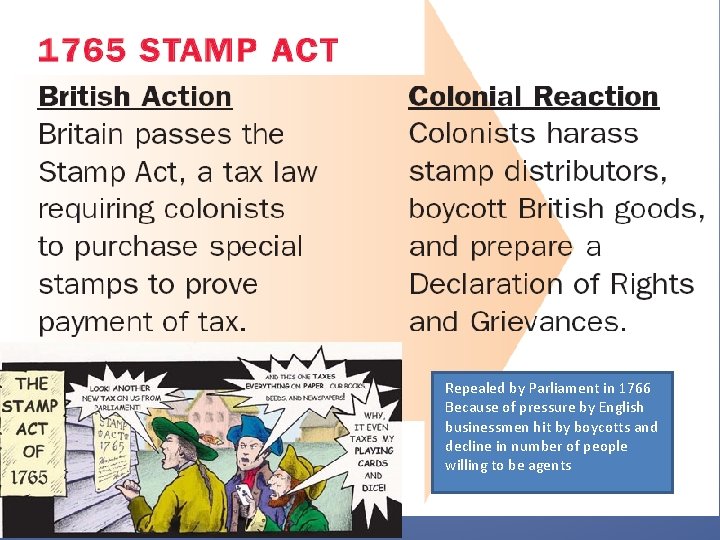
Repealed by Parliament in 1766 Because of pressure by English businessmen hit by boycotts and decline in number of people willing to be agents
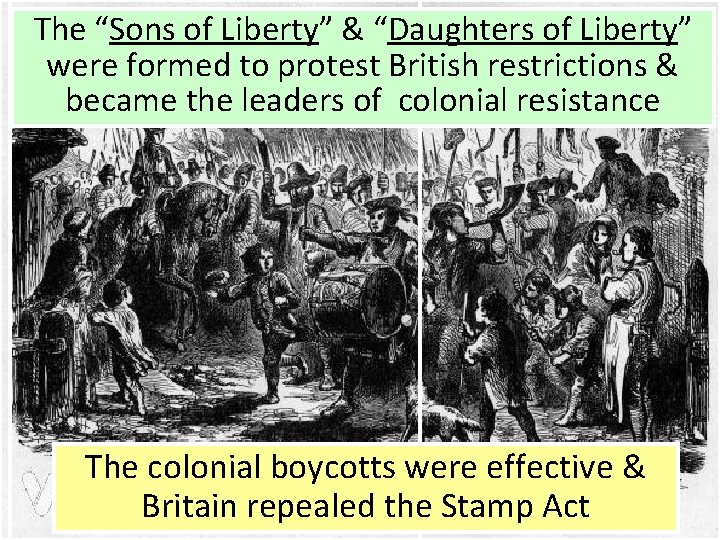
The “Sons of Liberty” & “Daughters of Liberty” were formed to protest British restrictions & became the leaders of colonial resistance Mob reaction to the Stamp Act boycotts effective & to For The the colonial 1 st time, many were colonists refer Britain repealed the Act fellow boycotters as. Stamp “patriots”
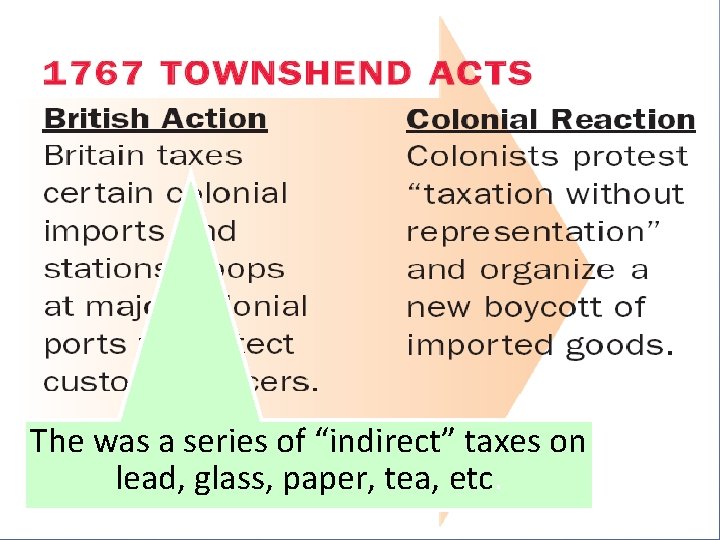
The was a series of “indirect” taxes on lead, glass, paper, tea, etc.
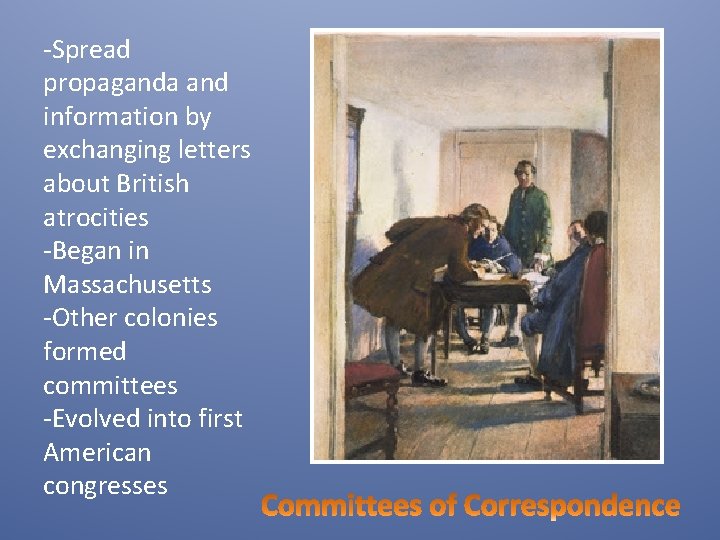
-Spread propaganda and information by exchanging letters about British atrocities -Began in Massachusetts -Other colonies formed committees -Evolved into first American congresses
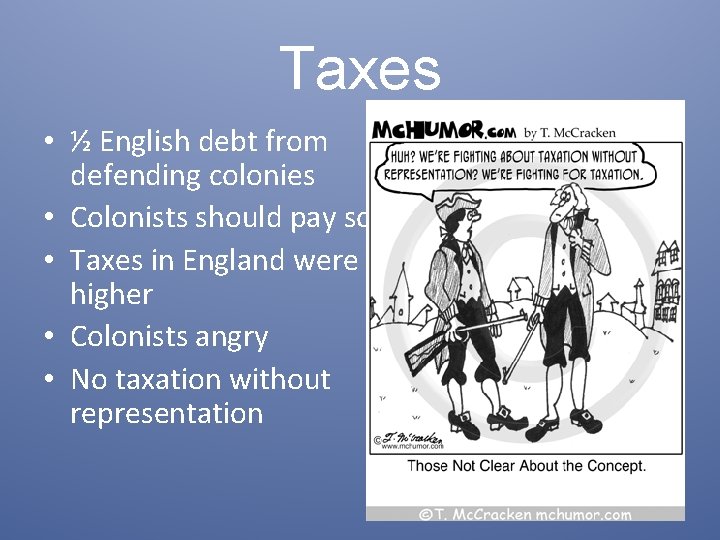
Taxes • ½ English debt from defending colonies • Colonists should pay some • Taxes in England were higher • Colonists angry • No taxation without representation
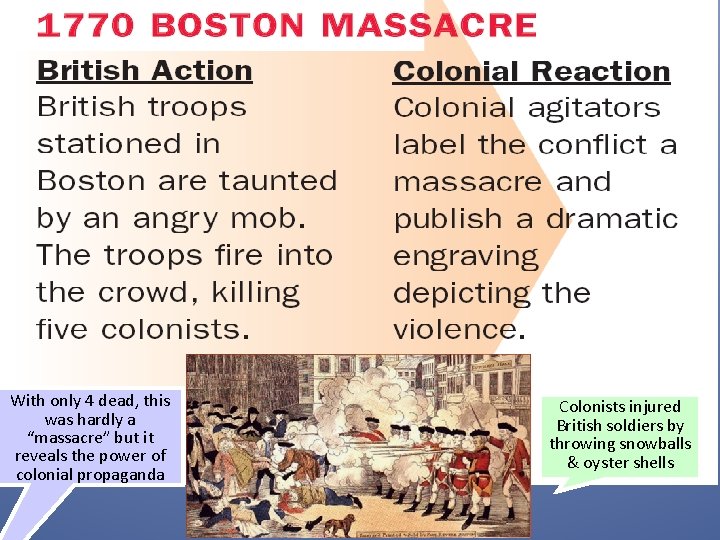
With only 4 dead, this was hardly a “massacre” but it reveals the power of colonial propaganda Colonists injured British soldiers by throwing snowballs & oyster shells
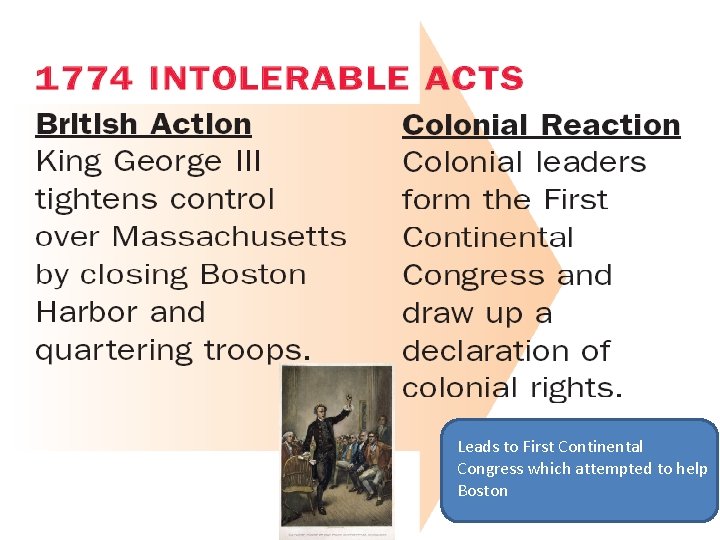
Leads to First Continental Congress which attempted to help Boston
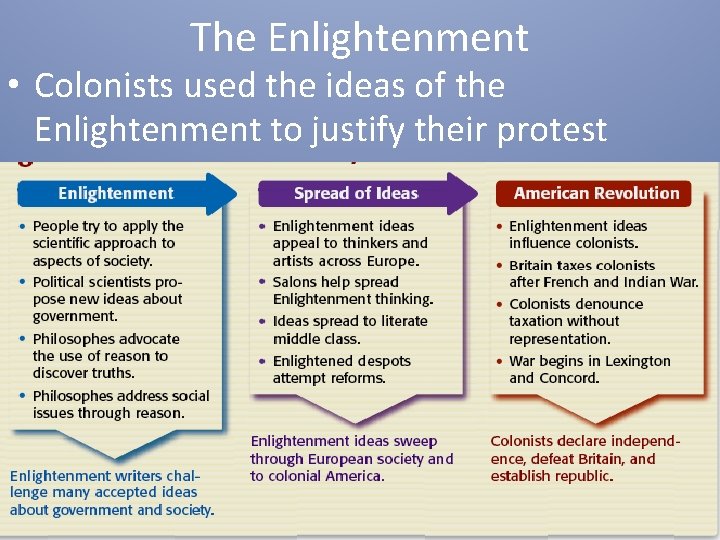
The Enlightenment • Colonists used the ideas of the Enlightenment to justify their protest –John Locke wrote that people have natural rights (life, liberty, & property) & should oppose tyranny –Rousseau believed that citizens have a social contract with their gov’t –Montesquieu argued that power should not be in the hands of a king, but separated among gov’t branches
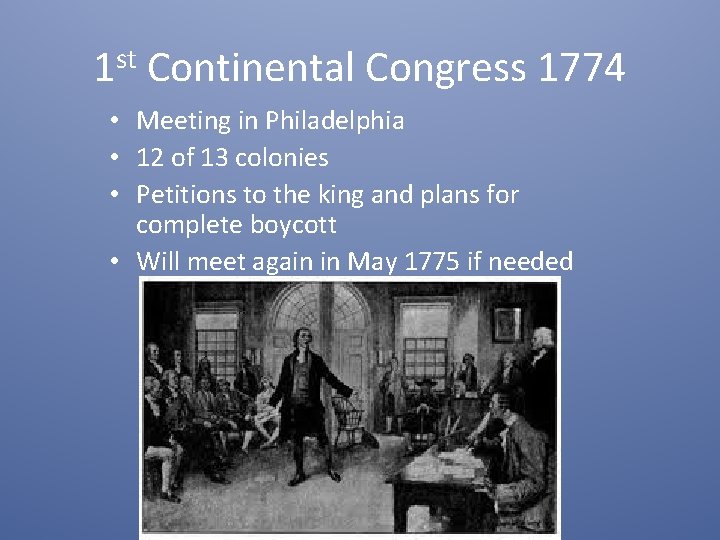
1 st Continental Congress 1774 • Meeting in Philadelphia • 12 of 13 colonies • Petitions to the king and plans for complete boycott • Will meet again in May 1775 if needed
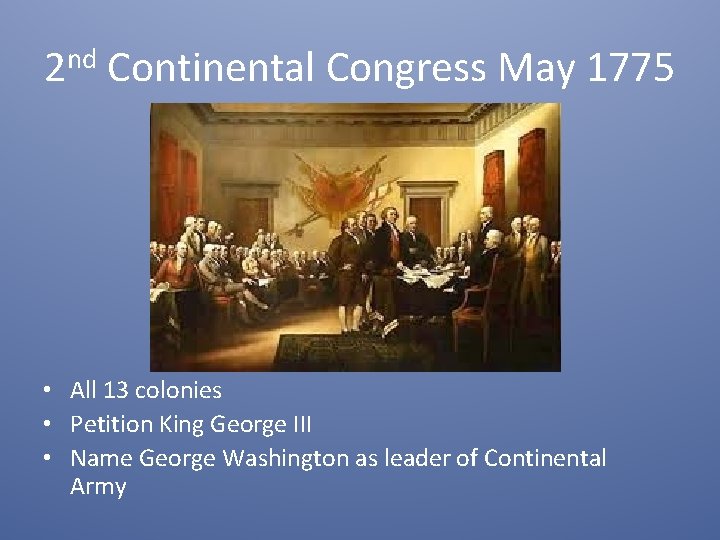
2 nd Continental Congress May 1775 • All 13 colonies • Petition King George III • Name George Washington as leader of Continental Army
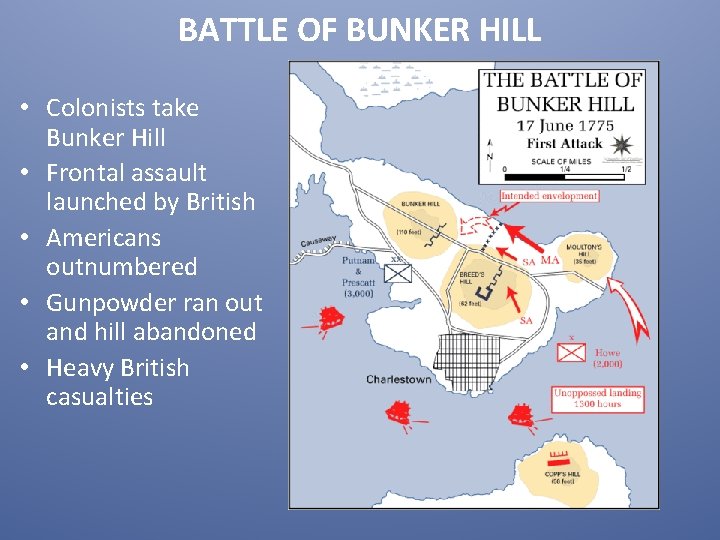
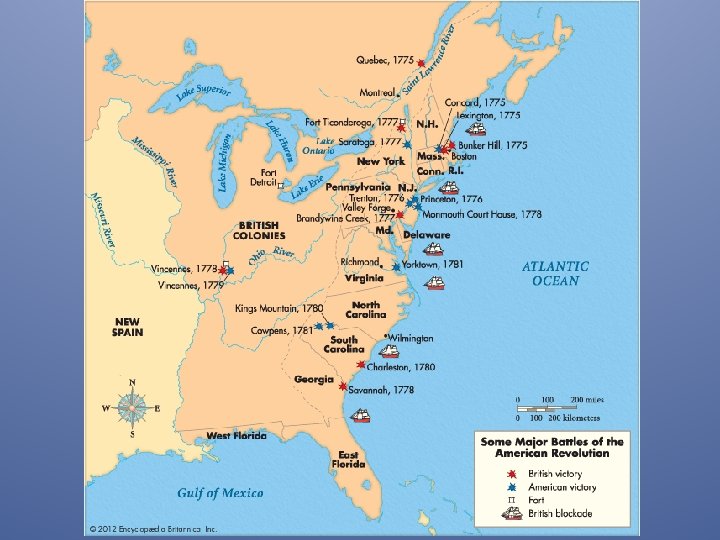
BATTLE OF BUNKER HILL JUNE 1775 • Colonists take Bunker Hill • Frontal assault launched by British • Americans outnumbered • Gunpowder ran out and hill abandoned • Heavy British casualties
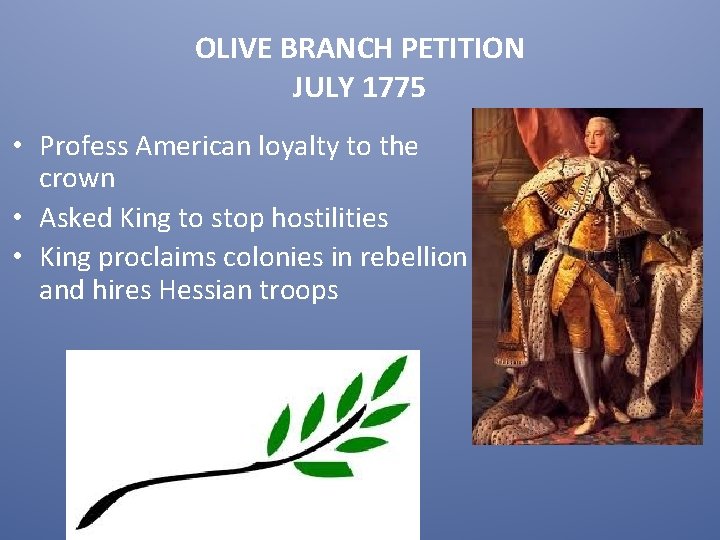
OLIVE BRANCH PETITION JULY 1775 • Profess American loyalty to the crown • Asked King to stop hostilities • King proclaims colonies in rebellion and hires Hessian troops
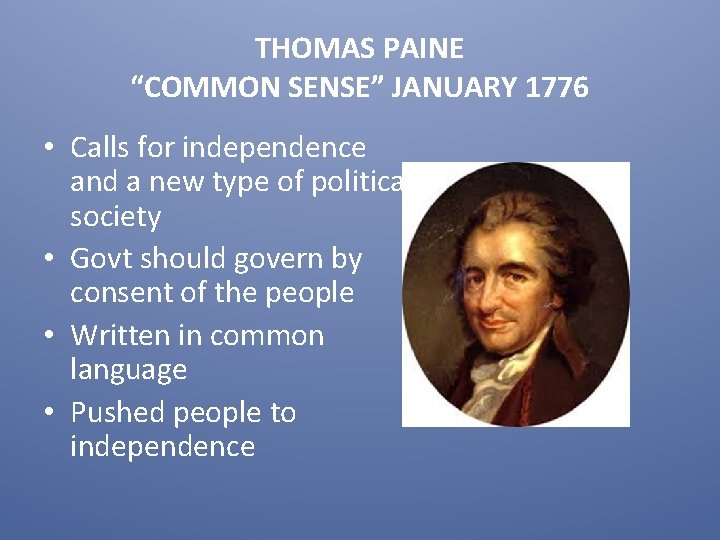
THOMAS PAINE “COMMON SENSE” JANUARY 1776 • Calls for independence and a new type of political society • Govt should govern by consent of the people • Written in common language • Pushed people to independence
Examining Excerpts from Thomas Paine’s Common Sense • Examine Common Sense: – In teams, read the 6 excerpts from Common Sense & write the main idea in your own words
The American Revolution
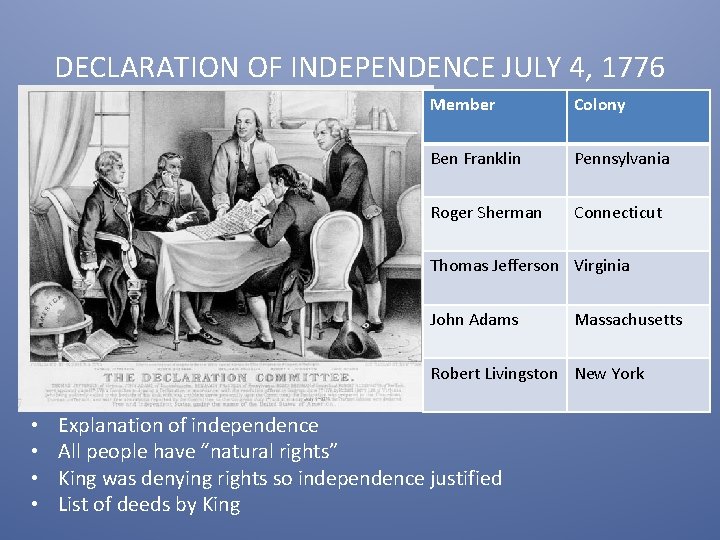
DECLARATION OF INDEPENDENCE JULY 4, 1776 Member Colony Ben Franklin Pennsylvania Roger Sherman Connecticut Thomas Jefferson Virginia John Adams Massachusetts Robert Livingston New York • • Explanation of independence All people have “natural rights” King was denying rights so independence justified List of deeds by King
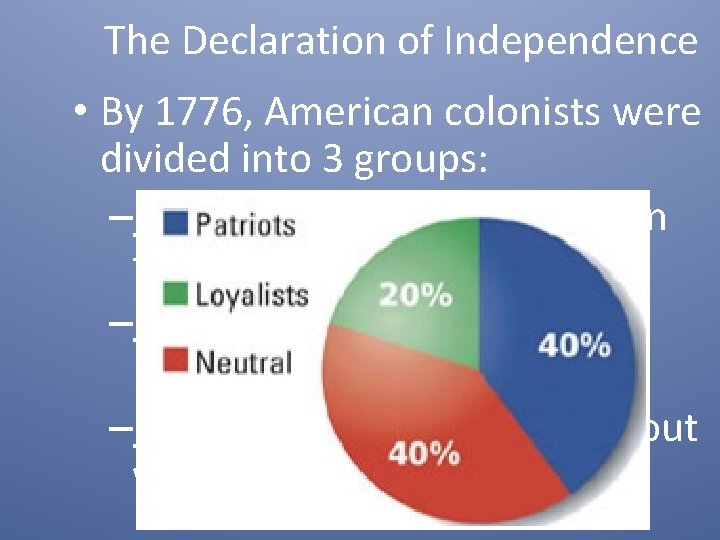
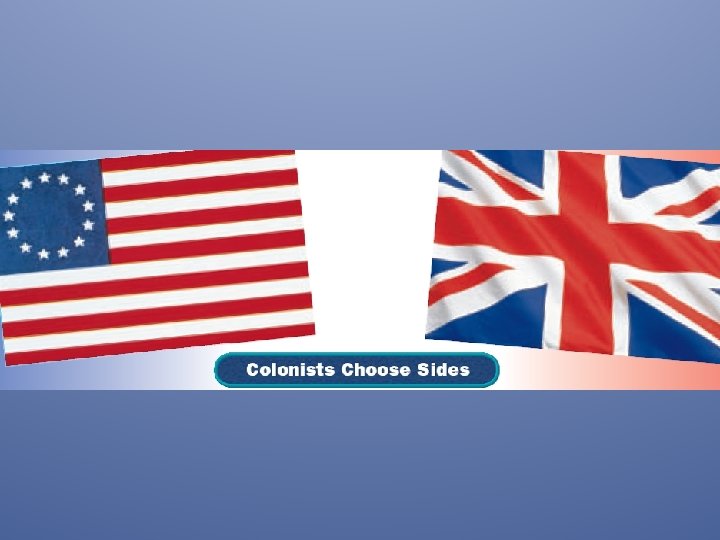
The Declaration of Independence • By 1776, American colonists were divided into 3 groups: –Patriots supported separation from Britain (independence) –Loyalists wanted to remain British colonies –Neutrals were undecided about which side to choose
The Enlightenment • The American Revolution was inspired by the Enlightenment: Enlightenment – John Locke—all men are born with natural rights Locke & citizens can revolt from tyrannical gov’ts – Montesquieu—separation of powers; checks & Montesquieu balances – Thomas Paine’s Common Sense urged colonial independence
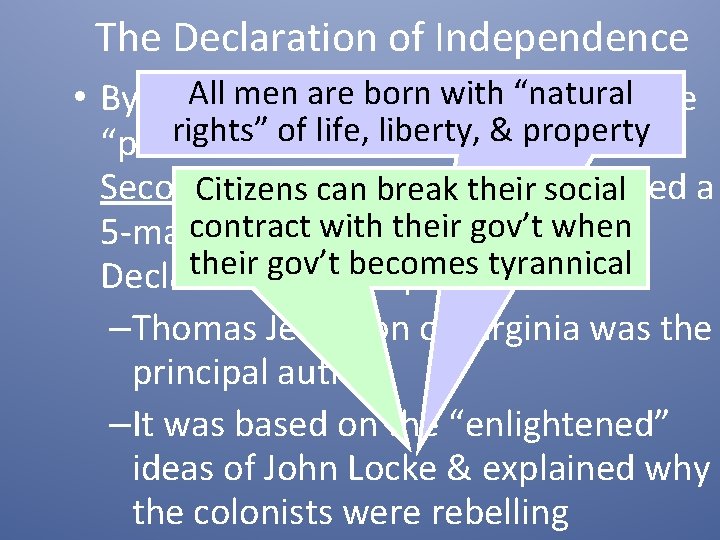
The Declaration of Independence men are born with “naturalwere • By July. All 1776, enough Americans rights”that of life, liberty, &ofproperty “patriots” members the Second Continental Congress formed a Citizens can break their social with their gov’t 5 -mancontract committee to draft a when their gov’t becomes tyrannical Declaration of Independence: –Thomas Jefferson of Virginia was the principal author –It was based on the “enlightened” ideas of John Locke & explained why the colonists were rebelling
Class Activity Examining Excerpts from the Declaration of Independence
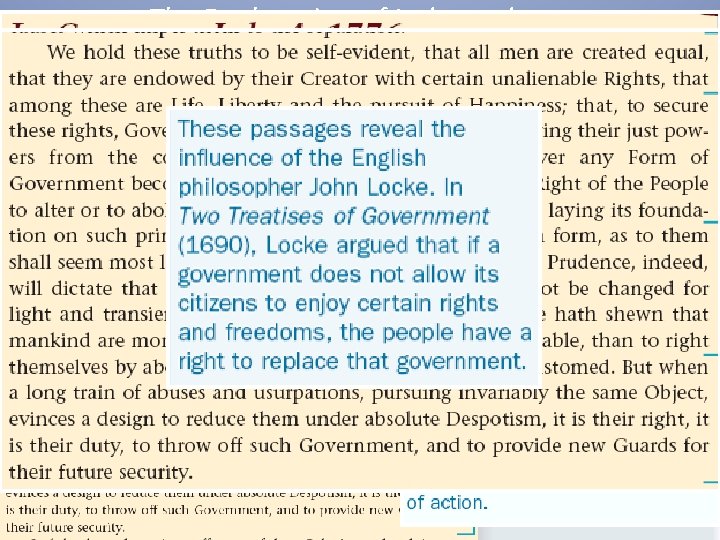
The Declaration of Independence & Influences from the Enlightenment
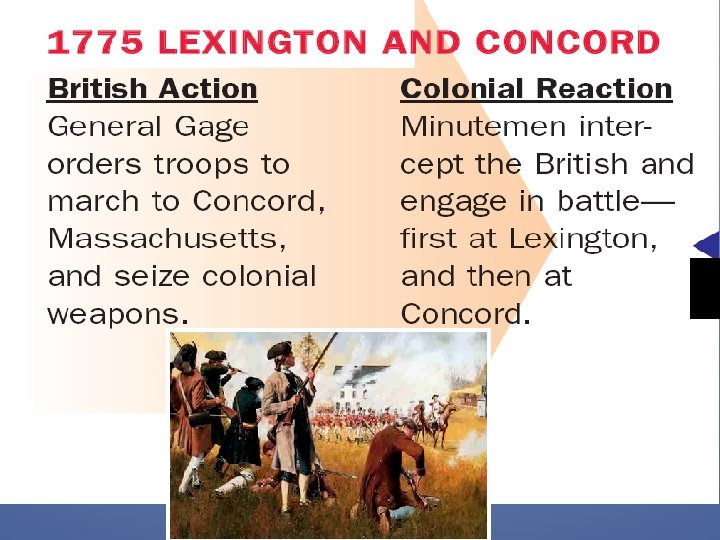
The American Revolution • The Dec of Independence was a formal demand for separation, but the Revolutionary War had already begun in 1775: – Lexington & Concord – Formation of a Continental Army under George Washington – Americans were divided among Patriots, Loyalists, & Neutrals
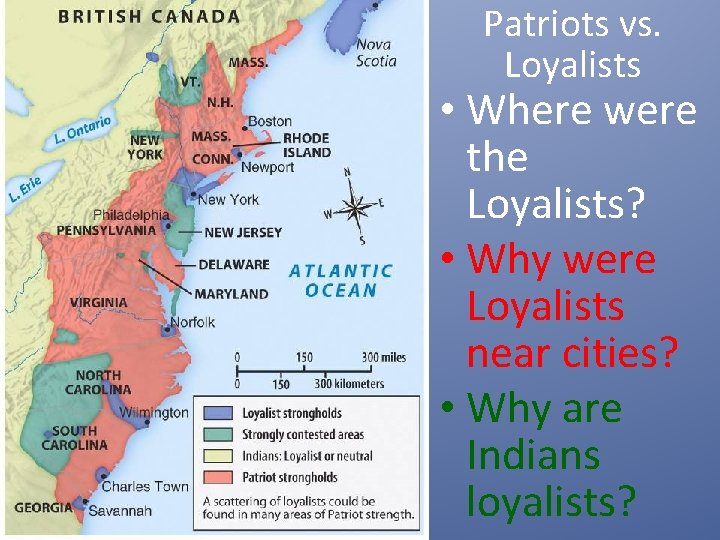
Patriots vs. Loyalists • Where were the Loyalists? • Why were Loyalists near cities? • Why are Indians loyalists?
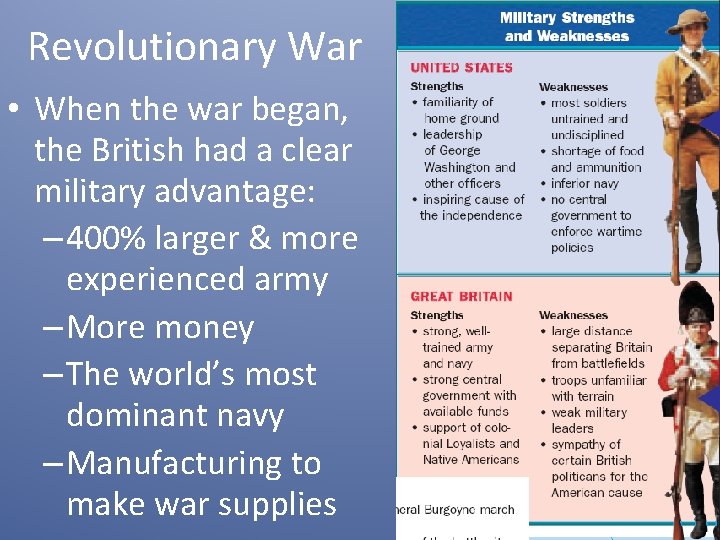
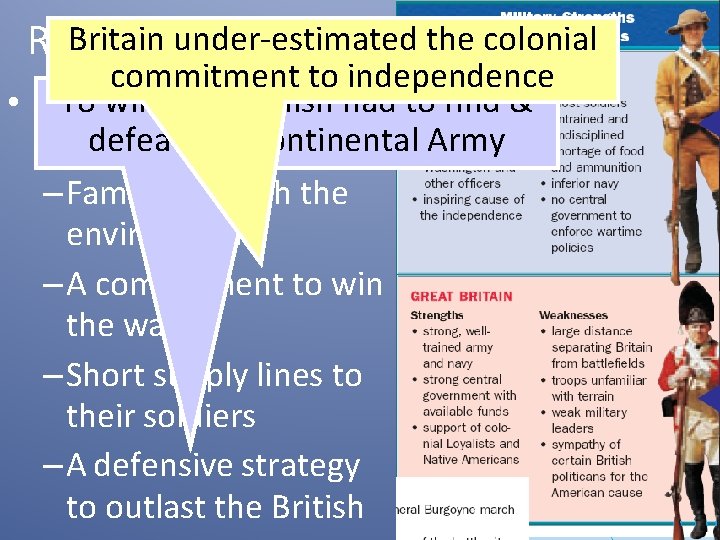
Revolutionary War • When the war began, the British had a clear military advantage: – 400% larger & more experienced army – More money – The world’s most dominant navy – Manufacturing to make war supplies
Britain under-estimated Revolutionary War the colonial commitment to independence To the win, American the English had to find & • But, defeathad: the Continental Army colonists – Familiarity with the environment – A commitment to win the war – Short supply lines to their soldiers – A defensive strategy to outlast the British
The Role of George Washington • As leader of the Continental Army, George Washington was the symbol of the American cause: – He had to build a professional army & coordinate the militias – Encouraged common citizens & volunteer soldiers to support the war even when the British seemed destined to win during the early years of the revolution
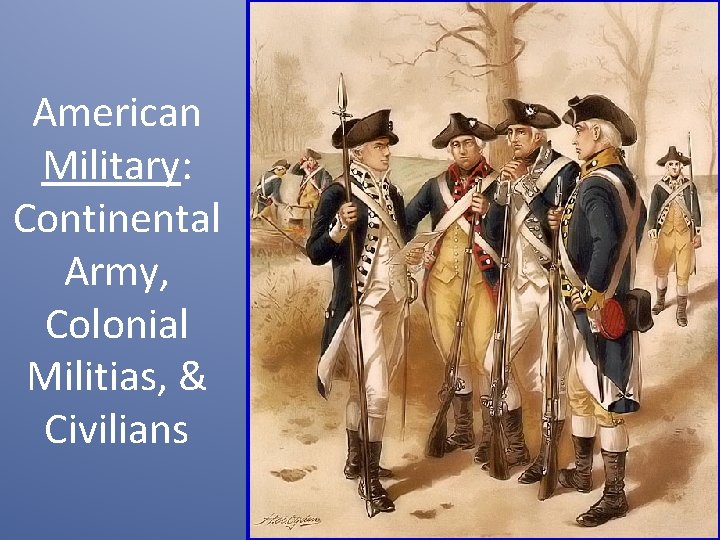
American Military: Continental Army, Colonial Militias, & Civilians
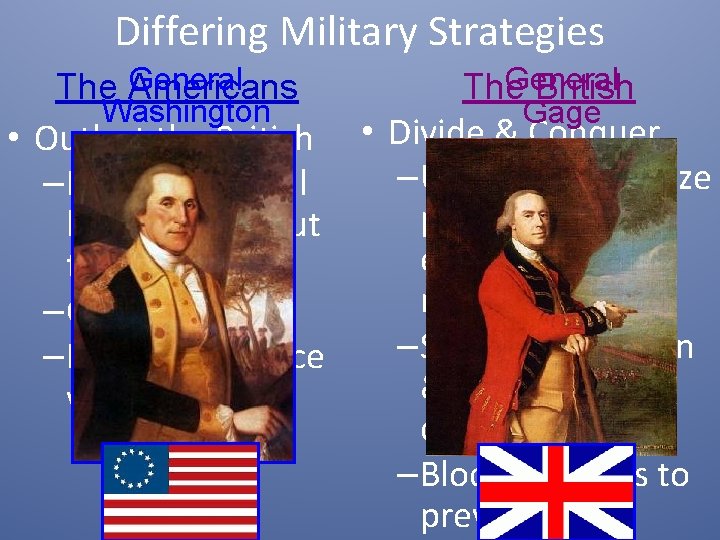
Differing Military Strategies General The Americans Washington General The British Gage • Outlast the British • Divide & Conquer –Use Loyalists, seize –Defend colonial property, lands & drag out encourage slave the war revolts –Guerilla tactics –Split the Northern –Make an alliance & Southern with France colonies –Blockade ports to prevent trade
Battle Map
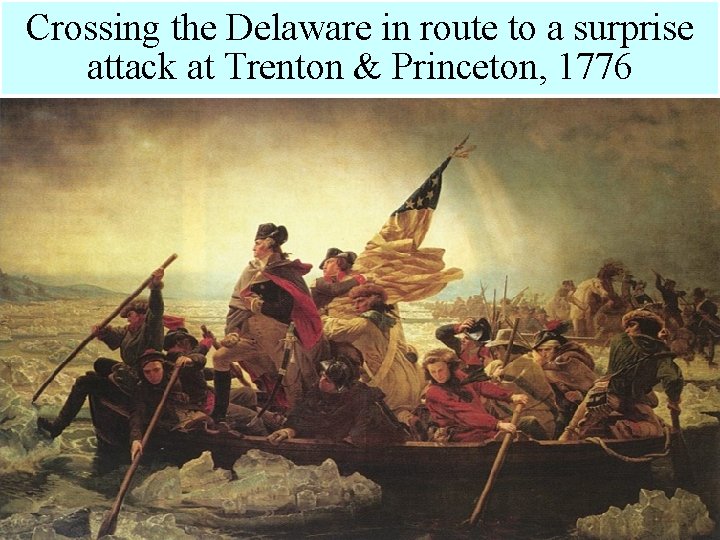
Crossing the Delaware in route to a surprise attack at Trenton & Princeton, 1776
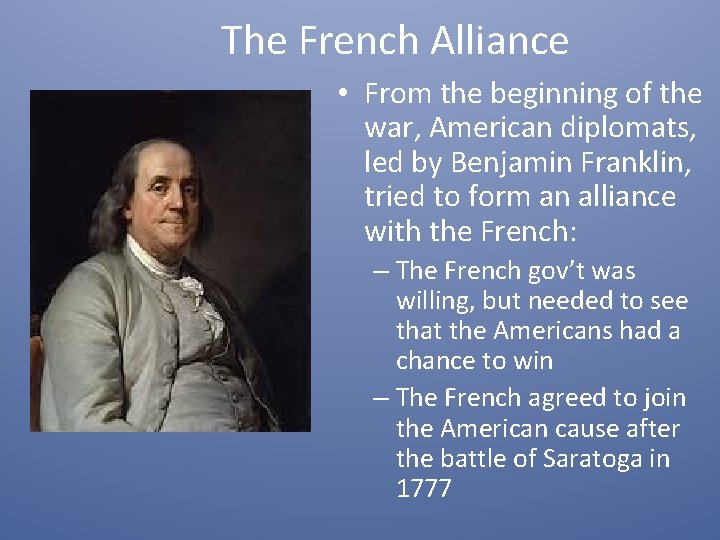
The French Alliance • From the beginning of the war, American diplomats, led by Benjamin Franklin, tried to form an alliance with the French: – The French gov’t was willing, but needed to see that the Americans had a chance to win – The French agreed to join the American cause after the battle of Saratoga in 1777
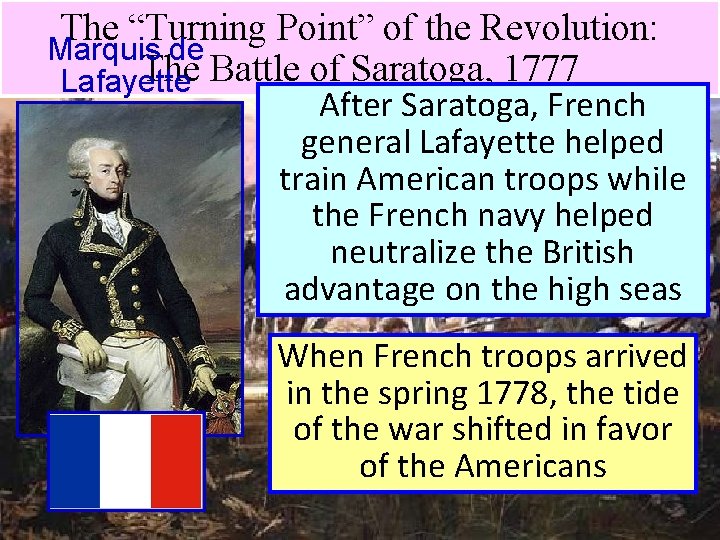
The “Turning Point” of the Revolution: Marquis de The Battle of Saratoga, 1777 Lafayette After Saratoga, French general Lafayette helped train American troops while the French navy helped neutralize the British advantage on the high seas When French troops arrived in the spring 1778, the tide of the war shifted in favor of the Americans
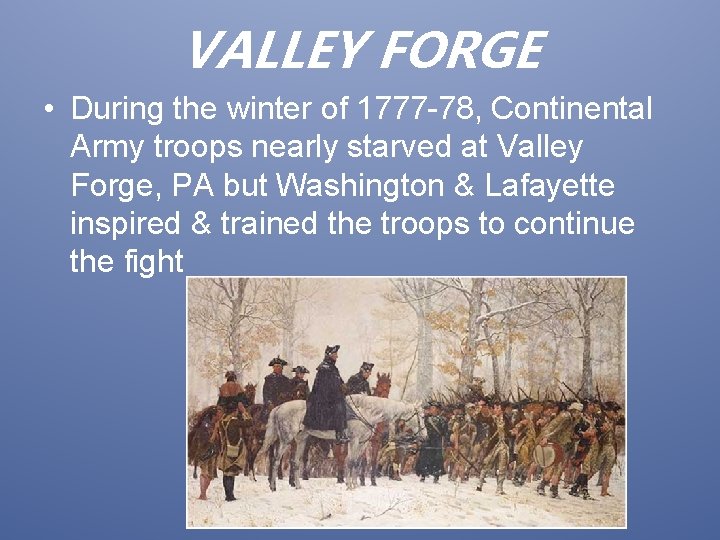
VALLEY FORGE • During the winter of 1777 -78, Continental Army troops nearly starved at Valley Forge, PA but Washington & Lafayette inspired & trained the troops to continue the fight
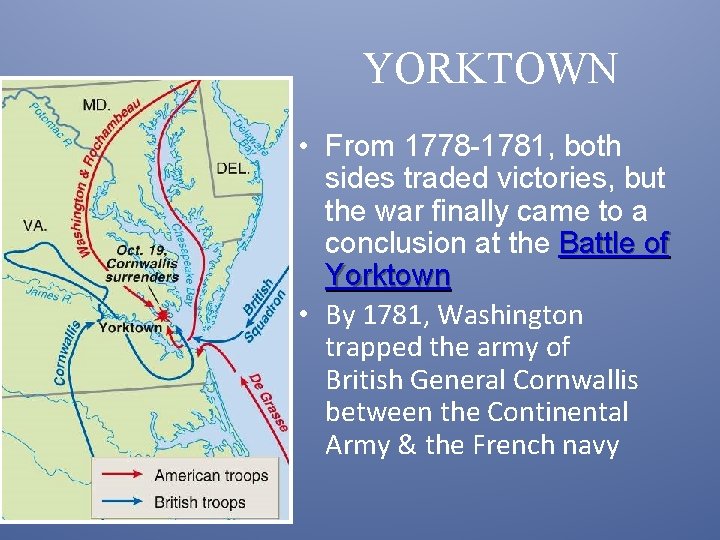
YORKTOWN • From 1778 -1781, both sides traded victories, but the war finally came to a conclusion at the Battle of Yorktown • By 1781, Washington trapped the army of British General Cornwallis between the Continental Army & the French navy
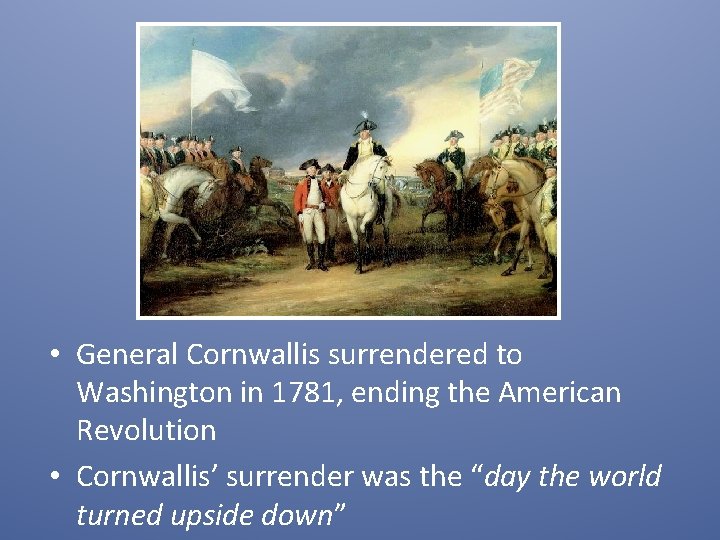
• General Cornwallis surrendered to Washington in 1781, ending the American Revolution • Cornwallis’ surrender was the “day the world turned upside down”
TREATY OF PARIS • The Treaty of Paris in 1783 ended the American Revolution • The treaty gave America: – – – Full independence All territory east of Mississippi River, between Canada & FL The removal of the British army from U. S. claims in America
Results of the Treaty of Paris After Treaty of Paris 1763 After Treaty of Paris 1783
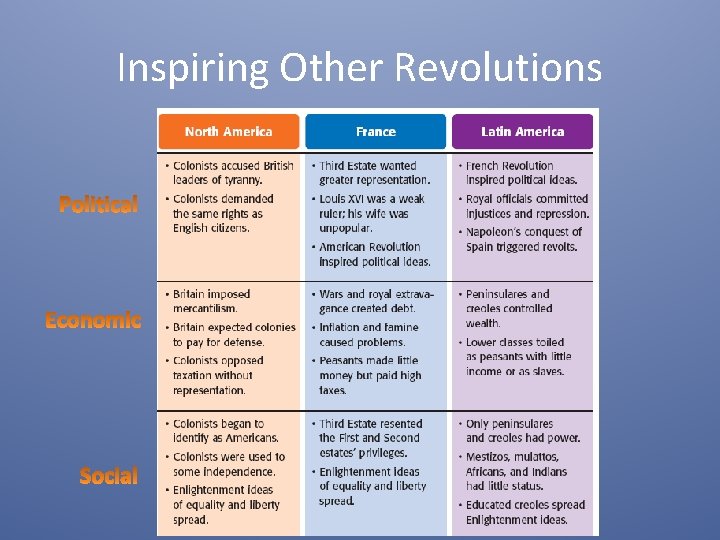
Inspiring Other Revolutions