
Unit 2 Review Population and Migration What does
- Slides: 34
Unit 2 Review Population and Migration
What does Ecumene refer to?
�It refers to the area where humans can live. �Includes land with adequate water sources, relatively flat terrain, and available human food source.
What is the difference between arithmetic density and physiologic density? What are the drawbacks of each?
�Arithmetic density: divides the entire population of a country by the total land are to come up with a population density for the country as a whole. �Physiologic density: only takes into account the land that is being used by humans
Where are the highest population densities located?
�East Asia, South Asia, Southeast Asia, & Western and Central Europe
What is meant by carrying capacity?
�The number of people an area can support on a sustained basis.
What is meant by overpopulation?
How can nations increase carrying capacity to reduce the risk of overpopulation?
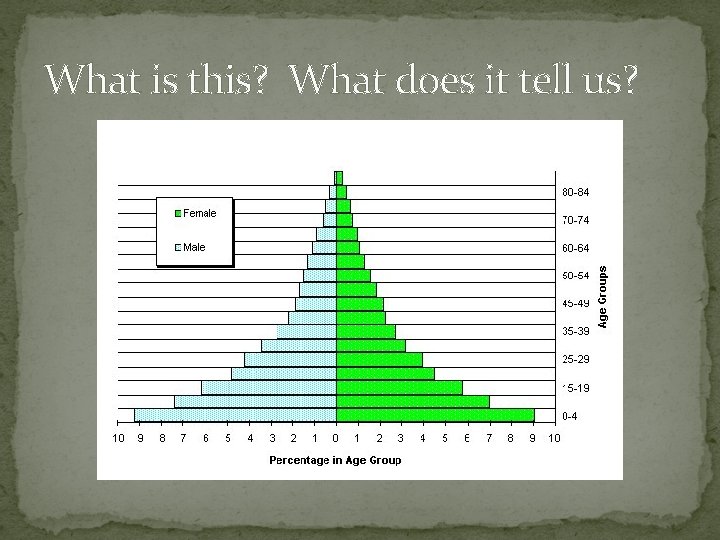
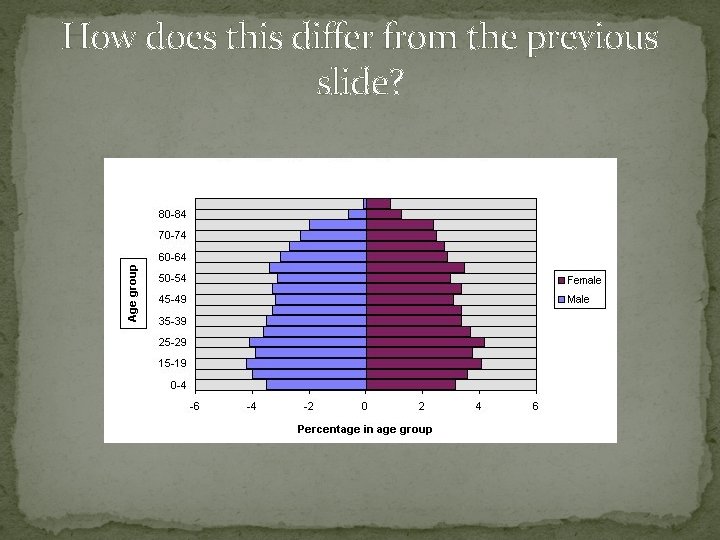
What is this? What does it tell us?
How does this differ from the previous slide?
What does it mean if there is a high dependency ratio?
�Dependency Ratio: the ratio of people under age 15 and those 65 and older to those age 15 to 65.
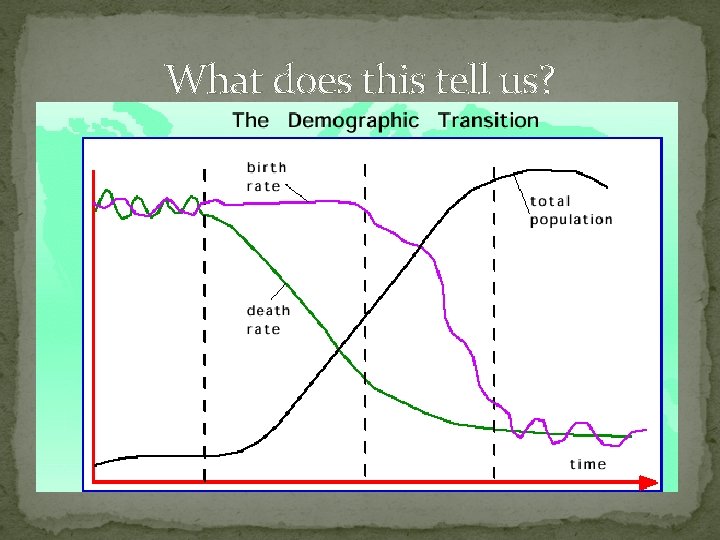
What does this tell us?
What TFR would generally be considered a replacement rate?
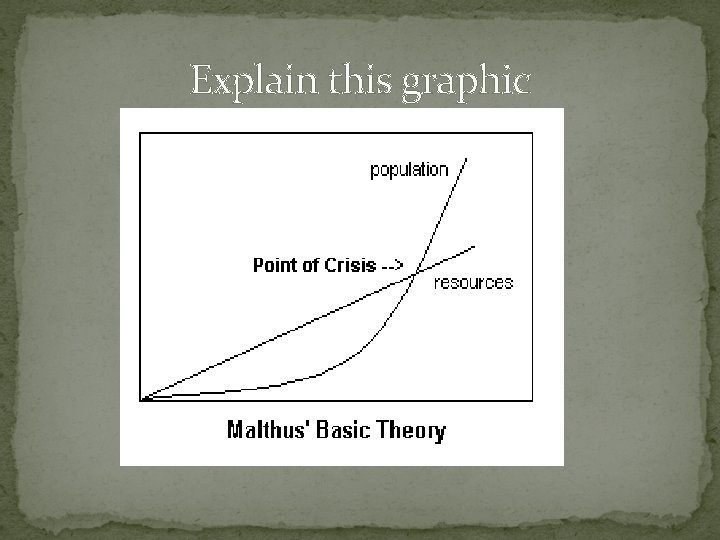
Explain this graphic
How has friction of distance been reduced?
What are some examples of Push Factors?
What are some examples of Pull Factors?
What is the difference between net-in and net-out migration?
What is meant by Chain Migration?
What are some examples of voluntary migration?
What are some examples of forced migration?
How does Transhumance relate to migration?
What is a refugee?
What is meant by demographic momentum?
Describe Ravenstein’s Migration “laws”
�Most migration is over a short distance �Migration occurs in a series of steps �Long-distance migrants usually move to centers of economic opportunity (urban areas) �Each migration produces a movement in the opposite direction, or counter stream �People in rural areas migrate more than people in cities �Men migrate over longer distances than women �Most migrants are young adult males �Cities grow more by migration than by natural increase �Migration increases with economic development �Migration is mostly due to economic causes
Describe Zelinksy’s Model of Migration Transition
�Migration occurs in conjunction with a demographic transition �Stage 2: the excessive population growth encourages people to move to another country where there is more economic opportunity �Stage 3 or Stage 4: people tend to move internally for job opportunities
In reference to migration, what is meant by an intervening opportunity? Intervening obstacle?
�Intervening opportunity: the idea that migrants will choose a location closer rather than farther if all other factors are roughly the same. �Intervening obstacle: An environmental or cultural feature of the landscape that hinders migration