
Unit 2 POSSESSIONS Everyday Objects NO EXAM Are
Unit 2 POSSESSIONS
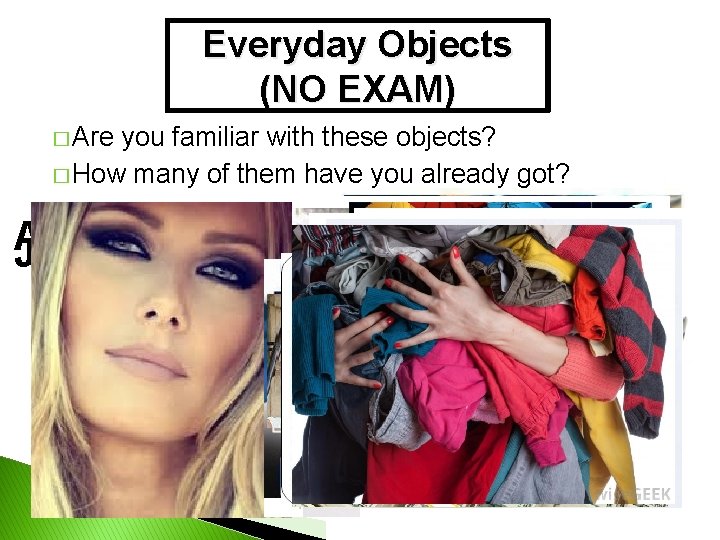
Everyday Objects (NO EXAM) � Are you familiar with these objects? � How many of them have you already got? AN ID CARD A TICKET AN MP 3 CLOTHES KEYS A WALLET A MOBILE A PURSE MONEY SUNGLASS AABAG JEWELLERY BUS PASS MAKE UP PLAYER UMBRELLA PHONE ES
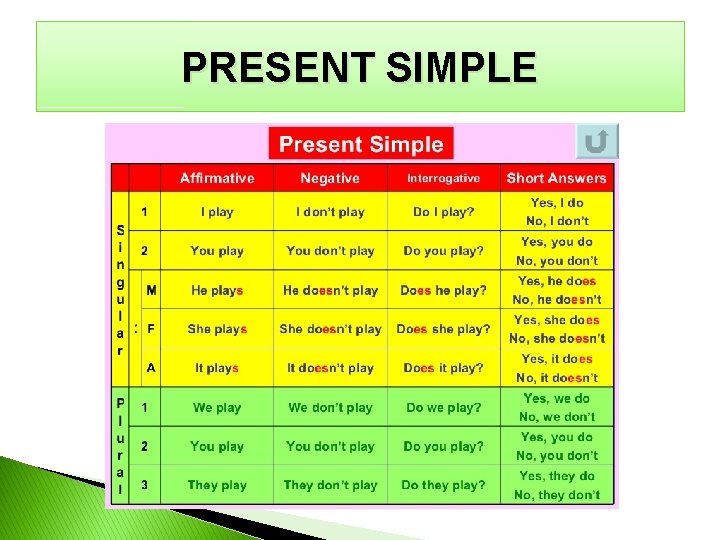
PRESENT SIMPLE
Adverbs of Frequency
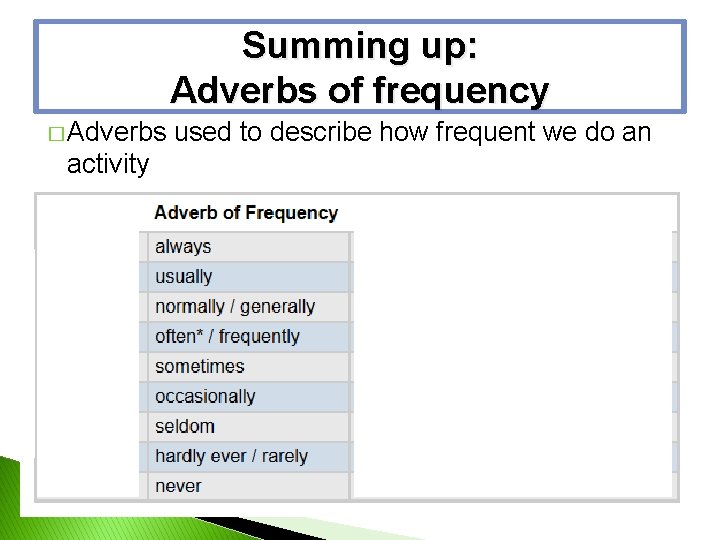
Summing up: Adverbs of frequency � Adverbs used to describe how frequent we do an activity
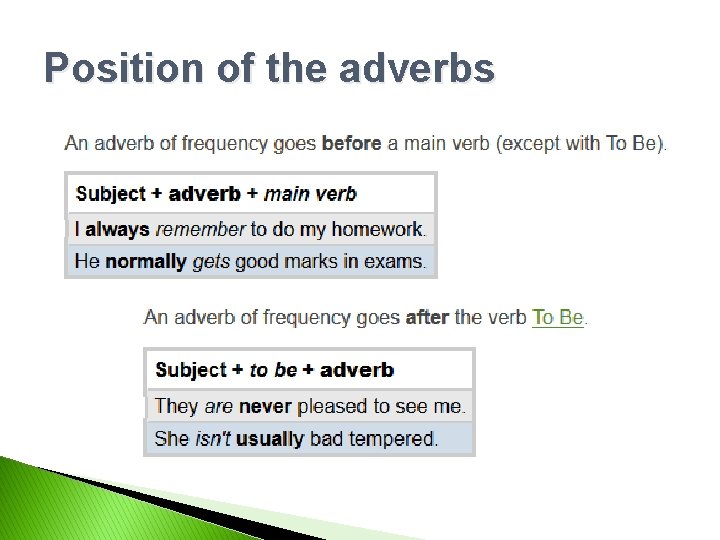
Position of the adverbs
Exercises and quizzes about adverbs of frequency: � http: //www. englishexercises. org/makeagame/vie wgame. asp? id=6502 � http: //www. johnsesl. com/scrambledtxt/adverbs/ © Rafael Moreno Esteban 2007
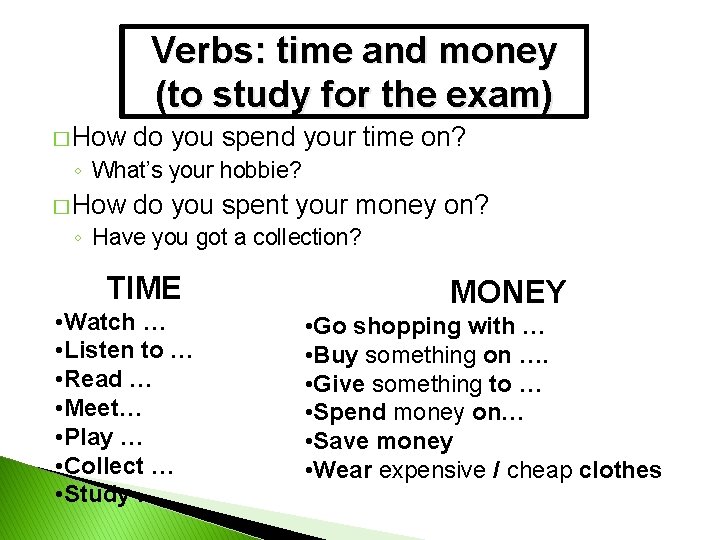
Verbs: time and money (to study for the exam) � How do you spend your time on? ◦ What’s your hobbie? � How do you spent your money on? ◦ Have you got a collection? TIME • Watch … • Listen to … • Read … • Meet… • Play … • Collect … • Study … MONEY • Go shopping with … • Buy something on …. • Give something to … • Spend money on… • Save money • Wear expensive / cheap clothes
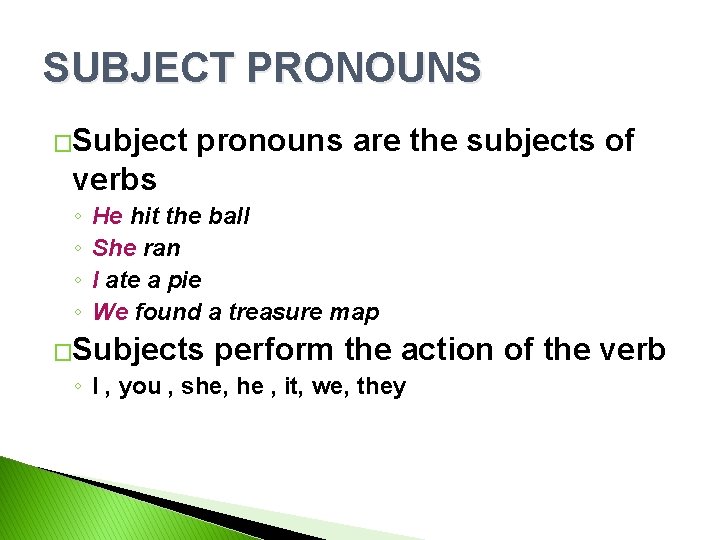
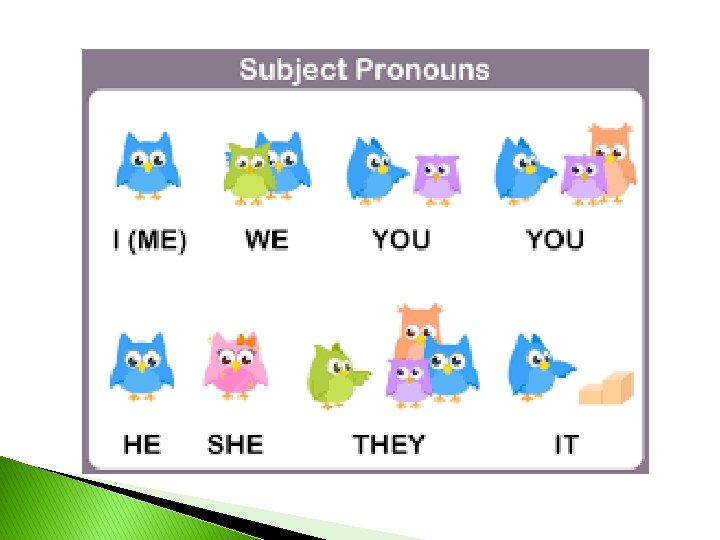
SUBJECT PRONOUNS �Subject pronouns are the subjects of verbs ◦ ◦ He hit the ball She ran I ate a pie We found a treasure map �Subjects perform the action of the verb ◦ I , you , she, he , it, we, they
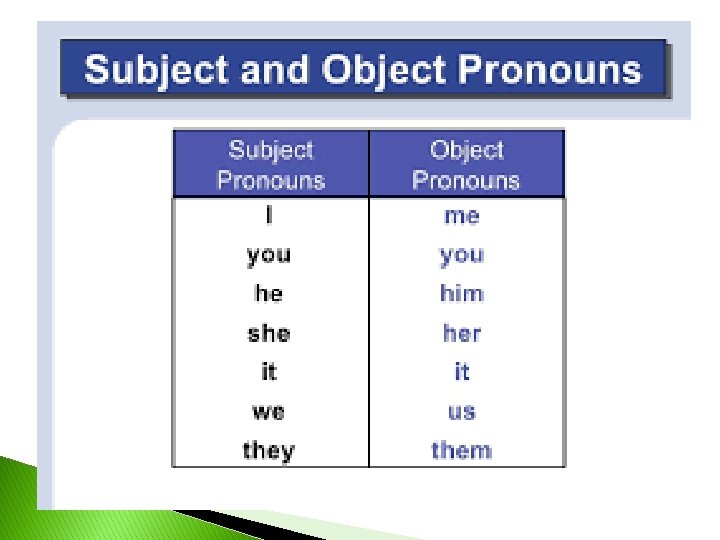
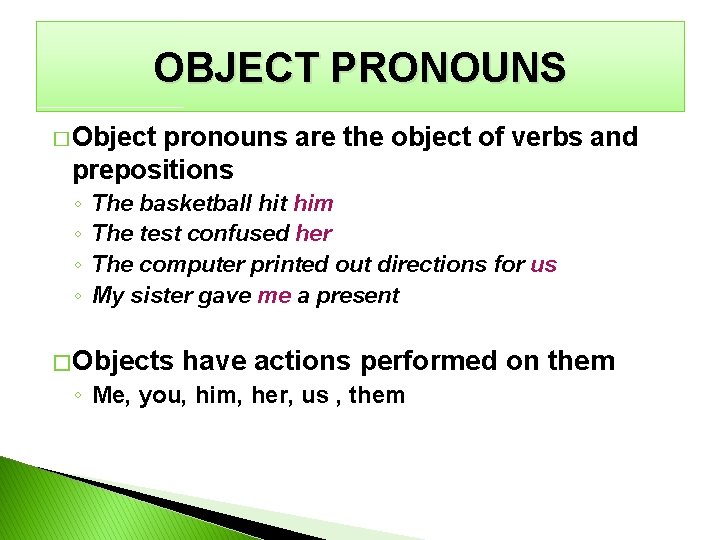
OBJECT PRONOUNS � Object pronouns are the object of verbs and prepositions ◦ ◦ The basketball hit him The test confused her The computer printed out directions for us My sister gave me a present � Objects have actions performed on them ◦ Me, you, him, her, us , them
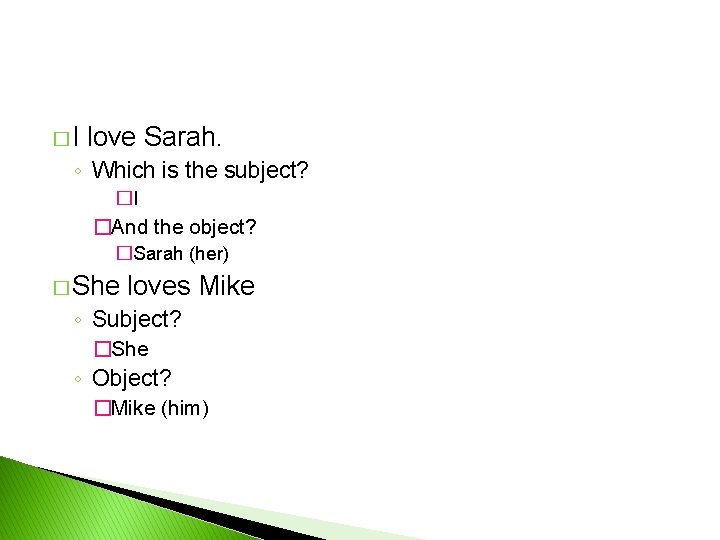
� I love Sarah. ◦ Which is the subject? �I �And the object? �Sarah (her) � She loves Mike ◦ Subject? �She ◦ Object? �Mike (him)
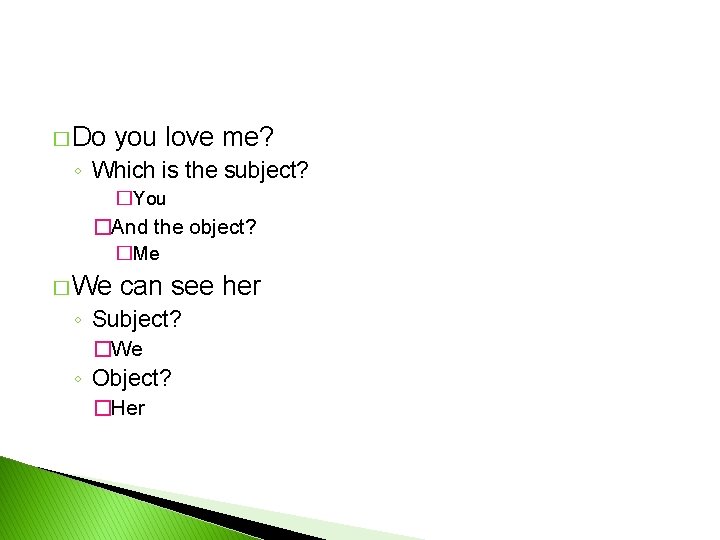
� Do you love me? ◦ Which is the subject? �You �And the object? �Me � We can see her ◦ Subject? �We ◦ Object? �Her
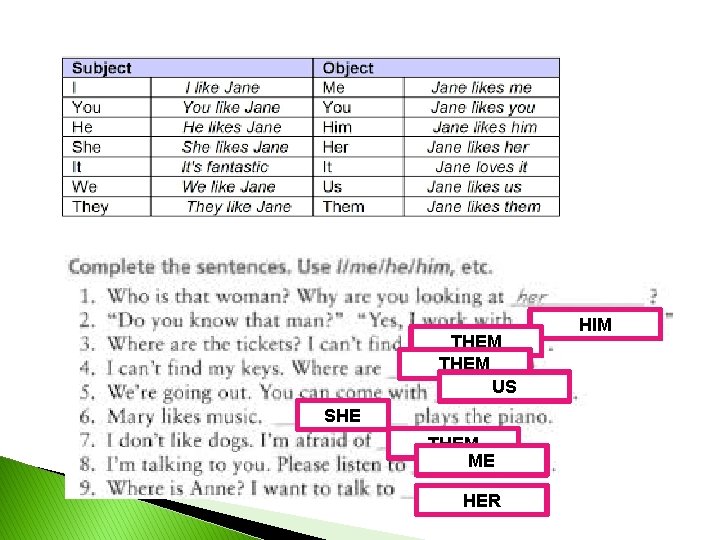
THEM US SHE THEM ME HER HIM
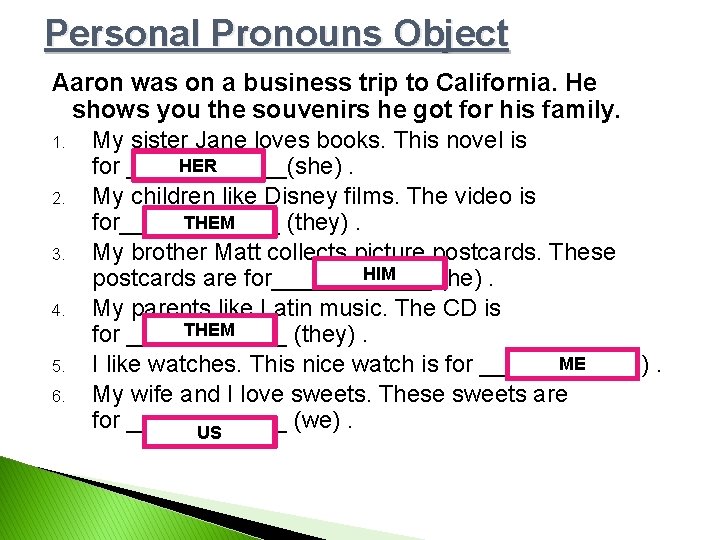
Personal Pronouns Object Aaron was on a business trip to California. He shows you the souvenirs he got for his family. 1. My sister Jane loves books. This novel is HER for ______(she). 2. My children like Disney films. The video is THEM for______ (they). 3. My brother Matt collects picture postcards. These HIM postcards are for______ (he). 4. My parents like Latin music. The CD is THEM for ______ (they). ME 5. I like watches. This nice watch is for ______(I). 6. My wife and I love sweets. These sweets are for ______ (we). US
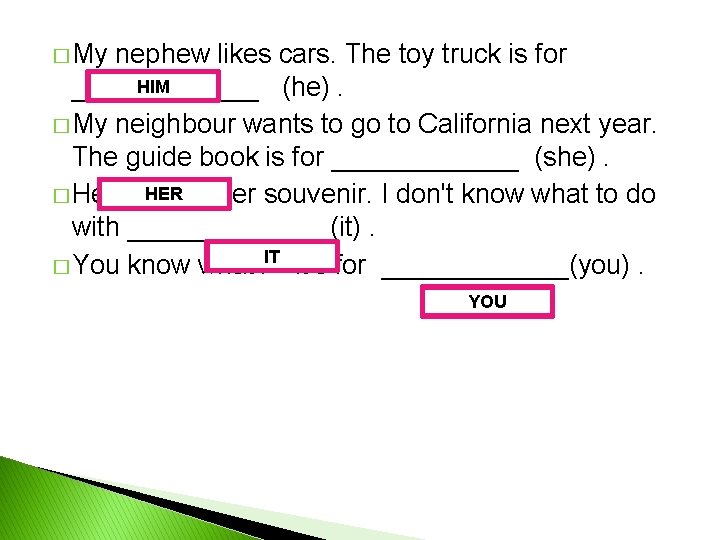
� My nephew likes cars. The toy truck is for HIM ______ (he). � My neighbour wants to go to California next year. The guide book is for ______ (she). HER � Here is another souvenir. I don't know what to do with ______ (it). IT � You know what? - It's for ______(you). YOU
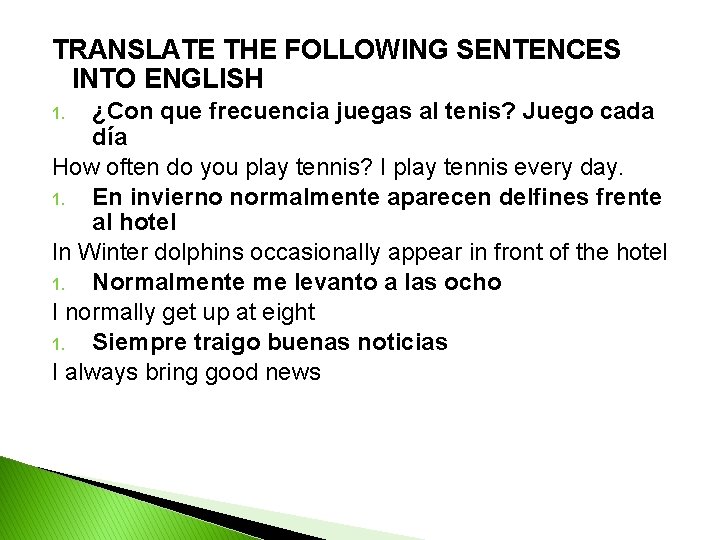
TRANSLATE THE FOLLOWING SENTENCES INTO ENGLISH ¿Con que frecuencia juegas al tenis? Juego cada día How often do you play tennis? I play tennis every day. 1. En invierno normalmente aparecen delfines frente al hotel In Winter dolphins occasionally appear in front of the hotel 1. Normalmente me levanto a las ocho I normally get up at eight 1. Siempre traigo buenas noticias I always bring good news 1.
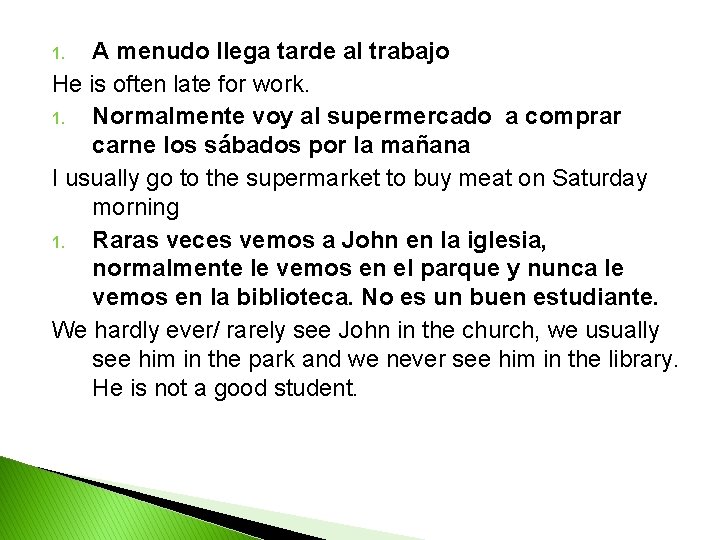
A menudo llega tarde al trabajo He is often late for work. 1. Normalmente voy al supermercado a comprar carne los sábados por la mañana I usually go to the supermarket to buy meat on Saturday morning 1. Raras veces vemos a John en la iglesia, normalmente le vemos en el parque y nunca le vemos en la biblioteca. No es un buen estudiante. We hardly ever/ rarely see John in the church, we usually see him in the park and we never see him in the library. He is not a good student. 1.
- Slides: 20