
Unit 2 Part 1 Cell structure and function
- Slides: 35
Unit 2: Part 1 Cell structure and function Membrane Functions
Cell Structure and Function
Scientists Book section 3. 1 Hooke – cells Leeuvenhoek – “animacules” Shleiden – all plants made up of cells Schwann – All animals are make up of cells Virchow – cells come from other cells
The Cell theory has three principles. 1. All living things are composed of one or more cells. 2. The cell is the most basic unit of structure of all living things. • unicellular organisms- one cell • Multicellular – specialized regions called tissues. 3. All existing cells are come from previously existing cells. • The ability of cells to divide to form new cells is the basis for all reproduction and for the growth and repari of all multi organisms.
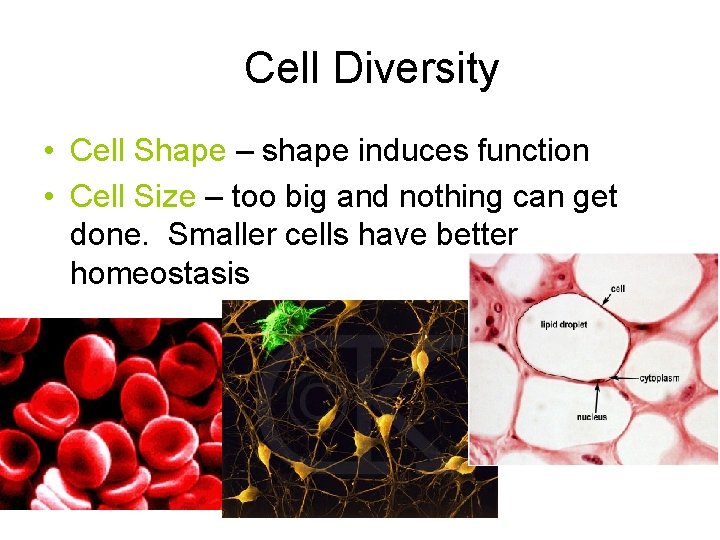
Cell Diversity • Cell Shape – shape induces function • Cell Size – too big and nothing can get done. Smaller cells have better homeostasis
2. 3 3 basic parts of all cells • Plasma membrane – barrier to outside – Selectively permeable • Cytoplasm – fluid inside, also includes the cytoskeleton, and organelles • Control Center – Either just DNA or Nucleus.
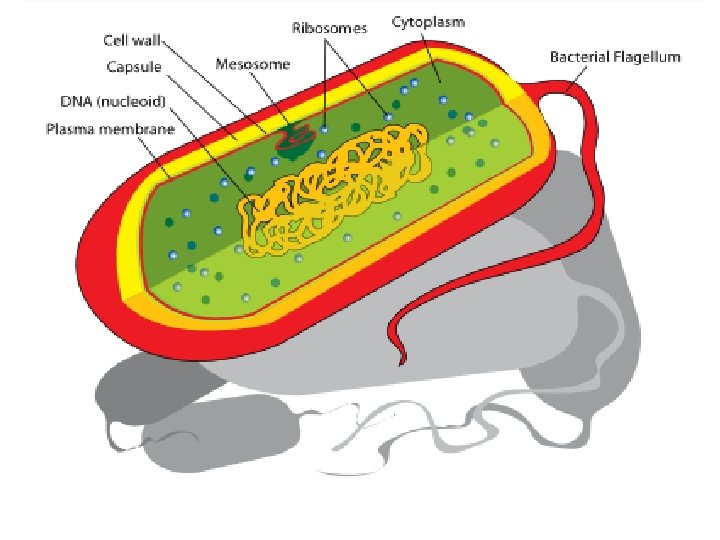
2 MAIN TYPES OF CELLS • The major difference between prokaryotic cells and eukaryotic cells is the presence of a nucleus. • 1. prokaryotic cells do not have a true nucleus, the DNA in pro cell is circular and called plasmid. • 2. Eukaryotic cells, the DNA is organized into structures called chromosomes and the chromosomes are separated from the cytoplasm by a nuclear membrane.
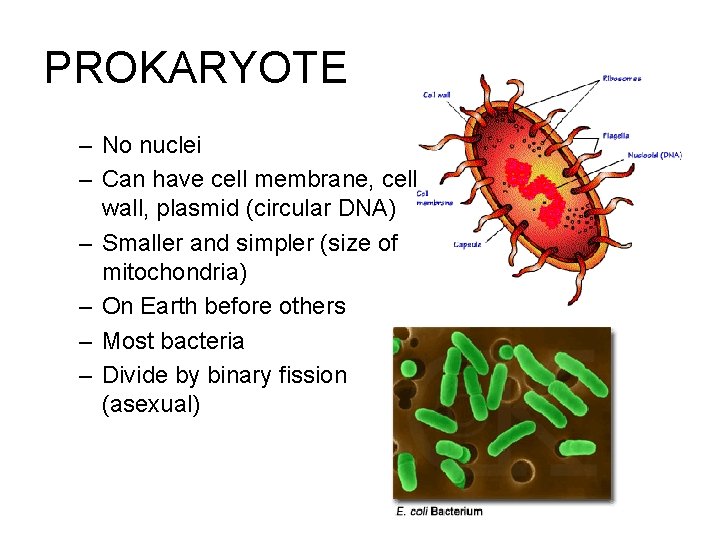
PROKARYOTE – No nuclei – Can have cell membrane, cell wall, plasmid (circular DNA) – Smaller and simpler (size of mitochondria) – On Earth before others – Most bacteria – Divide by binary fission (asexual)
Thee are two cell types: eukaryotic cells and prokaryotic cells
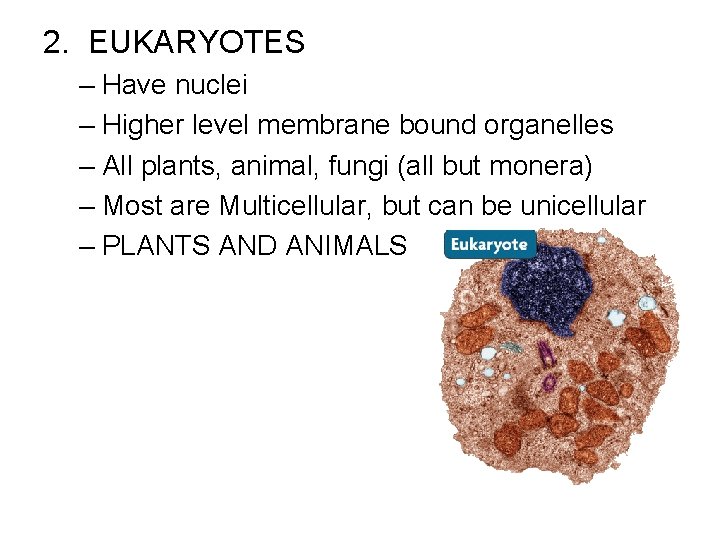
2. EUKARYOTES – Have nuclei – Higher level membrane bound organelles – All plants, animal, fungi (all but monera) – Most are Multicellular, but can be unicellular – PLANTS AND ANIMALS
Plants
2. 2 Cell Organelles and Features Organelle: is a cell structure the performs a specialized function within a eukaryotic cells. Organelles found in a eukaryotic cell are mentioned on the next 84 slides.
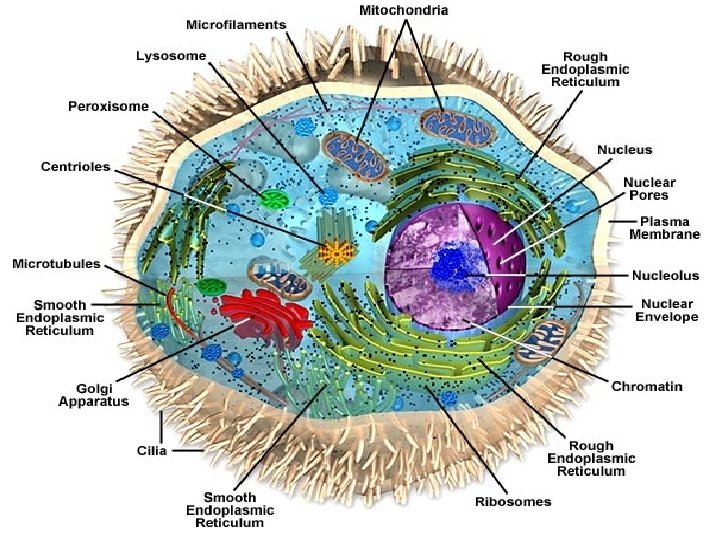
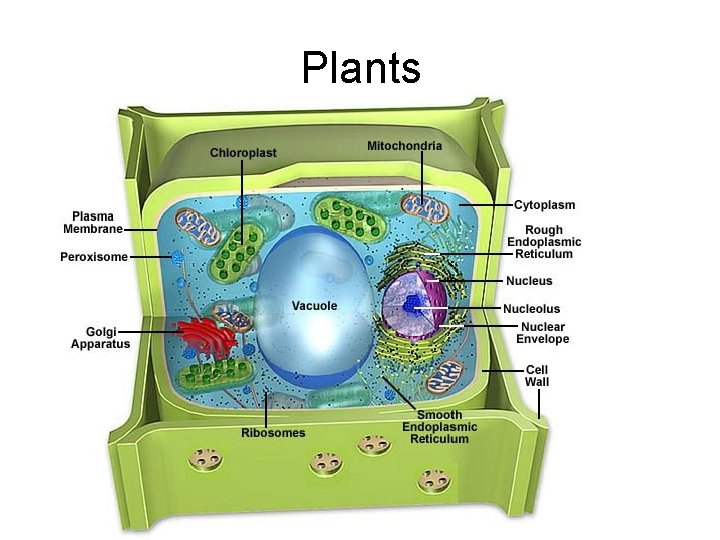
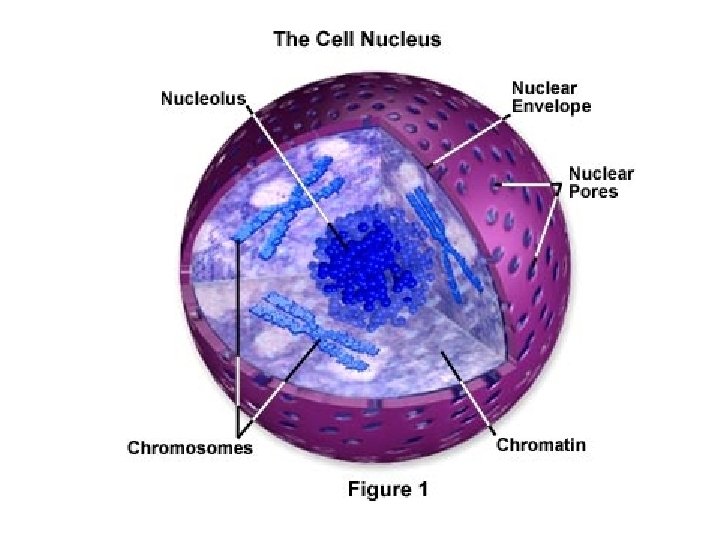
• 1. Nucleus – “brain” – Processes and contains DNA – Nucleolus – dense section inside nucleus • Production of ribosome's (protein makers)(r. RNA) – Nuclear envelope – double membrane with pores to allow passage of RNA and Ribosome – Chromatin – loose or granular genetic material. Most common state of DNA. • During cell division the chromatin coagulates together forming chromosomes (threads)
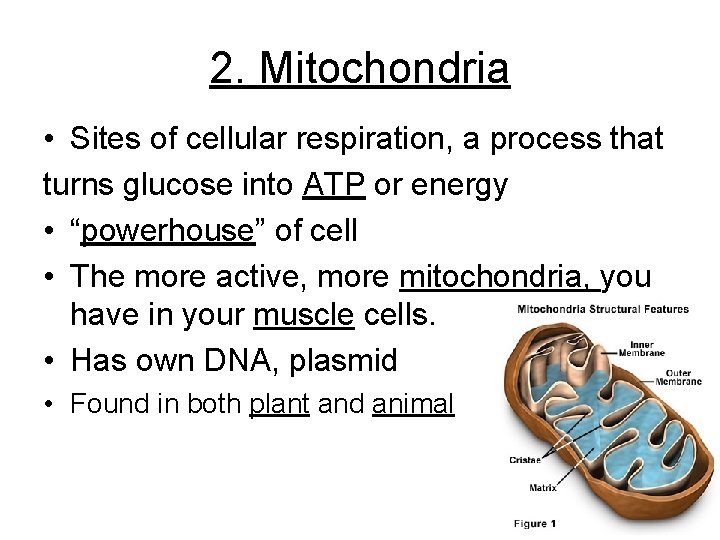
2. Mitochondria • Sites of cellular respiration, a process that turns glucose into ATP or energy • “powerhouse” of cell • The more active, more mitochondria, you have in your muscle cells. • Has own DNA, plasmid • Found in both plant and animal
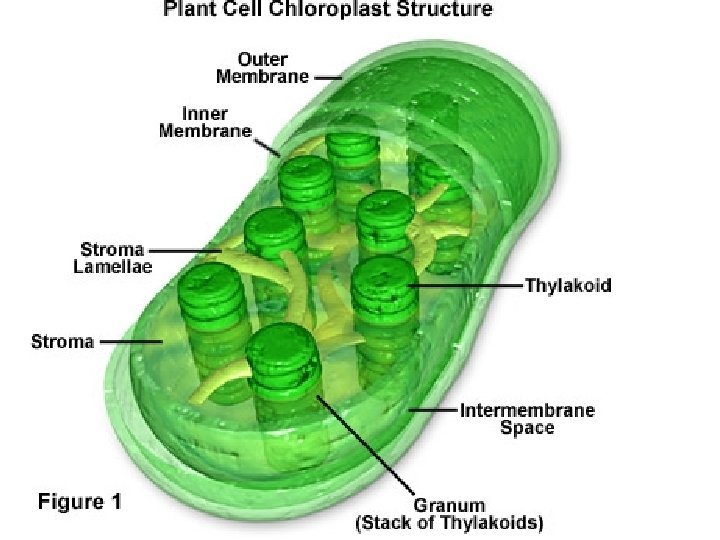
3. Chloroplast - Are found only in plants cells, contain the green pigment, chlorophyll, which absorbs energy from the sun to convert CO 2 and H 2 O into sugar through the process of photosynthesis. - Has its own DNA - Plants do have mitochondria
Vesicles • 4. Lysosomes – Bud from the GA, filled with enzymes that break down carbs, lipids and proteins, also breakdown dead organelles and waste from cell. • Peroxisomes – Neutralize free radicals and detox. – Produce H 2 O 2 as the break substances down.
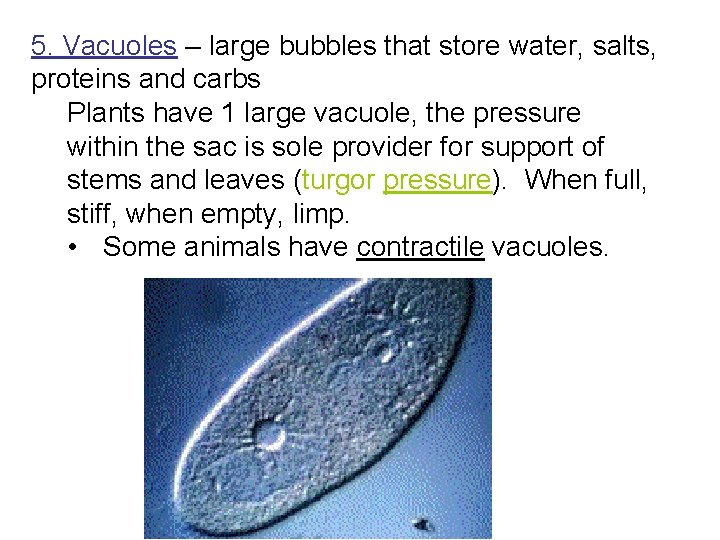
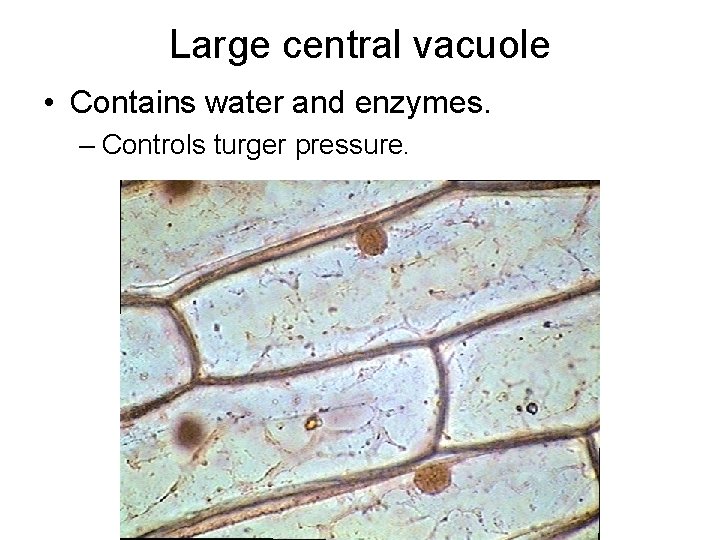
5. Vacuoles – large bubbles that store water, salts, proteins and carbs Plants have 1 large vacuole, the pressure within the sac is sole provider for support of stems and leaves (turgor pressure). When full, stiff, when empty, limp. • Some animals have contractile vacuoles.
Large central vacuole • Contains water and enzymes. – Controls turger pressure.
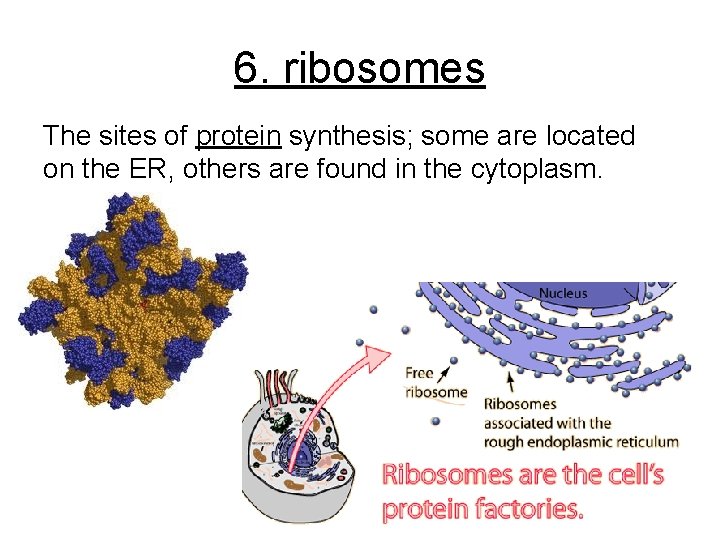
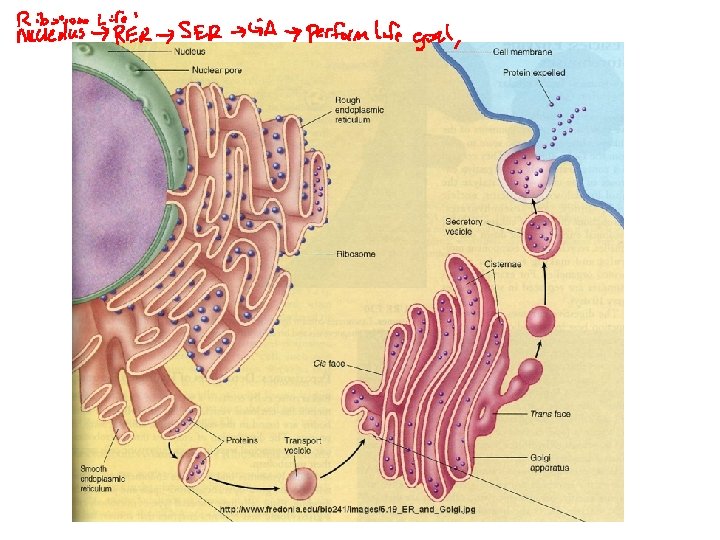
6. ribosomes The sites of protein synthesis; some are located on the ER, others are found in the cytoplasm.
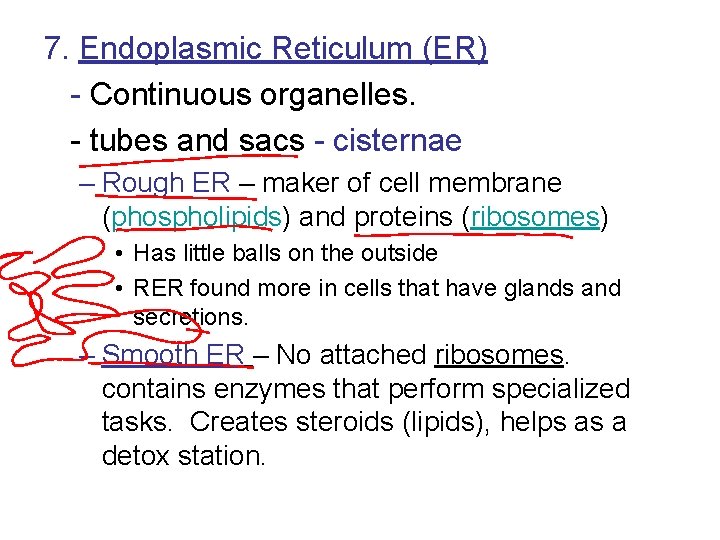
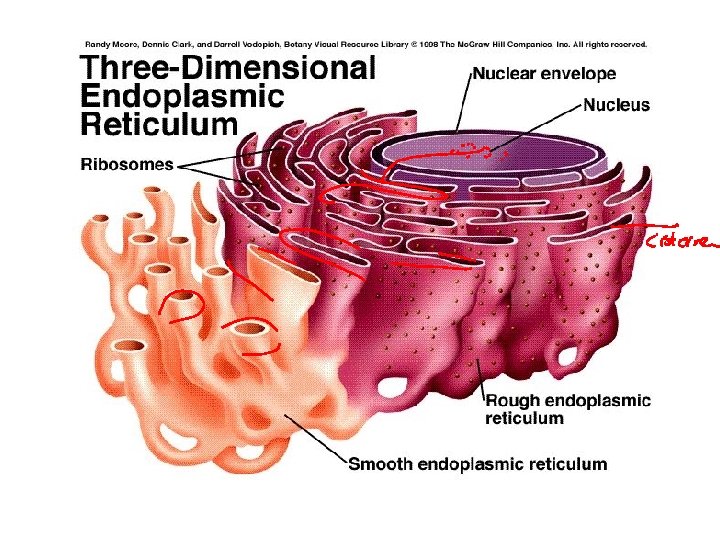
7. Endoplasmic Reticulum (ER) - Continuous organelles. - tubes and sacs - cisternae – Rough ER – maker of cell membrane (phospholipids) and proteins (ribosomes) • Has little balls on the outside • RER found more in cells that have glands and secretions. – Smooth ER – No attached ribosomes. contains enzymes that perform specialized tasks. Creates steroids (lipids), helps as a detox station.
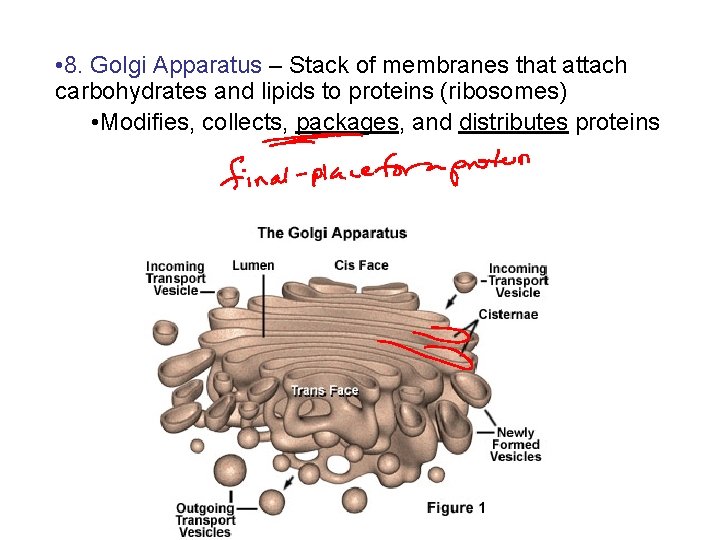
• 8. Golgi Apparatus – Stack of membranes that attach carbohydrates and lipids to proteins (ribosomes) • Modifies, collects, packages, and distributes proteins
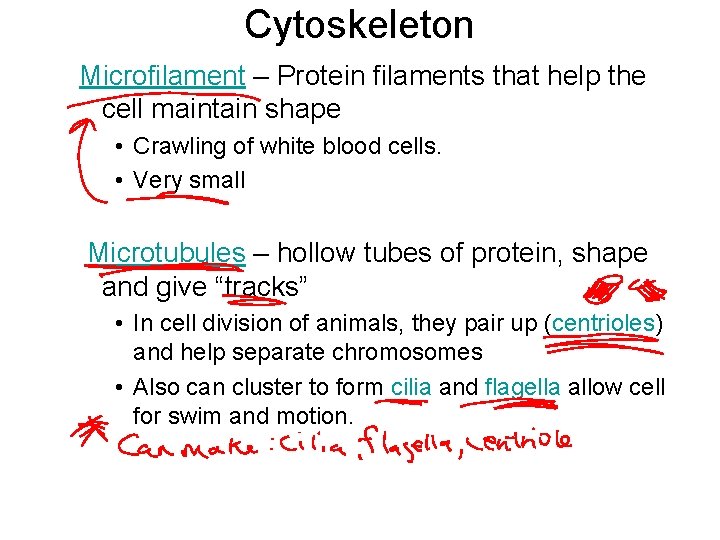
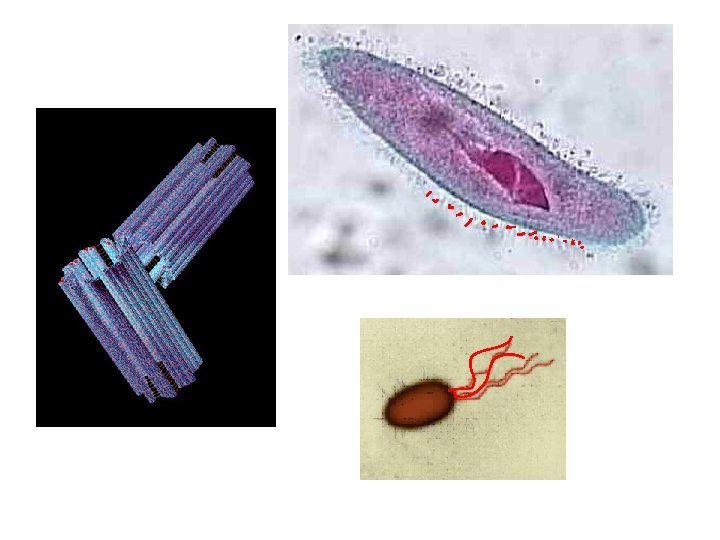
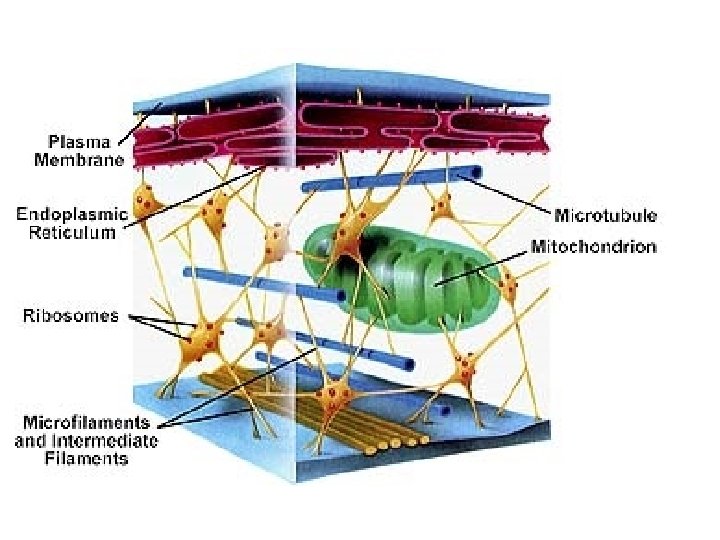
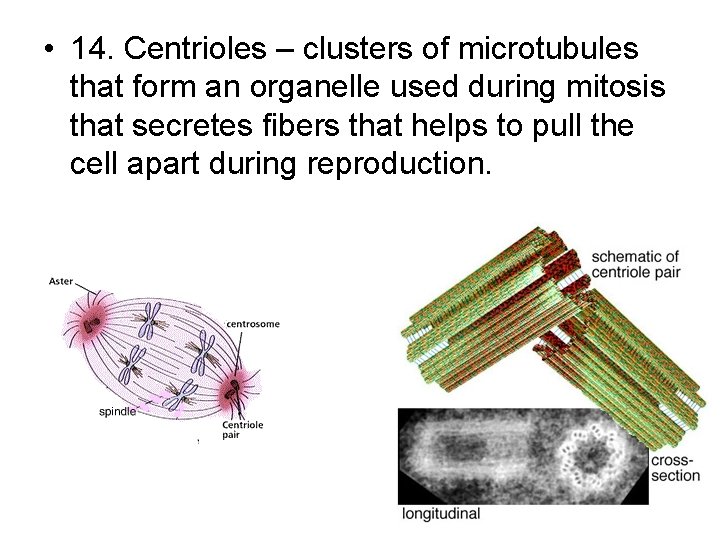
Cytoskeleton Microfilament – Protein filaments that help the cell maintain shape • Crawling of white blood cells. • Very small Microtubules – hollow tubes of protein, shape and give “tracks” • In cell division of animals, they pair up (centrioles) and help separate chromosomes • Also can cluster to form cilia and flagella allow cell for swim and motion.
• 9. Cilia are tiny hair like projections responsible for the movement animal cells or protists. – Made from microtubules. • 10. Flagella are long whip like projections responsible for the movement of some animal cells, bacteria, or protists. – Made from microtubules.
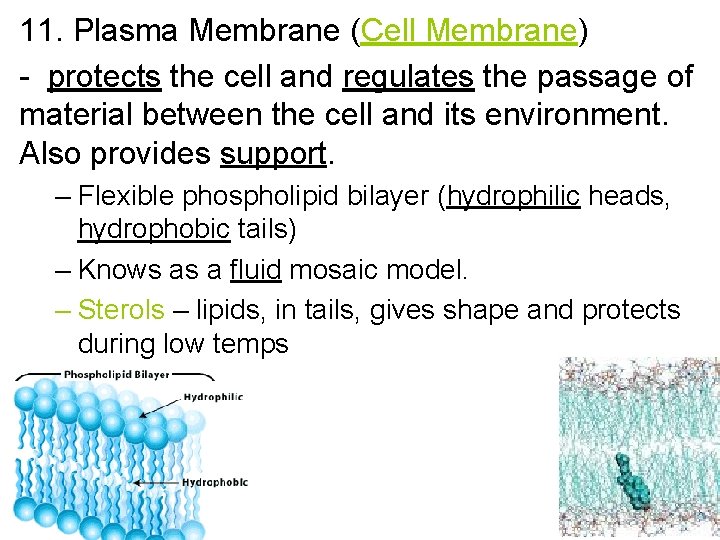
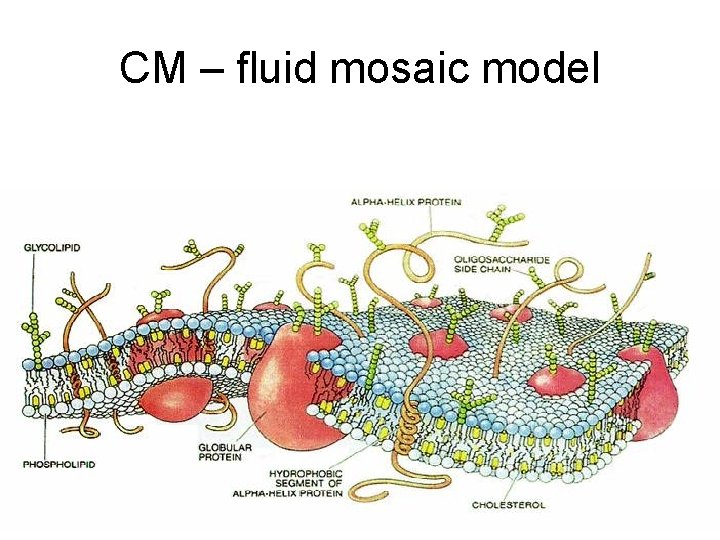
11. Plasma Membrane (Cell Membrane) - protects the cell and regulates the passage of material between the cell and its environment. Also provides support. – Flexible phospholipid bilayer (hydrophilic heads, hydrophobic tails) – Knows as a fluid mosaic model. – Sterols – lipids, in tails, gives shape and protects during low temps
CM – fluid mosaic model –Have proteins immersed inside for transport of materials in and out of the cell.
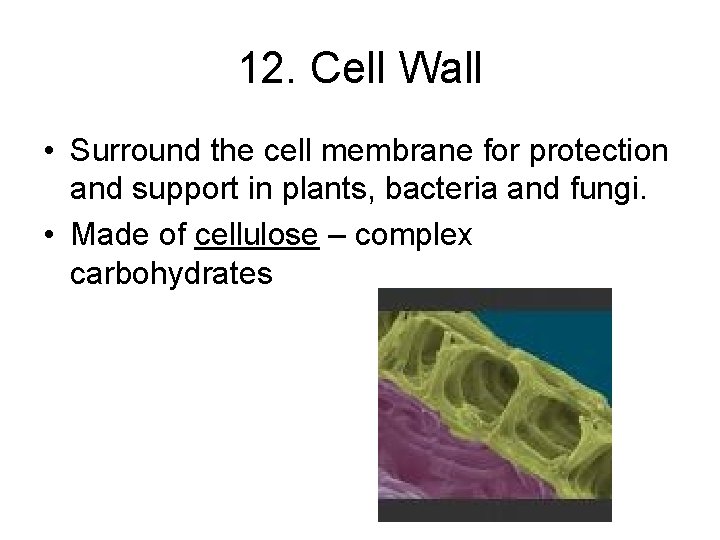
12. Cell Wall • Surround the cell membrane for protection and support in plants, bacteria and fungi. • Made of cellulose – complex carbohydrates
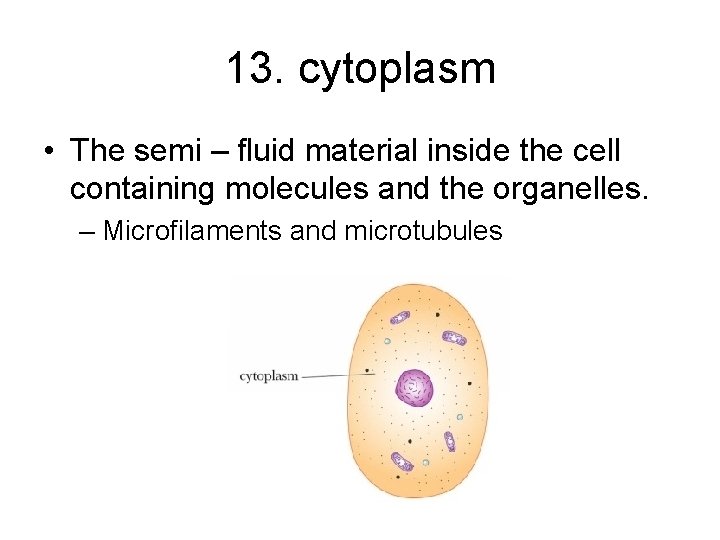
13. cytoplasm • The semi – fluid material inside the cell containing molecules and the organelles. – Microfilaments and microtubules
• 14. Centrioles – clusters of microtubules that form an organelle used during mitosis that secretes fibers that helps to pull the cell apart during reproduction.