
UNIT 2 ORGANIZING A MANAGEMENT FUNCTION Organizing Key
- Slides: 16
UNIT 2: ORGANIZING A MANAGEMENT FUNCTION
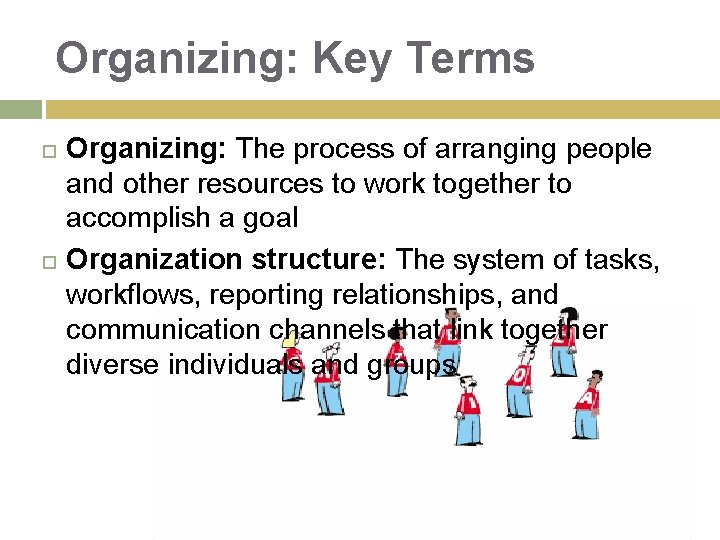
Organizing: Key Terms Organizing: The process of arranging people and other resources to work together to accomplish a goal Organization structure: The system of tasks, workflows, reporting relationships, and communication channels that link together diverse individuals and groups
Organizing: Key Terms Organization chart: A diagram describing reporting relationships and the formal(official) arrangement of work positions within an organization and how the organization is intended to function. � An organization chart identifies: The division of work Supervisory relationships Communication channels Major subunits Levels of management
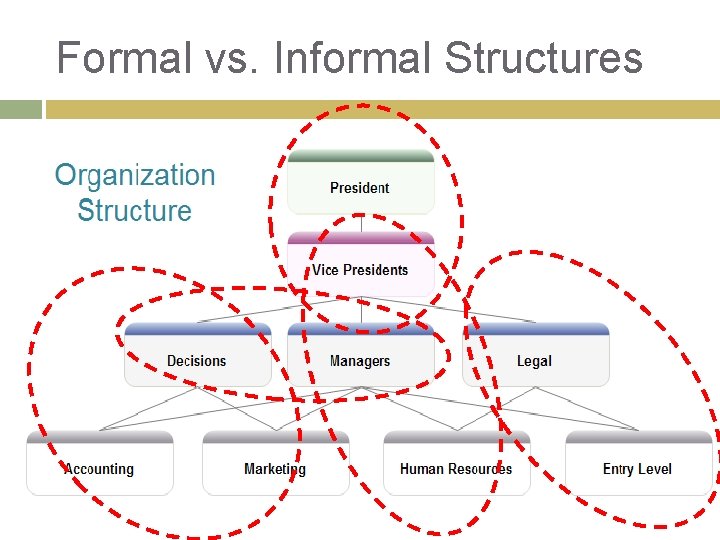
Formal vs. Informal Structures
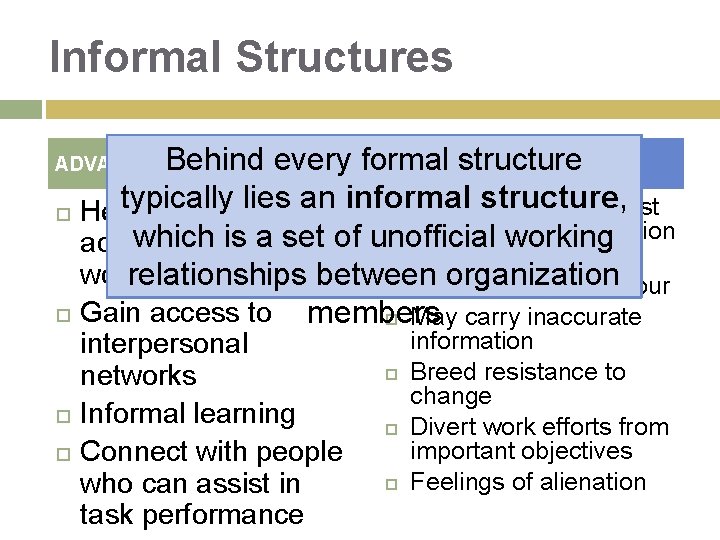
Informal Structures Behind every formal structure DISADVANTAGES typically lies an informal structure, May work against best Help people interestsworking of organization which is a set of unofficial accomplish their as a whole workrelationships between organization Susceptibility to rumour Gain access to members May carry inaccurate ADVANTAGES interpersonal networks Informal learning Connect with people who can assist in task performance information Breed resistance to change Divert work efforts from important objectives Feelings of alienation
Traditional Structures 1. 2. 3. Functional Structures Divisional Structures Matrix Structures Departmentalization: The process of grouping people and jobs into work units. Top-Down Approach to Organization
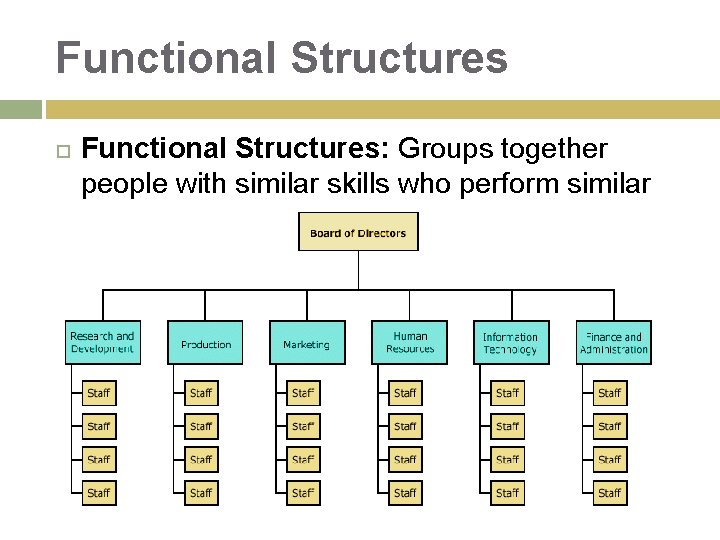
Functional Structures Functional Structures: Groups together people with similar skills who perform similar tasks
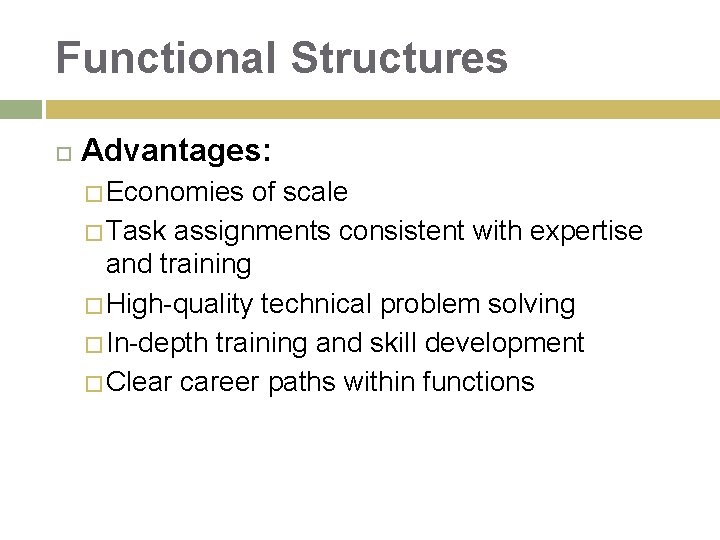
Functional Structures Advantages: � Economies of scale � Task assignments consistent with expertise and training � High-quality technical problem solving � In-depth training and skill development � Clear career paths within functions
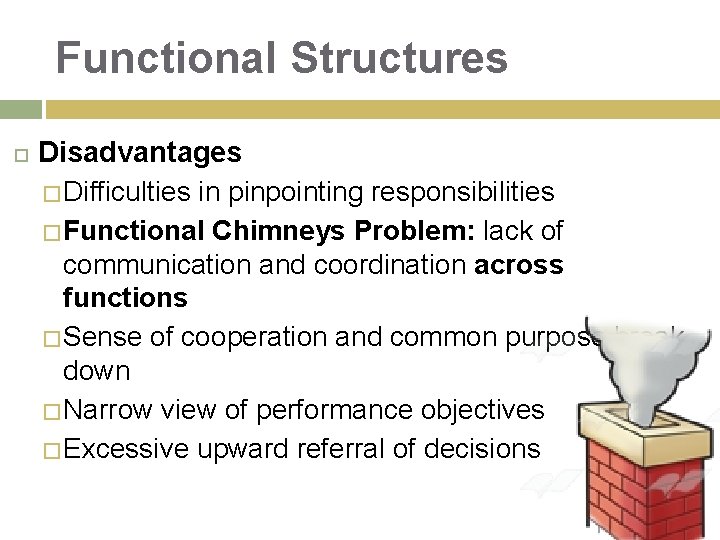
Functional Structures Disadvantages � Difficulties in pinpointing responsibilities � Functional Chimneys Problem: lack of communication and coordination across functions � Sense of cooperation and common purpose break down � Narrow view of performance objectives � Excessive upward referral of decisions
Divisional Structures
Horizontal/Flat Structures
Team Structures
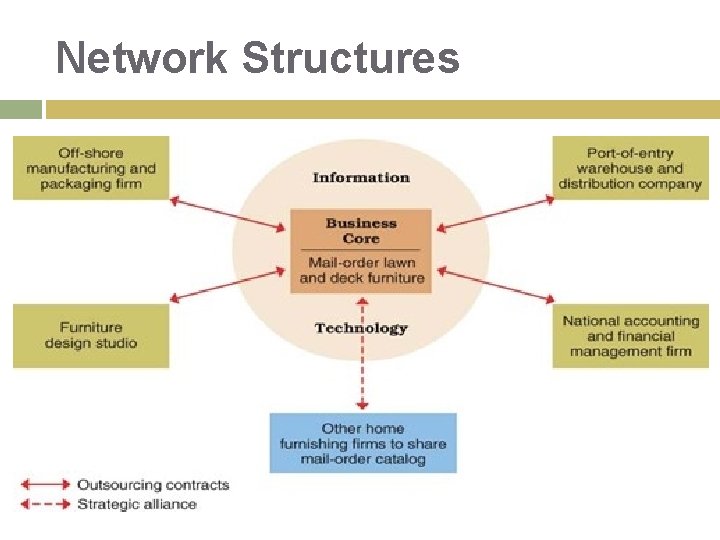
Network Structures
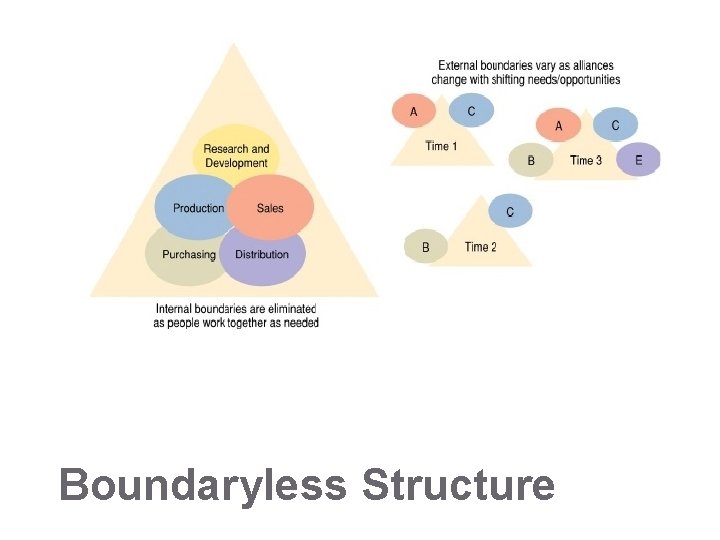
Boundaryless Structure
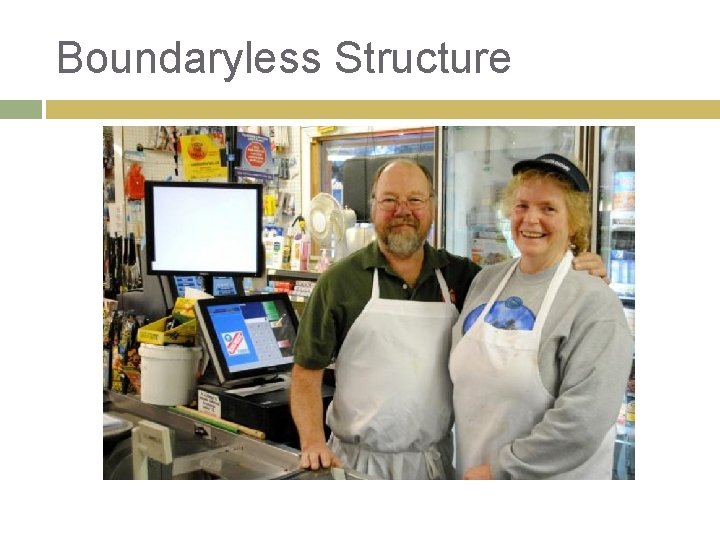
Boundaryless Structure
Virtual Organization