
Unit 2 Noun Expansion Prenoun modifiers Types 6






- Slides: 22
Unit 2 Noun Expansion (Pre-noun modifiers)
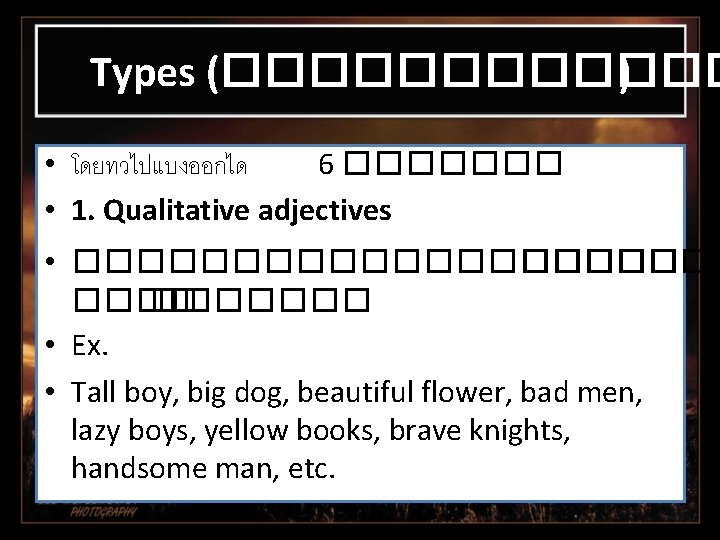
Types (������ ) • โดยทวไปแบงออกได 6 ������� • 1. Qualitative adjectives • ����������� ������� • Ex. • Tall boy, big dog, beautiful flower, bad men, lazy boys, yellow books, brave knights, handsome man, etc.
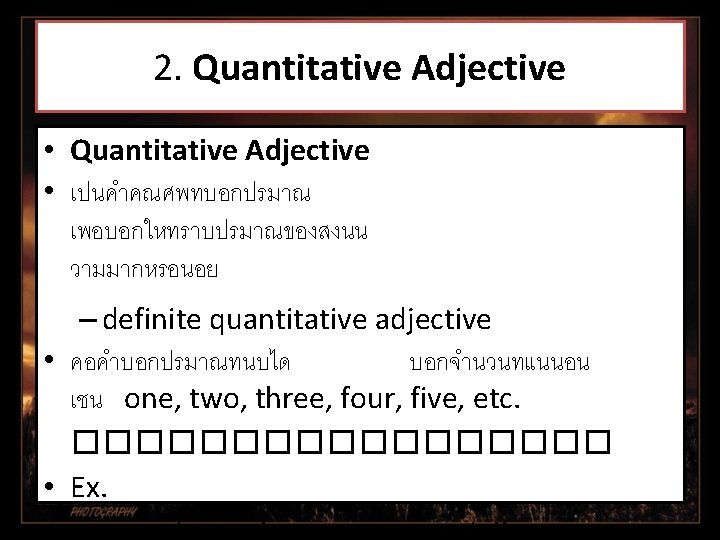
• • – indefinite quantitative adjective คอคำบอกปรมาณทนบไมได บอกจำนวนทไมแนนอน เชน much , any, half, enough, little, all, whole, some, great, Sufficient, many, few, several. Ex. We needed some money. ��������� He showed great patience. �����������
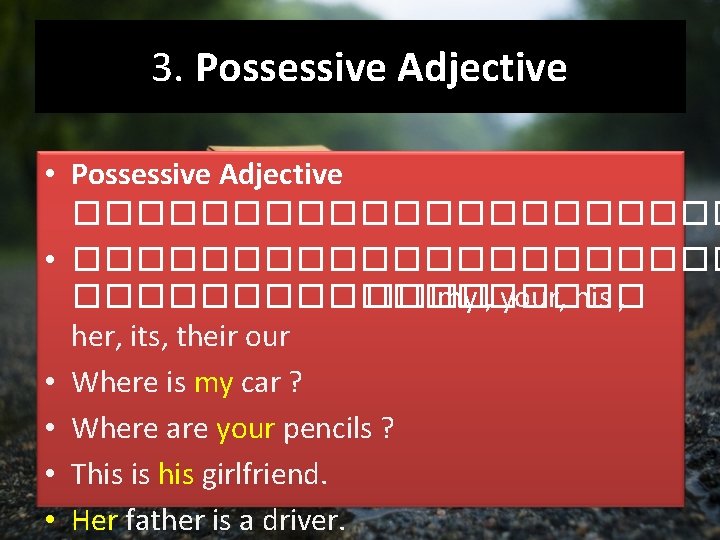
3. Possessive Adjective • Possessive Adjective ����������� • ����������� ���� my , your, his , her, its, their our • Where is my car ? • Where are your pencils ? • This is his girlfriend. • Her father is a driver.
• Every boy in this school loves playing football. • (���������� ) • Neither Jim nor Joe can drive a plane. • (���������� ) • Everybody goes to school.
• I invited that man to come in. ����������� � • She hated such things because they made her ill. ��������������������� • He said the same thing two or three times. ����������� 2 ���� 3 ������� (that, such, same
Participial Adjective • Participle ���������� –ed ���� –ing • ���� stand(v) standing(n) • cry(v) crying(n) • use(v) used(n) • kick(v) kicked(n)
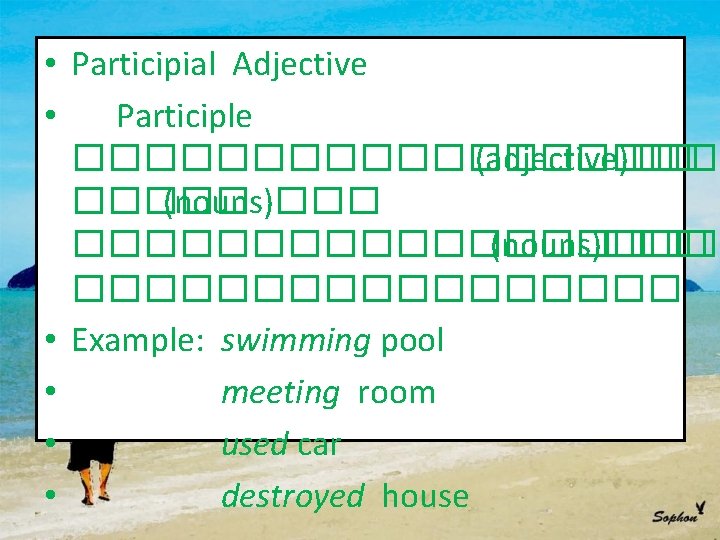
• Participial Adjective • Participle ���������� (adjective)�� ����� (nouns)��� ���������� (nouns)��� ��������� • Example: swimming pool • meeting room • used car • destroyed house
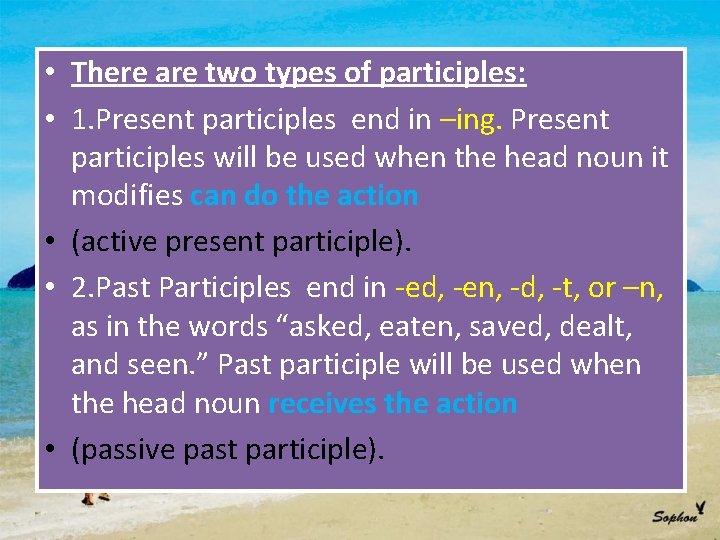
• There are two types of participles: • 1. Present participles end in –ing. Present participles will be used when the head noun it modifies can do the action • (active present participle). • 2. Past Participles end in -ed, -en, -d, -t, or –n, as in the words “asked, eaten, saved, dealt, and seen. ” Past participle will be used when the head noun receives the action • (passive past participle).
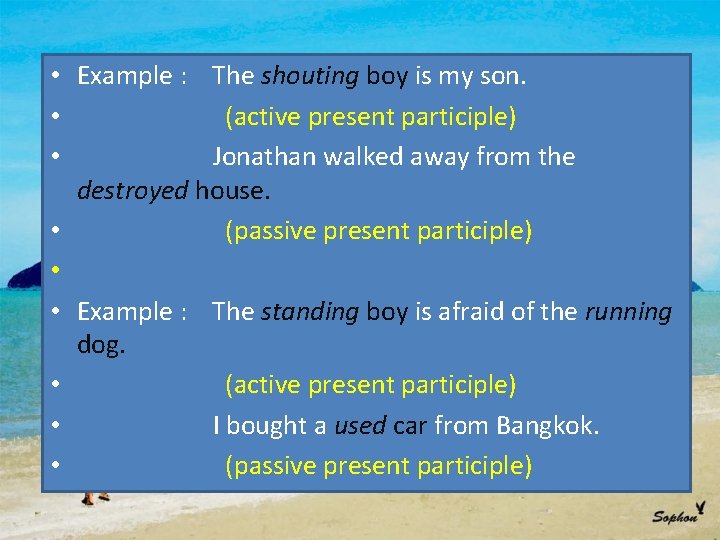
• Example : The shouting boy is my son. • (active present participle) • Jonathan walked away from the destroyed house. • (passive present participle) • • Example : The standing boy is afraid of the running dog. • (active present participle) • I bought a used car from Bangkok. • (passive present participle)
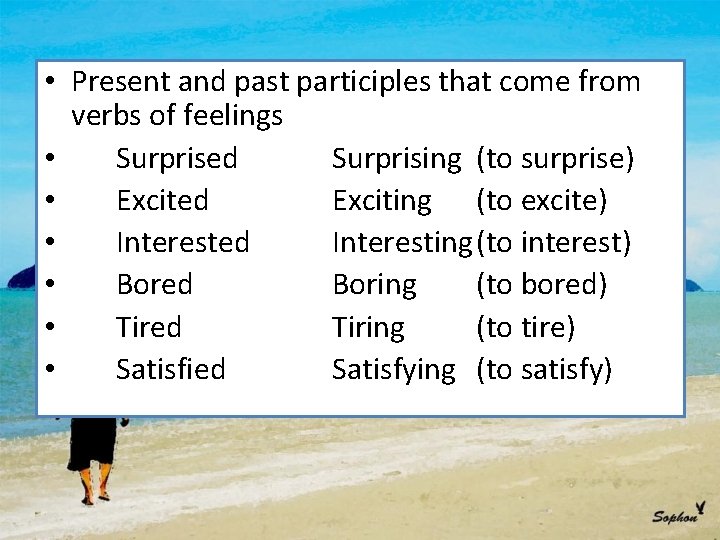
• Present and past participles that come from verbs of feelings • Surprised Surprising (to surprise) • Excited Exciting (to excite) • Interested Interesting(to interest) • Bored Boring (to bored) • Tired Tiring (to tire) • Satisfied Satisfying (to satisfy)
• Example: • The interested students listen carefully to the lecture. • The students have never missed this interesting lecture. • • The satisfied boss smiled happily. • Tony’s satisfying work pleases his boss a lot.
• • • what do you call the following? someone who fights fires. fireman someone who drives a taxi driver someone who tells fortune forecaster The case which is made for pencils. The pencil case
• in some circumstances, when a noun is used as an adjective, the ending -ed is added • examples • A blond -haired woman = a women whose hair is blond. • A high-walled house = a house which has high walls.