
UNIT 2 NOTES Cardiac Conduction System 1 Conduction
- Slides: 14
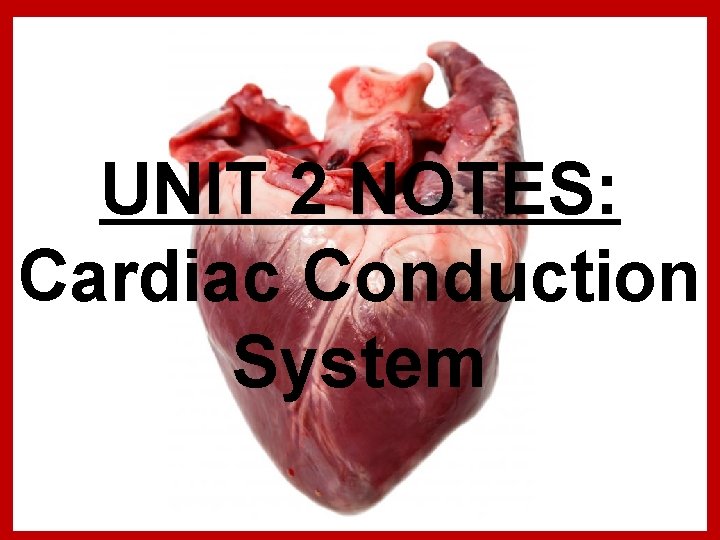
UNIT 2 NOTES: Cardiac Conduction System
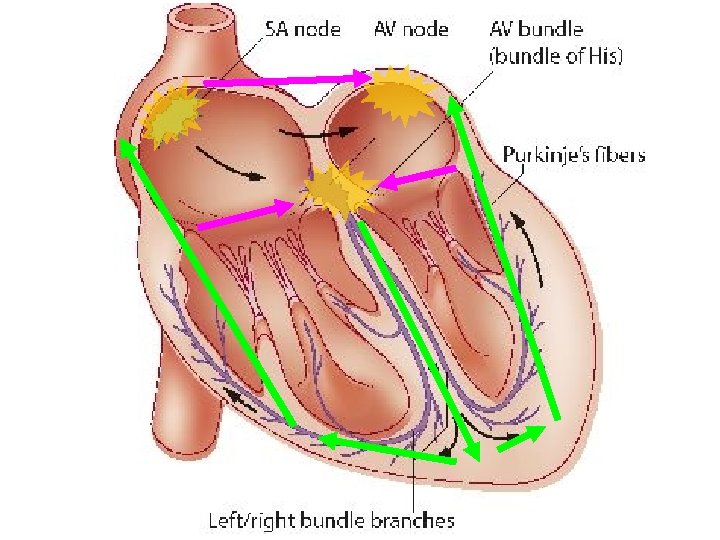
(1) Conduction System of Heart • Conduction System = Heart Beat & Pumping • Cardiac Contractions = Unconscious – Autonomic Nervous System decrease or increase heart rate depending on circumstance
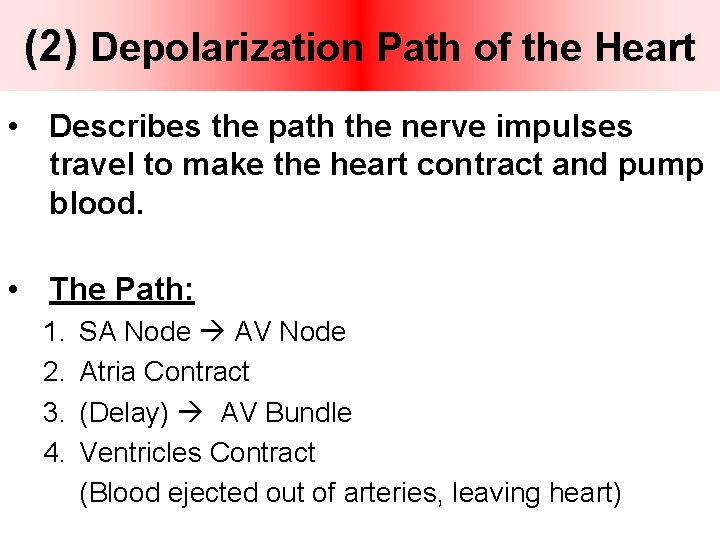
(2) Depolarization Path of the Heart • Describes the path the nerve impulses travel to make the heart contract and pump blood. • The Path: 1. 2. 3. 4. SA Node AV Node Atria Contract (Delay) AV Bundle Ventricles Contract (Blood ejected out of arteries, leaving heart)
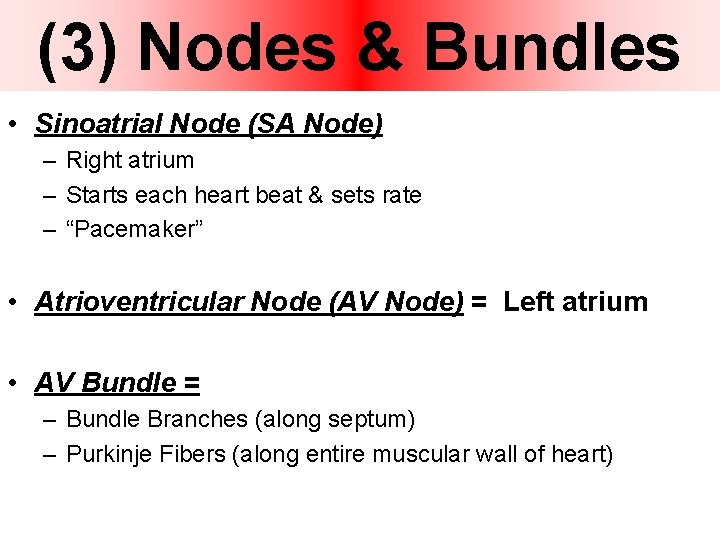
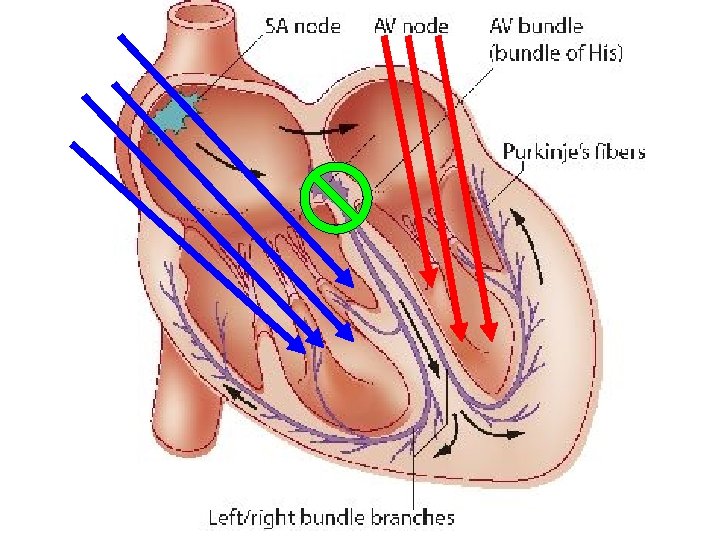
(3) Nodes & Bundles • Sinoatrial Node (SA Node) – Right atrium – Starts each heart beat & sets rate – “Pacemaker” • Atrioventricular Node (AV Node) = Left atrium • AV Bundle = – Bundle Branches (along septum) – Purkinje Fibers (along entire muscular wall of heart)
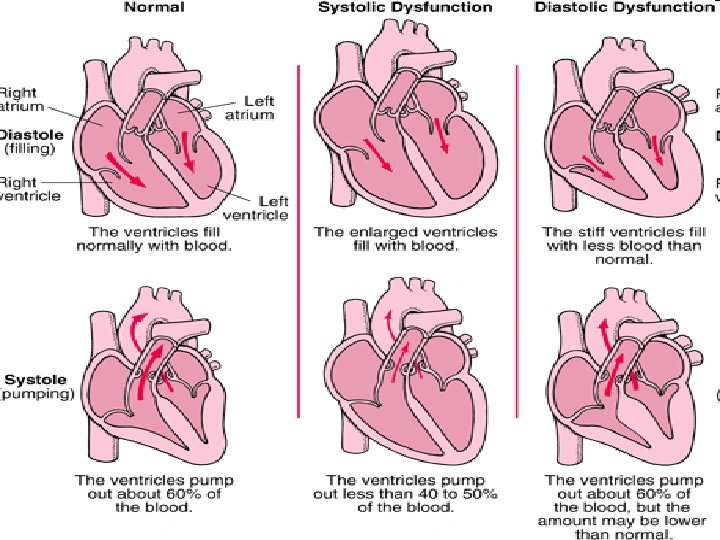
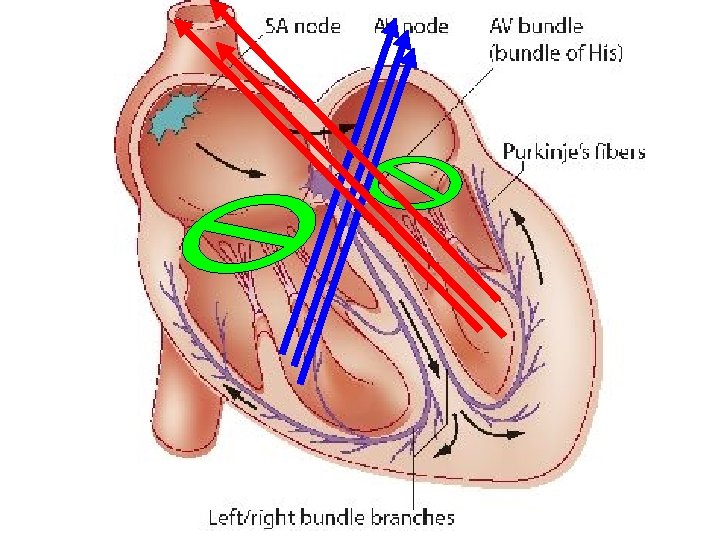
(4) Cardiac Cycle Phase 1 - Diastole (Relaxation) – Blood passively filling atria. – All valves exiting ventricles closed. Phase 2 -Systole (Contraction) – Ventricles contract and blood ejected out of heart. – All AV valves must be closed.
(5) Diastole Details 1. Ventricles relax 2. Semilunar valves closed 3. Ventricular Presure < Atrial Pressure – AV valves open – Ventricles fill with blood 4. Atria contract and force blood remaining in chambers into ventricles
(6) Systole Details 1. Pressure increases in ventricles - Filled with blood 2. AV valves close 3. Pressure in ventricles > Arteries leaving heart - Semilunar valves open Blood rushes out of ventricles 4. Atria are relaxed and begin to fill back up
(7) Cardiac Conduction Summary • Diastole: – Semilunar valves are closed. – AV valves are open. – Blood passively pouring into atria, and down into ventricles. – Only slight contraction of atria at the end to empty atria. – AV valves swing shut when ventricles full. • Systole: – – AV valves are closed. Ventricles contract and pump/eject blood out of heart. Blood exits out Semilunar Valves (which must open). Semilunar Valves close back up at end, and AV valves open back up.
(8) Heart Beat • You hear something like “lub” “dup” – “lub” = closing of AV valves • During ventricular systole – “dup” = closing of semilunar valves • During early diastole • You should NOT hear blood flow – You’ll hear it if flow is interrupted by blockage
(9) Starling’s Law • Starling’s Law of the Heart: – Degree of cardiac muscle extension before contraction – Increase Extension = Stronger Contraction – Degree of Extension result of percent filling of ventricles