
Unit 2 Metabolic Processes Glycolysis and Pyruvate Oxidation
Unit 2: Metabolic Processes Glycolysis and Pyruvate Oxidation SBI 4 U
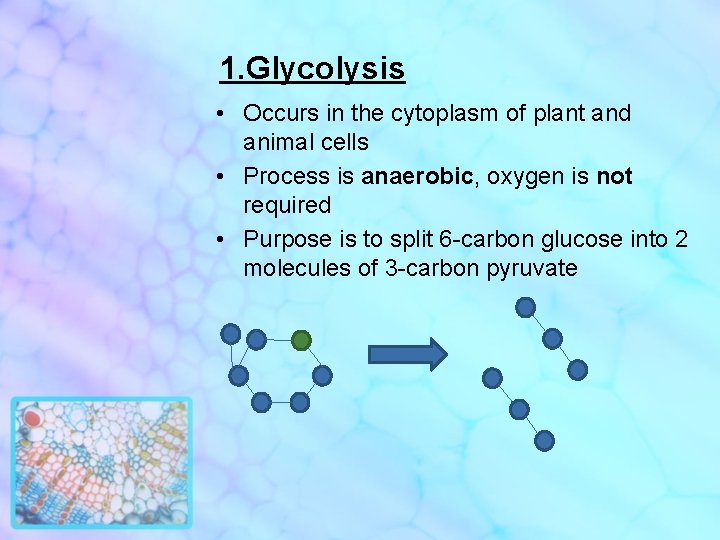
1. Glycolysis • Occurs in the cytoplasm of plant and animal cells • Process is anaerobic, oxygen is not required • Purpose is to split 6 -carbon glucose into 2 molecules of 3 -carbon pyruvate
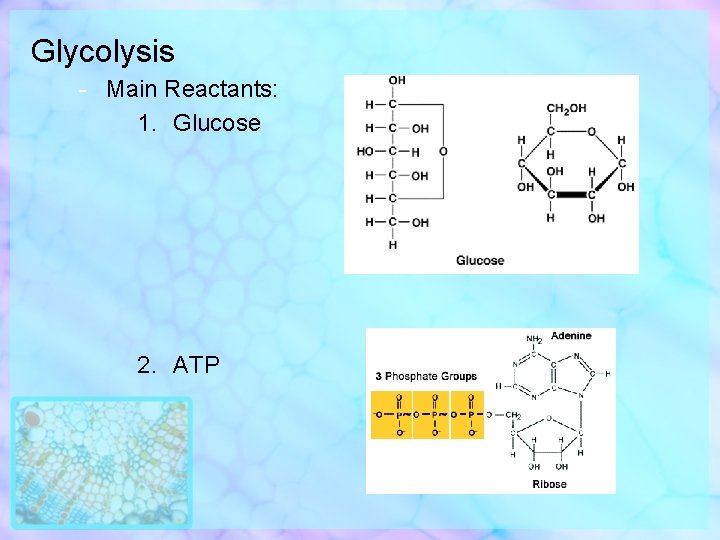
Glycolysis - Main Reactants: 1. Glucose 2. ATP
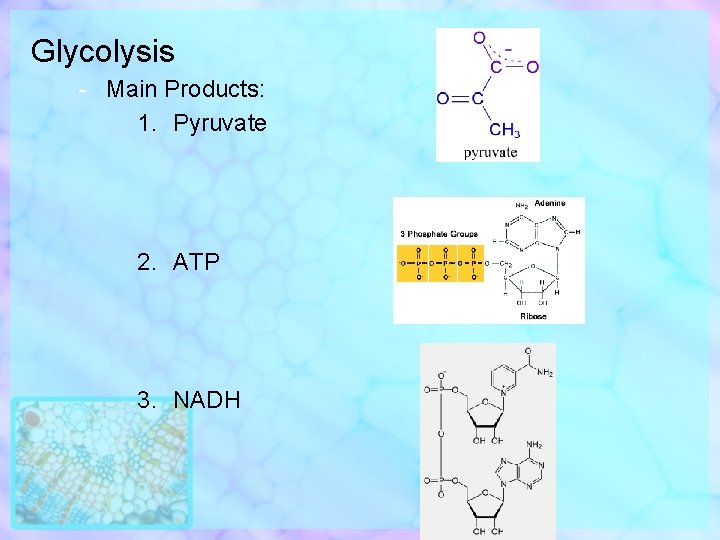
Glycolysis - Main Products: 1. Pyruvate 2. ATP 3. NADH
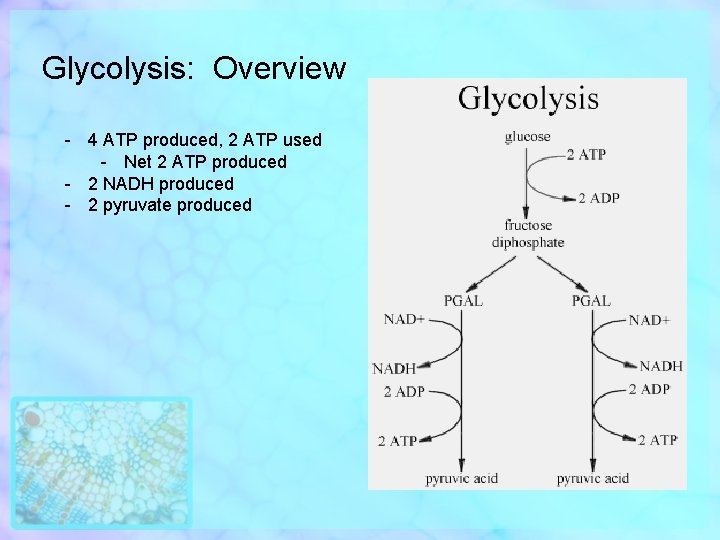
Glycolysis: Overview - 4 ATP produced, 2 ATP used - Net 2 ATP produced - 2 NADH produced - 2 pyruvate produced
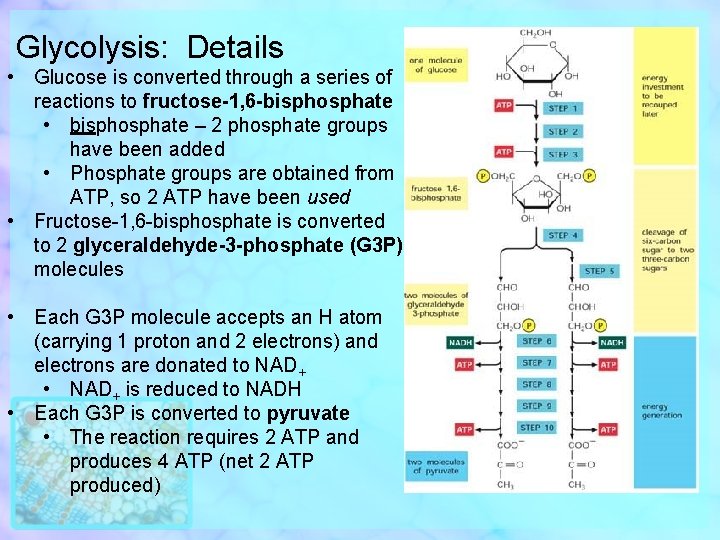
Glycolysis: Details • Glucose is converted through a series of reactions to fructose-1, 6 -bisphosphate • bisphosphate – 2 phosphate groups have been added • Phosphate groups are obtained from ATP, so 2 ATP have been used • Fructose-1, 6 -bisphosphate is converted to 2 glyceraldehyde-3 -phosphate (G 3 P) molecules • Each G 3 P molecule accepts an H atom (carrying 1 proton and 2 electrons) and electrons are donated to NAD+ • NAD+ is reduced to NADH • Each G 3 P is converted to pyruvate • The reaction requires 2 ATP and produces 4 ATP (net 2 ATP produced)
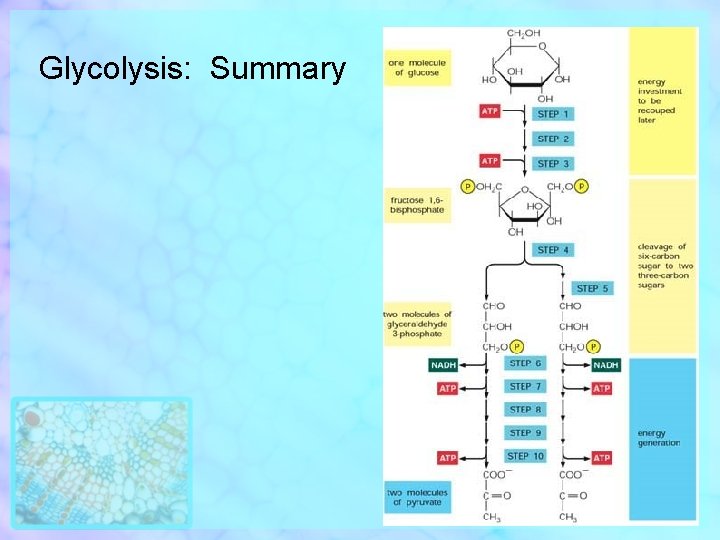
Glycolysis: Summary
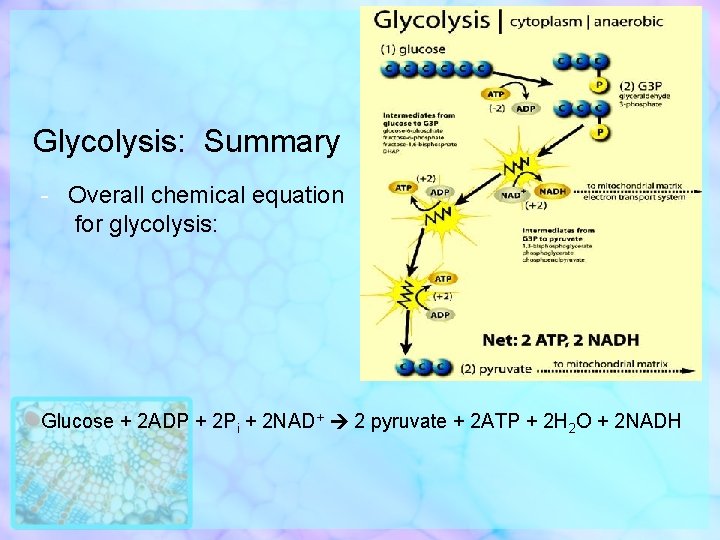
Glycolysis: Summary - Overall chemical equation for glycolysis: Glucose + 2 ADP + 2 Pi + 2 NAD+ 2 pyruvate + 2 ATP + 2 H 2 O + 2 NADH
Glycolysis • Glycolysis only transfers 2. 1% of free energy available in 1 mol of glucose to ATP • Some energy is released as heat, most is trapped in pyruvate and NADH molecules
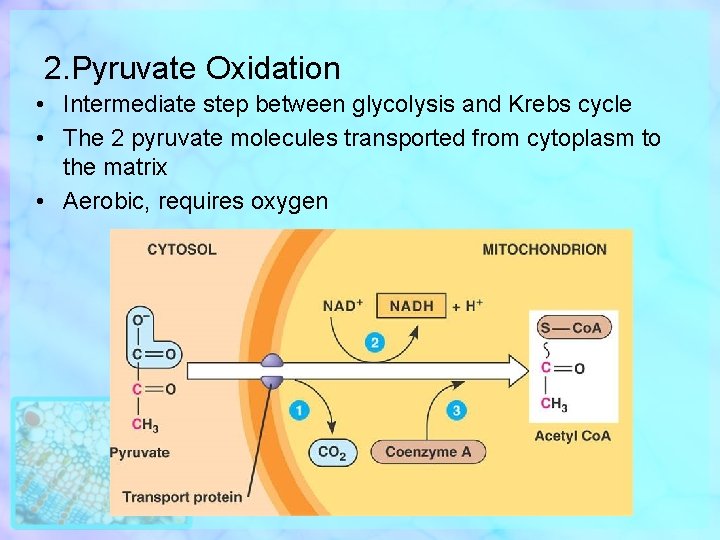
2. Pyruvate Oxidation • Intermediate step between glycolysis and Krebs cycle • The 2 pyruvate molecules transported from cytoplasm to the matrix • Aerobic, requires oxygen
Pyruvate Oxidation - 3 changes occur: 1. 2 CO 2 removed (1 from each pyruvate) 2. Pyruvate oxidized to acetic acid, NAD+ is reduced to NADH 3. Coenzyme A (Co. A) attaches to form acetyl. Co. A 2 pyruvate + 2 NAD+ + 2 Co. A 2 acetyl-Co. A + 2 NADH + 2 H+ + 2 CO 2
- Slides: 11