
Unit 2 Metabolic Processes Cellular Respiration An Overview
Unit 2: Metabolic Processes Cellular Respiration An Overview
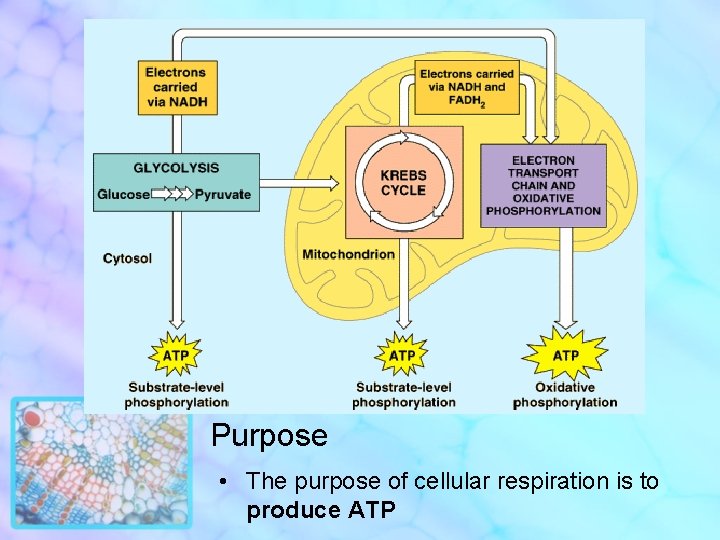
Purpose • The purpose of cellular respiration is to produce ATP
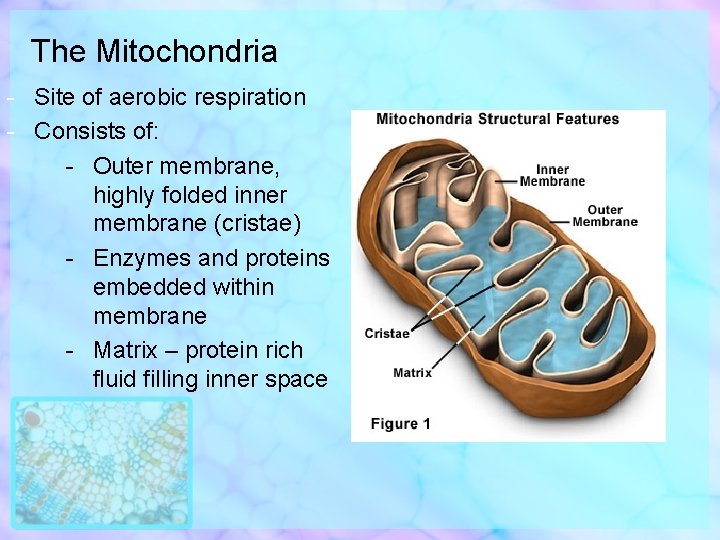
The Mitochondria - Site of aerobic respiration - Consists of: - Outer membrane, highly folded inner membrane (cristae) - Enzymes and proteins embedded within membrane - Matrix – protein rich fluid filling inner space
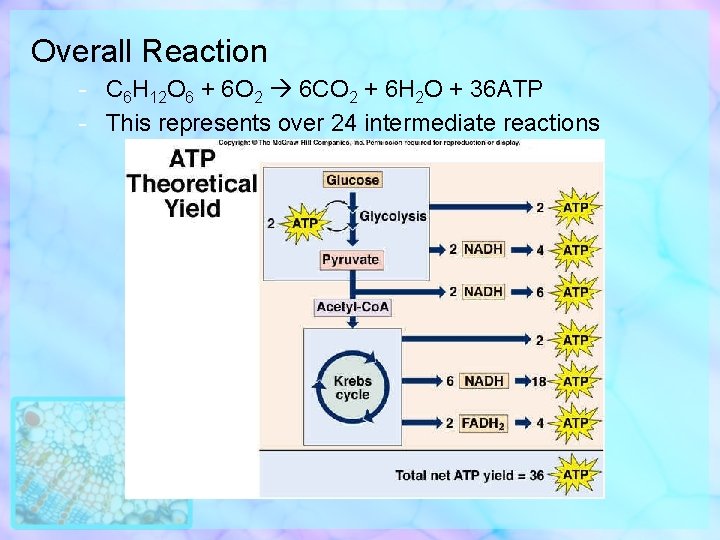
Overall Reaction - C 6 H 12 O 6 + 6 O 2 6 CO 2 + 6 H 2 O + 36 ATP - This represents over 24 intermediate reactions
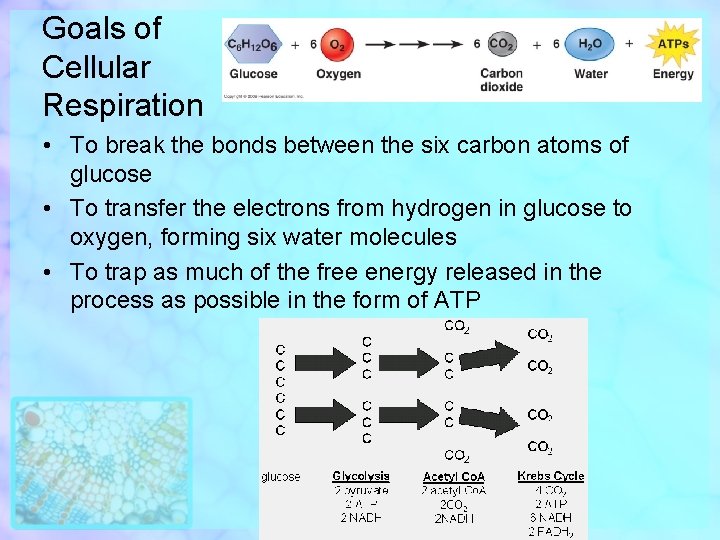
Goals of Cellular Respiration • To break the bonds between the six carbon atoms of glucose • To transfer the electrons from hydrogen in glucose to oxygen, forming six water molecules • To trap as much of the free energy released in the process as possible in the form of ATP
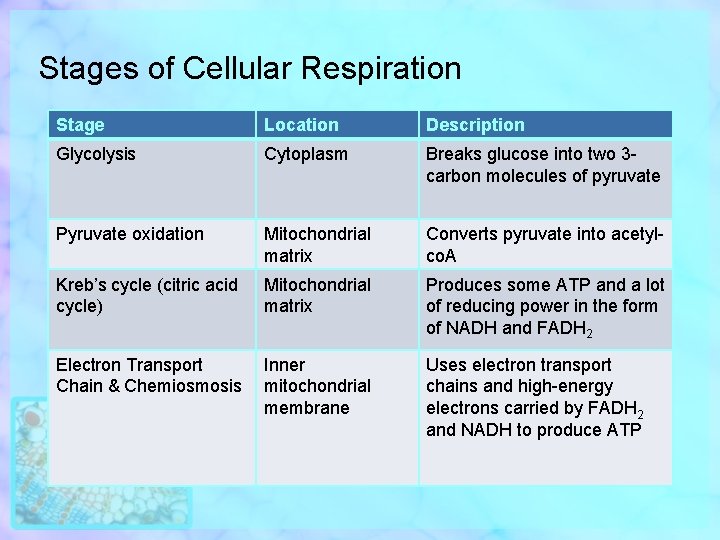
Stages of Cellular Respiration Stage Location Description Glycolysis Cytoplasm Breaks glucose into two 3 carbon molecules of pyruvate Pyruvate oxidation Mitochondrial matrix Converts pyruvate into acetylco. A Kreb’s cycle (citric acid cycle) Mitochondrial matrix Produces some ATP and a lot of reducing power in the form of NADH and FADH 2 Electron Transport Chain & Chemiosmosis Inner mitochondrial membrane Uses electron transport chains and high-energy electrons carried by FADH 2 and NADH to produce ATP
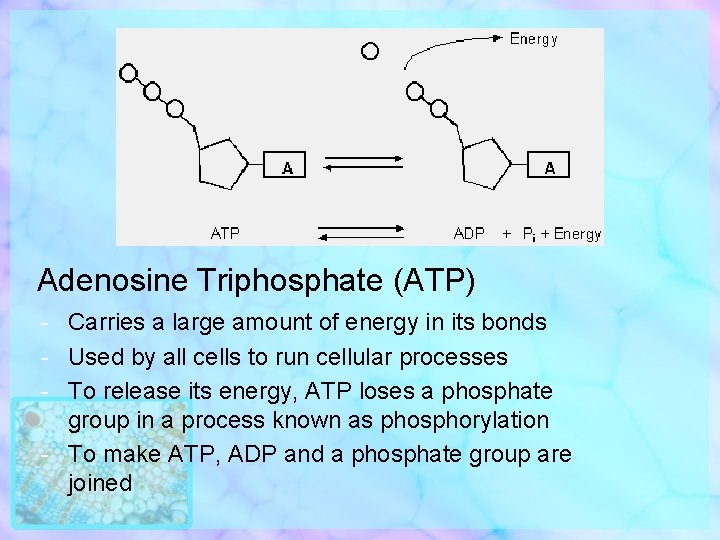
Adenosine Triphosphate (ATP) - Carries a large amount of energy in its bonds - Used by all cells to run cellular processes - To release its energy, ATP loses a phosphate group in a process known as phosphorylation - To make ATP, ADP and a phosphate group are joined
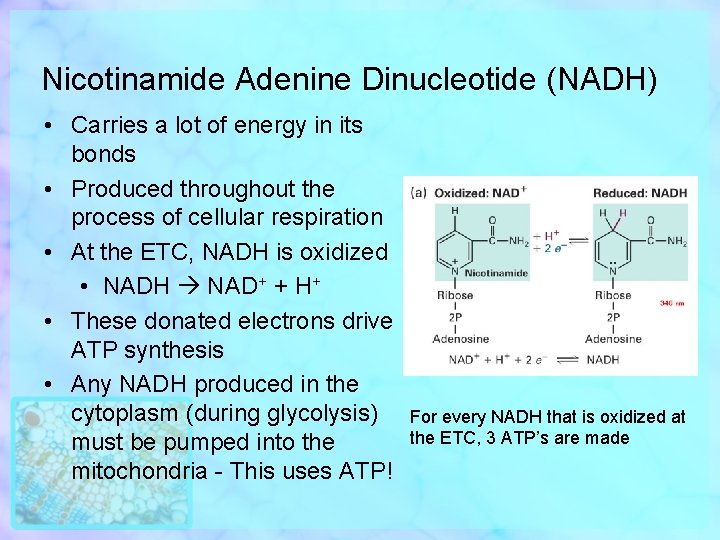
Nicotinamide Adenine Dinucleotide (NADH) • Carries a lot of energy in its bonds • Produced throughout the process of cellular respiration • At the ETC, NADH is oxidized • NADH NAD+ + H+ • These donated electrons drive ATP synthesis • Any NADH produced in the cytoplasm (during glycolysis) must be pumped into the mitochondria - This uses ATP! For every NADH that is oxidized at the ETC, 3 ATP’s are made
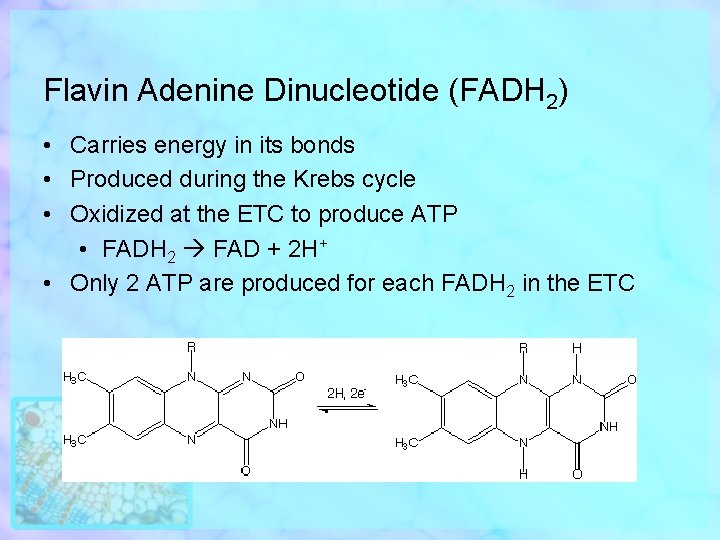
Flavin Adenine Dinucleotide (FADH 2) • Carries energy in its bonds • Produced during the Krebs cycle • Oxidized at the ETC to produce ATP • FADH 2 FAD + 2 H+ • Only 2 ATP are produced for each FADH 2 in the ETC
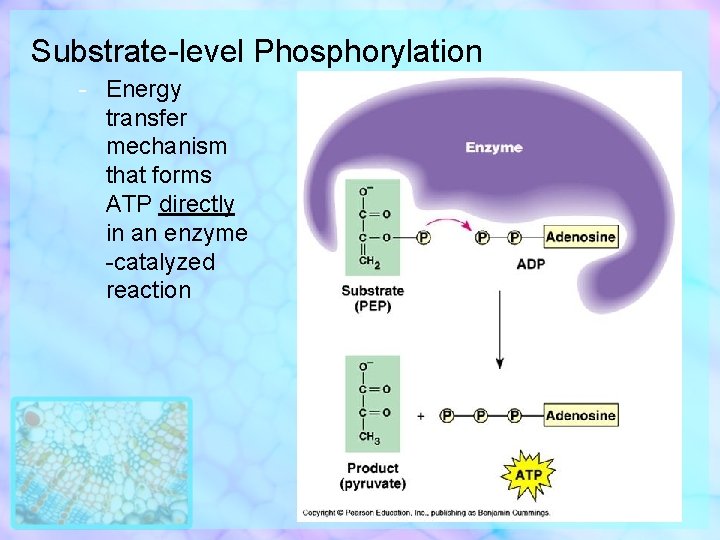
Substrate-level Phosphorylation - Energy transfer mechanism that forms ATP directly in an enzyme -catalyzed reaction
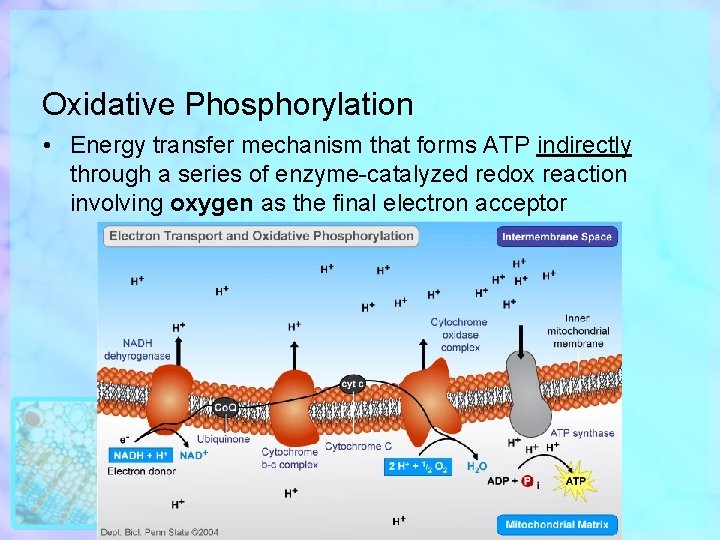
Oxidative Phosphorylation • Energy transfer mechanism that forms ATP indirectly through a series of enzyme-catalyzed redox reaction involving oxygen as the final electron acceptor
- Slides: 11