
Unit 2 Matter Module 5 Separation of Mixtures
- Slides: 10
Unit 2 Matter Module 5 Separation of Mixtures
Separation Techniques Physical methods to separate mixtures into their component substances
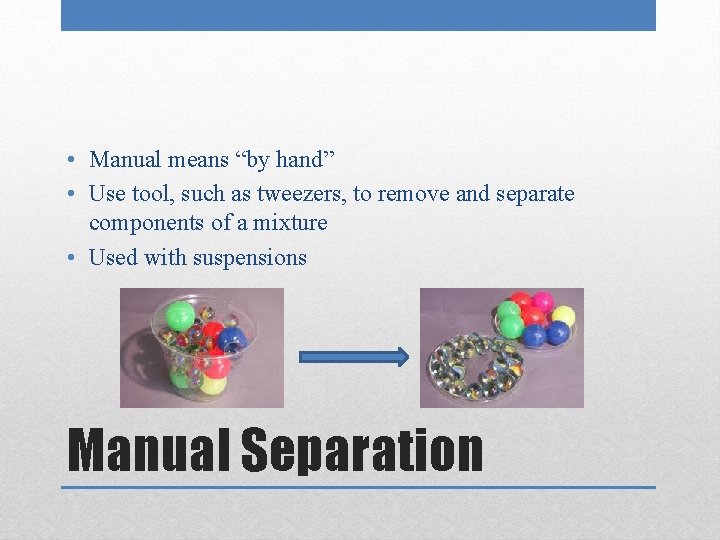
• Manual means “by hand” • Use tool, such as tweezers, to remove and separate components of a mixture • Used with suspensions Manual Separation
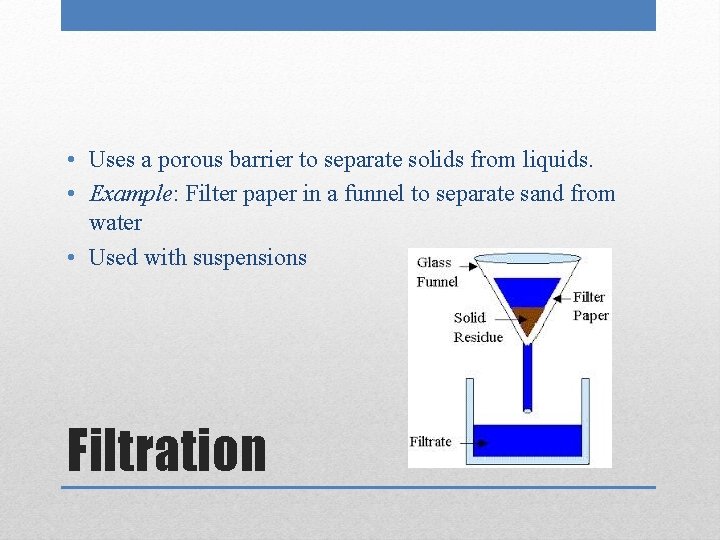
• Uses a porous barrier to separate solids from liquids. • Example: Filter paper in a funnel to separate sand from water • Used with suspensions Filtration
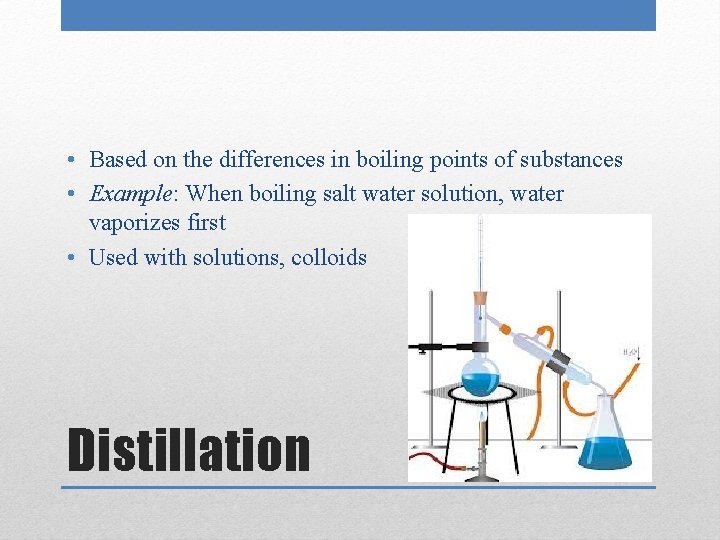
• Based on the differences in boiling points of substances • Example: When boiling salt water solution, water vaporizes first • Used with solutions, colloids Distillation
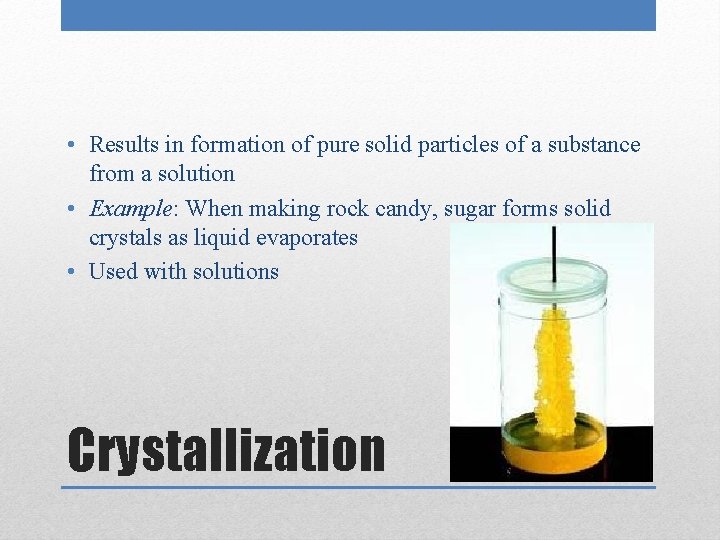
• Results in formation of pure solid particles of a substance from a solution • Example: When making rock candy, sugar forms solid crystals as liquid evaporates • Used with solutions Crystallization
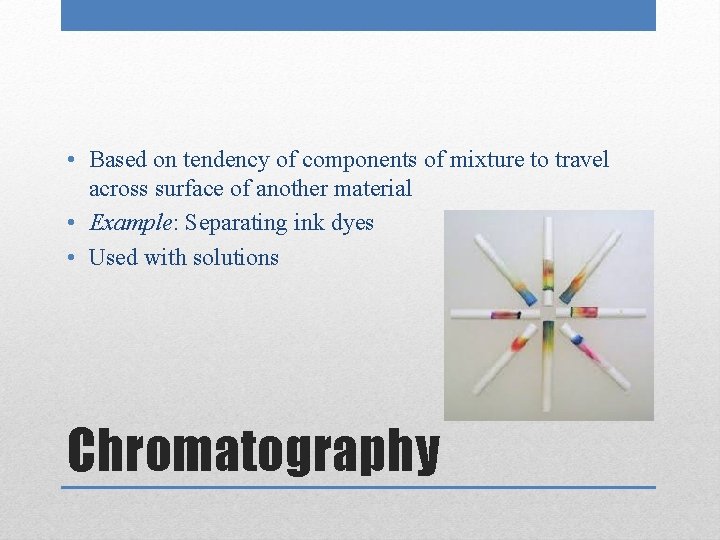
• Based on tendency of components of mixture to travel across surface of another material • Example: Separating ink dyes • Used with solutions Chromatography
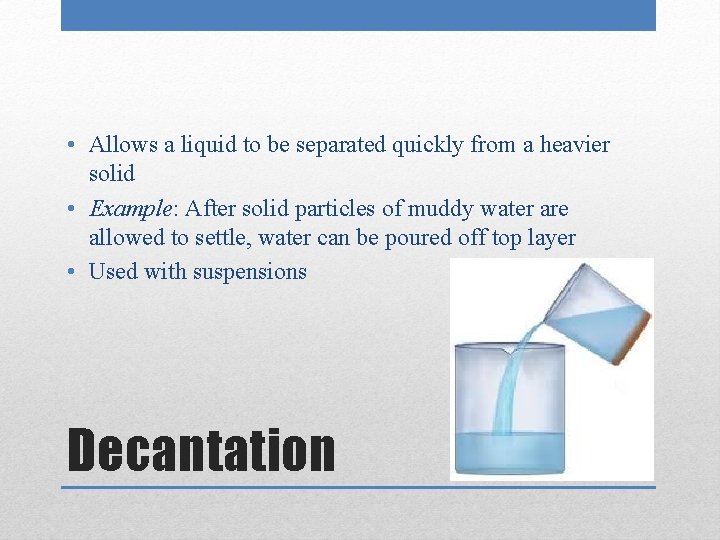
• Allows a liquid to be separated quickly from a heavier solid • Example: After solid particles of muddy water are allowed to settle, water can be poured off top layer • Used with suspensions Decantation
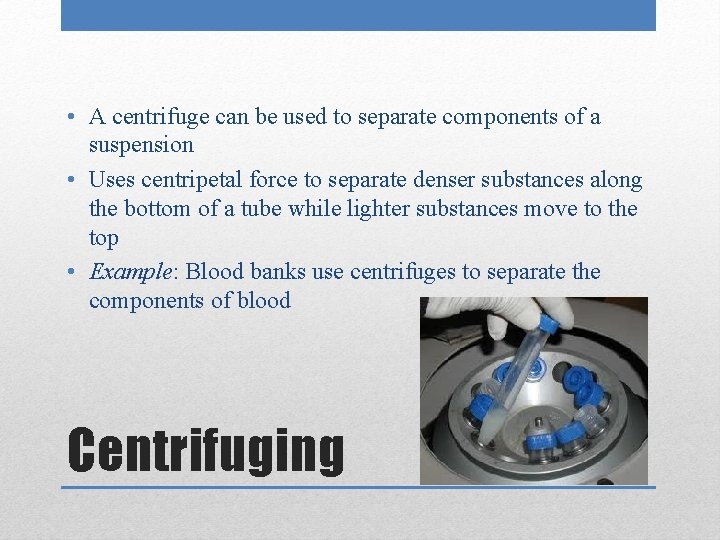
• A centrifuge can be used to separate components of a suspension • Uses centripetal force to separate denser substances along the bottom of a tube while lighter substances move to the top • Example: Blood banks use centrifuges to separate the components of blood Centrifuging
Unit 2 Matter Module 5 Separation of Mixtures