
Unit 2 Law Enforcement 4 Levels of U






- Slides: 66
Unit 2: Law Enforcement 4 Levels of U. S. Law Enforcement Structure Federal Law Enforcement State Law Enforcement Regional/County Law Enforcement Local Law Enforcement
Federal Law Enforcement Department of Justice (DOJ) Dept of Homeland Security (DHS) F. B. I. U. S. S. S. D. E. A. U. S. M. S. A. T. F. E. C. B. P. I. C. E. T. S. A.
Department of Justice (DOJ)
Mission Statement To enforce the law and defend the interests of the United States according to the law; to ensure public safety against threats foreign and domestic; to provide federal leadership in preventing and controlling crime; to seek just punishment for those guilty of unlawful behavior; and to ensure fair and impartial administration of justice for all Americans. How does a note-taker summarize this?
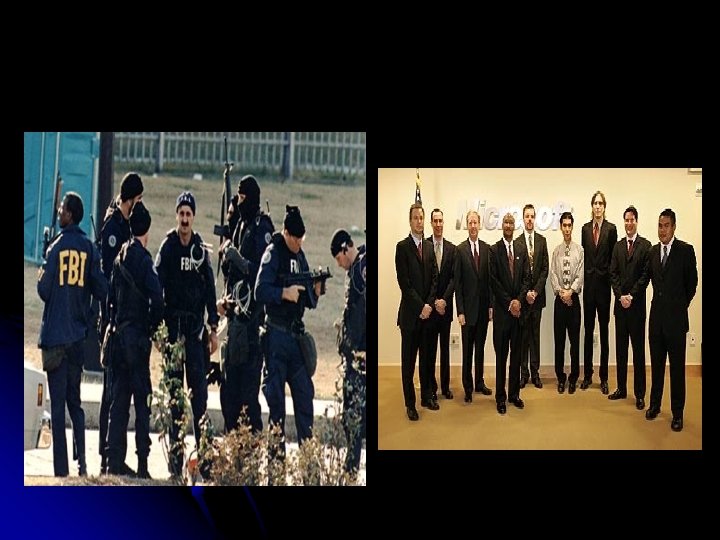
Federal Bureau of Investigation F. B. I. l l l l l protect U. S. from terrorist attack protect U. S. from cyber/high tech. attacks combat public corruption at all levels protect civil rights combat national crime organizations (ex. Mob/Latin Kings) combat major white collar crimes combat significant violent crimes support federal, state, and local law enforcement upgrade technology to successfully perform duties
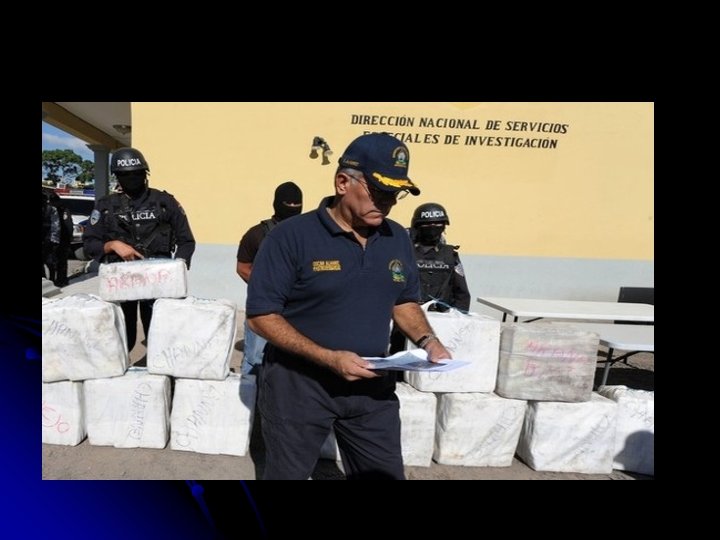
D. E. A. Drug Enforcement Administration l l enforce the controlled substance laws control criminal organizations involved in growing, manufacturing, or distribution of controlled substances
A. T. F. E. Alcohol Tobacco Firearms & Explosives l illegal use and trafficking of firearms l illegal use and storage of explosives l acts of arson, and bombings l acts of terrorism l illegal diversion of alcohol and tobacco products
U. S. M. S. United States Marshals Service l l l Judicial security Fugitive apprehension Witness Security (Witness Protection Program) Prisoner transport Asset Forfeiture Program
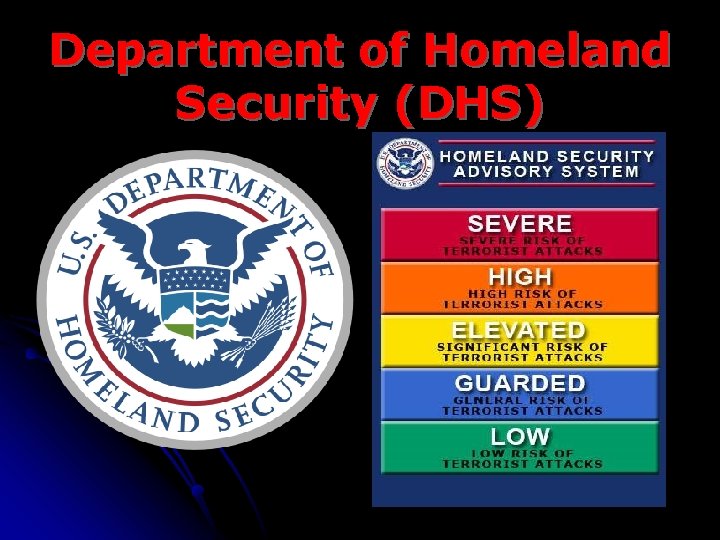
Department of Homeland Security (DHS)
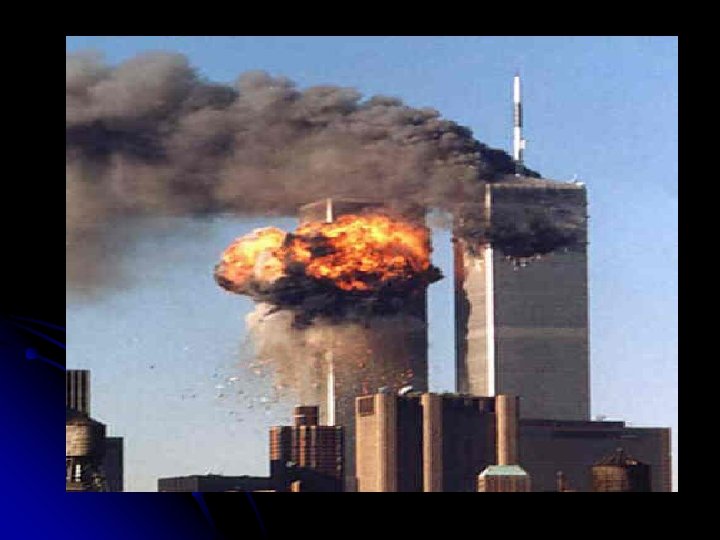
Mission Statement We are a separate law enforcement department from D. O. J. with main focus at protecting within United States borders from any foreign/domestic attacks or threat of attacks: When and why was this created?
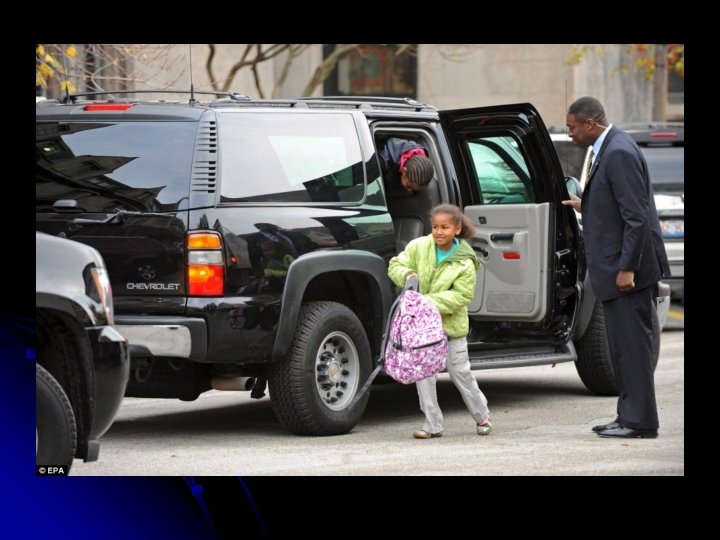
U. S. S. S. United States Secret Service Provides 24/7 protection to: l President/spouse/children l V. P. /” “ l Former “ “ 10 yrs after term l Foreign heads of State l Presidential/V. P. candidates within 120 days or necessary time period of election l Counterfeiting Activities of U. S. currency
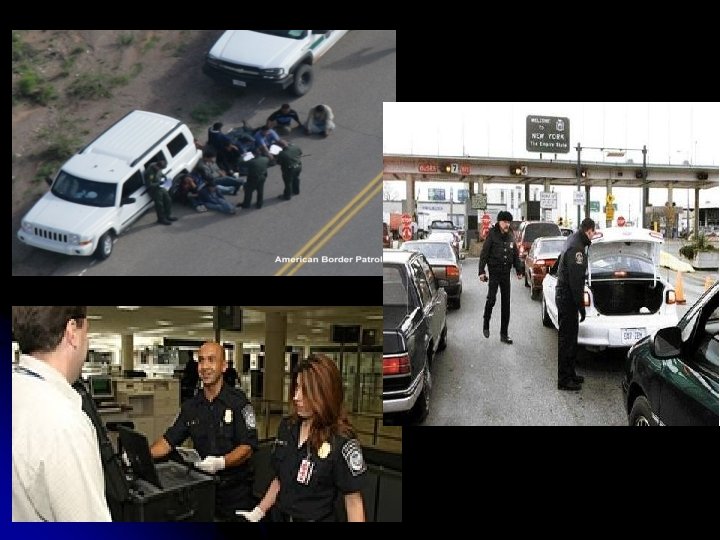
C. B. P. Customs and Border Protection l l protecting U. S. borders from terrorists and weapons from outside of United States securing trade and travel entering U. S.
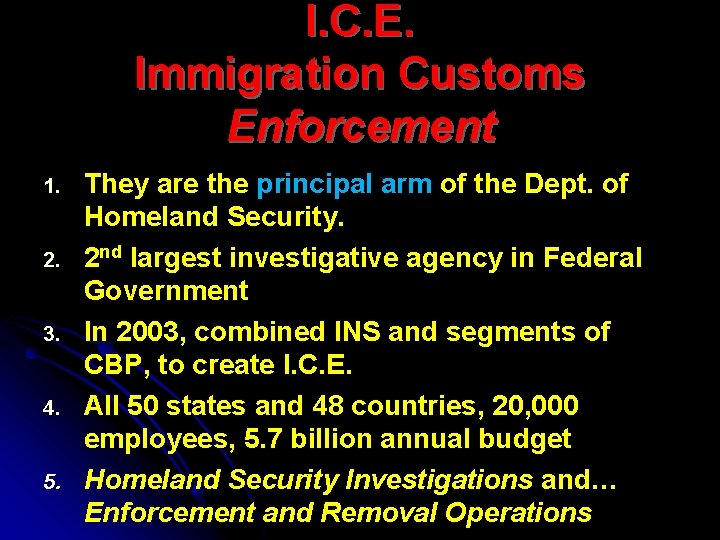
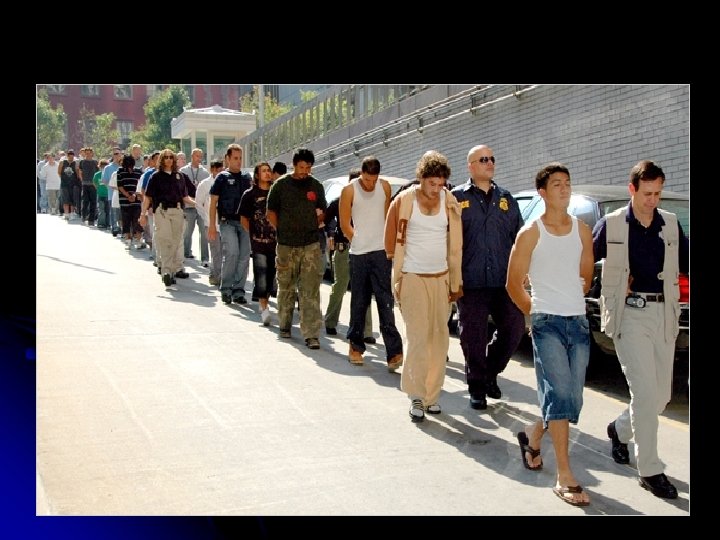
I. C. E. Immigration Customs Enforcement 1. 2. 3. 4. 5. They are the principal arm of the Dept. of Homeland Security. 2 nd largest investigative agency in Federal Government In 2003, combined INS and segments of CBP, to create I. C. E. All 50 states and 48 countries, 20, 000 employees, 5. 7 billion annual budget Homeland Security Investigations and… Enforcement and Removal Operations
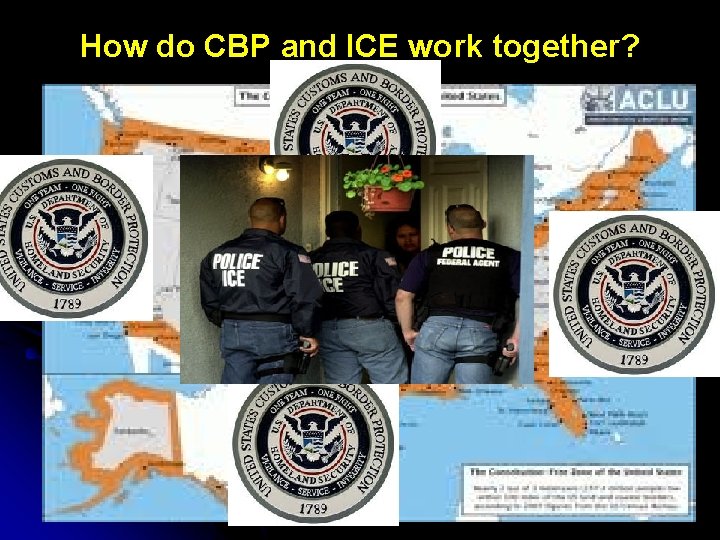
How do CBP and ICE work together?
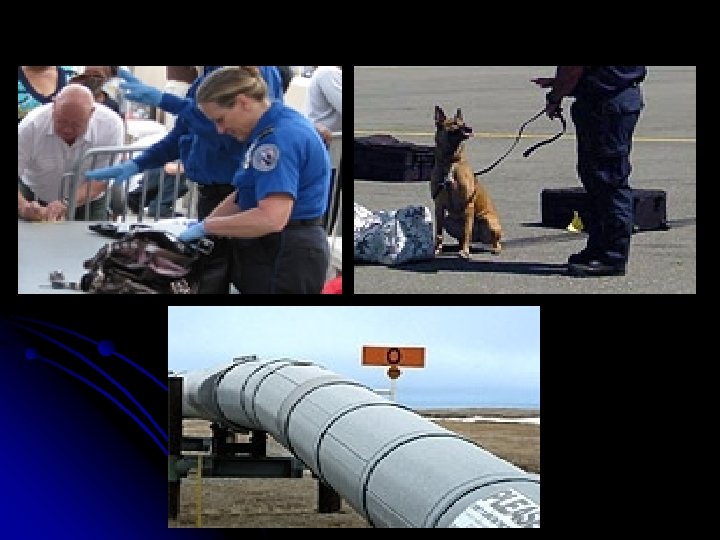
Transportation Security Administration Mission Statement The T. S. A. protects the Nation's transportation systems to ensure freedom of movement for people and commerce. 1. 48, 000 Transportation Security Officers serve in 457 U. S. airports 2. intelligence gathering and analysis 3. checking passenger manifests against watch lists 4. random canine team searches at airports 5. federal air marshals
Who investigates the following incidents? 1. 2. 3. 4. Excessive Force on a civilian by a DEA agent: U. S Marshals drinking at a pub while supposed to be protecting a judge: An ATFE agent irresponsibly shooting seized automatic weapons serving as evidence: An FBI agent taking a bribe from an individual under surveillance:
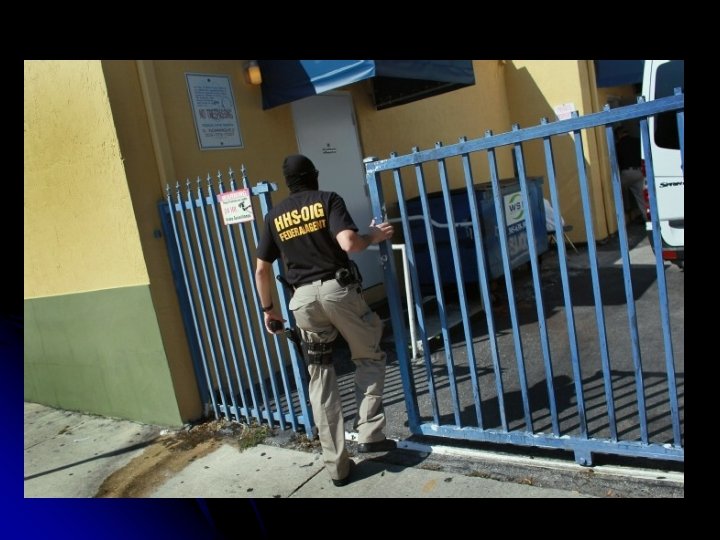
O. I. G. Office of Inspector General l conducts investigations and inspections to insure all L. E. are not participating in activities such as: 1. wasting funds and valuable resources 2. abusing power and authority 3. guilty of fraud towards any parties inside/outside D. O. J. /D. H. S. 4. misconduct according to D. O. J. /D. H. S. regulations
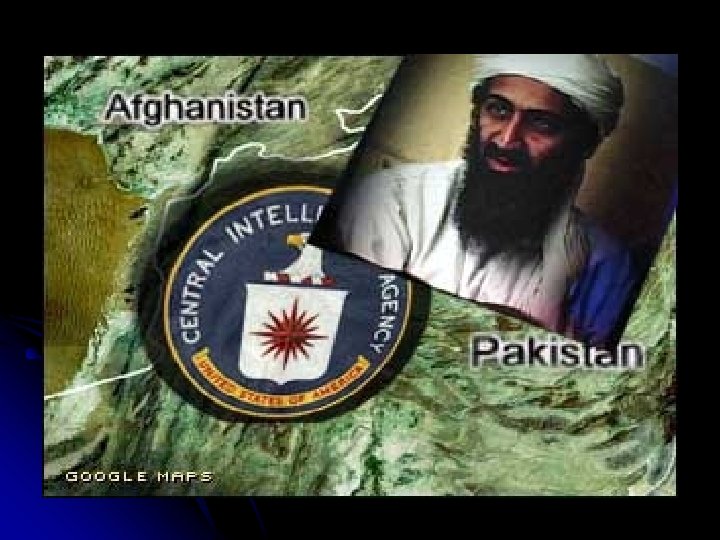
C. I. A. Central Intelligence Agency collects and analyzes information about foreign governments, corporations, and individuals, and to advise policymakers in federal government in making international decisions *C. I. A. operates as their own entity not under the authority of D. O. J. or D. H. S. *The C. I. A. are not Law Enforcement
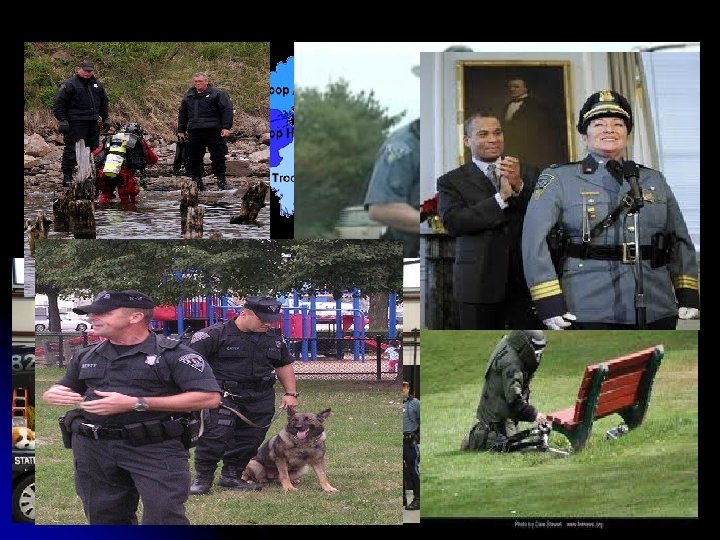
State Level Law Enforcement Commonwealth of Massachusetts State Police l l l l l maintaining police training academy provide emergency medical services crime laboratories (evidence analysis) bomb squad assist in homicide investigations accident reconstruction interstate highway patrol/traffic enforcement use of helicopters in searches K-9 units in assistance for searches performing autopsies in ruling cause of death
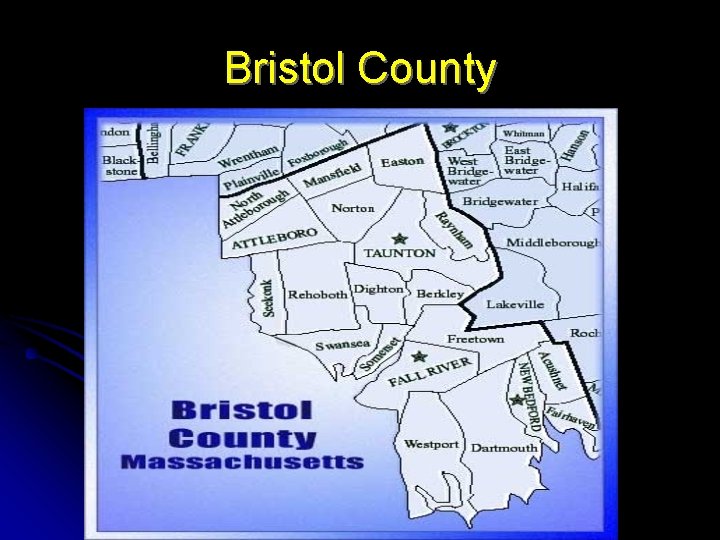
Regional/County Level of Law Enforcement l l l MA Bristol County Sheriff’s Department Operate Dartmouth House of Corrections Train, assist, and educate community programs in cooperation with L. E. departments Serve legal papers such as home foreclosures and evictions notices Supervise eviction from rented property Transport inmates from House of Corrections to and from court houses Attleboro, New Bedford, Fall River, Taunton North Attleboro, Norton, Dartmouth, Mansfield, Fairhaven, Swansea, Acushnet, Rehoboth, Dighton, Easton, Somerset, Seekonk, Berkley, Raynham, Westport
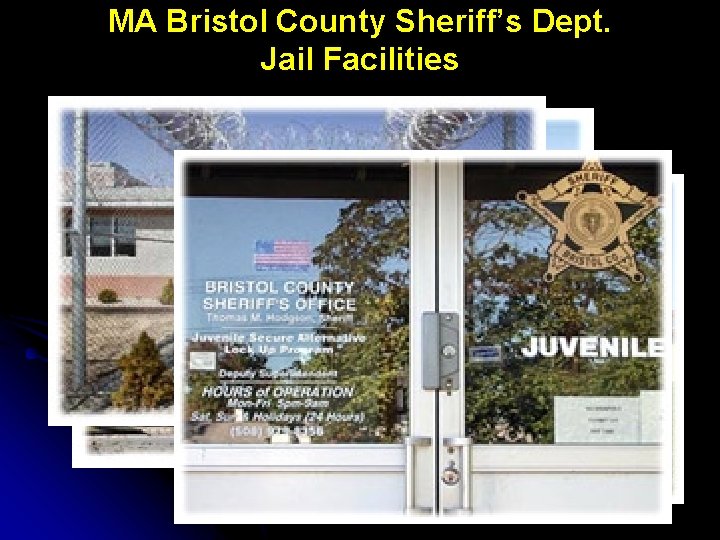
MA Bristol County Sheriff’s Dept. Jail Facilities
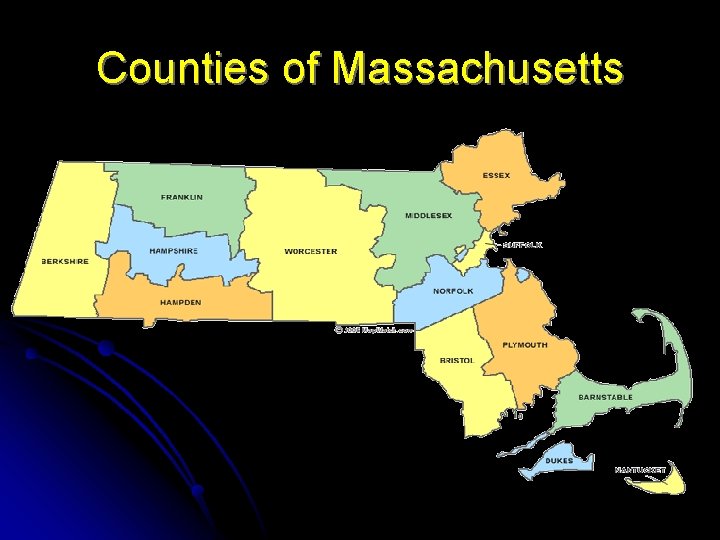
Counties of Massachusetts
Bristol County
Local Level of Law Enforcement City or town- Attleboro, Los Angeles, Rehoboth 2. Serve and Protect citizens of that town/city 3. Street patrol 4. Conduct criminal investigations 1.
Who is the executive in charge of all these departments and agencies?
Reflective Question l Why do you think the structure of federal law enforcement is so extensive? Provide three specific reasons to support your opinion.
Unit 2 Quiz Review 2 Federal Law Enforcement Departments What are they?
A. T. F. E. D. E. A. U. S. S. S. O. I. G U. S. M. S.
F. B. I. C. I. A. C. B. P. I. C. E.
State Level Law Enforcement Original purpose of creation Capabilities/services
County/Regional Level Bristol County Sheriff’s Department Different than other forms of Law Enforcement?
Unit 2: Reasonable Suspicion vs. Probable Cause Reasonable Suspicion: -based on more than a hunch -must have facts/details to support What can give officer R. S. ? 1. furtive movements (such as? ) 2. answers (what kind? ) 3. environment (where? ) 4. company you keep (like who? ) In other words……. . any “unusual conduct”
“Legal” Warrantless Searches and Seizures Reasonable Suspicion -based on more than a hunch -must have facts/details -reasonable to believe criminal activity is “afoot” (in action) What gives officer Reasonable Suspicion? 1. movements (such as? ) 2. answers (what kind? ) 3. environment (where? ) 4. company you keep (like who? )
What four things can a law enforcement do just based on “Reasonable Suspicion”?
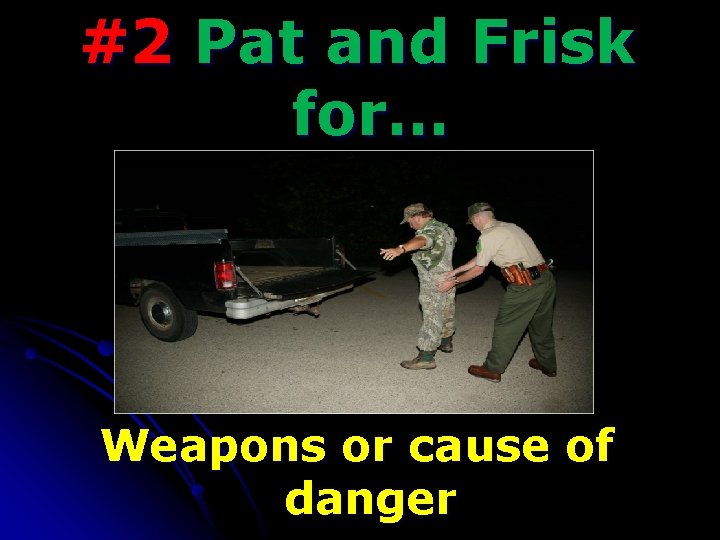
#2 Pat and Frisk for… Weapons or cause of danger
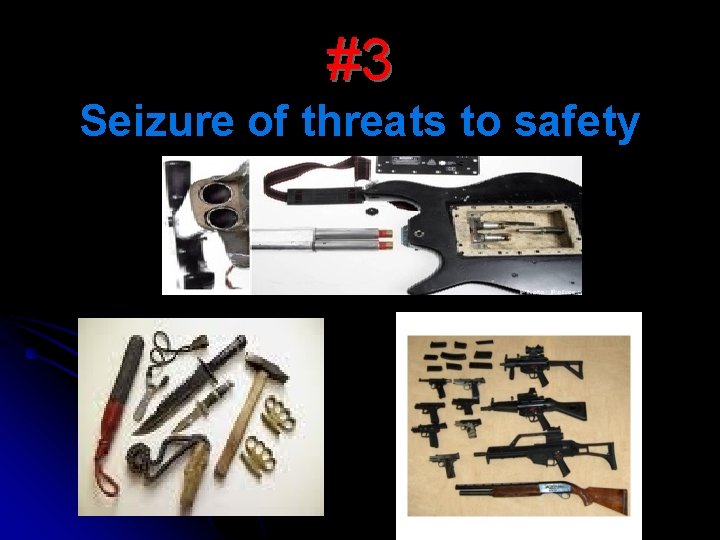
#3 Seizure of threats to safety
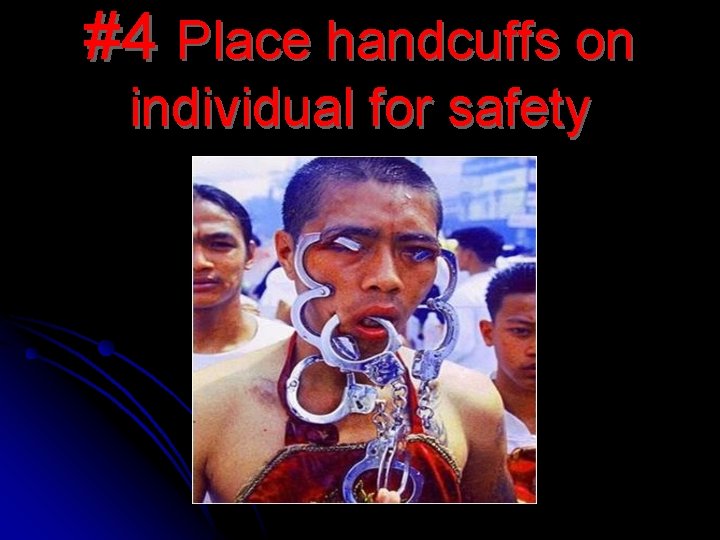
#4 Place handcuffs on individual for safety
“Probable Cause” Define: ? ? “There is no definition!” *no exact formula *police use own individual judgment based on… 1. experience 2. training 3. laws *requires more than suspicion
Sources of Probable Cause (what leads to P. C. ? ) 1. 2. 3. 4. Observation- 5 senses Expertiseexperience/training “Circumstantial” Evidence- examples? Information- from
Direct Sources of Probable Cause 1. 2. 3. 4. “Flight”- attempting to flee, evade, or elude, is by law, a presumption of guilt Evidence in “Plain View” Admitted Ownership of evidence or contraband Circumstantial Evidenceevidence points in
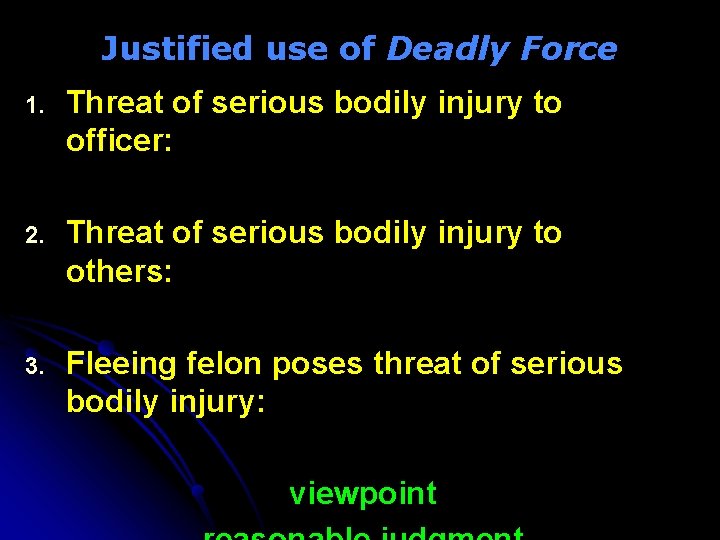
Justified use of Deadly Force 1. Threat of serious bodily injury to officer: 2. Threat of serious bodily injury to others: 3. Fleeing felon poses threat of serious bodily injury: viewpoint
What will law enforcement officers do when they have probable cause? Take into custody/Arrest
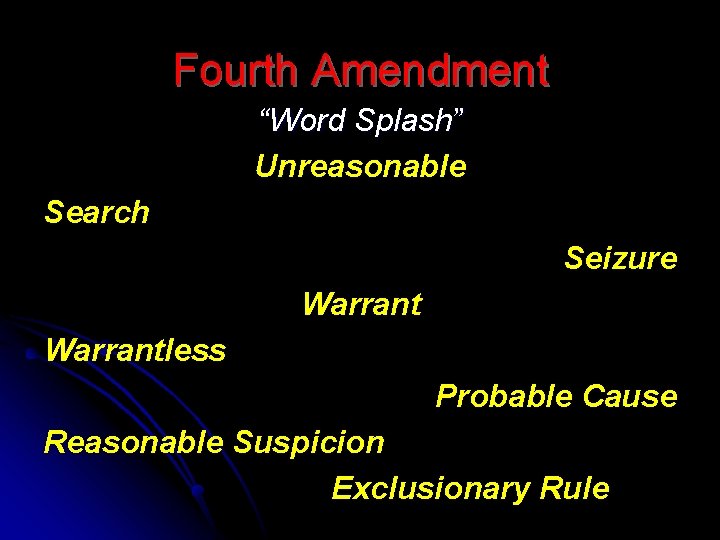
Fourth Amendment “Word Splash” Unreasonable Search Seizure Warrantless Probable Cause Reasonable Suspicion Exclusionary Rule
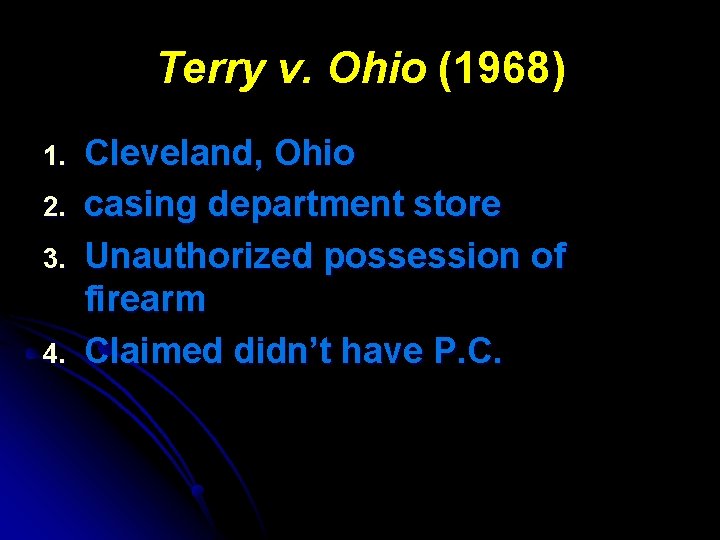
Terry v. Ohio (1968) 1. 2. 3. 4. Cleveland, Ohio casing department store Unauthorized possession of firearm Claimed didn’t have P. C.
What constitutes a search? -”reasonable expectancy of privacy” Where? . . . 1. person and property -use “common sense standard”
Motor Vehicle Stops/Search Reasonable Suspicion-When can I search? 1. Stop 2. Immediate area 3. Plain View 4. Consent Probable Cause 1. Immediate Control (trunk) 2. Wherever likelihood hiding evidence relevant to crime 3. Alter Vehicle? -warrant
Exclusionary Rule Weeks vs. United States (1914) Supreme Court ruled any evidence illegally seized by law enforcement officers in violation of the 4 th Amendment’s rights of the accused, cannot be used against the person in a criminal prosecution: Federal Courts Mapp vs. Ohio (1961) State Courts “Does this mean all charges are dropped any
Warrantless Searches 1. 2. 3. 4. 5. 6. 7. 8. 9. 10. Reasonable Suspicion Probable Cause Plain View Consent Special Events/Locations Hot Pursuit Emergency Vehicle Airports Border
What is a search warrant? -a legal document giving L. E. the authority to search a location for specific item(s): -Affidavit-> Written request from L. E. stating specific details of Probable Cause, and what searching items searching for: Must be signed under oath to confirm truthful
Search Warrant Mandates 1. Must be executed within a certain number of days to preserve integrity of search 2. Must be executed in daytime (unless specifically stated otherwise with justification) 3. Item(s) to be searched for not places to look are expressed in search warrant 4. Must knock to announce presence (unless no-knock is justified and granted) 5. Announce presence, purpose and authority
Two Kinds of Evidence 1. Direct Evidence- eye witness statements 2. Circumstantial Evidence- All other evidence seized by law enforcement and used against the accused
Miranda vs. AZ (1966) Miranda Rights 1. You have the right to remain silent 2. If you give up that right, anything you say can and will be used against you in a court of law. 3. You have a right to court appointed attorney and have him present during questioning. 4. Do you understand these rights I have explained to you? 5. With these rights in mind do you now wish to speak to me?
Why is Law Enforcement telling you all of this? 5 th Amendment- You have the right to not incriminate yourself- (blah, blah!) 6 th Amendment- You have the right to court appointed representation if you are indigent
What about school searches? New Jersey vs. T. L. O. -School officials have the right to search a students’ person and property based on………. Reasonable Suspicion SAFETY