
UNIT 2 Genetic Processes Chapter 4 Cell Division
- Slides: 31
UNIT 2: Genetic Processes Chapter 4: Cell Division and Reproduction Chapter 5: Patterns of Inheritance Chapter 6: Complex Patterns of Inheritance How have recent discoveries in genetics improved our understanding of inheritance and how to treat and prevent genetic disorders?
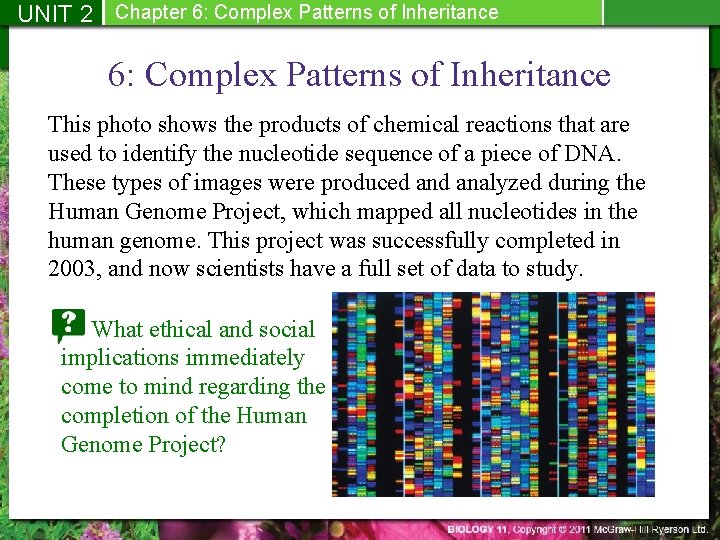
UNIT 2 Chapter 6: Complex Patterns of Inheritance This photo shows the products of chemical reactions that are used to identify the nucleotide sequence of a piece of DNA. These types of images were produced analyzed during the Human Genome Project, which mapped all nucleotides in the human genome. This project was successfully completed in 2003, and now scientists have a full set of data to study. What ethical and social implications immediately come to mind regarding the completion of the Human Genome Project?
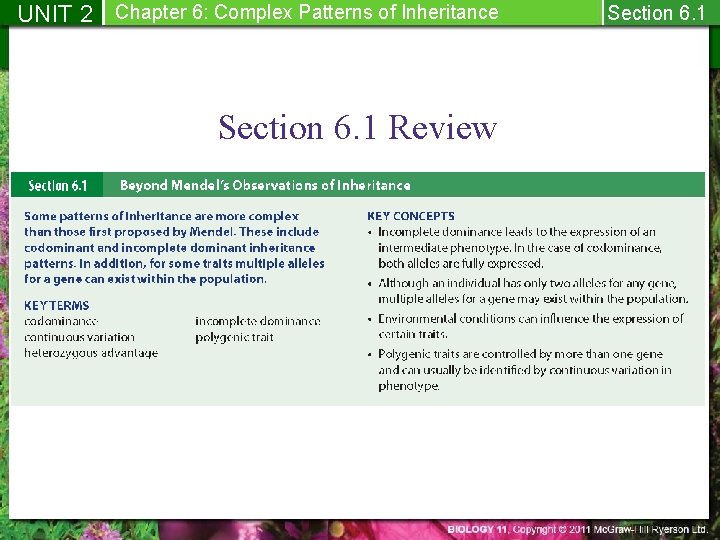
UNIT 2 Chapter 6: Complex Patterns of Inheritance Section 6. 1 Beyond Mendel’s Observations of Inheritance As more sophisticated experimental technologies became available, scientists realized that patterns of inheritance are more complicated than Mendel had proposed. Dominance and recessiveness are not the only patterns. The following complex patterns will be investigated: 1. incomplete dominance 2. codominance 3. multiple alleles 4. polygenic inheritance
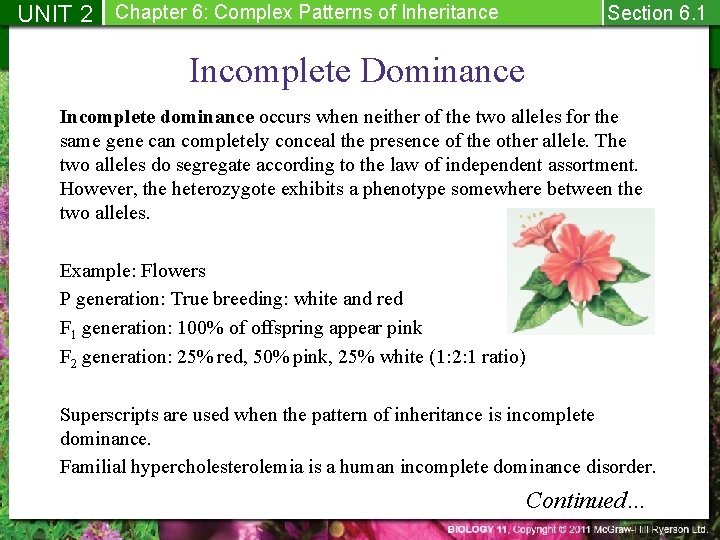
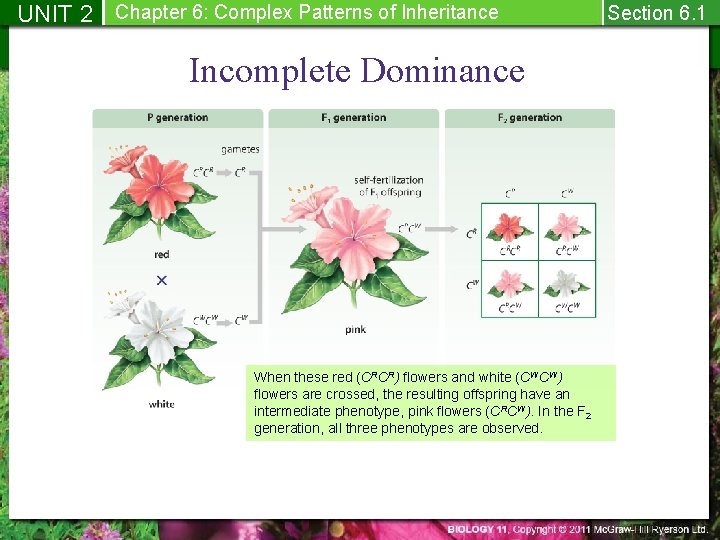
UNIT 2 Chapter 6: Complex Patterns of Inheritance Section 6. 1 Incomplete Dominance Incomplete dominance occurs when neither of the two alleles for the same gene can completely conceal the presence of the other allele. The two alleles do segregate according to the law of independent assortment. However, the heterozygote exhibits a phenotype somewhere between the two alleles. Example: Flowers P generation: True breeding: white and red F 1 generation: 100% of offspring appear pink F 2 generation: 25% red, 50% pink, 25% white (1: 2: 1 ratio) Superscripts are used when the pattern of inheritance is incomplete dominance. Familial hypercholesterolemia is a human incomplete dominance disorder. Continued…
UNIT 2 Chapter 6: Complex Patterns of Inheritance Incomplete Dominance When these red (CRCR) flowers and white (CWCW) flowers are crossed, the resulting offspring have an intermediate phenotype, pink flowers (CRCW). In the F 2 generation, all three phenotypes are observed. Section 6. 1
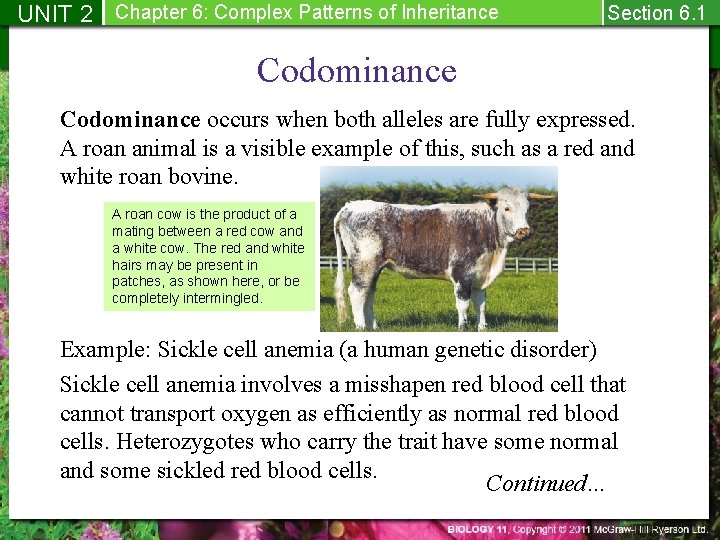
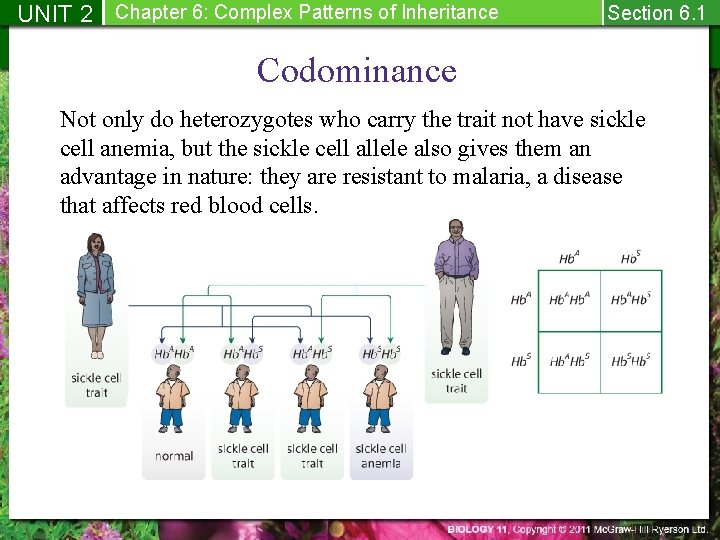
UNIT 2 Chapter 6: Complex Patterns of Inheritance Section 6. 1 Codominance occurs when both alleles are fully expressed. A roan animal is a visible example of this, such as a red and white roan bovine. A roan cow is the product of a mating between a red cow and a white cow. The red and white hairs may be present in patches, as shown here, or be completely intermingled. Example: Sickle cell anemia (a human genetic disorder) Sickle cell anemia involves a misshapen red blood cell that cannot transport oxygen as efficiently as normal red blood cells. Heterozygotes who carry the trait have some normal and some sickled red blood cells. Continued…
UNIT 2 Chapter 6: Complex Patterns of Inheritance Section 6. 1 Codominance Not only do heterozygotes who carry the trait not have sickle cell anemia, but the sickle cell allele also gives them an advantage in nature: they are resistant to malaria, a disease that affects red blood cells.
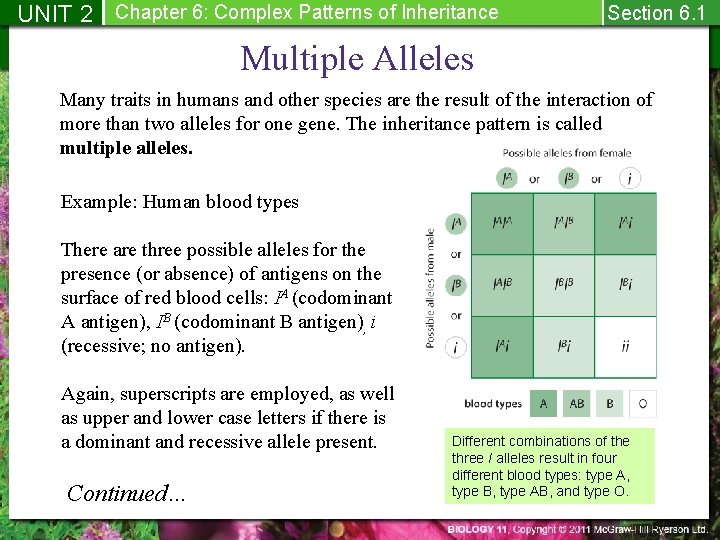
UNIT 2 Chapter 6: Complex Patterns of Inheritance Section 6. 1 Multiple Alleles Many traits in humans and other species are the result of the interaction of more than two alleles for one gene. The inheritance pattern is called multiple alleles. Example: Human blood types There are three possible alleles for the presence (or absence) of antigens on the surface of red blood cells: IA (codominant A antigen), IB (codominant B antigen), i (recessive; no antigen). Again, superscripts are employed, as well as upper and lower case letters if there is a dominant and recessive allele present. Continued… Different combinations of the three I alleles result in four different blood types: type A, type B, type AB, and type O.
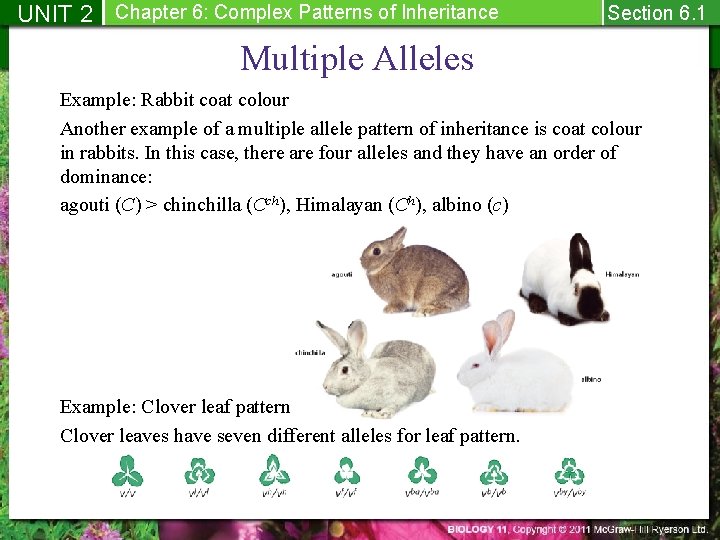
UNIT 2 Chapter 6: Complex Patterns of Inheritance Section 6. 1 Multiple Alleles Example: Rabbit coat colour Another example of a multiple allele pattern of inheritance is coat colour in rabbits. In this case, there are four alleles and they have an order of dominance: agouti (C) > chinchilla (Cch), Himalayan (Ch), albino (c) Example: Clover leaf pattern Clover leaves have seven different alleles for leaf pattern.
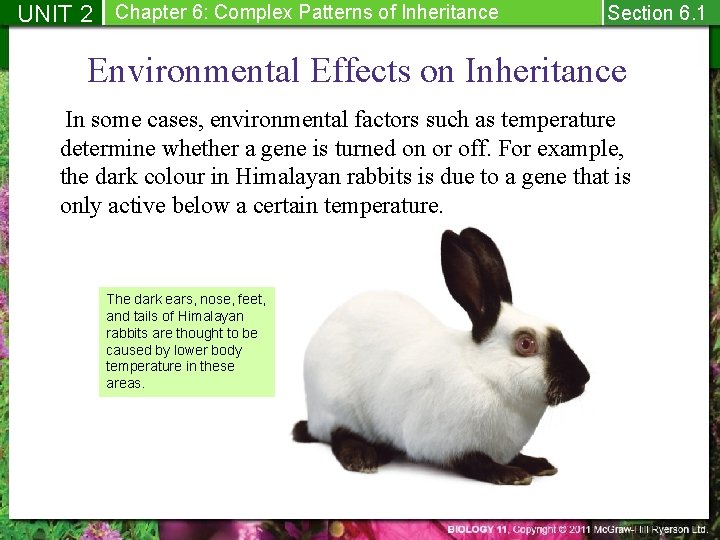
UNIT 2 Chapter 6: Complex Patterns of Inheritance Section 6. 1 Environmental Effects on Inheritance In some cases, environmental factors such as temperature determine whether a gene is turned on or off. For example, the dark colour in Himalayan rabbits is due to a gene that is only active below a certain temperature. The dark ears, nose, feet, and tails of Himalayan rabbits are thought to be caused by lower body temperature in these areas.
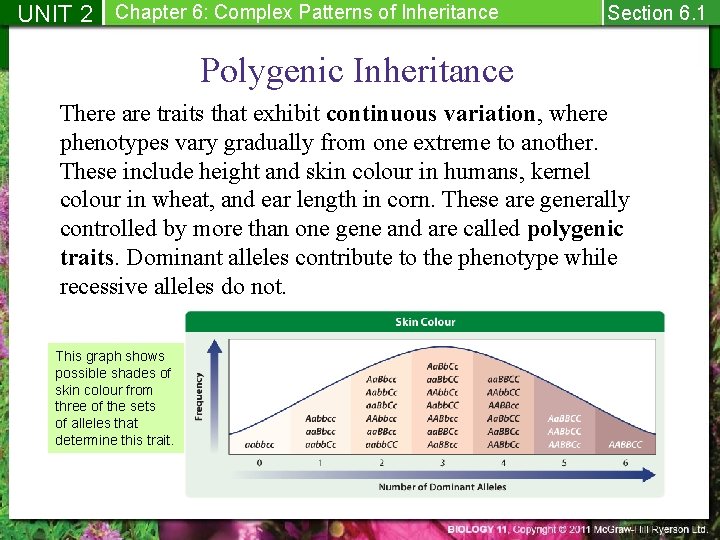
UNIT 2 Chapter 6: Complex Patterns of Inheritance Section 6. 1 Polygenic Inheritance There are traits that exhibit continuous variation, where phenotypes vary gradually from one extreme to another. These include height and skin colour in humans, kernel colour in wheat, and ear length in corn. These are generally controlled by more than one gene and are called polygenic traits. Dominant alleles contribute to the phenotype while recessive alleles do not. This graph shows possible shades of skin colour from three of the sets of alleles that determine this trait.
UNIT 2 Chapter 6: Complex Patterns of Inheritance Section 6. 1 Review Section 6. 1
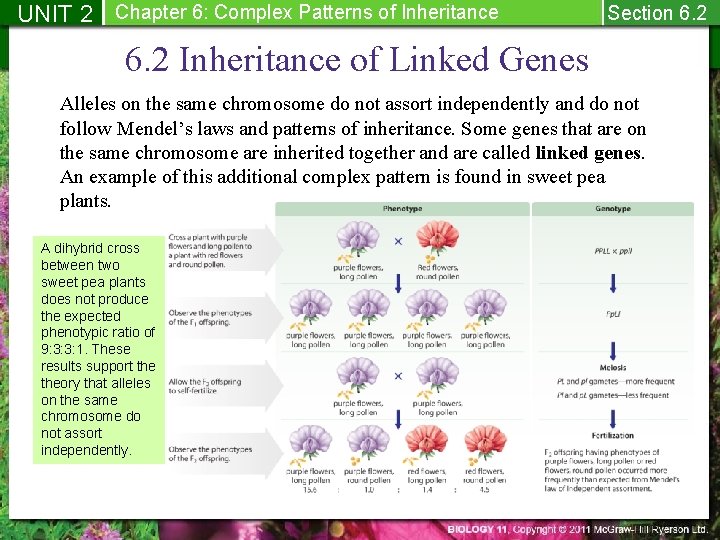
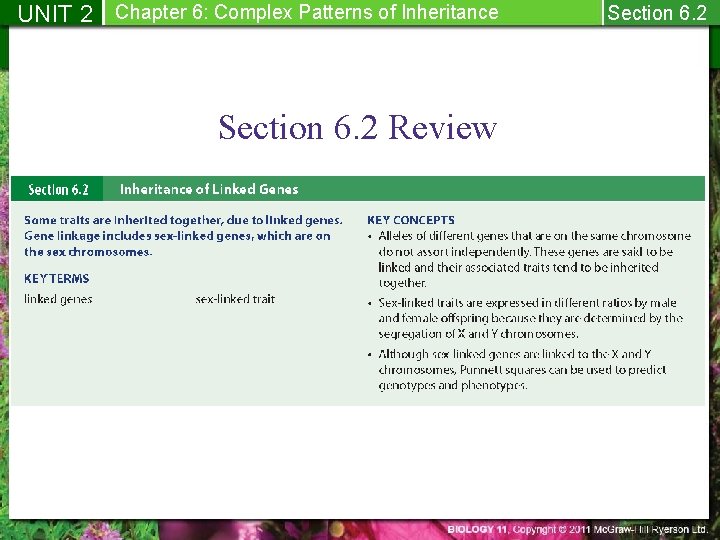
UNIT 2 Chapter 6: Complex Patterns of Inheritance Section 6. 2 Inheritance of Linked Genes Alleles on the same chromosome do not assort independently and do not follow Mendel’s laws and patterns of inheritance. Some genes that are on the same chromosome are inherited together and are called linked genes. An example of this additional complex pattern is found in sweet pea plants. A dihybrid cross between two sweet pea plants does not produce the expected phenotypic ratio of 9: 3: 3: 1. These results support theory that alleles on the same chromosome do not assort independently.
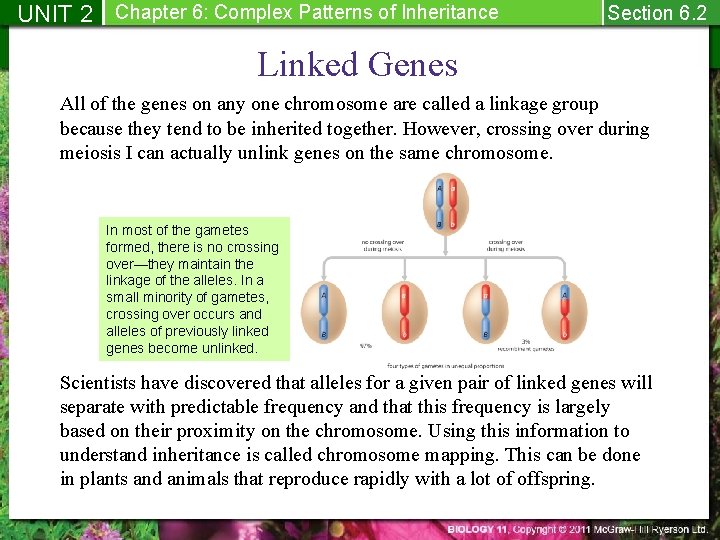
UNIT 2 Chapter 6: Complex Patterns of Inheritance Section 6. 2 Linked Genes All of the genes on any one chromosome are called a linkage group because they tend to be inherited together. However, crossing over during meiosis I can actually unlink genes on the same chromosome. In most of the gametes formed, there is no crossing over—they maintain the linkage of the alleles. In a small minority of gametes, crossing over occurs and alleles of previously linked genes become unlinked. Scientists have discovered that alleles for a given pair of linked genes will separate with predictable frequency and that this frequency is largely based on their proximity on the chromosome. Using this information to understand inheritance is called chromosome mapping. This can be done in plants and animals that reproduce rapidly with a lot of offspring.
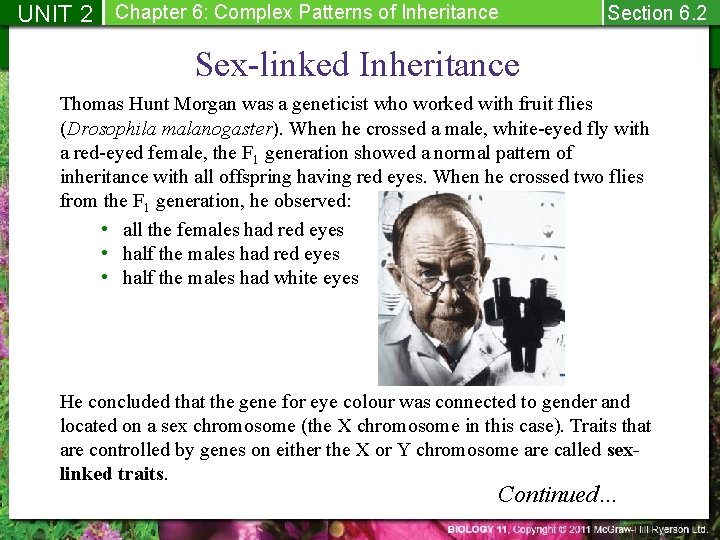
UNIT 2 Chapter 6: Complex Patterns of Inheritance Section 6. 2 Sex-linked Inheritance Thomas Hunt Morgan was a geneticist who worked with fruit flies (Drosophila malanogaster). When he crossed a male, white-eyed fly with a red-eyed female, the F 1 generation showed a normal pattern of inheritance with all offspring having red eyes. When he crossed two flies from the F 1 generation, he observed: • all the females had red eyes • half the males had white eyes He concluded that the gene for eye colour was connected to gender and located on a sex chromosome (the X chromosome in this case). Traits that are controlled by genes on either the X or Y chromosome are called sexlinked traits. Continued…
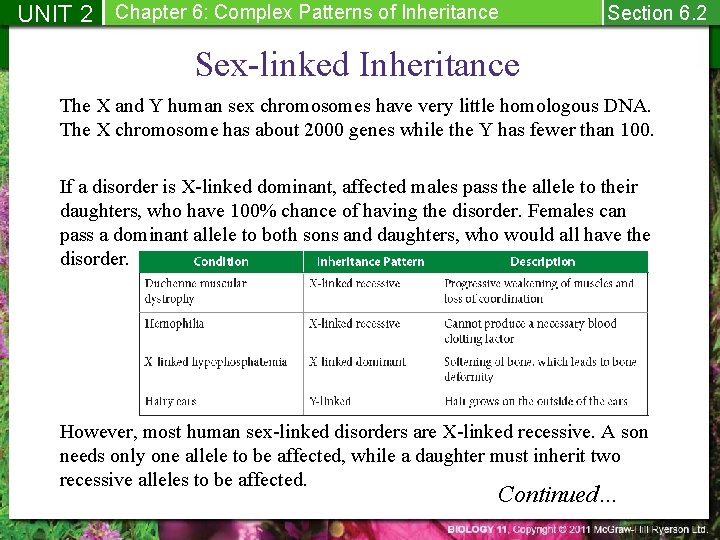
UNIT 2 Chapter 6: Complex Patterns of Inheritance Section 6. 2 Sex-linked Inheritance The X and Y human sex chromosomes have very little homologous DNA. The X chromosome has about 2000 genes while the Y has fewer than 100. If a disorder is X-linked dominant, affected males pass the allele to their daughters, who have 100% chance of having the disorder. Females can pass a dominant allele to both sons and daughters, who would all have the disorder. However, most human sex-linked disorders are X-linked recessive. A son needs only one allele to be affected, while a daughter must inherit two recessive alleles to be affected. Continued…
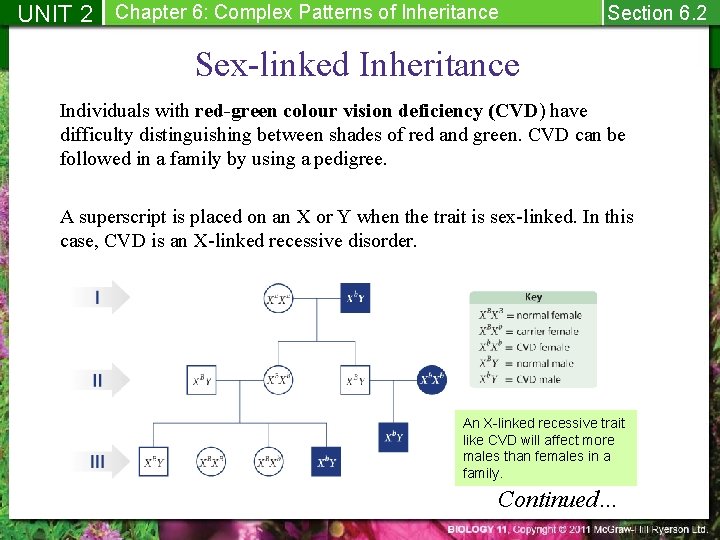
UNIT 2 Chapter 6: Complex Patterns of Inheritance Section 6. 2 Sex-linked Inheritance Individuals with red-green colour vision deficiency (CVD) have difficulty distinguishing between shades of red and green. CVD can be followed in a family by using a pedigree. A superscript is placed on an X or Y when the trait is sex-linked. In this case, CVD is an X-linked recessive disorder. An X-linked recessive trait like CVD will affect more males than females in a family. Continued…
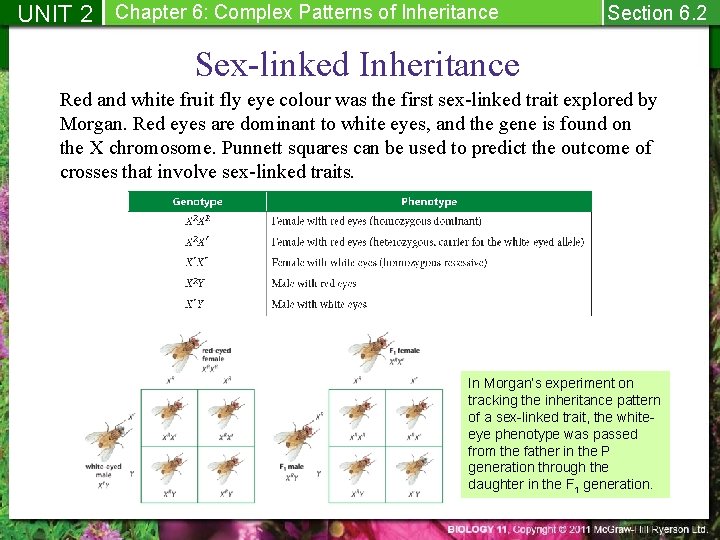
UNIT 2 Chapter 6: Complex Patterns of Inheritance Section 6. 2 Sex-linked Inheritance Red and white fruit fly eye colour was the first sex-linked trait explored by Morgan. Red eyes are dominant to white eyes, and the gene is found on the X chromosome. Punnett squares can be used to predict the outcome of crosses that involve sex-linked traits. In Morgan’s experiment on tracking the inheritance pattern of a sex-linked trait, the whiteeye phenotype was passed from the father in the P generation through the daughter in the F 1 generation.
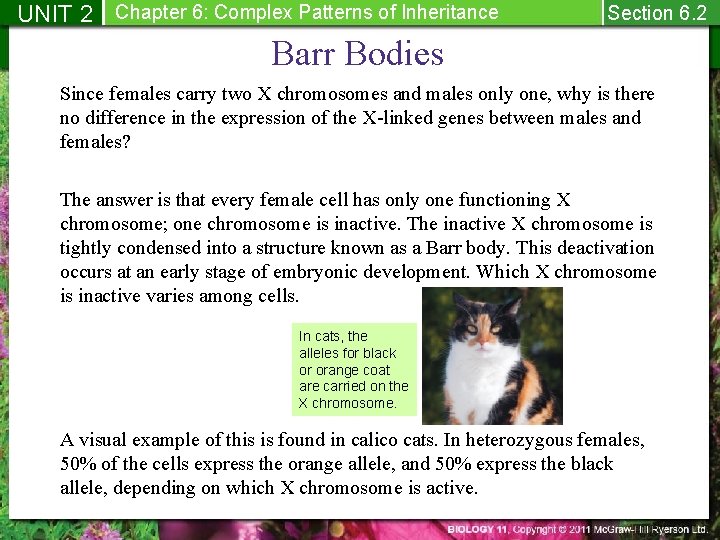
UNIT 2 Chapter 6: Complex Patterns of Inheritance Section 6. 2 Barr Bodies Since females carry two X chromosomes and males only one, why is there no difference in the expression of the X-linked genes between males and females? The answer is that every female cell has only one functioning X chromosome; one chromosome is inactive. The inactive X chromosome is tightly condensed into a structure known as a Barr body. This deactivation occurs at an early stage of embryonic development. Which X chromosome is inactive varies among cells. In cats, the alleles for black or orange coat are carried on the X chromosome. A visual example of this is found in calico cats. In heterozygous females, 50% of the cells express the orange allele, and 50% express the black allele, depending on which X chromosome is active.
UNIT 2 Chapter 6: Complex Patterns of Inheritance Section 6. 2 Review Section 6. 2
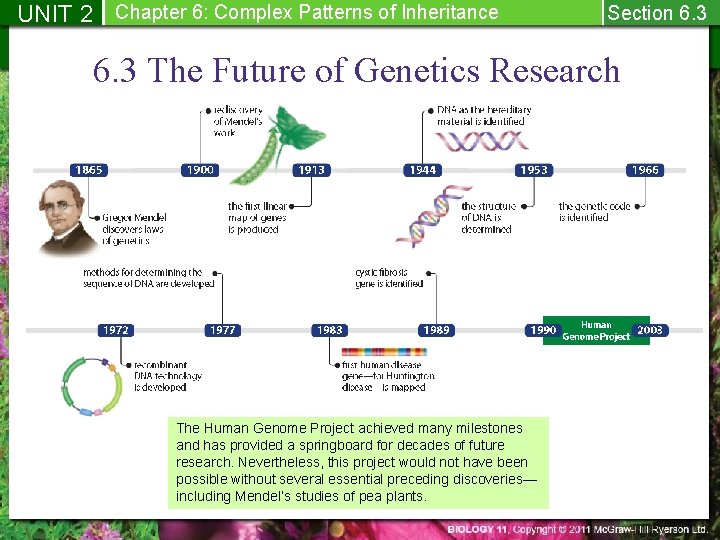
UNIT 2 Chapter 6: Complex Patterns of Inheritance Section 6. 3 The Future of Genetics Research The Human Genome Project achieved many milestones and has provided a springboard for decades of future research. Nevertheless, this project would not have been possible without several essential preceding discoveries— including Mendel’s studies of pea plants.
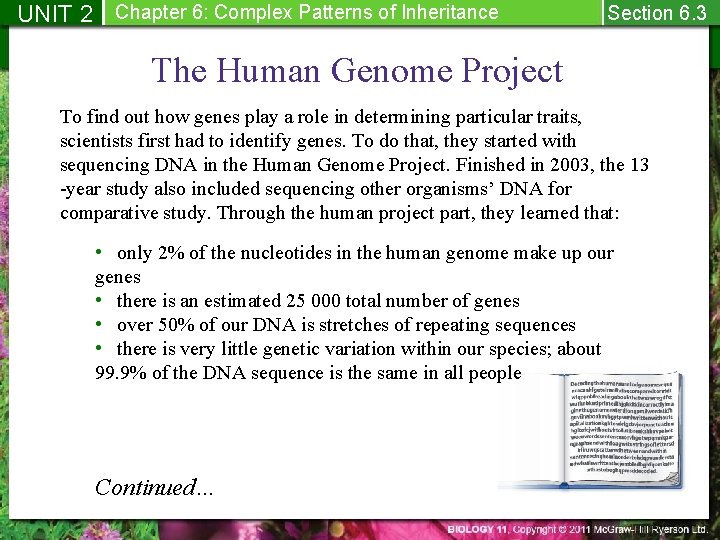
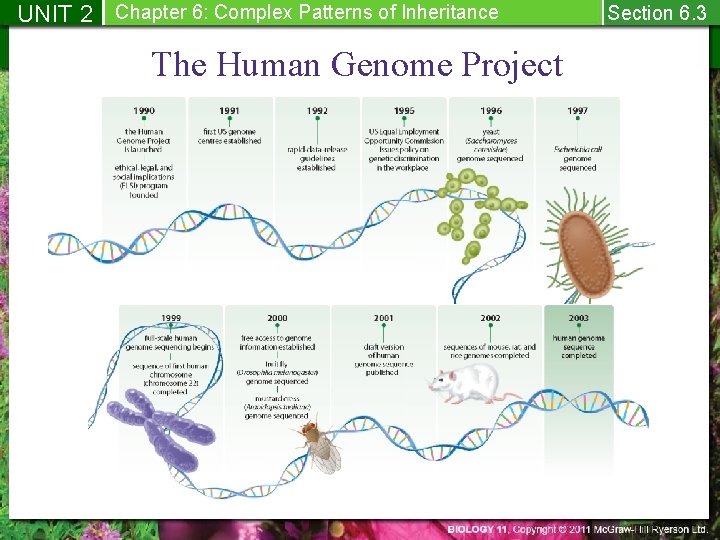
UNIT 2 Chapter 6: Complex Patterns of Inheritance Section 6. 3 The Human Genome Project To find out how genes play a role in determining particular traits, scientists first had to identify genes. To do that, they started with sequencing DNA in the Human Genome Project. Finished in 2003, the 13 -year study also included sequencing other organisms’ DNA for comparative study. Through the human project part, they learned that: • only 2% of the nucleotides in the human genome make up our genes • there is an estimated 25 000 total number of genes • over 50% of our DNA is stretches of repeating sequences • there is very little genetic variation within our species; about 99. 9% of the DNA sequence is the same in all people Continued…
UNIT 2 Chapter 6: Complex Patterns of Inheritance The Human Genome Project Section 6. 3
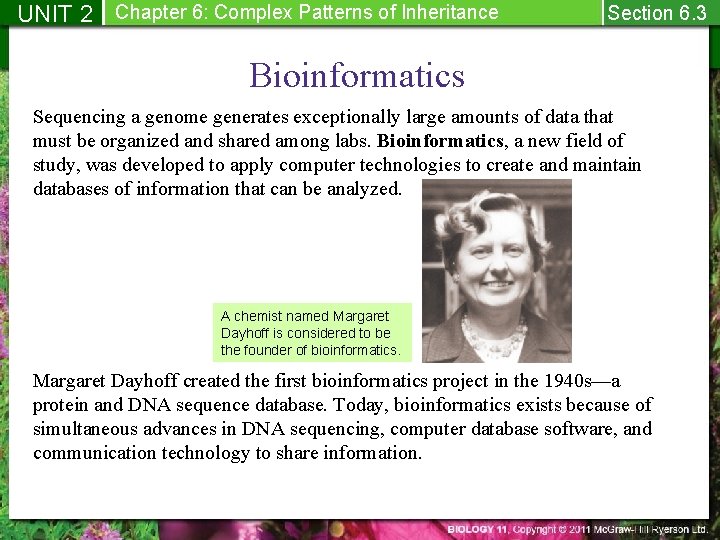
UNIT 2 Chapter 6: Complex Patterns of Inheritance Section 6. 3 Bioinformatics Sequencing a genome generates exceptionally large amounts of data that must be organized and shared among labs. Bioinformatics, a new field of study, was developed to apply computer technologies to create and maintain databases of information that can be analyzed. A chemist named Margaret Dayhoff is considered to be the founder of bioinformatics. Margaret Dayhoff created the first bioinformatics project in the 1940 s—a protein and DNA sequence database. Today, bioinformatics exists because of simultaneous advances in DNA sequencing, computer database software, and communication technology to share information.
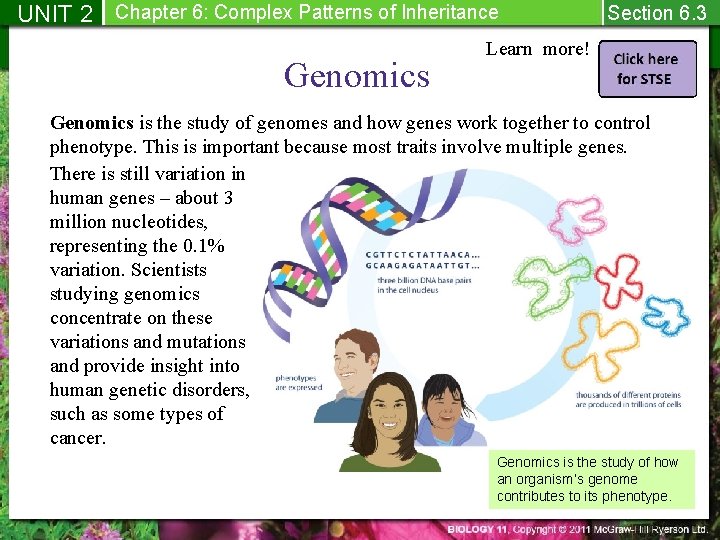
UNIT 2 Chapter 6: Complex Patterns of Inheritance Genomics Section 6. 3 Learn more! Genomics is the study of genomes and how genes work together to control phenotype. This is important because most traits involve multiple genes. There is still variation in human genes – about 3 million nucleotides, representing the 0. 1% variation. Scientists studying genomics concentrate on these variations and mutations and provide insight into human genetic disorders, such as some types of cancer. Genomics is the study of how an organism’s genome contributes to its phenotype.
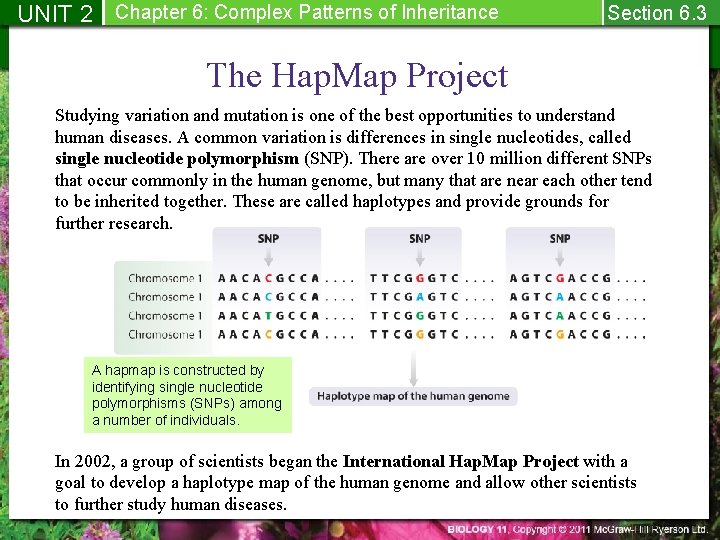
UNIT 2 Chapter 6: Complex Patterns of Inheritance Section 6. 3 The Hap. Map Project Studying variation and mutation is one of the best opportunities to understand human diseases. A common variation is differences in single nucleotides, called single nucleotide polymorphism (SNP). There are over 10 million different SNPs that occur commonly in the human genome, but many that are near each other tend to be inherited together. These are called haplotypes and provide grounds for further research. A hapmap is constructed by identifying single nucleotide polymorphisms (SNPs) among a number of individuals. In 2002, a group of scientists began the International Hap. Map Project with a goal to develop a haplotype map of the human genome and allow other scientists to further study human diseases.
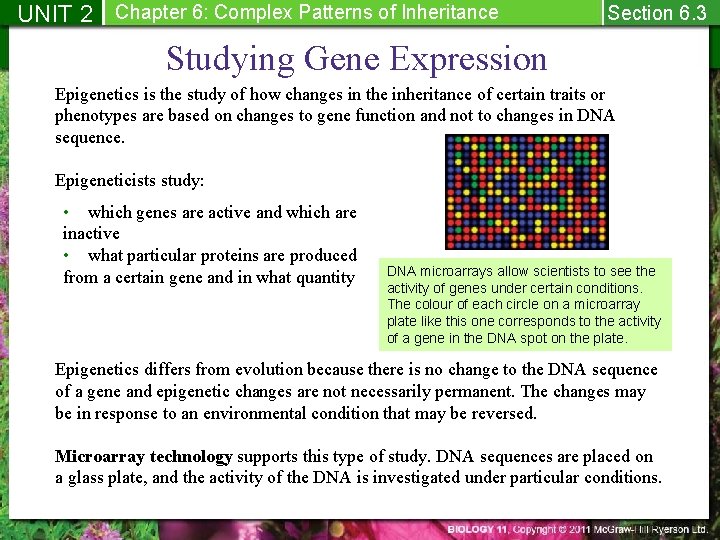
UNIT 2 Chapter 6: Complex Patterns of Inheritance Section 6. 3 Studying Gene Expression Epigenetics is the study of how changes in the inheritance of certain traits or phenotypes are based on changes to gene function and not to changes in DNA sequence. Epigeneticists study: • which genes are active and which are inactive • what particular proteins are produced from a certain gene and in what quantity DNA microarrays allow scientists to see the activity of genes under certain conditions. The colour of each circle on a microarray plate like this one corresponds to the activity of a gene in the DNA spot on the plate. Epigenetics differs from evolution because there is no change to the DNA sequence of a gene and epigenetic changes are not necessarily permanent. The changes may be in response to an environmental condition that may be reversed. Microarray technology supports this type of study. DNA sequences are placed on a glass plate, and the activity of the DNA is investigated under particular conditions.
UNIT 2 Chapter 6: Complex Patterns of Inheritance Section 6. 3 Public Benefits and Concerns In the future, researchers hope to use established links between genetic variation and risk of disease to provide better medical advice. If the cost of DNA sequencing continues to decrease, individuals may have access to their genetic profile – their complete genotype. This possibility creates ethical concerns about sharing the genetic profile or using it to make policy or decisions affecting individuals. It is possible that insurance companies and employers may gain access. The great debate continues as to whether DNA information is a natural resource to be shared for various purposes or belongs to the individual who supplied the sample.
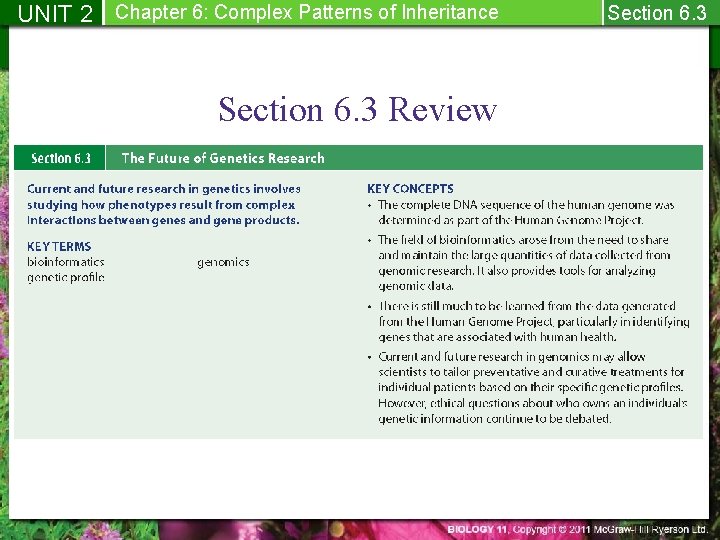
UNIT 2 Chapter 6: Complex Patterns of Inheritance Section 6. 3 Review Section 6. 3
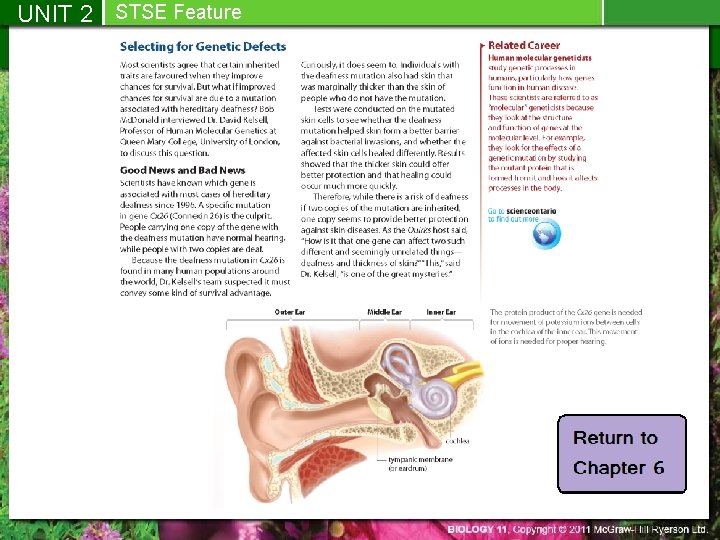
UNIT 2 STSE Feature