
Unit 2 Design measurement and analysis Three stages

- Slides: 11
Unit 2 Design, measurement, and analysis
Three stages • Many people equate quantitative research with statistical analysis. Indeed, statistics is only a subset of data analysis, and data analysis is only one of three components of quantitative research. The three components are: • Research design • Measurement • Data analysis
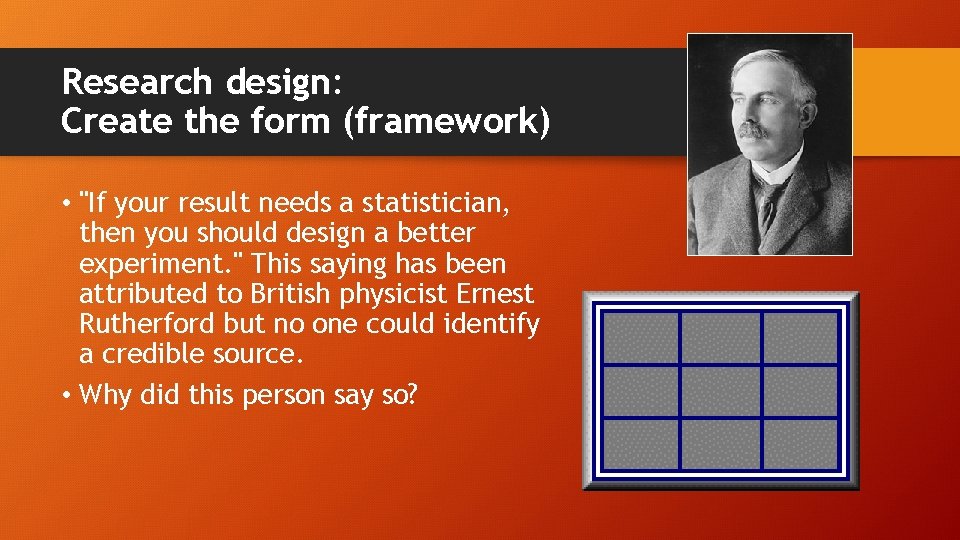
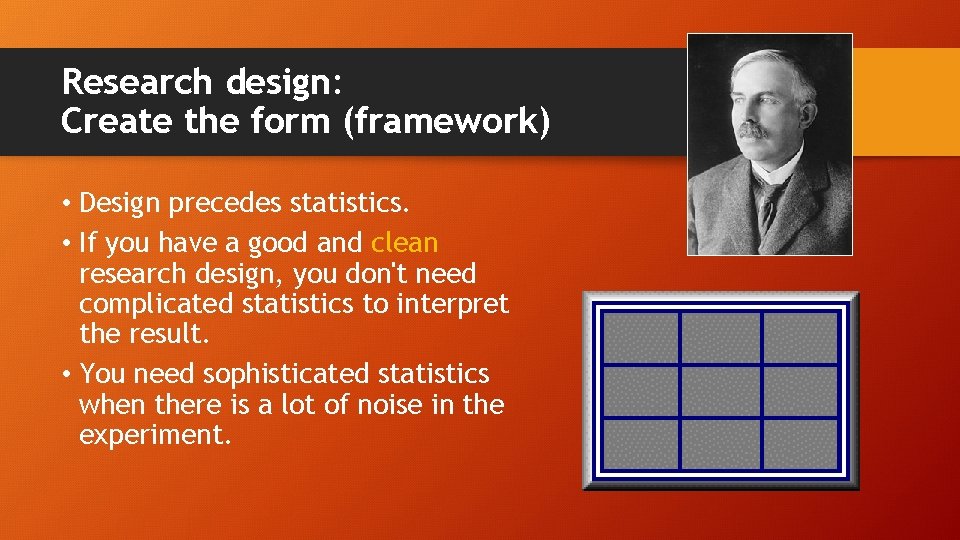
Research design: Create the form (framework) • "If your result needs a statistician, then you should design a better experiment. " This saying has been attributed to British physicist Ernest Rutherford but no one could identify a credible source. • Why did this person say so?
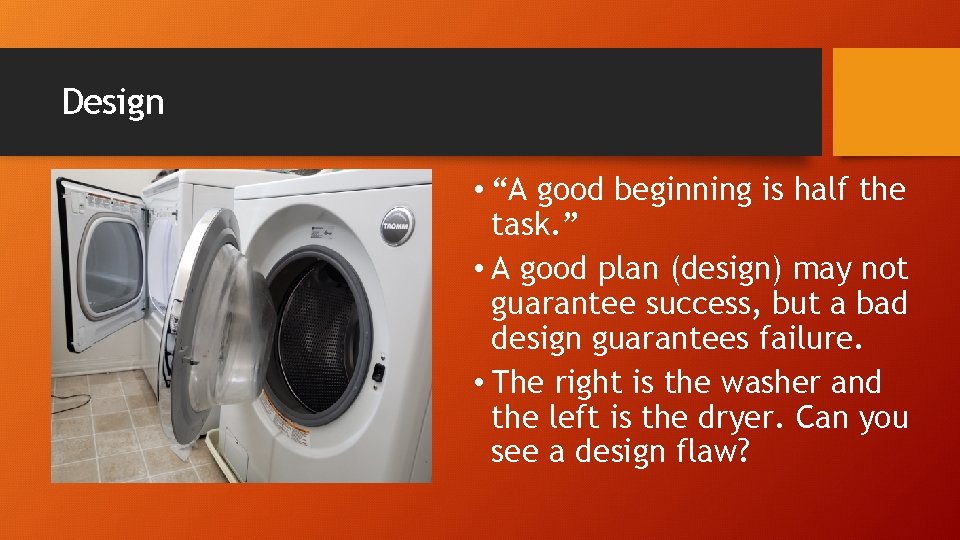
Design • “A good beginning is half the task. ” • A good plan (design) may not guarantee success, but a bad design guarantees failure. • The right is the washer and the left is the dryer. Can you see a design flaw?
Design flaw Form a small group of 3 -5. Have you ever encountered any example of design flaws? You can think about examples in your experience or from the news.
Research design: Create the form (framework) • Design precedes statistics. • If you have a good and clean research design, you don't need complicated statistics to interpret the result. • You need sophisticated statistics when there is a lot of noise in the experiment.
Well-designed study • Box, Hunter, and Hunter (1978) pointed out: • “Frequently conclusions are easily drawn from a welldesigned experiment, even when rather elementary methods of analysis are employed. Conversely, even the most sophisticated statistical analysis cannot salvage a badly designed experiment. ” (p. vii)
Three criteria of good design • Completeness: Poor planning can lead to incomplete designs that leave important questions unanswered. Researchers should start with clear research questions, operationalized variables (or open concepts), and foresee how data are collected to address the questions. • Efficiency: Poor planning can lead to redundant data collection while an efficient design provides the information to the researchers at a fraction of the cost of a poor design. • Insight: “Wow!” not “so what? ” “My research shows that the more hours a student spends studying, the higher their grade on the exam will be. ”
Measurement: Fill the form with substance • Blalock (1974) warned researchers how measurement error could cripple statistical analysis: “The more errors that creep into the data collection stage, the more complex our analyses must be in order to make allowances for these errors. ” • Bond and Fox (2015) asserted that measurement is fundamental: “quantitative researchers in the human sciences are focused too narrowly on statistical analysis and not concerned nearly enough about the nature of the data on which they use these statistics (p. 1). ” • Never make up your own measurement tool when you study abstract concepts e. g. intelligence, mental illness. Why?
Data analysis: Manipulate the substance within the form • The objective of analysis is not to make things more complicated, rather it is data reduction and clarification (Pedhazur, 1982). • Data analysis is by no means equated with statistical analysis. Statistical analysis is essentially tied to probability. Data analysis involves probability when it is needed, but avoids probability when it is improper e. g. data mining looks at the data at hand.
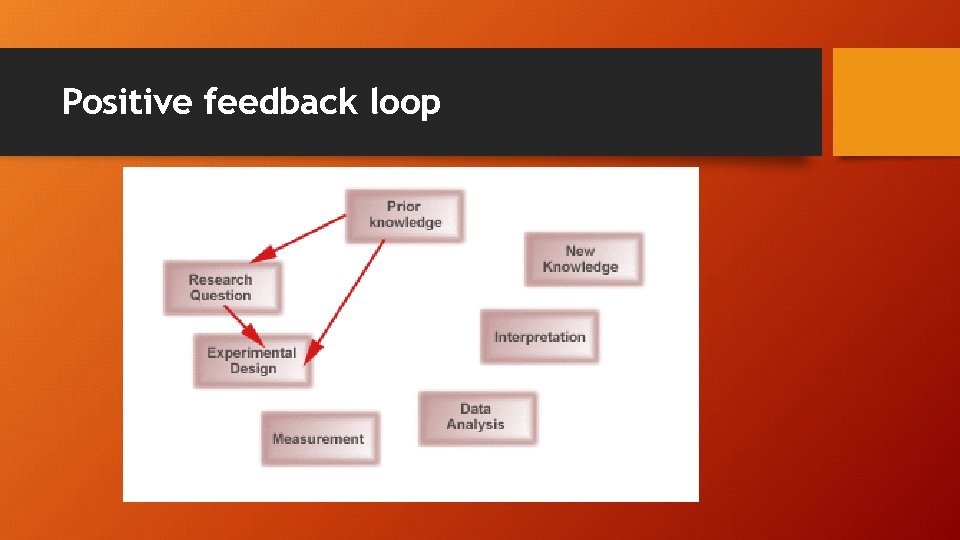
Positive feedback loop