
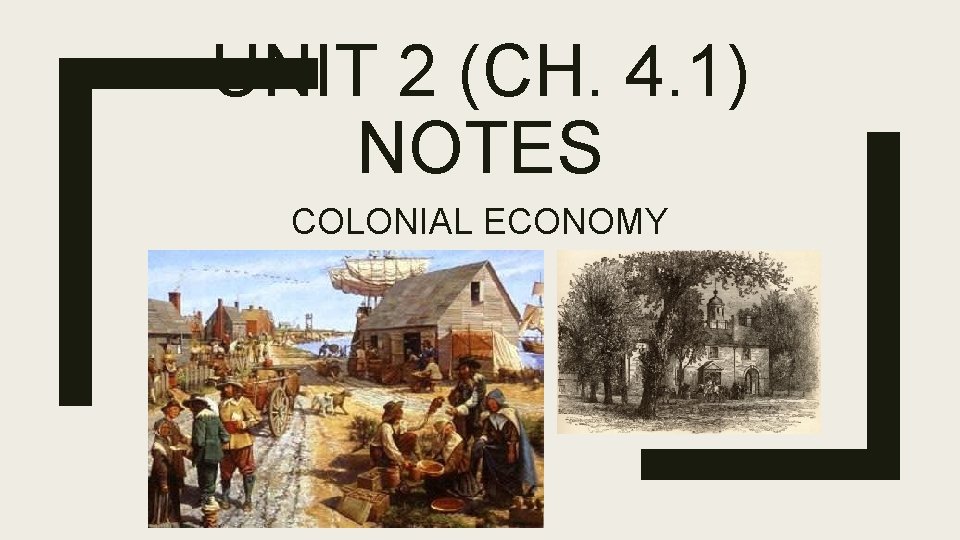
UNIT 2 CH 4 1 NOTES COLONIAL ECONOMY
- Slides: 13
UNIT 2 (CH. 4. 1) NOTES COLONIAL ECONOMY
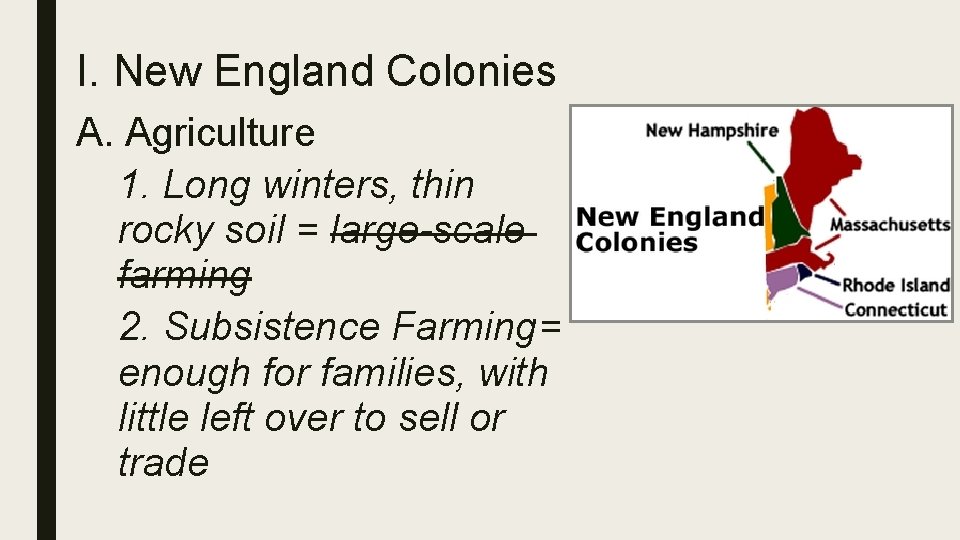
I. New England Colonies A. Agriculture 1. Long winters, thin rocky soil = large-scale farming 2. Subsistence Farming= enough for families, with little left over to sell or trade
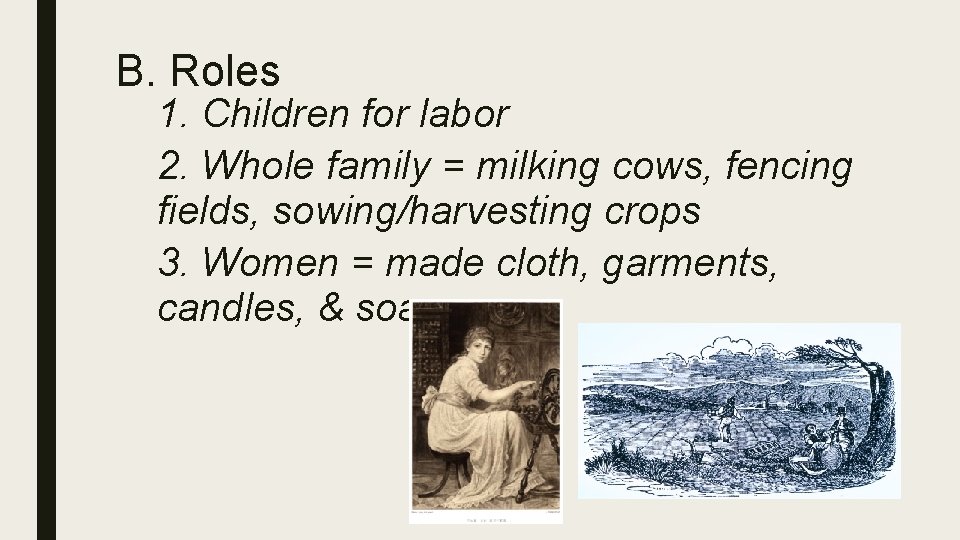
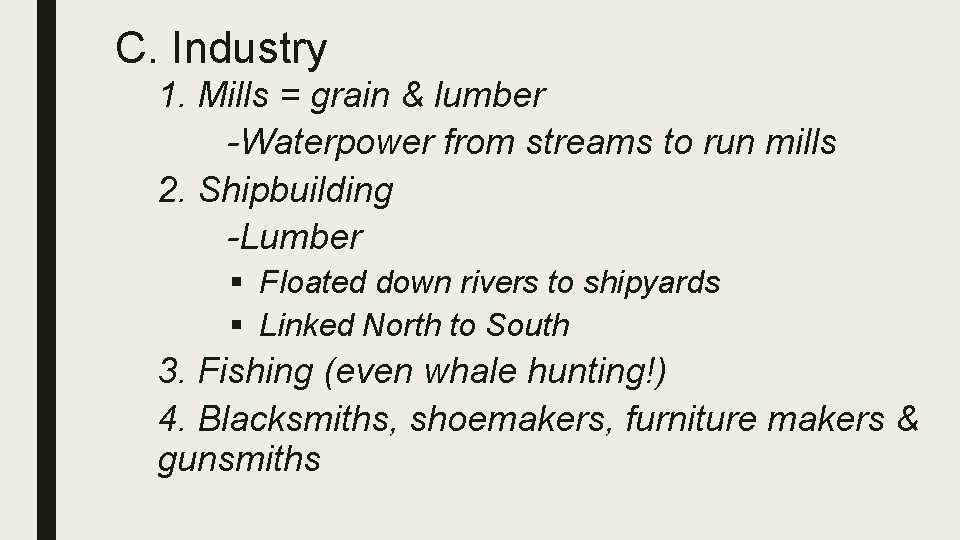
B. Roles 1. Children for labor 2. Whole family = milking cows, fencing fields, sowing/harvesting crops 3. Women = made cloth, garments, candles, & soap
C. Industry 1. Mills = grain & lumber -Waterpower from streams to run mills 2. Shipbuilding -Lumber § Floated down rivers to shipyards § Linked North to South 3. Fishing (even whale hunting!) 4. Blacksmiths, shoemakers, furniture makers & gunsmiths
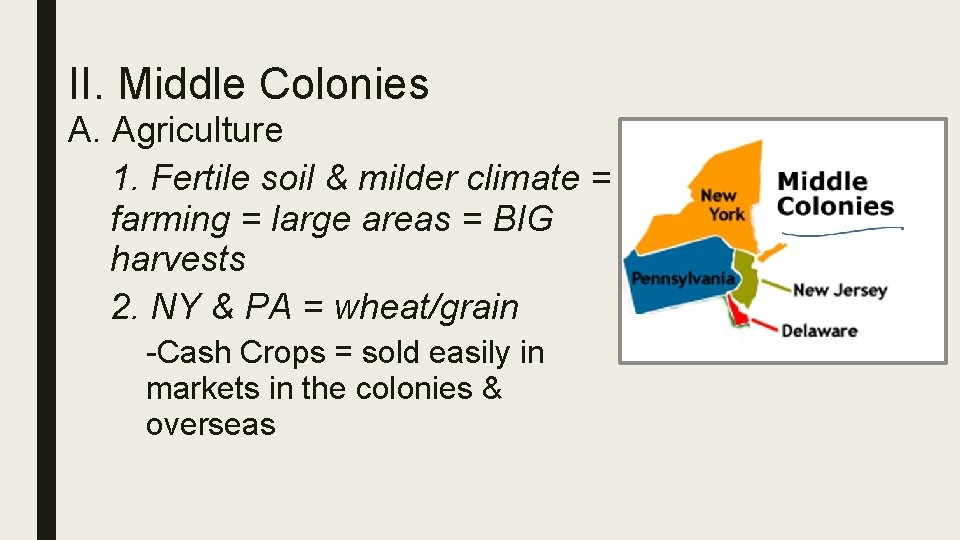
II. Middle Colonies A. Agriculture 1. Fertile soil & milder climate = farming = large areas = BIG harvests 2. NY & PA = wheat/grain -Cash Crops = sold easily in markets in the colonies & overseas
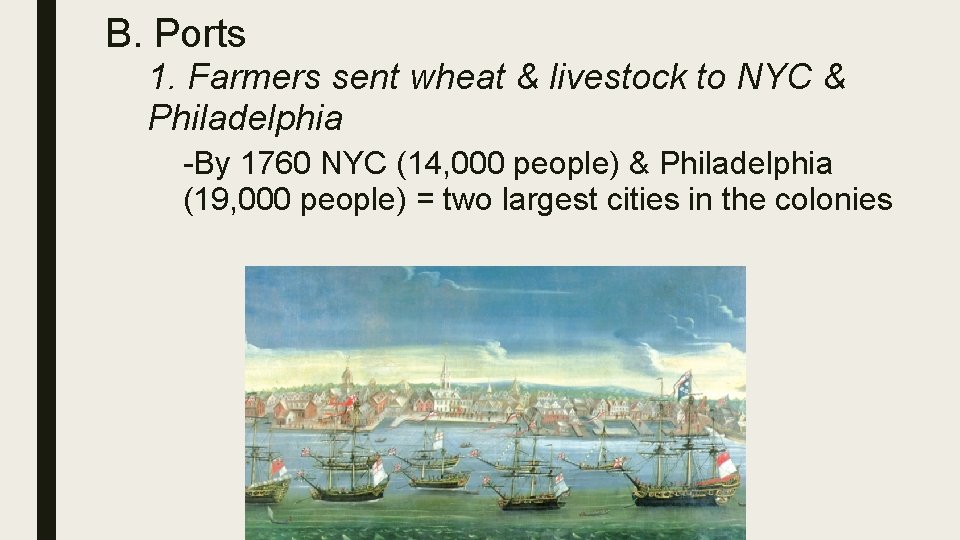
B. Ports 1. Farmers sent wheat & livestock to NYC & Philadelphia -By 1760 NYC (14, 000 people) & Philadelphia (19, 000 people) = two largest cities in the colonies
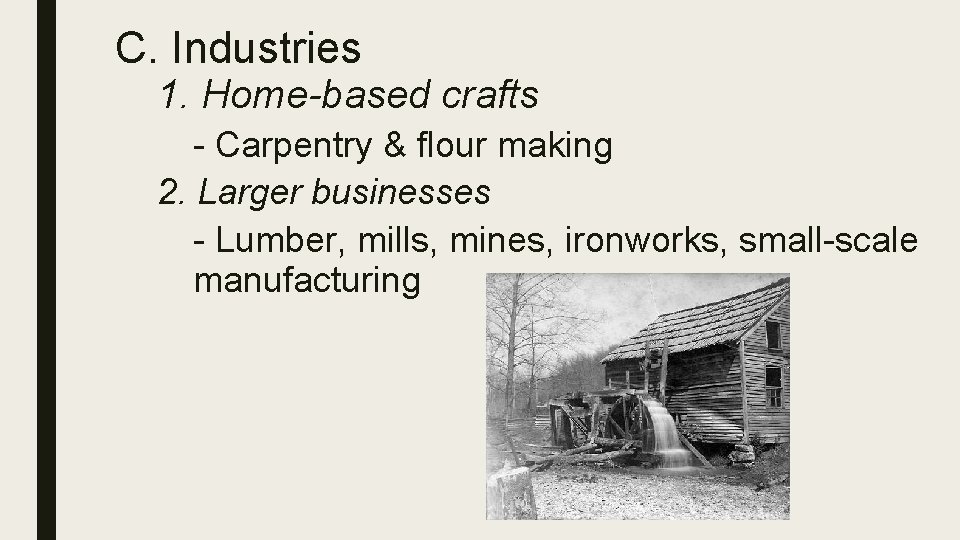
C. Industries 1. Home-based crafts - Carpentry & flour making 2. Larger businesses - Lumber, mills, mines, ironworks, small-scale manufacturing
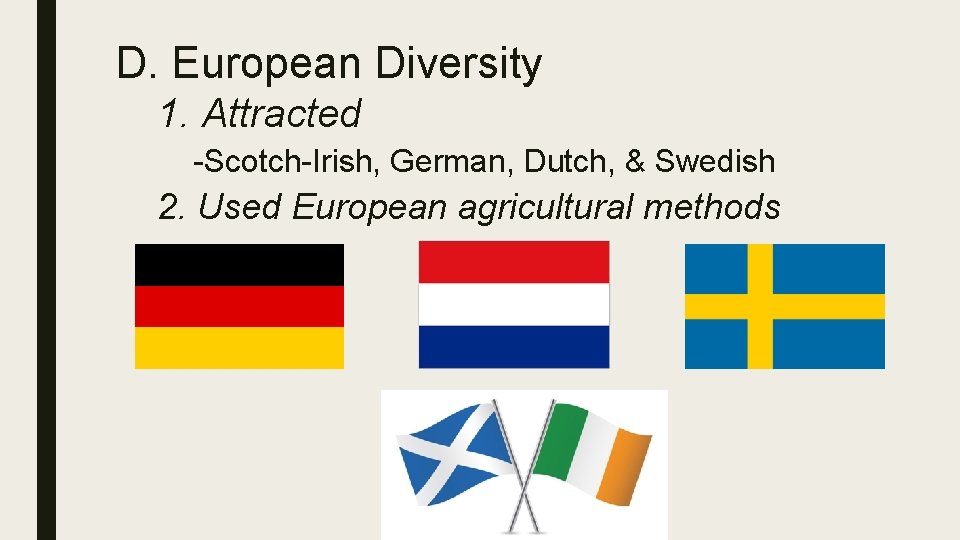
D. European Diversity 1. Attracted -Scotch-Irish, German, Dutch, & Swedish 2. Used European agricultural methods
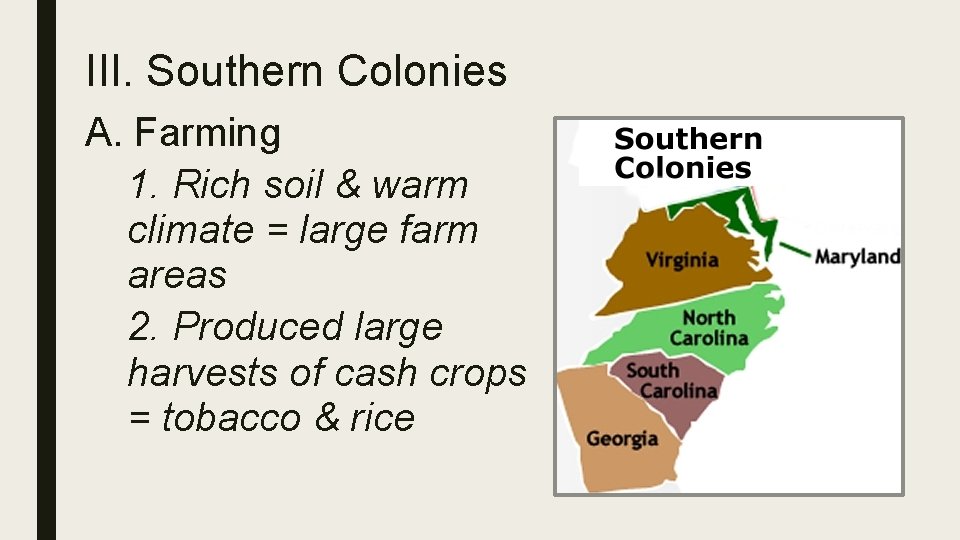
III. Southern Colonies A. Farming 1. Rich soil & warm climate = large farm areas 2. Produced large harvests of cash crops = tobacco & rice
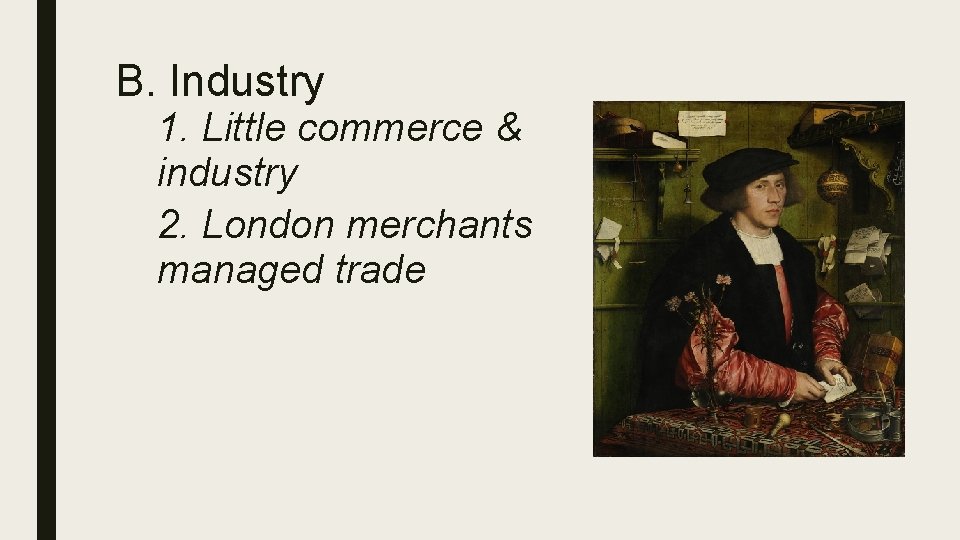
B. Industry 1. Little commerce & industry 2. London merchants managed trade
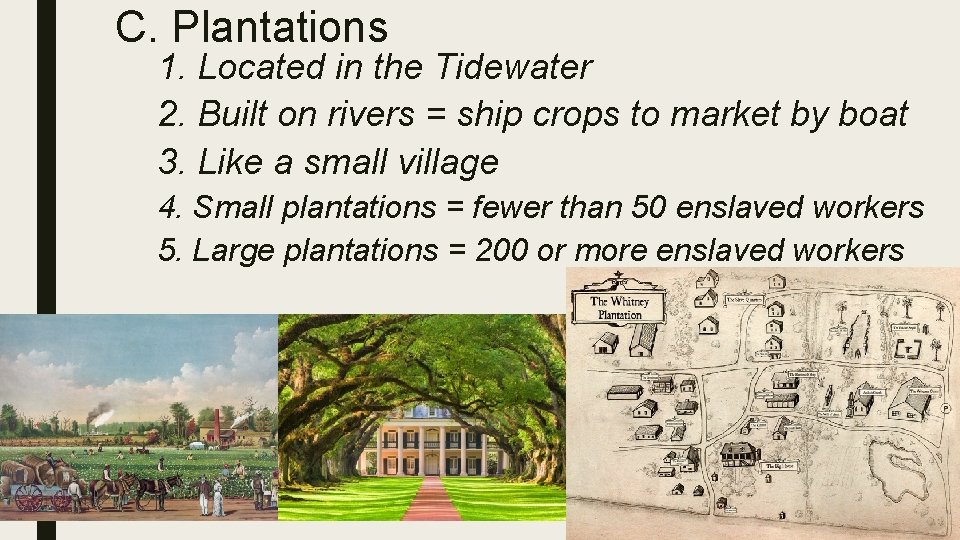
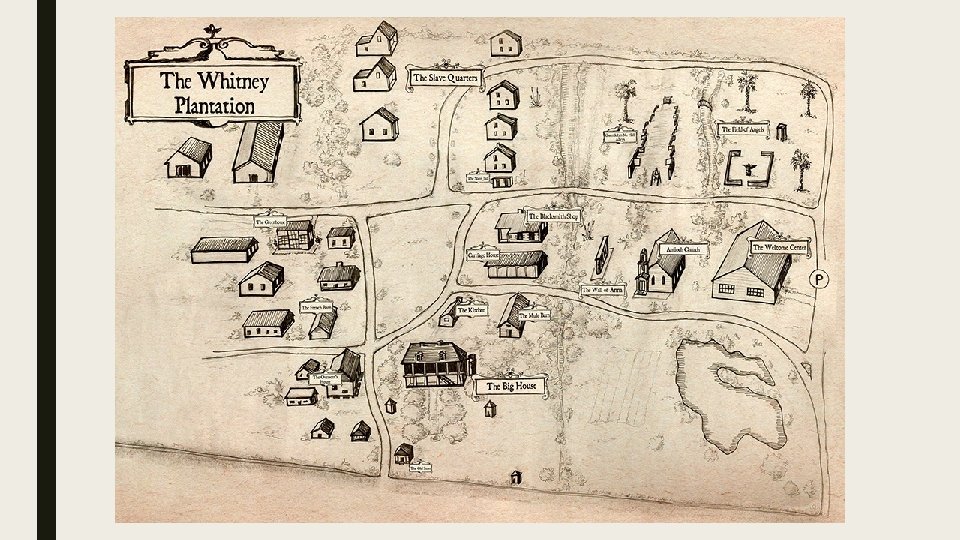
C. Plantations 1. Located in the Tidewater 2. Built on rivers = ship crops to market by boat 3. Like a small village 4. Small plantations = fewer than 50 enslaved workers 5. Large plantations = 200 or more enslaved workers
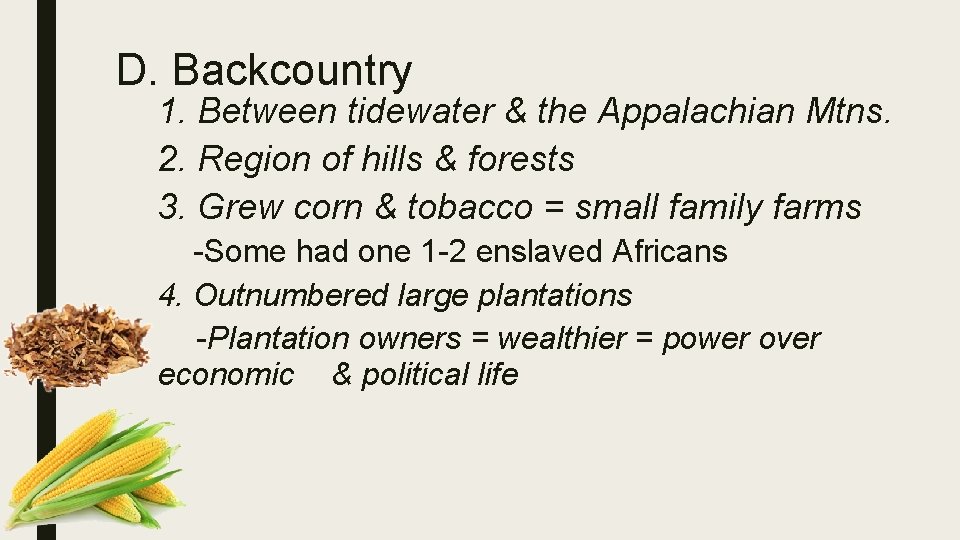
D. Backcountry 1. Between tidewater & the Appalachian Mtns. 2. Region of hills & forests 3. Grew corn & tobacco = small family farms -Some had one 1 -2 enslaved Africans 4. Outnumbered large plantations -Plantation owners = wealthier = power over economic & political life