
Unit 2 Biomechanics Angular Motion Centric and Eccentric
Unit 2: Biomechanics Angular Motion Centric and Eccentric Forces Magnus Effect Rotary Inertia Woodland Christian High School
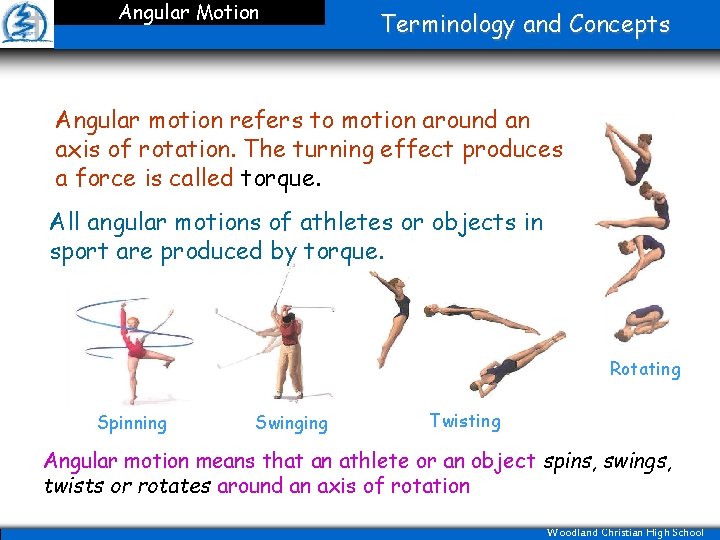
Angular Motion Terminology and Concepts Angular motion refers to motion around an axis of rotation. The turning effect produces a force is called torque. All angular motions of athletes or objects in sport are produced by torque. Rotating Spinning Swinging Twisting Angular motion means that an athlete or an object spins, swings, twists or rotates around an axis of rotation Woodland Christian High School
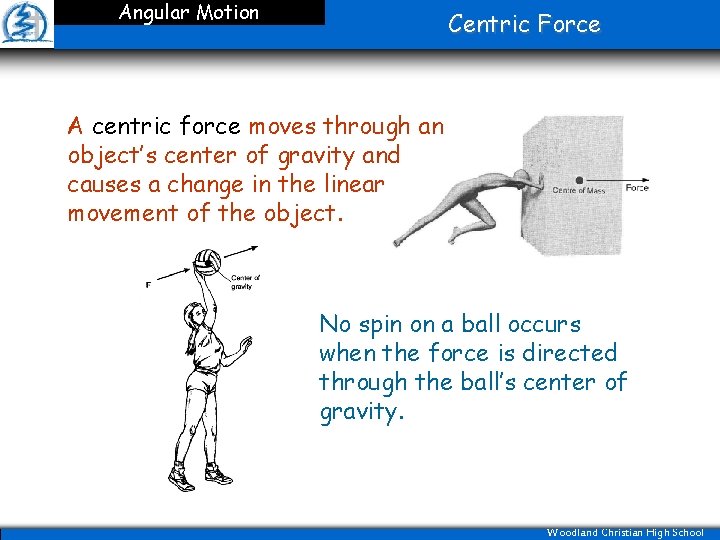
Angular Motion Centric Force A centric force moves through an object’s center of gravity and causes a change in the linear movement of the object. No spin on a ball occurs when the force is directed through the ball’s center of gravity. Woodland Christian High School
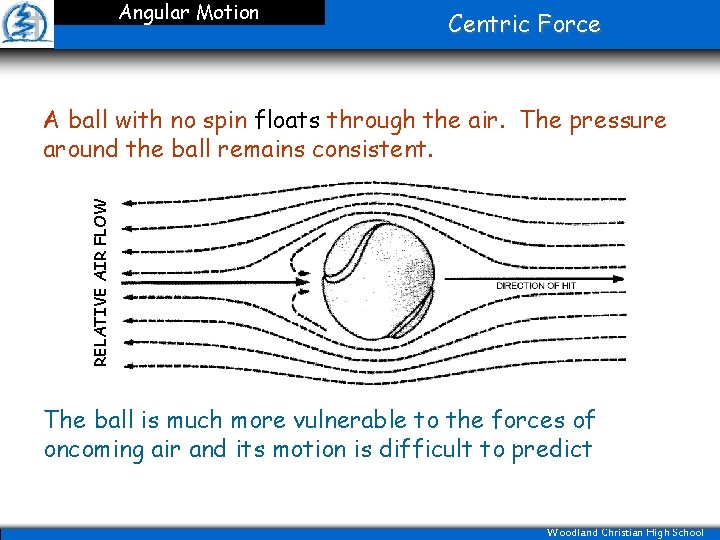
Angular Motion Centric Force RELATIVE AIR FLOW A ball with no spin floats through the air. The pressure around the ball remains consistent. The ball is much more vulnerable to the forces of oncoming air and its motion is difficult to predict Woodland Christian High School
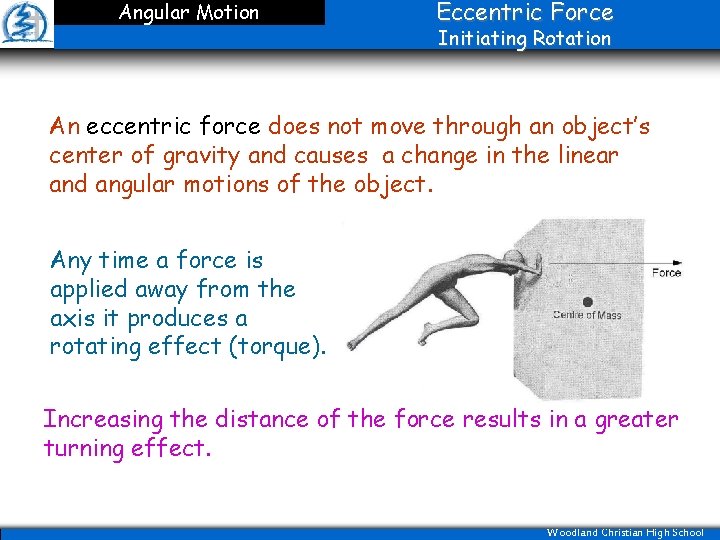
Angular Motion Eccentric Force Initiating Rotation An eccentric force does not move through an object’s center of gravity and causes a change in the linear and angular motions of the object. Any time a force is applied away from the axis it produces a rotating effect (torque). Increasing the distance of the force results in a greater turning effect. Woodland Christian High School
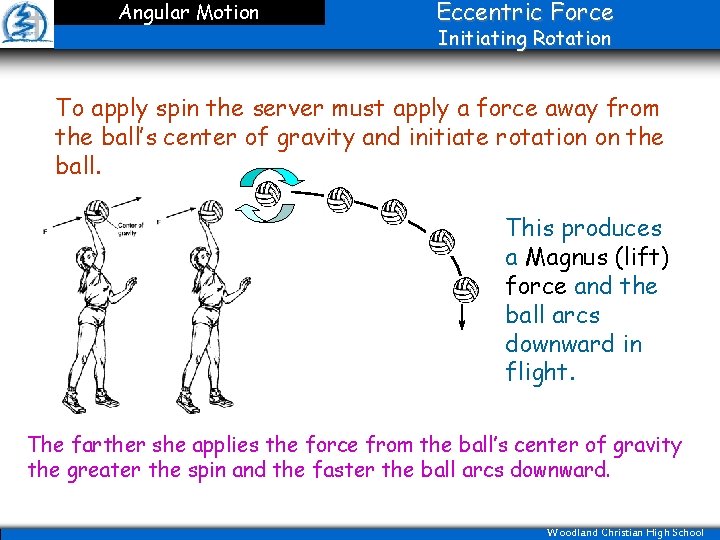
Angular Motion Eccentric Force Initiating Rotation To apply spin the server must apply a force away from the ball’s center of gravity and initiate rotation on the ball. This produces a Magnus (lift) force and the ball arcs downward in flight. The farther she applies the force from the ball’s center of gravity the greater the spin and the faster the ball arcs downward. Woodland Christian High School
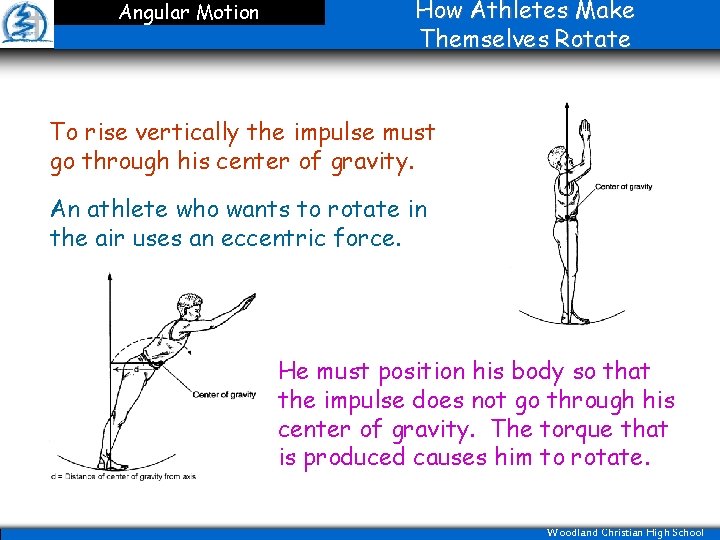
Angular Motion How Athletes Make Themselves Rotate To rise vertically the impulse must go through his center of gravity. An athlete who wants to rotate in the air uses an eccentric force. He must position his body so that the impulse does not go through his center of gravity. The torque that is produced causes him to rotate. Woodland Christian High School
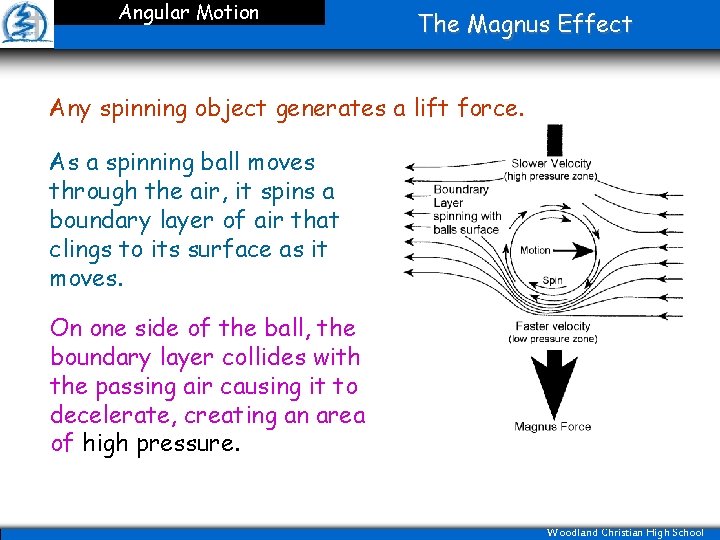
Angular Motion The Magnus Effect Any spinning object generates a lift force. As a spinning ball moves through the air, it spins a boundary layer of air that clings to its surface as it moves. On one side of the ball, the boundary layer collides with the passing air causing it to decelerate, creating an area of high pressure. Woodland Christian High School
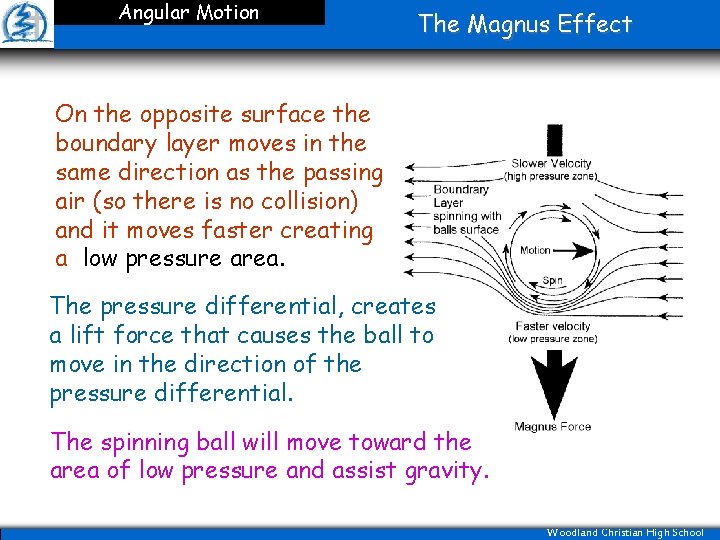
Angular Motion The Magnus Effect On the opposite surface the boundary layer moves in the same direction as the passing air (so there is no collision) and it moves faster creating a low pressure area. The pressure differential, creates a lift force that causes the ball to move in the direction of the pressure differential. The spinning ball will move toward the area of low pressure and assist gravity. Woodland Christian High School
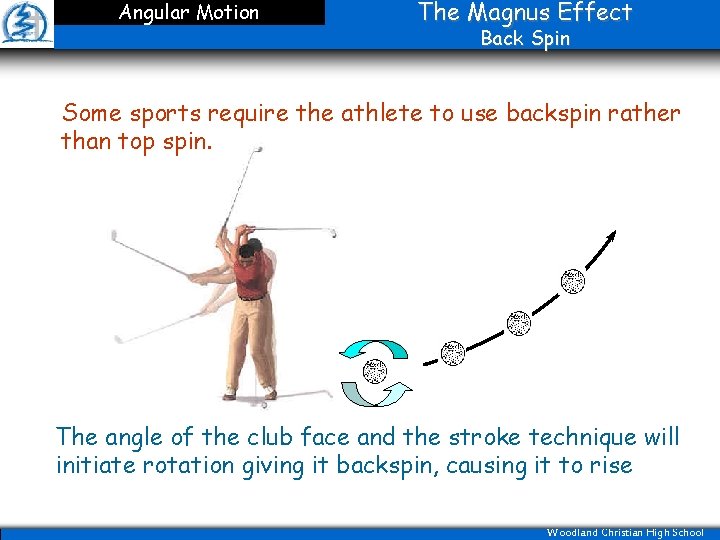
Angular Motion The Magnus Effect Back Spin Some sports require the athlete to use backspin rather than top spin. The angle of the club face and the stroke technique will initiate rotation giving it backspin, causing it to rise Woodland Christian High School
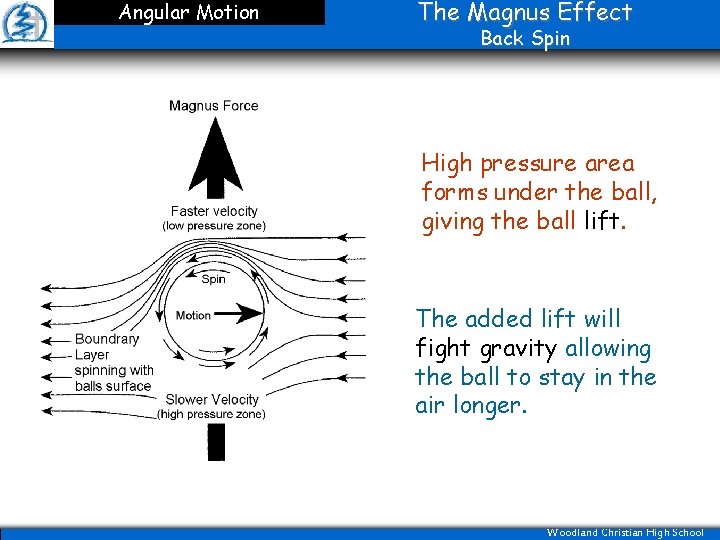
Angular Motion The Magnus Effect Back Spin High pressure area forms under the ball, giving the ball lift. The added lift will fight gravity allowing the ball to stay in the air longer. Woodland Christian High School
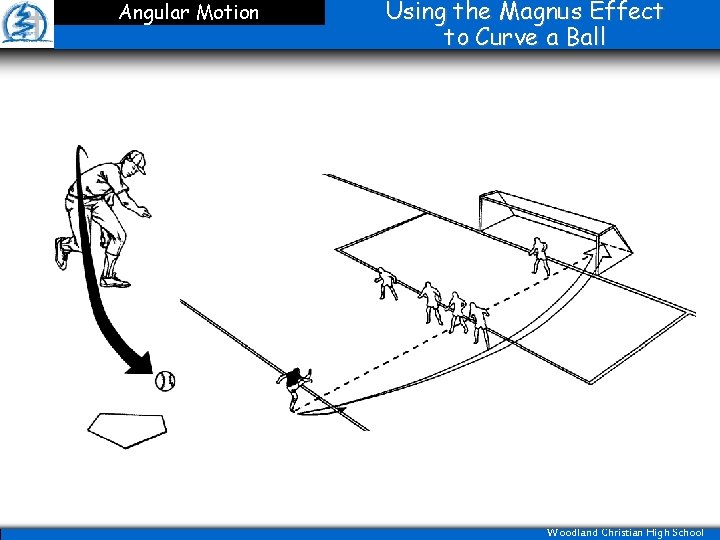
Angular Motion Using the Magnus Effect to Curve a Ball Woodland Christian High School
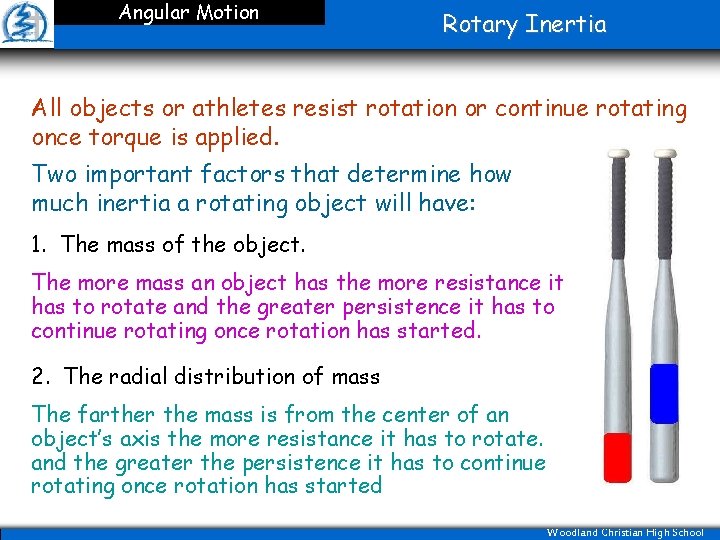
Angular Motion Rotary Inertia All objects or athletes resist rotation or continue rotating once torque is applied. Two important factors that determine how much inertia a rotating object will have: 1. The mass of the object. The more mass an object has the more resistance it has to rotate and the greater persistence it has to continue rotating once rotation has started. 2. The radial distribution of mass The farther the mass is from the center of an object’s axis the more resistance it has to rotate. and the greater the persistence it has to continue rotating once rotation has started 32 oz 36 oz Woodland Christian High School
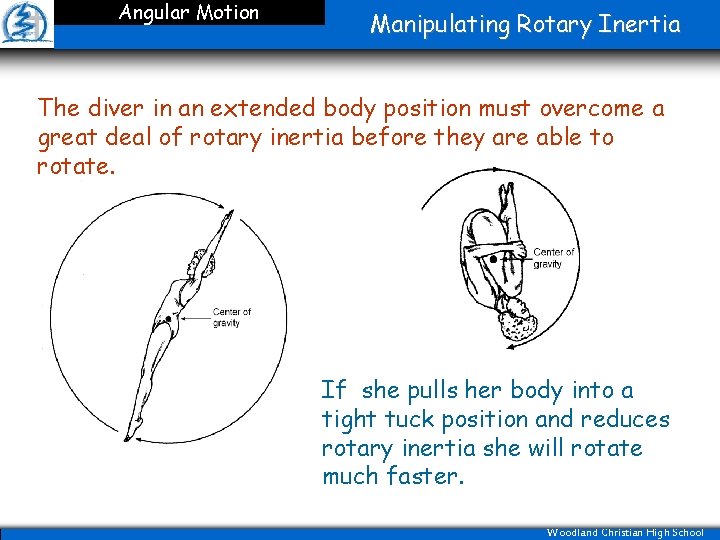
Angular Motion Manipulating Rotary Inertia The diver in an extended body position must overcome a great deal of rotary inertia before they are able to rotate. If she pulls her body into a tight tuck position and reduces rotary inertia she will rotate much faster. Woodland Christian High School
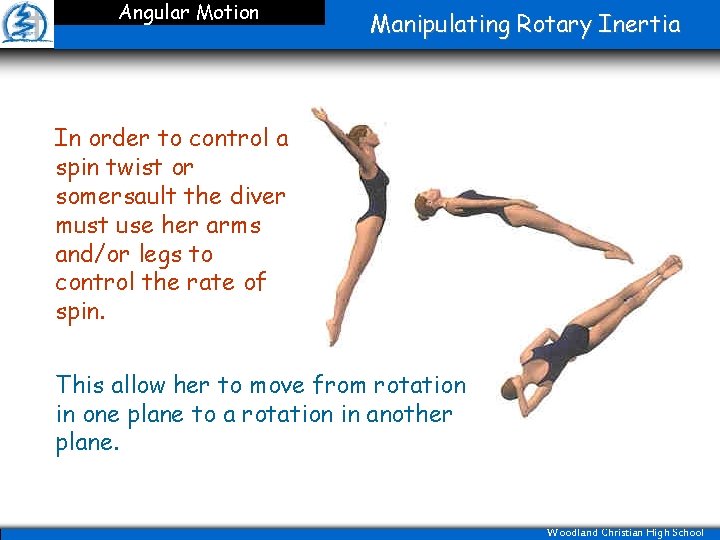
Angular Motion Manipulating Rotary Inertia In order to control a spin twist or somersault the diver must use her arms and/or legs to control the rate of spin. This allow her to move from rotation in one plane to a rotation in another plane. Woodland Christian High School
Angular Motion Summary The amount of spin applied to an object depends on how much force is applied and how far it is applied from the ball’s center of gravity. The greater the force and the larger the distance from the center of gravity, the greater the torque and the greater the spin. Principle 7: Angular Motion Angular motion is produced by the application of force or torque acting at some distance from an axis Woodland Christian High School
- Slides: 16