
Unit 2 AOS 2 KK 2 Chromosomes Karyotypes
- Slides: 52
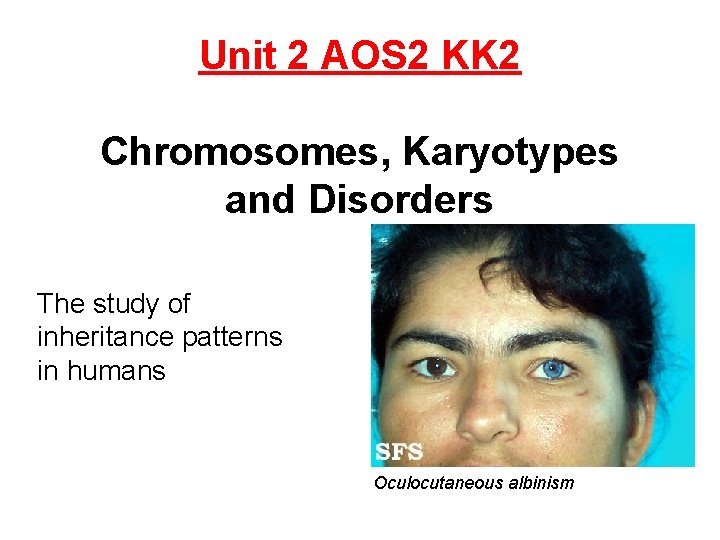
Unit 2 AOS 2 KK 2 Chromosomes, Karyotypes and Disorders The study of inheritance patterns in humans Oculocutaneous albinism
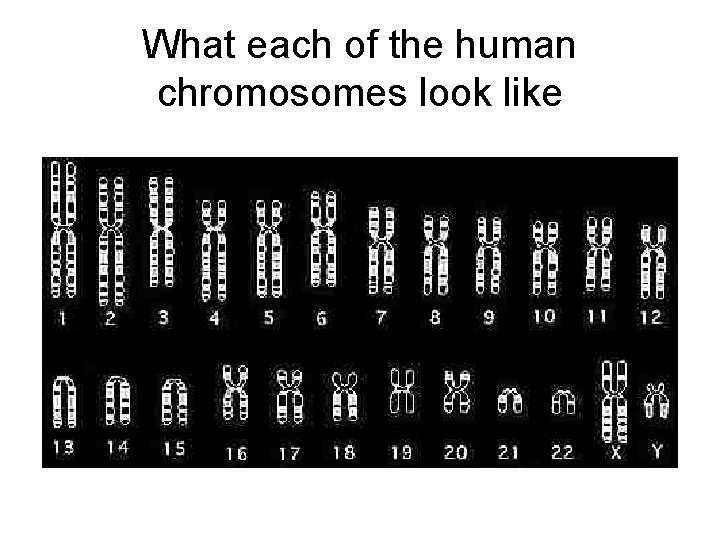
What each of the human chromosomes look like
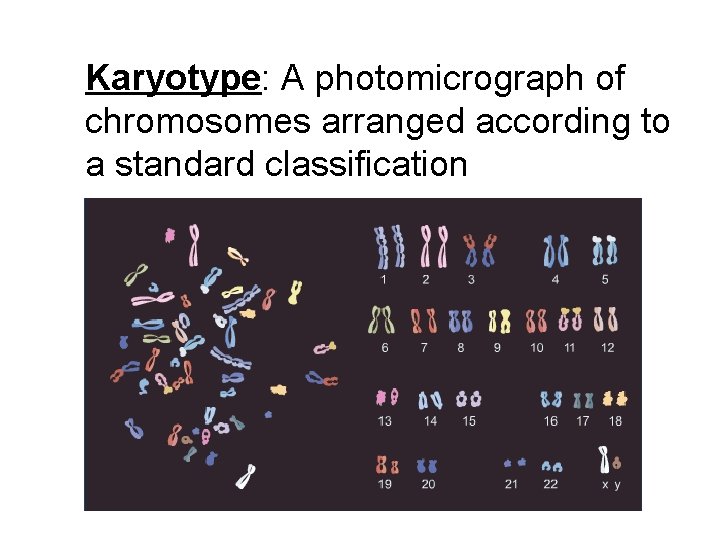
Karyotype: A photomicrograph of chromosomes arranged according to a standard classification
In other words… • Chromosomes are digitally arranged so that they are matched with their homologue or “partner” chromosome. • Homologue chromosomes are the same size, shape, and carry the same genes, and one is inherited from each parent. • They are numbered according to size.
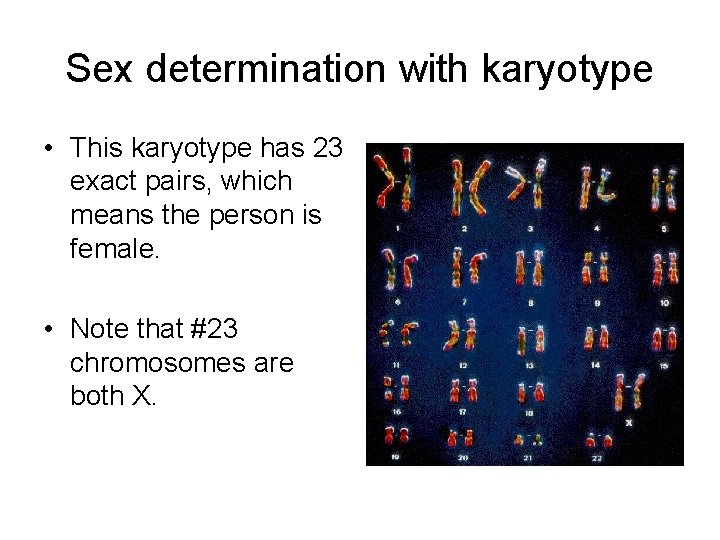
Sex determination with karyotype • This karyotype has 23 exact pairs, which means the person is female. • Note that #23 chromosomes are both X.
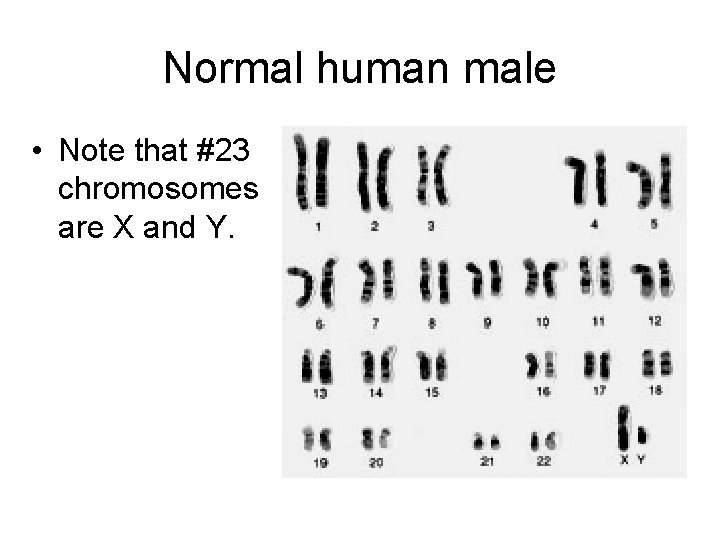
Normal human male • Note that #23 chromosomes are X and Y.
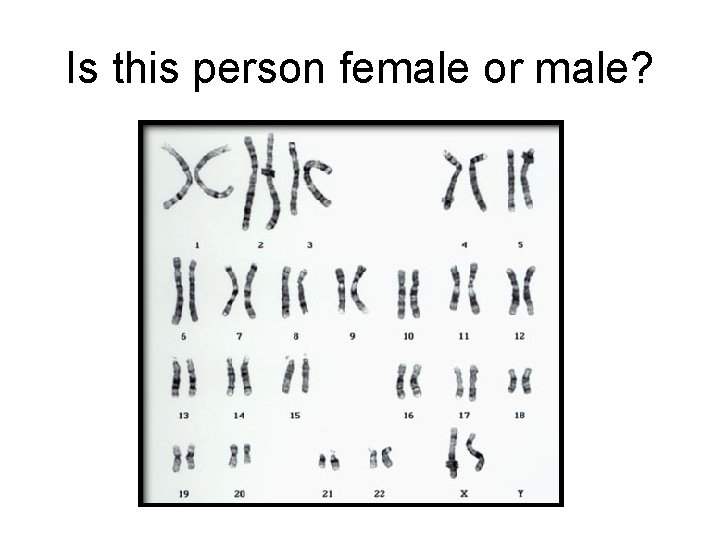
Is this person female or male?
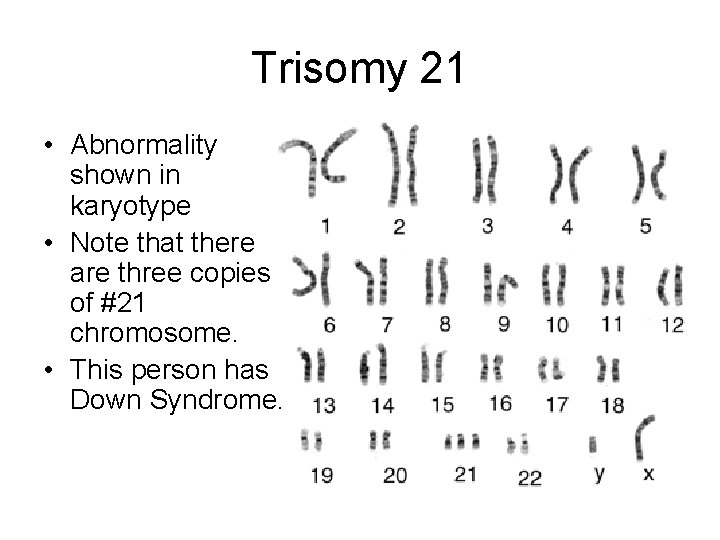
Trisomy 21 • Abnormality shown in karyotype • Note that there are three copies of #21 chromosome. • This person has Down Syndrome.
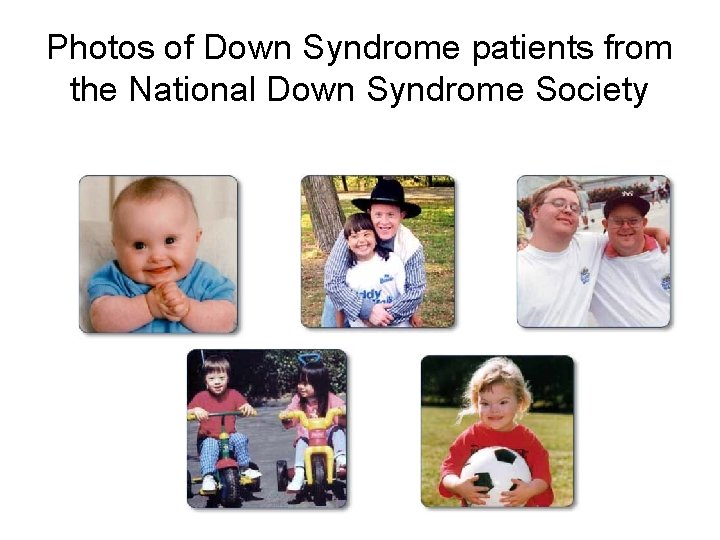
Photos of Down Syndrome patients from the National Down Syndrome Society
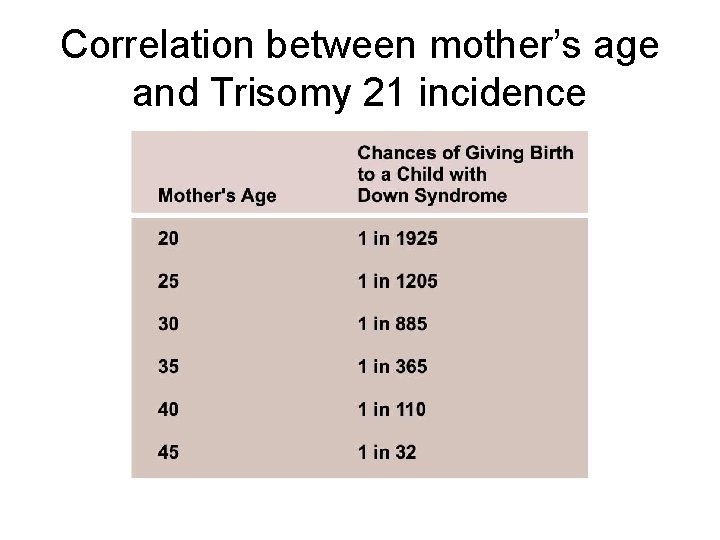
Correlation between mother’s age and Trisomy 21 incidence
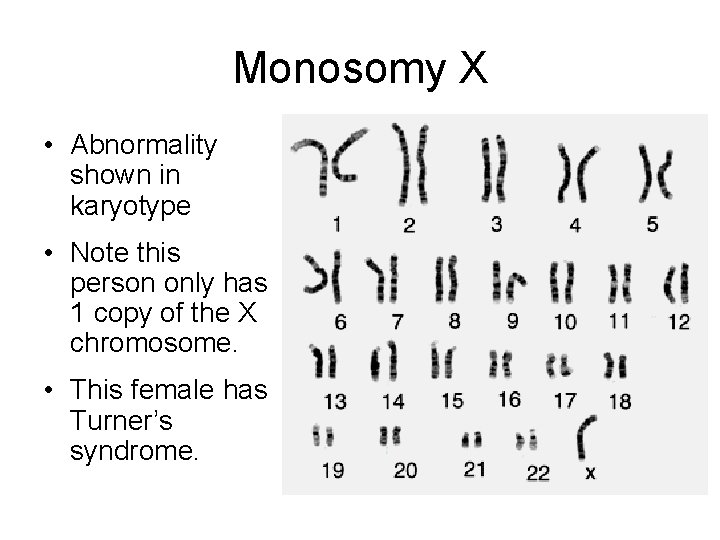
Monosomy X • Abnormality shown in karyotype • Note this person only has 1 copy of the X chromosome. • This female has Turner’s syndrome.
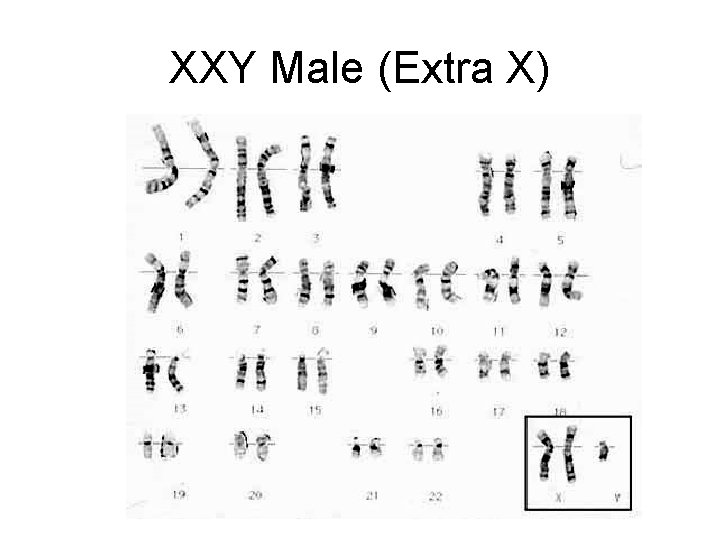
XXY Male (Extra X)
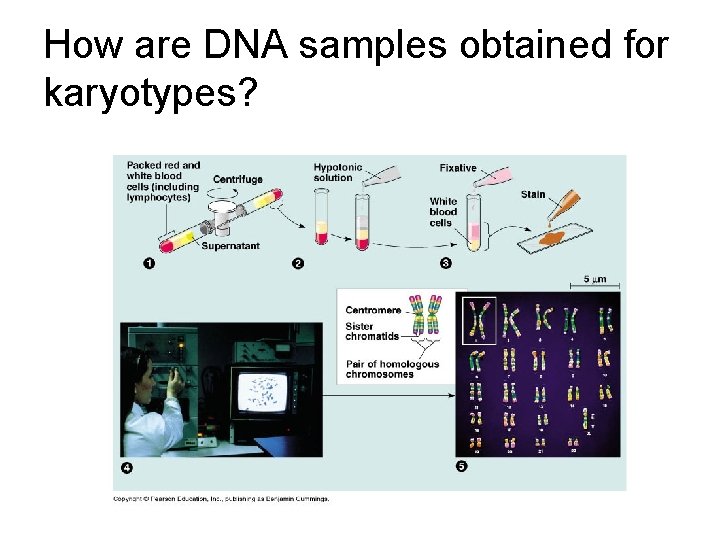
How are DNA samples obtained for karyotypes?
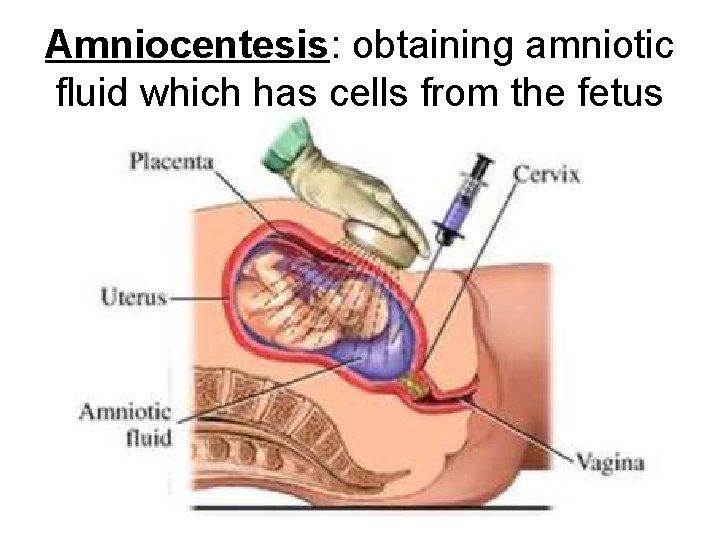
Amniocentesis: obtaining amniotic fluid which has cells from the fetus
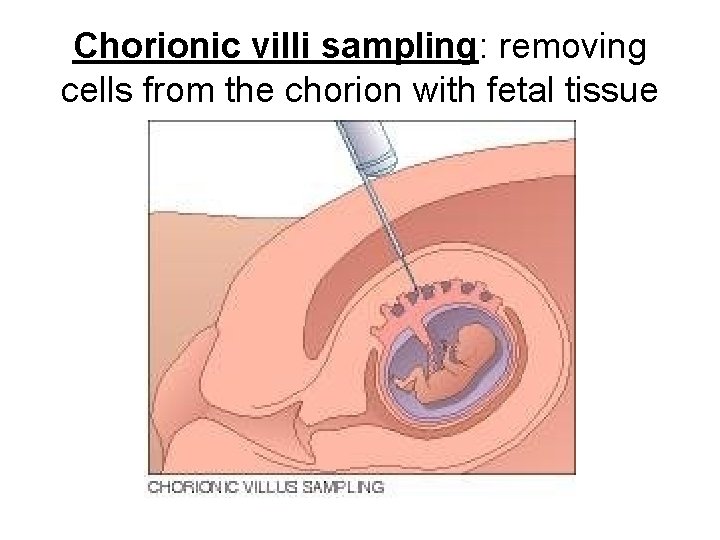
Chorionic villi sampling: removing cells from the chorion with fetal tissue
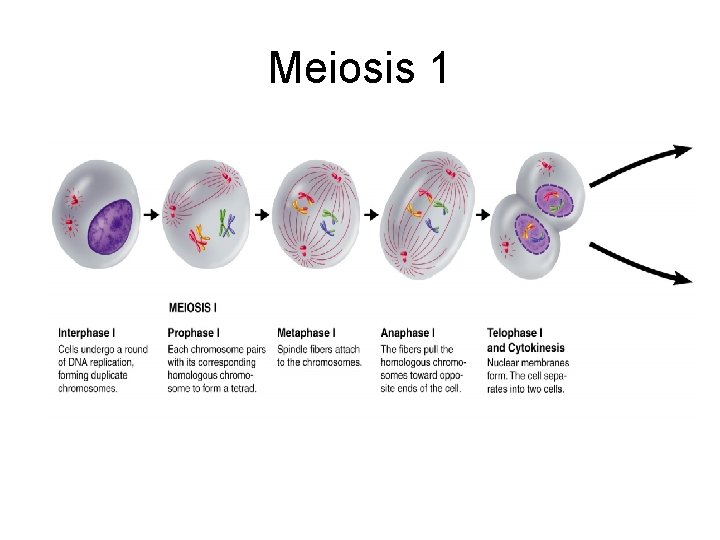
If there are chromosomal number abnormalities, how do they form? • Meiosis: the process of creating sperm or egg from a diploid cell • If there is a mistake when chromosomes are separating, then the resulting sperm or egg will have too many or too few chromosomes.
Meiosis 1
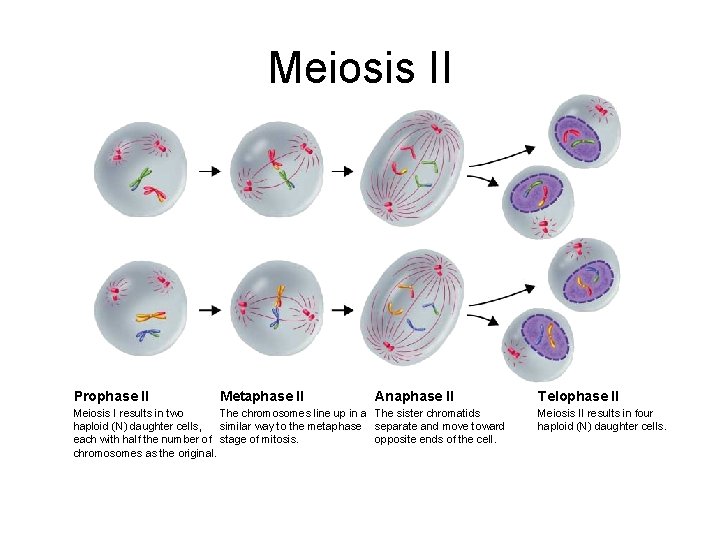
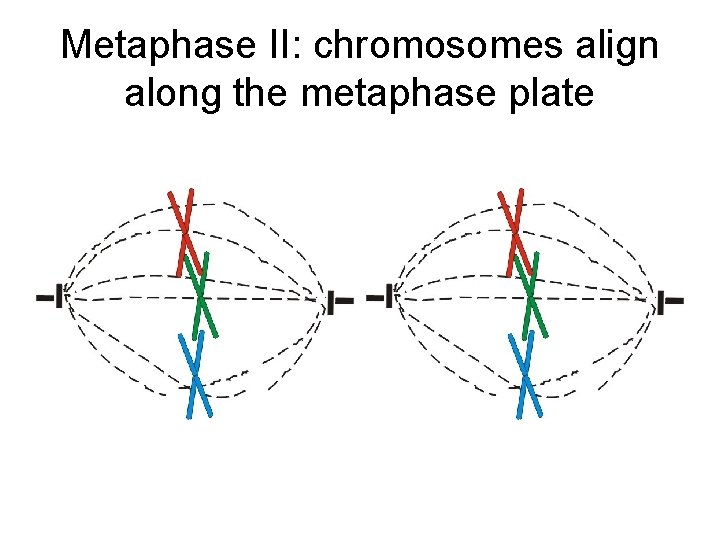
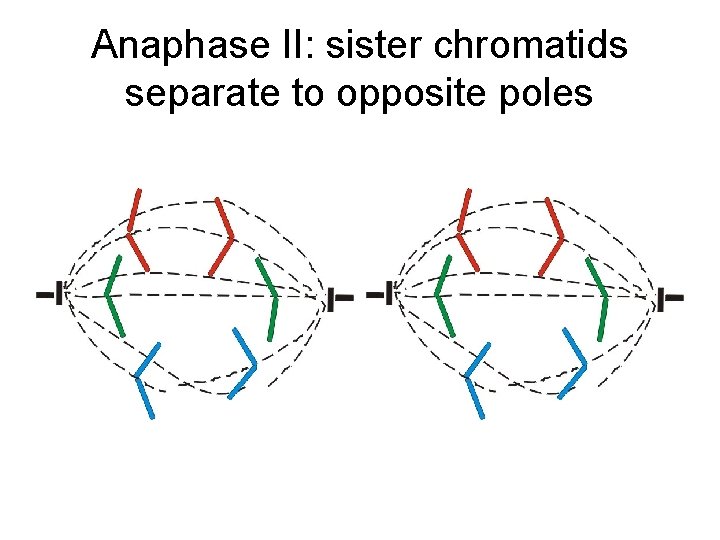
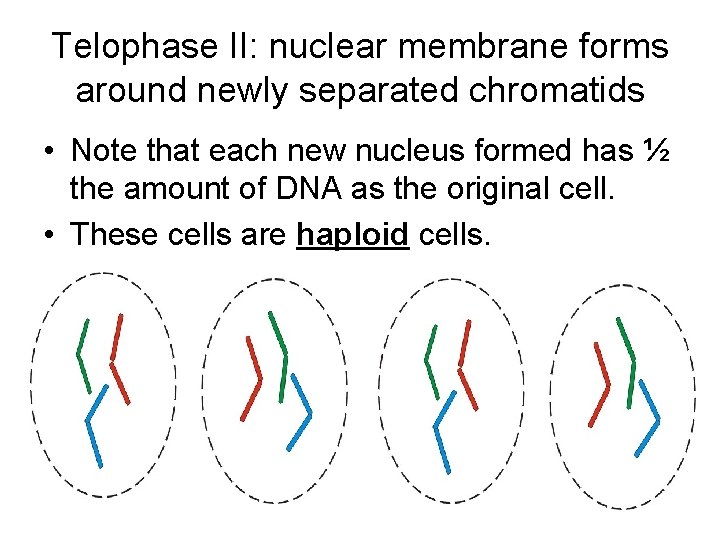
Meiosis II Prophase II Metaphase II Anaphase II Meiosis I results in two The chromosomes line up in a The sister chromatids haploid (N) daughter cells, similar way to the metaphase separate and move toward each with half the number of stage of mitosis. opposite ends of the cell. chromosomes as the original. Telophase II Meiosis II results in four haploid (N) daughter cells.
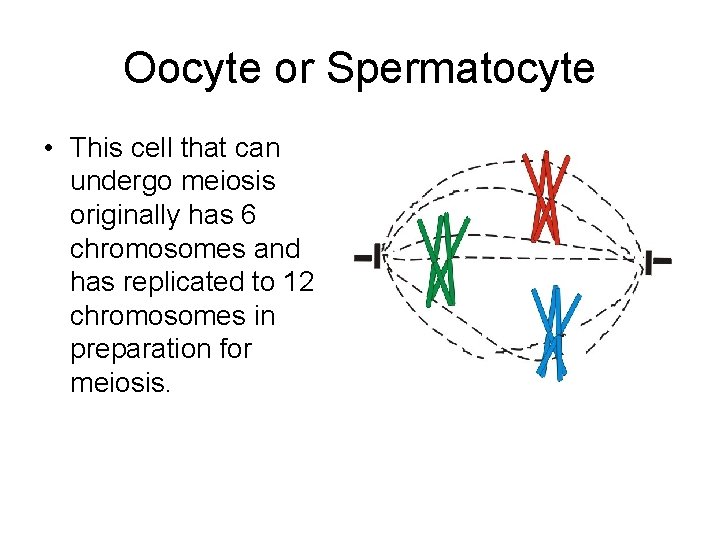
Oocyte or Spermatocyte • This cell that can undergo meiosis originally has 6 chromosomes and has replicated to 12 chromosomes in preparation for meiosis.
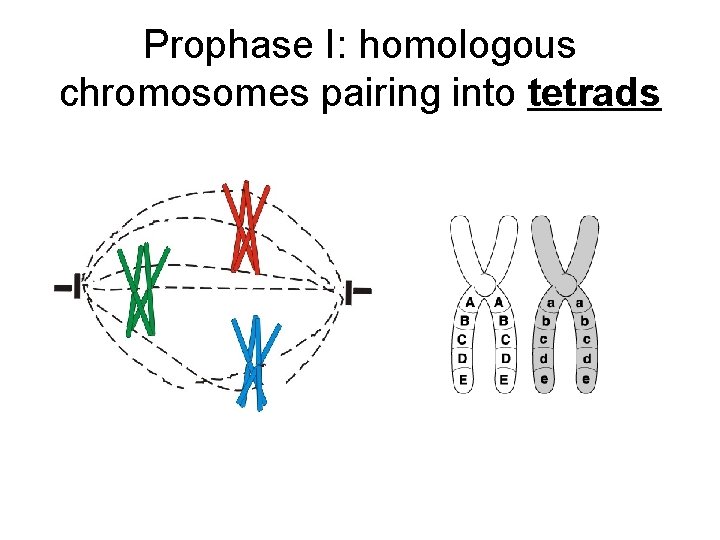
Prophase I: homologous chromosomes pairing into tetrads
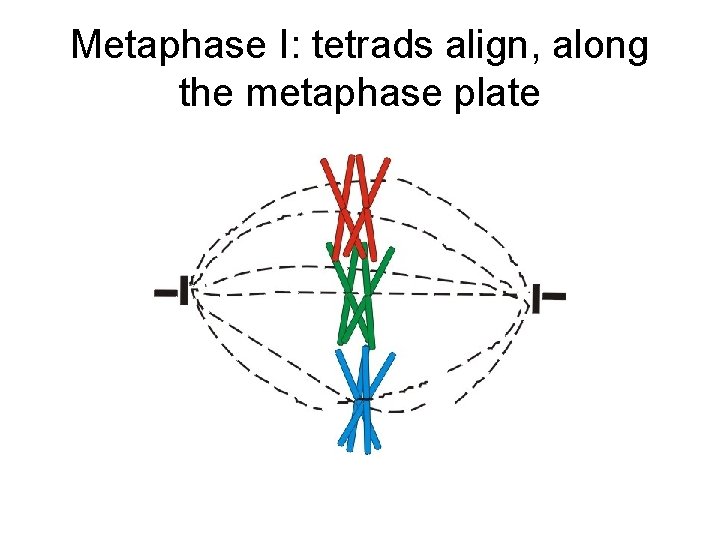
Metaphase I: tetrads align, along the metaphase plate
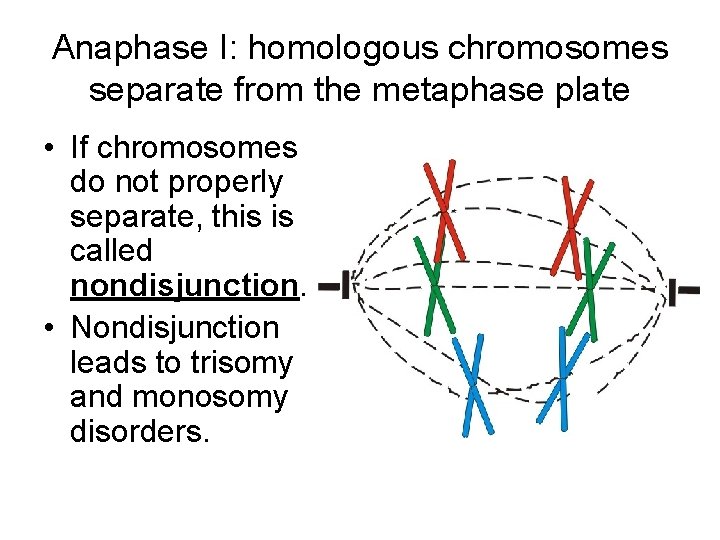
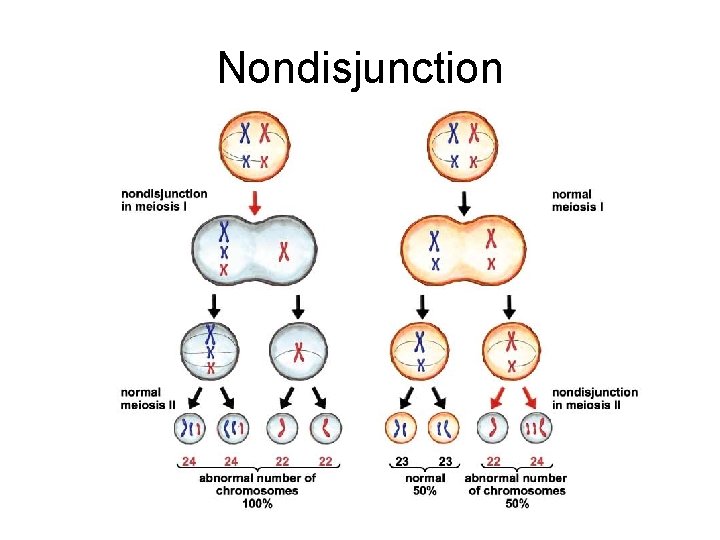
Anaphase I: homologous chromosomes separate from the metaphase plate • If chromosomes do not properly separate, this is called nondisjunction. • Nondisjunction leads to trisomy and monosomy disorders.
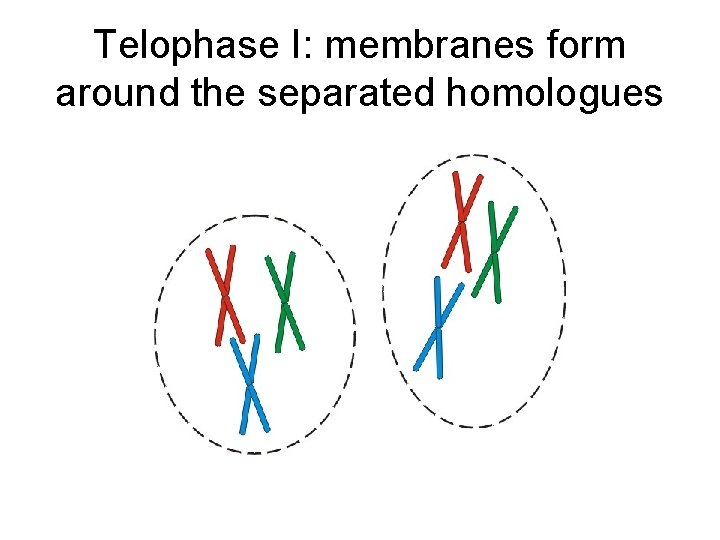
Telophase I: membranes form around the separated homologues
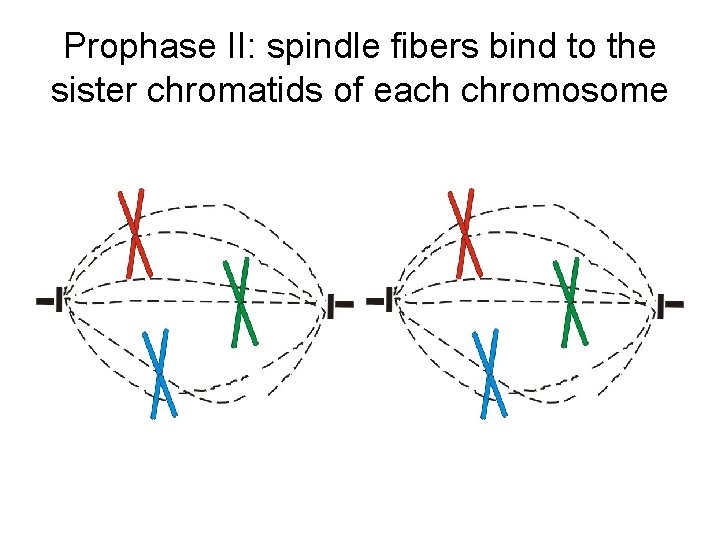
Prophase II: spindle fibers bind to the sister chromatids of each chromosome
Metaphase II: chromosomes align along the metaphase plate
Anaphase II: sister chromatids separate to opposite poles
Telophase II: nuclear membrane forms around newly separated chromatids • Note that each new nucleus formed has ½ the amount of DNA as the original cell. • These cells are haploid cells.
Nondisjunction
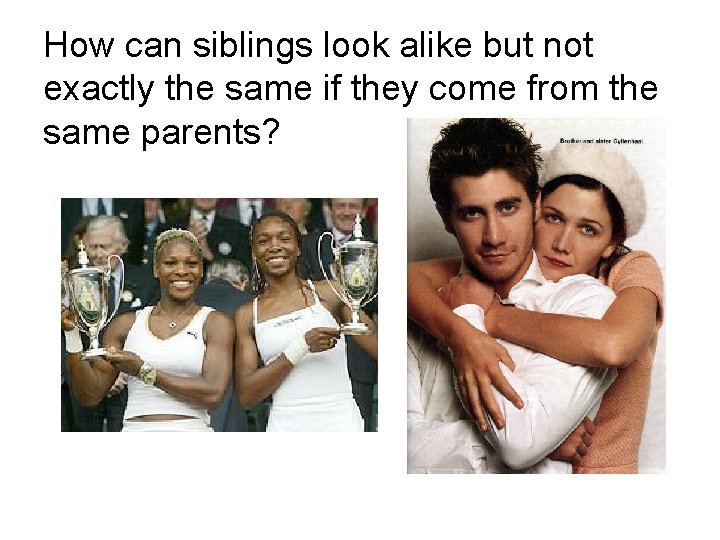
How can siblings look alike but not exactly the same if they come from the same parents?
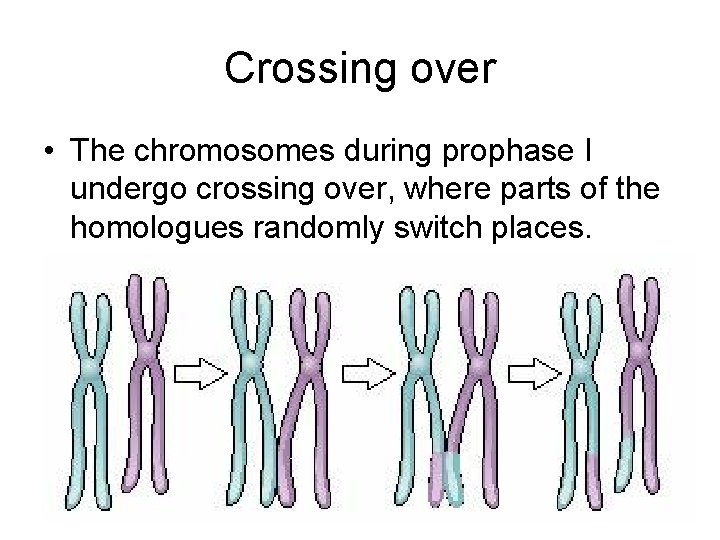
Crossing over • The chromosomes during prophase I undergo crossing over, where parts of the homologues randomly switch places.
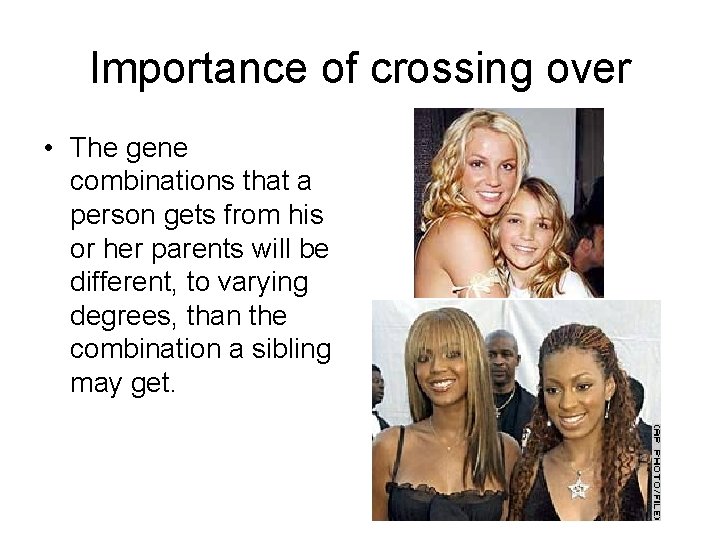
Importance of crossing over • The gene combinations that a person gets from his or her parents will be different, to varying degrees, than the combination a sibling may get.
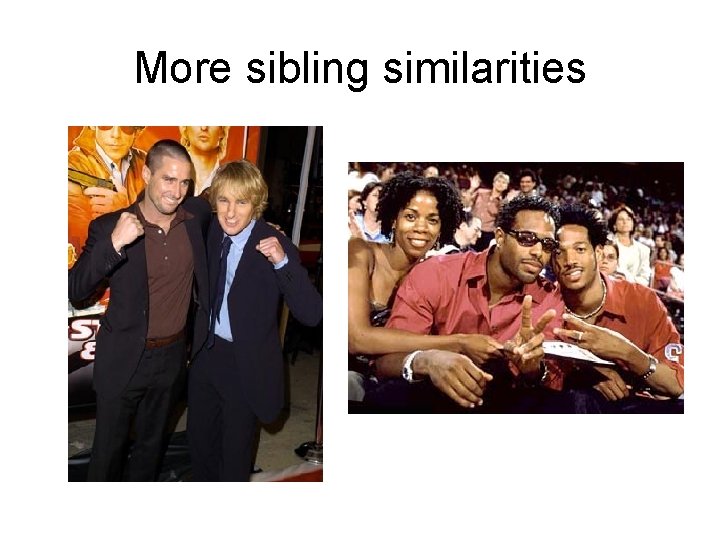
More sibling similarities
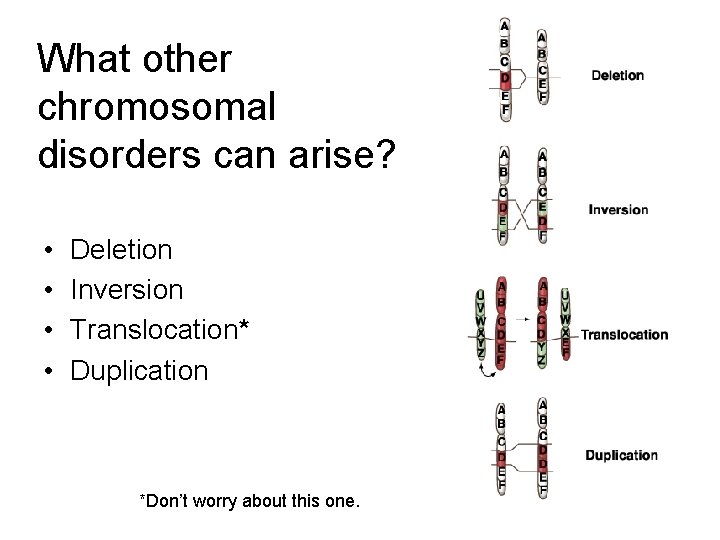
What other chromosomal disorders can arise? • • Deletion Inversion Translocation* Duplication *Don’t worry about this one.
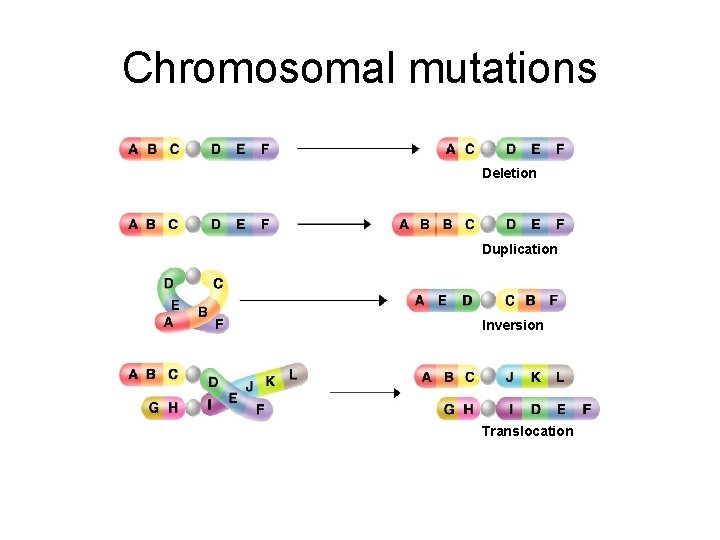
Chromosomal mutations Deletion Duplication Inversion Translocation
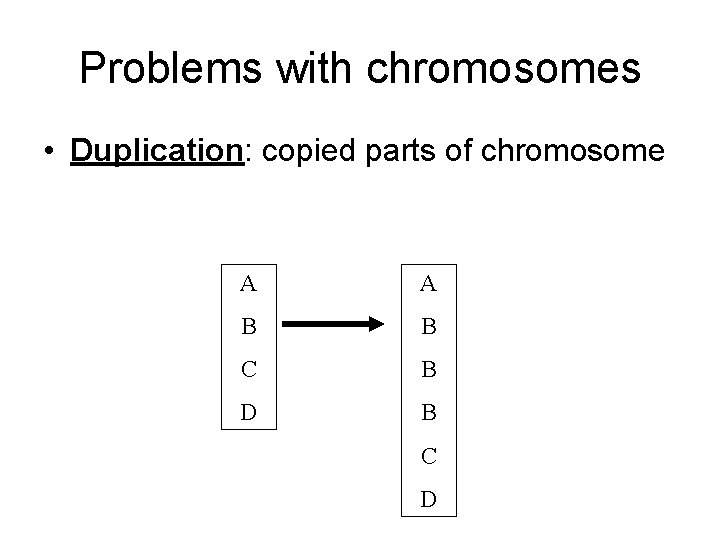
Problems with chromosomes • Duplication: copied parts of chromosome A A B B C B D B C D
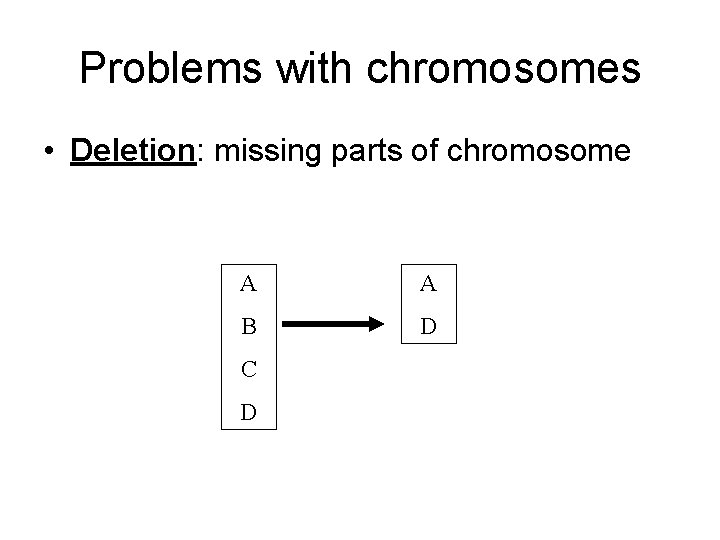
Problems with chromosomes • Deletion: missing parts of chromosome A A B D C D
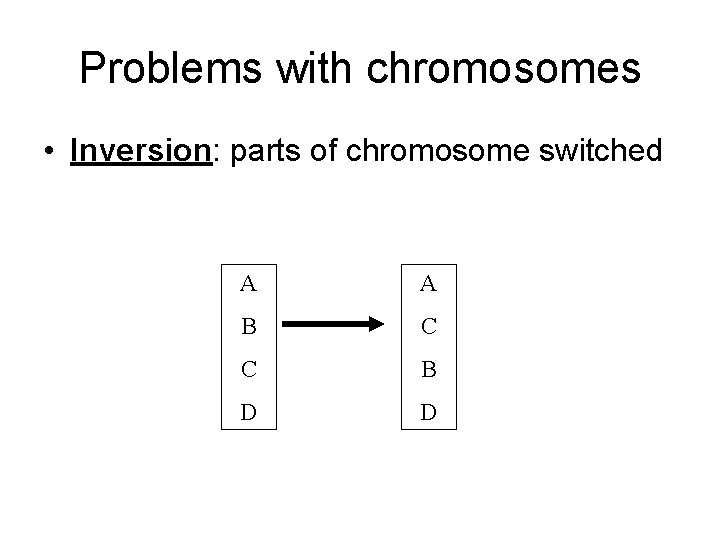
Problems with chromosomes • Inversion: parts of chromosome switched A A B C C B D D
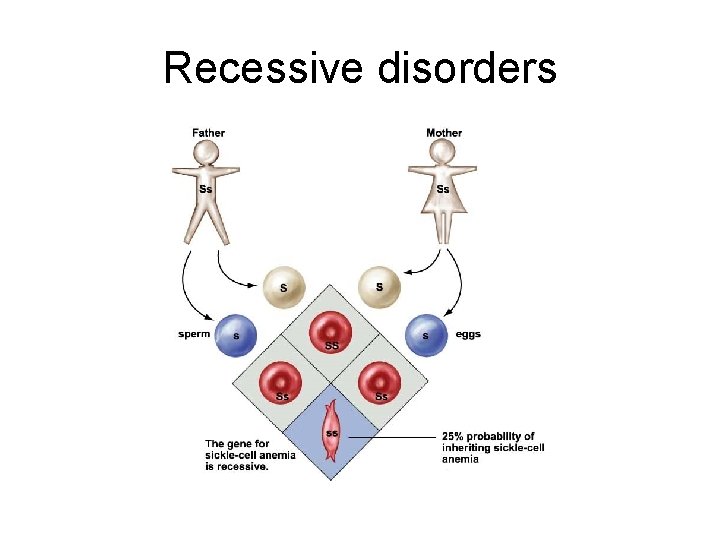
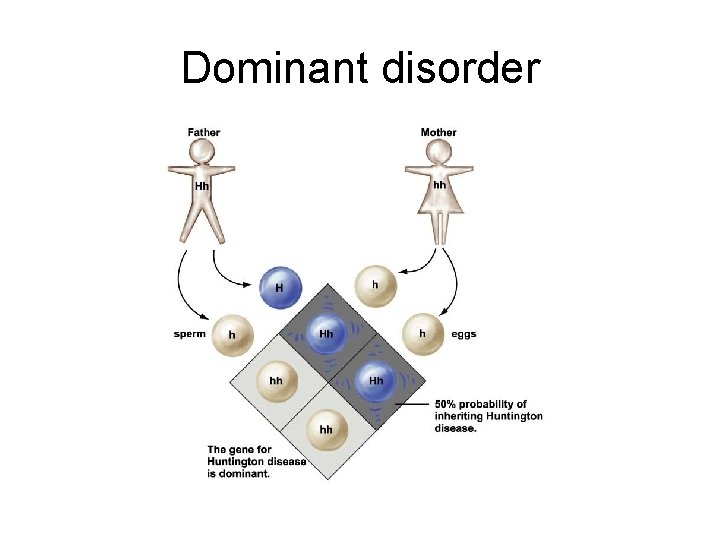
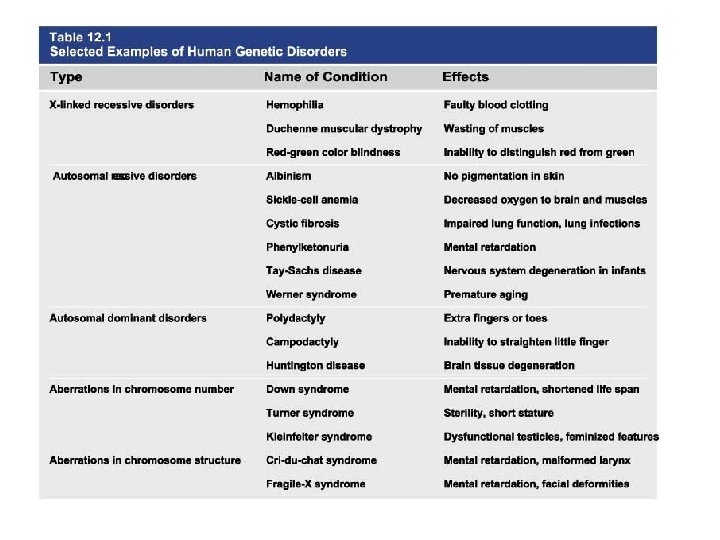
Human genetic disorders from deleterious genes • Sometimes the alleles inherited contribute to disorders and not from the number or shape of the chromosomes. 1. Sex-linked: genes found on X or Y chromosome 2. Recessive: requires 2 allele copies to express disorder 3. Dominant: requires only 1 allele copy to express disorder
Recessive disorders
Dominant disorder
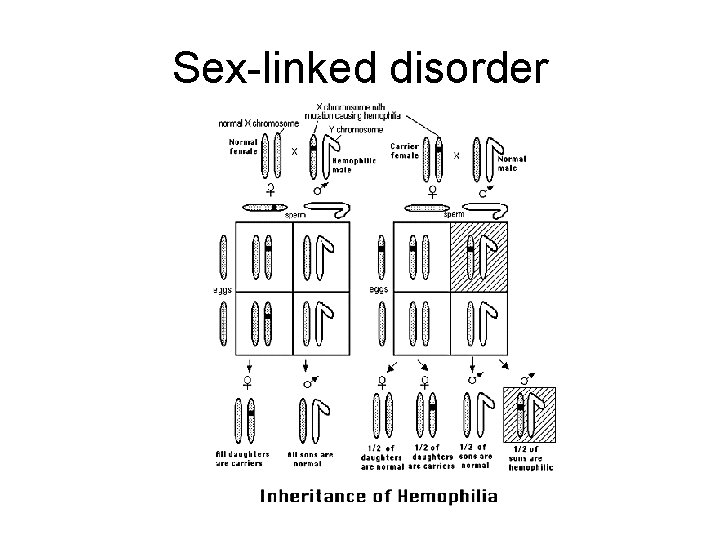
Sex-linked disorder
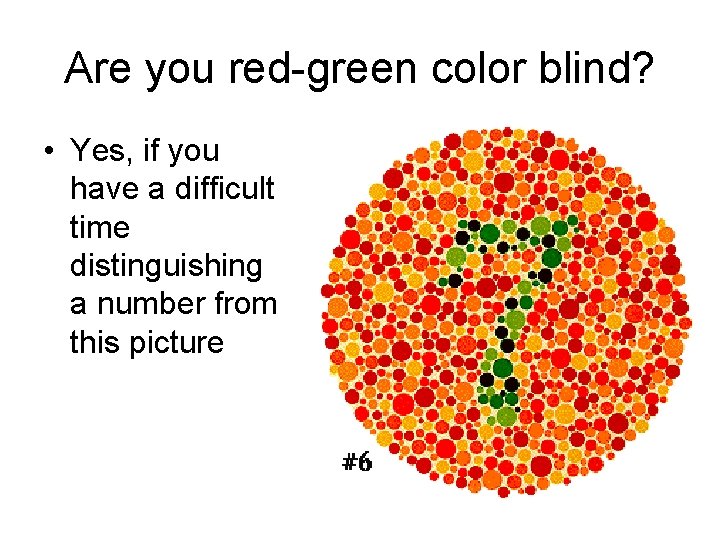
Are you red-green color blind? • Yes, if you have a difficult time distinguishing a number from this picture
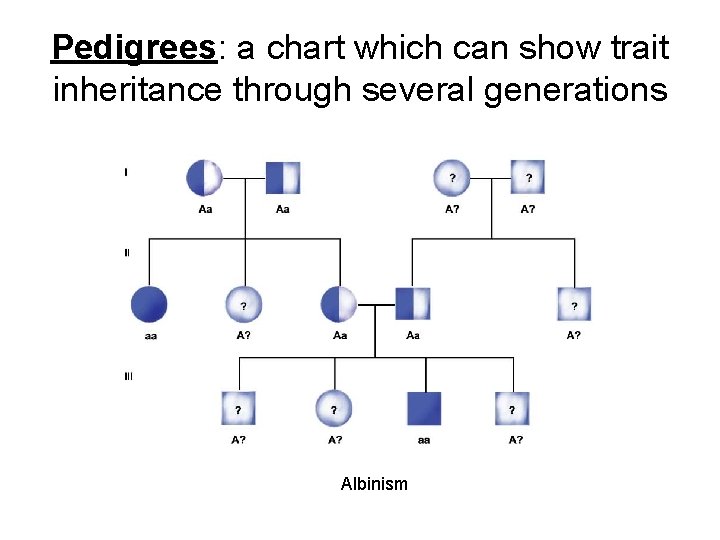
Pedigrees: a chart which can show trait inheritance through several generations Albinism
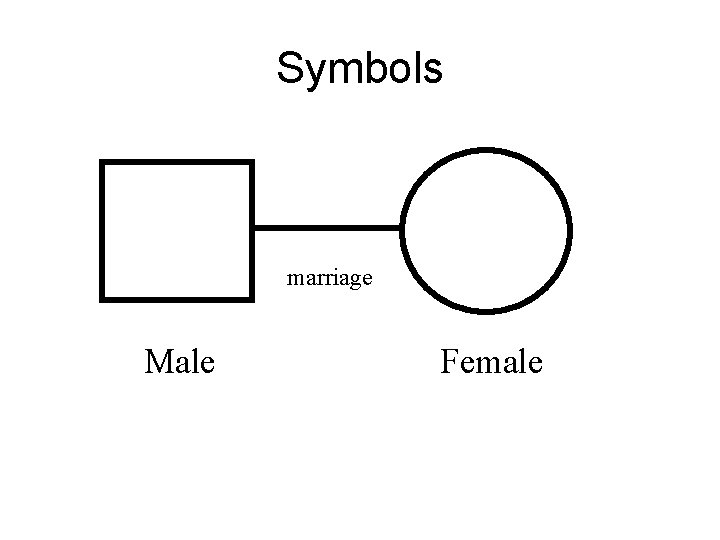
Symbols marriage Male Female
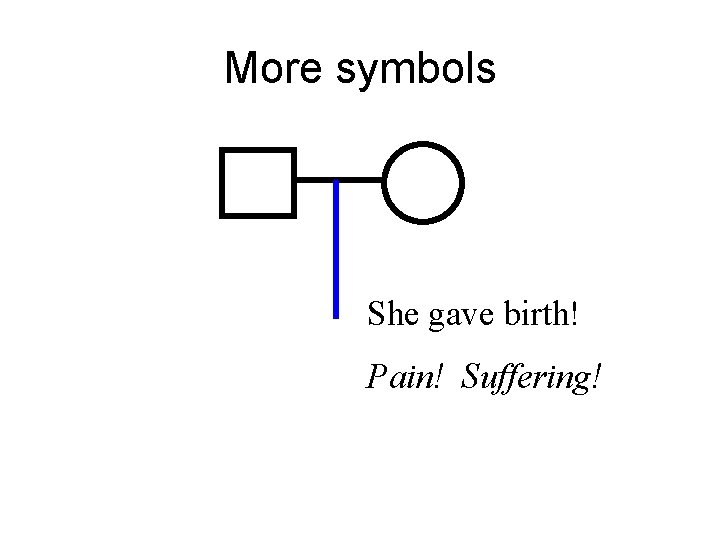
More symbols She gave birth! Pain! Suffering!
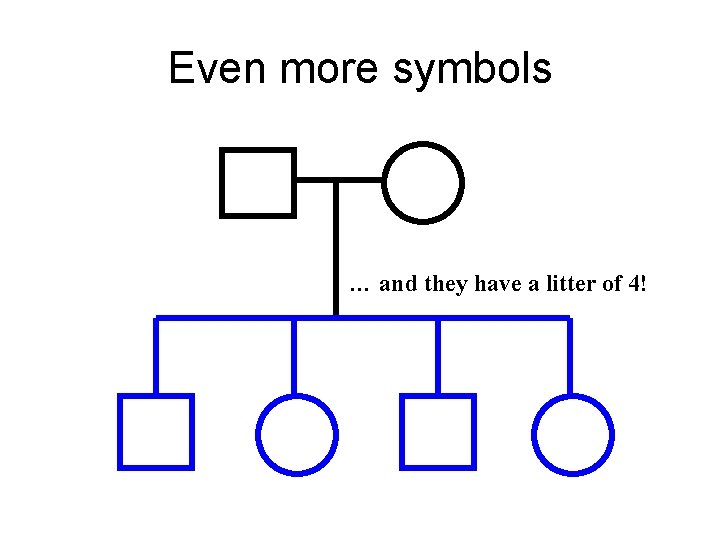
Even more symbols … and they have a litter of 4!
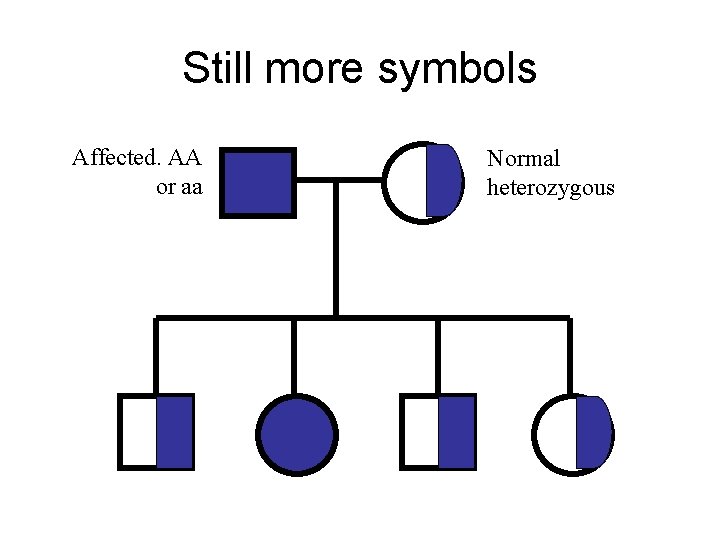
Still more symbols Affected. AA or aa Normal heterozygous
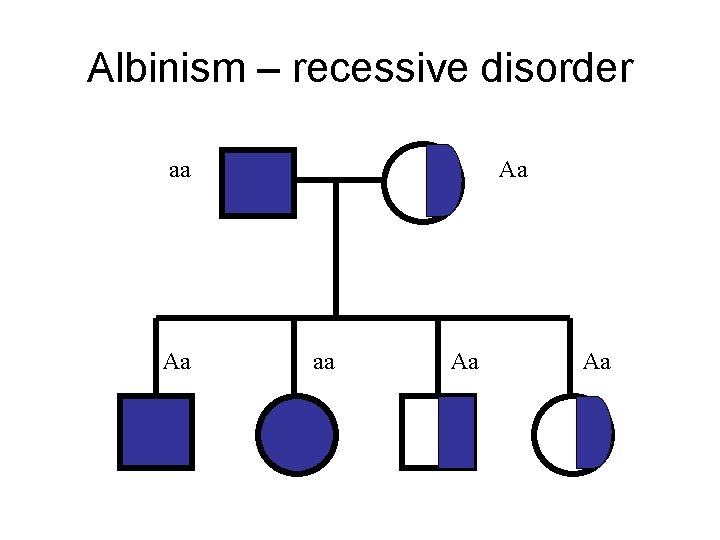
Albinism – recessive disorder aa Aa Aa
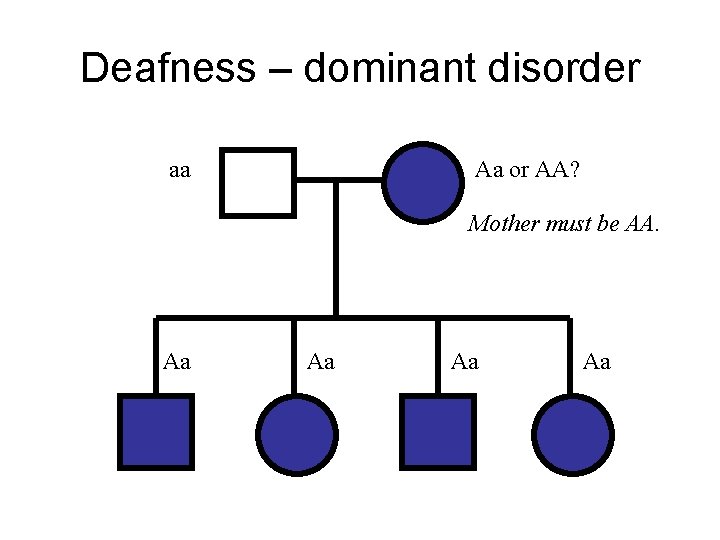
Deafness – dominant disorder aa Aa or AA? Mother must be AA. Aa Aa
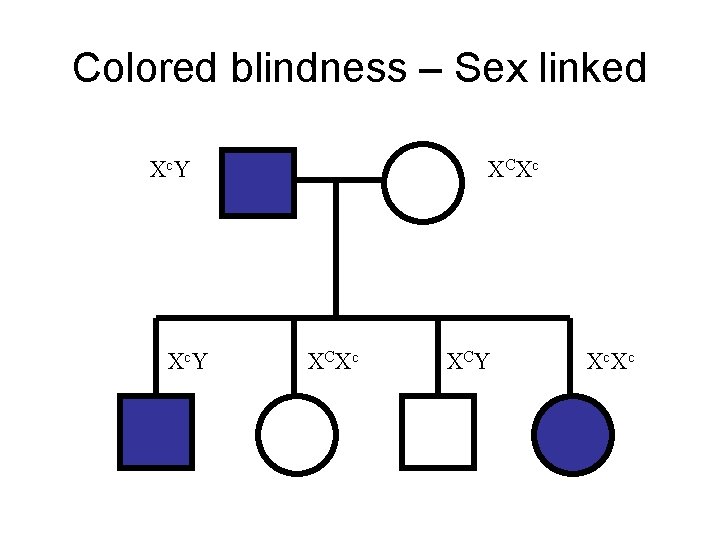
Colored blindness – Sex linked Xc Y XC Xc XC Y Xc Xc
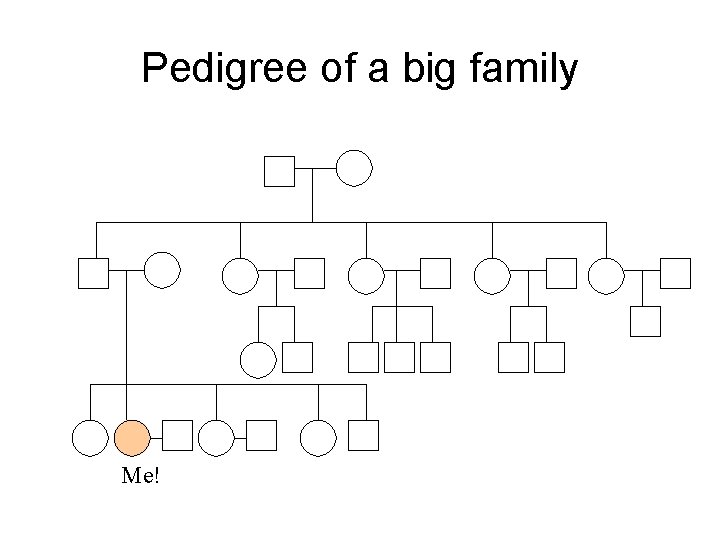
Pedigree of a big family Me!