
Unit 2 Alkenes 1 LEARNING INTENTIONS Part 1







- Slides: 20
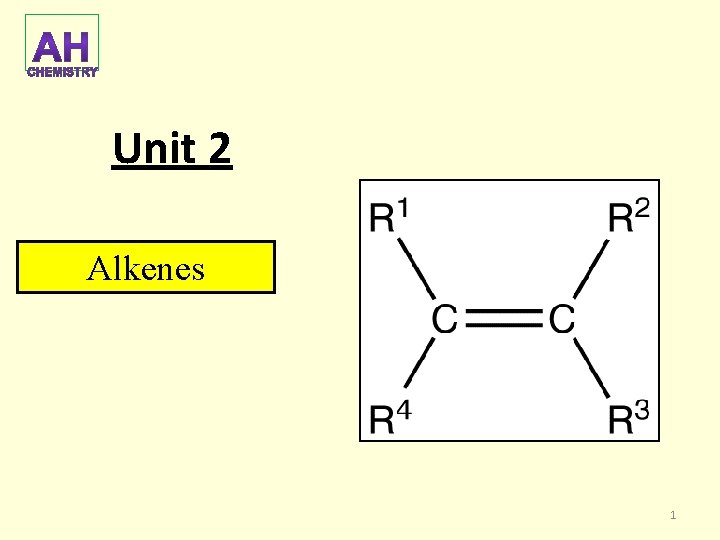
Unit 2 Alkenes 1
LEARNING INTENTIONS Part 1 Preparation • Dehydration of alcohols • Base induced elimination of hydrogen halides from monohalogenoalkanes 2
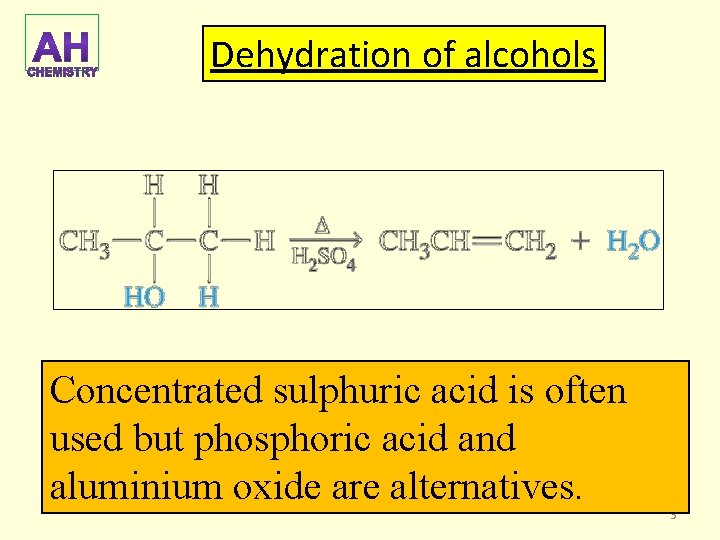
Dehydration of alcohols Concentrated sulphuric acid is often used but phosphoric acid and aluminium oxide are alternatives. 3
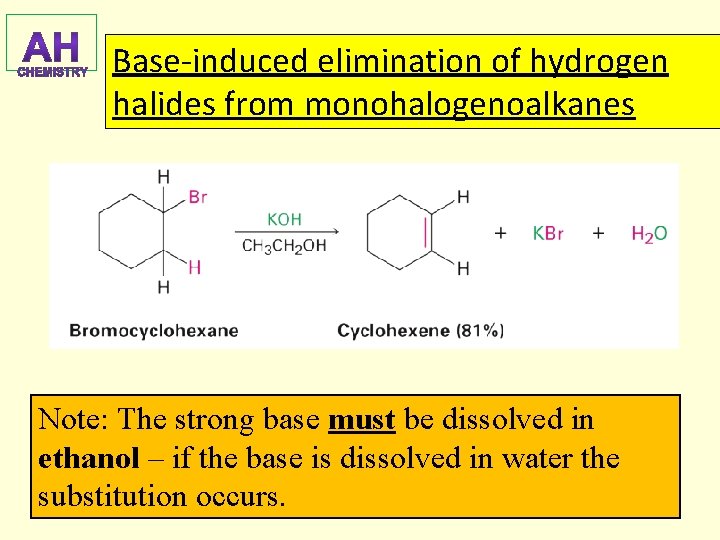
Base-induced elimination of hydrogen halides from monohalogenoalkanes Note: The strong base must be dissolved in ethanol – if the base is dissolved in water the substitution occurs. 4
Reactions of alkenes Alkenes have a double bond. This means a high concentration of negative charge and hence will react with positively charged species. The characteristic reaction of alkenes is electrophilic addition.
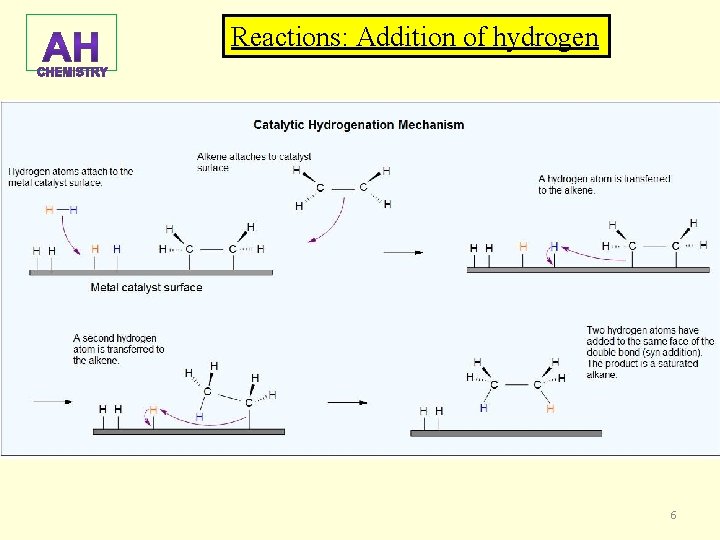
Reactions: Addition of hydrogen 6
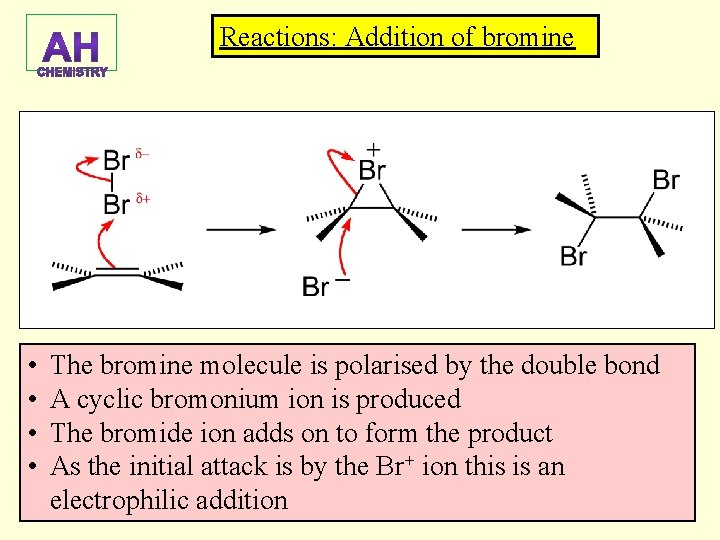
Reactions: Addition of bromine • • The bromine molecule is polarised by the double bond A cyclic bromonium ion is produced The bromide ion adds on to form the product As the initial attack is by the Br+ ion this is an electrophilic addition 7
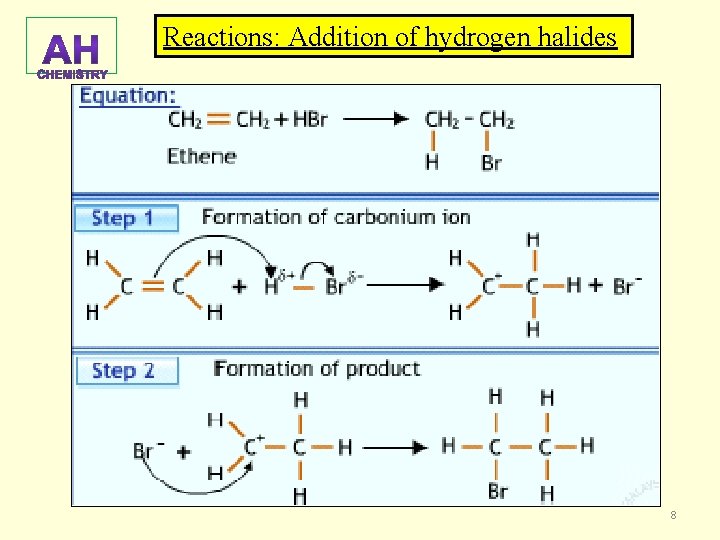
Reactions: Addition of hydrogen halides 8
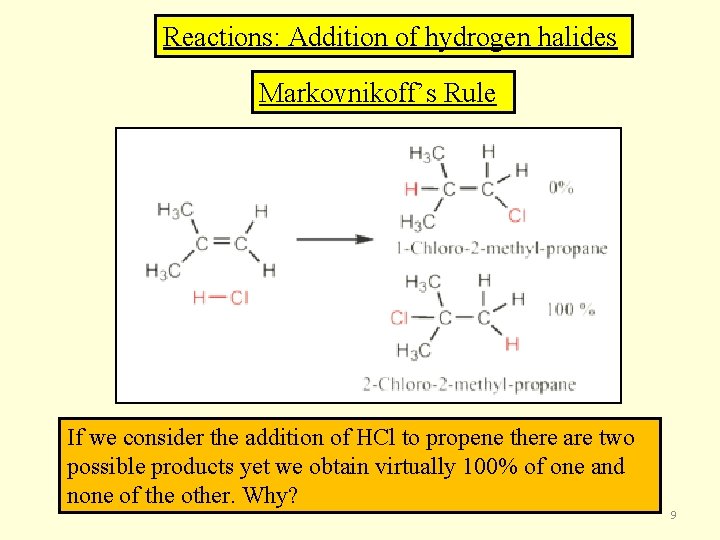
Reactions: Addition of hydrogen halides Markovnikoff’s Rule If we consider the addition of HCl to propene there are two possible products yet we obtain virtually 100% of one and none of the other. Why? 9
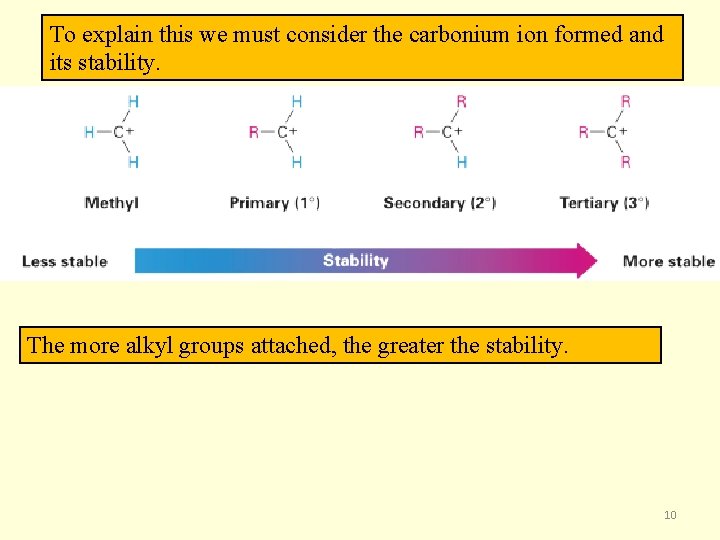
To explain this we must consider the carbonium ion formed and its stability. The more alkyl groups attached, the greater the stability. 10
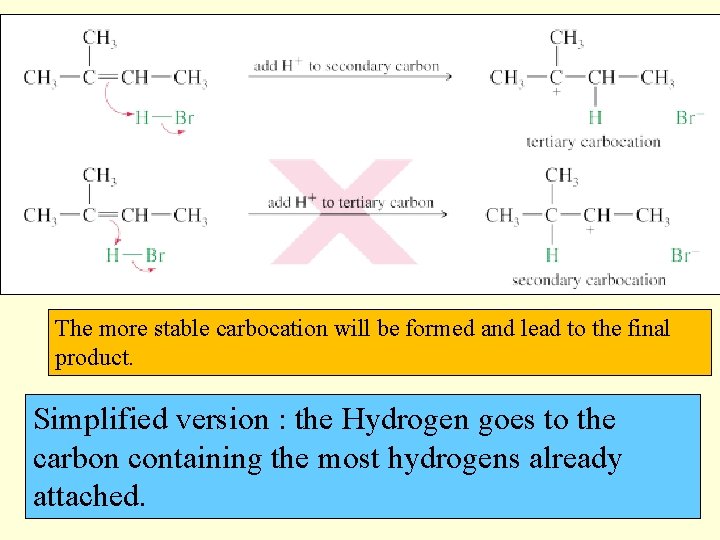
The more stable carbocation will be formed and lead to the final product. Simplified version : the Hydrogen goes to the carbon containing the most hydrogens already attached. 11
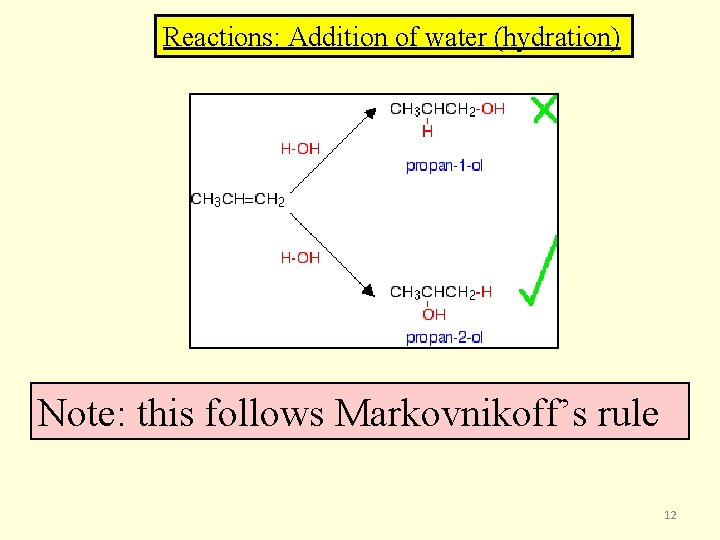
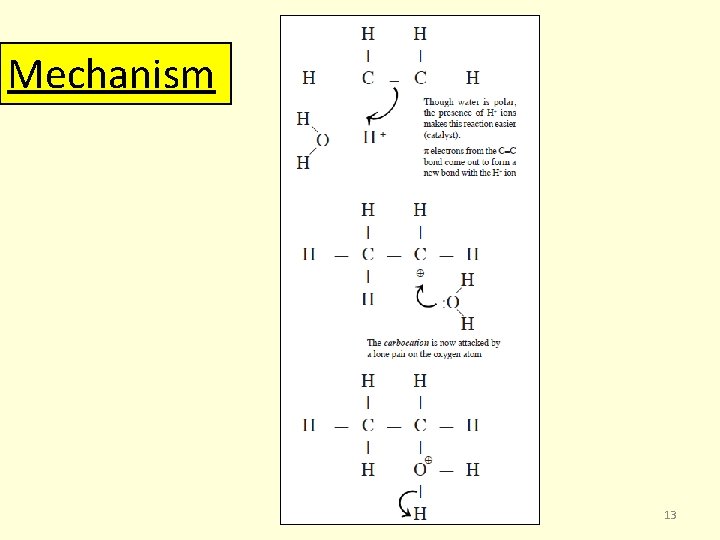
Reactions: Addition of water (hydration) Note: this follows Markovnikoff’s rule 12
Mechanism 13
14
15
16
17
18
19
20