
Unit 2 Activities of Daily Living Lesson 1
- Slides: 30
Unit 2: Activities of Daily Living Lesson 1: Activities of Daily Living
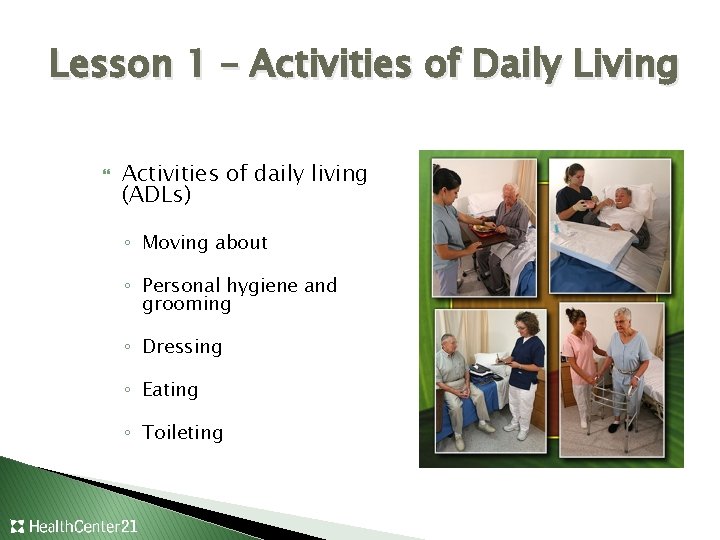
Lesson 1 – Activities of Daily Living Activities of daily living (ADLs) ◦ Moving about ◦ Personal hygiene and grooming ◦ Dressing ◦ Eating ◦ Toileting
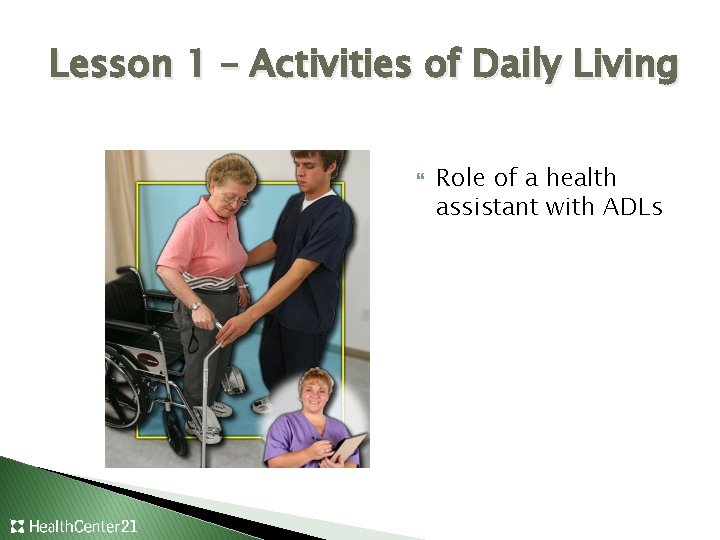
Lesson 1 – Activities of Daily Living Role of a health assistant with ADLs
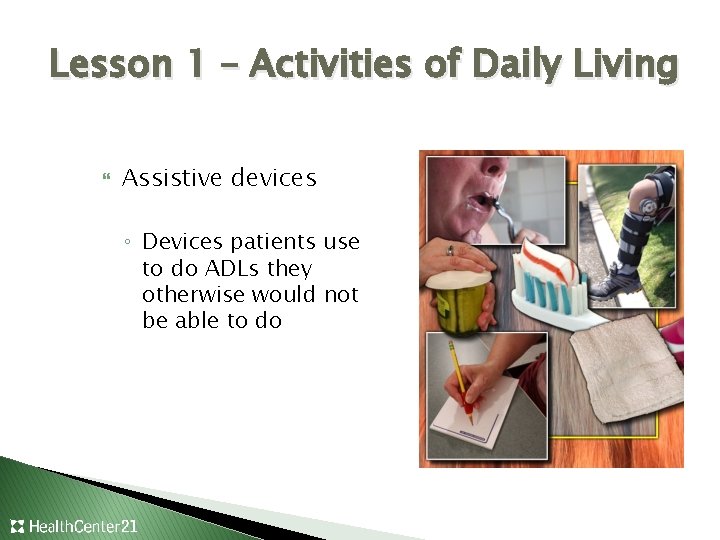
Lesson 1 – Activities of Daily Living Assistive devices ◦ Devices patients use to do ADLs they otherwise would not be able to do
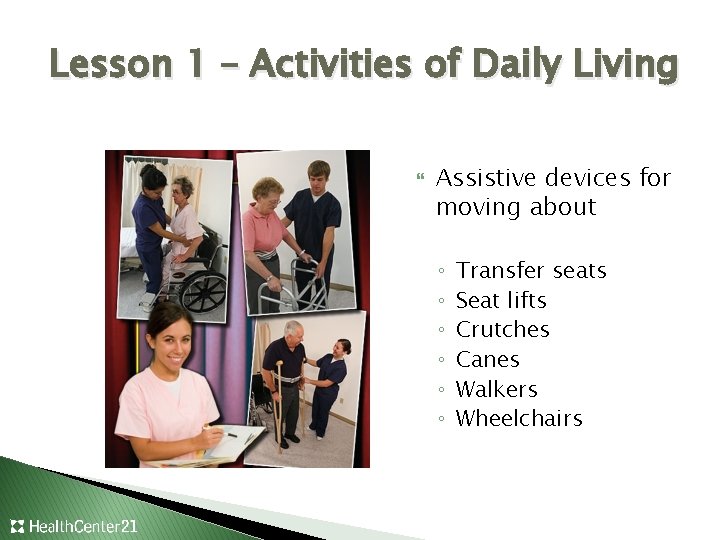
Lesson 1 – Activities of Daily Living Assistive devices for moving about ◦ ◦ ◦ Transfer seats Seat lifts Crutches Canes Walkers Wheelchairs
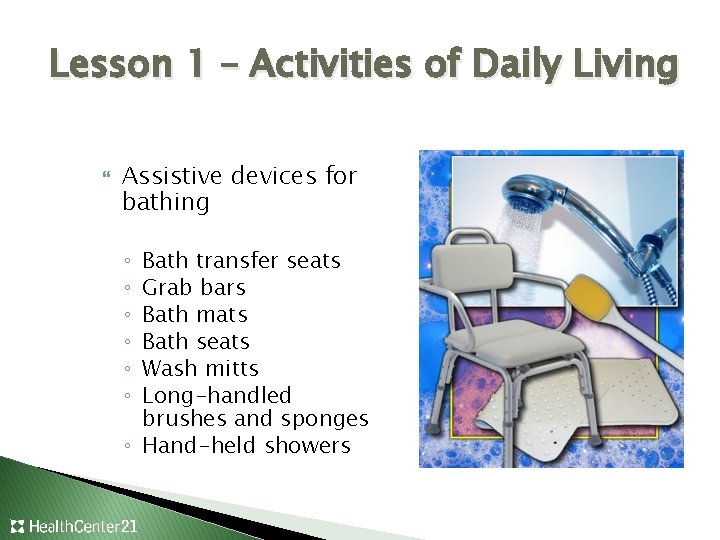
Lesson 1 – Activities of Daily Living Assistive devices for bathing Bath transfer seats Grab bars Bath mats Bath seats Wash mitts Long-handled brushes and sponges ◦ Hand-held showers ◦ ◦ ◦
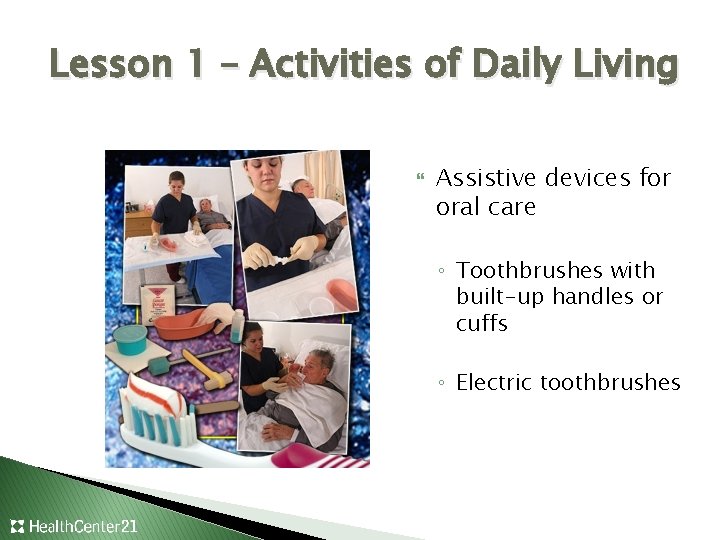
Lesson 1 – Activities of Daily Living Assistive devices for oral care ◦ Toothbrushes with built-up handles or cuffs ◦ Electric toothbrushes
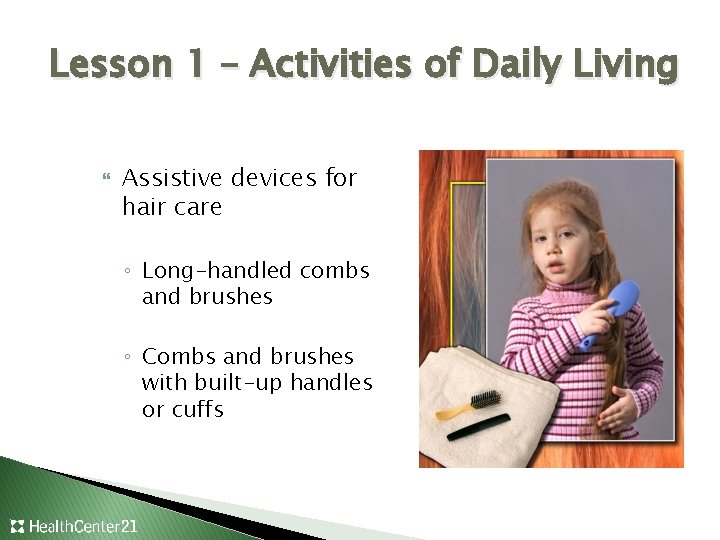
Lesson 1 – Activities of Daily Living Assistive devices for hair care ◦ Long-handled combs and brushes ◦ Combs and brushes with built-up handles or cuffs
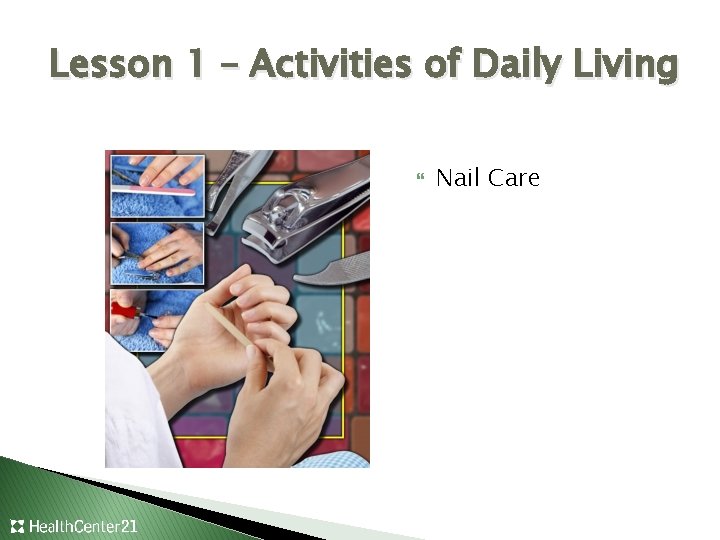
Lesson 1 – Activities of Daily Living Nail Care
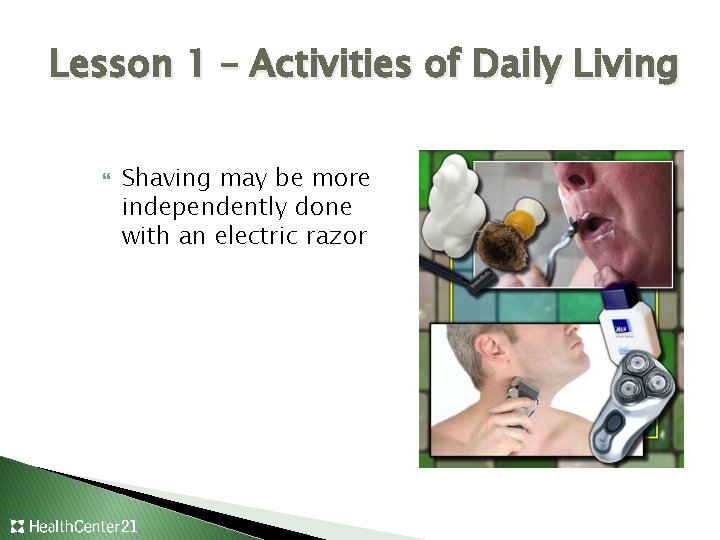
Lesson 1 – Activities of Daily Living Shaving may be more independently done with an electric razor
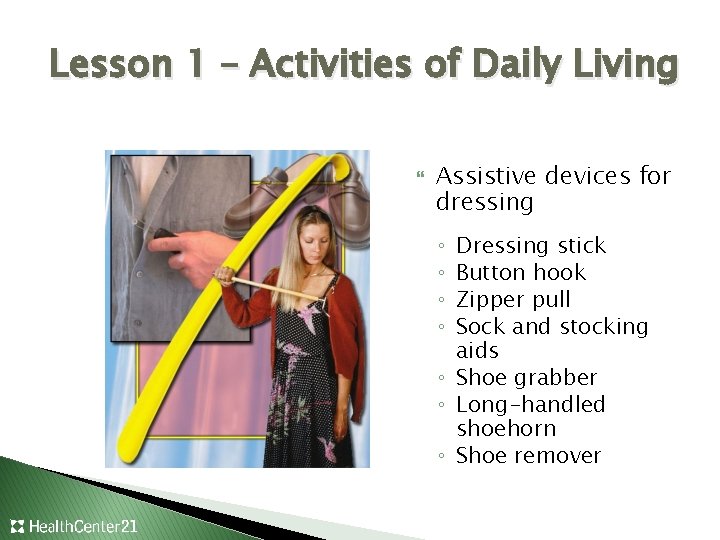
Lesson 1 – Activities of Daily Living Assistive devices for dressing Dressing stick Button hook Zipper pull Sock and stocking aids ◦ Shoe grabber ◦ Long-handled shoehorn ◦ Shoe remover ◦ ◦
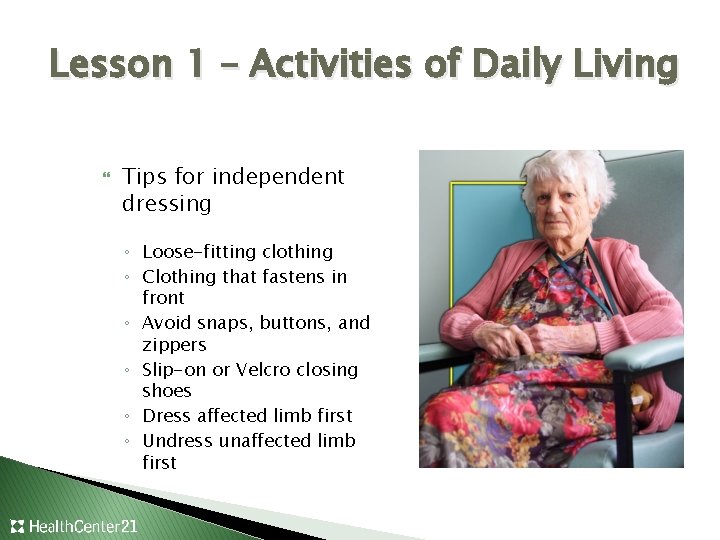
Lesson 1 – Activities of Daily Living Tips for independent dressing ◦ Loose-fitting clothing ◦ Clothing that fastens in front ◦ Avoid snaps, buttons, and zippers ◦ Slip-on or Velcro closing shoes ◦ Dress affected limb first ◦ Undress unaffected limb first
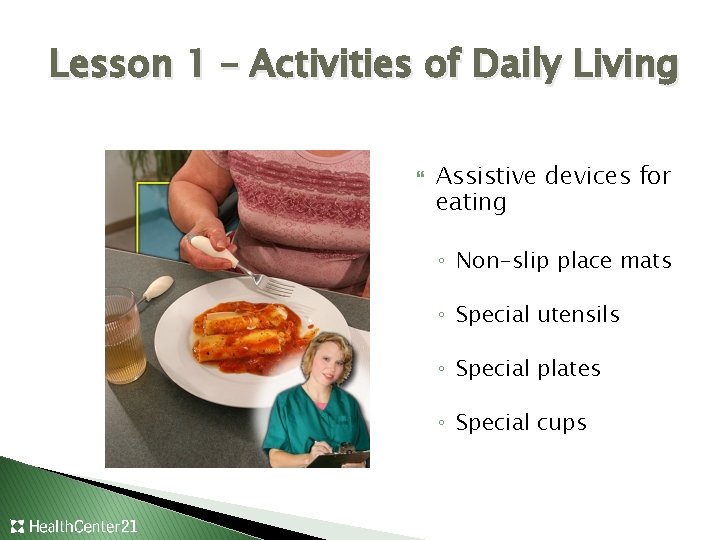
Lesson 1 – Activities of Daily Living Assistive devices for eating ◦ Non-slip place mats ◦ Special utensils ◦ Special plates ◦ Special cups
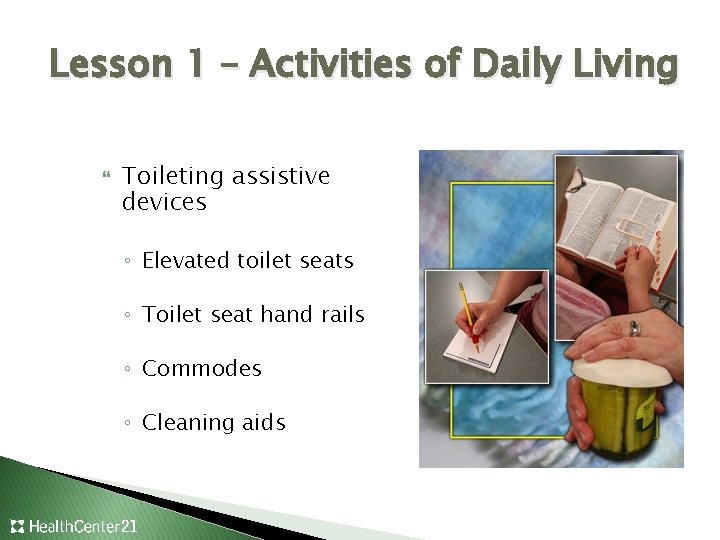
Lesson 1 – Activities of Daily Living Toileting assistive devices ◦ Elevated toilet seats ◦ Toilet seat hand rails ◦ Commodes ◦ Cleaning aids
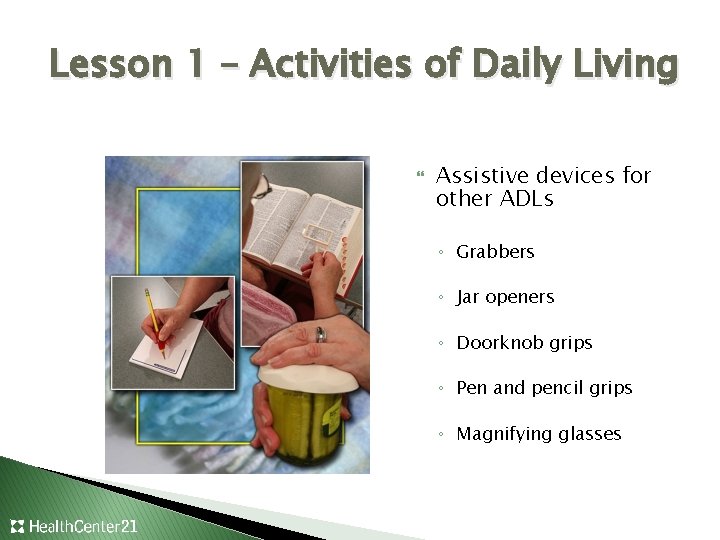
Lesson 1 – Activities of Daily Living Assistive devices for other ADLs ◦ Grabbers ◦ Jar openers ◦ Doorknob grips ◦ Pen and pencil grips ◦ Magnifying glasses
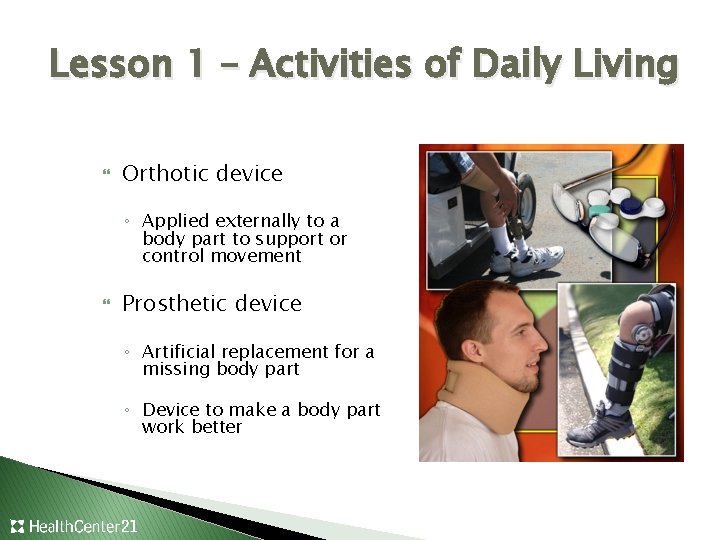
Lesson 1 – Activities of Daily Living Orthotic device ◦ Applied externally to a body part to support or control movement Prosthetic device ◦ Artificial replacement for a missing body part ◦ Device to make a body part work better
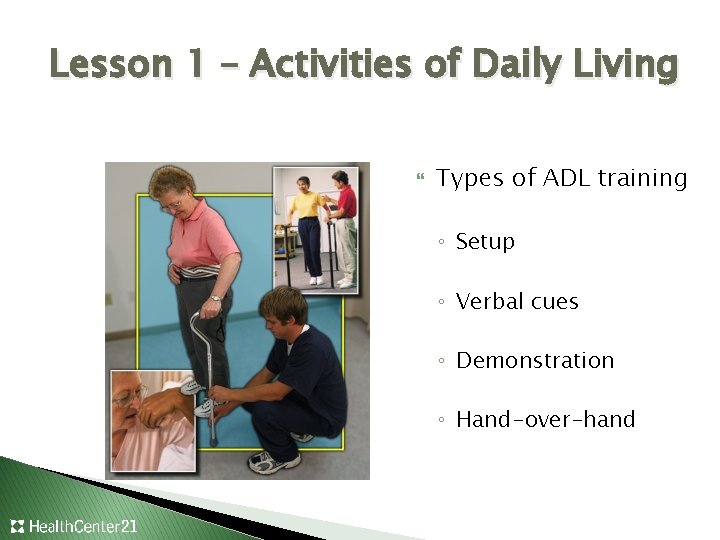
Lesson 1 – Activities of Daily Living Types of ADL training ◦ Setup ◦ Verbal cues ◦ Demonstration ◦ Hand-over-hand
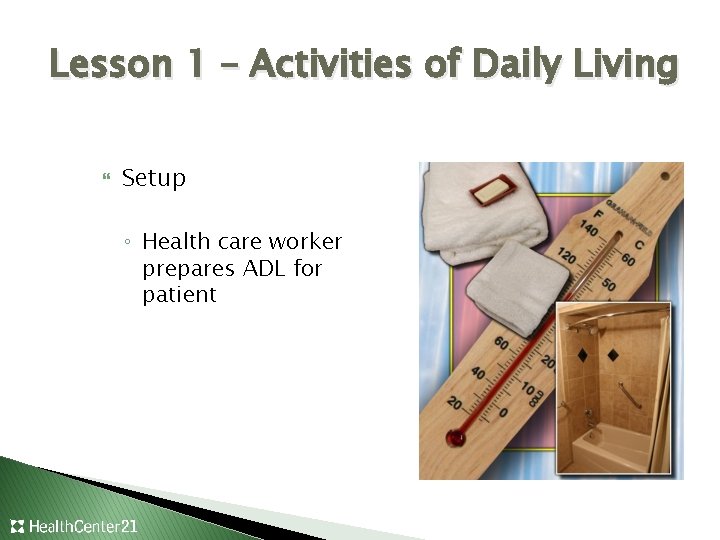
Lesson 1 – Activities of Daily Living Setup ◦ Health care worker prepares ADL for patient
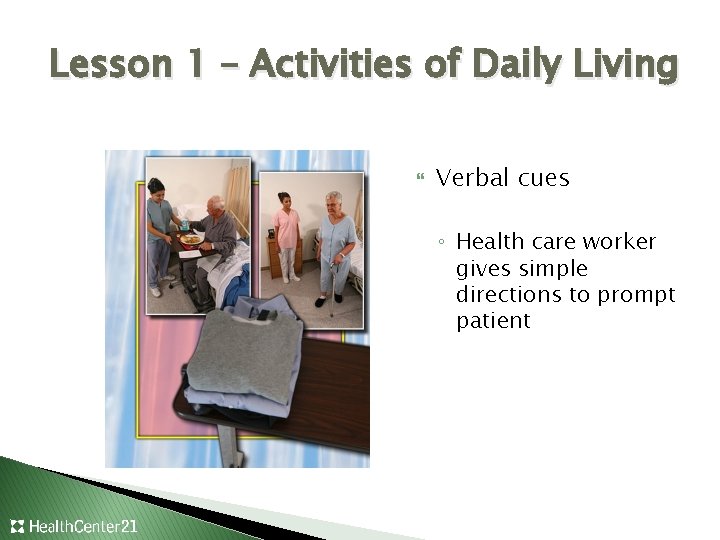
Lesson 1 – Activities of Daily Living Verbal cues ◦ Health care worker gives simple directions to prompt patient
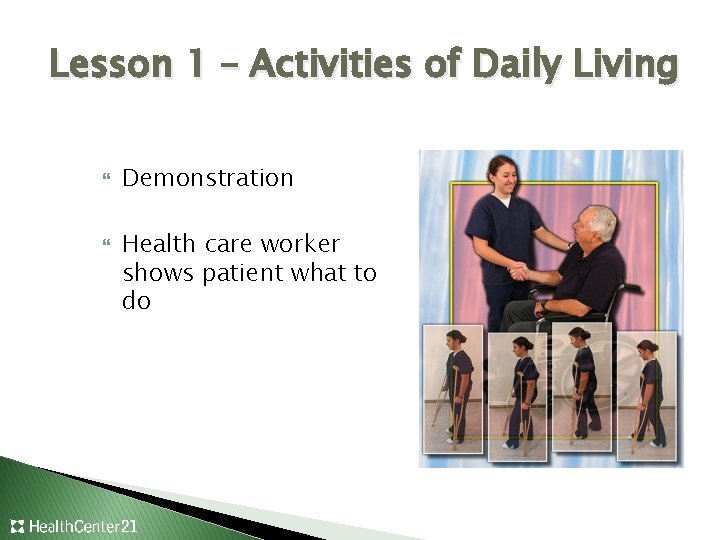
Lesson 1 – Activities of Daily Living Demonstration Health care worker shows patient what to do
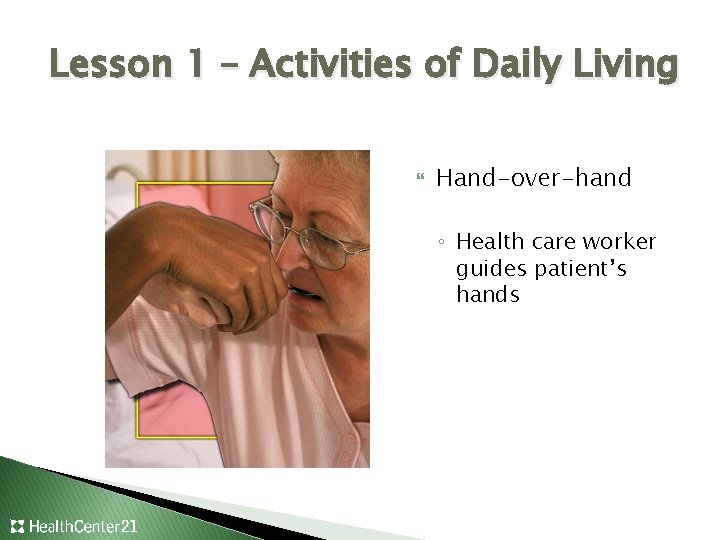
Lesson 1 – Activities of Daily Living Hand-over-hand ◦ Health care worker guides patient’s hands
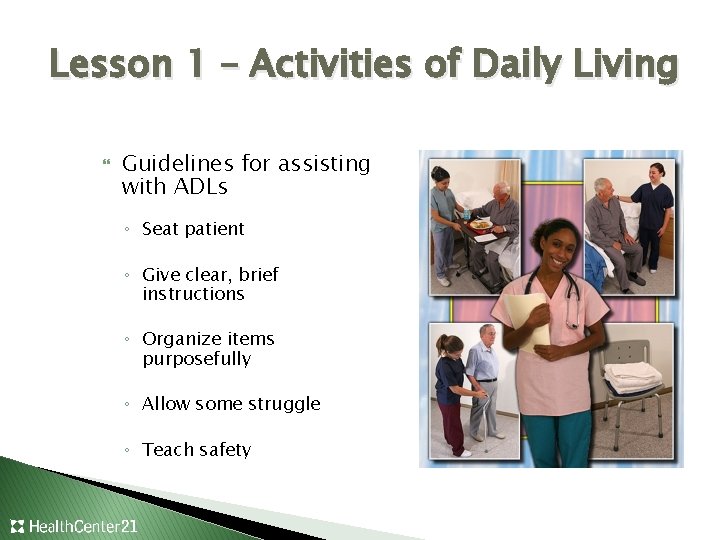
Lesson 1 – Activities of Daily Living Guidelines for assisting with ADLs ◦ Seat patient ◦ Give clear, brief instructions ◦ Organize items purposefully ◦ Allow some struggle ◦ Teach safety
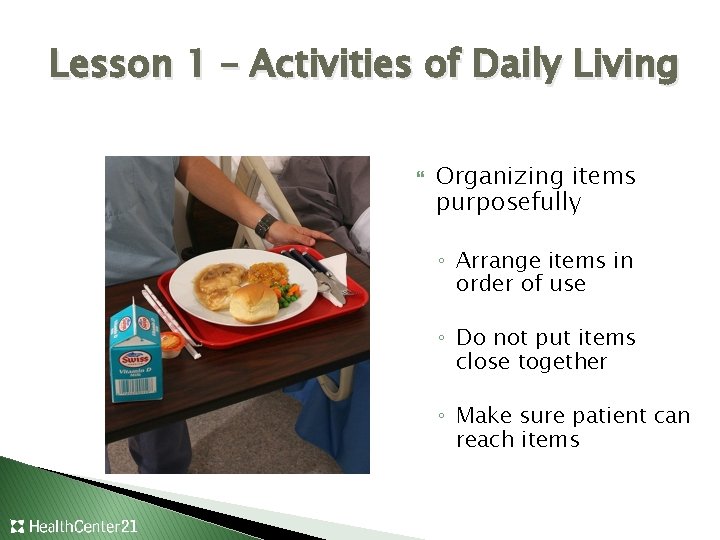
Lesson 1 – Activities of Daily Living Organizing items purposefully ◦ Arrange items in order of use ◦ Do not put items close together ◦ Make sure patient can reach items
Unit 2: Activities of Daily Living Lesson 2: Incontinence
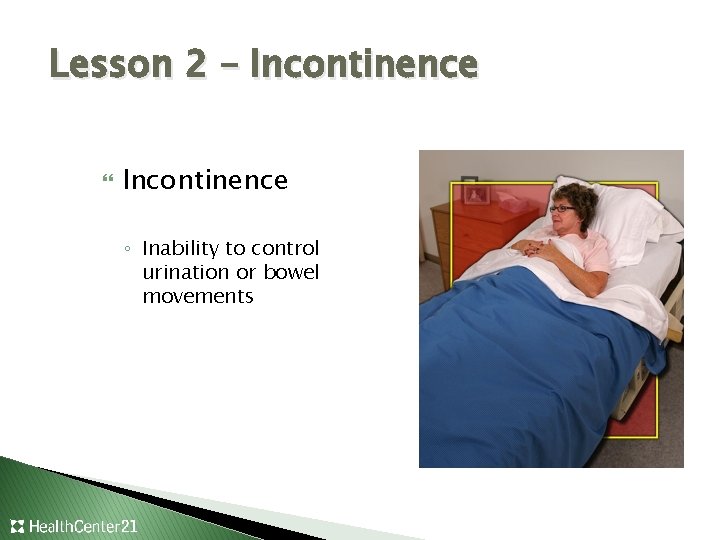
Lesson 2 – Incontinence ◦ Inability to control urination or bowel movements
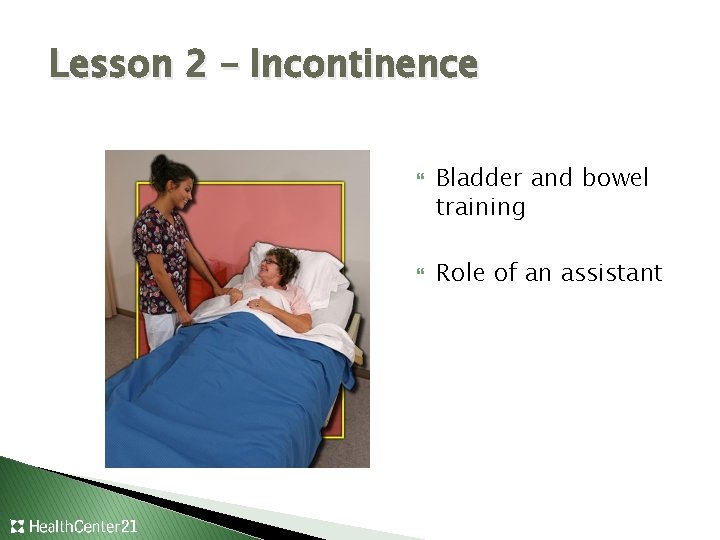
Lesson 2 – Incontinence Bladder and bowel training Role of an assistant
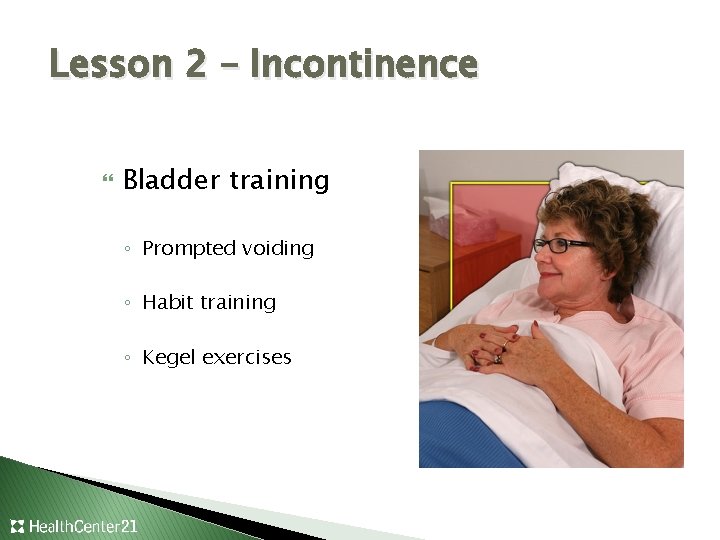
Lesson 2 – Incontinence Bladder training ◦ Prompted voiding ◦ Habit training ◦ Kegel exercises
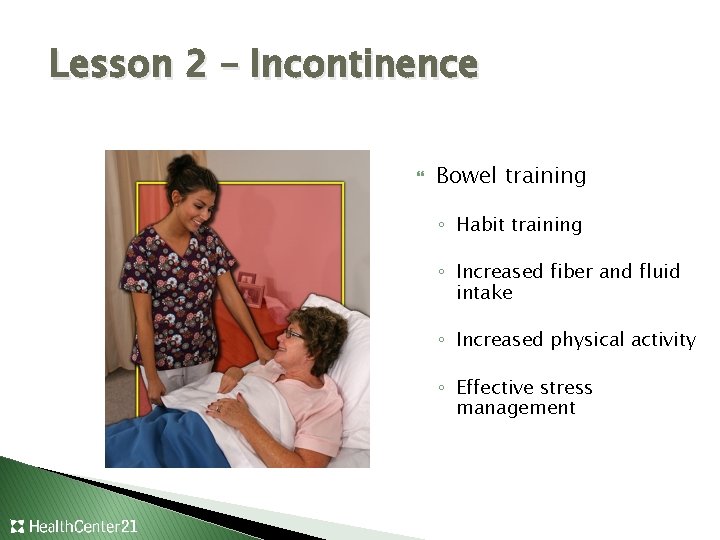
Lesson 2 – Incontinence Bowel training ◦ Habit training ◦ Increased fiber and fluid intake ◦ Increased physical activity ◦ Effective stress management
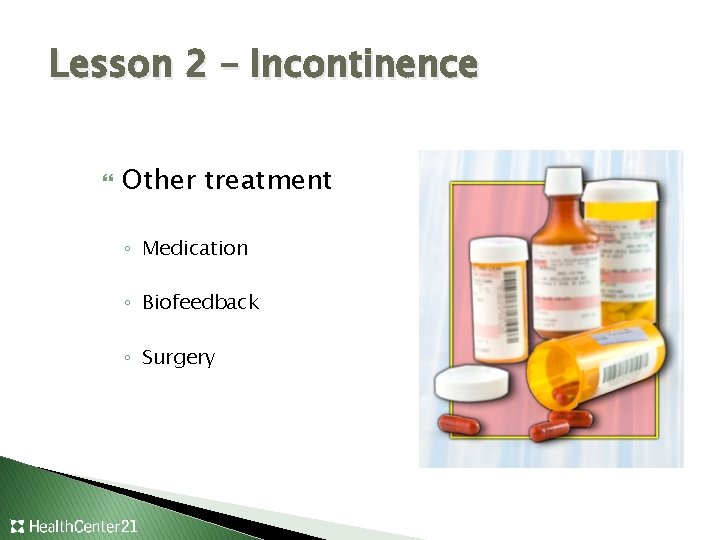
Lesson 2 – Incontinence Other treatment ◦ Medication ◦ Biofeedback ◦ Surgery
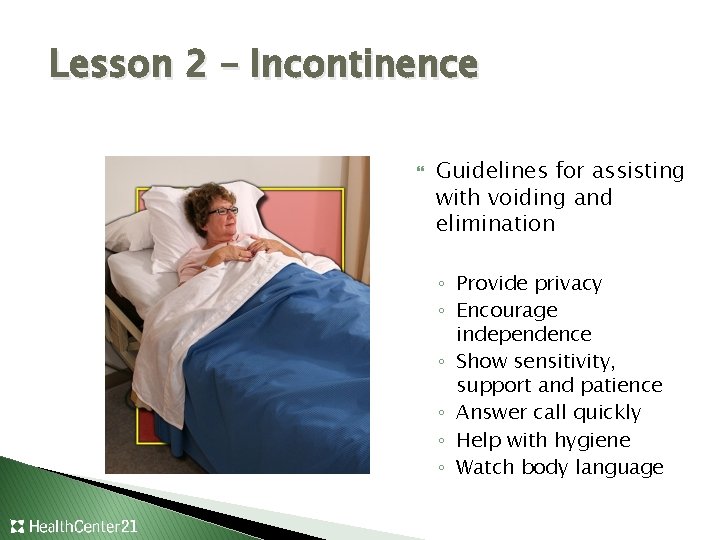
Lesson 2 – Incontinence Guidelines for assisting with voiding and elimination ◦ Provide privacy ◦ Encourage independence ◦ Show sensitivity, support and patience ◦ Answer call quickly ◦ Help with hygiene ◦ Watch body language