
Unit 2 A Human Form Function Respiration Unit
- Slides: 14
Unit 2 A: Human Form & Function Respiration
Unit 2 A: Human Form & Function Metabolism • Metabolism is the total of all the chemical processes that take place in the body. These chemical processes convert the food you eat into the energy and materials needed for all life processes.
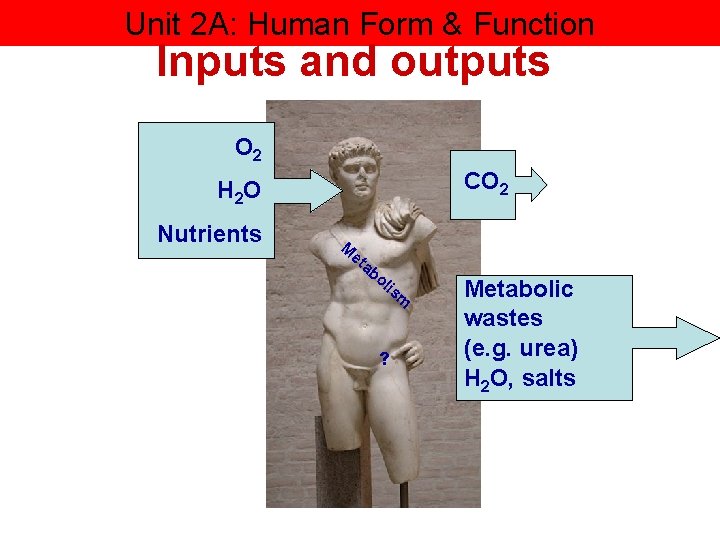
Unit 2 A: Human Form & Function Inputs and outputs O 2 CO 2 H 2 O Nutrients M et ab o lis m ? Metabolic wastes (e. g. urea) H 2 O, salts
Unit 2 A: Human Form & Function Anabolism & catabolism • Metabolic processes can be regarded as either anabolic or catabolic.
Unit 2 A: Human Form & Function Anabolism • Anabolic reactions construct complex substances from simpler ones. • Anabolic processes use energy. • Protein synthesis is an example of an anabolic process.
Unit 2 A: Human Form & Function Catabolism • Catabolic reactions are destructive metabolic processes during which complex substances are broken down into simpler ones. • Catabolic processes release energy. • Cellular respiration is a good example of a catabolic process.
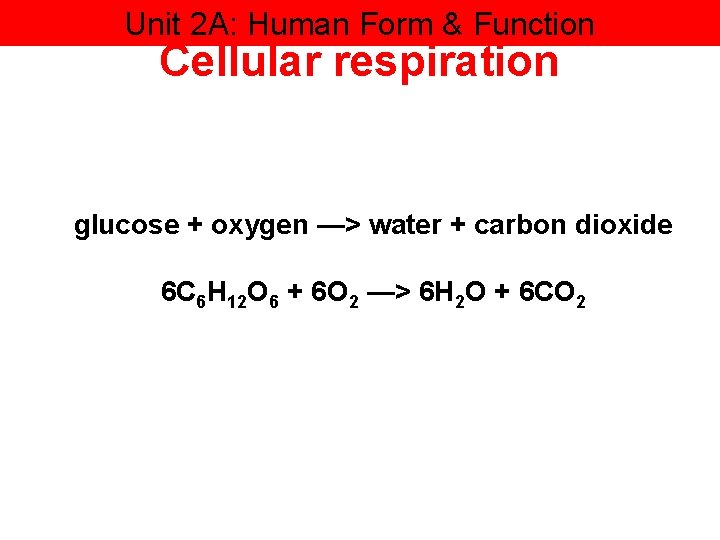
Unit 2 A: Human Form & Function Cellular respiration glucose + oxygen —> water + carbon dioxide 6 C 6 H 12 O 6 + 6 O 2 —> 6 H 2 O + 6 CO 2
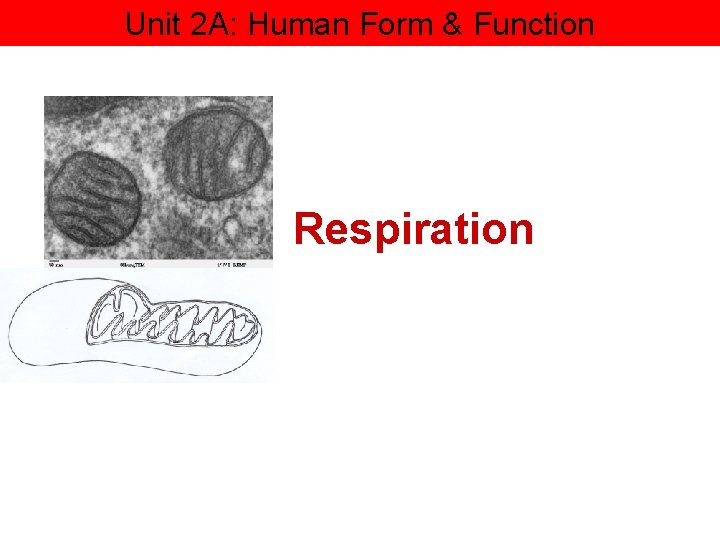
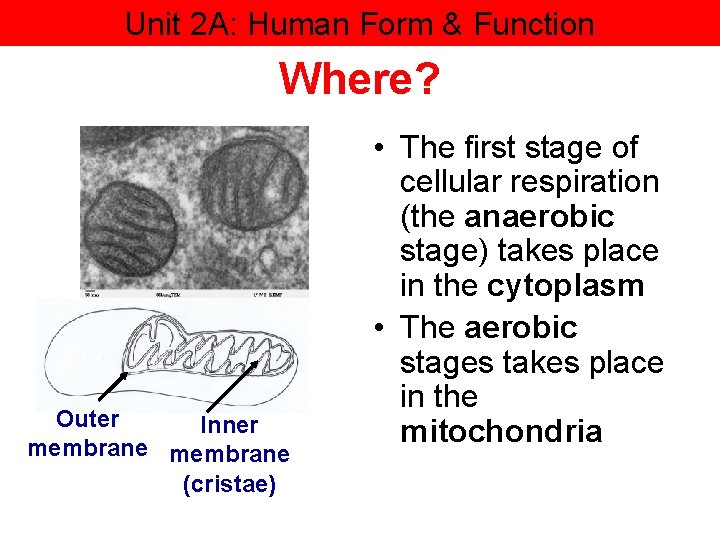
Unit 2 A: Human Form & Function Where? Outer Inner membrane (cristae) • The first stage of cellular respiration (the anaerobic stage) takes place in the cytoplasm • The aerobic stages takes place in the mitochondria
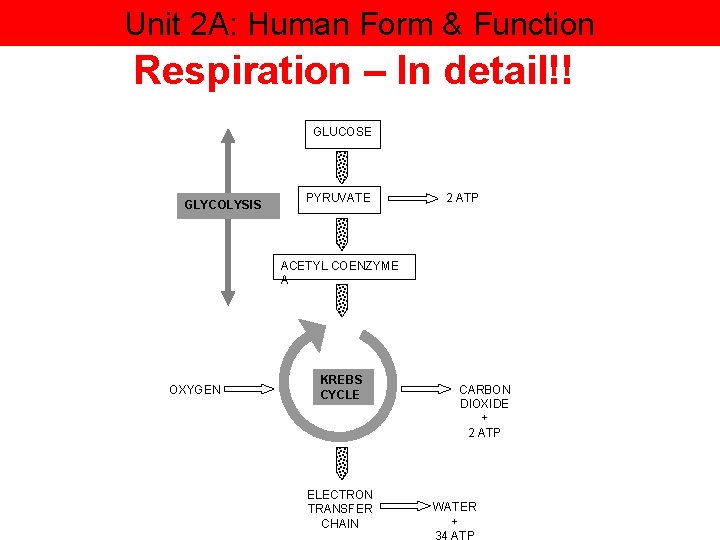
Unit 2 A: Human Form & Function Respiration – In detail!! GLUCOSE GLYCOLYSIS PYRUVATE 2 ATP ACETYL COENZYME A OXYGEN KREBS CYCLE ELECTRON TRANSFER CHAIN CARBON DIOXIDE + 2 ATP WATER +
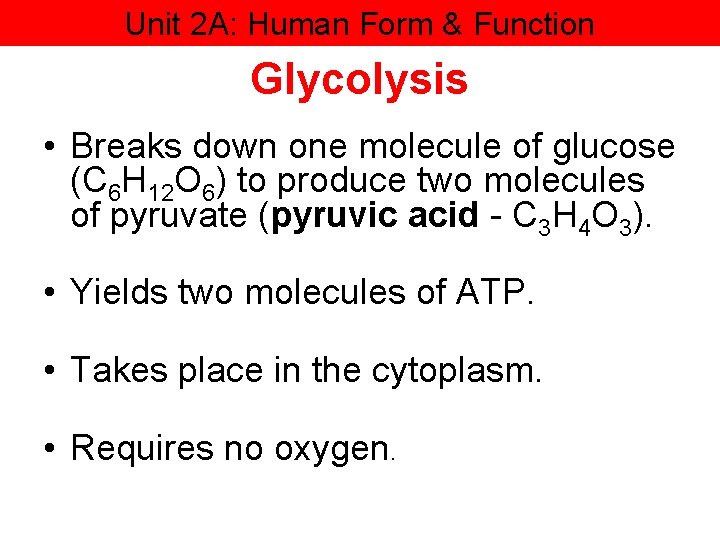
Unit 2 A: Human Form & Function Glycolysis • Breaks down one molecule of glucose (C 6 H 12 O 6) to produce two molecules of pyruvate (pyruvic acid - C 3 H 4 O 3). • Yields two molecules of ATP. • Takes place in the cytoplasm. • Requires no oxygen.
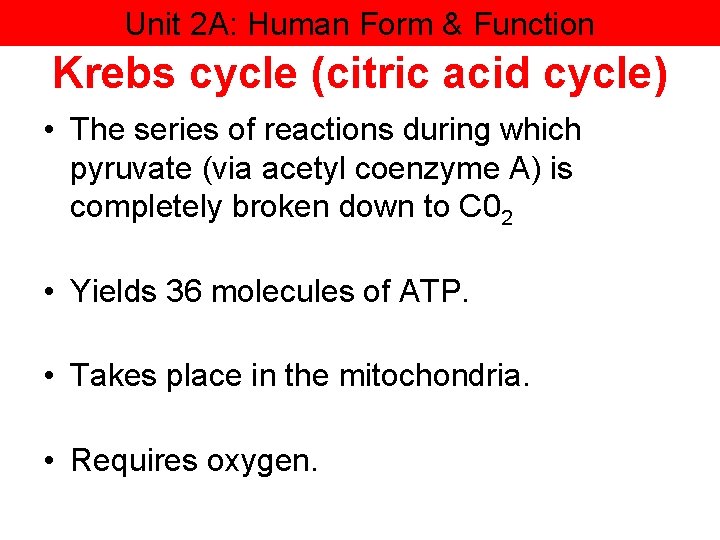
Unit 2 A: Human Form & Function Krebs cycle (citric acid cycle) • The series of reactions during which pyruvate (via acetyl coenzyme A) is completely broken down to C 02 • Yields 36 molecules of ATP. • Takes place in the mitochondria. • Requires oxygen.
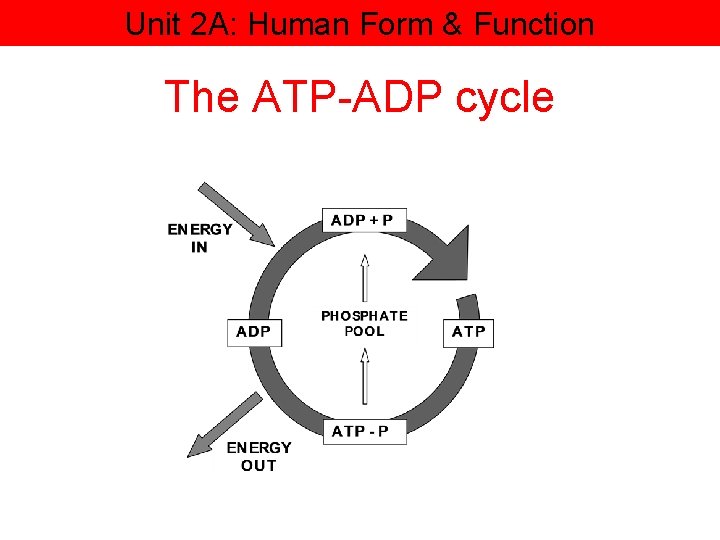
Unit 2 A: Human Form & Function ATP • ATP = adenosine triphosphate • Energy from the Krebs cycle is used to convert adenosine diphosphate (ADP) to the energyrich compound, ATP. • Energy is stored in cells as ATP.
Unit 2 A: Human Form & Function • When a phosphate molecule is stripped from ATP energy is released and ATP becomes ADP again. • Energy released by this process is available to do biological work (e. g. muscle contraction).
Unit 2 A: Human Form & Function The ATP-ADP cycle