
Unit 2 A Ecology Biotic Notes Population Interactions
Unit 2 A – Ecology – Biotic Notes – Population Interactions
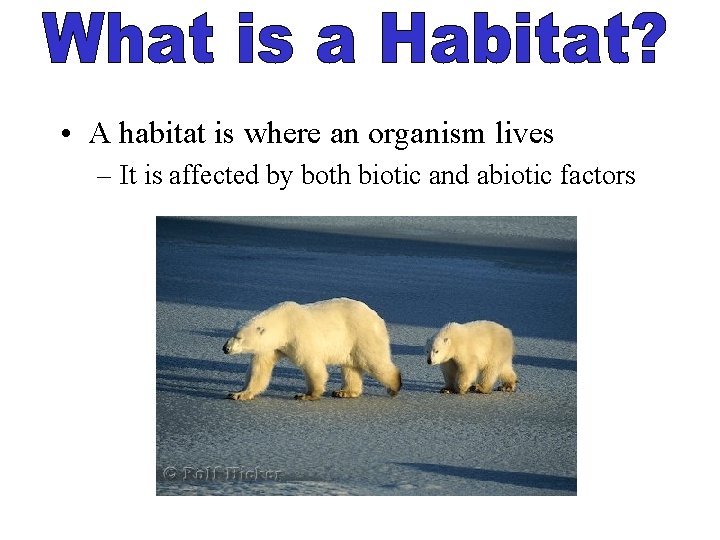
• A habitat is where an organism lives – It is affected by both biotic and abiotic factors
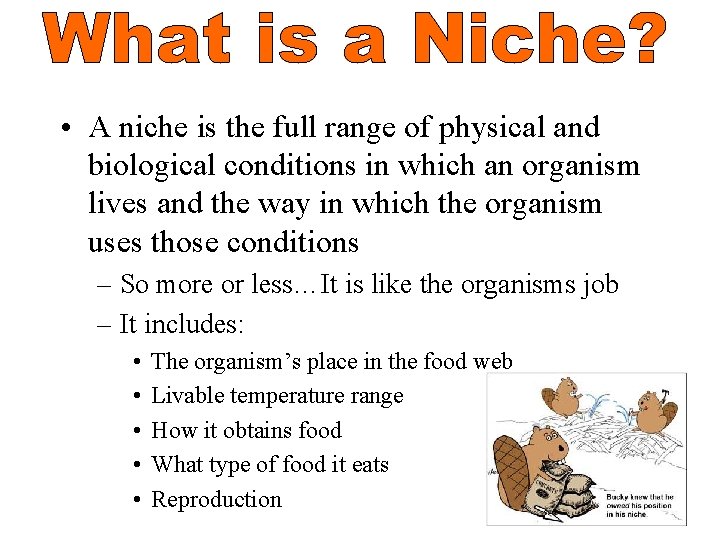
• A niche is the full range of physical and biological conditions in which an organism lives and the way in which the organism uses those conditions – So more or less…It is like the organisms job – It includes: • • • The organism’s place in the food web Livable temperature range How it obtains food What type of food it eats Reproduction
• When organisms live close together, they are always interacting – These interactions shape their ecosystem • There are 3 main types of interactions: 1. Competition 2. Predation 3. Symbiosis 1. 3 Types
• COMPETITION – Occurs when organisms of the same or different species attempt to use an ecological resource in the same place at the same time • Resource = Anything that an organism needs to survive – Direct competition in nature results in a winner & a loser – Competition Exclusion Principle • Fundamental rule in ecology • No 2 species can occupy the same niche in the same habitat at the same time

• PREDATION – An interaction when 1 organism captures and feeds upon another – The organism capture & killing = PREDATOR – The organism that is the food = PREY – Example: Eel eating a fish
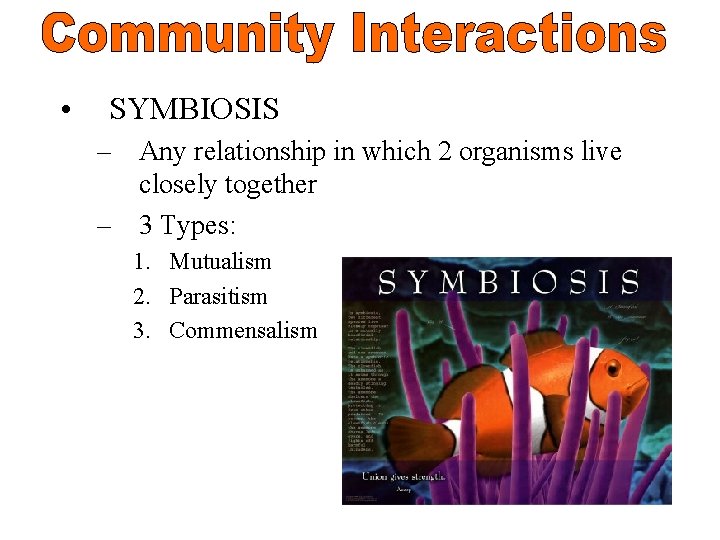
• SYMBIOSIS – Any relationship in which 2 organisms live closely together – 3 Types: 1. Mutualism 2. Parasitism 3. Commensalism
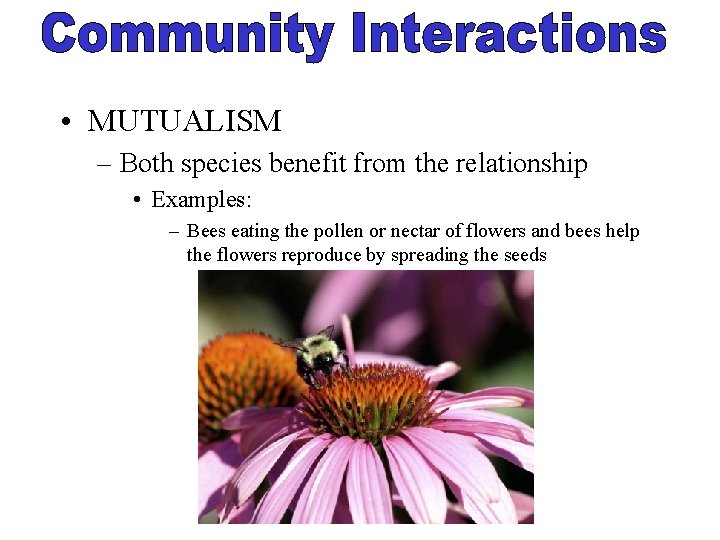
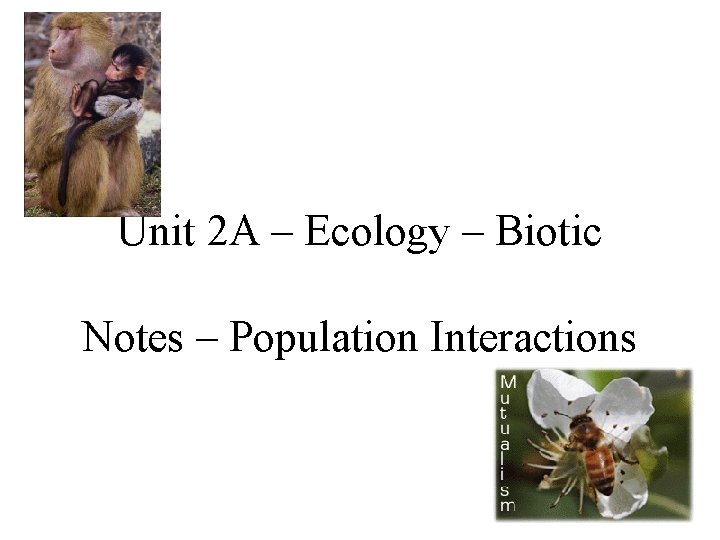
• MUTUALISM – Both species benefit from the relationship • Examples: – Bees eating the pollen or nectar of flowers and bees help the flowers reproduce by spreading the seeds
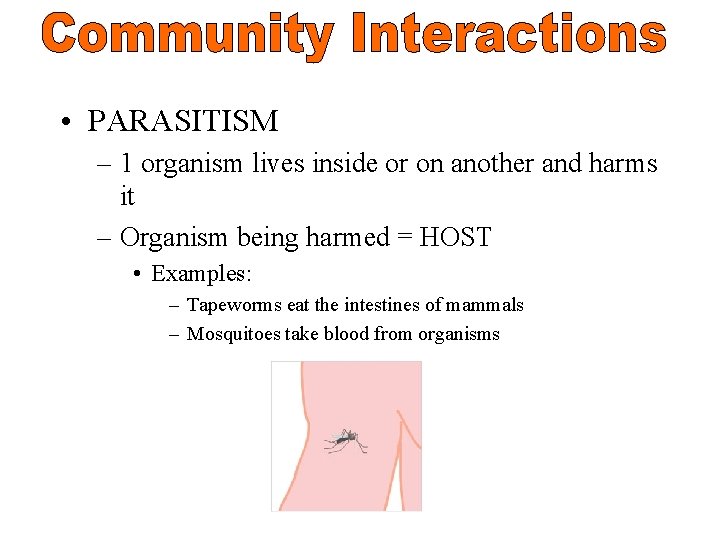
• PARASITISM – 1 organism lives inside or on another and harms it – Organism being harmed = HOST • Examples: – Tapeworms eat the intestines of mammals – Mosquitoes take blood from organisms
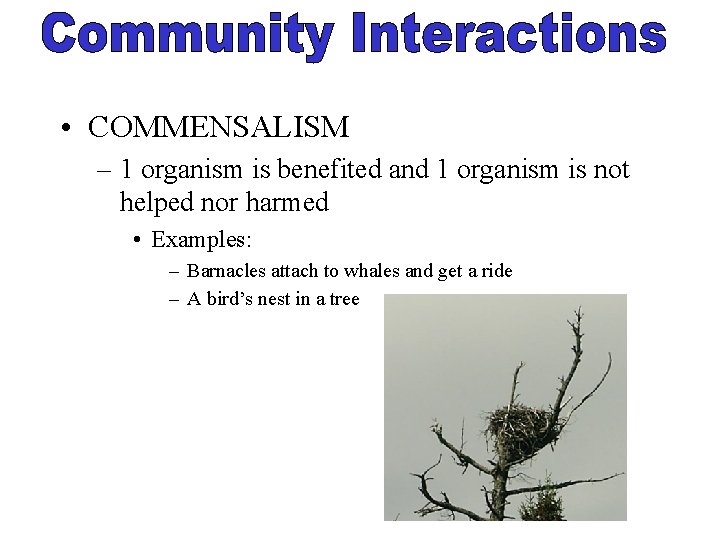
• COMMENSALISM – 1 organism is benefited and 1 organism is not helped nor harmed • Examples: – Barnacles attach to whales and get a ride – A bird’s nest in a tree
- Slides: 10