
Unit 15 Administrative Ethics English for Public Administration
Unit 15 Administrative Ethics English for Public Administration IV Snježana Husinec, Ph. D. , shusinec@pravo. hr
Introduction 1. What is in your opinion ethics? 2. Have views on morality changed significantly in recent years? 3. What moral principles are particularly important for civil servants?
Definitions, Values and Principles of Administrative Ethichs
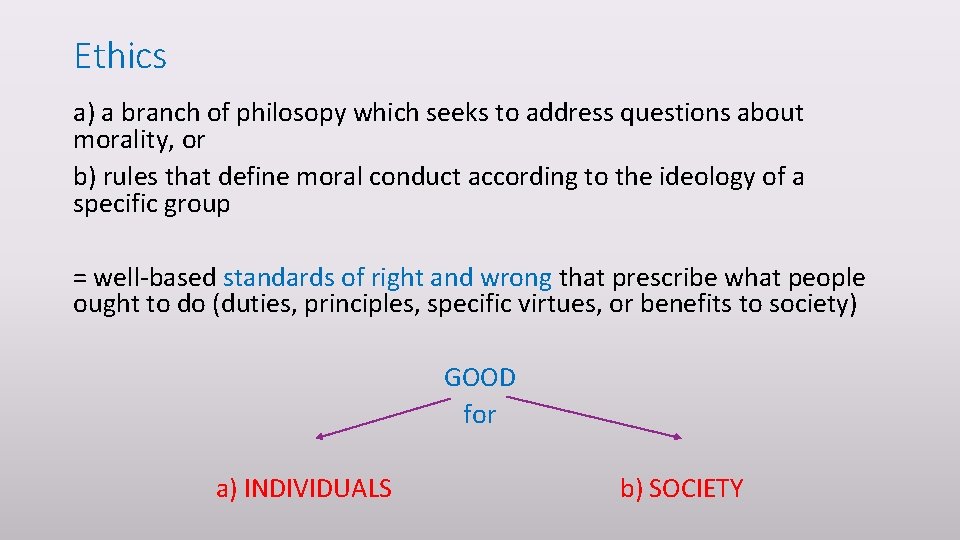
Ethics a) a branch of philosopy which seeks to address questions about morality, or b) rules that define moral conduct according to the ideology of a specific group = well-based standards of right and wrong that prescribe what people ought to do (duties, principles, specific virtues, or benefits to society) GOOD for a) INDIVIDUALS b) SOCIETY
Ethics = PERSONS who work in GOVERNMENT and NON-PROFIT ORGANIZATIONS MUST - serve the public - fulfil the expectations of public office - be trustees of public resources
Public administration ethics = rooted in duty = DUTY BASED ETHICS PUBLIC SERVICE MOTIVATION - Persons who seek positions in government or non-profit organizations are commonly motivated by a sense of duty to serve – § to help others § to benefit society § to serve the public interest INDICATORS of PUBLIC SERVICE MOTIVATION - attraction to policy making - commitment to the public interest/civil duty - compassion and self-sacrifice (working for a cause bigger than myself; for the good of society)
Indicators provide the basis for ethical values rooted in duty Handling key relationships guided by duty: - interaction with the public - interaction with the organization in which one is a part - interaction with political superiors (government officials or boards of non-profit organizations) PUBLIC OFFICIALS should a) not lie; b) withhold information; c) put their own interest above serving the public should be ACCOUNTABLE to - SUPERIORS - PUBLIC
Code of ethics = creates standards of professionalism that co-workers in a public sector can expect from each other Strong code of ethics guidelines to leaders needed to carry out their tasks and inspire employees to enforce laws in a professional and equitable manner
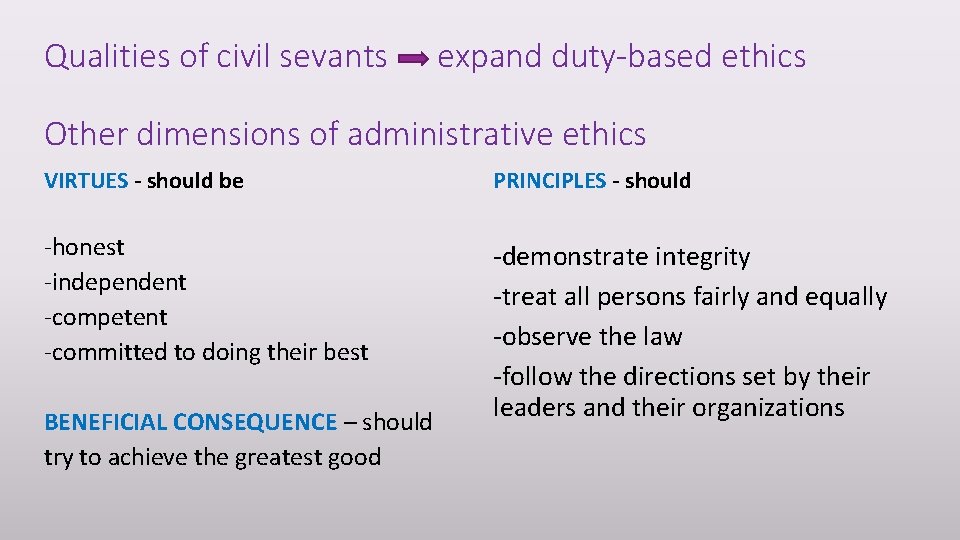
Qualities of civil sevants expand duty-based ethics Other dimensions of administrative ethics VIRTUES - should be PRINCIPLES - should -honest -independent -competent -committed to doing their best -demonstrate integrity -treat all persons fairly and equally -observe the law -follow the directions set by their leaders and their organizations BENEFICIAL CONSEQUENCE – should try to achieve the greatest good
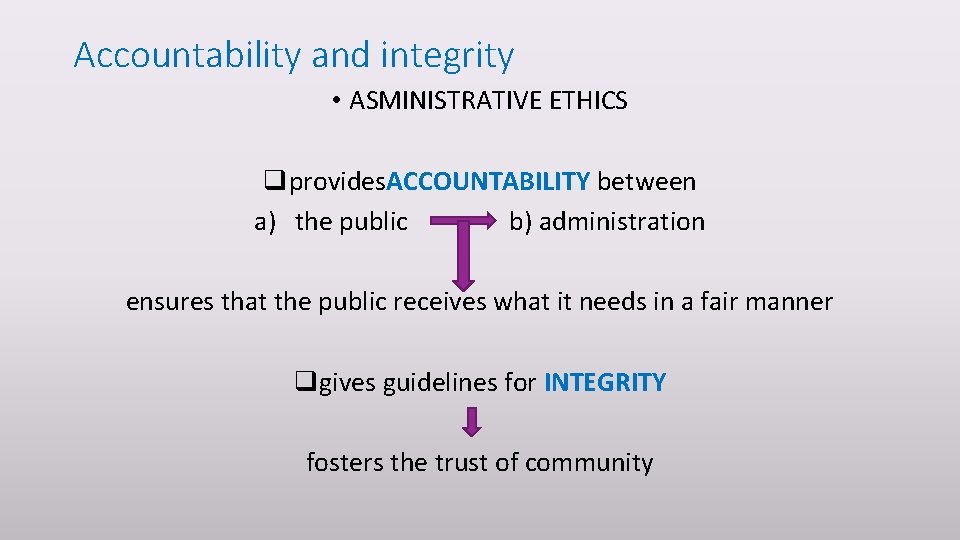
Accountability and integrity • ASMINISTRATIVE ETHICS qprovides. ACCOUNTABILITY between a) the public b) administration ensures that the public receives what it needs in a fair manner qgives guidelines for INTEGRITY fosters the trust of community
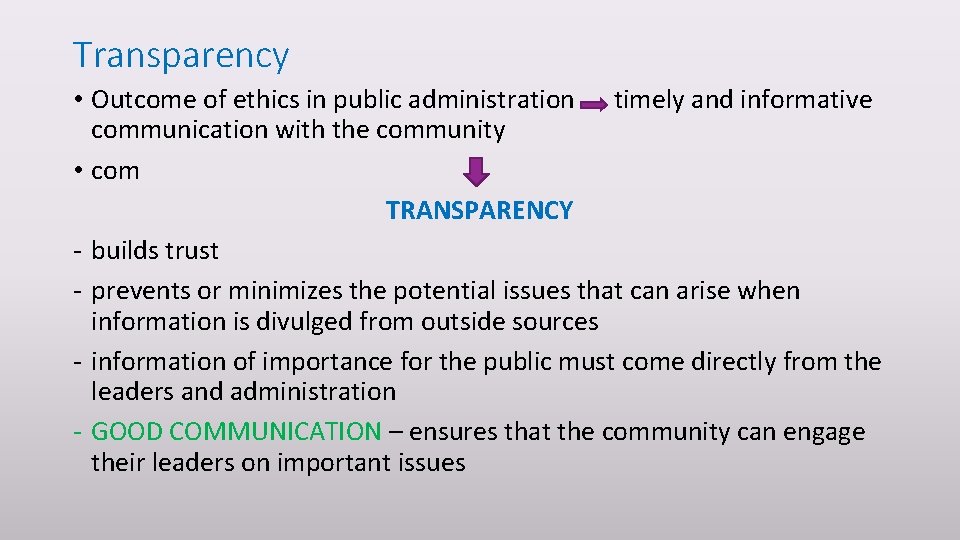
Transparency • Outcome of ethics in public administration timely and informative communication with the community • com TRANSPARENCY - builds trust - prevents or minimizes the potential issues that can arise when information is divulged from outside sources - information of importance for the public must come directly from the leaders and administration - GOOD COMMUNICATION – ensures that the community can engage their leaders on important issues
- Slides: 11