
Unit 13 Lesson 6 Using Prepositions Correctly The






- Slides: 13
Unit 13: Lesson 6 Using Prepositions Correctly
The prepositions “it” and “into” are often used incorrectly. Here’s how you can keep these two very similar prepositions straight and in their places.
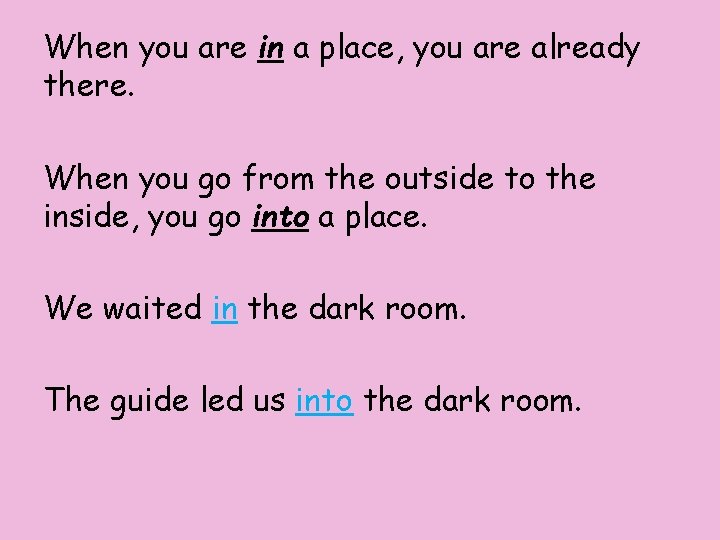
When you are in a place, you are already there. When you go from the outside to the inside, you go into a place. We waited in the dark room. The guide led us into the dark room.
Another common mistake with prepositions is using the preposition “of” as a helping verb. Have you ever heard the phrase… Couldav Shouldav Wouldav?
These are actually verb phrases… Could have Should have Would have NOT Could of Should of Would of
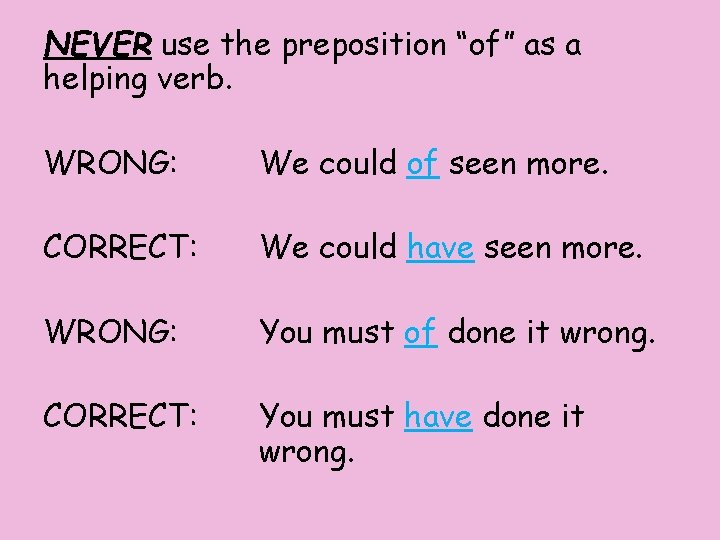
NEVER use the preposition “of” as a helping verb. WRONG: We could of seen more. CORRECT: We could have seen more. WRONG: You must of done it wrong. CORRECT: You must have done it wrong.
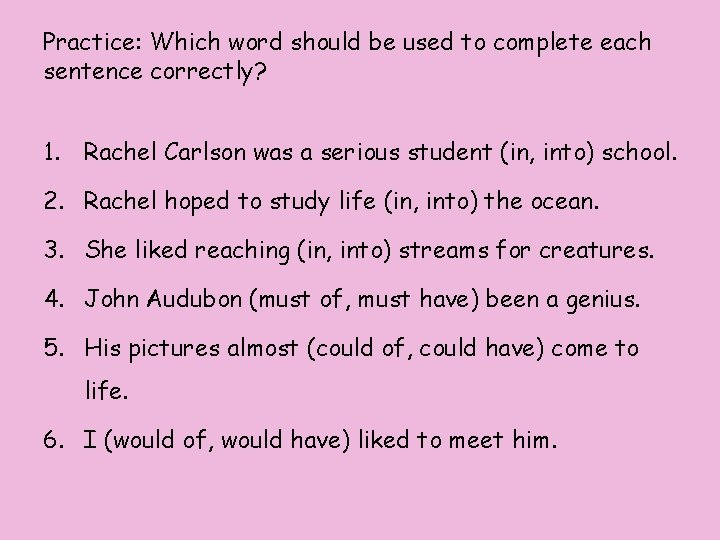
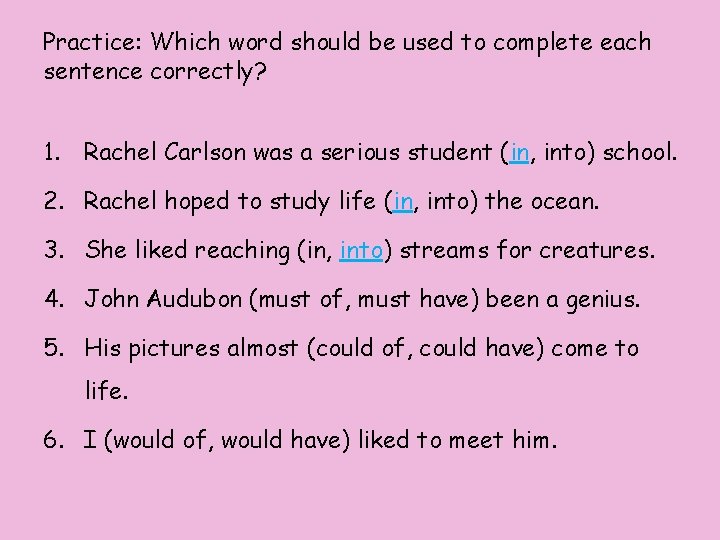
Practice: Which word should be used to complete each sentence correctly? 1. Rachel Carlson was a serious student (in, into) school. 2. Rachel hoped to study life (in, into) the ocean. 3. She liked reaching (in, into) streams for creatures. 4. John Audubon (must of, must have) been a genius. 5. His pictures almost (could of, could have) come to life. 6. I (would of, would have) liked to meet him.
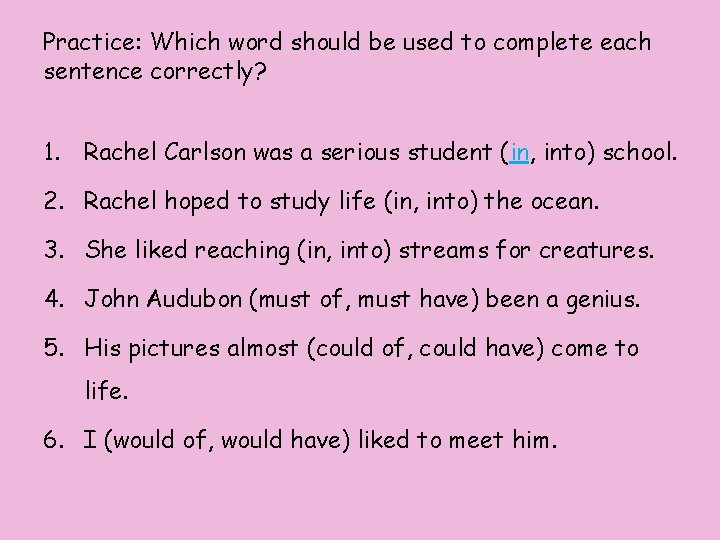
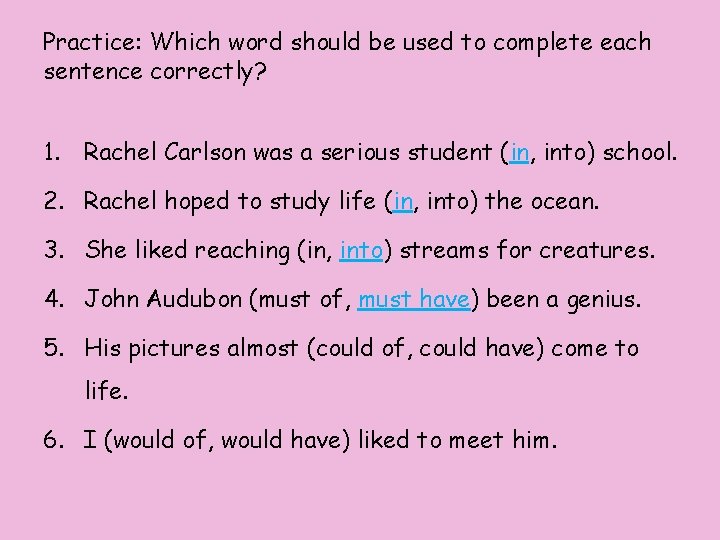
Practice: Which word should be used to complete each sentence correctly? 1. Rachel Carlson was a serious student (in, into) school. 2. Rachel hoped to study life (in, into) the ocean. 3. She liked reaching (in, into) streams for creatures. 4. John Audubon (must of, must have) been a genius. 5. His pictures almost (could of, could have) come to life. 6. I (would of, would have) liked to meet him.
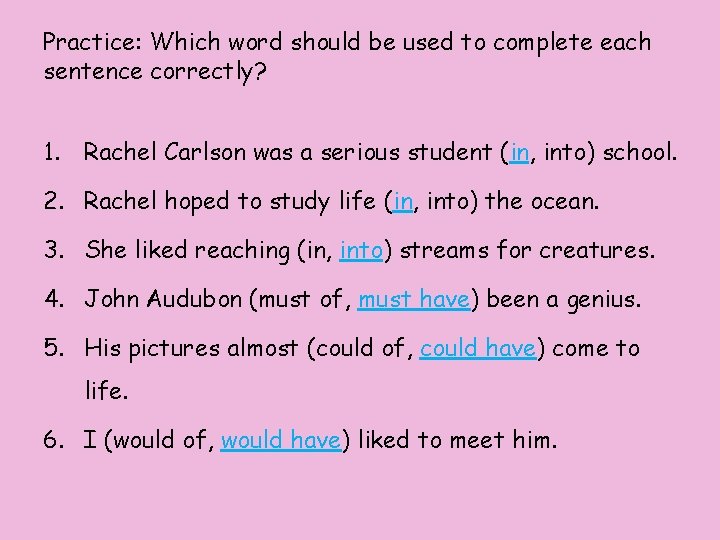
Practice: Which word should be used to complete each sentence correctly? 1. Rachel Carlson was a serious student (in, into) school. 2. Rachel hoped to study life (in, into) the ocean. 3. She liked reaching (in, into) streams for creatures. 4. John Audubon (must of, must have) been a genius. 5. His pictures almost (could of, could have) come to life. 6. I (would of, would have) liked to meet him.
Practice: Which word should be used to complete each sentence correctly? 1. Rachel Carlson was a serious student (in, into) school. 2. Rachel hoped to study life (in, into) the ocean. 3. She liked reaching (in, into) streams for creatures. 4. John Audubon (must of, must have) been a genius. 5. His pictures almost (could of, could have) come to life. 6. I (would of, would have) liked to meet him.
Practice: Which word should be used to complete each sentence correctly? 1. Rachel Carlson was a serious student (in, into) school. 2. Rachel hoped to study life (in, into) the ocean. 3. She liked reaching (in, into) streams for creatures. 4. John Audubon (must of, must have) been a genius. 5. His pictures almost (could of, could have) come to life. 6. I (would of, would have) liked to meet him.
Practice: Which word should be used to complete each sentence correctly? 1. Rachel Carlson was a serious student (in, into) school. 2. Rachel hoped to study life (in, into) the ocean. 3. She liked reaching (in, into) streams for creatures. 4. John Audubon (must of, must have) been a genius. 5. His pictures almost (could of, could have) come to life. 6. I (would of, would have) liked to meet him.
Practice: Which word should be used to complete each sentence correctly? 1. Rachel Carlson was a serious student (in, into) school. 2. Rachel hoped to study life (in, into) the ocean. 3. She liked reaching (in, into) streams for creatures. 4. John Audubon (must of, must have) been a genius. 5. His pictures almost (could of, could have) come to life. 6. I (would of, would have) liked to meet him.