
UNIT 12 WISHFUL THINKING Lesson 3 grammar listening

- Slides: 22
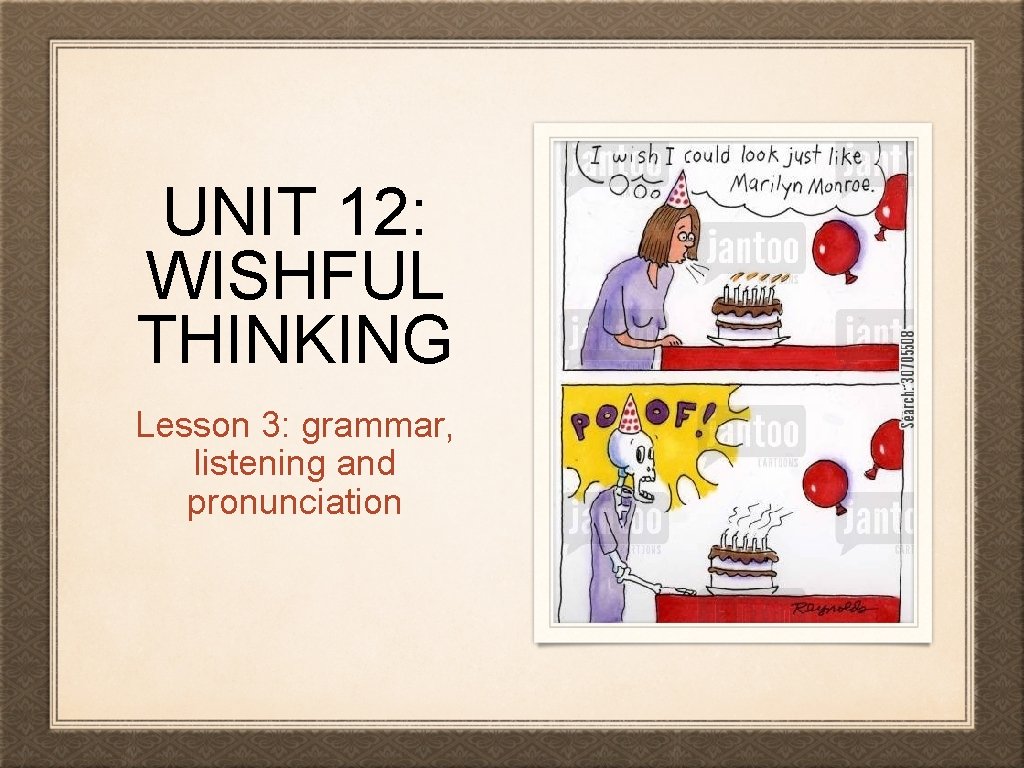
UNIT 12: WISHFUL THINKING Lesson 3: grammar, listening and pronunciation
OUR GOAL In this unit we will learn how to: wish for changes to the future recognize speakers’ roles in listening say content words together
WISHING FOR CHANGES TO THE FUTURE Brainstorm things about New York City you would like to see changed within the next ten years. Example: I want less pollution. Work in pairs to make similar sentences about your own ideas.
WISHING FOR CHANGES TO THE FUTURE You can say: I want less pollution. You can also say: I wish we could reduce the amount of pollution. I wish the government would do something about pollution. I wish industries would find cleaner ways of making their products. I wish people wouldn’t throw litter on the ground.
WISHING FOR CHANGES TO THE FUTURE The form used for wishing for changes in the present: wish + would or could + base form of verb
WISHING FOR CHANGES TO THE FUTURE Read the grammar explanation and examples independently. (p. 122) Exercise 7 (p. 122): read the instructions and the list of world issues independently. Write down your five wishes independently.
Exercise 8 (p. 122): With a partner, express your most heartfelt wish for future change. Does your partner agree that the change you are wishing for is important? If not, try to persuade your partner to agree with you.
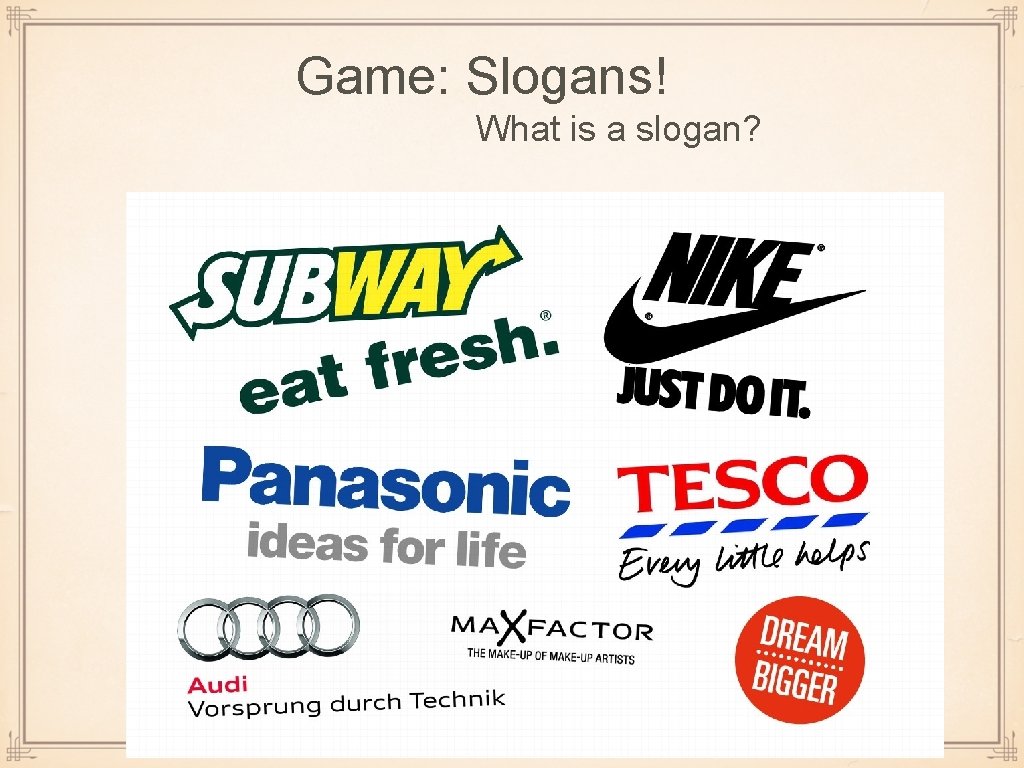
Game: Slogans! What is a slogan?
Read the slogans on the next slide. Tell what the groups who wrote the slogans would like to see changed in the future. Make sentences with wish + would/could for each slogan. e. g. , for Subway’s slogan, “eat fresh”, we can say: “Subway wishes people would/could eat fresh food for every meal. ”
Save the Whales Only You Can Prevent Forest Fires Smokers Die Younger Save the Children Save the Planet No More War Don’t Be a Litterbug
LISTEN: SHARE A WISH Before you listen (p. 122): read and respond to the questions in pairs or small groups. Recognizing Speakers’ Roles: read the strategy independently.
RECOGNIZING SPEAKERS’ ROLES This is something we usually do without thinking. Can you remember any examples of when you understood a situation, in real life or in a movie, by understanding the relationship between the speakers?
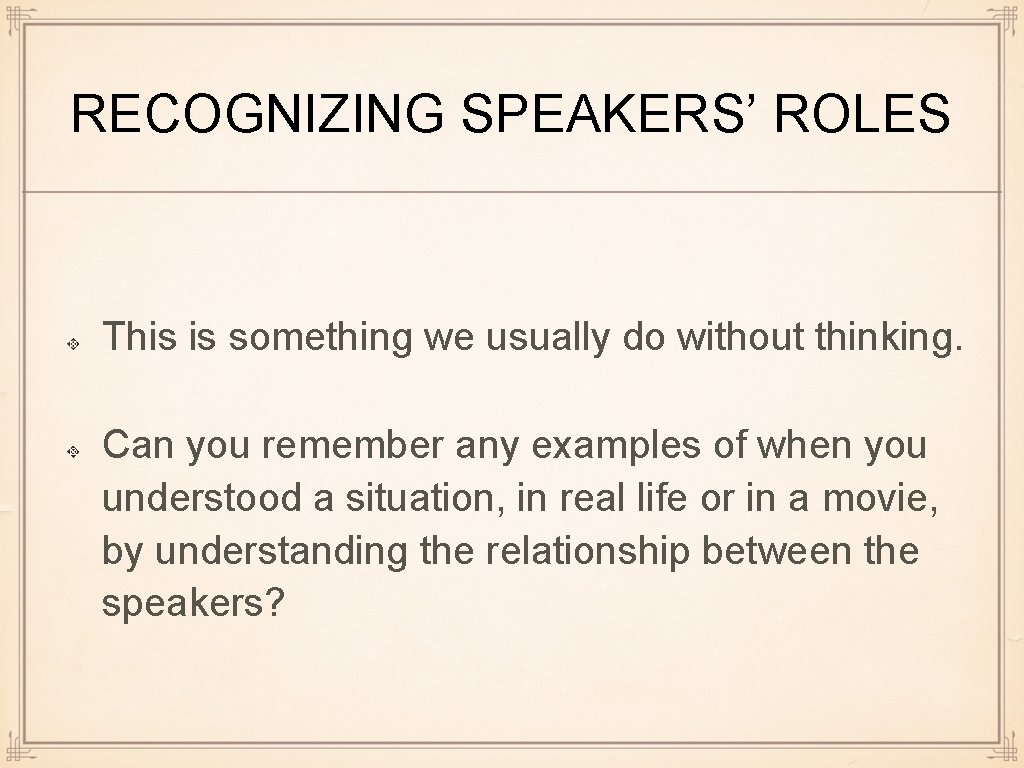
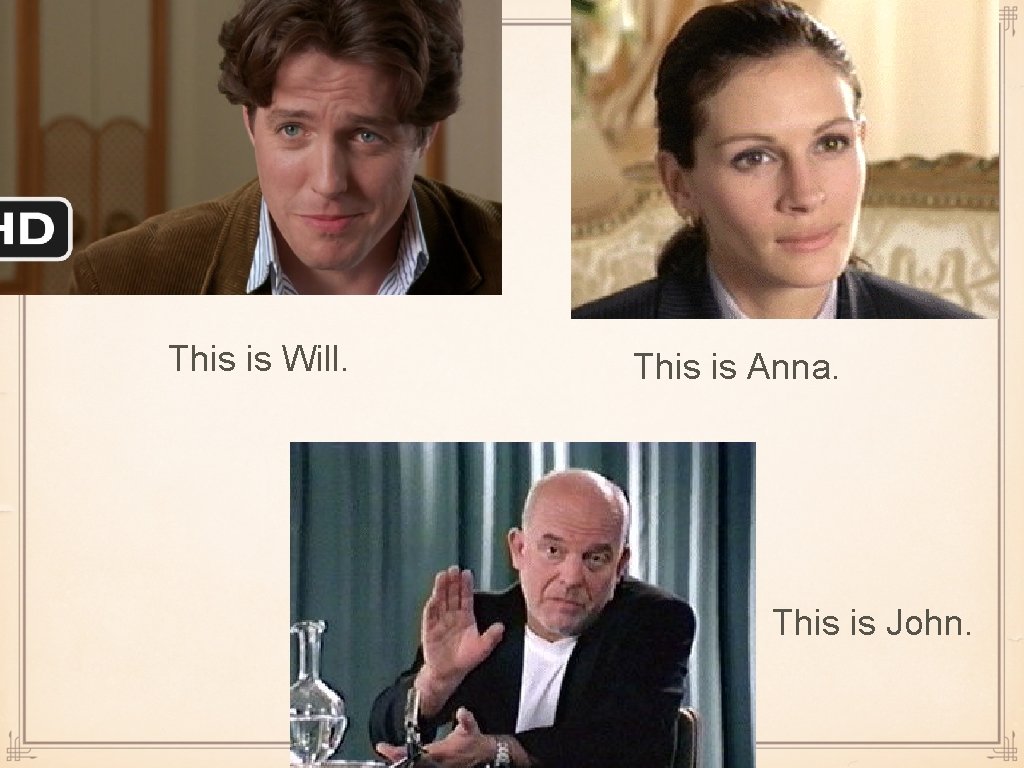
This is Will. This is Anna. This is John.
Watch the movie clip and answer the following questions with your partner(s): What are Will’s, Ann’s and John’s roles? What’s the relationship between Will and Ann? What’s the relationship between John and Ann? In your opinion, what may John think about Will? https: //www. youtube. com/watch? v=-x. Q 5 n. H_-yy. Q
PRONUNCIATION Our goal is to learn to say content words together. What is a content word? Content words are words such as nouns, most verbs, adjectives, and adverbs that refer to some object, action, or characteristic. e. g. , A black car runs fast on the road. What are the content words in this sentence?
Content words is different from function words, such as articles and prepositions. e. g. , A black car runs fast on the road. What are the function words in this sentence?
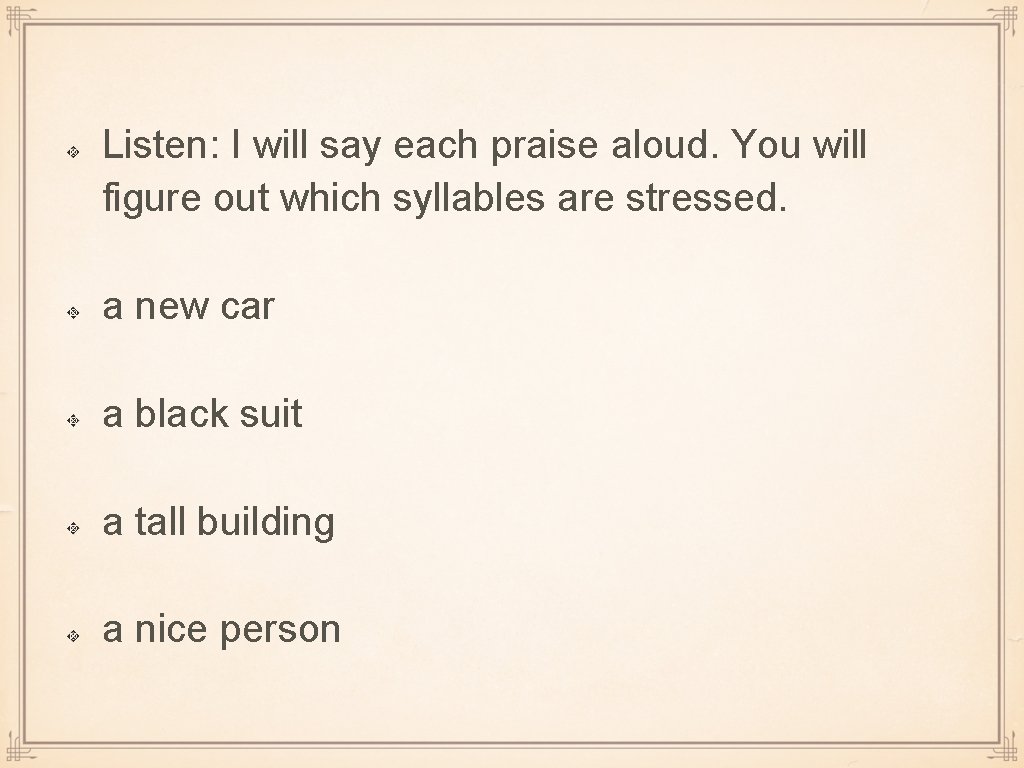
Predict: for each of the phrases, which syllables are stressed? (A syllable is a unit for pronunciation. It is made up of at least one vowel. ) a new car a black suit a tall building a nice person
Listen: I will say each praise aloud. You will figure out which syllables are stressed. a new car a black suit a tall building a nice person
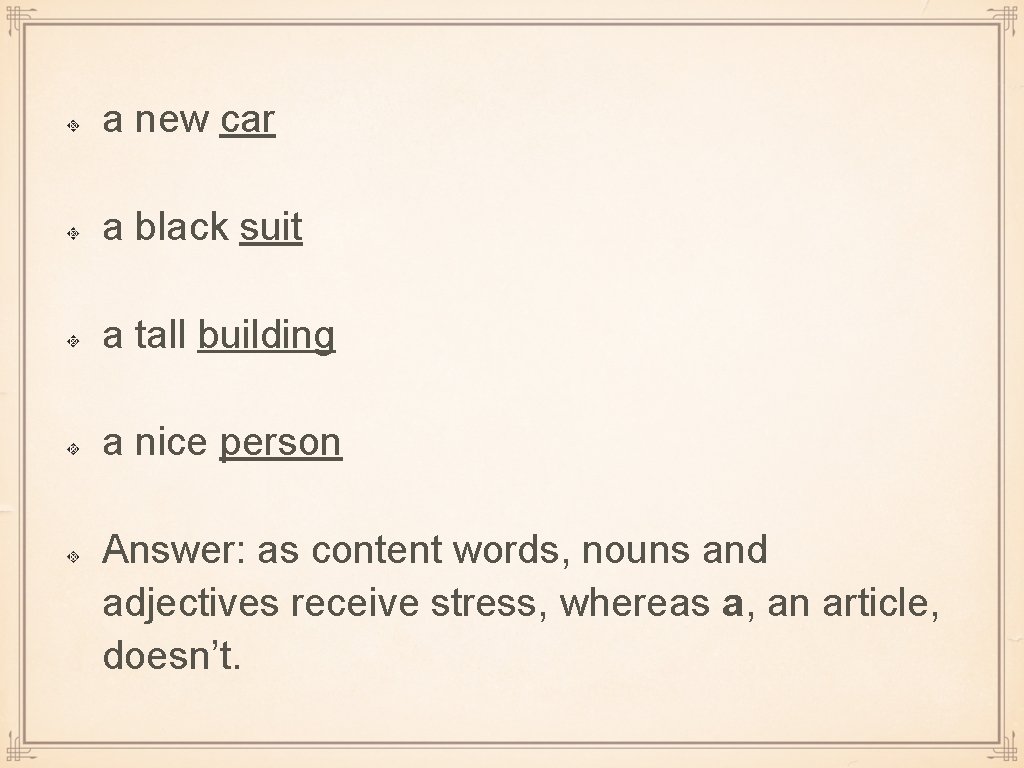
a new car a black suit a tall building a nice person Answer: as content words, nouns and adjectives receive stress, whereas a, an article, doesn’t.
PRONUNCIATION (P. 123) Read the explanation and the examples independently. Read the examples after me. Can you hear the difference in stress? Can you understand the rules that account for the differences?
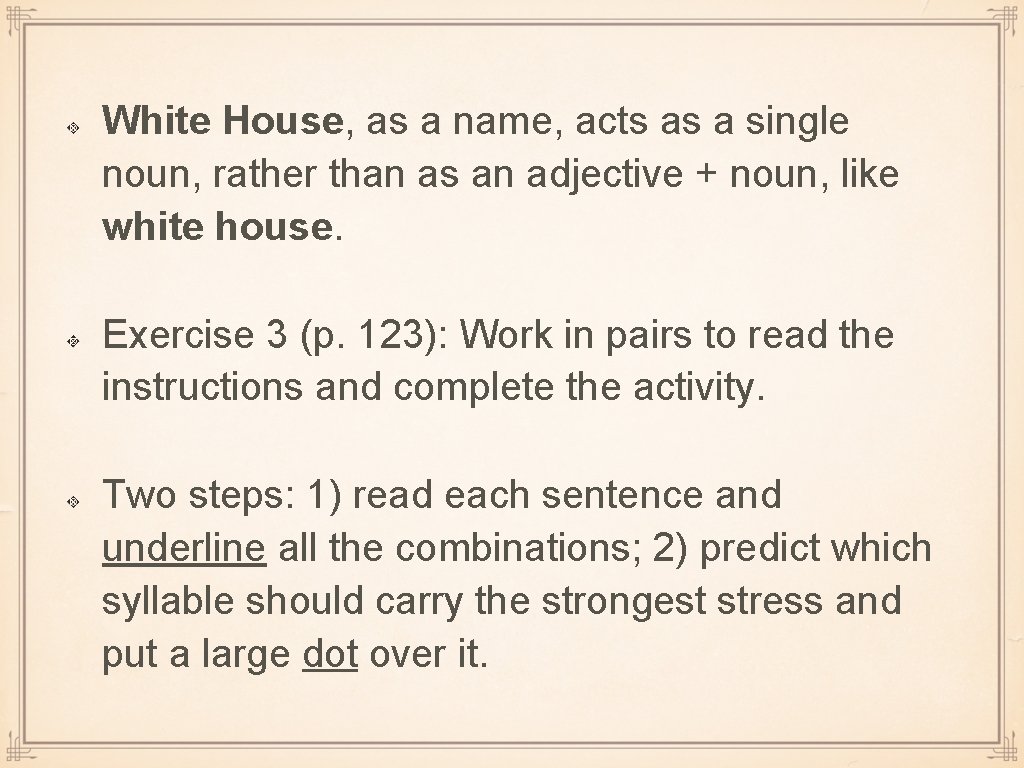
White House, as a name, acts as a single noun, rather than as an adjective + noun, like white house. Exercise 3 (p. 123): Work in pairs to read the instructions and complete the activity. Two steps: 1) read each sentence and underline all the combinations; 2) predict which syllable should carry the strongest stress and put a large dot over it.
Exercise 4 (p. 123): Read the instructions. I will play the recording twice. Exercise 5 (p. 123): Practice the dialogue in pairs.