
Unit 12 States of Matter GAS LIQUID SOLID

- Slides: 16
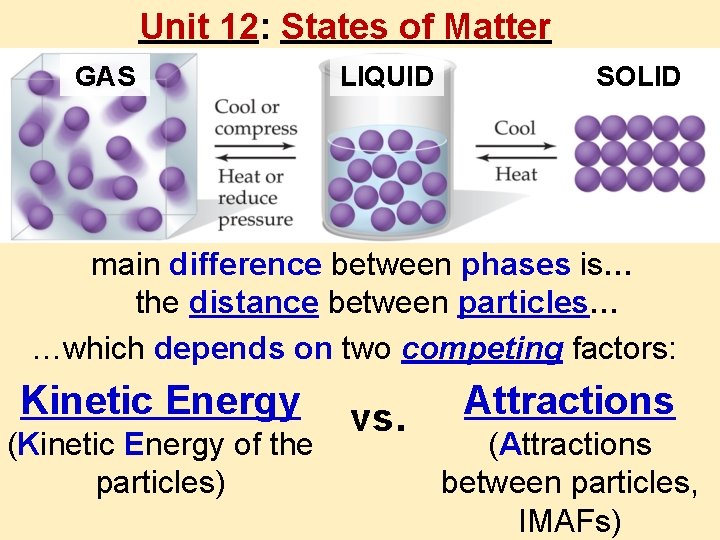
Unit 12: States of Matter GAS LIQUID SOLID main difference between phases is… the distance between particles… …which depends on two competing factors: Kinetic Energy (Kinetic Energy of the particles) vs. Attractions (Attractions between particles, IMAFs)
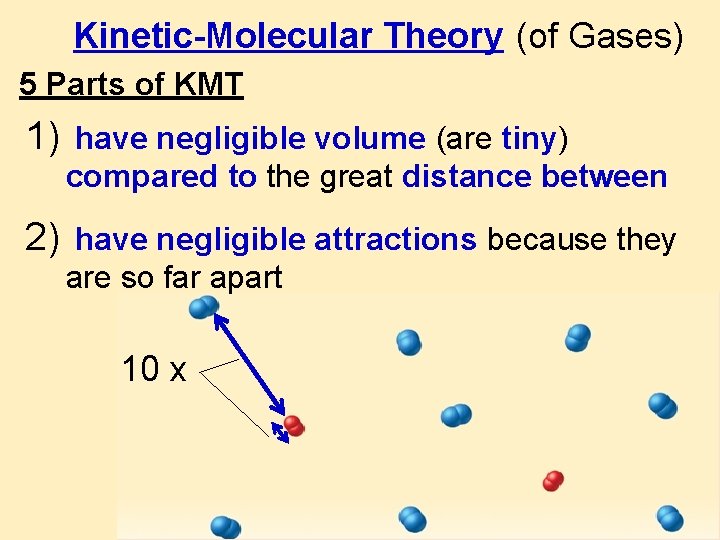
Kinetic-Molecular Theory (of Gases) 5 Parts of KMT 1) have negligible volume (are tiny) compared to the great distance between 2) have negligible attractions because they are so far apart 10 x
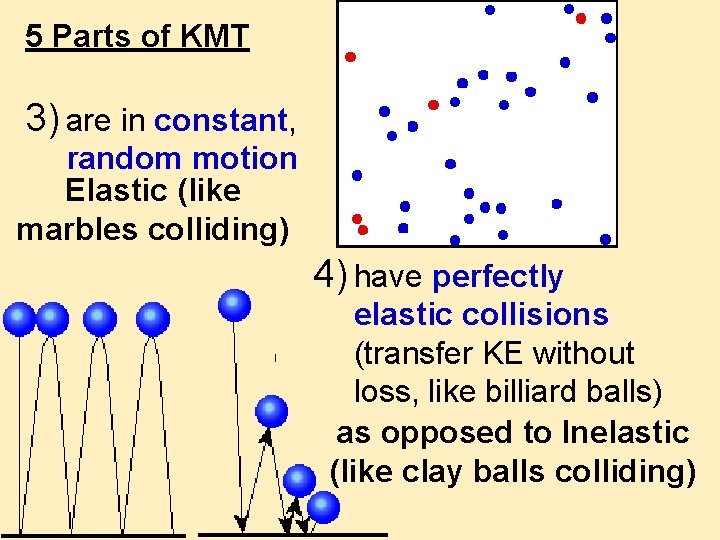
5 Parts of KMT 3) are in constant, random motion Elastic (like marbles colliding) 4) have perfectly elastic collisions (transfer KE without loss, like billiard balls) as opposed to Inelastic (like clay balls colliding)
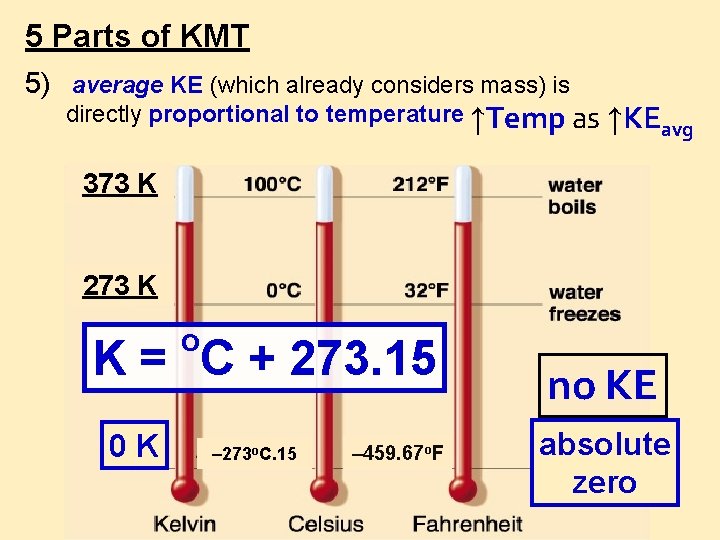
5 Parts of KMT 5) average KE (which already considers mass) is directly proportional to temperature ↑Temp as ↑KE avg 373 K 273 K o K = C + 273. 15 0 K – 273 o. C. 15 – 459. 67 o. F no KE absolute zero
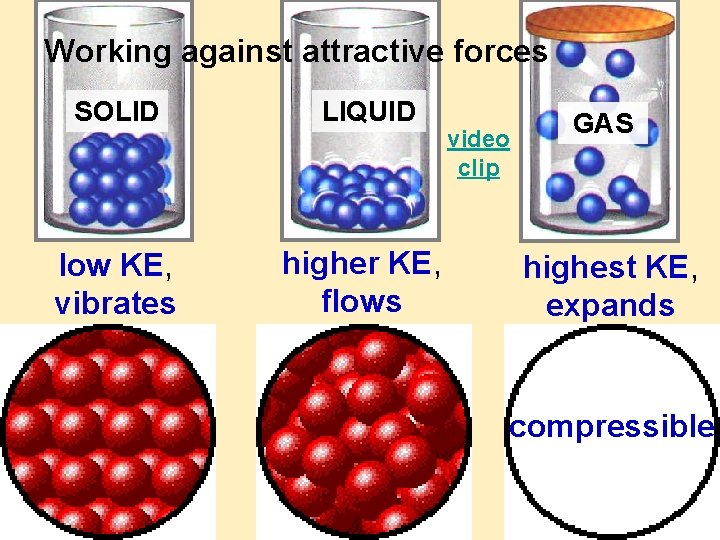
Working against attractive forces SOLID LIQUID low KE, vibrates higher KE, flows video clip GAS highest KE, expands compressible
Phase Changes
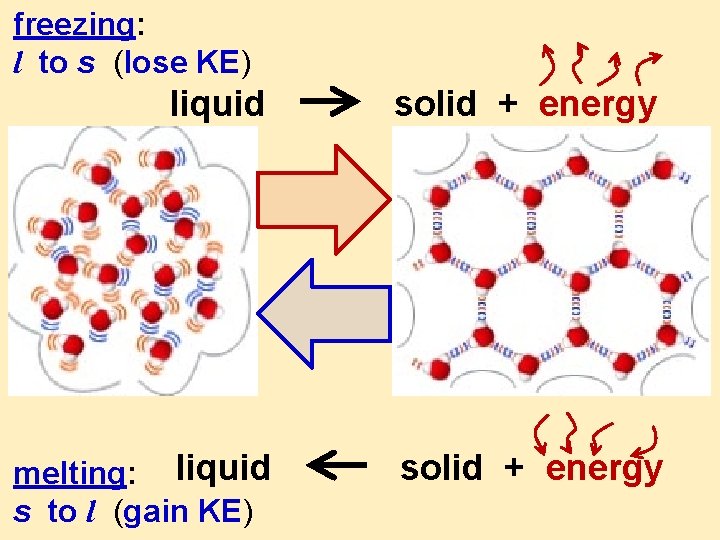
freezing: l to s (lose KE) liquid solid + energy melting: liquid s to l (gain KE) solid + energy
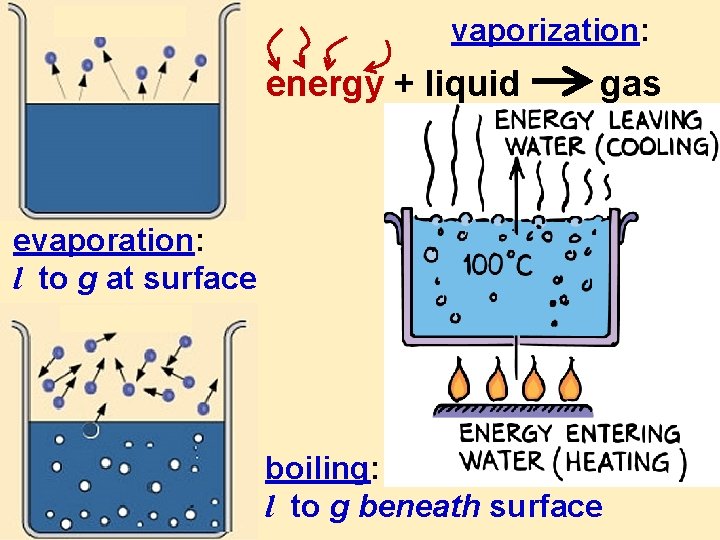
vaporization: energy + liquid gas evaporation: l to g at surface boiling: l to g beneath surface
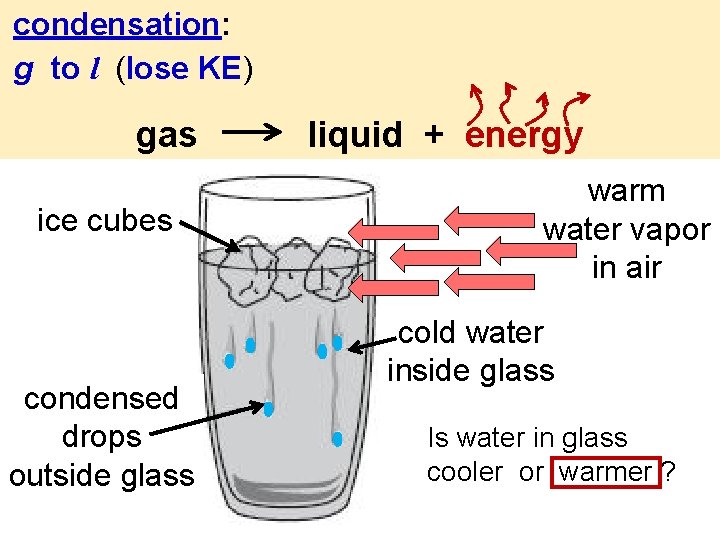
condensation: g to l (lose KE) gas ice cubes condensed drops outside glass liquid + energy warm water vapor in air cold water inside glass Is water in glass cooler or warmer ?
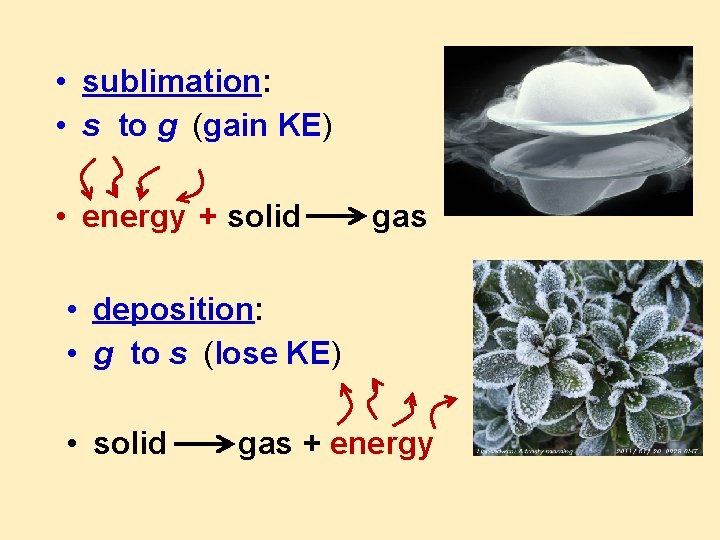
• sublimation: • s to g (gain KE) • energy + solid gas • deposition: • g to s (lose KE) • solid gas + energy
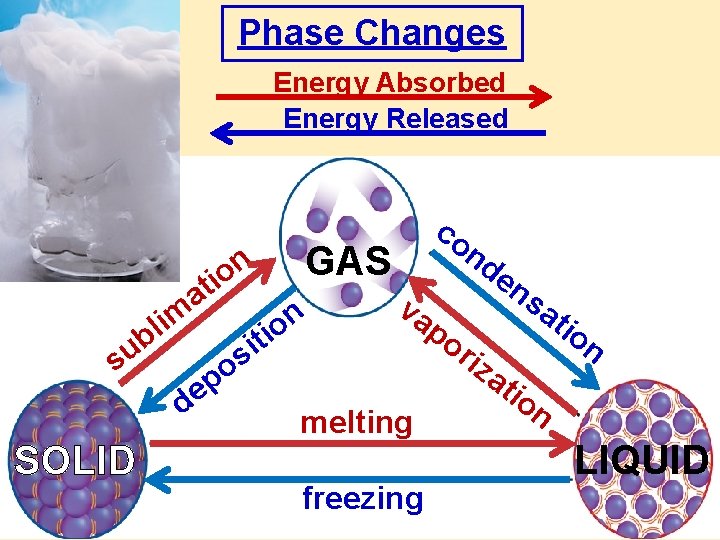
Phase Changes Energy Absorbed Energy Released im l ub s SOLID n o ti a p e d os GAS n o iti va melting freezing co nd en po r sa iza tio n LIQUID
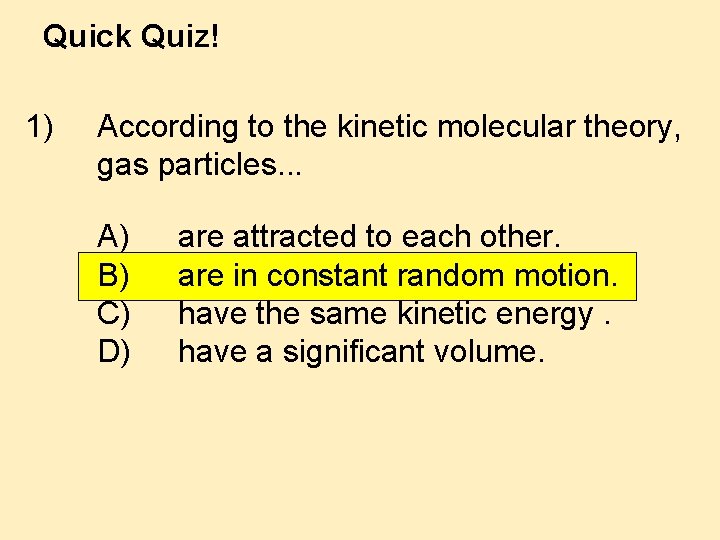
Quick Quiz! 1) According to the kinetic molecular theory, gas particles. . . A) B) C) D) are attracted to each other. are in constant random motion. have the same kinetic energy. have a significant volume.
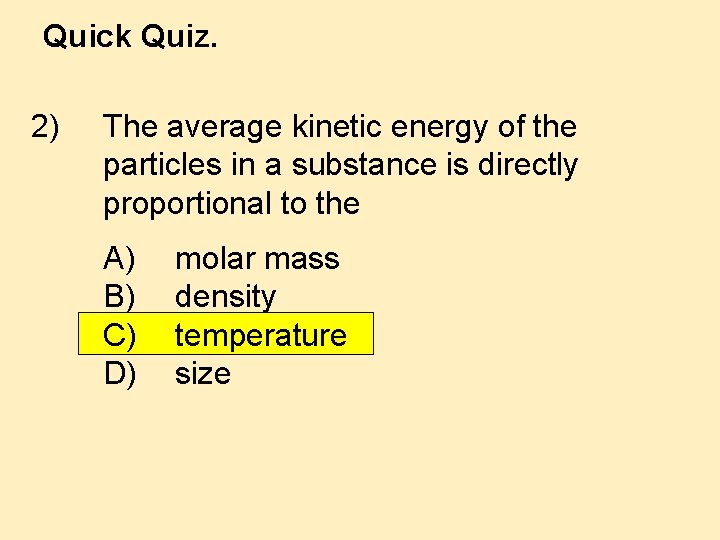
Quick Quiz. 2) The average kinetic energy of the particles in a substance is directly proportional to the A) B) C) D) molar mass density temperature size
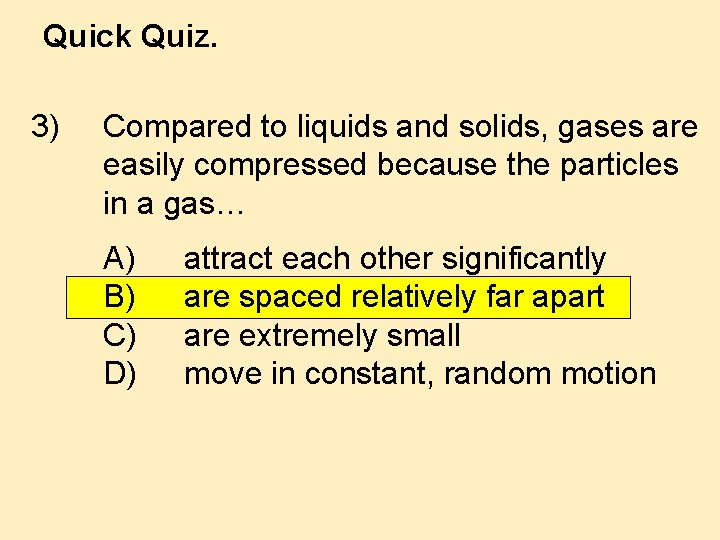
Quick Quiz. 3) Compared to liquids and solids, gases are easily compressed because the particles in a gas… A) B) C) D) attract each other significantly are spaced relatively far apart are extremely small move in constant, random motion
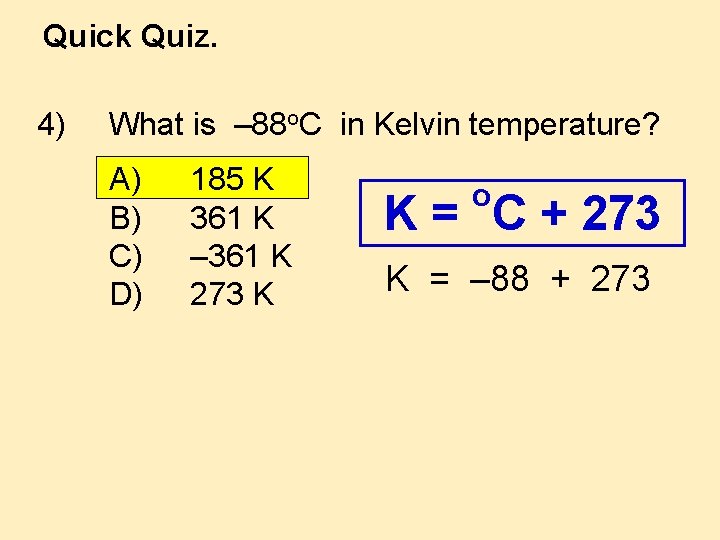
Quick Quiz. 4) What is – 88 o. C in Kelvin temperature? A) B) C) D) 185 K 361 K – 361 K 273 K o K = C + 273 K = – 88 + 273
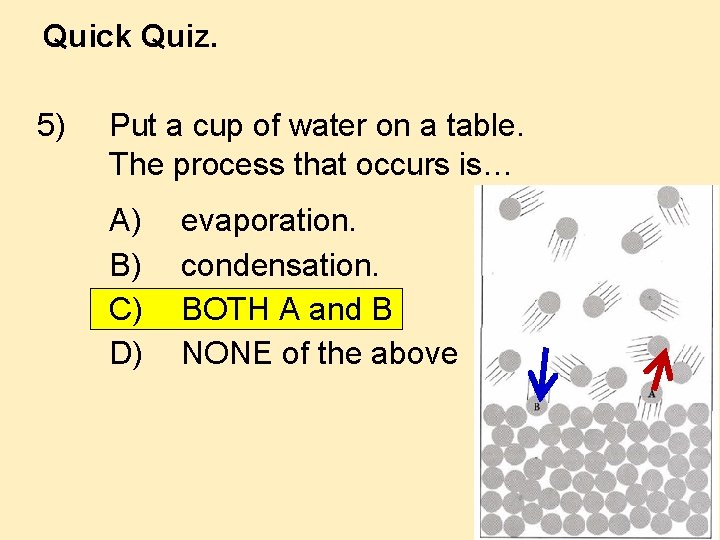
Quick Quiz. 5) Put a cup of water on a table. The process that occurs is… A) B) C) D) evaporation. condensation. BOTH A and B NONE of the above