
Unit 12 of 2 Introduction of Economics Economic
- Slides: 38
Unit 1(2 of 2) Introduction of Economics
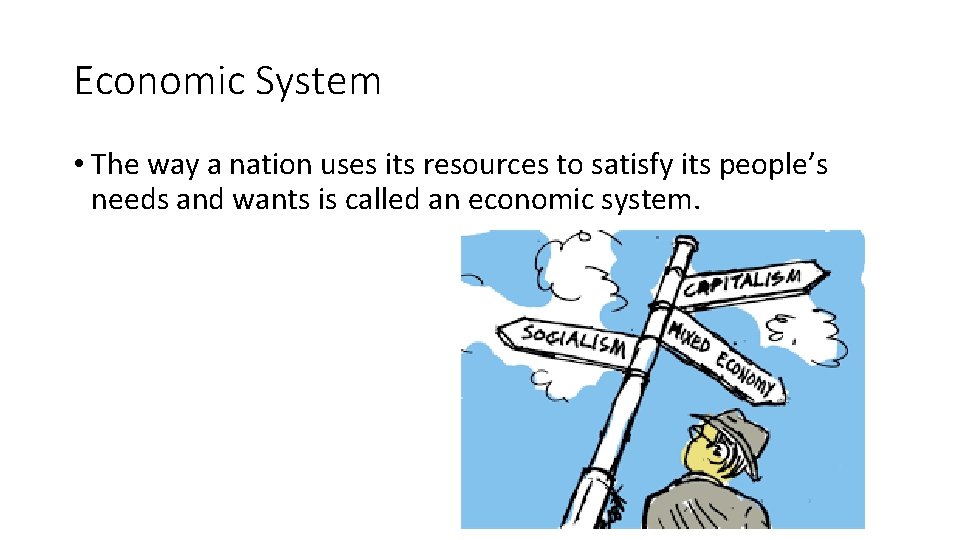
Economic System • The way a nation uses its resources to satisfy its people’s needs and wants is called an economic system.
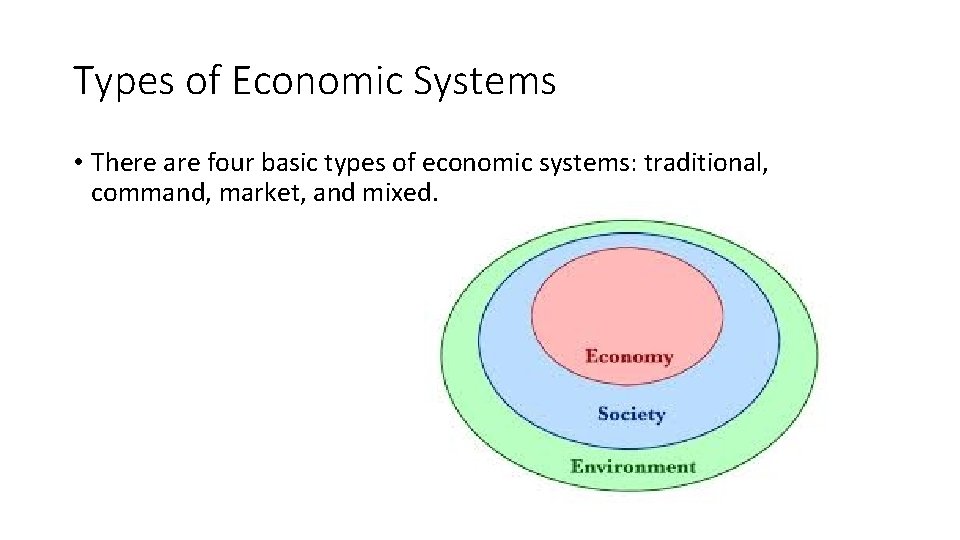
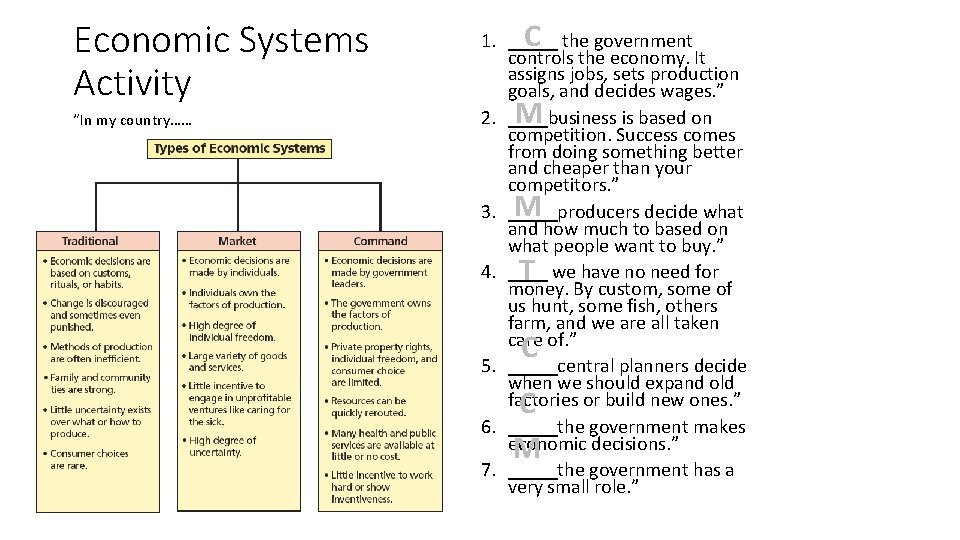
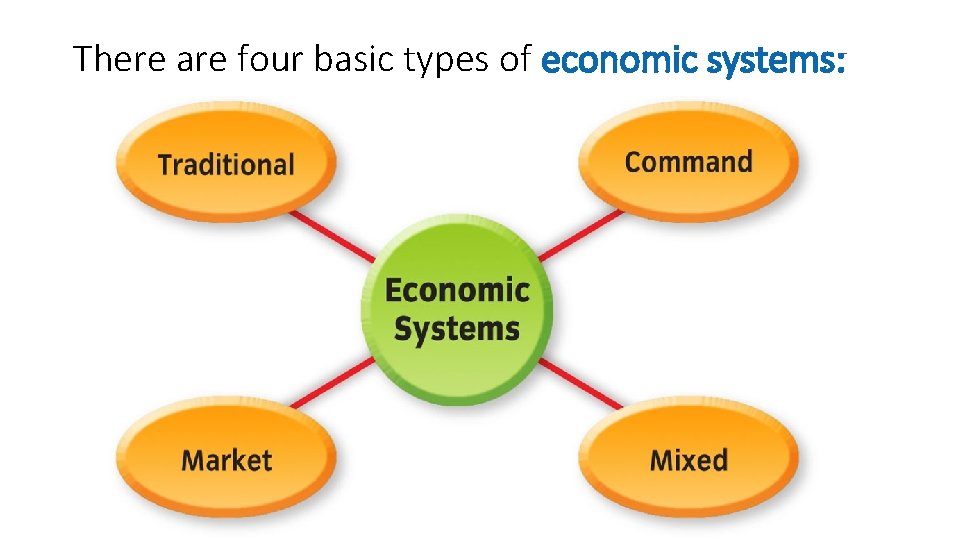
Types of Economic Systems • There are four basic types of economic systems: traditional, command, market, and mixed.
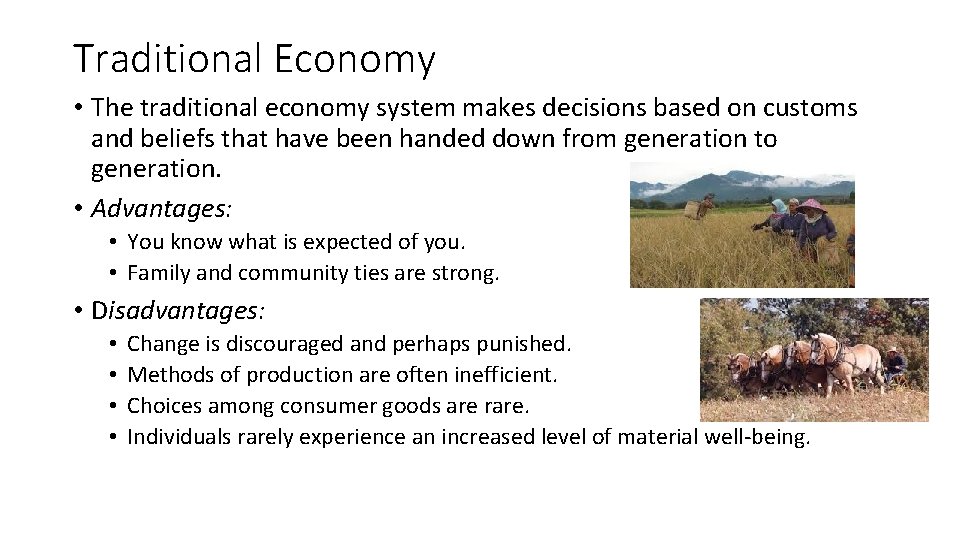
Traditional Economy • The traditional economy system makes decisions based on customs and beliefs that have been handed down from generation to generation. • Advantages: • You know what is expected of you. • Family and community ties are strong. • Disadvantages: • • Change is discouraged and perhaps punished. Methods of production are often inefficient. Choices among consumer goods are rare. Individuals rarely experience an increased level of material well-being.
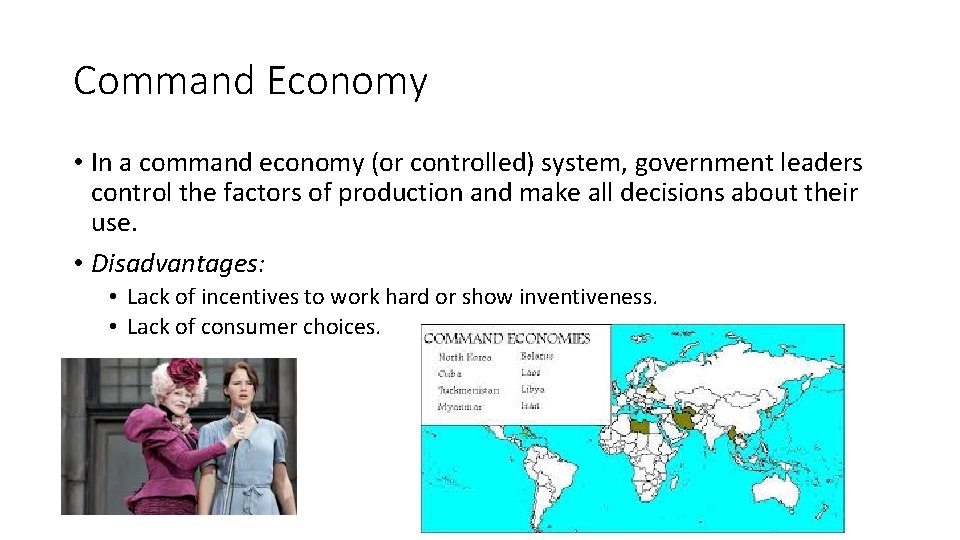
Command Economy • In a command economy (or controlled) system, government leaders control the factors of production and make all decisions about their use. • Disadvantages: • Lack of incentives to work hard or show inventiveness. • Lack of consumer choices.
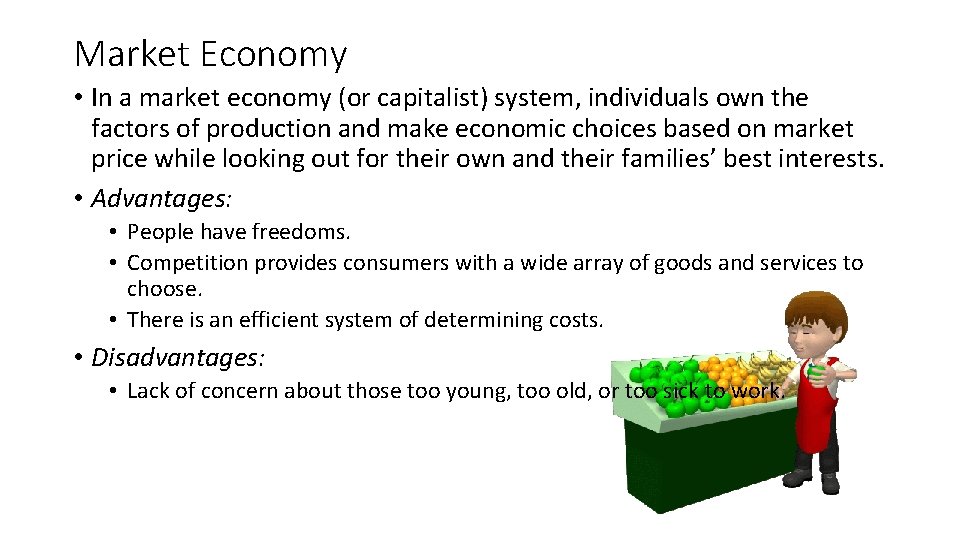
Market Economy • In a market economy (or capitalist) system, individuals own the factors of production and make economic choices based on market price while looking out for their own and their families’ best interests. • Advantages: • People have freedoms. • Competition provides consumers with a wide array of goods and services to choose. • There is an efficient system of determining costs. • Disadvantages: • Lack of concern about those too young, too old, or too sick to work.
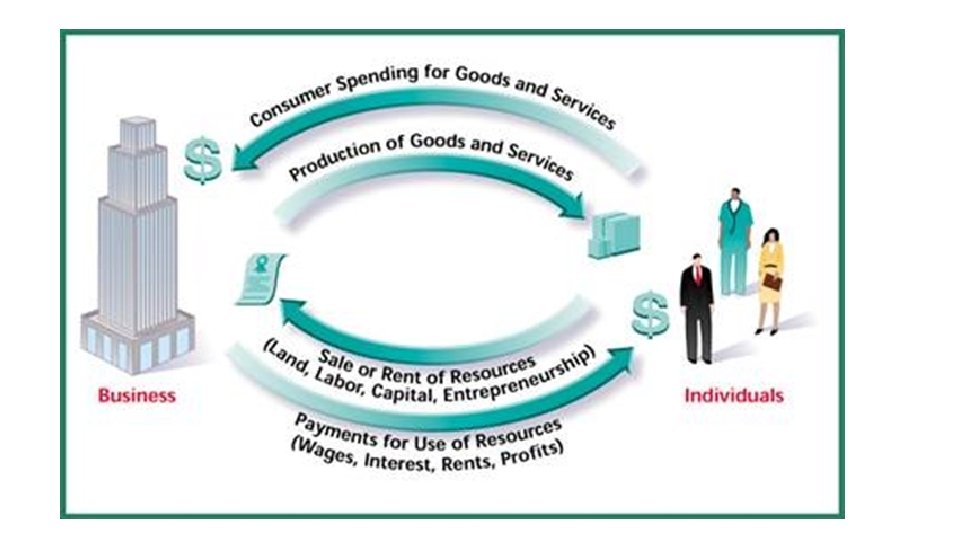
Circular Flow • The flow of resources, goods and services, and income in a market system is a circular flow of income and output.
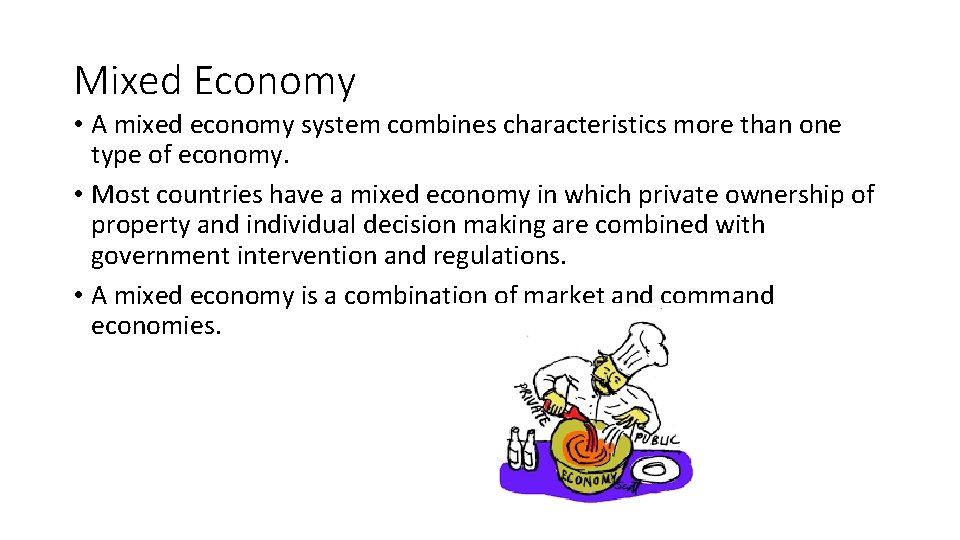
Mixed Economy • A mixed economy system combines characteristics more than one type of economy. • Most countries have a mixed economy in which private ownership of property and individual decision making are combined with government intervention and regulations. • A mixed economy is a combination of market and command economies.
Name that Economic System My name is Heraldo Esterez. I have lived in Cuba all my life. I wanted to become a teacher. However, I work for a large sugar producer that is owned by the government. The government decides when I work, where I work, and how much money I receive. What economic system am I describing? Command Economy
Name that Economic System My name is Curt Jones and I have always had a passion for delicious ice cream. I discovered a way to freeze ice cream into small dots. I patented the process for making the ice cream and built a plant to make enough ice cream to sell it internationally. Which economic system am I describing? Market Economy
Name that Economic System I am a basket maker in India. The people in my village make beautiful baskets. My grandmother and my mother made baskets. What type of economic system am I describing? Traditional Economy
Name that Economic System My name is Morgan Taylor. I went shopping for a new pair of jeans. I refused to buy the jeans because they were too expensive. Which economic system am I describing? Market Economy
Name that Economic System My name is Madison Brown. I worked for an ice cream company for many years. I am now 65 years old and have health problems that prevent me from working. I receive a Social Security check each month to help pay my expenses. What economic system am I describing? Mixed Economy
Name that Economic System My name is Whitney Smith. I own a toy factory. My employees use many sharp instruments to make the toys. A federal agency called O. S. H. A. (Occupational Health and Safety Administration) visits my factory often to make sure my employees have the safe equipment to use. Which economic system am I describing? Mixed Economy Market and Command Economies
Name that Economic System My name is Derek Jones. I am an engineer. My father and grandfather are engineers also. Which economic system am I describing? Traditional Economy
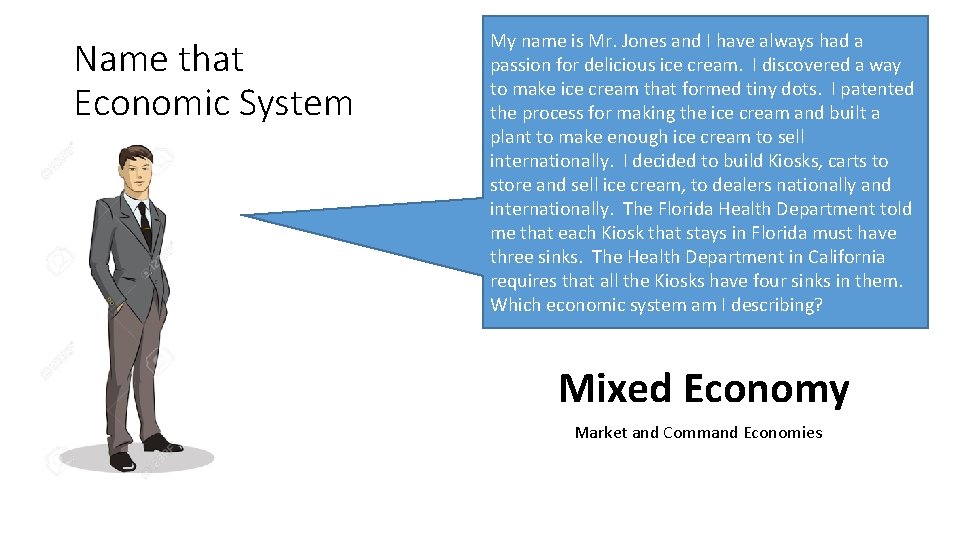
Name that Economic System My name is Mr. Jones and I have always had a passion for delicious ice cream. I discovered a way to make ice cream that formed tiny dots. I patented the process for making the ice cream and built a plant to make enough ice cream to sell internationally. I decided to build Kiosks, carts to store and sell ice cream, to dealers nationally and internationally. The Florida Health Department told me that each Kiosk that stays in Florida must have three sinks. The Health Department in California requires that all the Kiosks have four sinks in them. Which economic system am I describing? Mixed Economy Market and Command Economies
Economic Systems Activity “In my country…… C the government 1. _____ controls the economy. It assigns jobs, sets production goals, and decides wages. ” M 2. ____business is based on competition. Success comes from doing something better and cheaper than your competitors. ” M 3. _____producers decide what and how much to based on what people want to buy. ” 4. ____ we have no need for T money. By custom, some of us hunt, some fish, others farm, and we are all taken care of. ” C 5. _____central planners decide when we should expand old factories C or build new ones. ” 6. _____the government makes economic decisions. ” M 7. _____the government has a very small role. ”
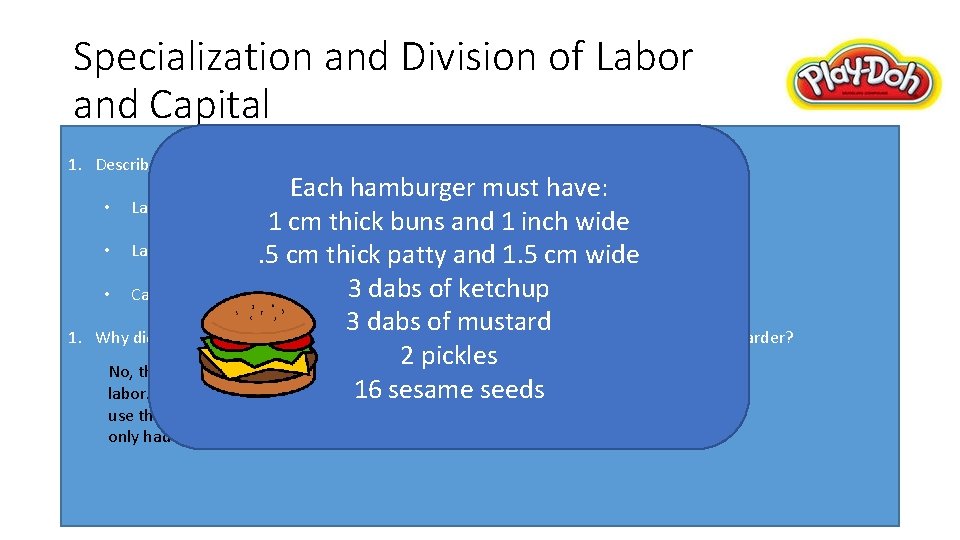
Specialization and Division of Labor and Capital Part 1: Making Production More Efficient 1. Describe each factor of production used? Group 2: Group 1: Each hamburger must have: – modeling playdoh into balls for buns 2 students Land-must Classroom/workspace Each • student make their own hamburgers. You may 2 students – flatten balls into buns 1 cmsome thick buns and NOT divide the playdoh by passing of each color to 1 inch wide – modeling playdoh into balls for meat workers Labor- Human resource each • student. . 5 cmofthick patty and 1. 511 student cm wide student – flatten balls into meat 3 students – use rulers to make sure meat patties 3 dabs of ketchup • Capital- Hamburgers/playdoh are correct size 3 dabs of mustard student – assemble bottomharder? bun and meat 1. Why did the assembly line group make more hamburgers? 1 Was it because they worked 1 student – put on three dabs of ketchup 2 pickles No, the assembly line group specialized by dividing the 1 student – put on three dabs of mustard 16 wasted sesame seeds labor. The non-assembly line group time waiting to 1 student – put on two pickles use the capital and playdoh. The assembly line students 1 student – put 16 sesame seed holes in bun and only had to learn one task. assemble burgers 1 student – help where needed 1 student – quality control person
Specialization and Division of Labor and Capital Part 2: Making Work More Productive Group 2: 2 students – modeling playdoh into balls for buns 2 students – flatten balls into buns 1 student – modeling playdoh into balls for meat 1 student – flatten balls into meat 3 students – use rulers to make sure meat patties 1. Do you think that workers who use modern, more efficient capital would be paid less or more than workers are correct size who do not use capital, or who use older, less efficient capital? 1 student – assemble bottom bun and meat 1 student – put on three dabs of ketchup 1 student – put on three dabs of mustard 1. What are ways that other producers of goods and services use capital to improve productivity? 1 student – put on two pickles 1 student – put 16 sesame seed holes in bun and assemble burgers 1 student – help where needed 1 student – quality control person Group 1: You may now organize and use the “new” capital. 1. Why does better capital make a difference?
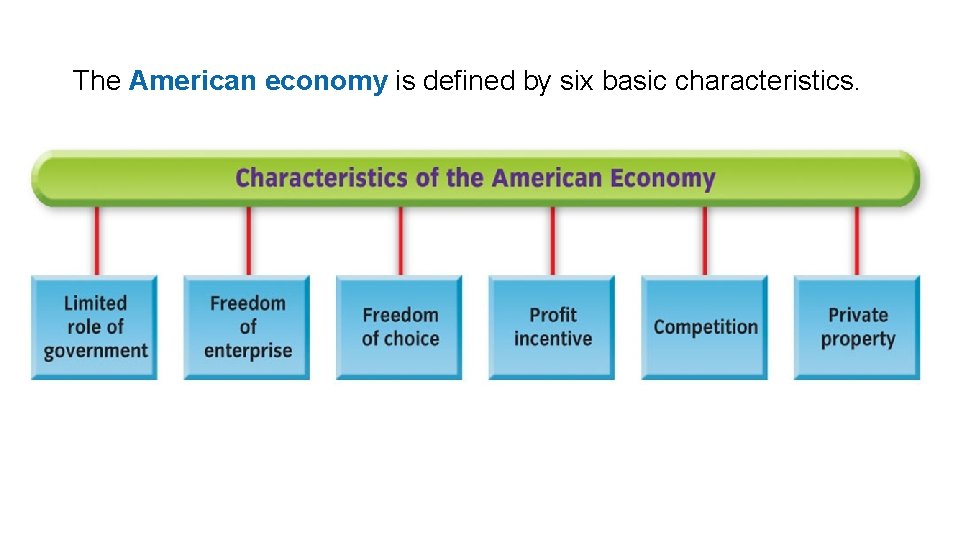
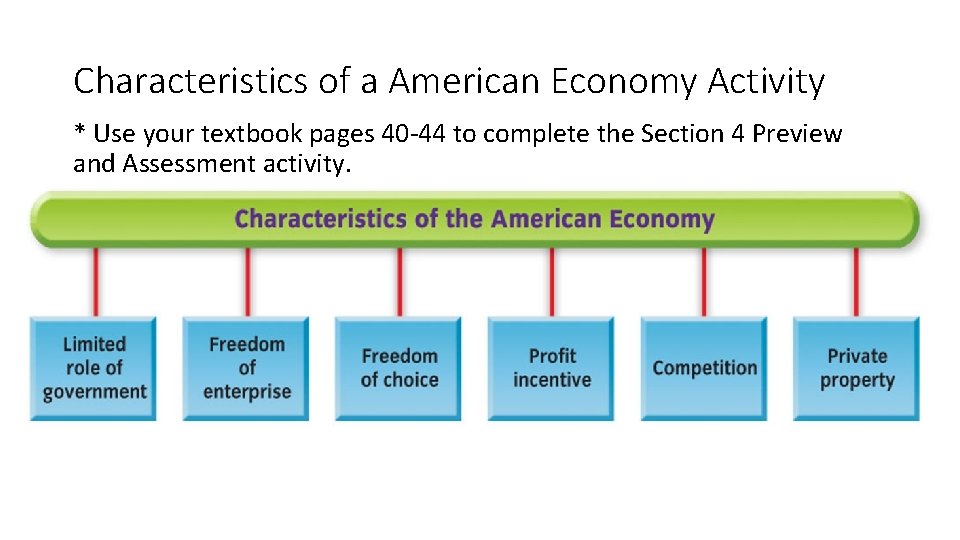
Limited Role of Government • Capitalism is another name for the market economy system. • Pure capitalism has been called Laissez-faire system; a French term meaning “let (people) do (as they choose). ” • Laissez-faire is an economic system in which the government minimizes its interference with the economy. Also known as “hands off” government. • Capitalism in the United States is best defined as an economic system in which private individuals own the factors of production but use them within certain legislated limits.
Other Characteristics • The American economy is known as a free enterprise system. Individuals are free to own the factors of production and decide how to use them within legal limits; same as capitalism. • Americans also have freedom of choice where buyers, not sellers, make the decisions about what should be produced. • At times, the government has intervened in various areas of the economy to protect buyers and regulate price. • The goal of a business is to make a profit.
Other Characteristics • The desire to make a profit is referred to as profit incentive or profit motive. • The risk of failing, when profits are not realized, is also part of the free-enterprise system. • In a free-enterprise system, the lure of profits encourages competition. • For competition to exist, industry barriers to enter into, and exit from must be weak.
Other Characteristics • Competition leads to an efficient use of resources since businesses are forced to keep costs of production as low as possible. • One of the most important characteristics of capitalism is the existence of private property.
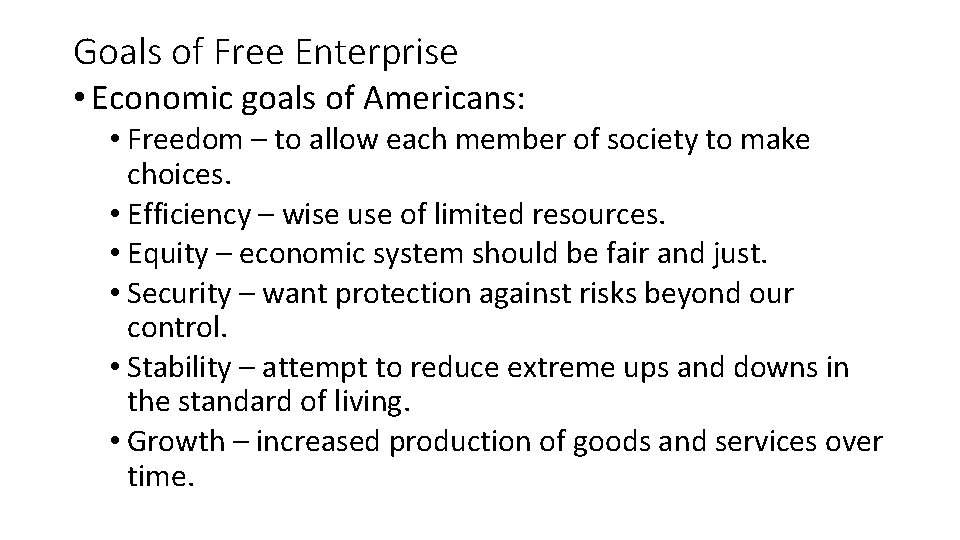
Goals of Free Enterprise • Economic goals of Americans: • Freedom – to allow each member of society to make choices. • Efficiency – wise use of limited resources. • Equity – economic system should be fair and just. • Security – want protection against risks beyond our control. • Stability – attempt to reduce extreme ups and downs in the standard of living. • Growth – increased production of goods and services over time.
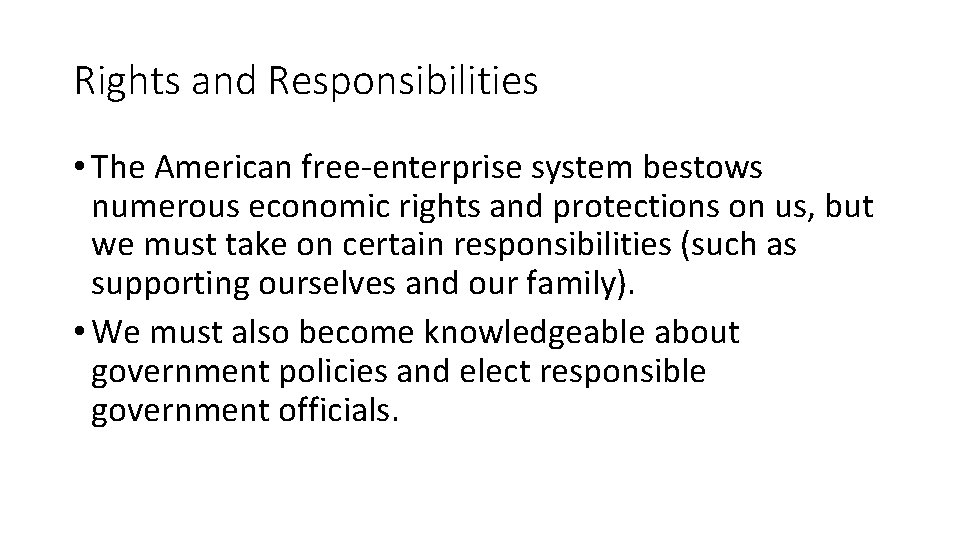
Rights and Responsibilities • The American free-enterprise system bestows numerous economic rights and protections on us, but we must take on certain responsibilities (such as supporting ourselves and our family). • We must also become knowledgeable about government policies and elect responsible government officials.
The American economy is defined by six basic characteristics.
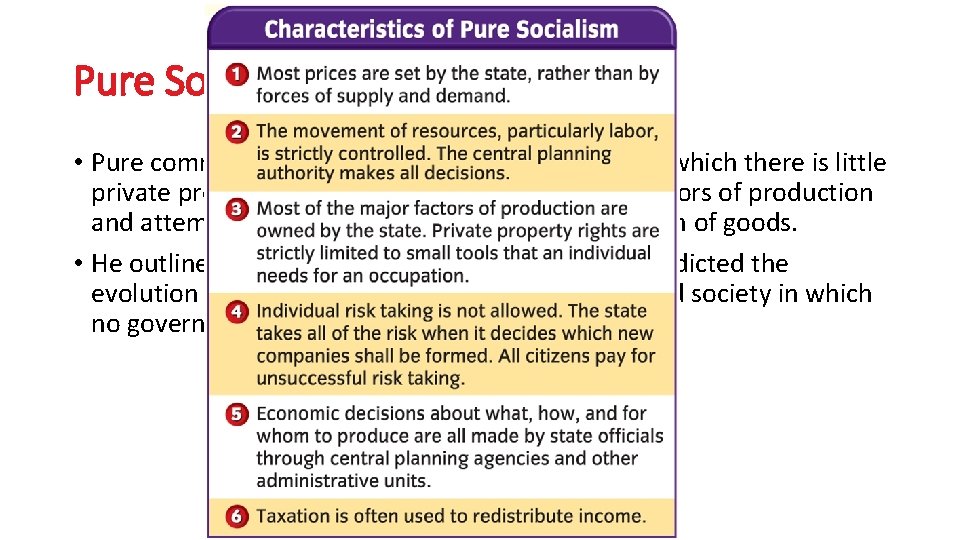
Pure Socialism • Pure command socialism is an economic system in which there is little private property and the government owns the factors of production and attempts to manage output and the distribution of goods. • He outlined the eventual plan of capitalism and predicted the evolution of socialism into communism, an idealized society in which no government is necessary.
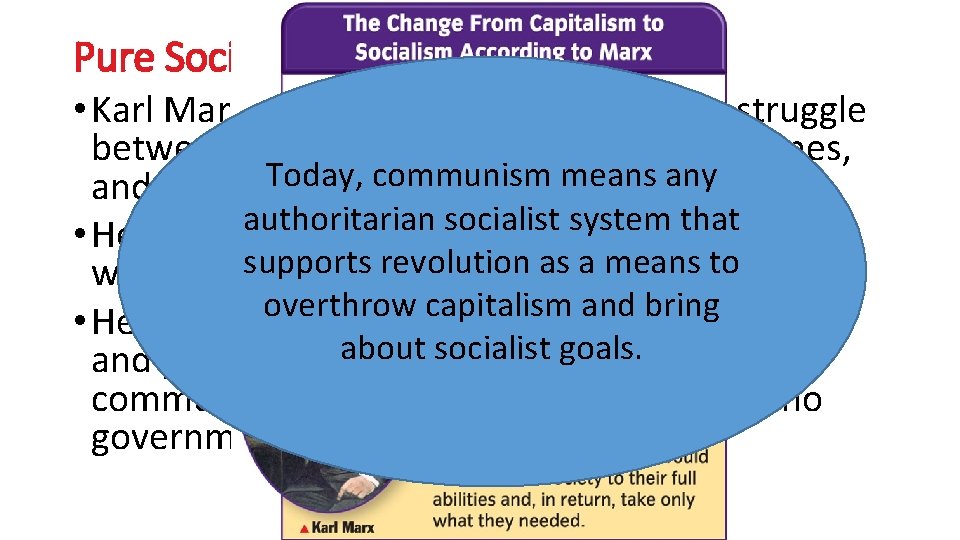
Pure Socialism (cont. ) • Karl Marx viewed history as a continual struggle between capitalists (owners of land, machines, Today, means any and factories) andcommunism the workers. authoritarian socialist system that • He believed that the capitalists exploited the workers. supports revolution as a means to overthrow capitalism and bring • He outlined the eventual collapse of capitalism about socialist goals. and predicted the evolution of socialism into communism, an idealized society in which no government is necessary.
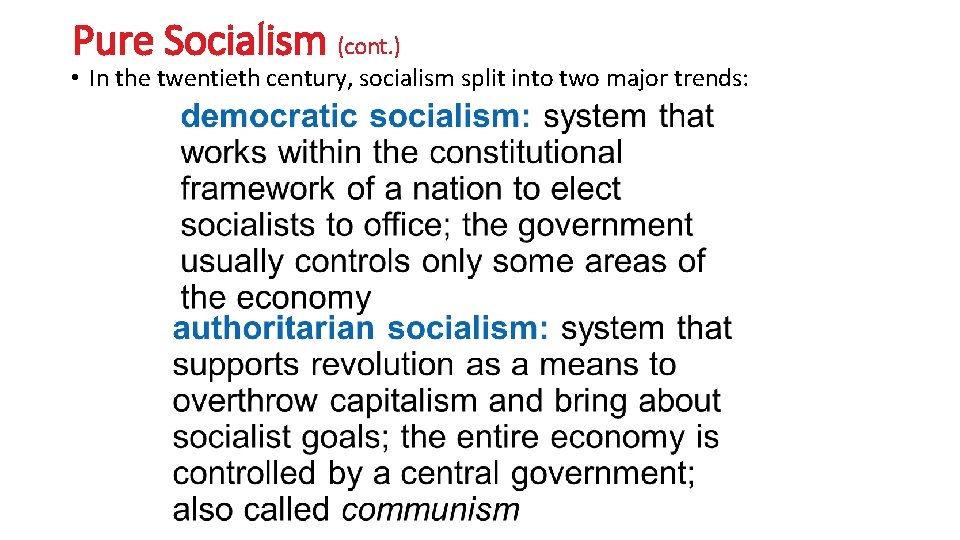
Pure Socialism (cont. ) • In the twentieth century, socialism split into two major trends:
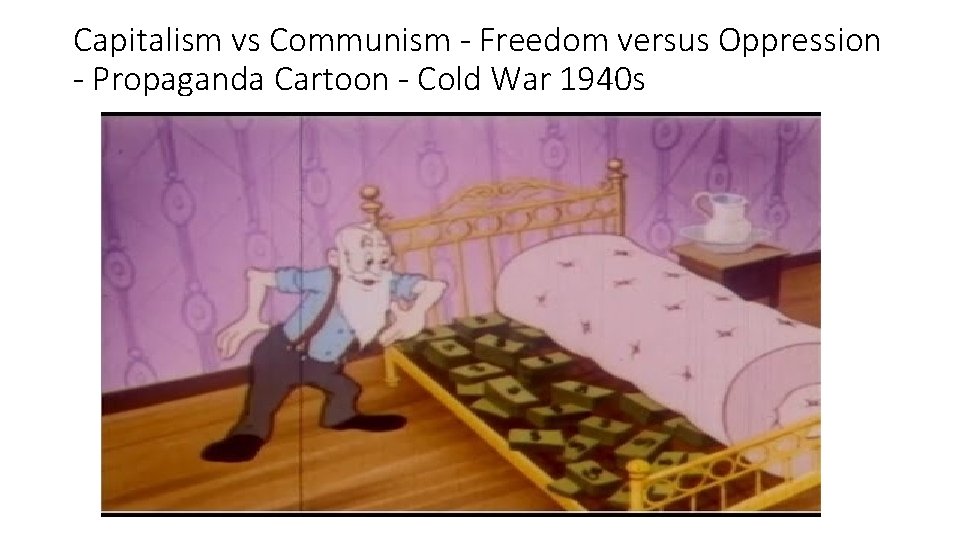
Capitalism vs Communism - Freedom versus Oppression - Propaganda Cartoon - Cold War 1940 s
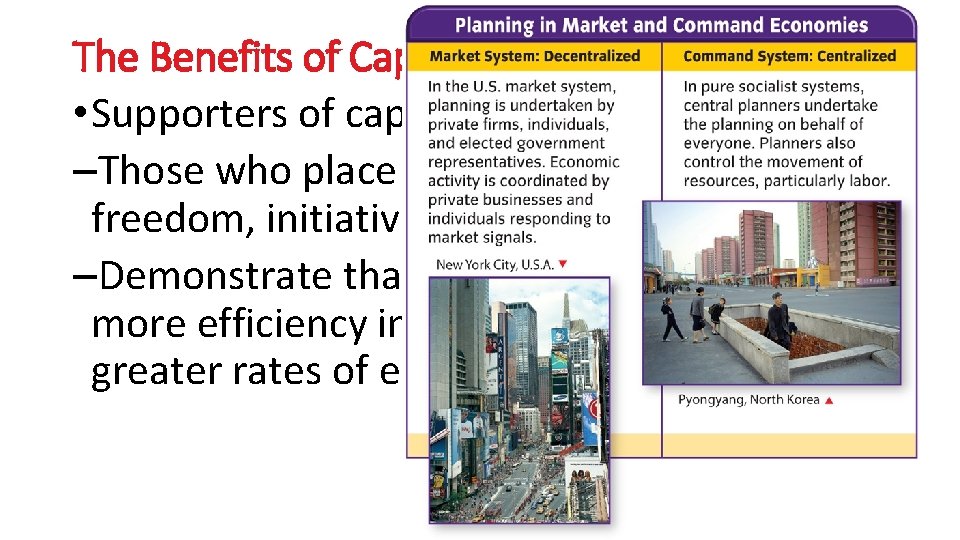
The Benefits of Capitalism • Supporters of capitalism: –Those who place a high value on personal freedom, initiative, and individuality. –Demonstrate that capitalism allows for more efficiency in the marketplace and for greater rates of economic growth.
The Benefits of Capitalism (cont. ) • The United States has an economy planned by private firms, individuals, and elected government officials, while socialism has an economy planned by central planners. • Problems of capitalism: –Income is unequally distributed throughout the economy. –There are not enough schools and museums for the general public.
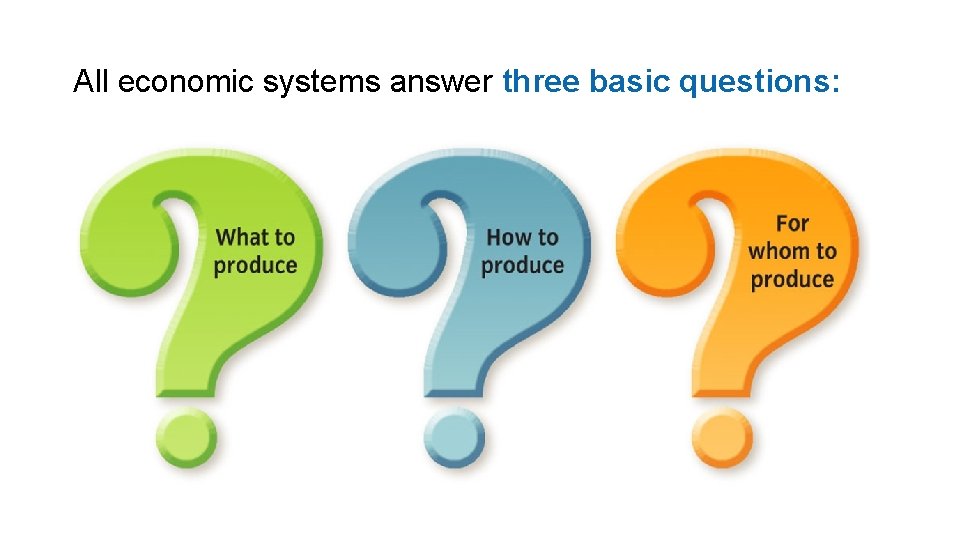
All economic systems answer three basic questions:
There are four basic types of economic systems:
Characteristics of a American Economy Activity * Use your textbook pages 40 -44 to complete the Section 4 Preview and Assessment activity.