
Unit 11 Site Utilities Sewer Drains Sewer Drains

- Slides: 17
Unit 11 Site Utilities
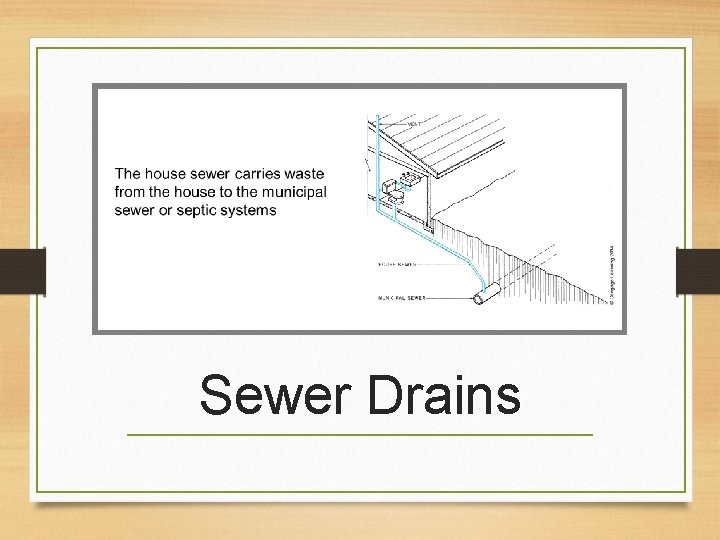
Sewer Drains
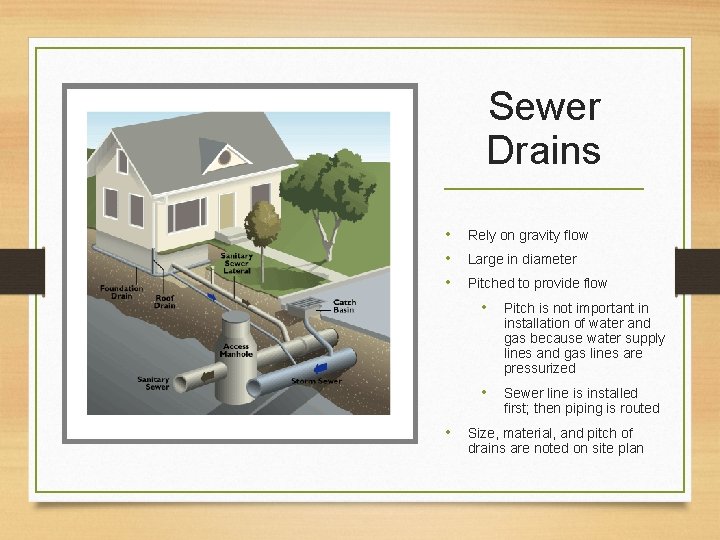
Sewer Drains • • Rely on gravity flow Large in diameter Pitched to provide flow • Pitch is not important in installation of water and gas because water supply lines and gas lines are pressurized • Sewer line is installed first; then piping is routed Size, material, and pitch of drains are noted on site plan
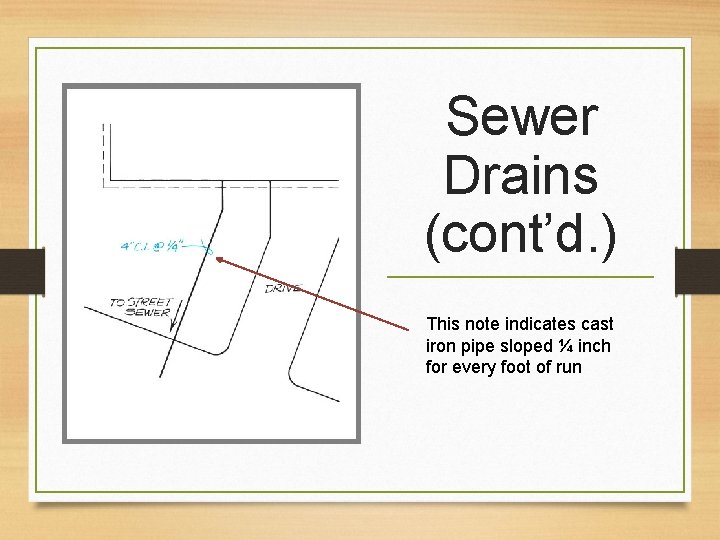
Sewer Drains (cont’d. ) This note indicates cast iron pipe sloped ¼ inch for every foot of run
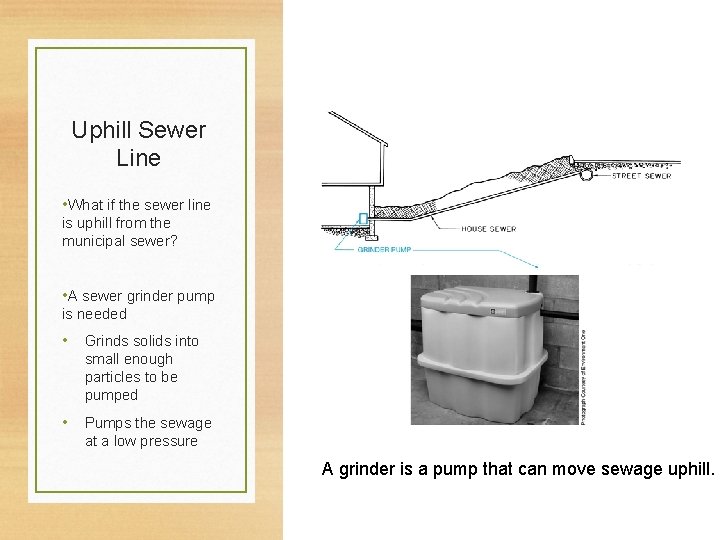
Uphill Sewer Line • What if the sewer line is uphill from the municipal sewer? • A sewer grinder pump is needed • Grinds solids into small enough particles to be pumped • Pumps the sewage at a low pressure A grinder is a pump that can move sewage uphill.
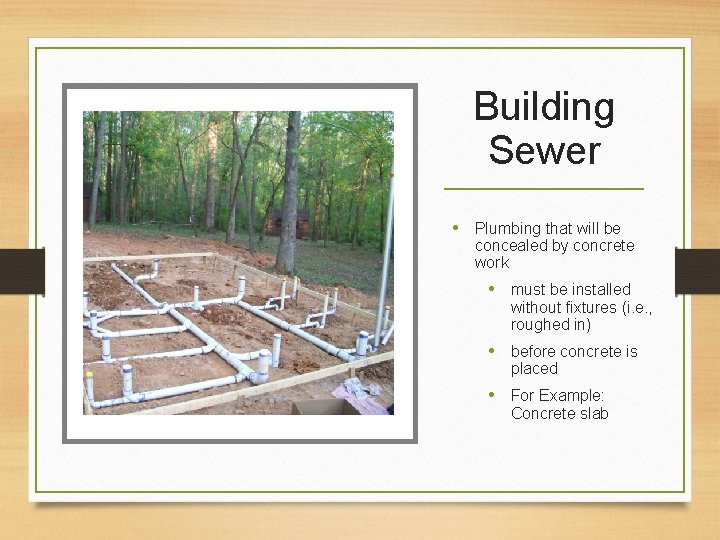
Building Sewer • Plumbing that will be concealed by concrete work • must be installed without fixtures (i. e. , roughed in) • before concrete is placed • For Example: Concrete slab
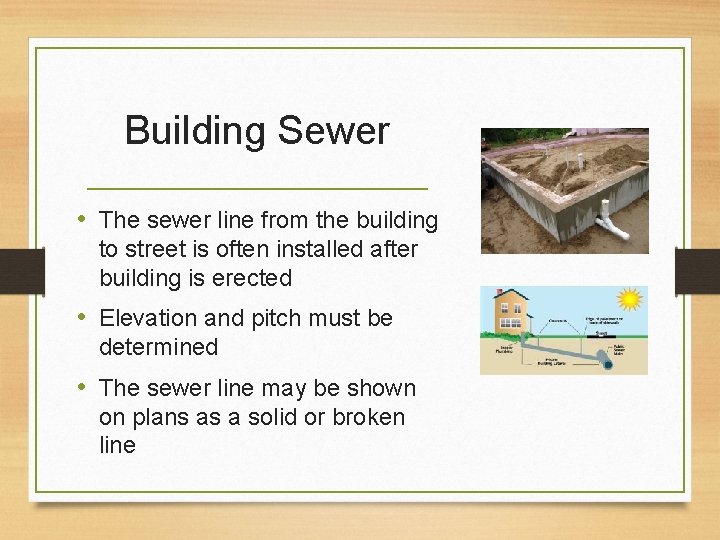
Building Sewer • The sewer line from the building to street is often installed after building is erected • Elevation and pitch must be determined • The sewer line may be shown on plans as a solid or broken line
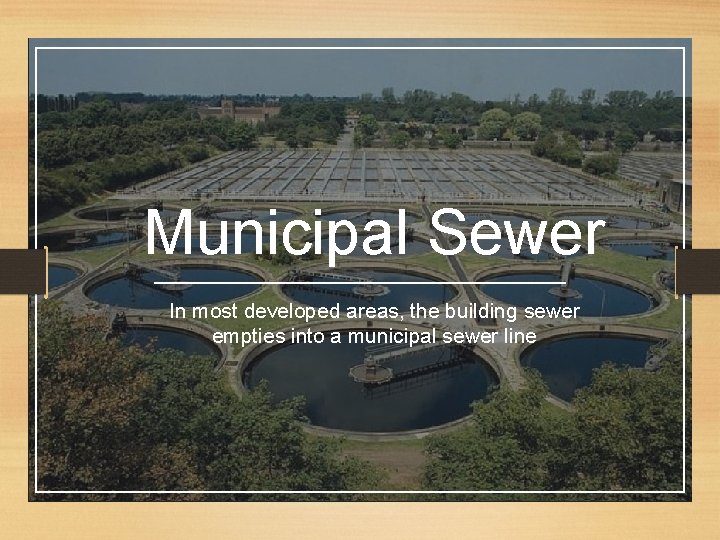
Municipal Sewer In most developed areas, the building sewer empties into a municipal sewer line
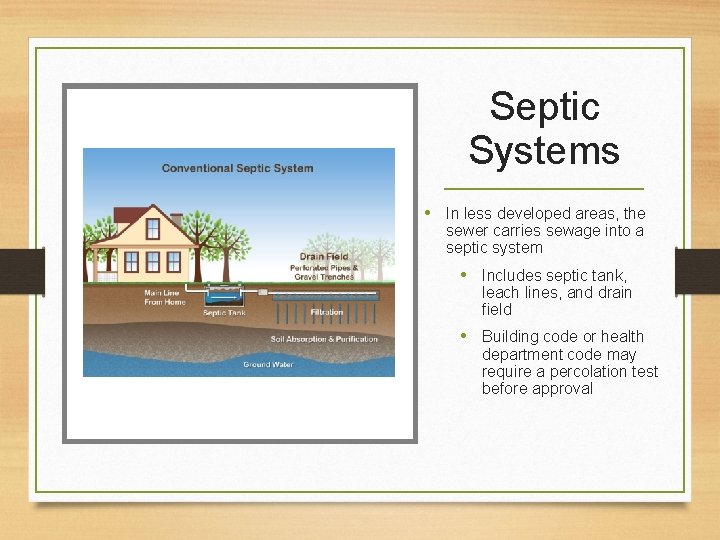
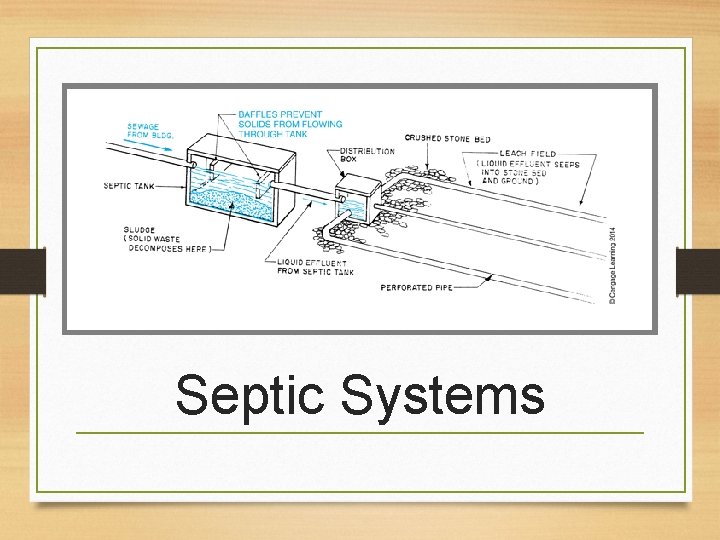
Septic Systems • In less developed areas, the sewer carries sewage into a septic system • Includes septic tank, leach lines, and drain field • Building code or health department code may require a percolation test before approval
Septic Systems
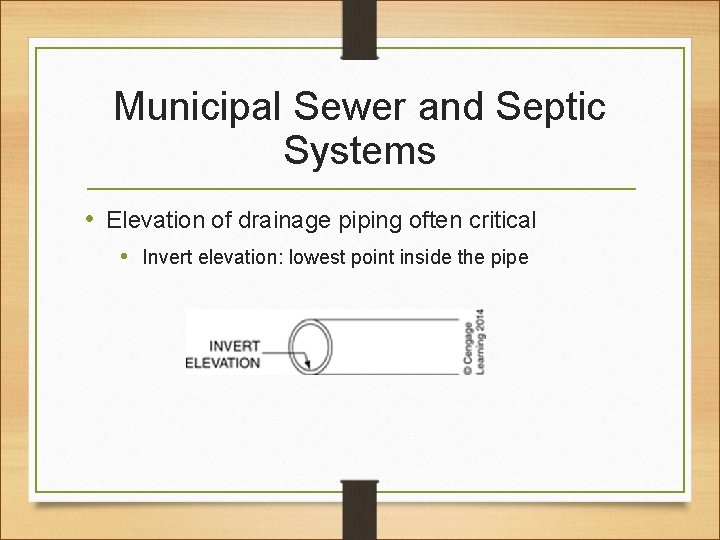
Municipal Sewer and Septic Systems • Elevation of drainage piping often critical • Invert elevation: lowest point inside the pipe
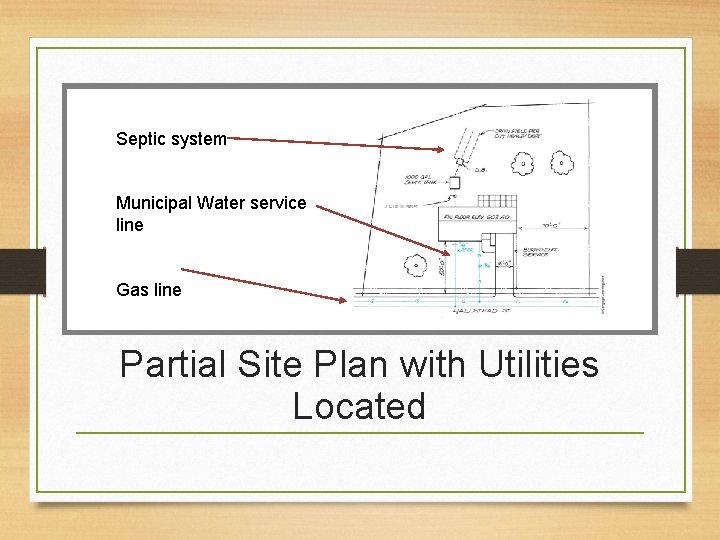
• Other utility piping • Such as water supply or gas • is shown on the site plan • If lines will pass under Other Piping concrete footing, or concrete slab, they must be roughed in first • All supply lines should be labeled according to type and size of piping
Septic system Municipal Water service line Gas line Partial Site Plan with Utilities Located
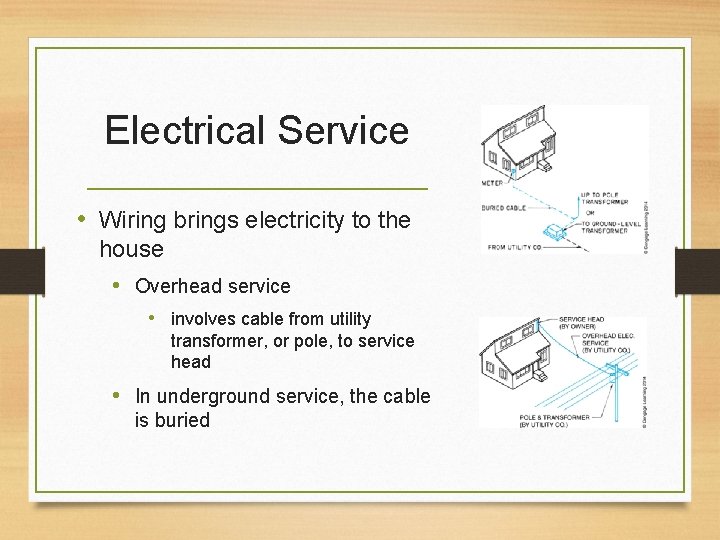
Electrical Service • Wiring brings electricity to the house • Overhead service • involves cable from utility transformer, or pole, to service head • In underground service, the cable is buried
• Electrical service is a utility, but not usually installed until building is enclosed • Residential and small Electric al Service commercial building service have one distribution point (i. e. , main electric panel) • Heavy commercial and industrial electrical service require multiconductor feeders • Usually underground from a utility transformer to a service entrance section in utility room
Quiz Time 1. What size is the sewer for the Lake 2. 3. 4. 5. House? How many lineal feet are required from the foundation wall to the septic tank? What is the rise of the sewer from the house to the septic tank? Where does the sewer pass through the foundation? How many lineal feet of perforated pipe are needed for the drain field? 1. 4 inches 2. Approx. 115 feet 3. 11 feet 4. Under the utility room 5. 120 feet (three 40’ lines)
Quiz Time 6. How many cubic yards of crushed stone are needed for the drain field? 7. What is the invert elevation of the sewer pipe at the point it enters the house? 6. 13 1/3 cubic yards each line is 3’ x 1’ 7. 336 feet