
Unit 11 Gases Properties of Gases Gases expand
- Slides: 18
Unit 11: Gases: Properties of Gases
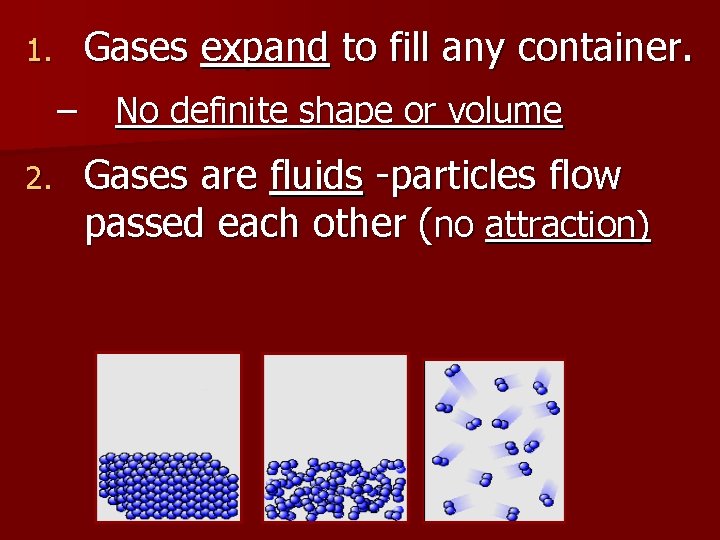
Gases expand to fill any container. 1. – 2. No definite shape or volume Gases are fluids -particles flow passed each other (no attraction)
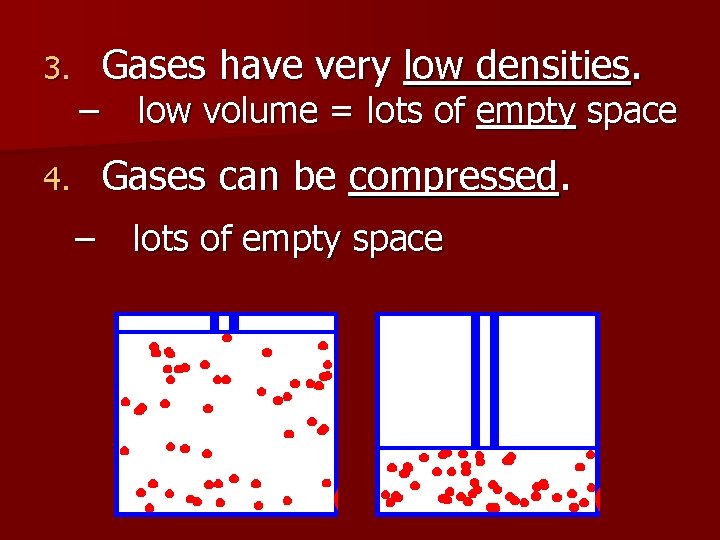
3. – Gases have very low densities. low volume = lots of empty space Gases can be compressed. 4. – lots of empty space
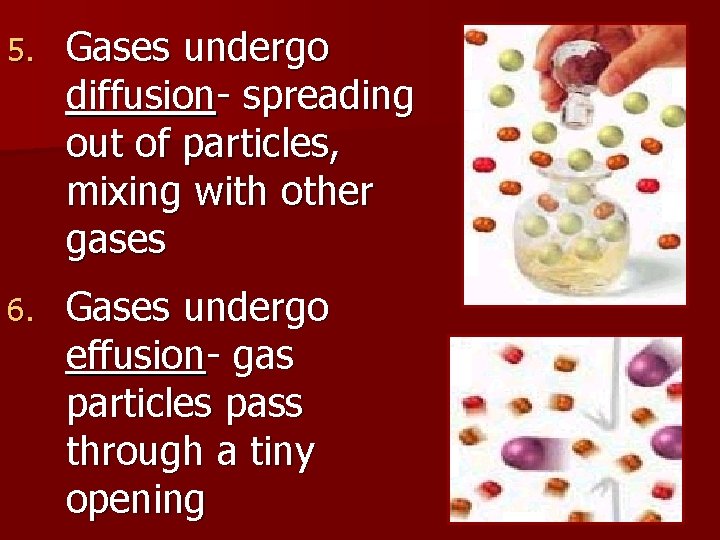
5. Gases undergo diffusion- spreading out of particles, mixing with other gases 6. Gases undergo effusion- gas particles pass through a tiny opening
Factors Affecting Gases
1. Volume (V) The amount space occupied by an object (gas) 3 • Units: L, m. L, cm •
2. Temperature (T) The amount of kinetic energy of the particles • Units: K •
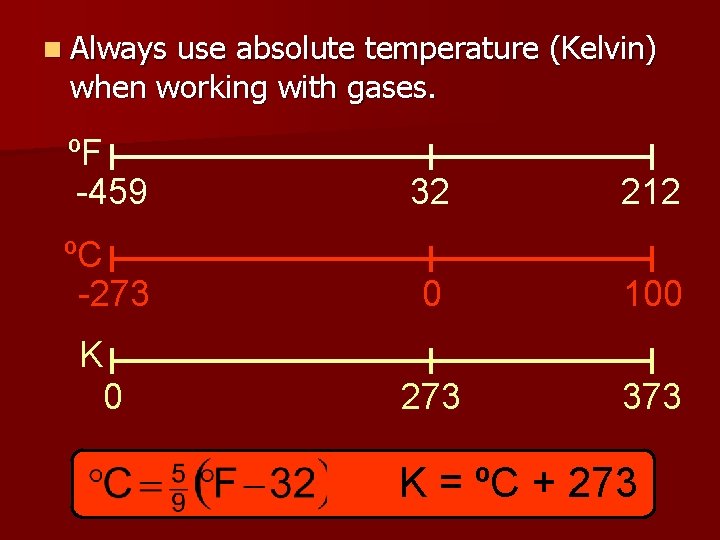
n Always use absolute temperature (Kelvin) when working with gases. ºF -459 32 212 ºC -273 0 100 K 0 273 373 K = ºC + 273
3. # of gas particles (n) • The amount moles in a gas • Units: mol
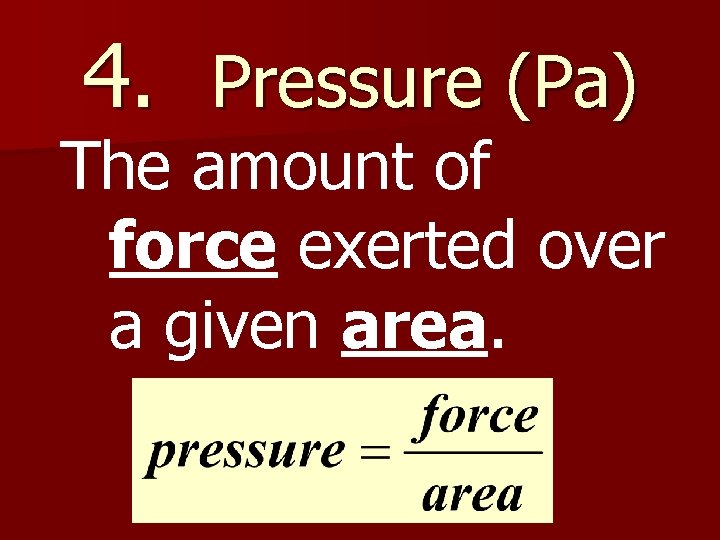
4. Pressure (Pa) The amount of force exerted over a given area.
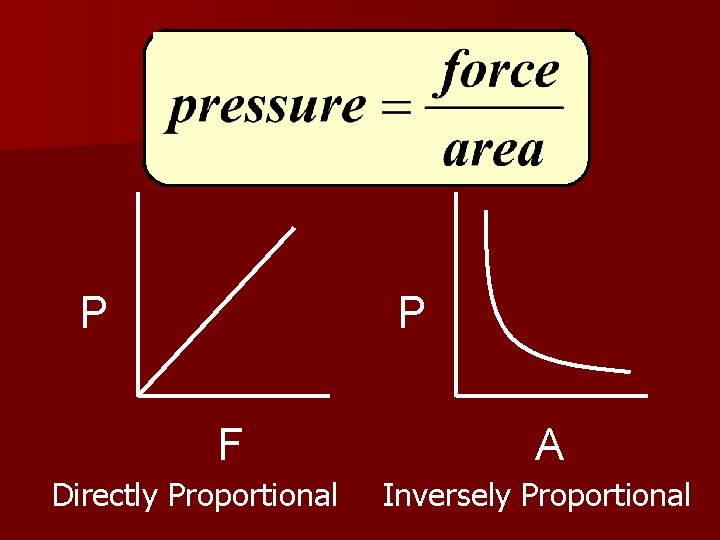
P P F Directly Proportional A Inversely Proportional
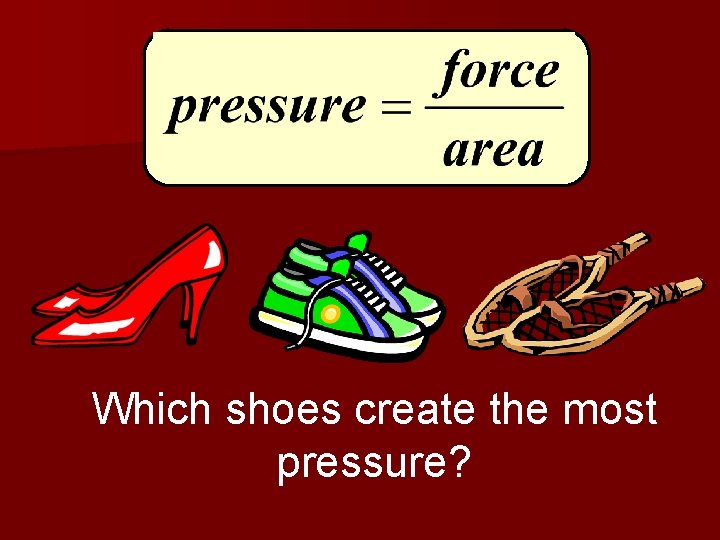
Which shoes create the most pressure?
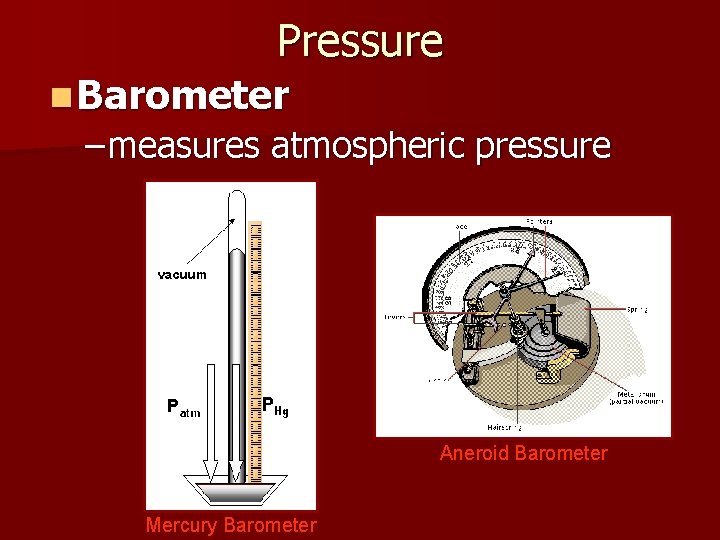
Pressure n Barometer – measures atmospheric pressure Aneroid Barometer Mercury Barometer
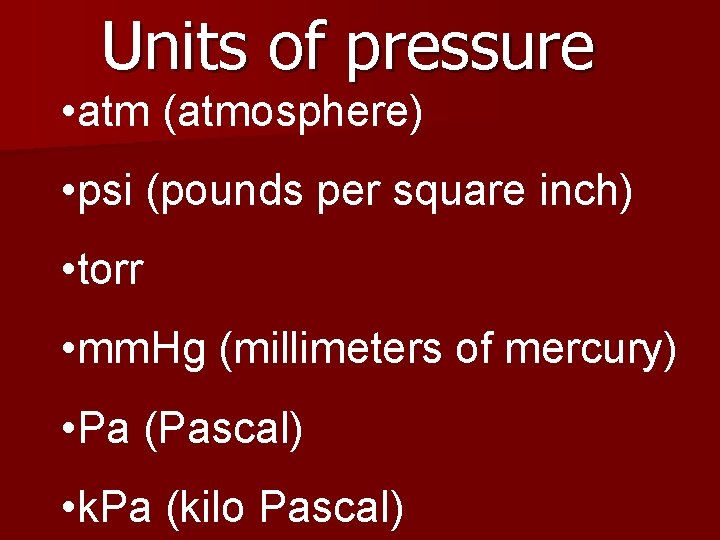
Units of pressure • atm (atmosphere) • psi (pounds per square inch) • torr • mm. Hg (millimeters of mercury) • Pa (Pascal) • k. Pa (kilo Pascal)
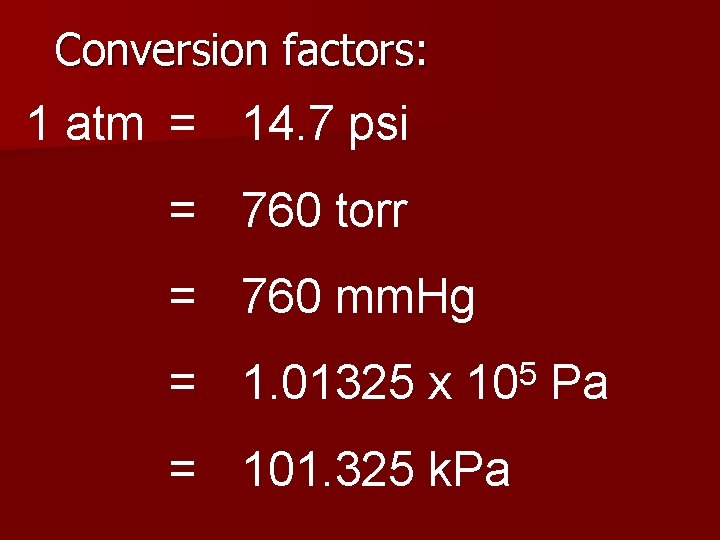
Conversion factors: 1 atm = 14. 7 psi = 760 torr = 760 mm. Hg = 1. 01325 x 105 Pa = 101. 325 k. Pa
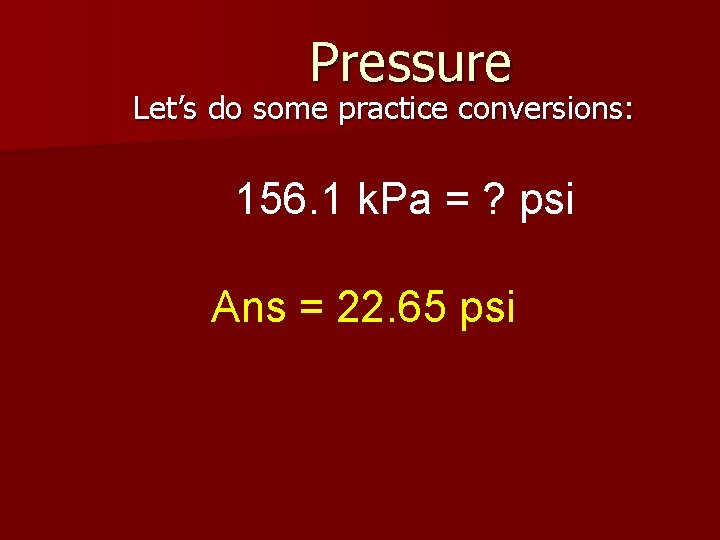
Pressure Let’s do some practice conversions: 156. 1 k. Pa = ? psi Ans = 22. 65 psi
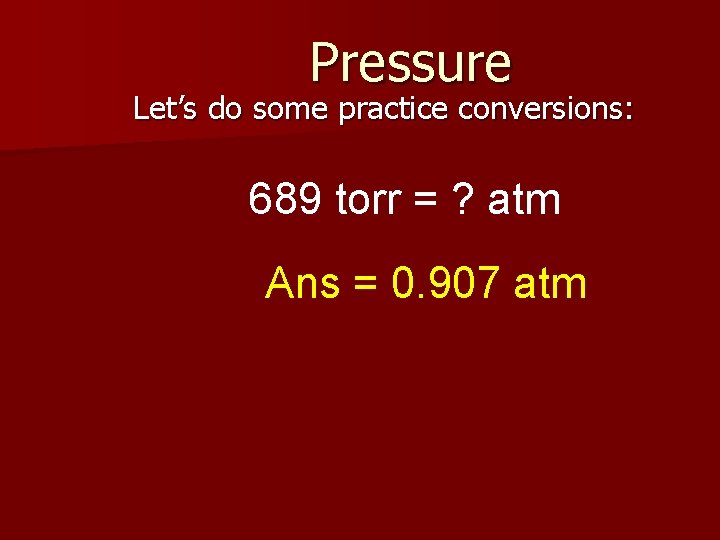
Pressure Let’s do some practice conversions: 689 torr = ? atm Ans = 0. 907 atm
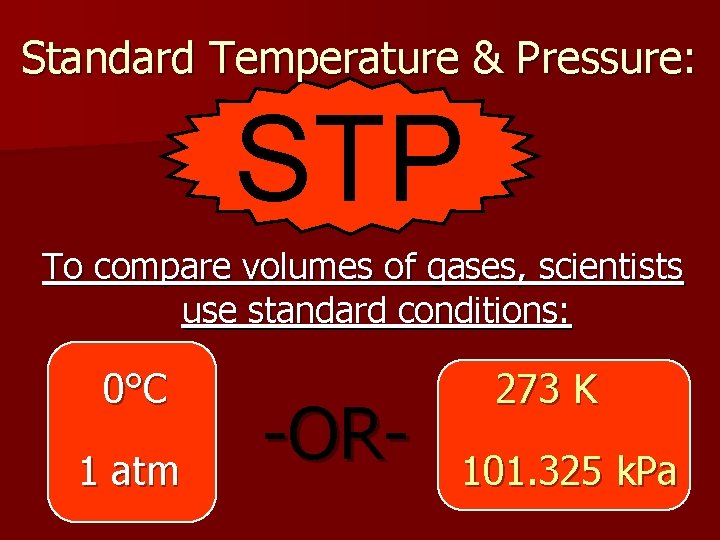
Standard Temperature & Pressure: STP To compare volumes of gases, scientists use standard conditions: 0°C 1 atm -OR- 273 K 101. 325 k. Pa